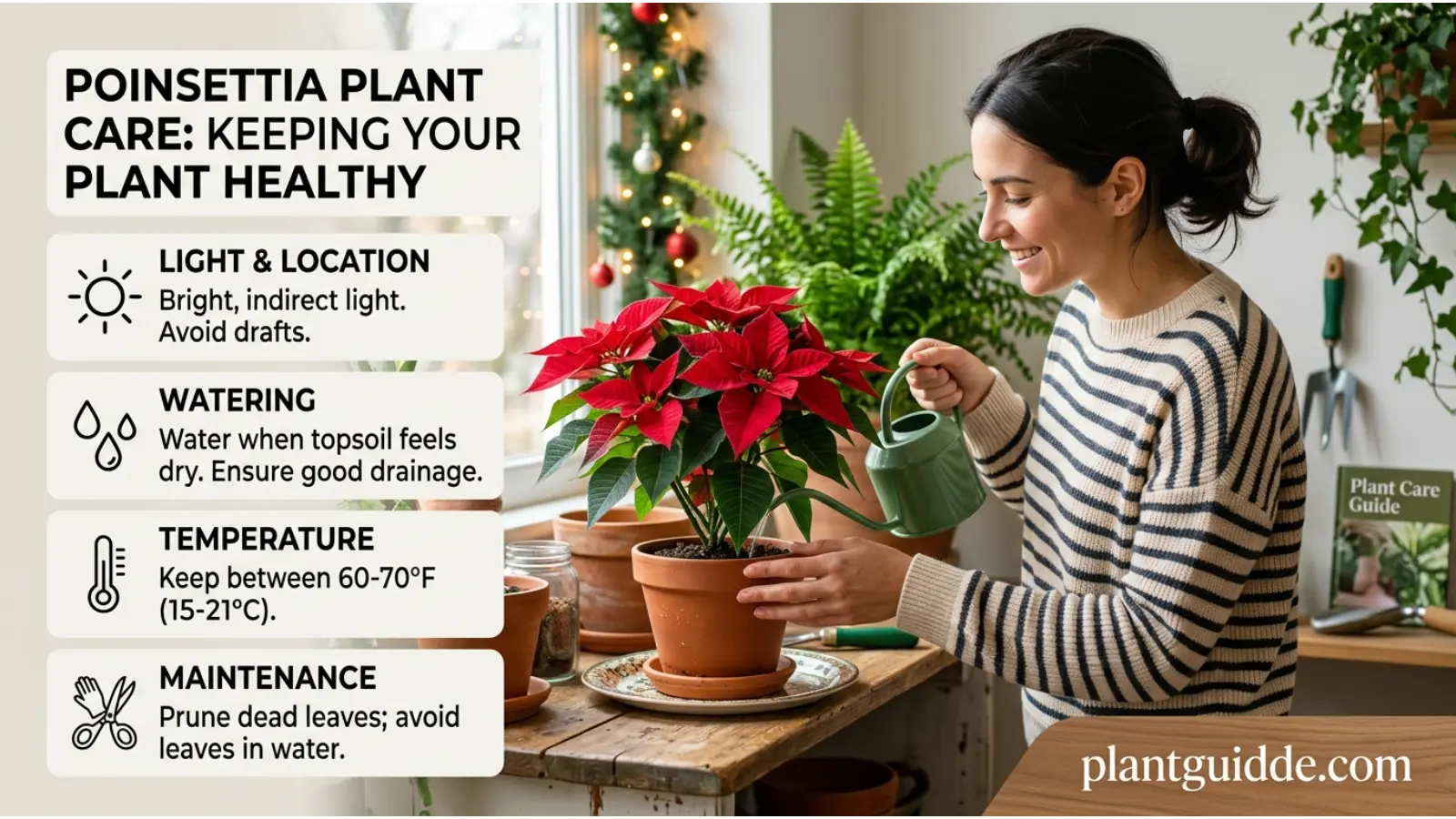
Poinsettia plant care are best known for their bright red holiday bracts, but they can remain attractive long after the Christmas season with the right growing conditions. The plant is commonly treated as a temporary holiday decoration, yet a healthy poinsettia can continue growing for months or even years.
The biggest challenge with poinsettia plant care is usually water management and environmental stability. A poinsettia may start dropping leaves when it is exposed to cold drafts, sudden temperature changes, very dry conditions, inadequate light, or consistently wet soil. Understanding what the plant needs at each stage makes it much easier to keep it healthy.
Quick Answer
Poinsettia plant care focuses on bright, indirect light, well-draining soil, careful watering, moderate humidity, and stable temperatures. Water when the top inch of soil feels dry, but never leave the roots sitting in water. After the holiday season, provide adequate light, prune the plant in spring, and use a controlled light-and-dark schedule in fall if you want it to develop colorful bracts again.
What Is a Poinsettia?
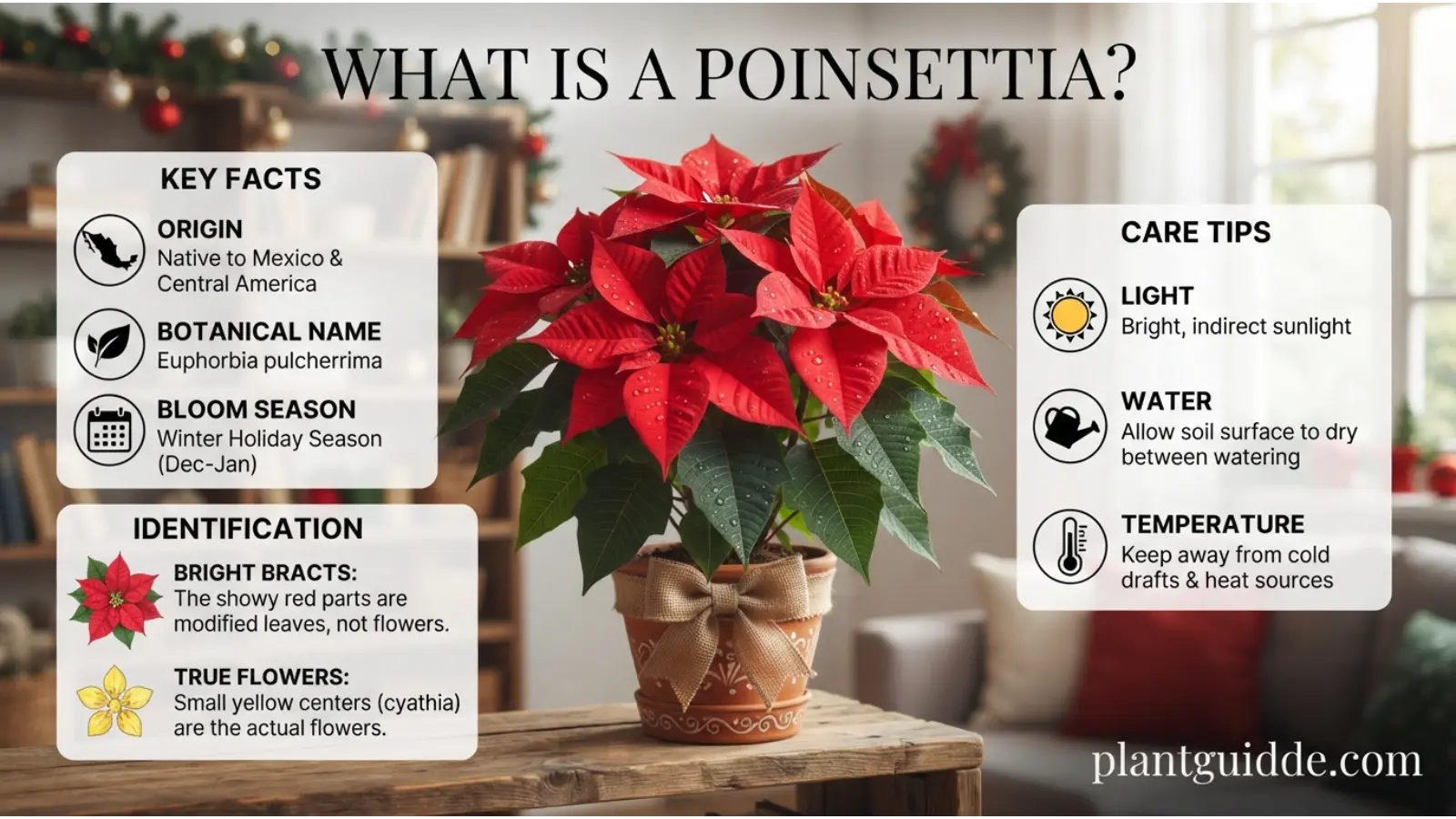
Poinsettia (Euphorbia pulcherrima) is a tropical-to-subtropical shrub native to Mexico and Central America. It belongs to the spurge family, Euphorbiaceae.
The colorful parts that people often call the flowers are actually bracts, or modified leaves. The true flowers are the small yellow structures called cyathia found in the center of the colorful bracts.
Although red is the traditional poinsettia color, cultivated varieties are also available with:
- White or cream bracts
- Pink bracts
- Burgundy or deep red bracts
- Marble or variegated patterns
- Salmon and peach tones
Poinsettias naturally respond to shortening day length. This is why controlling nighttime darkness becomes important when trying to make a plant develop colorful bracts again.
How to Care for a Poinsettia
Successful poinsettia plant care comes down to maintaining a balance between light, moisture, temperature, and airflow.
| Care requirement | What a poinsettia prefers |
|---|---|
| Light | Bright, indirect light; some gentle direct sun is acceptable |
| Water | Water thoroughly when the upper soil begins to dry |
| Soil | Loose, well-draining potting mix |
| Temperature | Stable, comfortable indoor temperatures |
| Humidity | Moderate humidity with good airflow |
| Fertilizer | Regular feeding during active growth |
| Pruning | Prune after the colorful bracts fade and growth resumes |
| Repotting | Usually in spring or when roots become crowded |
| Reblooming | Requires appropriate light during the day and uninterrupted darkness at night |
The goal is not to follow a rigid watering calendar. Instead, check the soil and the plant’s environment before deciding whether it needs water.
Poinsettia Light Requirements
Light is one of the most important parts of poinsettia plant care.
Place the plant near a bright window where it receives plenty of natural light without being exposed to intense, scorching afternoon sunlight for long periods.
An east-facing window is often convenient because it can provide bright morning light. A bright south- or west-facing window can also work if strong afternoon rays are filtered with a sheer curtain.
Signs of insufficient light
A poinsettia receiving too little light may develop:
- Weak or stretched growth
- Smaller leaves
- Slow growth
- Fading or poor coloration
- Increased leaf drop
Poinsettia plant care your poinsettia is several feet away from a relatively dark window, simply moving it closer to a bright light source can make a noticeable difference.
Can poinsettias tolerate direct sunlight?
Yes, but the intensity matters. Gentle morning sunlight is generally easier for the plant to tolerate than strong midday or afternoon sun through glass.
If leaves become scorched, bleached, or develop dry brown patches after being moved into intense sunlight, provide filtered light instead.
How Often Should You Water a Poinsettia?
Poinsettias prefer evenly moist but not waterlogged soil.
Instead of watering every few days automatically, insert your finger about an inch into the soil. If the upper layer feels dry, it is usually time to water. If it still feels noticeably moist, wait and check again later.
When watering:
- Take the plant to a sink or suitable drainage area.
- Water thoroughly until excess water drains from the bottom.
- Allow the pot to drain completely.
- Empty any water collected in the saucer or decorative container.
- Return the plant to its normal position.
This approach is more reliable than giving the plant a small amount of water frequently.
Why overwatering causes problems
Poinsettias do not like their roots remaining saturated for extended periods. Constantly wet soil reduces air around the roots and can contribute to root problems.
Common signs associated with excessive moisture include:
- Yellowing leaves
- Wilting despite wet soil
- Premature leaf drop
- Soft or declining stems
- Unpleasant-smelling soil
- Slow or stalled growth
One of the most common mistakes is assuming that a wilted poinsettia always needs more water. Check the soil first. Wilting can occur when roots have been damaged by excessive moisture and can no longer function properly.
What Type of Soil Does a Poinsettia Need?
Use a lightweight, well-draining potting mix that allows both water and air to move through the root zone.
A suitable commercial indoor potting mix can work well when the container has adequate drainage. Avoid using heavy garden soil by itself in an indoor container because it can become compacted and drain poorly.
The pot should always have drainage holes.
A decorative outer cover can hide drainage problems. If your poinsettia comes wrapped in decorative foil, make sure excess water can actually escape after watering. Do not allow water to remain trapped around the nursery pot.
Best Temperature for Poinsettias
Poinsettias prefer stable indoor temperatures rather than sudden fluctuations.
Keep the plant away from:
- Cold drafts
- Frequently opened exterior doors
- Heating vents
- Radiators
- Air-conditioning outlets
- Very hot windows
- Sudden temperature changes
A poinsettia sitting beside a cold window at night and directly above a heater during the day may experience much more environmental stress than one kept in a stable location.
Temperature stress is particularly important during the holiday season because poinsettias are frequently transported outdoors in cold weather.
Poinsettia plant care you purchase one during cold weather, protect it from exposure to cold air during transportation.
Humidity and Airflow
Poinsettias generally appreciate moderate humidity, particularly in homes where heating systems make the air very dry.
However, increasing humidity does not mean keeping the foliage constantly wet.
Helpful options include:
- Using a room humidifier
- Grouping compatible plants together
- Keeping the plant away from dry heating vents
- Maintaining reasonable airflow around the foliage
Avoid creating a constantly damp environment around the leaves. Good airflow helps reduce the conditions that encourage fungal and other leaf problems.
Fertilizing Poinsettias
A poinsettia does not need heavy fertilization while it is serving as a colorful holiday plant.
Once the plant enters active growth after the bracts begin fading, feeding becomes more useful.
A balanced, water-soluble houseplant fertilizer can generally be used according to its label directions during active growth. Avoid applying more fertilizer than recommended because excess salts can accumulate in the potting mix and damage roots.
Poinsettia plant care a plant is newly purchased and already growing well, there is usually little reason to immediately compensate with extra fertilizer.
More fertilizer does not equal faster or healthier growth. Light, roots, water, and temperature all need to be appropriate first.
What to Do When Poinsettia Bracts Fade
One of the most misunderstood parts of poinsettia plant care is what happens after the holidays.
As the colorful bracts age, they naturally lose their appearance. This does not automatically mean the plant is dying.
After the colorful display fades:
- Continue providing bright light.
- Reduce watering slightly if the plant is using less water.
- Remove dead or severely damaged foliage.
- Continue checking soil moisture rather than following a fixed schedule.
- Allow the plant to continue growing.
The plant can enter a less decorative phase while it develops new green growth.
How to Prune a Poinsettia
Pruning encourages a more compact, branching plant after the holiday display has finished.
When active growth resumes, stems can be cut back to encourage branching. Clean, sharp pruning tools are preferable because they make cleaner cuts and reduce unnecessary stem damage.
Do not repeatedly shear the plant without considering where new growth will develop. A few well-placed cuts are generally more useful than removing foliage indiscriminately.
Because poinsettias are woody shrubs when grown over time, proper pruning can help prevent the plant from becoming excessively tall and sparse.
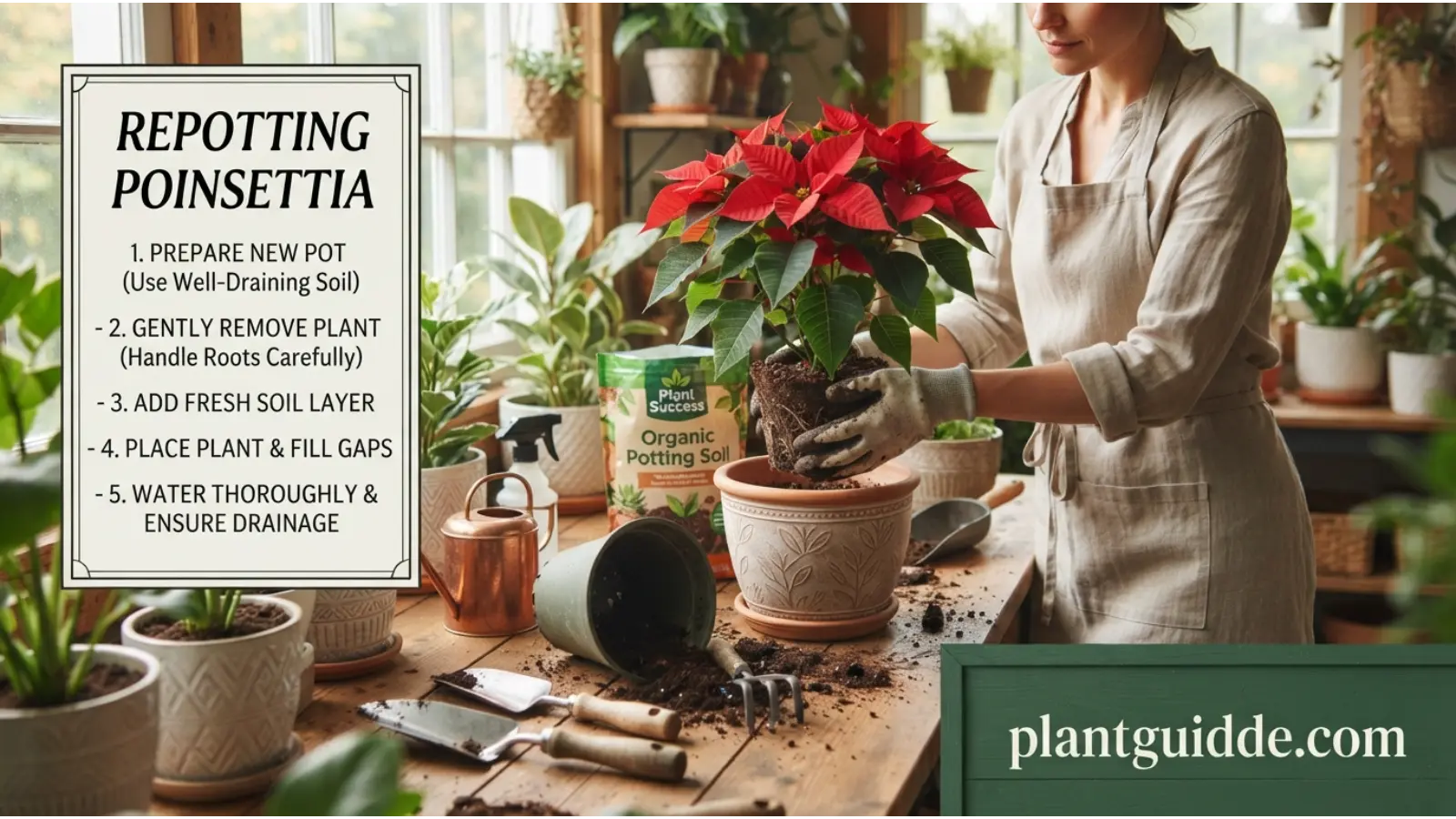
Repotting a Poinsettia
Spring is generally a convenient time to repot a poinsettia if it has outgrown its container.
Repot when you notice signs such as:
- Roots circling heavily around the root ball
- Roots emerging from drainage holes
- Soil drying unusually quickly
- The plant becoming unstable in a very small pot
- Poor drainage caused by an old or compacted mix
Choose a container only modestly larger than the current one. Moving a small root system into a very large container can leave excess soil wet for longer periods, increasing the risk of moisture-related root problems.
Make sure the new container has drainage holes.
How to Keep a Poinsettia Alive After Christmas
Keeping a poinsettia alive after Christmas is less complicated than many people expect.
The important change is to stop thinking of it only as a holiday decoration and start treating it as a growing plant.
During the months after the holidays:
- Give it plenty of bright light.
- Water according to soil moisture.
- Protect it from temperature extremes.
- Prune when appropriate.
- Feed during active growth.
- Repot if the roots have outgrown the container.
The plant may become mostly green after its colorful bracts fade. That is normal. Its next colorful display depends on seasonal conditions and proper photoperiod management.
How to Get a Poinsettia to Turn Red Again
Poinsettias develop colorful bracts in response to shorter days and sufficiently long periods of uninterrupted darkness.
If you want a poinsettia to develop color again for the holiday season, the process needs to begin well before December.
During the appropriate period in fall, the plant needs:
- Bright light during the daytime
- Long, uninterrupted darkness at night
- Consistency over many weeks
- Appropriate temperature and watering
- Continued healthy growth
Even brief exposure to light during the required dark period can interfere with the photoperiodic response.
This is why simply placing a poinsettia in a dark room for a few hours is not enough. The plant needs a consistent day/night pattern.
For home growers, following a reliable controlled-darkness schedule beginning in early fall can improve the chances of developing colorful bracts around the holiday period.
Poinsettia Leaf Drop: Causes and Solutions
Leaf drop is one of the most common complaints after bringing a poinsettia home.
A few dropped leaves are not necessarily a serious problem, especially after the plant experiences a major environmental change. However, extensive or continuing leaf loss deserves investigation.
Cold exposure
Problem: The plant was exposed to cold air during transportation or near a drafty window.
What to do: Move it to a stable, comfortable location away from drafts.
Overwatering
Problem: Soil stays wet for long periods.
What to do: Allow the upper portion of the soil to dry before watering again and make sure the container drains freely.
Underwatering
Problem: Soil becomes extremely dry and the plant repeatedly wilts.
What to do: Water thoroughly when the soil is dry rather than repeatedly giving tiny amounts.
Insufficient light
Problem: The plant is positioned far from a bright window.
What to do: Move it closer to a suitable light source while avoiding harsh heat or scorching sun.
Sudden environmental change
Problem: A plant moves from a bright, humid garden center to a dry, dim, temperature-variable home.
What to do: Give the poinsettia a stable location and avoid constantly moving it around while it adjusts.
Why Are My Poinsettia Leaves Turning Yellow?
Yellow leaves can have several causes, so the color alone does not identify the problem.
Check these conditions first:
- Feel the soil. Is it constantly wet or completely dry?
- Inspect drainage. Does water escape freely from the pot?
- Check light. Is the plant receiving adequate brightness?
- Look at temperature. Is it near a draft, heater, or cold window?
- Inspect the roots if decline continues. Persistent wetness combined with poor growth may indicate root damage.
An occasional older yellow leaf can be normal. A pattern of multiple leaves turning yellow and dropping, particularly when the soil remains wet, is more concerning.
Why Are Poinsettia Leaves Curling?
Curling or distorted foliage can result from environmental stress, inconsistent moisture, excessive heat, or pest activity.
Start by examining the growing conditions rather than immediately applying a treatment.
Look underneath the leaves and around new growth for signs of pests such as:
- Small insects
- Fine webbing
- Sticky residue
- Speckled or stippled leaves
- Distorted new growth
If pests are present, identify them before choosing a control method. Different pests require different approaches.
Common Poinsettia Care Mistakes
Watering on a fixed schedule
Watering every Sunday regardless of soil condition can easily lead to overwatering.
Better approach: Check the soil before watering.
Leaving the plant inside decorative foil
Decorative wrapping can trap drainage water around the roots.
Better approach: Ensure water can escape freely and empty excess water.
Placing it beside a heater
The warm, dry air can stress foliage and cause moisture loss.
Better approach: Choose a stable location away from direct heat.
Keeping it in a dark corner
Poinsettias need adequate light for healthy growth.
Better approach: Place the plant in a bright location with suitable filtered or gentle sunlight.
Assuming leaf drop means the plant is dead
Poinsettias can lose leaves after environmental stress and still recover.
Better approach: Diagnose the growing conditions before discarding the plant.
Trying to force rebloom without controlling darkness
A poinsettia needs an appropriate photoperiod, not simply “less light.”
Better approach: Provide bright daytime conditions and consistent uninterrupted darkness during the appropriate fall period.
Poinsettia Care Through the Seasons
Winter
The plant is often purchased while flowering or displaying colorful bracts.
Focus on:
- Bright light
- Stable temperatures
- Careful watering
- Protection from cold drafts
Spring
This is a useful period for pruning and, if necessary, repotting.
As new growth develops, gradually return to regular feeding during active growth.
Summer
A healthy poinsettia can produce substantial green growth during the warmer growing season.
Provide adequate light, water when needed, and avoid allowing the soil to remain saturated.
Fall
Fall is particularly important if your goal is reblooming.
Maintain strong daytime light while providing the long, uninterrupted nighttime darkness needed to trigger colorful bract development.
Are Poinsettias Poisonous?
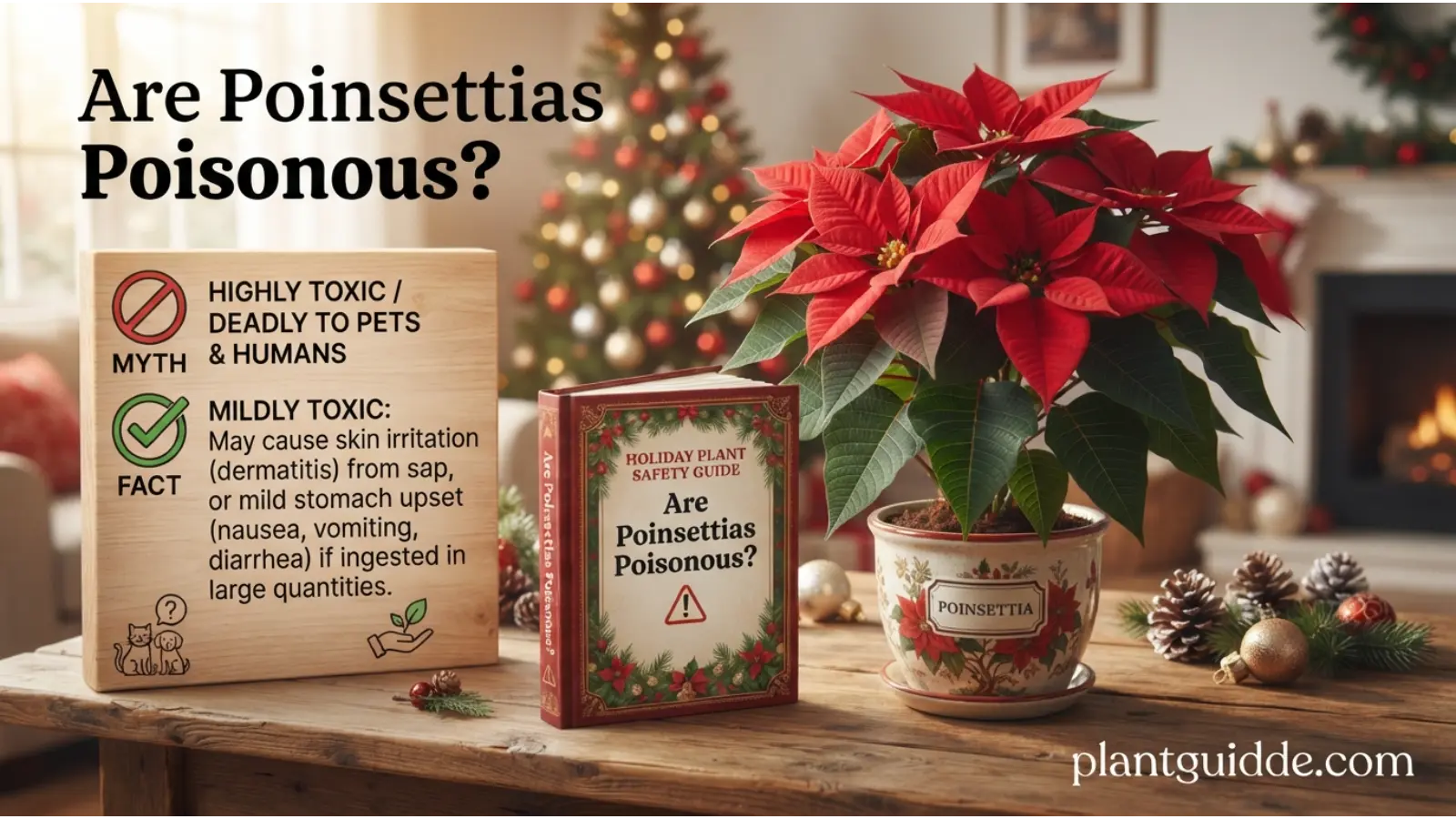
Poinsettias have a reputation for being highly poisonous, but this is an exaggeration of their actual toxicity.
The milky sap can irritate the skin and mouth, and eating plant material may cause gastrointestinal discomfort. The plant should still be kept away from children and pets that may chew or ingest plants, and medical or veterinary advice should be sought if a significant amount is consumed or concerning symptoms develop.
Handling the plant normally does not require treating it as a highly dangerous plant, but avoiding ingestion and washing hands after handling damaged stems is sensible.
Indoor Poinsettia Care: A Simple Routine
If you want a straightforward routine, use this checklist:
Every few days:
Check the soil moisture and inspect the foliage.
When the upper soil begins to dry:
Water thoroughly and allow the container to drain completely.
Weekly:
Look for pests, yellowing leaves, unusual leaf drop, and signs of environmental stress.
During active growth:
Provide appropriate fertilizer according to the product label.
In spring:
Consider pruning and repotting if necessary.
In fall:
If reblooming is your goal, maintain the required day/night schedule consistently.
This approach is more dependable than trying to manage the plant through an exact calendar-based watering routine.
FAQs:
How often should I water a poinsettia?
Water when the upper portion of the soil begins to dry rather than watering according to a fixed schedule. Water thoroughly, then allow excess water to drain completely. Avoid keeping the soil continuously saturated.
Why is my poinsettia losing leaves?
Leaf drop can result from cold drafts, sudden environmental changes, insufficient light, overwatering, underwatering, or other stress. Check the soil moisture, drainage, temperature, and light before deciding on a solution.
Can a poinsettia live indoors all year?
Yes. With adequate light, appropriate watering, suitable temperatures, and seasonal pruning, a poinsettia can be maintained as a long-term indoor plant rather than discarded after the holidays.
Can I make my poinsettia red again?
Yes, a healthy poinsettia can produce colorful bracts again when it receives the appropriate seasonal light and darkness conditions. The plant needs bright daytime light and long, uninterrupted nights during the fall period.
Do poinsettias need direct sunlight?
Poinsettias need plenty of light, but intense direct sunlight can scorch foliage. Bright filtered light or gentle morning sun is generally easier to manage indoors than strong afternoon exposure.
Final Thoughts
Good poinsettia plant care is less about complicated techniques and more about consistent conditions. Give the plant bright light, let the soil begin to dry before watering, provide good drainage, and protect it from cold drafts and sudden temperature changes.
If you want to keep your poinsettia beyond the holiday season, continue caring for it after the colorful bracts fade. With spring pruning, healthy summer growth, and a properly controlled fall light cycle, a poinsettia can become a long-term plant capable of producing another seasonal display.

Asad Mumtaz is a dedicated plant enthusiast and gardening writer with a passion for helping people care for their plants successfully. He specializes in plant care guides, indoor gardening, and practical growing tips for all skill levels. His content focuses on making gardening simple, enjoyable, and rewarding. Through his work, Asad shares reliable advice to help readers create thriving green spaces.