
Dragon plants are popular indoor plants because they offer a striking, tree-like appearance without demanding constant attention. Dragon plant care. Their slender trunks and long, strap-like leaves can instantly add a tropical touch to any room.
However, easy-care doesn’t mean trouble-free. Brown leaf tips, yellow leaves, curling foliage, drooping, and slow growth can all appear when growing conditions are not right. The challenge is that these symptoms can have several causes, from dry air and inconsistent watering to poor light or mineral buildup in the soil.
The key to successful dragon plant care is understanding what your plant is telling you rather than following a rigid watering schedule. This guide covers the essential care routine and shows you how to recognize common problems before they become serious.
Quick Answer
Dragon plant care is mainly about providing bright, indirect light, well-draining soil, moderate watering, warmth, and reasonable humidity. The common indoor “dragon plant” usually refers to a Dracaena, especially Dracaena marginata, also called the Madagascar dragon tree. Allow the upper layer of soil to dry between waterings, protect the plant from harsh direct sun and cold drafts, and avoid constantly wet soil.
What Is a Dragon Plant?
“Dragon plant” is a common name used for several Dracaena species grown as houseplants. The term commonly includes Dracaena marginata, the Madagascar dragon tree, as well as species such as Dracaena fragrans. The RHS specifically describes woody dracaenas as dragon plants and lists D. fragrans and D. marginata among the most common types.
The most recognizable dragon plant is often Dracaena marginata. It develops narrow, pointed leaves from the tops of woody stems and can eventually become a tall architectural plant.
Common dragon plant types
| Type | What it looks like | Care consideration |
|---|---|---|
| Dracaena marginata | Narrow green leaves, often with red or pink margins | Bright indirect light helps maintain strong growth |
| Dracaena marginata ‘Tricolor’ | Green leaves with cream and pink/red striping | More light can help maintain attractive variegation |
| Dracaena fragrans | Broader, arching leaves | Tolerates typical indoor conditions but dislikes waterlogged soil |
| ‘Lemon Lime’ | Bright green and yellow striping | Good light helps preserve coloration |
| ‘Warneckii’ | Narrow leaves with white/gray-green stripes | Avoid prolonged harsh direct sun |
Cultivar names can vary in the plant trade, so identifying the plant by its botanical name is useful when troubleshooting.
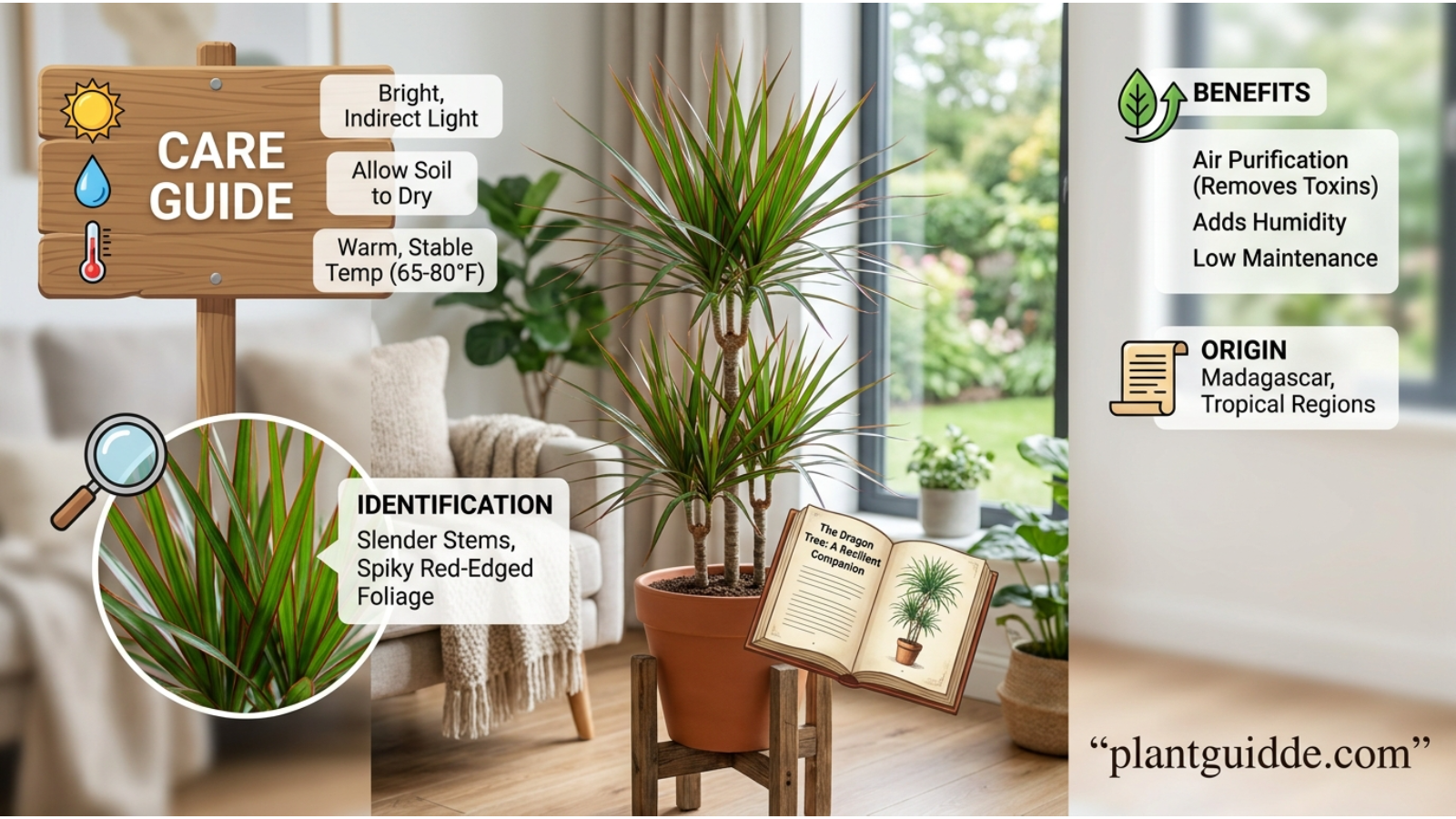
Dragon Plant Care Requirements at a Glance
A healthy dragon plant does not need a complicated routine. Its main requirements are:
- Light: Bright, indirect light is ideal.
- Water: Water thoroughly, then allow the soil to partially dry before watering again.
- Soil: Use a loose, well-draining potting mix.
- Temperature: Keep it warm and away from cold drafts.
- Humidity: Average indoor humidity is often acceptable, although moderate humidity can improve appearance.
- Fertilizer: Feed moderately during active growth.
- Pruning: Remove damaged foliage and cut back stems when necessary to control height.
- Pot: Always use drainage holes.
- Water quality: Filtered or rainwater may be preferable where tap water is hard or high in fluoride.
The biggest mistake is treating all of these requirements separately. They interact.
For example, a plant in low light uses water more slowly than one growing in brighter conditions. If you continue watering it on the same schedule, the soil may remain wet for too long.
How Much Light Does a Dragon Plant Need?
Dragon plants generally perform best in bright, indirect light. An east- or west-facing window can work well when the plant is protected from intense direct sunlight, while a bright south-facing location may require a sheer curtain or some distance from the glass.
What good light looks like
Place your dragon plant where:
- The room is bright during the day.
- Natural light reaches the plant without intense midday sun burning the leaves.
- The plant is not hidden deep inside a dark corner.
- Variegated varieties receive enough light to maintain their coloring.
Dragon plants can tolerate lower light than many demanding tropical plants, but tolerance should not be confused with optimum growth.
Signs of insufficient light
You may notice:
- Very slow growth
- Long spaces between leaves
- Smaller new leaves
- Weak or stretched growth
- Loss of strong variegation in some cultivars
- Soil staying wet for unusually long periods
Signs of excessive direct light
Look for:
- Bleached-looking patches
- Dry brown areas on leaves
- Scorched foliage
- Sudden fading after moving the plant into stronger sunlight
Expert tip: If your dragon plant is struggling, check its light before immediately changing its fertilizer or watering routine. Light determines how actively the plant grows and how quickly it uses available water.
Dragon Plant Watering: How Often Should You Water?
There is no universally correct watering schedule for a dragon plant.
Instead of watering every seven days, check the soil.
Allow the upper portion of the potting mix to dry somewhat before watering again. When it is time to water, soak the soil thoroughly enough that excess water drains from the bottom of the container.
Then empty any standing water from the saucer.
A practical watering method
- Check the soil with your finger or a moisture meter.
- If the upper layer is still noticeably wet, wait.
- When the soil has dried sufficiently, water thoroughly.
- Allow excess water to drain completely.
- Do not leave the pot sitting in water.
- Check the soil again before the next watering.
This method works better than following a fixed calendar because indoor conditions change throughout the year.
Why overwatering is a common problem
Beginners sometimes interpret drooping leaves as a signal that a plant needs more water. With dracaenas, that assumption can be dangerous.
If the roots remain surrounded by saturated soil, oxygen availability around the root system decreases. Continued overwatering can eventually lead to root problems.
A plant can therefore look thirsty while actually suffering from excessive moisture.
Why underwatering also causes problems
If the plant repeatedly becomes extremely dry, leaves may:
- Develop brown edges
- Curl
- Become crispy
- Droop
- Drop prematurely
The goal is consistent moisture management, not keeping the soil permanently wet or allowing the plant to become bone dry for long periods.
What Water Is Best for a Dragon Plant?
Water quality is an often-overlooked part of dragon plant care.
The RHS notes that dracaenas can be sensitive to fluoride in tap water and recommends rainwater or filtered water where possible. Hard tap water can also affect the growing medium over time.
If your dragon plant repeatedly develops brown tips despite otherwise good care, consider your water quality as one possible factor.
You do not necessarily need expensive bottled water.
Depending on your local water supply, options may include:
- Filtered tap water
- Rainwater
- A suitable low-fluoride water source
Avoid changing everything at once. If the plant has brown tips, first check light, watering, drainage, humidity, and water quality before assuming fertilizer is the problem.
Best Soil for Dragon Plant Care
Dragon plants need a growing medium that holds some moisture but does not remain saturated.
A practical mix should be:
- Well-draining
- Airy
- Slightly moisture-retentive
- Structurally stable
- Appropriate for indoor container plants
The RHS recommends a peat-free, loam-based compost for Dracaena marginata and notes that dracaenas prefer slightly acidic conditions.
For a simple home mixture, you can combine a quality indoor potting mix with a drainage-improving material such as perlite or pumice.
The container matters too
Even excellent soil cannot compensate for a pot without drainage.
Choose a container with drainage holes at the bottom. Decorative cachepots can still be used, but the plant’s actual growing pot should allow excess water to escape.
Common mistake: Putting stones or gravel at the bottom of a poorly draining pot does not turn it into a well-draining container. Proper drainage comes primarily from the container design and the physical properties of the growing medium.
Temperature and Humidity
Dragon plants are tropical or subtropical plants and generally prefer warm, stable indoor conditions.
The RHS recommends keeping dracaenas around 18–30°C (65–86°F) for best growth and advises avoiding cold drafts and hot radiators.
Protect your plant from temperature extremes
Avoid placing it directly beside:
- Air-conditioning vents
- Frequently opened cold windows
- Exterior doors
- Heaters
- Radiators
- Strong heating or cooling sources
A stable room is usually better than a location that repeatedly swings between hot and cold.
Does a dragon plant need high humidity?
Dragon plants appreciate humidity, but you do not necessarily need to turn your home into a tropical greenhouse.
If your indoor air is very dry, you can improve the environment by:
- Grouping plants together
- Using a humidifier
- Keeping the plant away from heating vents
- Monitoring the plant for dry leaf edges
The RHS also suggests grouping plants or using a moist-gravel tray to increase humidity around dracaenas.
Humidity alone, however, will not fix poor watering or root problems.
How to Fertilize a Dragon Plant
Dragon plants do not need aggressive feeding.
During active growth, a balanced houseplant fertilizer used according to its label can provide nutrients for continued growth. The RHS recommends regular balanced liquid feeding for certain Dracaena marginata cultivars during the growing season.
Avoid overfertilizing
More fertilizer does not automatically mean more growth.
Excess fertilizer can contribute to salt accumulation in the growing medium and may damage roots or leaf margins.
A better approach is:
- Water appropriately.
- Maintain suitable light.
- Fertilize during active growth.
- Follow the product’s dilution instructions.
- Reduce feeding when growth naturally slows.
If your plant is already stressed, correct environmental problems before increasing fertilizer.
How to Prune a Dragon Plant
Pruning is one of the easiest ways to manage an overgrown dragon plant.
As a dragon plant grows taller, its stem may become bare below the leaf canopy. Cutting back the stem can encourage new shoots below the cut and help create a more branched appearance.
To prune a dragon plant
- Use clean, sharp pruning shears.
- Decide how much height you want to remove.
- Make a clean cut through the cane.
- Keep the plant in suitable light afterward.
- Be patient while new growth develops.
You can also remove individual yellow, brown, or badly damaged leaves.
Do not remove healthy green foliage simply because an older leaf is slightly less attractive. Every healthy leaf contributes to photosynthesis.
Repotting a Dragon Plant
Dragon plants are not plants that need constant repotting.
Consider repotting when:
- Roots are filling the container heavily.
- Water runs through unusually quickly because the root mass has become dense.
- The plant repeatedly dries out much faster than before.
- The pot is physically unstable.
- The existing soil has degraded significantly.
Choose a new pot only moderately larger than the current one.
A dramatically oversized pot can hold more wet soil around a relatively small root system, increasing the risk of prolonged moisture.
After repotting
Do not immediately compensate for transplant stress with excessive watering or fertilizer.
Give the plant stable conditions and allow the root system time to adjust.
Why Is My Dragon Plant Getting Brown Tips?
Brown leaf tips are among the most common dragon plant problems.
They can result from several factors, including:
- Dry indoor air
- Inconsistent watering
- Excess fertilizer or salt buildup
- Fluoride-sensitive foliage
- Root stress
- Environmental changes
- Excessive direct sunlight
The important point is that brown tips are a symptom, not a diagnosis.
What to check first
If only the tips are brown but new growth looks healthy, inspect:
- Watering consistency
- Water quality
- Humidity
- Fertilizer use
- Light intensity
- Root and soil condition
Do not automatically increase watering simply because you see brown leaf tips.
Why Are Dragon Plant Leaves Turning Yellow?
Yellow leaves can be caused by normal aging or environmental stress.
An occasional older leaf turning yellow is not necessarily alarming.
The concern is when several leaves begin yellowing rapidly.
Possible causes include:
| Symptom | Possible cause | What to check |
|---|---|---|
| Lower older leaves yellow gradually | Natural aging | Check whether new growth is healthy |
| Several leaves yellow + wet soil | Overwatering | Check drainage and soil moisture |
| Yellowing + weak growth | Insufficient light | Move toward brighter indirect light |
| Yellowing after major environmental change | Stress | Stabilize conditions |
| Yellowing + root problems | Excess moisture/root stress | Inspect roots and potting mix |
Avoid treating yellow leaves with fertilizer before determining the cause.
Why Are My Dragon Plant Leaves Curling?
Curling leaves often indicate that the plant is under environmental stress.
Possible causes include:
- Soil becoming excessively dry
- Low humidity
- Excessive heat
- Strong direct sunlight
- Root problems
- Sudden changes in location
Check the soil first.
If it is extremely dry, provide a thorough watering and then return to a more consistent routine. If the soil is already wet, adding more water is unlikely to solve the problem.
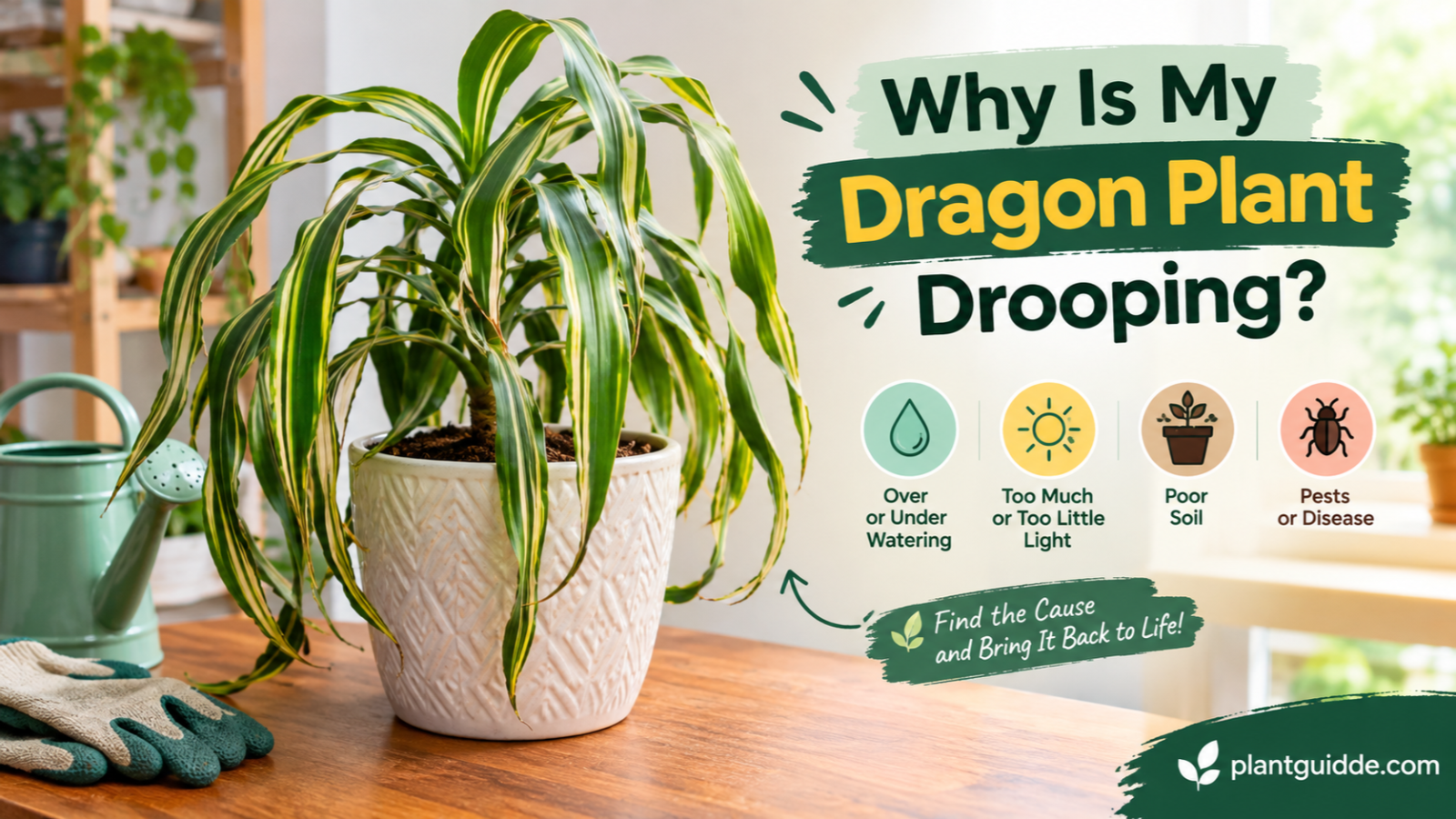
Why Is My Dragon Plant Drooping?
Drooping does not automatically mean thirst.
Check the entire growing environment.
If the soil is very dry
The plant may need water.
If the soil is wet
Investigate:
- Poor drainage
- Overwatering
- A container that is too large
- Low light combined with frequent watering
- Root stress
If the plant was recently moved
A sudden change in light, temperature, humidity, or watering conditions can cause temporary stress.
Give it time to adjust rather than repeatedly moving it around.
Dragon Plant Leaves Turning Brown All Over
When large sections of foliage become brown or crispy, look for a stronger environmental problem.
Possible causes include:
- Prolonged drought
- Severe direct sunlight
- Very dry air
- Cold damage
- Root damage
- Poor water quality
- Fertilizer or salt accumulation
Look at where the damage begins.
Brown tips concentrated around leaf edges suggest a different problem from large bleached patches on the side facing a sunny window.
The location of the damage can therefore be as informative as the color itself.
Common Dragon Plant Care Mistakes
1. Watering on a fixed schedule
“Water every Sunday” sounds convenient but ignores changes in temperature, light, season, pot size, and soil moisture.
Better approach: Check the soil before watering.
2. Keeping the soil constantly wet
Dragon plants need moisture, but their roots also need oxygen.
Better approach: Use a well-draining mix and allow the soil to partially dry between waterings.
3. Putting the plant in harsh sunlight
A bright window can be excellent, but intense direct summer sun through glass can scorch foliage.
Better approach: Use bright filtered or indirect light.
4. Keeping it in a dark corner
Dracaenas tolerate relatively low light, but prolonged darkness can lead to weak growth.
Better approach: Give the plant the brightest suitable indirect light available.
5. Ignoring water quality
If brown tips persist despite otherwise good care, water quality deserves consideration.
Better approach: Consider filtered or rainwater where appropriate.
6. Using an oversized pot
A huge pot can retain moisture around the roots for too long.
Better approach: Increase pot size gradually.
7. Fertilizing a stressed plant
Adding fertilizer does not correct poor light, damaged roots, or watering problems.
Better approach: Fix the environment first.
A Simple Weekly Dragon Plant Care Routine
You do not need to spend hours caring for a dragon plant.
Once a week, perform a quick inspection.
Check the soil
Is it still wet, moderately dry, or very dry?
Inspect the leaves
Look for:
- Brown tips
- Yellowing
- Curling
- Pests
- New growth
- Unusual spots
Check the location
Has the plant been exposed to:
- Stronger sunlight?
- A heater?
- An air conditioner?
- A cold draft?
Rotate the pot if needed
If growth is strongly leaning toward the window, rotate the container periodically so the plant develops more evenly.
Check for pests
Inspect leaf surfaces and stems, particularly if the plant has been stressed.
This five-minute inspection is often more useful than following a complicated care schedule.
Dragon Plant Care Through the Seasons
Spring
As light levels increase, growth may become more active.
This is a good period to:
- Resume or increase feeding gradually
- Prune if needed
- Repot if the plant has outgrown its container
- Adjust watering as the soil begins drying faster
Summer
Bright light and warmer temperatures can increase water use.
Monitor the soil rather than automatically increasing watering.
Protect the plant from intense direct sunlight and hot glass.
Autumn
As daylight decreases, the plant may use water more slowly.
This is when a summer watering routine can become excessive.
Check the soil more carefully before watering.
Winter
Growth may slow considerably indoors.
Keep the plant away from cold drafts and heating vents. Avoid compensating for lower light by keeping the soil constantly wet.
How to Propagate a Dragon Plant
Dragon plants can be propagated from stem or cane cuttings.
A basic method is:
- Select a healthy stem.
- Cut a section using clean shears.
- Allow the cutting to be prepared appropriately for propagation.
- Place it in a suitable propagation medium.
- Keep it warm with appropriate moisture.
- Provide bright, indirect light.
- Wait for rooting and new growth.
Propagation can take time, so avoid repeatedly disturbing the cutting to check for roots.
The RHS lists stem cuttings and leafless stem sections among propagation methods for Dracaena marginata.
When Should You Replace Rather Than Rescue a Dragon Plant?
Most struggling dragon plants are worth attempting to save if the main stem and some healthy roots remain viable.
However, severe root deterioration, extensive stem damage, or prolonged environmental stress can make recovery difficult.
Before discarding a struggling plant, inspect:
- The roots
- The base of the stems
- New growth
- Soil condition
- Pest activity
If part of the plant remains healthy, pruning and propagation may provide a second chance.
Are Dragon Plants Toxic to Pets?
Yes. Dracaena species are considered toxic to cats and dogs.
The ASPCA lists dracaena as toxic to dogs and cats, with saponins identified as the toxic principle for Dracaena generally. Reported signs can include vomiting, depression, loss of appetite, excessive drooling, weakness, and lack of coordination.
The ASPCA specifically lists Dracaena marginata—the Madagascar dragon tree—as toxic to cats and dogs.
If you have pets that chew plants, keep your dragon plant somewhere inaccessible. If ingestion occurs, contact a veterinarian or an appropriate animal poison-control service.
This is an important consideration before choosing a dragon plant for a pet-friendly home.
Quick Dragon Plant Troubleshooting Guide
| Problem | Most useful first check | What to do |
|---|---|---|
| Brown leaf tips | Watering and water quality | Improve consistency and consider filtered water |
| Yellow leaves | Soil moisture | Check for prolonged wetness |
| Curling leaves | Moisture and temperature | Check soil and environmental stress |
| Drooping | Soil condition | Determine whether it is too dry or too wet |
| Slow growth | Light | Move to brighter indirect light |
| Scorched patches | Direct sunlight | Reduce harsh sun exposure |
| Leaf drop | Environmental change | Stabilize temperature, light, and watering |
| Mushy roots | Excess moisture | Improve drainage and address root damage |
| Pale variegation | Insufficient light | Increase suitable indirect light |
| Tiny insects/webbing | Pest infestation | Inspect closely and isolate affected plant |
How to Tell Whether Your Dragon Plant Is Actually Healthy
A healthy dragon plant does not need to have absolutely perfect leaves.
Look instead for a combination of positive signs:
- New leaves emerging normally
- Firm stems
- Healthy green foliage
- No rapidly spreading discoloration
- Soil drying at a reasonable rate
- No persistent foul smell from the pot
- Stable growth
- No obvious pest infestation
A few old brown tips do not automatically mean the plant is dying.
The newest growth is often more informative than an old damaged leaf. If fresh leaves are emerging normally and the plant is stable, your care routine may already be working.
Expert Tips That Make Dragon Plant Care Easier
Match watering to light
A plant in a bright room may dry faster than the same plant in a dim corner. Your watering routine should respond to that difference.
Treat symptoms as clues
Brown tips, yellow leaves, and curling foliage are not diagnoses. Look at the whole environment.
Change one major variable at a time
If you simultaneously move the plant, repot it, fertilize it, increase humidity, and change the water, you will not know which change helped or harmed it.
Keep the environment stable
Dragon plants generally respond better to consistent conditions than constant adjustments.
Use the newest growth as your progress indicator
Old damage will not disappear. Focus on whether newly emerging leaves are healthier.
Do not confuse tolerance with preference
A dragon plant may survive low light, occasional dryness, or average humidity. That does not mean those conditions will produce its best growth.
FAQs:
How often should I water a dragon plant?
Water when the upper portion of the soil has dried sufficiently rather than following a fixed weekly schedule. Water thoroughly and allow excess water to drain completely.
Does a dragon plant need direct sunlight?
No. Bright, indirect light is generally preferable. Strong direct sunlight, especially through hot glass, can scorch the foliage.
Why are my dragon plant leaves turning brown?
Brown tips can result from inconsistent watering, dry conditions, water-quality issues, fertilizer or salt buildup, root stress, or excessive sunlight. Examine the entire growing environment before changing your watering routine.
Can a dragon plant survive in low light?
Yes, many dracaenas tolerate relatively low indoor light, but growth may become slower and weaker. Brighter indirect light is generally better for sustained growth and attractive foliage.
Should I mist my dragon plant?
Occasional misting may increase moisture around the foliage temporarily, but it is not a substitute for appropriate watering, humidity management, or good airflow. A humidifier is generally more consistent when indoor air is very dry.
What is the best soil for a dragon plant?
Use a loose, well-draining indoor potting medium that does not remain saturated. Slightly acidic conditions are suitable for dracaenas.
Why is my dragon plant dropping leaves?
Leaf drop can result from natural aging, watering problems, temperature stress, insufficient light, root issues, or sudden environmental changes. Check the soil and recent changes to the plant’s location first.
Can I cut the top off my dragon plant?
Yes. Pruning the cane can help control height and may encourage new shoots below the cut. The RHS notes that weak stems of Dracaena marginata can be shortened substantially when needed.
Are dragon plants safe for cats and dogs?
No. Dracaena plants, including Dracaena marginata, are toxic to cats and dogs if eaten.
How do I make my dragon plant grow faster?
Give it appropriate bright indirect light, consistent moisture without waterlogging, suitable warmth, healthy roots, and moderate nutrition during active growth. Increasing fertilizer alone will not make a poorly lit or overwatered plant grow faster.
Final Takeaway
Successful dragon plant care is less about following a perfect schedule and more about understanding the plant’s environment.
Give your Dracaena bright indirect light, well-draining soil, careful watering, warmth, and stable conditions. Let the soil partially dry rather than keeping it constantly wet, and pay attention to changes in the newest growth.
When problems appear, resist the temptation to treat every brown or yellow leaf the same way. Check the soil, light, temperature, water quality, drainage, and recent environmental changes first.
That diagnostic approach is what turns dragon plant care from guesswork into a repeatable routine, and it is usually the difference between a plant that merely survives indoors and one that continues producing strong, attractive growth for years.

Asad Mumtaz is a dedicated plant enthusiast and gardening writer with a passion for helping people care for their plants successfully. He specializes in plant care guides, indoor gardening, and practical growing tips for all skill levels. His content focuses on making gardening simple, enjoyable, and rewarding. Through his work, Asad shares reliable advice to help readers create thriving green spaces.