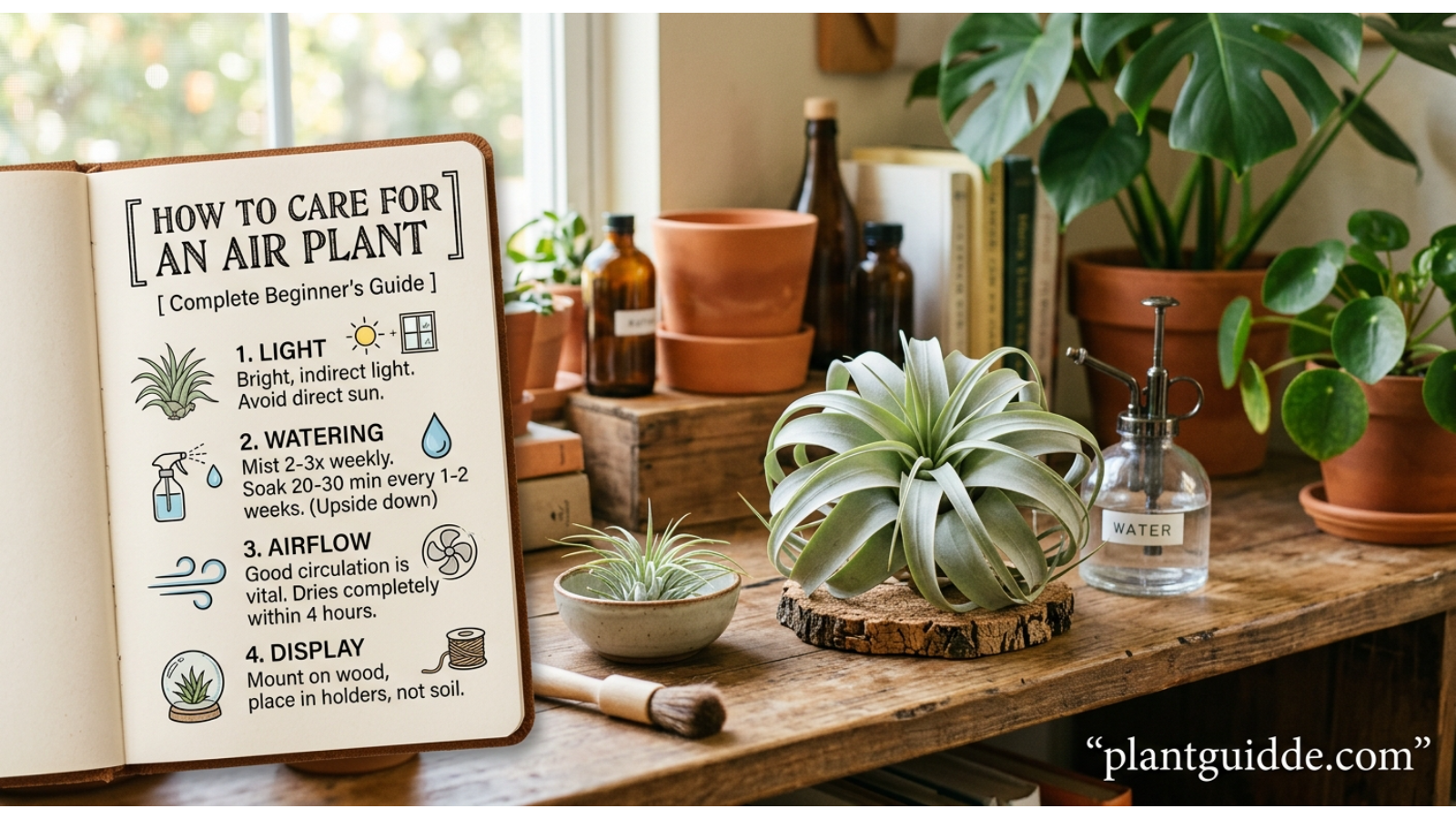
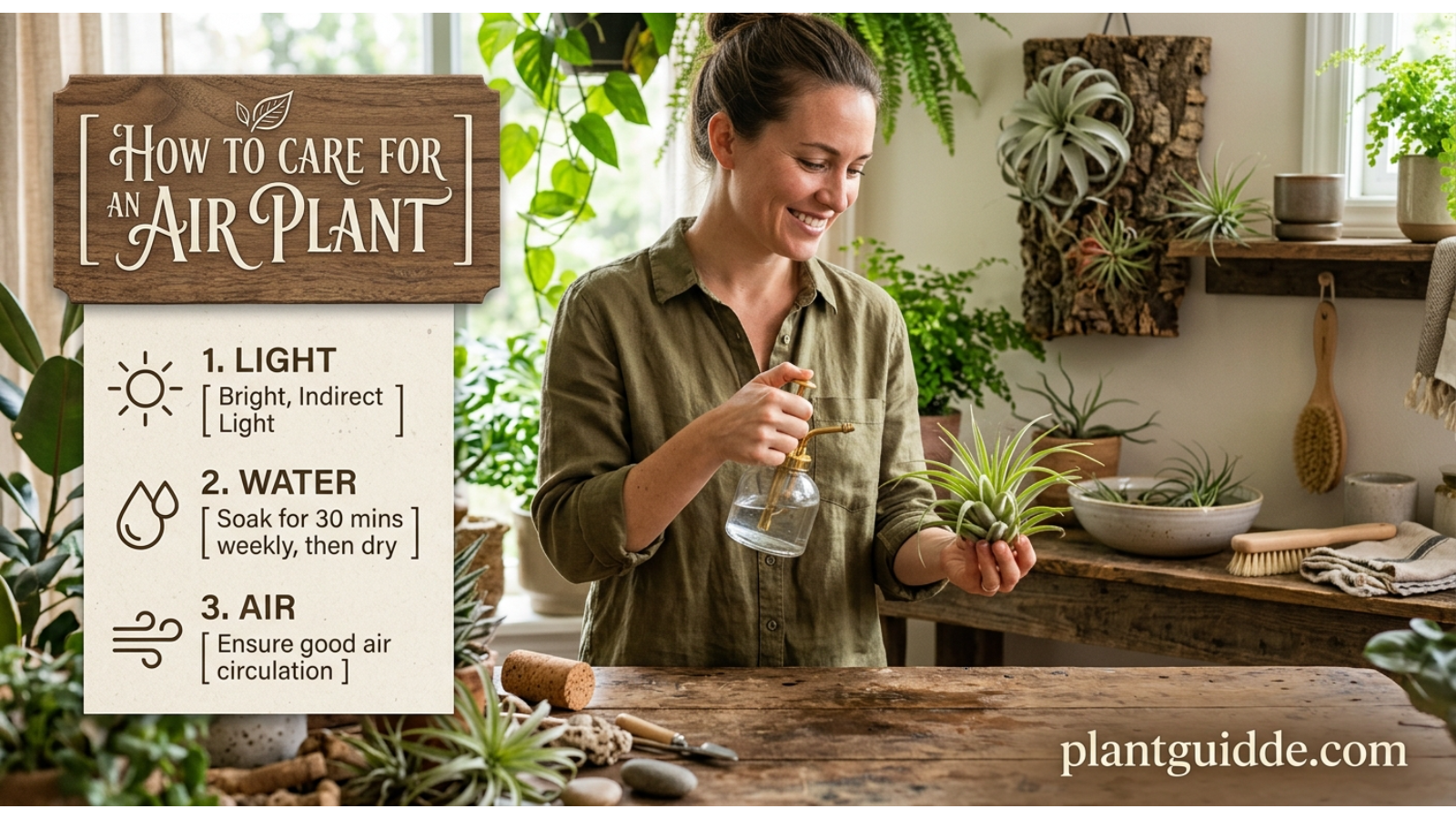
To care for an air plant, give it bright, indirect light, good air circulation, and regular watering. Soak or thoroughly rinse the plant about once a week, then shake out excess water and let it dry completely upside down or on its side. Keep it in a warm, well-ventilated location and avoid placing it in standing water or dark, humid corners.
Air plants are often marketed as plants that need no soil and almost no maintenance. The first part is true; the second can be misleading. Although air plants do not need a potting mix, they still depend on the right balance of light, water, humidity, temperature, and airflow.
Learning how to care for an air plant is therefore less about following a complicated schedule and more about understanding what the plant is telling you. Once you know how healthy leaves, dry roots, soft bases, and changing color differ, Tillandsia care becomes much easier.
Quick Answer
To care for an air plant, give it bright, indirect light, good air circulation, and regular watering. Soak or thoroughly rinse the plant about once a week, then shake out excess water and let it dry completely upside down or on its side. Keep it in a warm, well-ventilated location and avoid placing it in standing water or dark, humid corners.
What Is an Air Plant?
An air plant is a member of the Tillandsia genus in the bromeliad family. Unlike conventional houseplants, most Tillandsia species do not grow in soil. In nature, many attach themselves to tree branches, rocks, or other surfaces without taking nutrients directly from those structures.
Their roots are primarily used for anchoring rather than functioning like the roots of a typical potted plant. Specialized structures called trichomes cover the leaves and help many Tillandsia species absorb moisture and nutrients from their surroundings.
This is why an air plant can survive without soil, but it does not mean the plant lives on air alone. It still needs:
- Bright, suitable light
- Water
- Air circulation
- Appropriate temperatures
- Occasional nutrients during active growth
Different Tillandsia species can have very different needs. A thick, silvery xeric species may tolerate brighter and drier conditions than a softer green species adapted to more humid environments.
How to Care for an Air Plant
Successful air plant care comes down to five basic factors: light, watering, airflow, temperature, and the way the plant dries after watering.
1. Give Your Air Plant Bright, Indirect Light
Light is one of the most important parts of air plant care. A plant may survive for some time in a dim room, but low light can eventually contribute to weak growth and poor overall condition.
A bright room near an east- or west-facing window is often a good starting point. A south-facing window can also work if the plant is protected from intense direct afternoon sun.
Good locations include:
- Near a bright window
- On a bright shelf with filtered sunlight
- In a well-lit bathroom with adequate airflow
- Under a suitable grow light
- In a room receiving several hours of bright ambient light
Be careful with strong direct sunlight through glass. Some Tillandsia can handle substantial sun, but an indoor plant suddenly exposed to intense afternoon rays can develop scorched or bleached-looking foliage.
Practical test: If the location feels extremely hot against your hand during the strongest part of the day, it may be too intense for a delicate air plant.
Image Suggestion: A labeled visual showing ideal bright indirect light versus harsh direct sunlight for Tillandsia.
2. Water Thoroughly Rather Than Lightly Misting
Watering is where many air plant owners make mistakes.
A quick mist can make the leaves look wet without providing enough moisture, particularly in a dry indoor environment. For many commonly grown Tillandsia, periodically soaking or thoroughly rinsing the plant is more effective than relying exclusively on misting.
For a typical indoor air plant:
- Fill a clean container with room-temperature water.
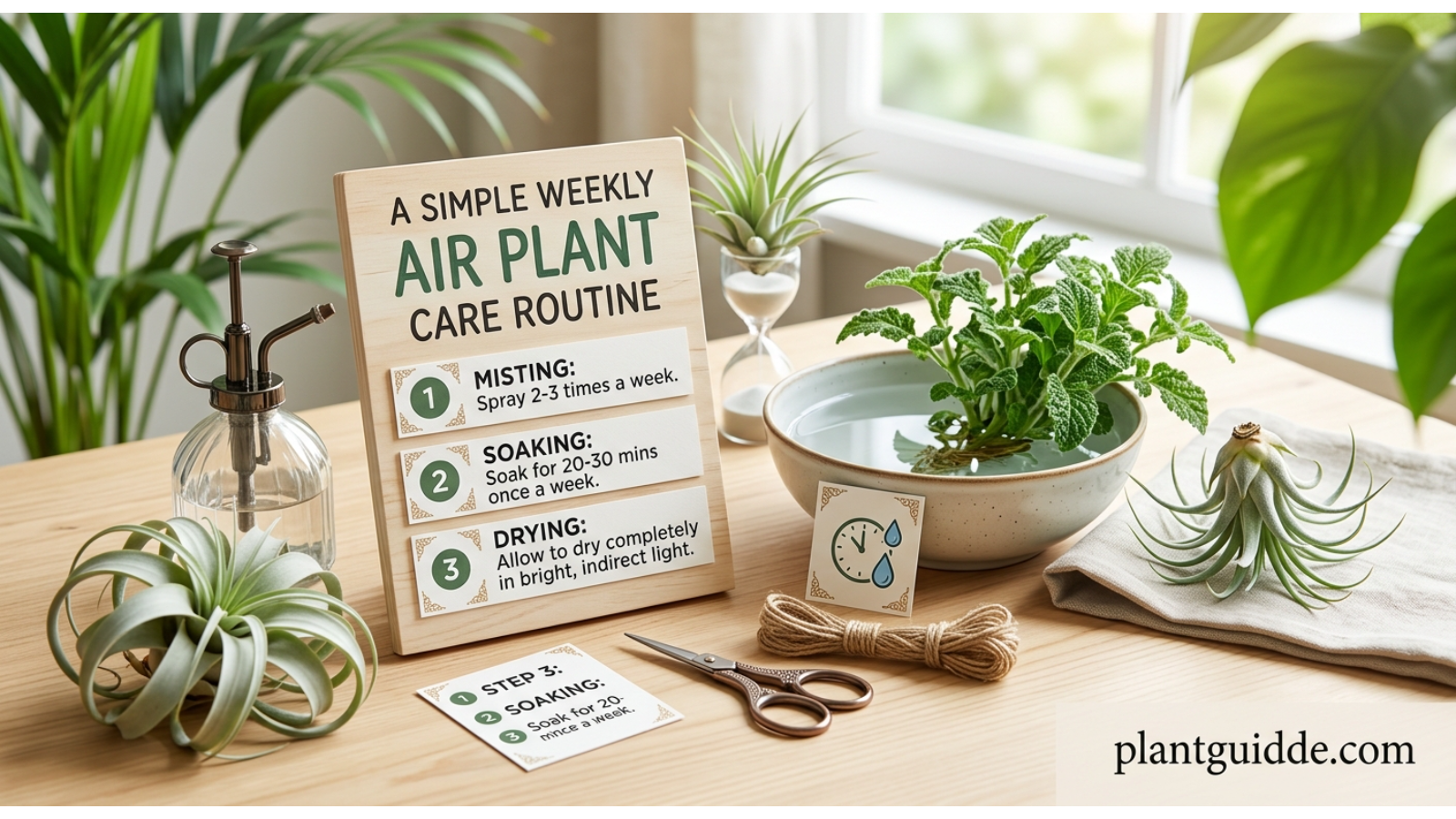
- Place the plant in the water and allow it to soak for roughly 20–30 minutes.
- Remove it and gently shake off excess water.
- Turn it upside down or place it on its side so water cannot collect in the center.
- Put it somewhere with good airflow.
- Allow it to dry completely before returning it to an enclosed display.
Not every Tillandsia needs exactly the same watering routine. Species, temperature, humidity, light, airflow, and season all affect how quickly the plant loses moisture.
A plant in a warm, bright, dry room may need water more frequently than one in a cooler, humid environment.
3. Let the Plant Dry Completely
This is one of the most overlooked parts of air plant care.
Water itself is not usually the problem. The problem is remaining wet for too long.
Air plants can develop rot when moisture remains trapped around the base or inside the plant for extended periods. This is especially likely when the plant is placed back into a decorative container immediately after watering.
After watering, gently shake the plant to remove trapped droplets. Position it so air can reach the entire plant.
A good rule is:
Water thoroughly, then dry thoroughly.
Do not leave an air plant sitting in a bowl of water, and avoid deep containers where the lower part of the plant remains damp.
4. Provide Good Air Circulation
Air circulation is essential because it helps the plant dry after watering and prevents moisture from remaining trapped around the leaves and base.
You do not need a powerful fan blowing directly onto the plant. Normal indoor air movement is often enough.
Good airflow can come from:
- An open room
- A ceiling fan
- A nearby oscillating fan
- An open window when temperatures are appropriate
- Spacing between plants rather than crowding them together
An enclosed glass terrarium may look attractive, but it can create a poor environment if ventilation is limited. If you keep Tillandsia in a terrarium, make sure it has sufficient ventilation and that the plant can dry quickly after watering.
5. Keep Temperatures Comfortable
Most commonly cultivated air plants prefer normal household temperatures rather than extreme heat or cold.
A comfortable range is generally around 60–80°F (16–27°C), although individual species can tolerate different conditions.
Protect air plants from:
- Freezing temperatures
- Frost
- Hot air directly from heaters
- Strong blasts from air-conditioning vents
- Very hot enclosed spaces
- Sudden temperature changes
If you move an air plant outdoors during warm weather, introduce it gradually to stronger light rather than placing it immediately in intense midday sun.
How Often Should You Water an Air Plant?
There is no single watering schedule that works for every air plant.
For many indoor Tillandsia, about once a week is a useful starting point. In particularly dry or hot conditions, watering may need to happen more often. In cool, humid conditions, the interval may be longer.
Instead of relying entirely on the calendar, examine the plant.
Signs that an air plant may need more moisture include:
- Leaves becoming unusually curled or limp
- A dry, stressed appearance
- Increasingly crisp foliage
- Reduced firmness compared with its normal condition
However, avoid assuming that every curled leaf means the plant is thirsty. Some Tillandsia naturally curl their leaves, particularly species adapted to drier conditions.
The better approach is to combine appearance with environmental conditions and your recent watering history.
Can You Mist an Air Plant?
Yes, misting can be useful, but it should not automatically replace thorough watering.
Misting may provide supplemental moisture in certain environments, especially when humidity is low. However, a brief spray may evaporate quickly without adequately hydrating the plant.
If you mist frequently, make sure the plant still dries properly afterward. Constantly keeping the foliage damp without sufficient airflow can create conditions that encourage rot.
For most indoor growers, thorough watering followed by complete drying is a more dependable foundation than frequent light misting alone.
What Type of Water Is Best for Air Plants?
Air plants can be sensitive to water quality, particularly when water contains substantial amounts of minerals or chemicals.
If your tap water is relatively soft and suitable for houseplants, it may work well. If you notice mineral deposits accumulating on the leaves, consider alternatives such as:
- Filtered water
- Rainwater collected safely
- Spring water with suitable mineral content
Avoid water that is extremely cold or hot. Room-temperature water is a safer choice.
When using rainwater, collect it from a clean system rather than from surfaces contaminated with chemicals, dirt, or bird droppings.
Do Air Plants Need Fertilizer?
Air plants can benefit from occasional fertilization, particularly when they are actively growing.
Use a fertilizer specifically formulated for bromeliads or Tillandsia when possible, and follow the product’s dilution instructions. A weak solution is generally preferable to repeatedly applying a concentrated fertilizer.
Fertilizing is not a substitute for proper light and watering. If an air plant is struggling because its base is rotting or it is severely dehydrated, fertilizer will not fix the underlying problem.
For beginners, focus first on establishing healthy light, watering, and airflow. Fertilizer is an optional improvement rather than the foundation of successful air plant care.
Do Air Plants Need Humidity?
Moderate humidity can be beneficial, but humidity alone does not keep an air plant healthy.
A bathroom may seem like the perfect location because of its humidity, but only if it also receives enough light and has reasonable ventilation.
Very dry indoor air can cause plants to lose moisture quickly. On the other hand, high humidity combined with stagnant air can slow drying and increase the risk of rot.
The goal is not simply maximum humidity. It is a balanced environment where the plant receives moisture and can dry efficiently afterward.
Why Is My Air Plant Turning Brown?
Brown leaves can have several causes, so the entire plant should be examined before changing its care routine.
Possible causes include:
- Dehydration
- Excessive direct sunlight
- Very dry conditions
- Physical damage
- Natural aging of individual leaves
- Prolonged moisture problems
If the tips are becoming dry and crispy in a bright, hot location, excessive sunlight or rapid moisture loss may be involved.
If the plant has a dark, soft, or collapsing base, the situation is more concerning. This can indicate rot rather than simple dehydration.
Do not automatically respond to brown leaves by watering more frequently. First determine whether the plant is actually dry or whether moisture has been lingering around the base.
Why Is My Air Plant Turning Green?
Some silvery air plants can appear greener when they are wet because water temporarily changes the appearance of their leaf surfaces.
This does not necessarily indicate a problem.
The important question is whether the plant returns to its normal appearance after drying. Many Tillandsia naturally have varying amounts of green, gray, silver, or reddish coloration depending on species, growing conditions, and developmental stage.
Why Is My Air Plant Turning Red?
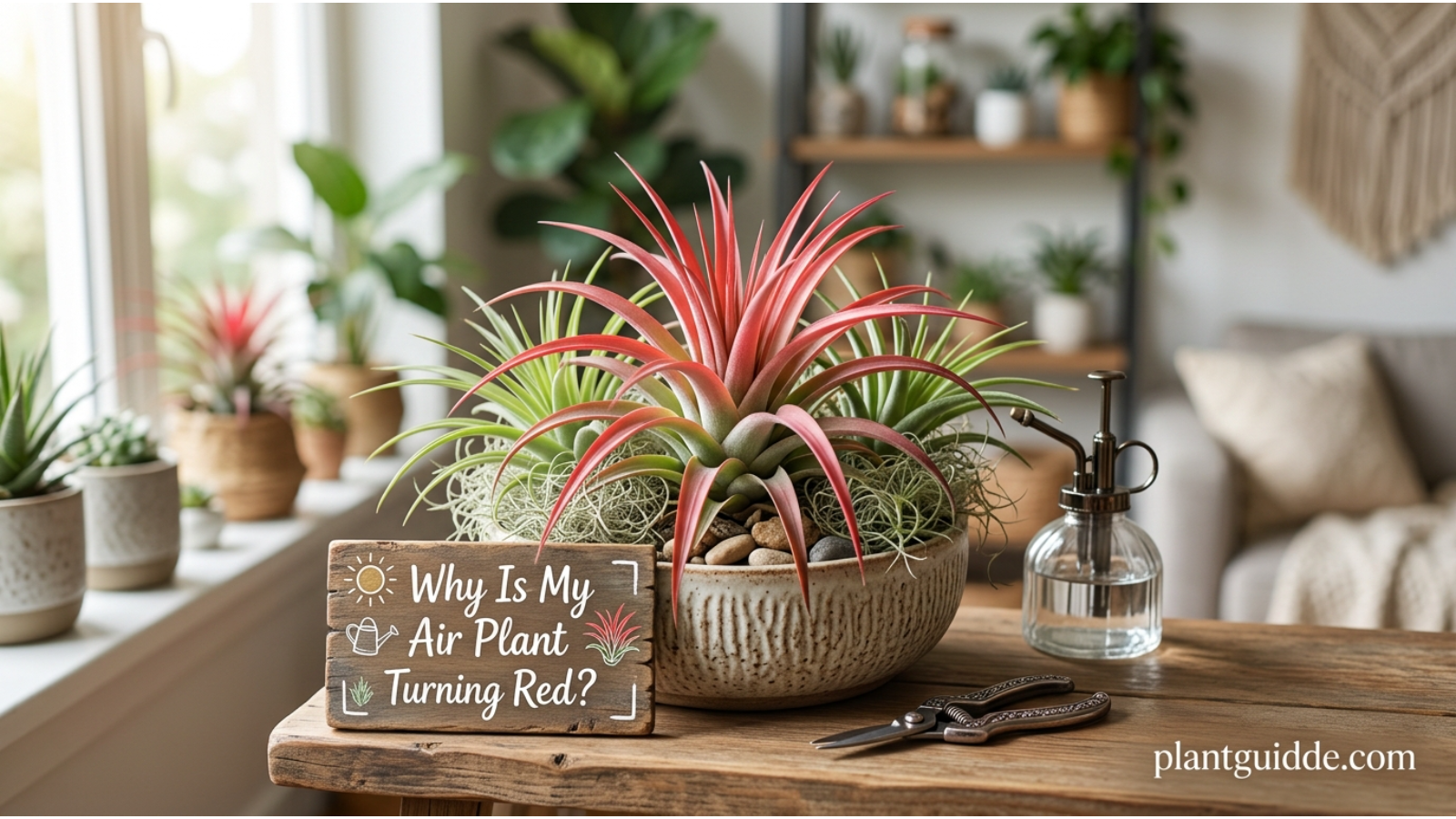
Red, pink, purple, or other color changes can occur naturally in some Tillandsia species.
Color can be influenced by:
- Species genetics
- Stronger light
- Flowering
- Stress
- Age
- Seasonal conditions
Some air plants develop striking coloration before flowering. Therefore, a color change is not automatically a sign that the plant is dying.
However, if the color change occurs alongside a soft base, severe leaf loss, or a sudden collapse, investigate the plant’s watering and drying conditions.
Why Is My Air Plant Falling Apart?
A healthy air plant should generally feel firm rather than mushy.
If the base becomes soft, dark, or unstable and the leaves pull away easily, rot is a major possibility.
Rot is often associated with water remaining trapped in the plant, especially when there is inadequate airflow or the plant is stored upright immediately after watering.
If the damage is advanced and the central growth point has become soft, recovery may not be possible.
This is why drying technique matters just as much as watering itself.
How Do You Save an Overwatered Air Plant?
If you suspect an air plant has been overwatered, stop adding water and examine the base.
First:
- Remove it from any enclosed holder.
- Check whether the base feels firm or soft.
- Remove standing or trapped water.
- Place the plant somewhere warm with good airflow.
- Allow it to dry completely.
- Avoid watering again until you have assessed its condition.
If the base is already severely soft and the plant is separating from the center, the damage may be advanced.
A common mistake is trying to rescue a rotting air plant by giving it more water because the foliage looks dehydrated. Rot and dehydration can produce confusing symptoms, so the condition of the base is particularly important.
How Do You Know if an Air Plant Is Healthy?
Healthy appearance varies by species, but several signs are generally encouraging:
- Leaves feel reasonably firm
- The plant holds its natural shape
- New growth emerges from the center
- The base remains firm
- The foliage has normal species-specific coloration
- The plant dries within a reasonable period after watering
- There is no persistent foul smell or mushy tissue
Do not judge an air plant solely by whether its leaves are perfectly straight. Some species naturally have curling, twisting, or arching foliage.
Common Air Plant Care Mistakes
Keeping It in a Dark Room
No soil does not mean no light. Air plants still photosynthesize and need appropriate light to grow.
Watering Without Drying
This is one of the most serious mistakes. Repeatedly wetting a plant that cannot dry properly creates a much greater problem than occasional underwatering.
Relying Only on Misting
Light misting can evaporate quickly, particularly in heated or air-conditioned rooms. It may not provide enough hydration by itself.
Leaving Water in the Base
After soaking, trapped water should be removed. Position the plant so gravity and airflow can help it dry.
Putting It in a Sealed Terrarium
A decorative glass container may look attractive but can restrict airflow. If the plant remains wet for too long, the display becomes a liability rather than an advantage.
Moving It Into Strong Sun Too Quickly
A plant grown indoors can be damaged when suddenly exposed to intense sunlight. Increase exposure gradually.
Fertilizing Too Much
More fertilizer does not mean faster growth. Excessive fertilizer can damage plants, particularly when environmental conditions are already poor.
How to Display an Air Plant Safely
Air plants are unusually versatile for decorating because they do not require conventional pots.
You can display them on:
- Open shelves
- Decorative stands
- Cork
- Driftwood
- Wall-mounted holders
- Open ceramic containers
- Hanging displays
The most important consideration is not the decoration itself. Make sure the holder does not trap water against the plant.
Avoid adhesives or mounting methods that permanently cover large portions of the plant or interfere with watering and airflow.
If you attach an air plant to a piece of wood or another natural material, leave enough space around it for air movement and easy removal when watering.
Air Plant Care Indoors vs. Outdoors
Indoor conditions are often easier to control, particularly for beginners.
Indoors:
Focus on bright light, appropriate watering, and good airflow. Watch plants closely if the home has very dry heating or air-conditioning.
Outdoors:
Air plants may benefit from natural humidity and airflow, but outdoor light can be considerably stronger. Protect newly moved plants from sudden exposure to intense sunlight and bring them indoors when temperatures become unsuitable.
Outdoor plants can also be exposed to heavy rain, pests, and contaminants, so inspect them regularly.
Air Plant Care by Season
Spring and Summer
Plants generally receive more light and may dry more quickly. Check their condition more frequently and adjust watering according to the environment.
Fall and Winter
Indoor heating can create very dry air, while lower temperatures may slow drying and growth. Do not continue watering on autopilot if the plant is staying wet for much longer than normal.
The best seasonal adjustment is not necessarily to water dramatically more or less. Instead, monitor how quickly the plant dries and how its foliage responds.
Can Air Plants Grow Flowers?
Yes. Mature Tillandsia can produce flowers, and some species develop colorful bracts that are almost as striking as the flowers themselves.
Flowering is part of the plant’s natural reproductive cycle. After flowering, an air plant may produce offsets, often called pups.
The parent plant can gradually decline after flowering while the offsets continue the growth cycle. This is normal and should not automatically be interpreted as a care failure.
How to Propagate an Air Plant
Air plants commonly produce offsets around the base.
Wait until the pup is large enough to handle safely. In general, an offset that has reached a substantial portion of the mother’s size is easier to separate than a very small pup.
To separate it:
- Hold the mother plant gently near the base.
- Identify where the pup connects.
- Carefully pull or twist the pup away without crushing the leaves.
- If necessary, use a clean, sharp tool rather than forcing the connection.
- Treat the new plant as an independent Tillandsia.
Do not rush to remove every pup. Keeping offsets attached can create an attractive cluster and allows the plant to develop naturally.
A Simple Weekly Air Plant Care Routine
For a beginner, a simple routine is more useful than an elaborate schedule.
Once a week:
Inspect the foliage and base, then water thoroughly if the plant is ready.
Immediately afterward:
Shake out excess water and position the plant to dry completely.
Throughout the week:
Check light, temperature, airflow, and general appearance.
Once a month:
Look closely for pests, mineral buildup, damaged leaves, and changes in the base.
During seasonal changes:
Reassess the watering frequency rather than assuming the previous routine will remain correct.
This approach makes how to care for an air plant much easier because you respond to the plant and its environment rather than blindly following a calendar.
FAQs:
How often should I water an air plant?
For many indoor air plants, once a week is a reasonable starting point. Adjust according to species, temperature, humidity, light, and airflow. The plant should dry completely after watering.
Can an air plant live without soil?
Yes. Tillandsia are adapted to grow without conventional soil. Their roots mainly provide attachment, while specialized leaf structures help them absorb moisture and nutrients.
Should I soak my air plant?
Many common Tillandsia benefit from a thorough soak of around 20–30 minutes, followed by complete drying. However, species and growing conditions vary, so avoid treating every air plant identically.
Why is my air plant dying?
Common causes include inadequate light, dehydration, excessive direct sun, poor airflow, and especially prolonged moisture around the base. Examine the plant before changing its watering routine.
Can air plants live in a bathroom?
Yes, provided the bathroom receives sufficient light and has adequate ventilation. Humidity can be helpful, but a dark, constantly damp bathroom is not an ideal environment.
Conclusion
The secret to healthy air plant care is not keeping the plant constantly wet or creating an extremely humid environment. It is providing enough light, thorough hydration, complete drying, and consistent airflow.
Start with bright indirect light and weekly watering as a general baseline, then adjust according to how quickly your Tillandsia dries and how it responds. Most importantly, learn to distinguish normal species characteristics from warning signs such as a soft base, persistent moisture, or severe leaf damage.
Once you treat an air plant as a living plant rather than a decoration that simply happens to need no soil, caring for it becomes surprisingly straightforward.

Asad Mumtaz is a dedicated plant enthusiast and gardening writer with a passion for helping people care for their plants successfully. He specializes in plant care guides, indoor gardening, and practical growing tips for all skill levels. His content focuses on making gardening simple, enjoyable, and rewarding. Through his work, Asad shares reliable advice to help readers create thriving green spaces.