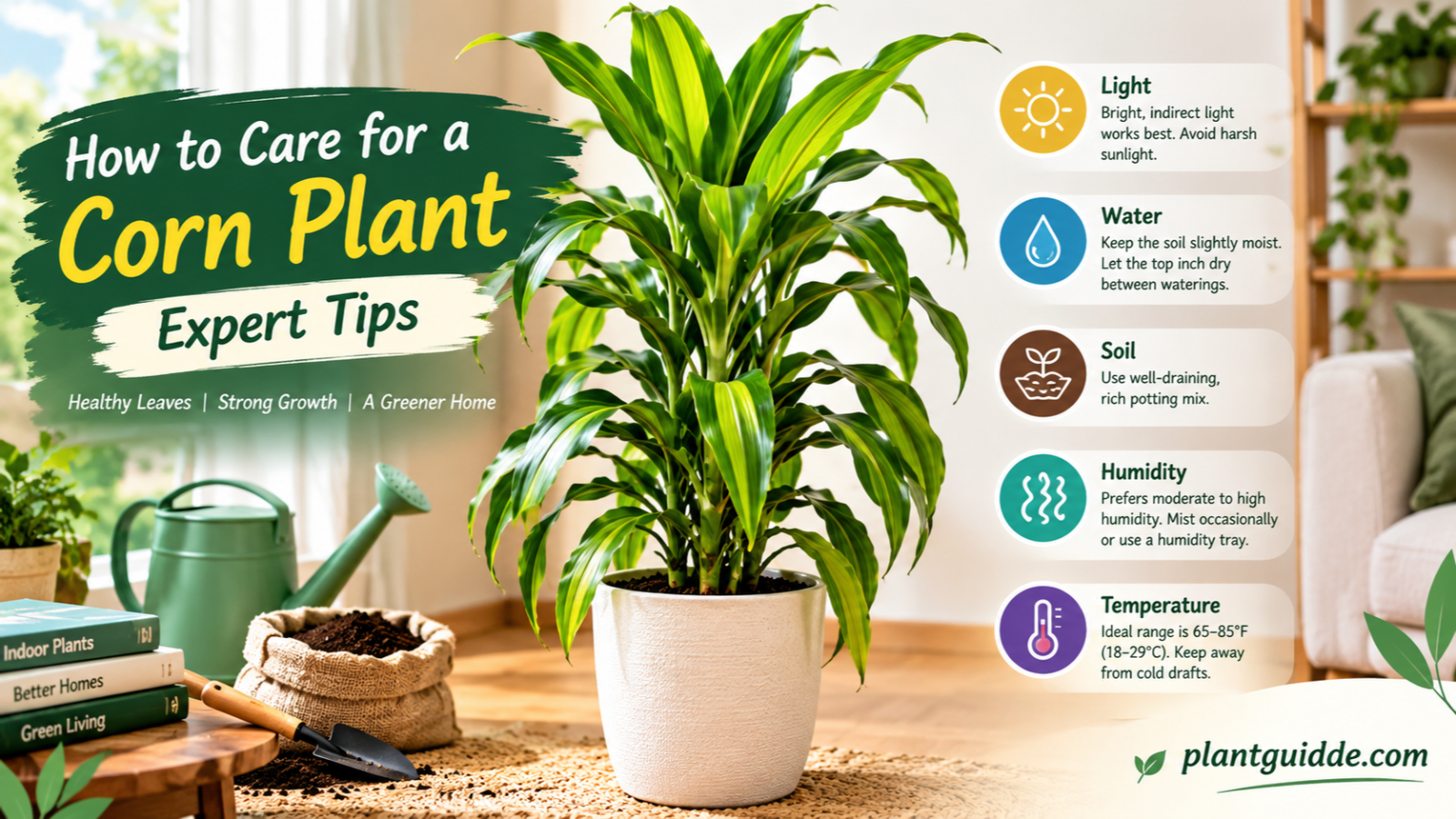
Care for a Corn Plant are popular indoor plants because they offer the appearance of a small tropical tree without requiring constant attention. Their tall canes and long, arching leaves can make an empty corner feel greener almost immediately.
The good news is that corn plant care becomes much easier once you understand what the plant is responding to.
The plant commonly sold as a corn plant is Dracaena fragrans, a tropical African species grown indoors for its attractive foliage and relatively forgiving nature. Some cultivars have green leaves, while others have cream, yellow, or pale-green stripes. But “easy-care” does not mean that a corn plant can be placed anywhere and forgotten.
Brown leaf tips, yellow leaves, drooping foliage, slow growth, and crispy edges are usually signs that something about the growing environment needs attention. The difficult part is identifying the actual cause. For example, brown tips can result from inconsistent watering, dry air, fluoride in water, excessive sunlight, cold drafts, or a nearby heat source.
Quick Answer
To care for a corn plant (Dracaena fragrans), place it in bright, indirect light, use well-draining soil, and water when the upper 2 inches of soil feel dry. Keep it warm and away from cold drafts and harsh direct sunlight. Feed lightly during active growth, maintain moderate humidity, and remove damaged leaves as needed. Avoid constantly wet soil because poor drainage and overwatering can lead to root problems.
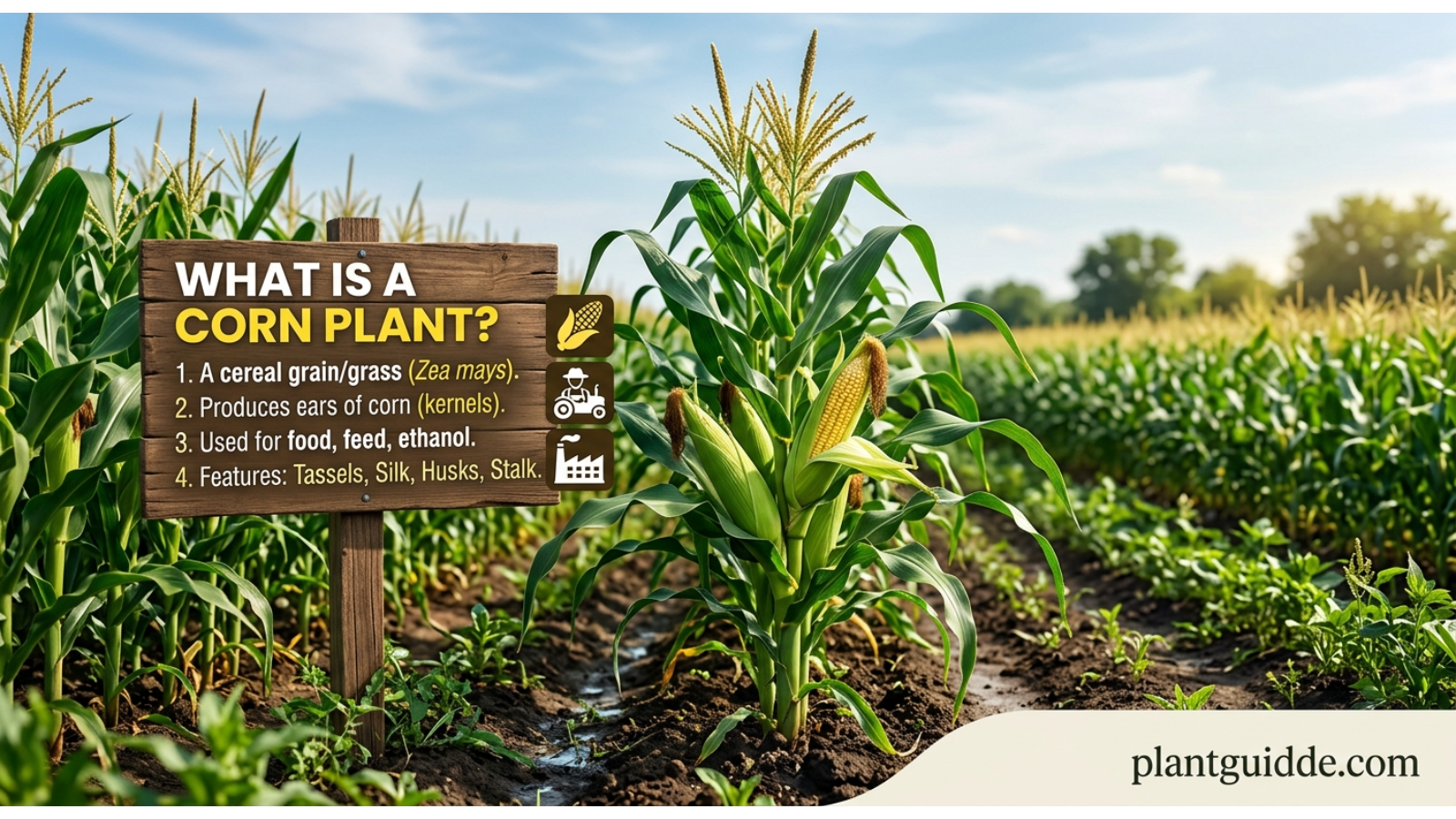
What Is a Corn Plant?
A corn plant is the common name for Dracaena fragrans, an evergreen tropical plant in the Asparagaceae family. It develops upright, woody stems or canes with rosettes of long, strap-like leaves.
Although it can become a substantial plant outdoors in suitable climates, it is primarily grown as a houseplant in cooler regions. The RHS lists mature Dracaena fragrans at roughly 1.5–2.5 meters in height under suitable conditions, although indoor specimens vary considerably in size.
One reason it works well indoors is its tolerance of a range of light conditions. However, tolerance should not be confused with ideal conditions. A corn plant may survive in relatively dim light while growing slowly, whereas brighter filtered light generally supports healthier foliage and stronger growth.
Common corn plant varieties
You may encounter several forms of Dracaena fragrans, including:
- Dracaena fragrans ‘Massangeana’ – commonly recognized by its central yellow-green stripe.
- ‘Janet Craig’ – known for darker green foliage.
- ‘Compacta’ – a more compact form with dense foliage.
- ‘Lemon Lime’ – has striking green and yellow striping.
- ‘Warneckei’ – features prominent pale striping.
Different cultivars can vary somewhat in their light tolerance, but the basic approach to corn plant care remains similar.
Corn Plant Care Requirements at a Glance
| Care factor | What your corn plant needs |
|---|---|
| Light | Bright, indirect light is ideal |
| Water | Water when the upper soil has dried; avoid constantly wet soil |
| Soil | Well-draining potting mix |
| Temperature | Warm, stable conditions |
| Humidity | Moderate to higher humidity is beneficial |
| Fertilizer | Light feeding during active growth |
| Pruning | Remove damaged foliage and cut back stems when necessary |
| Repotting | Repot when roots become crowded or soil drainage declines |
| Water quality | Filtered or rainwater can help prevent fluoride-related leaf damage |
| Pet safety | Toxic if eaten by cats and dogs |
The exact watering frequency will depend on pot size, soil, light, temperature, and airflow. A calendar is less reliable than checking the soil itself.
Give It Bright, Indirect Light
Light is one of the most important factors in successful corn plant care.
Place your plant where it receives bright, filtered or indirect light for much of the day. An east- or west-facing window can work well, while a south-facing window may need a sheer curtain or some protection from intense direct sun.
Corn plants can tolerate lower light, but prolonged low light may result in weaker growth and less attractive foliage.
How to tell if the light is wrong
Too much direct sun may cause:
- Bleached-looking patches
- Scorched or crispy leaves
- Brown areas on exposed foliage
Too little light may cause:
- Very slow growth
- Long periods without new leaves
- Weaker-looking foliage
- Loss of vigor
A common mistake is moving a corn plant directly from a dim room into strong sunlight. If you need to increase light substantially, make the change gradually.
Practical tip: If your plant is several feet from a bright window, observe its growth rather than assuming the distance automatically means adequate light. A bright room is not necessarily a bright growing location.
Image Suggestion: Corn plant positioned near an east-facing window with sheer curtains showing the difference between direct and filtered light.
Water According to the Soil, Not a Calendar
Watering is where many corn plants get into trouble.
The goal is not to keep the soil permanently wet. Corn plants prefer moisture but also need oxygen around their roots. The RHS recommends allowing the upper portion of the compost to dry before watering and warns that keeping the compost wet for long periods can contribute to root rot.
A useful starting point is to check the top 2 inches (about 5 cm) of soil.
How to water a corn plant
- Push your finger about 2 inches into the soil.
- If it still feels noticeably moist, wait.
- If the upper layer has dried, water thoroughly.
- Allow excess water to drain from the pot.
- Empty standing water from the saucer or outer container.
Do not simply add a small splash of water every few days. That can leave some parts of the root ball constantly damp while other areas remain relatively dry.
Why overwatering is so dangerous
Overwatering does not simply mean “giving too much water once.”
The bigger problem is keeping the root zone wet for too long. Poor drainage combined with frequent watering can deprive roots of oxygen and create conditions associated with root deterioration.
This is why a plant can have wet soil and still show symptoms that look like thirst.
What about winter?
Growth generally slows when conditions become cooler and darker, so the plant may use water more slowly. Check the soil before watering rather than following the same summer routine throughout the year. The RHS specifically recommends more sparing winter watering.
Use Well-Draining Soil
A corn plant needs soil that can hold some moisture without becoming saturated.
A quality indoor potting mix with good drainage is usually a better choice than heavy garden soil. The container should also have drainage holes.
The RHS recommends a peat-free, loam-based potting compost for Dracaena fragrans.
What makes a good corn plant soil?
Look for a mix that:
- Drains excess water efficiently
- Still retains some moisture
- Does not become compacted easily
- Allows air to reach the roots
A heavy, poorly draining mix can make otherwise sensible watering habits problematic.
An overlooked issue: the decorative pot
Sometimes the soil is not the real problem.
A corn plant may be sitting inside a decorative cachepot with nowhere for excess water to escape. If water accumulates at the bottom, the roots can remain wet long after the surface appears dry.
Always check whether the actual growing container has drainage holes.
Keep the Temperature Warm and Stable
Corn plants are tropical and perform best in warm indoor conditions.
The RHS recommends maintaining approximately 18–30°C (65–86°F) for good growth and advises avoiding cold drafts and hot radiators.
Avoid placing the plant:
- Directly beside an air conditioner
- Against a cold exterior window during winter
- Next to a heater or radiator
- In a location exposed to repeated temperature swings
A plant can be in a warm room overall but still experience localized stress if its leaves are repeatedly exposed to a heating vent or cold draft.
Practical observation: If brown tips appeared shortly after moving a plant beside a heater, air conditioner, or drafty window, inspect the location before changing your watering routine.
Provide Moderate Humidity
Corn plants appreciate humid conditions because they originate from tropical environments.
However, you do not necessarily need to turn your home into a greenhouse.
If indoor air is very dry, particularly during periods of heating or air conditioning, you can improve the surrounding environment by:
- Grouping plants together
- Using a humidifier
- Placing the pot near other plants
- Keeping the plant away from hot, dry air vents
The RHS also suggests methods such as a moist gravel tray and occasional misting.
The important distinction is that humidity and wet soil are not the same thing. Increasing humidity should not mean watering the plant more frequently.
Pay Attention to Your Water Quality
Water quality is an often-overlooked part of corn plant care.
Dracaenas can be sensitive to fluoride, and the RHS notes that fluoride in tap water can contribute to foliage damage and brown tips. It recommends rainwater or filtered water where possible.
If your plant repeatedly develops brown tips despite otherwise appropriate care, consider your water source.
Try this if brown tips keep returning
For several watering cycles, use:
- Rainwater, where practical
- Filtered water
- Another suitable low-fluoride water source
Also avoid watering with extremely cold water. Let water reach approximately room temperature before applying it.
This does not mean every brown tip is caused by tap water. Light stress, dry air, inconsistent watering, cold exposure, and other factors can produce similar symptoms.
Fertilize Lightly During Active Growth
Corn plants do not need heavy feeding.
A general liquid houseplant fertilizer can be applied during active growth according to the product’s directions. The RHS recommends feeding during the growing season and warns that excessive fertilizer can damage roots and reduce plant health.
A common beginner mistake is assuming that more fertilizer will make a slow-growing plant grow faster.
Usually, it is better to investigate:
- Light
- Root health
- Watering
- Temperature
- Soil condition
before increasing fertilizer.
If the plant is in poor light, adding more fertilizer is unlikely to solve the underlying problem.
Prune Your Corn Plant When It Gets Too Tall
One of the advantages of corn plants is that they tolerate pruning well.
If a cane becomes too tall or bare, you can cut it back. New shoots can develop below the cut, allowing you to encourage branching and control the plant’s height.
How to prune a corn plant
- Use clean, sharp pruning shears.
- Choose the height where you want the cane to be cut.
- Make a clean cut across the stem.
- Continue normal care afterward.
- Watch for new shoots developing below the cut.
Do not throw away every healthy cutting. Stem sections can potentially be used for propagation under suitable conditions.
Image Suggestion: Before-and-after diagram showing where to cut a tall corn plant and where new shoots can emerge.
Repot Only When It Actually Needs It
Corn plants do not need to be repotted every year simply because a calendar says so.
Consider repotting when:
- Roots are severely crowded
- Water runs through unusually quickly
- The soil has become compacted or degraded
- Drainage has deteriorated
- The plant has become unstable in its container
Choose a container only modestly larger than the existing root system.
A dramatically oversized pot can hold more wet soil than the plant can use, making moisture management harder.
After repotting, do not compensate for the disturbance by constantly watering. Allow the new soil and root system to establish while maintaining sensible moisture.
Why Are My Corn Plant Leaves Turning Brown?
Brown leaves are one of the most common corn plant problems, but the color alone does not identify the cause.
The RHS lists several possible causes, including watering problems, fluoride, excessive direct light, dry air, cold drafts, and heat sources.
Use the location and pattern of the damage to narrow down the possibilities.
| Symptom | Possible cause |
|---|---|
| Brown crispy tips | Dry air, inconsistent watering, fluoride, other environmental stress |
| Brown bleached patches | Excessive direct sunlight |
| Brown leaves after cold exposure | Temperature stress |
| Brown foliage near radiator | Hot, dry air |
| Yellowing with persistently wet soil | Possible root stress from excessive moisture |
| Fine stippling/webbing | Possible spider mites |
| Cottony insects | Possible mealybugs |
| Raised brown bumps | Possible scale |
Do not immediately increase watering because you see brown leaves. First inspect the soil, roots, light exposure, air conditions, and water source.
Why Are My Corn Plant Leaves Turning Yellow?
Yellow leaves can occur naturally as older leaves age, particularly lower on the plant.
But widespread or progressive yellowing deserves investigation.
Check:
- Is the soil remaining wet for many days?
- Does the pot drain freely?
- Has the plant recently been moved?
- Is it receiving enough light?
- Are the roots healthy?
- Have temperatures changed significantly?
One of the biggest mistakes is treating every yellow leaf as a sign of underwatering.
If the soil is already wet, adding more water can make the original problem worse.
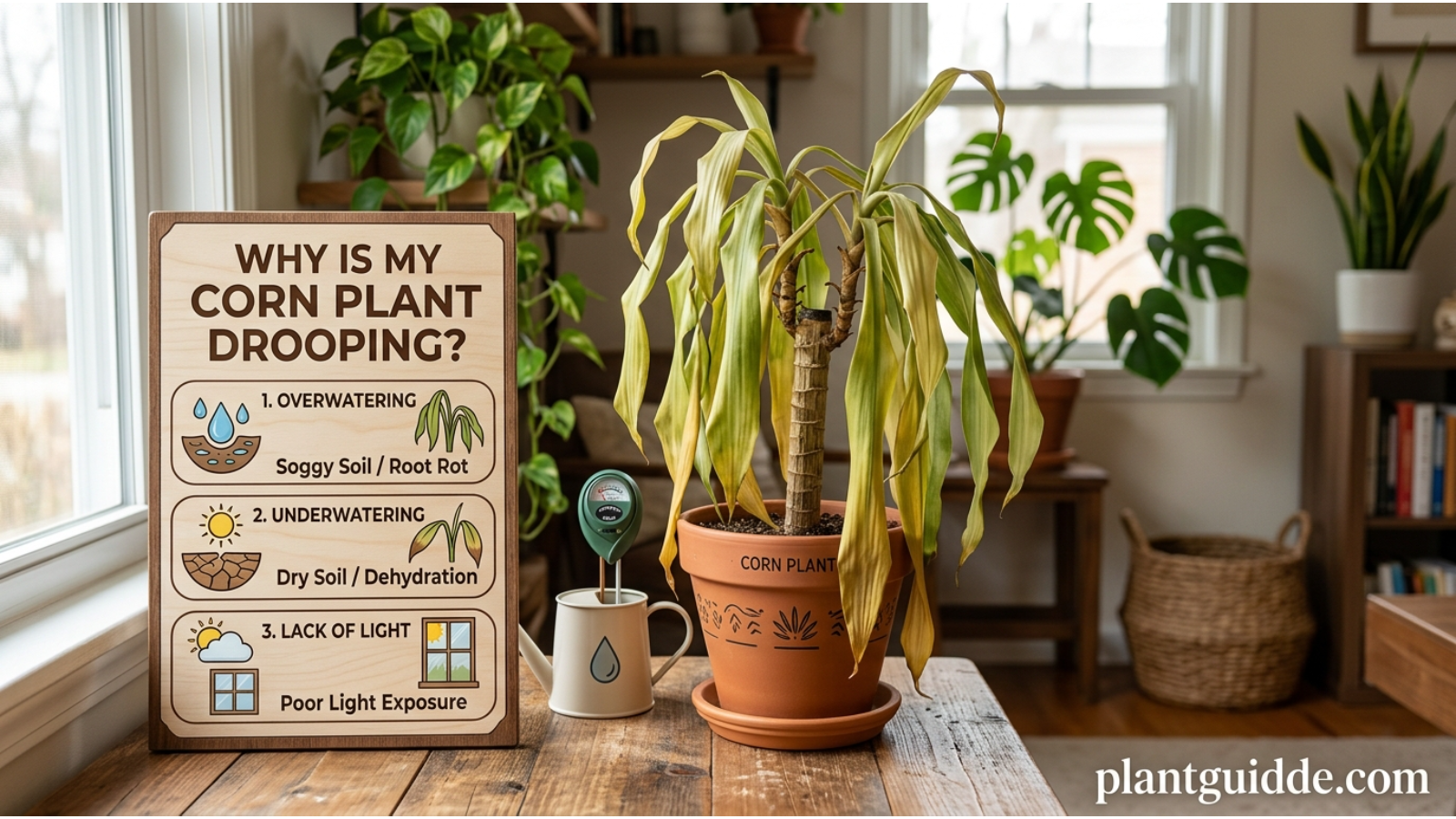
Why Is My Corn Plant Drooping?
A drooping corn plant may be responding to either insufficient moisture or root stress.
Check the soil first.
If the soil is very dry
The plant may need a thorough watering.
If the soil is wet
Do not automatically add more water.
Persistent wetness can indicate poor drainage or excessive watering, which can damage the root system.
Also inspect the plant’s location. A sudden temperature change, heat source, or environmental disturbance can affect foliage.
The most useful question is not simply “Is my plant drooping?” but “What is happening around its roots and growing environment?”
Corn Plant Leaves Curling: What Does It Mean?
Curling leaves can be a response to environmental stress.
Possible contributors include:
- Dry conditions
- Excessive direct sunlight
- Temperature stress
- Inconsistent watering
- Low humidity
- Root problems
Look at the entire plant rather than treating leaf curling as a single diagnosis.
For example, curling combined with very dry soil points you toward a different solution than curling combined with saturated soil and yellowing leaves.
Common Corn Plant Problems and What to Do
Brown tips
Check first: water quality, humidity, watering consistency, direct sunlight, drafts, and nearby heating.
What to do: correct the environmental cause rather than simply cutting off the damaged portion.
The existing brown tissue will not become green again, but improving conditions can protect new growth.
Yellow leaves
Check first: soil moisture and drainage.
What to do: if the soil stays wet for prolonged periods, allow the plant to dry appropriately and investigate drainage rather than watering more.
Slow growth
Check first: light.
Corn plants can tolerate relatively low light, but low-light conditions can reduce growth. Move the plant toward brighter filtered light if appropriate.
Leaf spots or damaged foliage
Inspect the plant closely for pests such as scale insects, mealybugs, thrips, or spider mites. Dracaenas can be susceptible to several sap-feeding pests.
Weak or bare stems
Pruning can help rejuvenate the plant and encourage new shoots. Corn plants respond well to being cut back when necessary.
How to Check a Corn Plant for Pests
Inspect both sides of the leaves and the areas where leaves meet the stem.
Look for:
- Sticky residue
- Tiny moving insects
- Fine webbing
- Cotton-like clusters
- Small raised bumps
- Speckled or mottled leaves
The RHS identifies scale insects, mealybugs, thrips, and red spider mites among potential dracaena pests.
Early detection is much easier to manage than waiting until an infestation has spread throughout the plant.
Seasonal Corn Plant Care
Spring
Spring is a useful time to:
- Check whether the plant needs repotting
- Resume or increase feeding as growth increases
- Prune overgrown stems
- Move the plant toward better filtered light if winter conditions were too dim
Summer
Monitor:
- Watering frequency
- Direct sunlight
- Heat buildup near windows
- Dry indoor air
A plant that was comfortable in spring may dry much faster during hot weather.
Autumn
As growth begins to slow, reassess your watering routine rather than continuing a summer schedule automatically.
Winter
Winter often requires more careful placement.
Keep the plant away from:
- Cold drafts
- Freezing windows
- Radiators
- Heating vents
Reduced light and slower growth can also mean the soil stays wet longer. The RHS recommends watering more sparingly in winter.
The Biggest Corn Plant Care Mistakes
1. Watering on a fixed schedule
“Every Sunday” sounds simple, but indoor conditions change.
Check the soil instead.
2. Keeping the soil constantly wet
Moist does not mean saturated.
Good drainage is essential.
3. Putting it in harsh direct sunlight
A bright window is useful, but intense direct summer sunlight can scorch foliage.
4. Ignoring water quality
Persistent brown tips can sometimes be linked to fluoride or mineral-related issues.
5. Fertilizing a stressed plant
Fertilizer is not a cure for poor light, damaged roots, or incorrect watering.
6. Using an oversized pot
More soil means more potential moisture around the roots.
7. Moving it repeatedly
Corn plants generally benefit from stable conditions. If a location is suitable, avoid constantly moving the plant in search of a perfect spot.
A Simple Weekly Corn Plant Care Routine
You do not need to spend a lot of time maintaining a corn plant.
Once a week, perform a quick inspection:
Step 1: Check the soil moisture.
Step 2: Look at the newest leaves.
Step 3: Inspect the underside of foliage for pests.
Step 4: Check whether the plant is receiving appropriate light.
Step 5: Look for new brown or yellow areas.
Step 6: Remove completely dead leaves if necessary.
Step 7: Rotate the pot occasionally if growth is becoming uneven.
This short inspection can catch problems before they become serious.
An Expert Way to Diagnose Corn Plant Problems
When a corn plant starts looking unhealthy, resist the temptation to change five things at once.
Instead, work through the environment systematically:
First: Check the soil
Is it dry, moderately moist, or staying wet?
Second: Check the light
Is the plant receiving bright filtered light, weak light, or harsh direct sun?
Third: Check temperature
Is it exposed to a draft, air conditioner, radiator, or major temperature swing?
Fourth: Check water quality
If brown tips persist, consider whether fluoride or mineral buildup could be contributing.
Fifth: Inspect the roots
If the soil remains wet and the plant continues declining, investigate drainage and root health.
Sixth: Look for pests
Inspect leaves and stems carefully.
This approach is more reliable than treating the visible symptom alone.

Is a Corn Plant Easy to Care For?
Yes, Dracaena fragrans is generally considered an easy-going houseplant, particularly because it tolerates a range of indoor conditions. However, it performs best when its basic requirements—appropriate light, sensible watering, warmth, and good drainage—are consistently met.
Its reputation as a low-maintenance plant sometimes causes people to ignore gradual environmental problems.
The goal is not to provide perfect conditions every day. The goal is to avoid repeatedly exposing the plant to conditions that stress its roots or foliage.
Is a Corn Plant Safe for Pets?
No. Corn plants are considered harmful if eaten by pets, including cats and dogs. The RHS specifically lists Dracaena fragrans and its cultivars as potentially harmful to pets.
If you have pets that chew houseplants, place the corn plant somewhere inaccessible to them.
If you suspect a pet has eaten part of the plant, contact a veterinarian or an appropriate animal poison service for advice.
FAQs:
How often should I water a corn plant?
There is no single schedule that works for every home. Check the soil and water when the upper approximately 2 inches have dried. Environmental conditions, pot size, soil, temperature, and light all affect how quickly the plant uses water.
Does a corn plant need direct sunlight?
Not necessarily. Bright, indirect or filtered light is generally a better indoor choice. Strong direct sunlight, especially through hot glass, can scorch the foliage.
Why does my corn plant have brown tips?
Brown tips can have several causes, including inconsistent watering, dry air, fluoride in water, direct sun, cold drafts, and heat sources. Check the entire growing environment before deciding what to change.
Can a corn plant grow in low light?
It can tolerate relatively low light, but growth may be slower. Brighter filtered light is generally preferable when available.
Should I mist my corn plant?
Occasional misting is one possible way to increase moisture around foliage, but it should not replace proper watering or good overall humidity management. A humidifier or grouping plants can provide a more consistent environment.
What is the best soil for a corn plant?
Use a well-draining indoor potting mix that retains some moisture without becoming waterlogged. The RHS recommends a peat-free, loam-based compost for Dracaena fragrans.
Can I cut the top off a corn plant?
Yes. Corn plants tolerate pruning, and cutting a stem back can encourage new shoots below the cut.
Why is my corn plant not growing?
Start by checking light. If the plant is healthy but receives very little light, slow growth may be expected. Also check root health, watering, temperature, and nutrition before adding more fertilizer.
Should I use tap water for a corn plant?
You can, but if brown tips repeatedly develop despite otherwise good care, consider filtered or rainwater. Dracaenas can be sensitive to fluoride in water.
How do I make my corn plant grow faster?
Give it the conditions that support steady growth rather than trying to force it: adequate filtered light, appropriate moisture, warm temperatures, suitable soil, and modest feeding during active growth.
Final Corn Plant Care Checklist
For a healthy Dracaena fragrans, remember these essentials:
- Light: Bright and indirect is a reliable indoor target.
- Water: Check the soil before watering.
- Drainage: Never allow the roots to remain in stagnant water.
- Soil: Use a loose, well-draining potting mix.
- Temperature: Keep conditions warm and stable.
- Humidity: Moderate to higher humidity is beneficial.
- Water quality: Filtered or rainwater can be useful if brown tips persist.
- Fertilizer: Feed lightly during active growth.
- Pruning: Cut back tall or bare stems when needed.
- Pests: Inspect leaves and stems regularly.
- Pets: Keep the plant away from cats and dogs because it is harmful if eaten.
Conclusion
Learning how to care for a corn plant is less about following a rigid watering schedule and more about creating a stable growing environment.
Give Dracaena fragrans bright filtered light, well-draining soil, sensible watering, warmth, and reasonable humidity. When something goes wrong, do not treat the symptom automatically. Brown tips, yellow leaves, curling, and drooping can have several different causes, so check the soil, light, temperature, water quality, and roots before changing your routine.
The most useful habit is simple: inspect the plant before you intervene. Once you learn to read what the leaves and soil are telling you, corn plant care becomes much more predictable, and your plant can remain an attractive indoor feature for years.

Asad Mumtaz is a dedicated plant enthusiast and gardening writer with a passion for helping people care for their plants successfully. He specializes in plant care guides, indoor gardening, and practical growing tips for all skill levels. His content focuses on making gardening simple, enjoyable, and rewarding. Through his work, Asad shares reliable advice to help readers create thriving green spaces.