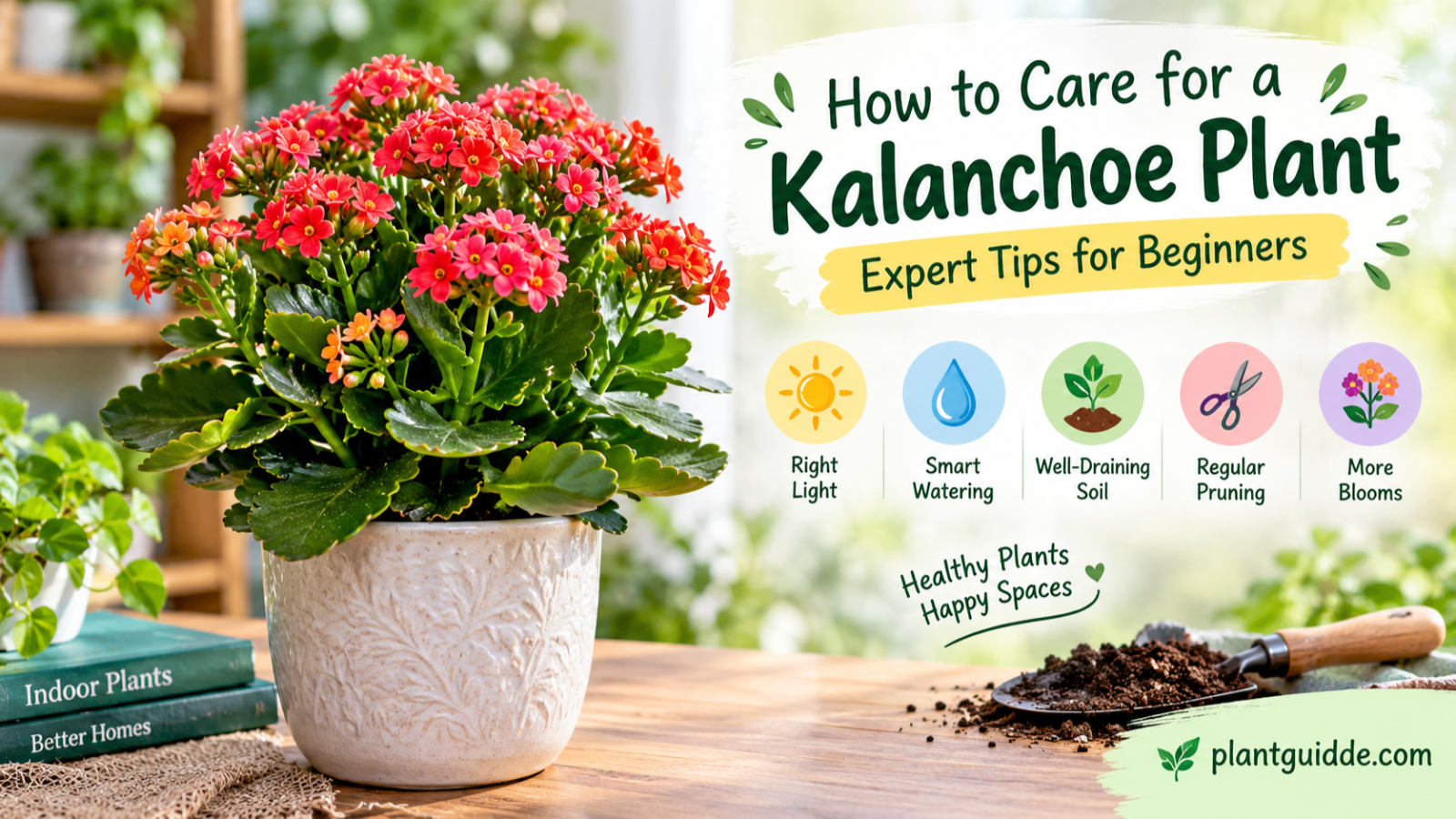
Kalanchoe is a popular houseplant because it combines colorful flowers, thick green leaves, and surprisingly easy maintenance. However, knowing how to care for a kalanchoe plant properly is important if you want healthy growth and long-lasting blooms.
As a succulent, kalanchoe stores water in its leaves, so it generally prefers bright light, well-draining soil, and periods of dryness between waterings. Too much water, poor drainage, or insufficient light can quickly lead to yellow leaves, root problems, or weak growth.
Learning how to care for a kalanchoe plant becomes much easier when you understand what the plant is telling you. care for a kalanchoe plant your kalanchoe is indoors, flowering, developing yellow leaves, or refusing to bloom, small changes in light, watering, soil, and temperature can make a noticeable difference.
This guide explains how to care for a kalanchoe plant step by step, including watering, light requirements, soil, humidity, pruning, and common problems. By following these practical tips, you’ll know exactly how to care for a kalanchoe plant and keep it healthy, compact, and attractive throughout the year.
Quick Answer
To learn how to care for a kalanchoe plant, give it bright light, fast-draining soil, and thorough watering only when the soil has mostly dried. Keep it warm, avoid standing water, and use a pot with drainage holes. During active growth, feed lightly with a balanced fertilizer. After flowering, remove spent blooms and provide plenty of light to encourage healthy new growth and future flowering.
Understanding Your Kalanchoe
The name kalanchoe refers to a group of succulent plants in the genus Kalanchoe. Several species are grown as houseplants, but Kalanchoe blossfeldiana and its cultivated forms are especially common in homes because of their colorful flowers.
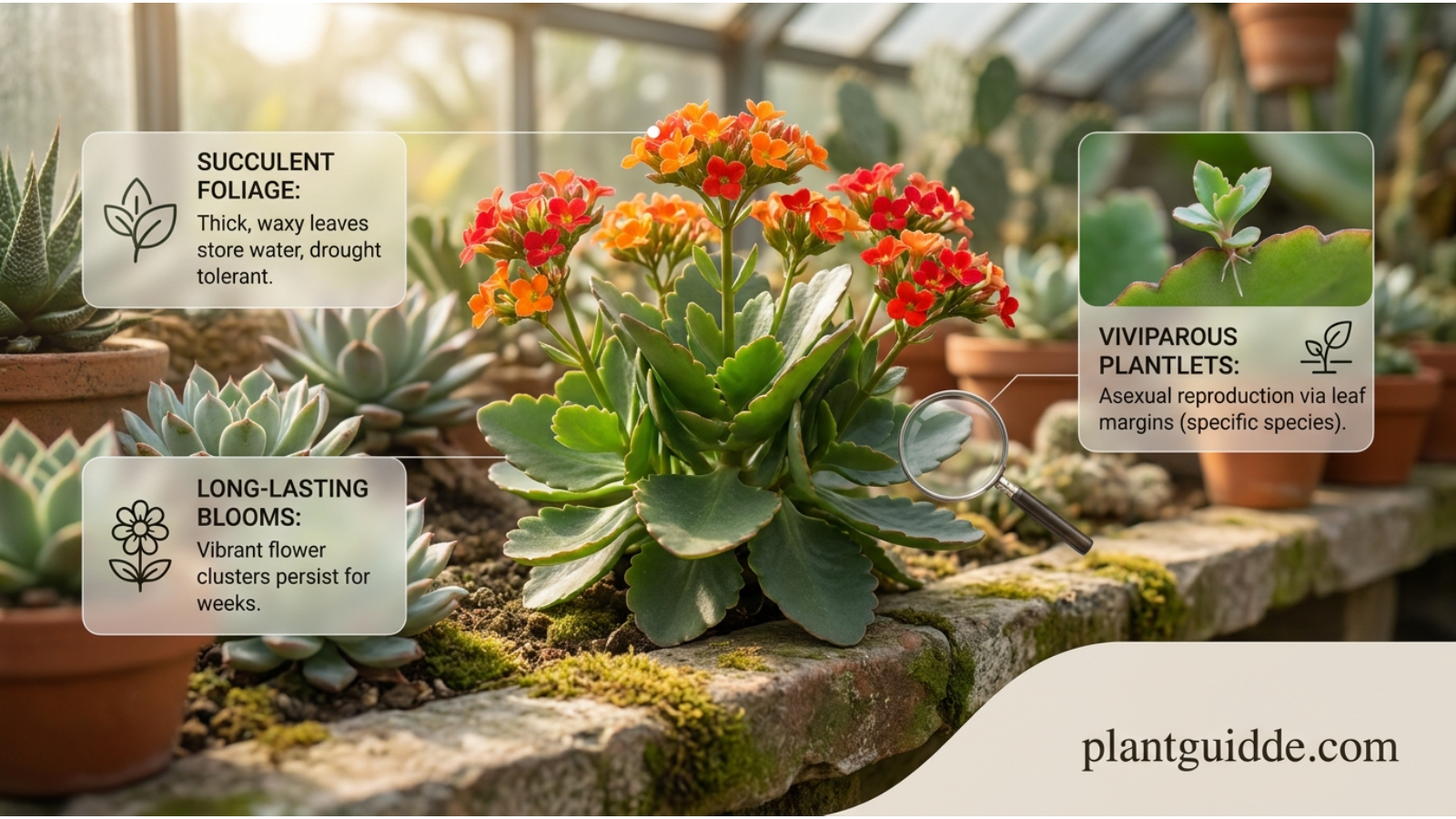
Unlike plants with thin, delicate foliage, kalanchoes have adapted to periods of limited water availability. Their fleshy leaves and stems can retain moisture, which is useful in dry conditions but becomes a disadvantage when the roots remain wet for too long.
This explains one of the biggest misconceptions about kalanchoe care:
A plant that stores water does not need constantly moist soil.
In fact, allowing the growing medium to dry between waterings is one of the most important parts of keeping a kalanchoe healthy.
What makes kalanchoe different?
Kalanchoe generally prefers:
- Bright natural light
- Well-draining soil
- A pot with drainage holes
- Thorough but infrequent watering
- Warm, stable temperatures
- Moderate humidity rather than constantly humid conditions
- Good airflow
- Light feeding during active growth
It is usually easier to correct underwatering than chronic overwatering. A thirsty kalanchoe may show slightly limp or wrinkled leaves, while persistently wet roots can suffer damage that is much harder to reverse.
Image Suggestion: Close-up botanical illustration labeling kalanchoe’s fleshy leaves, stem, roots, flowers, and drainage holes.
Give Kalanchoe Plenty of Bright Light
Light is arguably the most important factor after drainage.
Place your kalanchoe near a bright window where it receives several hours of strong natural light. A south- or west-facing window can work well when the plant is appropriately acclimated, while an east-facing window can provide gentler morning light.
A plant that receives insufficient light may remain alive but become stretched, weak, or reluctant to flower.
How much light does kalanchoe need?
A practical indoor setup is:
- Bright indirect light: Good for everyday growth.
- Several hours of gentle direct sunlight: Often excellent for compact growth and flowering.
- Very intense afternoon sun through hot glass: May require some filtering or gradual acclimation.
Don’t move a kalanchoe from a dim room directly into intense sunlight. Sudden exposure can cause leaf scorch.
How to tell if the light is wrong
Too little light:
- Stems become elongated.
- New growth appears weaker.
- Leaves may become smaller.
- The plant leans toward the window.
- Flowering becomes poor or stops.
Too much intense light:
- Leaves may develop bleached or scorched areas.
- Foliage can look stressed after sudden exposure.
- Soil may dry unusually quickly.
A useful rule is to watch the plant rather than relying only on a compass direction. Two windows facing the same direction can provide dramatically different amounts of usable light depending on curtains, glass, nearby buildings, trees, and the distance from the window.
Image Suggestion: A simple window-light diagram showing low light, bright indirect light, and intense direct sunlight suitable for kalanchoe.
Water Only After the Soil Has Dried
Watering is where many kalanchoe problems begin.
Because kalanchoe stores moisture in its leaves, it doesn’t need the soil kept continuously damp. Instead, allow the growing medium to dry substantially before watering again.
Don’t use a calendar alone.
A statement such as “water every seven days” may work temporarily in one home and fail completely in another. A kalanchoe in bright light during summer can use water much faster than one sitting several feet from a dim window during winter.
How to know when to water
Check the soil with your finger or use another reliable method of assessing moisture.
care for a kalanchoe plant the upper portion of the potting mix feels dry and the pot has become noticeably lighter, it may be time to water.
When you do water:
- Pour water slowly and evenly over the soil.
- Continue until excess water drains from the bottom.
- Allow the pot to drain completely.
- Empty any water collected in the saucer or decorative container.
- Don’t water again until the soil has dried sufficiently.
The goal isn’t to give the plant tiny amounts of water every few days. Small, frequent drinks can leave moisture concentrated around the root zone while encouraging inconsistent wetness.
A thorough watering followed by a proper drying period is generally a better approach.
Signs your kalanchoe may need water
You may notice:
- Slightly softer or less firm leaves
- Wrinkled foliage
- A noticeably dry potting mix
- A very lightweight container
However, don’t wait for severe wilting before watering. Check the soil first.
Signs of overwatering
Overwatering can produce:
- Yellowing leaves
- Soft or mushy stems
- Leaves dropping unexpectedly
- Persistently wet soil
- An unpleasant smell from the potting mix
- Dark or damaged roots
- Sudden decline despite frequent watering
One of the most common beginner mistakes is interpreting yellow leaves as an automatic signal to add more water. With kalanchoe, yellow foliage can actually be associated with excessive moisture.
Use Fast-Draining Kalanchoe Soil
The best kalanchoe soil allows excess water to move away from the roots quickly while still providing enough moisture and nutrients for healthy growth.
A commercial cactus or succulent potting mix is a convenient starting point. You can improve drainage further by incorporating an appropriate mineral component such as perlite, pumice, or coarse material suitable for container growing.
The exact recipe matters less than the result.
You want a medium that doesn’t remain saturated for days after watering.
What makes good soil for kalanchoe?
A suitable mix should:
- Drain quickly
- Resist compaction
- Allow oxygen to reach the roots
- Hold enough moisture for normal growth
- Dry at a reasonable rate
Avoid heavy garden soil in an indoor container. It can compact around the roots and retain too much moisture.
Why soil and watering are connected
Consider two plants receiving exactly the same amount of water.
- Plant A is growing in a loose, well-draining succulent mix.
- Plant B is growing in dense soil that stays wet for a long time.
Plant A may be perfectly healthy.
Plant B may develop root problems.
The difference isn’t necessarily the amount of water applied. It is how long the roots remain exposed to excessive moisture.
Choose the Right Pot
A good pot can make kalanchoe care much easier.
Always choose a container with drainage holes. Decorative pots without drainage can hold water around the roots even when the surface appears dry.
Terracotta pots can be useful because their porous walls allow some moisture to evaporate. Plastic and glazed ceramic pots can also work perfectly well; they simply may retain moisture longer, so watering needs to be adjusted accordingly.
Avoid oversized containers
A pot that is much larger than the root system can hold more wet soil than the plant can use.
This can create a slow-drying environment and increase the risk of root problems.
When repotting, choose a container only modestly larger than the existing root ball.
Expert Tip: Don’t automatically repot a healthy kalanchoe into a much larger decorative pot. For moisture-sensitive plants, an oversized container can create more problems than it solves.
Keep Temperatures Warm and Stable
Kalanchoe generally performs well in comfortable indoor temperatures.
Keep it away from:
- Freezing temperatures
- Cold drafts
- Frequently opened exterior doors
- Very hot heating vents
- Sudden temperature changes
A warm, stable room is usually better than a location that repeatedly swings from hot to cold.
During colder months, be especially careful about placing the plant directly against a cold window if temperatures near the glass become very low.
Humidity Usually Isn’t the Main Problem
Because kalanchoe is succulent-like, it generally doesn’t require the high humidity that some tropical houseplants prefer.
Normal indoor humidity is often adequate.
This means you don’t need to mist the leaves constantly.
In fact, if the real problem is poor drainage or excessive watering, increasing humidity won’t solve it.
care for a kalanchoe plant your home is extremely dry, especially during prolonged heating or air-conditioning, maintaining a reasonable indoor environment can help overall plant health. But prioritize light, watering, and drainage before purchasing a humidifier.
This is an important distinction because beginners sometimes focus on humidity when the actual problem is wet soil.
Feed Lightly During Active Growth
Kalanchoe doesn’t need heavy fertilization.
During periods of active growth, you can use a balanced, water-soluble houseplant fertilizer at a diluted rate according to the product instructions.
Avoid repeatedly applying concentrated fertilizer to dry soil because this can stress the roots.
A practical approach is:
- Water appropriately.
- Fertilize only when the plant is actively growing.
- Follow the fertilizer’s dilution instructions.
- Reduce or stop feeding when growth slows significantly.
More fertilizer doesn’t necessarily mean more flowers. Light, temperature, plant maturity, and watering conditions all influence flowering.
Getting Kalanchoe to Flower Again
One of the most common questions after how to care for a kalanchoe plant is:
Why isn’t my kalanchoe flowering?
The answer is often related to light and seasonal conditions rather than a lack of fertilizer.
Kalanchoe is capable of responding to day length. Flowering plants are often produced commercially under controlled conditions, so a plant may bloom beautifully when purchased and then fail to repeat the performance immediately in a home.
Start with light
A kalanchoe that receives inadequate light may remain healthy-looking but produce few flowers.
Move it gradually toward a brighter location if it is currently growing in low light.
After flowering
Once blooms fade:
- Remove spent flower clusters.
- Trim away dead or weak material with clean tools.
- Keep the plant in bright light.
- Continue sensible watering.
- Allow it to produce healthy vegetative growth.
Don’t assume that a kalanchoe needs constant fertilizer simply because it has stopped blooming.
A useful flowering lesson
A common mistake is trying to force flowering by changing several things at once.
Instead, identify the likely limiting factor.
care for a kalanchoe plant the plant is stretched and pale, improve light first.
care for a kalanchoe plant it has healthy foliage but the soil stays wet, correct drainage.
What to Do After Kalanchoe Finishes Blooming
Flowering can be surprisingly demanding for a small potted plant.
Once the blooms fade, the plant enters a useful maintenance period. Removing spent flowers keeps the plant looking cleaner and allows you to focus on foliage and new growth.
Cut flower stems back to a healthy section rather than leaving exhausted flower clusters attached indefinitely.
At this stage, prioritize:
- Bright light
- Proper drainage
- Controlled watering
- Light feeding during active growth
- Removal of dead growth
Healthy foliage is the foundation for the next flowering cycle.
Pruning Kalanchoe Without Damaging It
Pruning isn’t complicated, but it should have a purpose.
Use clean, sharp scissors or pruning shears to remove:
- Dead flowers
- Dead leaves
- Damaged stems
- Weak or badly stretched growth
If the plant has become leggy because of inadequate light, pruning can help restore its shape, but correcting the light is equally important.
Otherwise, new growth may become stretched again.
Don’t remove healthy foliage unnecessarily
Leaves are the plant’s energy-producing organs. Heavy pruning of an already weak kalanchoe can slow recovery.
When possible, remove only what is dead, damaged, diseased, or genuinely unwanted.
Repotting Kalanchoe
You don’t need to repot kalanchoe simply because you’ve owned it for a certain amount of time.
Repot when there is a practical reason, such as:
- Roots are filling the container.
- The soil has become compacted.
- Drainage has deteriorated.
- The plant is repeatedly drying extremely quickly because of its root system.
- The existing pot lacks adequate drainage.
- There are signs of root problems requiring inspection.
How to repot
- Choose a container with drainage holes.
- Select a well-draining succulent or cactus-style mix.
- Remove the plant carefully.
- Inspect the roots.
- Remove obviously damaged or rotten roots with clean tools if necessary.
- Place the plant at approximately the same depth as before.
- Fill around the root ball with fresh mix.
- Avoid packing the soil excessively tightly.
- Place the plant in a suitable bright location.
- Resume watering according to the condition of the new soil and plant rather than following an automatic schedule.
Image Suggestion: Step-by-step illustration showing kalanchoe being removed from a pot, roots inspected, drainage holes checked, and plant repotted into a gritty soil mix.
Kalanchoe Care Through the Seasons
Your watering routine should change with the environment.
| Season | What to Watch For | Practical Approach |
|---|---|---|
| Spring | Increasing light and new growth | Check soil more frequently as growth accelerates |
| Summer | Strong light and faster drying | Monitor moisture regularly; protect from extreme heat |
| Fall | Gradually changing light | Reduce watering if the soil begins drying more slowly |
| Winter | Lower light and slower growth | Water less frequently and keep away from cold drafts |
The important point is that seasonal care is about plant behavior, not a rigid calendar.
If your home remains warm and bright year-round, your kalanchoe may not follow the same watering pattern as one growing near a cool winter window.
Common Kalanchoe Problems and How to Fix Them
Yellow Leaves
Yellow leaves are one of the most common symptoms beginners notice.
Possible causes include:
- Excessive watering
- Poor drainage
- Aging leaves
- Insufficient light
- Root damage
What to check first
Don’t immediately add fertilizer.
Instead, inspect the soil.
If it is staying wet for a long time, examine the drainage and watering routine first.
If the plant is also sitting in low light, improve its light gradually.
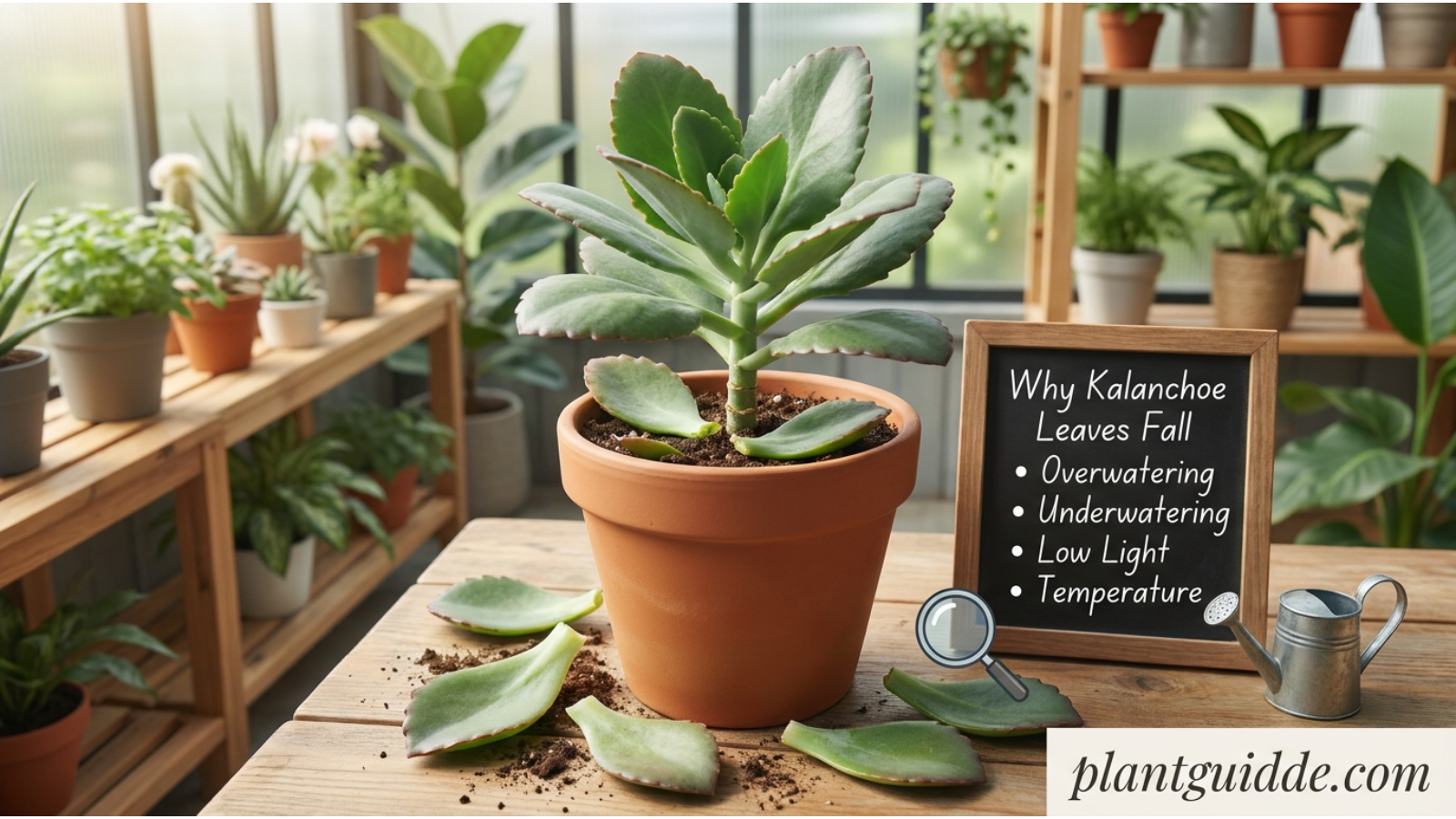
Kalanchoe Leaves Are Falling Off
Leaf drop can result from environmental stress.
Check:
- How often you’re watering.
- Whether the soil stays wet.
- Whether the plant recently experienced a temperature change.
- Whether it receives enough light.
- Whether the roots are healthy.
A few older leaves naturally aging and dropping isn’t necessarily alarming. Sudden, widespread leaf loss deserves investigation.
Leaves Are Wrinkled
Wrinkled leaves can indicate that the plant is using stored moisture faster than it can replace it.
Check the soil before watering.
If the soil is bone dry and the plant is receiving strong light, a thorough watering may be appropriate.
But don’t assume every wrinkled leaf means dehydration. Root damage can also interfere with water uptake. A plant sitting in chronically wet soil can sometimes look dehydrated because damaged roots aren’t functioning properly.
This is why soil condition and leaf symptoms need to be evaluated together.
Soft or Mushy Stem
A soft, dark, or mushy stem is more concerning than ordinary leaf wilting.
It can indicate excessive moisture and tissue or root damage.
Take action quickly:
- Stop routine watering.
- Remove the plant from its container if root or stem rot is suspected.
- Inspect the roots and lower stem.
- Remove severely damaged tissue with clean tools.
- Repot healthy remaining material into fresh, well-draining soil if recovery is possible.
Prevention is much easier than treating advanced rot.
Brown or Crispy Leaves
Brown edges can have several causes.
Consider:
- Excessively intense sunlight
- Very dry conditions
- Irregular watering
- Root problems
- Salt buildup
- Physical damage
Look at the pattern.
If only leaves directly exposed to harsh sunlight are damaged, light may be responsible.
If the plant has dry soil and widespread crispy foliage, water stress deserves attention.
A Simple Kalanchoe Troubleshooting Table
| Symptom | Possible Cause | What to Check First |
|---|---|---|
| Yellow leaves | Excess moisture, low light, aging foliage | Soil moisture and drainage |
| Wrinkled leaves | Dry soil or damaged roots | Soil moisture and root condition |
| Mushy stem | Excess moisture or rot | Roots and lower stem |
| Leggy growth | Insufficient light | Window position |
| No flowers | Low light or unsuitable seasonal conditions | Light exposure |
| Brown leaf patches | Sun stress, dryness, root issues | Light and soil |
| Leaves dropping | Watering, temperature, root stress | Recent environmental changes |
| Soil stays wet | Poor drainage or oversized pot | Pot and soil mix |
The Most Common Kalanchoe Care Mistakes
Mistake 1: Watering on a Schedule
“Every Sunday” sounds simple, but plants don’t consume water at the same rate every week.
Better approach: Check the soil and consider recent light and temperature conditions.
Mistake 2: Using a Decorative Pot Without Drainage
A beautiful container can hide a serious watering problem.
Better approach: Keep the plant in a nursery pot with drainage or use a decorative container that also allows excess water to escape.
Mistake 3: Treating Kalanchoe Like a Tropical Plant
Constant moisture and frequent misting aren’t necessary.
Better approach: Remember that its fleshy leaves are adapted to storing water.
Mistake 4: Keeping It Too Far From a Window
A kalanchoe can survive in mediocre light for a while, but survival isn’t the same as strong growth and flowering.
Better approach: Give it the brightest practical location available while avoiding sudden exposure to intense sunlight.
Mistake 5: Repotting Into a Huge Container
More soil means more moisture-holding capacity.
Better approach: Increase pot size modestly when repotting.
Mistake 6: Adding Fertilizer to Fix Every Problem
Fertilizer can’t repair damaged roots, poor drainage, or insufficient light.
Better approach: Diagnose the growing environment first.
An Expert’s Simple Kalanchoe Care Routine
If you want a routine that is easy to remember, use this checklist.
Every few days
Look at the plant.
Check for:
- New growth
- Flower development
- Yellowing
- Leaf drop
- Pests
- Unusual softness or damage
You don’t need to water every time you inspect it.
Before watering
Check:
- Is the soil sufficiently dry?
- Is the pot noticeably lighter?
- Has the plant recently received less light?
- Is the container draining properly?
During watering
Water thoroughly enough to wet the root zone, then allow excess water to escape.
Monthly
Look for:
- Root crowding
- Compacted soil
- Salt buildup
- Weak or leggy growth
- Dead flower stems
- Pests
This approach is much more reliable than following a fixed “water once per week” rule.
Can Kalanchoe Grow in Low Light?
It can tolerate less-than-ideal light for a period, but low light isn’t a good long-term strategy if you want compact growth and reliable flowering.
A plant may remain green in a dim room while gradually becoming stretched and producing fewer flowers.
If your kalanchoe isn’t blooming, don’t immediately assume it needs more fertilizer.
Check the light first.
Can Kalanchoe Grow Outside?
Kalanchoe can grow outdoors in suitable warm climates, but its outdoor requirements differ from an indoor plant.
Outdoor plants may experience:
- Stronger sunlight
- More rapid drying
- Heavy rainfall
- Temperature fluctuations
- Wind
- Increased pest exposure
A kalanchoe moved outdoors should be acclimated gradually to stronger light.
Never assume that a plant accustomed to filtered indoor light can immediately tolerate intense outdoor sun.
How to Propagate Kalanchoe
Healthy kalanchoe can often be propagated from suitable stem or leaf material, depending on the species and cultivar.
For stem propagation:
- Select a healthy section of growth.
- Make a clean cut.
- Allow the cut surface to dry appropriately.
- Place it into a suitable well-draining propagation medium.
- Keep conditions warm and bright without keeping the medium constantly wet.
- Wait for rooting and new growth.
The main principle is the same as mature-plant care: avoid creating a constantly wet environment around developing roots.
Should You Mist a Kalanchoe?
Usually, no.
Misting isn’t necessary simply because the plant is indoors.
If the plant is struggling because its roots are staying wet, adding moisture to the surrounding air doesn’t address the underlying problem.
Instead, concentrate on:
light → drainage → watering → temperature → airflow
Those factors usually have a much greater impact on kalanchoe health.
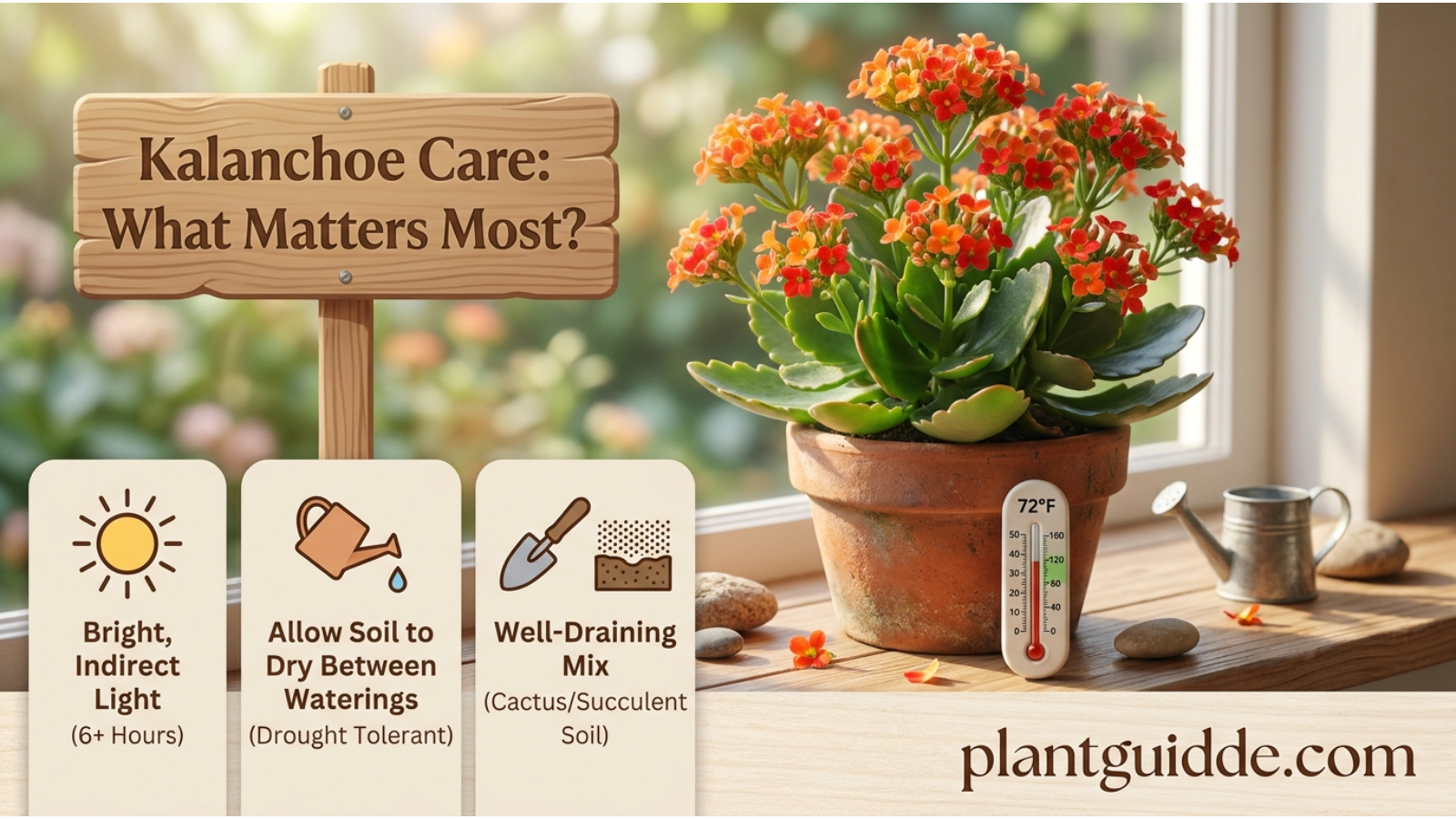
Kalanchoe Care: What Matters Most?
When several problems occur at once, don’t try to fix everything simultaneously.
Use this priority order:
1. Check the roots and soil
Is the plant staying wet for too long?
2. Check the light
Is it receiving enough bright light?
3. Check the watering technique
Are you watering thoroughly and then allowing appropriate drying?
4. Check the pot
Does excess water have somewhere to go?
5. Check temperature
Is the plant exposed to cold drafts or extreme heat?
6. Consider fertilizer
Only after the basic growing conditions are right should nutrition become a major focus.
This order can save beginners a lot of frustration because many plant problems aren’t caused by a lack of fertilizer.
FAQs:
How often should I water a kalanchoe plant?
Water when the soil has dried substantially rather than following a fixed weekly schedule. Brightness, temperature, pot size, soil, and season all affect how quickly the plant dries.
Does kalanchoe need direct sunlight?
Kalanchoe benefits from bright light and can handle some direct sunlight, especially when acclimated gradually. Very intense sunlight through hot glass may cause leaf scorch.
Why is my kalanchoe not flowering?
Insufficient light is a common reason. Other factors include seasonal conditions, plant maturity, recent flowering, and general environmental stress. Improve light before assuming the plant needs more fertilizer.
Why are my kalanchoe leaves turning yellow?
Overwatering and poor drainage are important possibilities. Check how wet the soil remains between waterings before increasing irrigation.
What is the best soil for kalanchoe?
Use a loose, well-draining cactus or succulent-style potting mix. The important characteristic is that excess water drains away rather than remaining around the roots.
Should kalanchoe be misted?
Generally, misting isn’t necessary. Kalanchoe usually does better when its roots are allowed to dry appropriately rather than when the plant is kept continuously moist.
Can I keep kalanchoe in a bathroom?
It can work if the bathroom has sufficient bright light. A naturally humid bathroom isn’t automatically better if the plant is also exposed to poor airflow or excessive moisture.
Why are my kalanchoe leaves soft?
Soft leaves can result from either water stress or root problems. Check the soil first. If the soil is very wet, investigate drainage and roots rather than simply watering again.
Should I cut off dead kalanchoe flowers?
Yes. Removing spent flower clusters improves the plant’s appearance and allows you to focus its care on healthy new growth.
How do I make my kalanchoe bushier?
Provide strong light and prune appropriately after flowering or when growth becomes excessively stretched. Correcting insufficient light is essential because pruning alone won’t prevent new leggy growth.
Final Takeaway
The secret to successful kalanchoe care isn’t complicated.
Give the plant bright light, fast-draining soil, a pot with drainage, and a real drying period between thorough waterings. Then adjust your routine according to how quickly the soil actually dries rather than following a rigid calendar.
If something goes wrong, start with the basics. Check the roots and soil first, then examine light, watering, drainage, and temperature. A kalanchoe with healthy roots and adequate light can recover from many minor setbacks, while chronic overwatering can cause problems that are much harder to reverse.
Once you understand that kalanchoe is a water-storing plant rather than a moisture-loving tropical houseplant, its care becomes much easier. Instead of constantly trying to keep it happy, you create the conditions that let it take care of itself.

Asad Mumtaz is a dedicated plant enthusiast and gardening writer with a passion for helping people care for their plants successfully. He specializes in plant care guides, indoor gardening, and practical growing tips for all skill levels. His content focuses on making gardening simple, enjoyable, and rewarding. Through his work, Asad shares reliable advice to help readers create thriving green spaces.