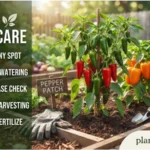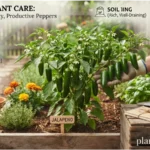
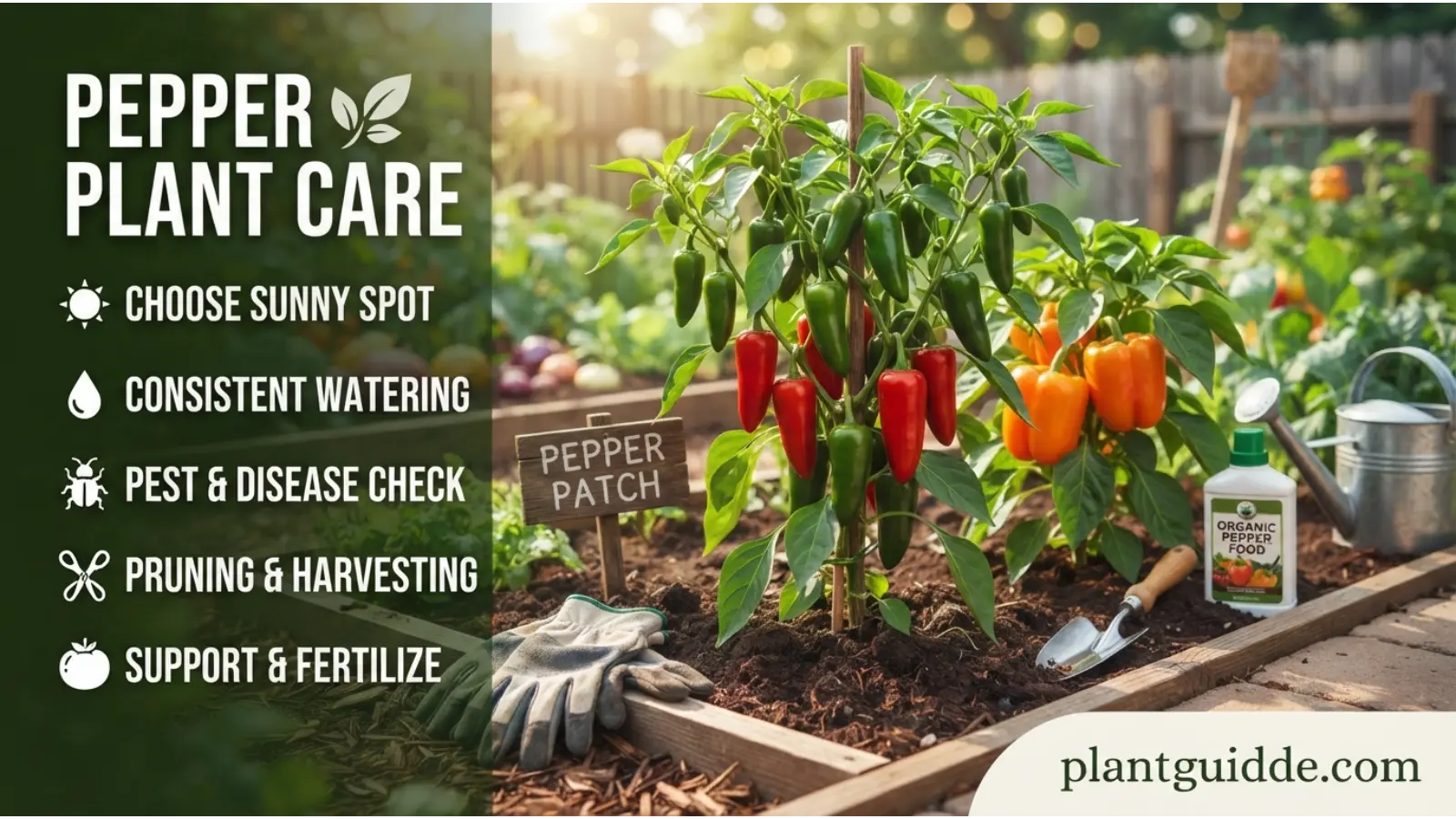
Pepper plant care can be surprisingly productive in containers, raised beds, and garden soil, but they respond poorly to inconsistent growing conditions. A plant may look healthy while producing few flowers, dropping blossoms, developing yellow leaves, or growing plenty of foliage without setting many peppers.
The key to successful pepper plant care is consistency. Peppers need warmth, sunlight, moisture, nutrition, and enough growing space, but none of these should be taken to an extreme. Once you understand how the plant responds to its environment, many common problems become much easier to prevent and correct.
Quick Answer
Pepper plant care mainly depends on strong sunlight, warm temperatures, well-draining fertile soil, consistent moisture, and regular harvesting. Give pepper plants at least 6–8 hours of direct sunlight, water when the upper soil begins to dry, avoid waterlogged roots, and feed plants during active growth. Good airflow, proper spacing, and timely pest control also help plants produce healthier foliage, flowers, and peppers.
Understanding Pepper Plants Before You Grow Them
Peppers belong to the genus Capsicum, which includes sweet peppers, hot peppers, chili peppers, jalapeños, and many other varieties. Although their fruit size, flavor, heat level, and growth habit vary, most garden peppers have similar basic requirements.
Pepper plants are warm-season crops. They perform best when the soil and air are comfortably warm and growth slows when conditions become cold.
Different varieties can behave quite differently. A compact chili pepper may remain manageable in a container, while a vigorous bell pepper may need more space and support.
Before planting, check the specific variety for:
- Mature plant size
- Days to maturity
- Container suitability
- Expected fruit size
- Heat level
- Disease resistance
- Whether it needs staking
- Recommended spacing
This matters because good care cannot compensate for a variety that is poorly matched to your climate or growing space.
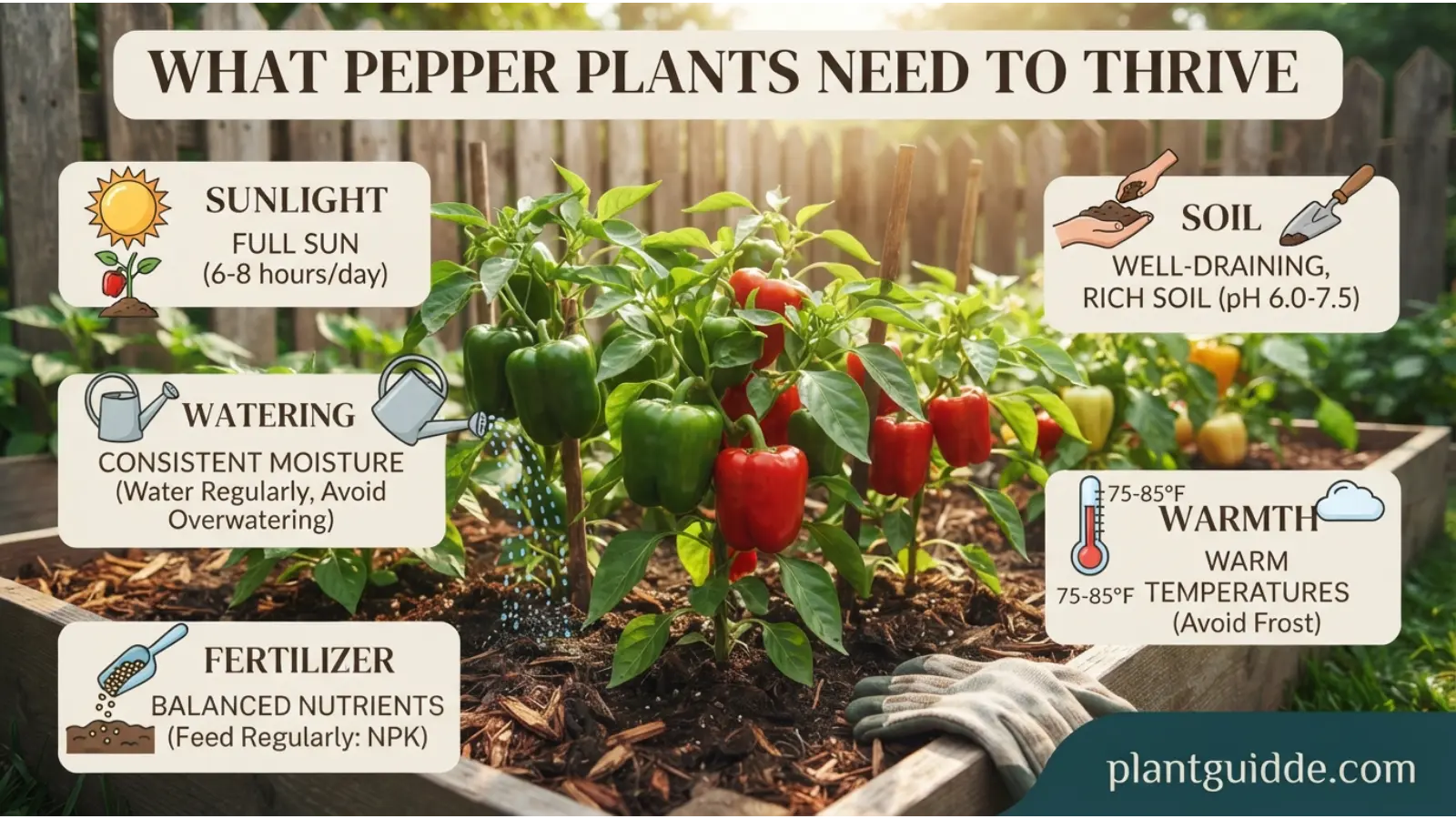
What Pepper Plants Need to Thrive
| Growing factor | What peppers generally prefer | Why it matters |
|---|---|---|
| Light | 6–8+ hours of direct sun | Supports strong growth, flowering, and fruit development |
| Temperature | Warm conditions | Peppers are sensitive to cold |
| Soil | Fertile and well-draining | Provides nutrients without keeping roots saturated |
| Water | Consistent moisture | Prevents stress and uneven growth |
| Feeding | Balanced nutrition with appropriate fruiting support | Encourages healthy growth and production |
| Airflow | Good spacing around plants | Helps foliage dry and reduces disease pressure |
| Support | Stakes or cages when needed | Keeps heavy plants and fruit from bending stems |
The goal is not to create perfect conditions every hour of the day. It is to avoid repeated extremes such as drought followed by heavy watering, intense shade, or constantly wet soil.
How Much Sunlight Do Pepper Plants Need?
Pepper plants generally perform best with at least 6–8 hours of direct sunlight per day.
A sunny garden bed is ideal, but peppers can also grow successfully in containers placed on a bright patio, balcony, or other suitable location.
Insufficient light can lead to:
- Tall, stretched stems
- Sparse foliage
- Weak growth
- Fewer flowers
- Reduced fruit production
- Smaller or slower-developing peppers
Pepper plant care a pepper plant receives only a few hours of weak morning or filtered light, moving it to a brighter location can make a noticeable difference.
However, a sudden change from shade to intense afternoon sun can stress a plant. If seedlings were grown indoors or under weaker light, acclimate them gradually before placing them in full outdoor sun.
What If Pepper Leaves Look Scorched?
Leaf damage can sometimes occur during periods of intense heat or after a sudden environmental change.
Do not automatically assume every brown or pale patch means the plant needs more water. Examine the entire growing situation, including soil moisture, recent weather, sunlight exposure, and whether the plant was recently transplanted.
The Best Soil for Pepper Plants
Pepper plants need soil that holds enough moisture for healthy growth while allowing excess water to drain away.
A useful soil mix should be:
- Fertile
- Loose rather than compacted
- Well-draining
- Rich in organic matter
- Able to retain some moisture without remaining saturated
Heavy, poorly draining soil can create serious problems because pepper roots need oxygen as well as water.
Pepper plant care you are planting in the ground, improve compacted soil with appropriate organic matter rather than simply adding more fertilizer.
For containers, use a quality potting mix designed for container plants. Avoid using dense garden soil by itself in a pot because it can become compacted and drain poorly.
How Often Should You Water Pepper Plants?
There is no single watering schedule that works for every pepper plant.
Watering frequency depends on:
- Temperature
- Rainfall
- Container size
- Soil type
- Plant size
- Sun exposure
- Wind
- Growth stage
Instead of watering according to a fixed calendar, check the soil.
When the upper portion of the soil has started to dry but the root zone is not completely dry, water thoroughly. Allow excess water to drain away from containers rather than letting the pot sit in standing water.
During hot weather, container-grown peppers may need water much more frequently than plants growing in a larger garden bed.
Avoid the Drought-to-Deluge Cycle
One of the most common pepper-growing mistakes is allowing a plant to become extremely dry and then soaking it heavily.
Repeated swings between very dry and very wet conditions can stress the plant and contribute to problems such as blossom-end rot in developing fruit.
Consistent moisture is generally more useful than constantly wet soil.
How to Fertilize Pepper Plants
Peppers need nutrients for leafy growth, flowering, and fruit production, but more fertilizer is not automatically better.
Start with fertile soil and follow the recommendations on your chosen fertilizer. During active growth, peppers may benefit from regular feeding, particularly when they are grown in containers where nutrients can be depleted more quickly.
Avoid excessive nitrogen.
Too much nitrogen can encourage abundant leafy growth while leaving you disappointed by limited flowering and fruit production.
A practical approach is to:
- Start with fertile, well-prepared soil.
- Feed according to the fertilizer label.
- Monitor plant growth rather than automatically increasing the dose.
- Reduce unnecessary feeding if the plant is producing excessive foliage.
- Maintain adequate moisture so roots can access available nutrients.
Pepper plant care a plant suddenly develops yellow leaves, do not assume fertilizer deficiency is the cause. Poor drainage, root stress, watering problems, pests, and environmental stress can produce similar symptoms.
When and How to Plant Pepper Plants
Pepper seedlings should be planted outdoors only when conditions are warm enough for active growth.
Cold soil and chilly nights can slow development and cause newly transplanted peppers to struggle.
When transplanting:
- Choose a location with strong sunlight.
- Prepare loose, fertile, well-draining soil.
- Water the seedling before transplanting if the root ball is dry.
- Handle the roots gently.
- Plant at the appropriate depth for the particular seedling.
- Water thoroughly after planting.
- Keep soil moisture consistent while the plant establishes.
Avoid putting a tender young pepper plant directly into harsh outdoor conditions without acclimation.
How Far Apart Should Pepper Plants Be?
Spacing depends on the variety, but overcrowding should generally be avoided.
Plants that are packed too closely together can have:
- Reduced airflow
- More difficult watering
- Greater competition for light
- Foliage that stays damp longer
- Increased difficulty inspecting for pests
Always prioritize the spacing recommendation supplied for your particular variety.
For large or vigorous plants, giving them additional room can make maintenance and harvesting easier even if the minimum recommended spacing is smaller.
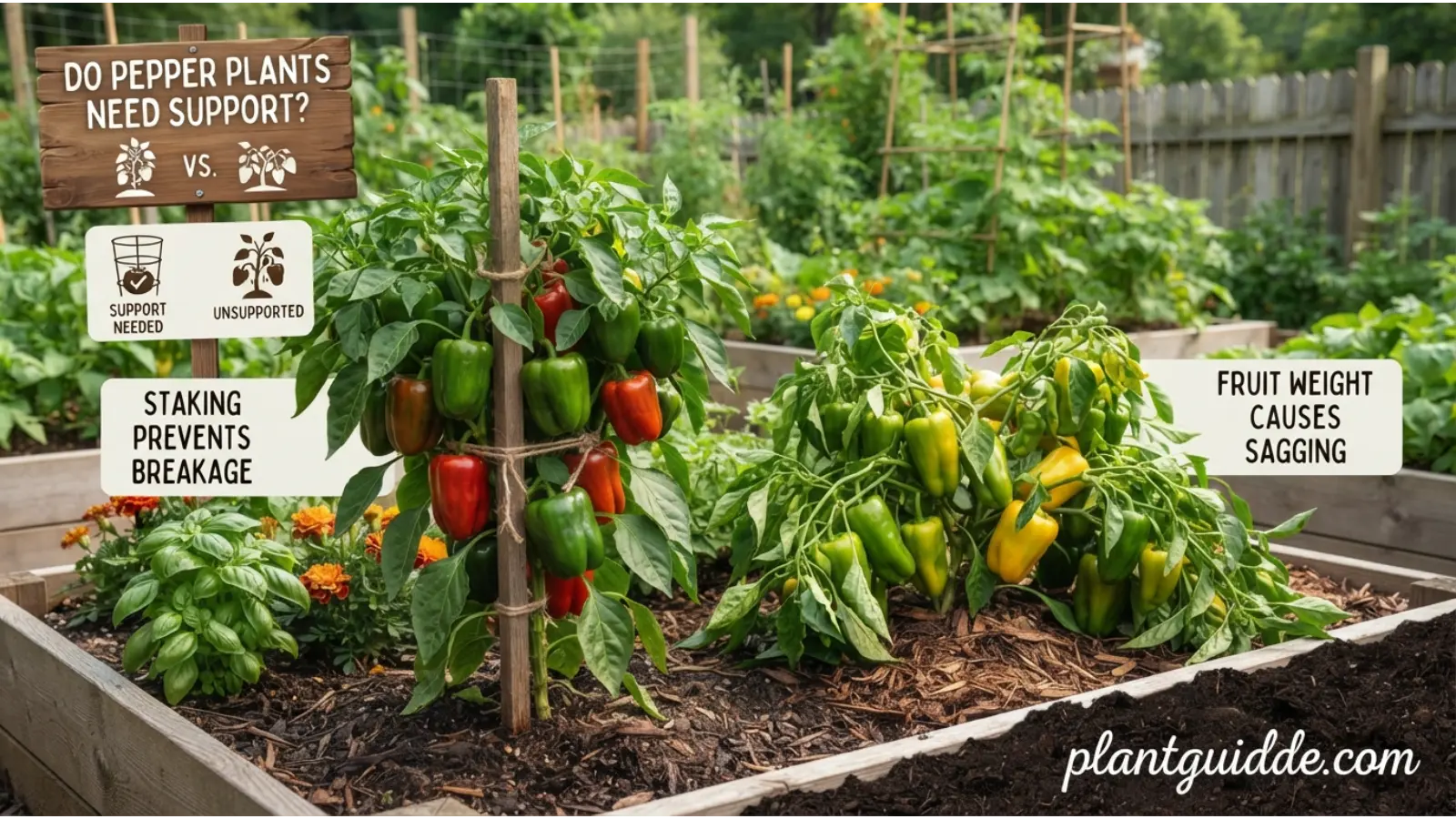
Do Pepper Plants Need Support?
Some pepper plants remain compact and upright without help. Others become top-heavy once they carry multiple fruits.
Support can be useful when:
- Stems bend under the weight of fruit
- The plant becomes tall and unstable
- Strong winds move the plant
- Fruit touches the soil
- A productive plant needs additional structural support
A small stake, cage, or other gentle support can prevent stems from bending or breaking.
Install support early when possible. Pushing a stake into the soil after the plant has developed a large root system can unnecessarily disturb roots.
Should You Prune Pepper Plants?
Pepper plants usually do not require aggressive pruning to produce fruit.
Remove clearly damaged, diseased, or dead growth when appropriate, and keep the plant’s growing space reasonably open.
Avoid repeatedly cutting healthy branches simply because you think more pruning must produce more peppers.
For most home growers, good light, nutrition, watering, spacing, and harvesting have a larger practical impact than elaborate pruning techniques.
How to Encourage More Peppers
If a healthy pepper plant has plenty of leaves but few fruits, look at the growing conditions before reaching for more fertilizer.
Check:
- Is the plant receiving enough direct sunlight?
- Are temperatures appropriate?
- Is the soil staying excessively wet?
- Is the plant being allowed to dry out too severely?
- Is there excessive nitrogen?
- Are flowers forming but dropping?
- Are pests damaging new growth or flowers?
- Is the plant overcrowded?
Once flowers appear, avoid unnecessary environmental stress. Sudden drought, excessive heat, root problems, or major changes in growing conditions can interfere with fruit set.
Regular harvesting can also encourage continued production in varieties that keep producing throughout the season.
When Should You Harvest Peppers?
The ideal harvest stage depends on the variety and your preferred flavor.
Many peppers can be harvested while still green, while others develop their mature color if left on the plant longer.
Harvesting when fruits reach the expected size and appearance helps you use the crop at its intended stage.
Use clean scissors or pruners when needed rather than aggressively pulling fruit from the plant and risking broken stems.
For a continuous harvest, check plants regularly instead of waiting until every pepper reaches full maturity.
Pepper Plant Care in Containers
Growing peppers in pots can work extremely well, particularly when garden soil is poor or outdoor space is limited.
The container should have:
- Adequate drainage holes
- Enough volume for the mature plant
- Quality potting mix
- A suitable location with strong sunlight
- Enough stability to prevent the plant from tipping
Container plants often require closer attention than garden-grown plants because pots can heat up and dry out quickly.
During hot weather, check container moisture frequently rather than relying on the same schedule you use for plants in the ground.
Choosing a Container
A small seedling may look comfortable in a small pot, but pepper roots and the mature plant eventually need more room.
The exact container size depends on the pepper variety and expected mature size. Larger varieties generally benefit from larger, heavier containers.
Do not place a large pepper plant in a tiny pot simply because it can survive there. Restricted root space can make moisture and nutrient management much harder.
Common Pepper Plant Problems
Yellow Leaves
Yellow leaves can have several causes.
Possible factors include:
- Overwatering
- Poor drainage
- Root stress
- Nutrient imbalance
- Aging leaves
- Pest activity
- Insufficient light
Look at the pattern before taking action. If only a few older leaves are yellow while the plant is otherwise healthy, the cause may be very different from widespread yellowing accompanied by wet soil and poor growth.
Drooping Pepper Plant
A drooping pepper plant may be thirsty, but watering is not always the solution.
Check the soil first.
If it is very dry, thorough watering may help. If the soil is already wet, adding more water can worsen root stress.
Also consider:
- Extreme heat
- Transplant shock
- Root damage
- Poor drainage
- Disease
- Pest activity
Flowers Falling Off
Flower drop can be frustrating because it feels like the plant is preparing to produce peppers and then suddenly stops.
Environmental stress is one possible reason. Excessive heat, cold conditions, inconsistent moisture, and other growing stresses can interfere with successful fruit set.
Before adding fertilizer, evaluate the plant’s overall environment.
Small Peppers
Small fruit can result from the variety itself, but environmental conditions can also influence fruit development.
Check sunlight, water consistency, nutrition, temperature, and root health.
If the plant is healthy but the fruit is consistently smaller than expected, compare its characteristics with the seed packet or variety information before assuming something is wrong.
Curling or Distorted Leaves
Curling leaves may be associated with environmental stress, watering problems, heat, pests, or other growing issues.
Inspect both sides of the leaves for insects and examine new growth closely. New leaves that repeatedly emerge distorted deserve more attention than a single older leaf showing minor damage.
Pepper Plant Pests to Watch For
Common garden pests can attack peppers, particularly tender new growth.
Inspect plants regularly for:
- Aphids
- Spider mites
- Whiteflies
- Thrips
- Caterpillars
- Other chewing or sap-sucking insects
Look underneath leaves as well as on top. Many pests are easier to identify before populations become large.
Instead of automatically spraying a broad pesticide, first identify the pest when possible. Physical removal, water sprays, sanitation, beneficial insects, or targeted treatments may be appropriate depending on the pest and growing situation.
Always follow the product label for edible crops, including application rates and the required interval between treatment and harvest.
Pepper Plant Diseases and Prevention
Many pepper problems become more difficult when plants are stressed or foliage remains wet for extended periods.
Good preventive practices include:
- Avoiding waterlogged soil
- Providing adequate spacing
- Maintaining airflow
- Watering the soil rather than repeatedly wetting foliage
- Removing seriously diseased plant material
- Cleaning tools when disease is suspected
- Avoiding unnecessary handling of wet plants
Crop rotation can also be useful in garden beds where the same crop family is repeatedly grown and soilborne disease problems occur.
If a plant develops severe or rapidly spreading symptoms, identify the problem before treating it. Disease symptoms can resemble nutrient deficiencies or environmental stress.
Common Pepper Growing Mistakes
Watering on a Fixed Schedule
“Water every three days” sounds simple, but weather and soil conditions change.
Better approach: Check the soil and adjust watering to current conditions.
Giving Too Much Fertilizer
More fertilizer does not automatically mean more peppers.
Better approach: Start with fertile soil and follow the fertilizer label.
Growing Peppers in Too Little Sun
A pepper plant may survive in partial shade but fail to perform as expected.
Better approach: Choose the sunniest suitable location available.
Keeping the Soil Permanently Wet
Roots need oxygen as well as moisture.
Better approach: Use well-draining soil and water thoroughly when needed, allowing excess water to drain.
Ignoring the Mature Plant Size
A tiny transplant can eventually become a large, fruit-heavy plant.
Better approach: Plan container size, spacing, and support around mature growth.
Waiting Too Long to Notice Pests
A few insects can become a major infestation surprisingly quickly.
Better approach: Inspect leaves and new growth regularly.
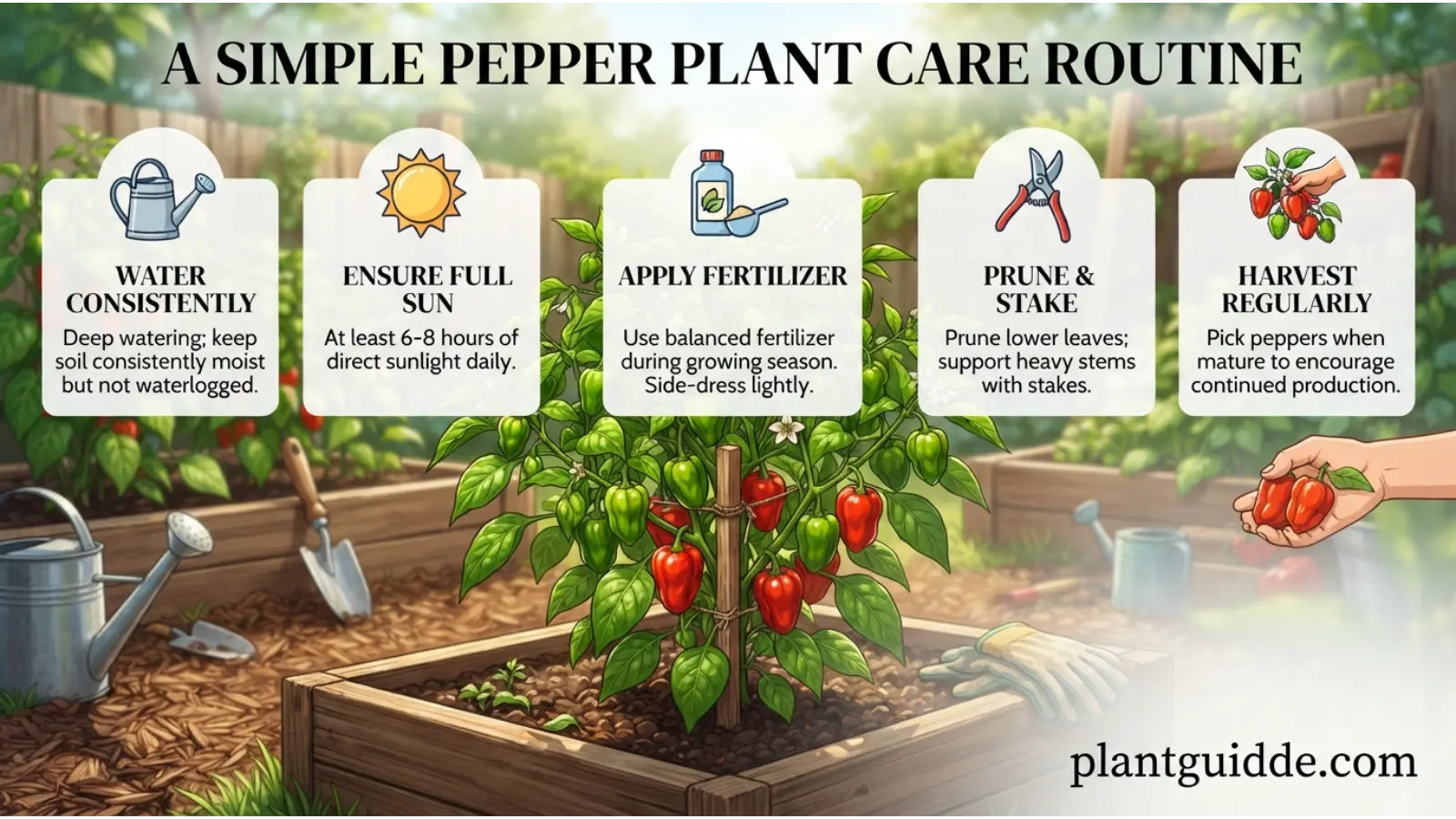
A Simple Pepper Plant Care Routine
For beginners, a simple routine is often more effective than complicated gardening schedules.
Every few days: Check soil moisture, especially during hot weather.
Weekly: Inspect leaves, stems, flowers, and new growth for pests or unusual symptoms.
During active growth: Monitor nutrition and provide fertilizer according to the product instructions when needed.
As the plant grows: Check whether stems need support and whether neighboring plants are becoming overcrowded.
During fruit production: Harvest regularly according to the variety’s recommended maturity stage.
After harvesting: Remove damaged or diseased material and continue monitoring the plant if the variety is capable of producing another crop.
FAQs:
How much sun does a pepper plant need?
Most pepper plants perform best with at least 6–8 hours of direct sunlight each day. Strong light supports healthy growth, flowering, and fruit development. If a plant becomes tall and weak or produces little fruit, insufficient light should be one of the first growing conditions you investigate.
How often should I water pepper plants?
Water when the soil has begun to dry rather than following a rigid schedule. Hot weather, containers, wind, and small pots can increase watering needs. Water thoroughly when needed, but avoid keeping the root zone continuously saturated.
Why does my pepper plant have flowers but no peppers?
Flower production does not always guarantee successful fruit set. Temperature stress, inconsistent moisture, excessive nitrogen, inadequate growing conditions, and other environmental factors can interfere with fruit development. Check the plant’s overall growing conditions before adding more fertilizer.
Can pepper plants grow in pots?
Yes. Many pepper varieties grow successfully in containers when they have adequate root space, good drainage, fertile potting mix, strong sunlight, and consistent moisture. Container plants usually need more frequent monitoring because their soil can dry faster than garden soil.
Should I remove the first flowers from a pepper plant?
There is no universal need to remove the first flowers from every pepper plant. Some growers remove early flowers to encourage vegetative growth in young transplants, but the practice is not essential for every plant. Focus first on establishing healthy roots, adequate light, proper moisture, and suitable nutrition.
Conclusion
Successful pepper plant care comes down to giving the plant stable conditions rather than constantly adjusting it. Provide strong sunlight, warm growing conditions, fertile well-draining soil, consistent moisture, appropriate nutrition, and enough space for the variety to mature.
When something goes wrong, resist the temptation to treat the first visible symptom immediately. Yellow leaves, drooping, poor flowering, and small fruit can have several causes. Check the soil, roots, light, temperature, nutrition, and pests together. That simple habit will help you diagnose problems more accurately and grow healthier, more productive pepper plants.

Asad Mumtaz is a dedicated plant enthusiast and gardening writer with a passion for helping people care for their plants successfully. He specializes in plant care guides, indoor gardening, and practical growing tips for all skill levels. His content focuses on making gardening simple, enjoyable, and rewarding. Through his work, Asad shares reliable advice to help readers create thriving green spaces.