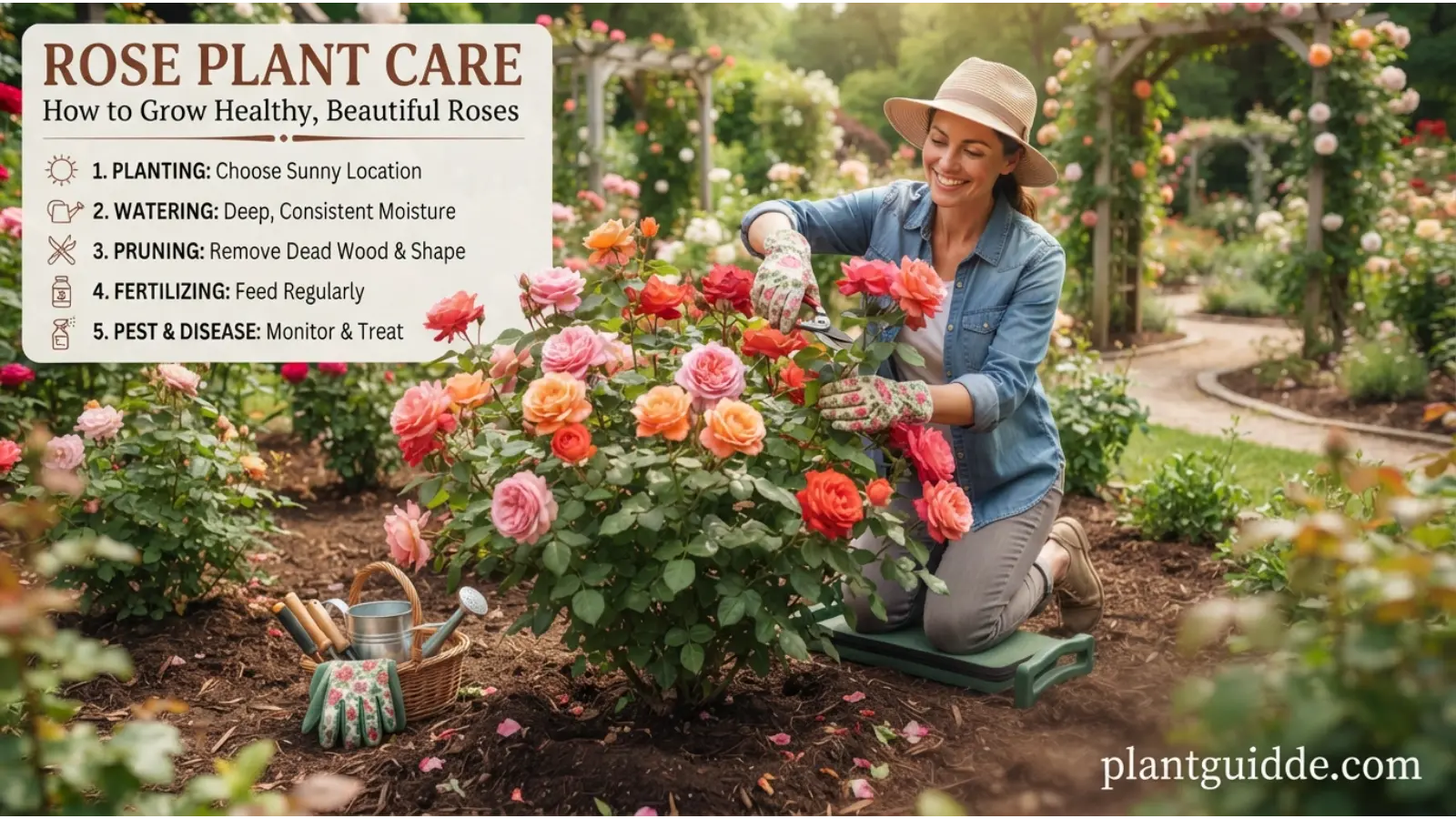
Rose plant care are often considered difficult plants, but many problems come from a few manageable mistakes: too little sunlight, constantly wet soil, poor airflow, irregular watering, or pruning at the wrong time.
Once you understand what roses need and learn to read their leaves, stems, buds, and soil, rose plant care becomes much more predictable.
Rose plant care you are growing a rose in a garden bed, container, patio, or balcony, the basic goal is the same: provide enough light for strong growth, keep the root zone healthy, avoid prolonged wetness, and give the plant enough space for air to move around its foliage.
Quick Answer
Rose plant care starts with plenty of sunlight, well-draining fertile soil, consistent watering, good air circulation, and regular pruning. Most roses perform best with about 6 hours or more of direct sunlight daily.
Water deeply when the soil begins to dry rather than giving frequent shallow drinks, and monitor leaves regularly for black spot, powdery mildew, aphids, and other common problems.
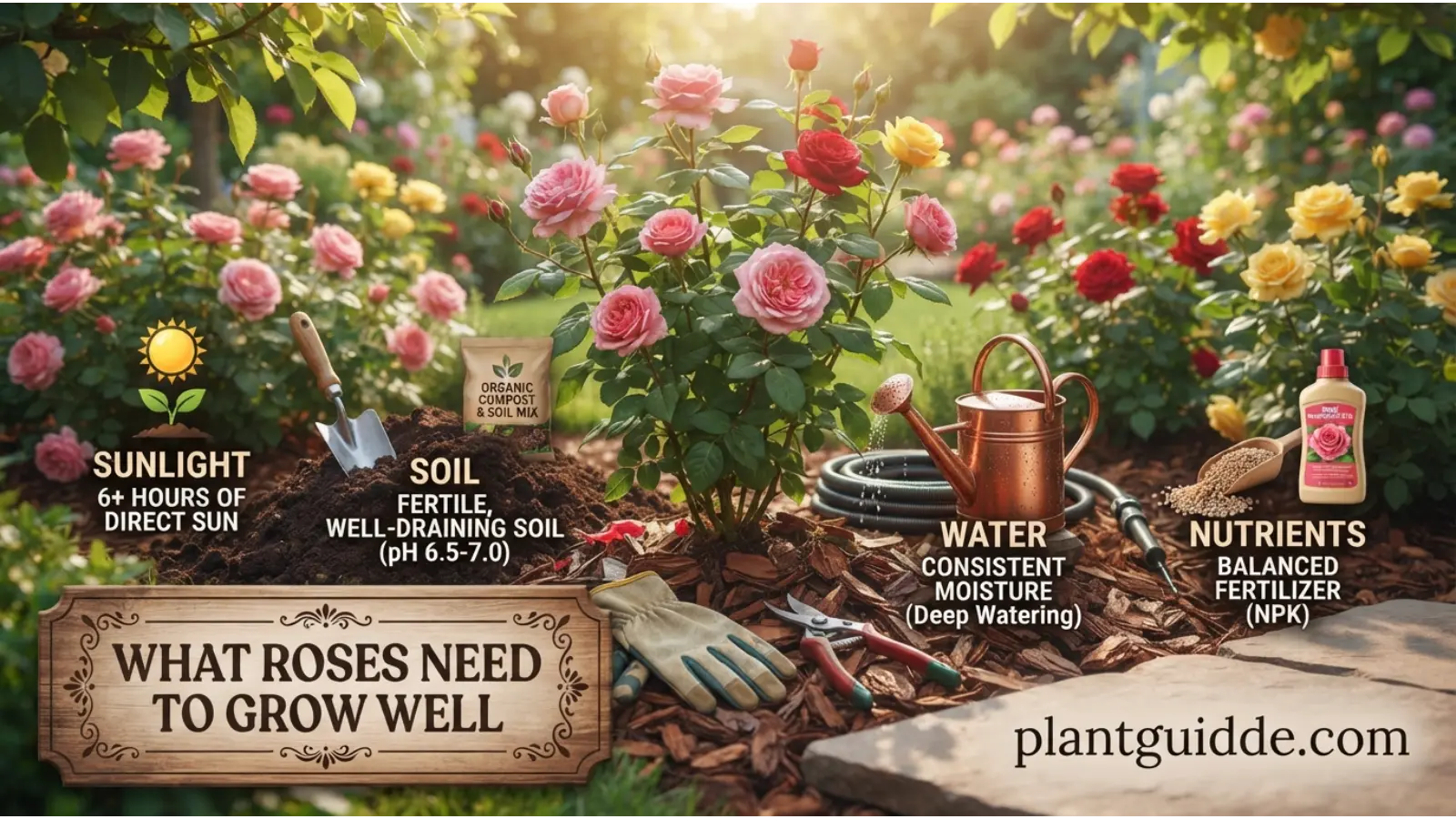
What Roses Need to Grow Well
Roses are woody flowering plants in the genus Rosa. There are many types, including hybrid teas, floribundas, climbing roses, shrub roses, miniature roses, and landscape roses. Their exact requirements vary somewhat by cultivar, but several fundamentals apply to most garden roses.
| Growing factor | What roses generally prefer | Why it matters |
|---|---|---|
| Light | About 6+ hours of direct sunlight | Supports flowering and strong growth |
| Soil | Fertile, well-draining soil | Provides nutrients without keeping roots saturated |
| Water | Deep, consistent watering | Encourages a healthier root system |
| Airflow | Open space around foliage | Helps foliage dry and reduces disease pressure |
| Feeding | Regular nutrition during active growth | Supports leaves, stems, buds, and flowers |
| Pruning | Depends on rose type and flowering habit | Controls shape and encourages productive growth |
| Temperature | Varies by cultivar and climate | Affects dormancy, flowering, and winter survival |
The most important point is that these factors work together. A rose receiving excellent fertilizer will still struggle if its roots remain waterlogged or if it grows in deep shade.
How Much Sunlight Does a Rose Plant Need?
Most roses grow and flower best in a location receiving at least 6 hours of direct sunlight per day, with many performing particularly well in more sun when temperatures are not excessively stressful.
Morning and midday sunlight are especially useful because they provide strong light while helping foliage dry after overnight moisture.
A rose receiving inadequate light may show:
- Long, weak or stretched stems
- Fewer flowers
- Smaller blooms
- Pale or thin foliage
- Poorly developed buds
- Greater competition between shoots
Before moving a struggling rose, observe the site throughout the day. A location that appears sunny in the morning may become shaded by a building, wall, tree, or neighboring plant later.
Practical tip: If your rose receives strong afternoon heat in a very hot climate, the best location may require some protection during the harshest part of the day. Do not automatically assume that more intense heat is always better simply because roses like sunlight.
Choosing the Right Soil for Roses
Roses need soil that holds enough moisture and nutrients for active growth while allowing excess water to drain away.
A heavy, compacted planting site can create problems because water and air do not move efficiently around the roots. On the other hand, extremely sandy soil may drain so quickly that the plant struggles to maintain adequate moisture.
A useful rose-growing soil should be:
- Well drained
- Rich in organic matter
- Loose enough for roots to expand
- Able to retain some moisture without becoming saturated
- Free from persistent standing water
When preparing a garden bed, work suitable organic matter into poor soil rather than simply placing a small pocket of rich material around the root ball.
What Soil pH Do Roses Prefer?
Roses generally perform well in slightly acidic to neutral soil, roughly around pH 6 to 7.
You do not need to adjust soil pH simply because you are growing roses. If a rose repeatedly shows nutrient-related symptoms, poor growth, or unusual leaf coloration, testing the soil can be more useful than adding amendments based on guesswork.
How to Water Roses Correctly
Watering is one of the most important parts of rose plant care, but roses do not benefit from following a rigid watering schedule.
The amount and frequency of water depend on:
- Temperature
- Rainfall
- Soil type
- Container size
- Plant size
- Wind exposure
- Sunlight
- Season
- Root development
Instead of watering automatically every day, check the soil and the plant.
For established garden roses, water deeply enough to moisten the root zone when the soil has begun to dry. Newly planted roses usually need closer monitoring while their roots become established.
How to Water a Rose Plant
- Check the soil several centimeters below the surface.
- If it is still noticeably moist, wait and check again later.
- When watering is needed, apply water slowly around the root zone.
- Water deeply rather than repeatedly wetting only the surface.
- Avoid routinely soaking the leaves.
- Make sure excess water can drain away.
Container-grown roses usually require more frequent attention than roses planted in the ground because containers have a smaller volume of soil and can dry quickly.
Common mistake: Giving a rose a small amount of water every day without checking the soil. This can encourage shallow moisture and may leave deeper soil inconsistently hydrated while also keeping the upper root zone wet.
Should You Water Roses From Above?
It is better to direct water toward the soil rather than routinely wetting the foliage.
Wet leaves that remain damp for long periods can create conditions favorable to certain fungal diseases. Watering close to the soil also puts moisture where the roots can use it.
If rain naturally wets the foliage, that is not something you need to prevent. The practical goal is simply to avoid unnecessary prolonged leaf wetness when irrigating.
Fertilizing Rose Plants
Roses are active growers and flowering plants, so adequate nutrition matters, particularly during the growing season.
However, fertilizer should support good growing conditions rather than compensate for poor ones.
A rose with damaged roots, inadequate light, severe pest pressure, or chronically wet soil may not respond well to additional fertilizer.
Depending on the rose variety and soil fertility, gardeners may use a balanced fertilizer or a fertilizer formulated for flowering roses. Always follow the product label rather than assuming that more fertilizer will produce more flowers.
Signs a Rose May Have a Nutrient Problem
Possible clues include:
- Pale or yellowing foliage
- Weak new growth
- Poor flowering
- Small leaves
- Unusually slow growth
These symptoms are not proof of a nutrient deficiency. Similar symptoms can result from poor drainage, root damage, pests, disease, incorrect watering, or unsuitable light.
That is why diagnosing the growing environment first is usually more reliable than immediately increasing fertilizer.
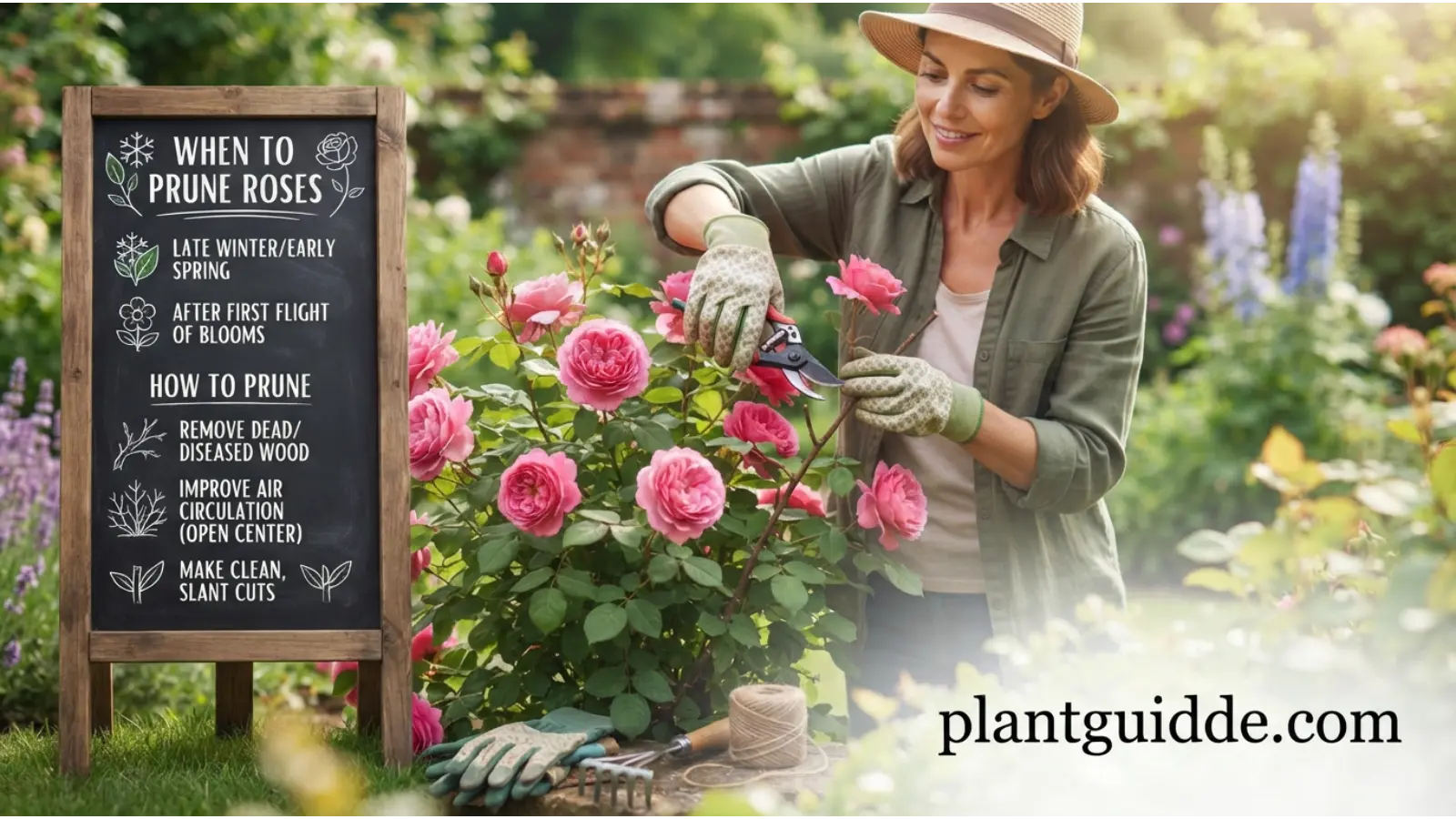
When and How to Prune Roses
Pruning can improve the structure, appearance, and flowering performance of many roses, but the correct approach depends heavily on the type of rose.
Start by removing:
- Dead wood
- Diseased or damaged stems
- Weak growth
- Crossing or rubbing branches
- Unwanted shoots that interfere with the plant’s structure
For many repeat-flowering roses, pruning during the appropriate dormant or early-growth period can encourage vigorous new growth. However, some roses flower primarily on older wood, so aggressive pruning at the wrong time can remove the stems that would have produced flowers.
Identify the rose before making major pruning cuts. If you do not know the cultivar, observe when it flowers and how it produces blooms before performing heavy pruning.
Deadheading Roses
Removing spent flowers can improve the plant’s appearance and, for many repeat-blooming roses, encourage additional flowering.
When deadheading, make a clean cut just above a suitable outward-facing bud or leaf node rather than leaving a long dead stem.
Not every rose needs aggressive deadheading. Some shrub and landscape roses naturally produce attractive hips after flowering, and gardeners may intentionally leave those flowers in place.
How to Encourage More Rose Flowers
If your rose has healthy leaves but produces very few flowers, examine the basics before reaching for more fertilizer.
Check:
- Sunlight: Is the plant receiving enough direct light?
- Pruning: Was productive flowering wood accidentally removed?
- Water: Is the plant repeatedly drying severely or staying saturated?
- Nutrition: Is the soil reasonably fertile?
- Pests: Are insects damaging buds or new growth?
- Disease: Is foliage being lost prematurely?
- Cultivar: Is the variety naturally a once-blooming or repeat-flowering type?
A rose cannot compensate for insufficient sunlight simply by receiving extra fertilizer.
Rose Plant Care in Containers
Roses can grow successfully in containers, but container culture requires more attention than planting in the ground.
Choose a container with:
- Adequate drainage holes
- Enough volume for the mature plant
- A stable base that will not easily tip
- A quality potting mix suitable for container plants
Avoid placing a rose in a decorative pot that has no drainage unless the plant is grown inside a properly drained nursery pot.
Container roses can dry rapidly during hot weather, particularly on sunny balconies or patios. Check the soil regularly instead of relying on the same watering
hoosing a Rose for Your Growing Space
The best rose for a particular location depends on more than flower color.
Consider:
- Mature size
- Climate suitability
- Disease resistance
- Flowering habit
- Fragrance
- Thorniness
- Container suitability
- Available sunlight
- Desired growth form
For a small balcony, a compact or miniature rose may be more practical than a vigorous climber. For a large garden, a shrub or climbing rose may make better use of available space.
Read the cultivar’s mature dimensions before planting. A rose that looks small in a nursery container can eventually become much larger.
Image Suggestion: A labeled visual showing rose sunlight requirements, correct watering at the soil line, pruning points, drainage, and healthy spacing between plants.
Common Rose-Growing Mistakes to Avoid
Watering on a Fixed Schedule
Weather changes, soil dries at different rates, and container plants behave differently from plants in the ground. Check moisture instead of blindly following a calendar.
Planting in Too Much Shade
Roses may survive in poor light, but survival is not the same as strong flowering. Choose a naturally bright planting location.
Keeping the Soil Constantly Wet
Roots need oxygen as well as water. Poor drainage can cause root stress and create conditions that favor root diseases.
Overfertilizing
More fertilizer does not automatically mean more flowers. Excess nutrients can damage roots or produce imbalanced growth.
Pruning Without Knowing the Rose Type
Different roses flower on different types of growth. Identify the plant’s flowering habit before making major cuts.
Ignoring Airflow
A crowded rose with dense foliage may create a favorable environment for disease. Give mature plants enough space to breathe.
Treating Every Yellow Leaf as a Deficiency
Yellowing is a symptom, not a diagnosis. Check water, drainage, roots, light, pests, and the age of the affected leaves first.
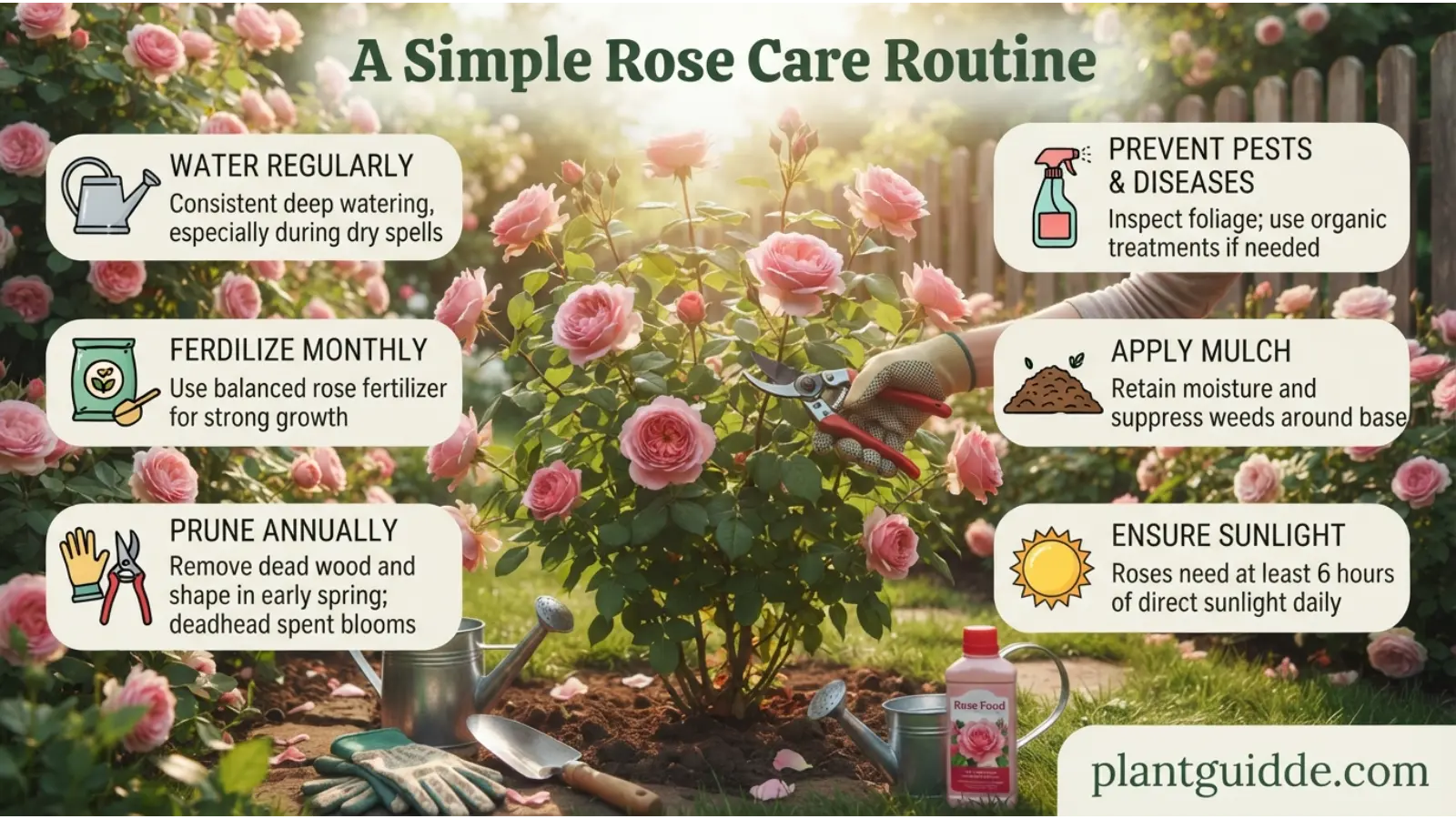
A Simple Rose Care Routine
If you want a practical routine rather than a complicated calendar, use this checklist.
Every few days during active growth:
- Look at new growth and buds.
- Check for insects.
- Observe leaves for spots, discoloration, or distortion.
- Check soil moisture when weather is hot or unusually dry.
When watering is needed:
- Water the root zone thoroughly.
- Avoid repeated shallow watering.
- Allow excess water to drain.
Regularly:
- Remove dead or damaged material.
- Deadhead repeat-flowering roses when appropriate.
- Keep fallen diseased foliage under control.
- Check that surrounding plants are not blocking sunlight or airflow.
Seasonally:
- Adjust watering for temperature and rainfall.
- Feed according to the rose’s growth stage, soil fertility, and fertilizer instructions.
- Perform major pruning according to the rose type and local growing conditions.
FAQs:
How often should I water a rose plant?
There is no single watering interval that works for every rose. Check the soil and water deeply when the root zone begins to dry. Newly planted and container-grown roses usually require closer monitoring than established garden roses.
Do roses need full sun?
Most roses flower best with around 6 or more hours of direct sunlight daily. Insufficient light can result in weak growth and fewer flowers, although the exact tolerance varies by cultivar and climate.
Why are my rose leaves turning yellow?
Yellow leaves can result from overwatering, poor drainage, nutrient issues, insufficient light, pests, disease, or normal aging. Examine the entire plant and growing conditions rather than assuming fertilizer deficiency.
Should I cut off dead roses?
For many repeat-flowering roses, removing spent flowers can encourage additional flowering and keeps the plant looking tidy. However, some roses are intentionally grown for their hips, so leaving spent flowers can also be appropriate.
Can roses grow in pots?
Yes. Many roses can be grown successfully in containers when they have adequate space, drainage, suitable potting mix, sufficient sunlight, and consistent moisture management. Compact varieties are generally easier to manage in containers than very large roses.
Conclusion
Successful rose plant care is less about following a rigid schedule and more about maintaining the right growing conditions. Give your rose enough sunlight, provide fertile but well-draining soil, water deeply when needed, maintain airflow, feed responsibly, and prune according to the plant’s flowering habit.
For a healthier rose, your next step is simple: inspect the plant today, check the soil moisture and sunlight, and look closely at the newest leaves and buds. Those observations often tell you more about what the plant needs than a fixed care calendar ever will.

Asad Mumtaz is a dedicated plant enthusiast and gardening writer with a passion for helping people care for their plants successfully. He specializes in plant care guides, indoor gardening, and practical growing tips for all skill levels. His content focuses on making gardening simple, enjoyable, and rewarding. Through his work, Asad shares reliable advice to help readers create thriving green spaces.