Aglaonema plant care, commonly called the Chinese evergreen, is one of the more forgiving tropical houseplants, but “easy” does not mean it can tolerate every indoor condition. A plant that looks healthy in a nursery can develop yellow leaves, brown edges, curling foliage, or weak growth after being moved into a darker, colder, or drier room.
Good aglaonema plant care is less about following a rigid watering schedule and more about understanding what the plant is telling you. The leaves, soil, and growth pattern provide useful clues. Once you learn how to read those signs, caring for an Aglaonema becomes considerably easier.
Quick Answer
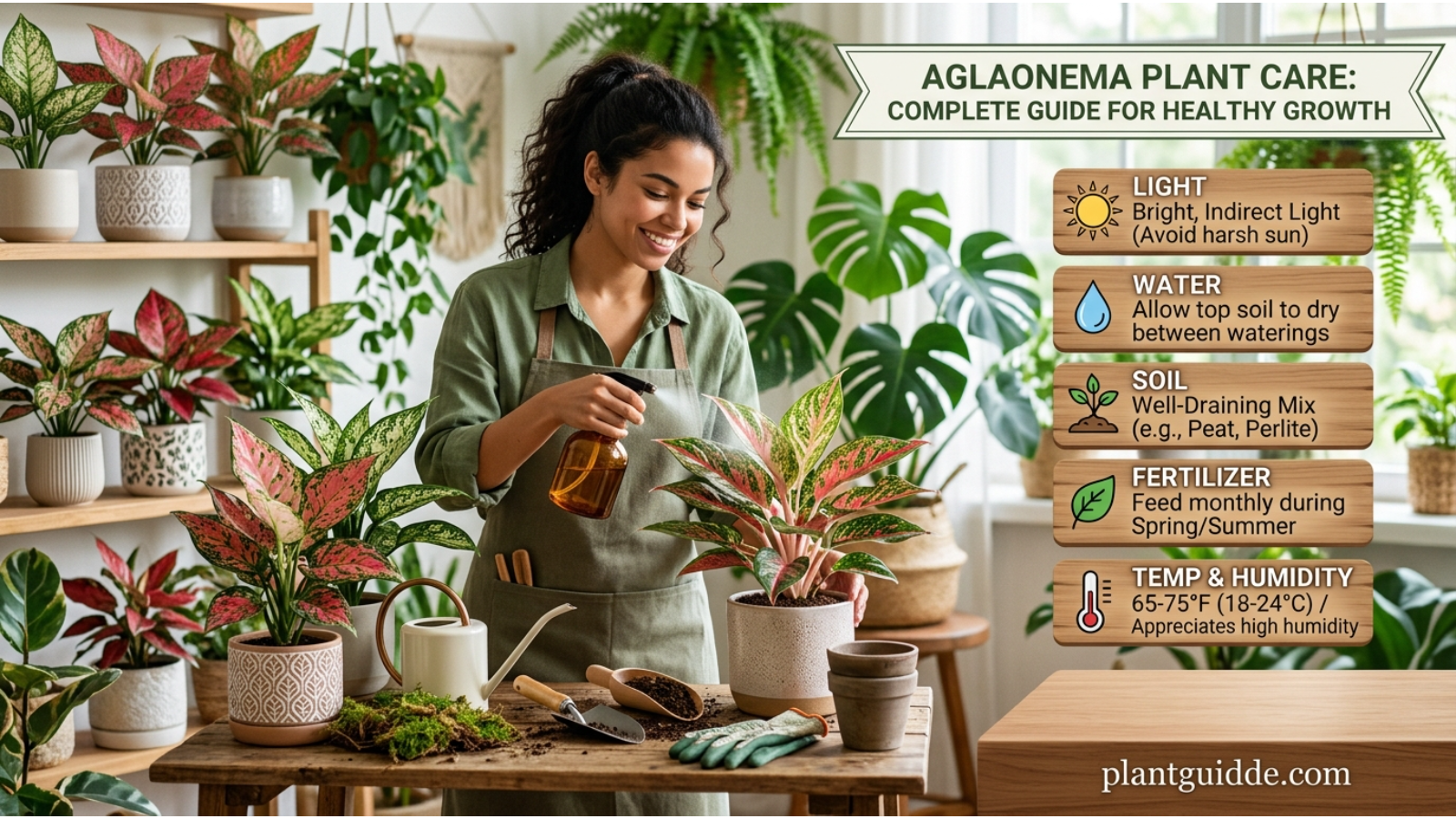
Aglaonema plant care is mainly about providing bright to moderate indirect light, well-draining soil, moderate watering, warm temperatures, and reasonable humidity. Allow the upper layer of soil to dry slightly before watering again, and avoid keeping the roots constantly wet. Most problems, including yellow leaves, brown tips, drooping, and slow growth, are caused by inconsistent moisture, poor drainage, unsuitable light, or temperature stress.
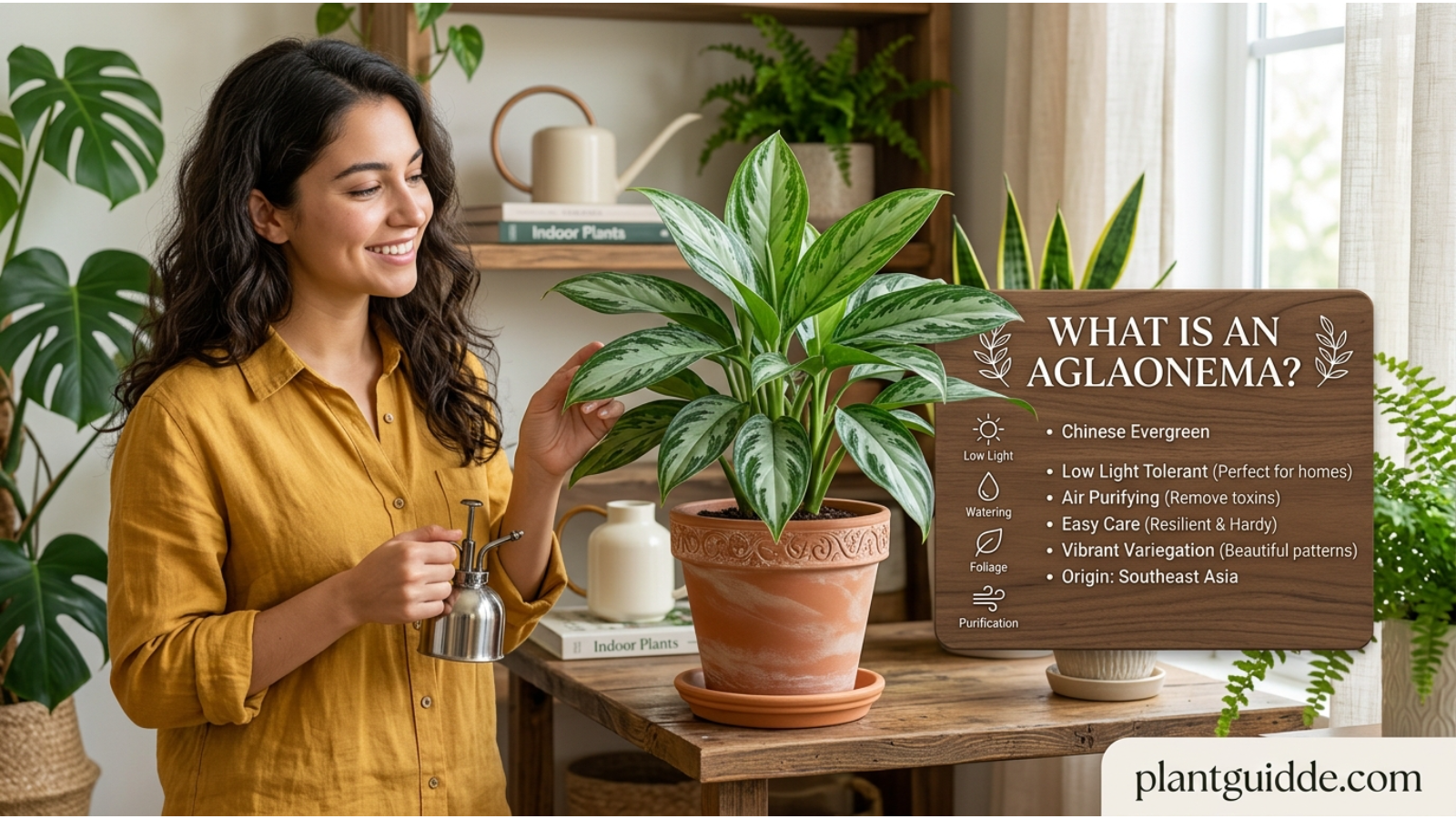
What Is an Aglaonema?
Aglaonema is a genus of tropical foliage plants in the arum family, Araceae. Several species and cultivated varieties are grown as houseplants, and they are particularly valued for their attractive leaves.
Depending on the variety, foliage may be deep green, silver-green, cream, pink, red, or combinations of several colors. Some cultivars remain compact, while others gradually develop upright stems and a fuller appearance.
Aglaonemas naturally grow in warm, humid environments with filtered light rather than intense direct sun. That explains many of their indoor preferences:
- They generally prefer indirect or filtered light.
- Their roots need moisture but also oxygen.
- They dislike prolonged cold exposure.
- They perform best when environmental conditions remain relatively stable.
- Variegated varieties may need more light than darker green varieties to maintain strong growth and coloration.
Although Aglaonema can adapt to lower light than many houseplants, very low light can still reduce growth and make the plant look sparse.
Aglaonema Plant Care Requirements at a Glance
| Care factor | Practical recommendation |
|---|---|
| Light | Bright to moderate indirect light |
| Water | Water when the upper soil has dried slightly |
| Soil | Loose, airy, well-draining potting mix |
| Humidity | Moderate to high humidity is beneficial |
| Temperature | Warm, stable indoor temperatures |
| Fertilizer | Light feeding during active growth |
| Pot | Container with drainage holes |
| Repotting | When roots become crowded or soil structure deteriorates |
| Pruning | Remove damaged, yellowing, or dead foliage |
| Growth | Usually moderate, depending on variety and conditions |
The important point is that these are starting guidelines rather than absolute rules. A plant in a bright, warm room may use water much faster than one in a cool, dim room.
How Much Light Does Aglaonema Need?
Aglaonemas generally perform well in bright indirect light, although many established plants can tolerate moderate or relatively low indoor light.
Place the plant near a window where it receives plenty of ambient daylight without sitting in strong, prolonged direct afternoon sun.
Best light for green Aglaonema
Darker green varieties are often more tolerant of lower light. They may remain attractive in a room that receives moderate indirect illumination.
However, low-light tolerance should not be confused with low-light preference. If growth becomes extremely slow, stems stretch, or new leaves become noticeably smaller, the plant may benefit from a brighter location.
Best light for colorful Aglaonema
Pink, red, silver, cream, or strongly variegated varieties generally benefit from brighter indirect light.
Light helps the plant produce energy and can also support better expression of its foliage patterns. In excessively dark conditions, highly variegated plants may grow slowly.
A useful rule is:
The more colorful the foliage, the more carefully you should watch for insufficient light.
Do not compensate for low light by placing the plant immediately against a hot, sunny window. A sudden increase in intense sunlight can scorch foliage.
Signs of too much light
Watch for:
- Bleached-looking patches
- Dry brown areas on exposed leaves
- Crispy leaf edges
- Foliage becoming unusually pale
- Damage concentrated on the window-facing side
If this happens, move the plant farther from the glass or filter the light with a sheer curtain.
Image Suggestion: A comparison showing Aglaonema in low light, ideal filtered light, and excessive direct sunlight, with visible differences in leaf growth.
How Often Should You Water Aglaonema?
There is no reliable universal watering schedule for Aglaonema.
Instead, check the soil before watering. When the upper portion of the potting mix has dried somewhat but the root zone is not completely parched, water thoroughly.
The exact interval depends on:
- Pot size
- Soil composition
- Temperature
- Humidity
- Light exposure
- Season
- Root development
- Drainage
A plant in a small pot near a bright window may need water considerably sooner than one in a large container in a cool, dim room.
The right way to water Aglaonema
- Check the soil with your finger or another simple moisture check.
- If the upper layer has dried and the plant is ready for water, water slowly and thoroughly.
- Continue until excess water begins to leave the drainage holes.
- Allow the pot to drain completely.
- Empty standing water from a decorative cachepot or saucer.
The objective is to moisten the root ball evenly rather than repeatedly adding small amounts of water to the surface.
Should Aglaonema soil dry out completely?
It is usually better to avoid allowing the entire root ball to become bone dry for extended periods.
Aglaonema appreciates consistent but not saturated moisture. At the same time, keeping the soil continuously wet can deprive roots of oxygen and increase the risk of root problems.
This balance is one of the most important parts of successful Chinese evergreen care.
Aglaonema Soil: What Mix Works Best?
The ideal Aglaonema soil should retain some moisture while allowing excess water and air to move through the root zone.
A basic indoor potting mix can work, provided it does not remain heavy and soggy after watering.
For a more airy mixture, consider combining:
- Quality indoor potting mix
- Perlite or pumice
- A small amount of bark or another material that improves structure
The exact proportions do not need to be complicated. What matters is the finished texture.
When you squeeze slightly moist soil, it should not behave like dense mud or remain saturated for days.
Why drainage matters more than a complicated soil recipe
Many root problems attributed to “overwatering” are actually a combination of frequent watering and poor drainage.
For example, watering a plant every few days is not necessarily harmful if the soil dries appropriately between waterings. But watering that same plant on a fixed schedule while it sits in dense, poorly draining soil can keep the roots wet for too long.
That is why Aglaonema plant care should always consider both watering and soil together.
What Temperature Is Best for Aglaonema?
Aglaonemas prefer warm indoor conditions and generally dislike sudden exposure to cold.
Keep the plant away from:
- Cold drafts
- Frequently opened exterior doors during cold weather
- Very cold windows
- Direct blasts from air conditioners
- Heating vents
- Abrupt temperature changes
Cold stress can cause drooping, discoloration, slowed growth, and other forms of foliage damage.
A stable room is usually better than repeatedly moving the plant between dramatically different environments.
Does Aglaonema Need High Humidity?
Aglaonema comes from tropical environments, so moderate humidity is beneficial, especially in dry indoor rooms.
However, you do not necessarily need to turn your home into a greenhouse.
If the air is very dry, you may notice:
- Brown leaf tips
- Crispy margins
- Increased leaf stress
- Slower development of new foliage
A humidifier is often more consistent than occasional misting when a room is genuinely dry.
You can also group compatible plants together or position the plant in a naturally more humid part of the home, provided there is still adequate airflow.
Should you mist Aglaonema?
Misting can temporarily increase moisture around the foliage, but it is not a substitute for appropriate room humidity or correct watering.
If leaves stay wet for long periods in stagnant air, repeated misting may be counterproductive.
Focus first on the fundamentals: proper watering, suitable light, warmth, airflow, and an appropriate humidity level.
How to Fertilize Aglaonema
Aglaonema does not usually require heavy feeding.
During active growth, a balanced houseplant fertilizer used according to its label directions can provide the nutrients needed for continued development.
Avoid the temptation to fertilize a struggling plant simply because it looks unhealthy.
For example, yellow leaves caused by waterlogged roots will not necessarily improve with additional fertilizer. If the roots are stressed, solving the root-zone problem should come first.
Signs of possible fertilizer problems
Excess fertilizer can contribute to:
- Brown leaf margins
- Salt accumulation in the soil
- Root stress
- Poor-looking foliage despite otherwise reasonable conditions
If fertilizer salts accumulate, thoroughly watering the soil and allowing excess water to drain away can help move soluble salts through the pot, provided the container and soil drain properly.
How to Repot an Aglaonema
Aglaonemas do not need to be repotted simply because a certain amount of time has passed.
Look for signs that the existing container or soil is becoming restrictive, such as:
- Roots circling heavily around the root ball
- Roots emerging from drainage holes
- Soil drying unusually quickly
- Water running through the pot almost immediately
- Noticeably reduced growth despite appropriate care
- Potting mix becoming compacted or poorly draining
When repotting, choose a container only moderately larger than the existing root system.
A pot that is dramatically oversized can hold excess moisture around a relatively small root ball, increasing the risk of prolonged wetness.
How to Prune Aglaonema
Pruning is mostly about maintaining appearance and removing damaged growth.
Use clean, sharp scissors or pruning shears to remove:
- Completely dead leaves
- Severely damaged foliage
- Yellowing leaves that are clearly declining
- Dead stems
Cut close to the base of the affected leaf or stem without unnecessarily damaging healthy tissue.
If only the tip of a leaf is brown, you do not have to remove the entire leaf. You can trim the damaged section for appearance, following the natural shape of the foliage.
However, trimming the brown tip does not solve the underlying cause. If new leaves continue developing brown edges, investigate watering, humidity, fertilizer buildup, light, and root conditions.
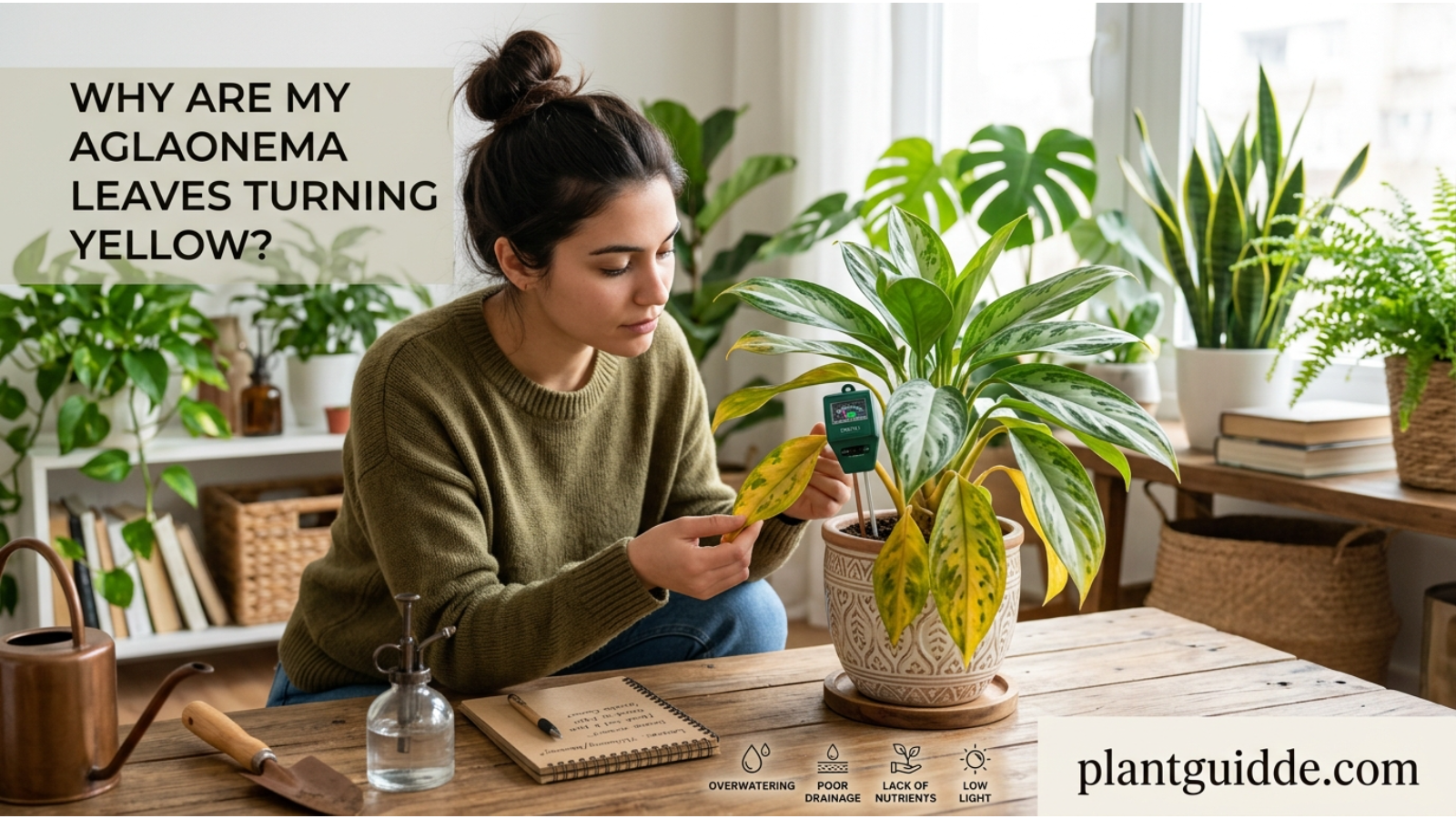
Why Are My Aglaonema Leaves Turning Yellow?
Yellow leaves can have several causes, so the pattern matters.
Overwatering
If the soil remains wet for a long time and multiple leaves begin turning yellow, excessive moisture is a strong possibility.
Check the drainage and inspect the soil before watering again.
Natural aging
An occasional older leaf turning yellow is not automatically a sign of a serious problem. Plants naturally replace older foliage.
If only an older, lower leaf is declining while the rest of the plant looks healthy, natural aging may be responsible.
Insufficient light
Very low light can slow growth and contribute to poor foliage performance.
Move the plant gradually toward a brighter area with indirect light rather than suddenly exposing it to harsh direct sun.
Root problems
Persistent wet soil, foul-smelling potting mix, soft roots, or widespread leaf decline can indicate root stress.
In that situation, changing the watering schedule alone may not be enough. The root system and soil may need closer inspection.
Why Are Aglaonema Leaves Turning Brown?
Brown foliage is another symptom with multiple possible causes.
Common possibilities include:
- Very dry air
- Inconsistent watering
- Excessive direct sunlight
- Fertilizer or salt buildup
- Root damage
- Cold or environmental stress
Look at where the damage appears.
Crispy edges often point toward dryness or environmental stress.
Bleached patches concentrated on the sunny side may suggest excessive light.
Brown foliage accompanied by constantly wet soil should make you investigate the root zone.
The symptom is useful, but the surrounding conditions provide the real diagnosis.
Why Are Aglaonema Leaves Curling?
Curling leaves are often a sign that the plant is under environmental stress.
Check for:
- Dry soil
- Very dry indoor air
- Excessive direct light
- Cold drafts
- Root problems
- Sudden environmental changes
Do not immediately assume that curling means the plant needs more water. If the soil is already wet, adding more water can make the underlying problem worse.
Why Is My Aglaonema Drooping?
Drooping can occur when the plant is thirsty, but it can also occur when the roots are struggling in excessively wet soil.
First check the soil.
If it is very dry, give the plant a thorough watering and monitor its recovery.
If the soil is wet and the plant remains limp, investigate drainage and the root system rather than watering again.
This simple distinction prevents one of the most common houseplant mistakes: treating every drooping plant as if it needs more water.
Why Is My Aglaonema Not Growing?
Slow growth is not always a problem. Aglaonema growth can naturally slow during periods of low light or cooler conditions.
However, unusually slow growth can result from:
- Insufficient light
- Poor root health
- Nutrient deficiency
- Cold temperatures
- Severely compacted soil
- An excessively small container
- Normal seasonal slowdown
If the plant is healthy but simply growing slowly, avoid trying to force it with excessive fertilizer. Improve its overall growing conditions first.
Aglaonema Plant Care for Different Varieties
Not every Aglaonema behaves identically.
Green Aglaonema
Dark green varieties generally tolerate lower light relatively well. They are useful for rooms where bright natural light is limited, although some daylight is still important for healthy growth.
Silver Aglaonema
Silver-leaved varieties can make a strong visual impact in indoor spaces. Bright, indirect light can help maintain vigorous growth without exposing the foliage to harsh direct sun.
Red or Pink Aglaonema
Colorful varieties often look their best with brighter indirect light. Extremely low light may result in slower growth and less impressive coloration.
Variegated Aglaonema
Variegated cultivars contain areas with less chlorophyll, so providing adequate indirect light becomes especially important. Avoid placing them in intense direct sun simply to increase brightness.
Aglaonema Plant Care Indoors: A Simple Routine
For beginners, a simple routine is more useful than constantly adjusting the plant.
Weekly check
Once a week, inspect:
- Soil moisture
- Leaf color
- Leaf edges
- New growth
- Pests
- General posture of the plant
You do not necessarily need to water every week. The weekly check is simply an opportunity to decide whether watering is actually needed.
Monthly check
Look more closely at:
- Drainage
- Dust on foliage
- Root crowding
- Fertilizer use
- Pest activity
- Changes in light exposure
This approach turns Aglaonema care indoors into observation rather than guesswork.
Common Aglaonema Care Mistakes
Watering according to the calendar
“Water every Sunday” sounds convenient, but plant water requirements change.
A better approach is to check the soil.
Using a pot without drainage
Even an excellent soil mix can struggle if excess water has nowhere to escape.
Always prioritize a container with functional drainage holes.
Keeping the plant in deep darkness
Aglaonema can tolerate lower light, but that does not mean a windowless corner is ideal indefinitely.
Putting it in harsh sunlight
A plant that tolerates moderate light does not automatically tolerate intense afternoon sun.
Fertilizing a stressed plant
Nutrients cannot compensate for damaged roots, poor drainage, cold stress, or severe watering problems.
Changing everything at once
If your plant is struggling, avoid immediately changing its pot, soil, location, watering routine, and fertilizer simultaneously.
Make the most obvious correction first, then observe the response. This makes diagnosis much easier.
How to Make Aglaonema Fuller
If your Aglaonema looks sparse, first determine why.
Insufficient light can produce weak or stretched growth. Moving it to a brighter indirect-light location may help support stronger development.
You can also prune excessively long or damaged stems to encourage a more attractive shape. Healthy cuttings may sometimes be propagated, depending on the plant and growing conditions.
Do not expect a sudden transformation. Fuller growth takes time because new foliage must actually develop.
Aglaonema Propagation
Aglaonema can be propagated in several ways, including division and stem cuttings, depending on the plant’s structure.
Propagation by division
Division works particularly well when an established plant has multiple rooted sections.
Remove the plant from its container and carefully examine the root system. Separate naturally distinct sections while preserving healthy roots, then pot each division into an appropriate container with well-draining soil.
Propagation from stem cuttings
Healthy stem sections can also be used for propagation. The cutting needs suitable warmth, moisture, and a medium that does not remain saturated.
The main mistake is keeping propagation material excessively wet. Moisture is necessary, but stagnant, waterlogged conditions can encourage decay.
How to Deal With Aglaonema Pests
Aglaonema can occasionally experience common indoor plant pests such as spider mites, mealybugs, scale, or other sap-feeding insects.
Inspect:
- Leaf undersides
- Stem joints
- New growth
- Areas where leaves overlap
Early detection is much easier to manage than a large infestation.
Aglaonema plant care pests are present, isolate the affected plant from nearby houseplants and follow an appropriate treatment method for the specific pest. Repeated monitoring is important because one treatment does not always eliminate every life stage.
A Practical Aglaonema Troubleshooting Table
| Problem | Likely causes | What to check first |
|---|---|---|
| Yellow leaves | Excess moisture, low light, aging foliage, root stress | Soil and affected leaves |
| Brown tips | Dry air, inconsistent moisture, salt buildup | Humidity, watering, fertilizer |
| Curling leaves | Dryness, heat, low humidity, root stress | Soil and location |
| Drooping | Underwatering or root problems | Soil moisture and drainage |
| Bleached patches | Excessive direct light | Window exposure |
| Slow growth | Low light, cold, root issues, seasonal slowdown | Light and roots |
| Soft stems | Excess moisture or decay | Soil drainage and roots |
| Leaf drop | Environmental stress, cold, watering issues | Recent changes |
| Small new leaves | Low light or root restriction | Light and root space |
The key is not to diagnose the plant from one symptom alone. Combine the symptom with the soil condition, recent environmental changes, and location.
Is Aglaonema Easy to Care For?
Yes, Aglaonema is generally considered a forgiving indoor plant, particularly compared with many demanding tropical species.
Its tolerance for moderate indoor light makes it useful for homes and offices where lighting is not perfect.
But its reputation for being easy can lead to a common misunderstanding: Aglaonema tolerates imperfect conditions; it does not thrive under every condition.
A healthy plant still benefits from:
- Appropriate indirect light
- Proper drainage
- Sensible watering
- Warm temperatures
- Reasonable humidity
- Periodic feeding
- Regular observation
Is Aglaonema Toxic to Pets?
Aglaonema contains insoluble calcium oxalate crystals and is considered toxic if chewed or ingested by cats, dogs, and other animals.
If pets or young children have access to the plant, place it somewhere they cannot chew the foliage. If ingestion occurs, contact an appropriate veterinarian or poison-control service for advice.
This is an important consideration when selecting Aglaonema for a household.

FAQs:
How often should I water an Aglaonema?
Water when the upper portion of the soil has dried somewhat rather than following a fixed calendar. Water thoroughly, then allow excess moisture to drain completely.
Does Aglaonema need direct sunlight?
Usually not. Bright indirect light is a safer choice. Some Aglaonemas tolerate moderate or lower light, while strongly direct sunlight can scorch their leaves.
Why are my Aglaonema leaves turning yellow?
Yellow leaves can result from excess moisture, poor drainage, low light, root problems, or natural aging. Check the soil and determine whether the yellowing affects older leaves or newer growth.
How do I make my Aglaonema grow faster?
Provide appropriate indirect light, healthy roots, suitable soil, warmth, and consistent moisture. Avoid excessive fertilizer in an attempt to force growth.
Can Aglaonema grow in low light?
Many Aglaonema varieties can tolerate lower indoor light, particularly darker green cultivars. However, extremely low light can reduce growth and may be less suitable for colorful or heavily variegated varieties.
Final Thoughts
Successful aglaonema plant care is not about keeping the soil constantly wet or finding a perfect watering calendar. It is about creating a stable growing environment and responding to what the plant shows you.
Start with bright or moderate indirect light, a well-draining pot, and soil that is allowed to dry slightly between thorough waterings. Keep the plant warm, avoid harsh sunlight and cold drafts, and watch the leaves for early signs of stress.
Aglaonema plant care your Aglaonema develops yellow leaves, brown tips, curling foliage, or drooping, do not automatically add more water or fertilizer. Check the soil, roots, light, temperature, and recent changes first. That habit of diagnosing before treating is one of the most useful skills you can develop as an indoor plant grower.

Asad Mumtaz is a dedicated plant enthusiast and gardening writer with a passion for helping people care for their plants successfully. He specializes in plant care guides, indoor gardening, and practical growing tips for all skill levels. His content focuses on making gardening simple, enjoyable, and rewarding. Through his work, Asad shares reliable advice to help readers create thriving green spaces.