African mask plant care is one of those houseplants that can make an indoor space look instantly more dramatic. Its large, dark green leaves, contrasting pale veins, and upright growth give it a tropical appearance that is difficult to ignore. But that striking foliage also means the plant can be quick to show when something in its environment is wrong.
Brown leaf edges, yellow leaves, curling foliage, drooping, and stalled growth are common problems when African mask plant care is inconsistent. The good news is that most problems are easier to prevent than to fix once the roots or foliage have been seriously damaged.
The key is not simply watering more or moving the plant closer to a window. African mask plants respond best when light, moisture, humidity, temperature, soil, and airflow work together. This guide explains what the plant needs, how to provide it indoors, and how to diagnose problems before they become severe.
Quick Answer
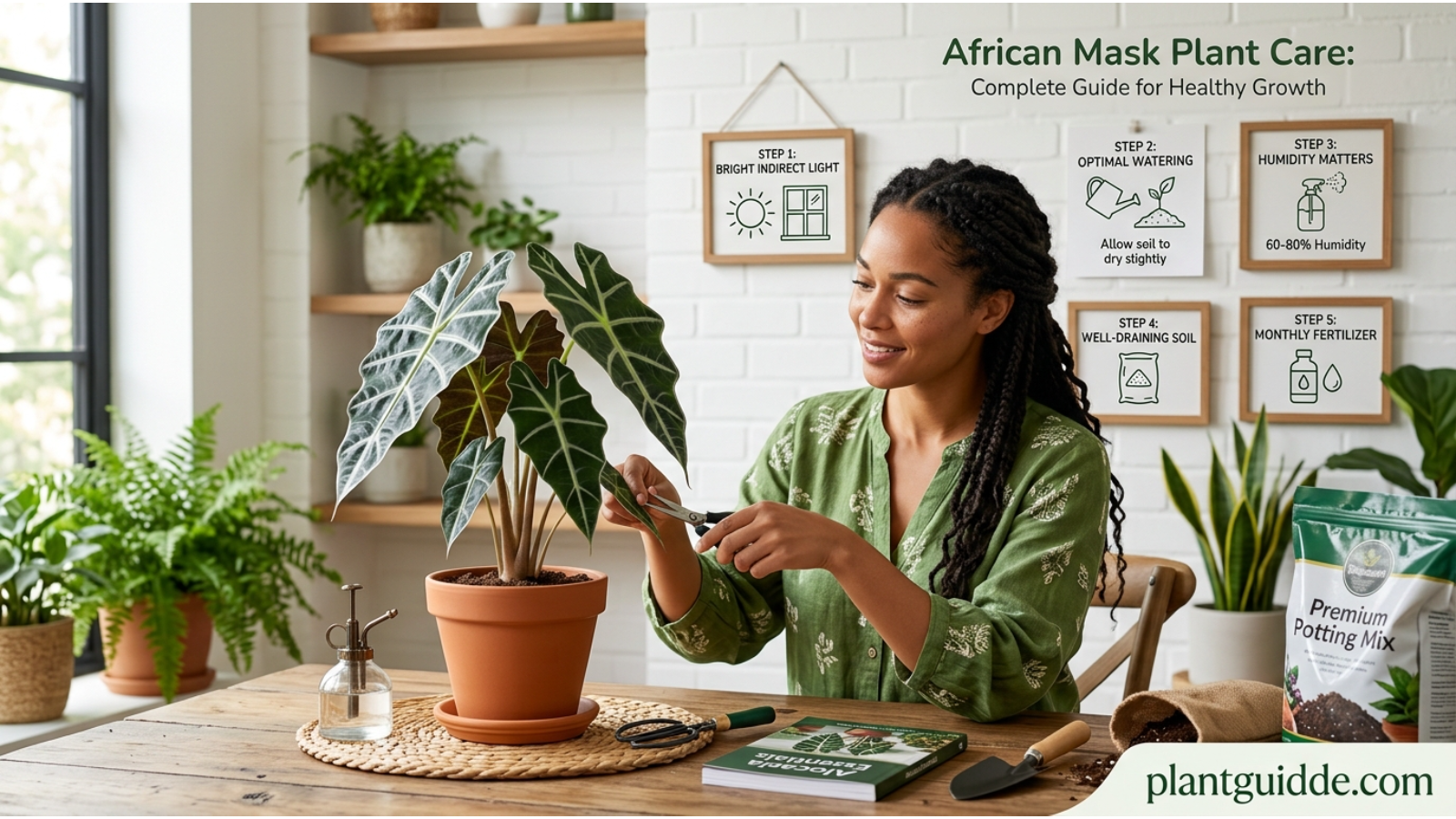
African mask plant care is mainly about bright indirect light, consistently moist but well-draining soil, warm temperatures, and moderate to high humidity. Keep it away from harsh direct sun, cold drafts, and constantly soggy soil. Water when the upper layer of soil begins to dry, provide good drainage, and watch the leaves for early signs of stress such as yellowing, browning, curling, or drooping.
What Is an African Mask Plant?
The name African mask plant is commonly used for Alocasia amazonica, a striking tropical houseplant known for its arrowhead-shaped leaves and prominent light-colored veins. Despite the common name, it is not actually a plant native to Africa. Alocasia amazonica is a cultivated hybrid associated with the genus Alocasia.
Its foliage is its main attraction. Leaves are typically deep green to almost black-green, with dramatic silvery or pale veins that create a mask-like appearance.
African mask plants belong to a group of tropical plants that naturally grow in warm, humid environments. That background explains many of their indoor requirements:
- They prefer warmth rather than cold rooms.
- They appreciate higher humidity.
- They need moisture but dislike stagnant, waterlogged soil.
- They perform best in bright filtered or indirect light.
- They can react quickly when environmental conditions change.
One important point for beginners is that an African mask plant is not a drought-tolerant houseplant. Allowing the potting mix to become completely dry repeatedly can cause unnecessary stress, especially during active growth.
African Mask Plant Care Requirements at a Glance
| Care factor | What the plant prefers |
|---|---|
| Light | Bright, indirect light |
| Water | Even moisture without waterlogging |
| Soil | Airy, well-draining, moisture-retentive mix |
| Humidity | Moderate to high humidity |
| Temperature | Warm, stable conditions |
| Fertilizer | Regular feeding during active growth |
| Pot | Drainage holes are essential |
| Airflow | Gentle, consistent airflow |
| Growth | More active in warm, bright conditions |
These are starting points rather than rigid rules. The best care routine depends on your home’s temperature, light levels, pot size, soil mixture, and season.
How Much Light Does an African Mask Plant Need?
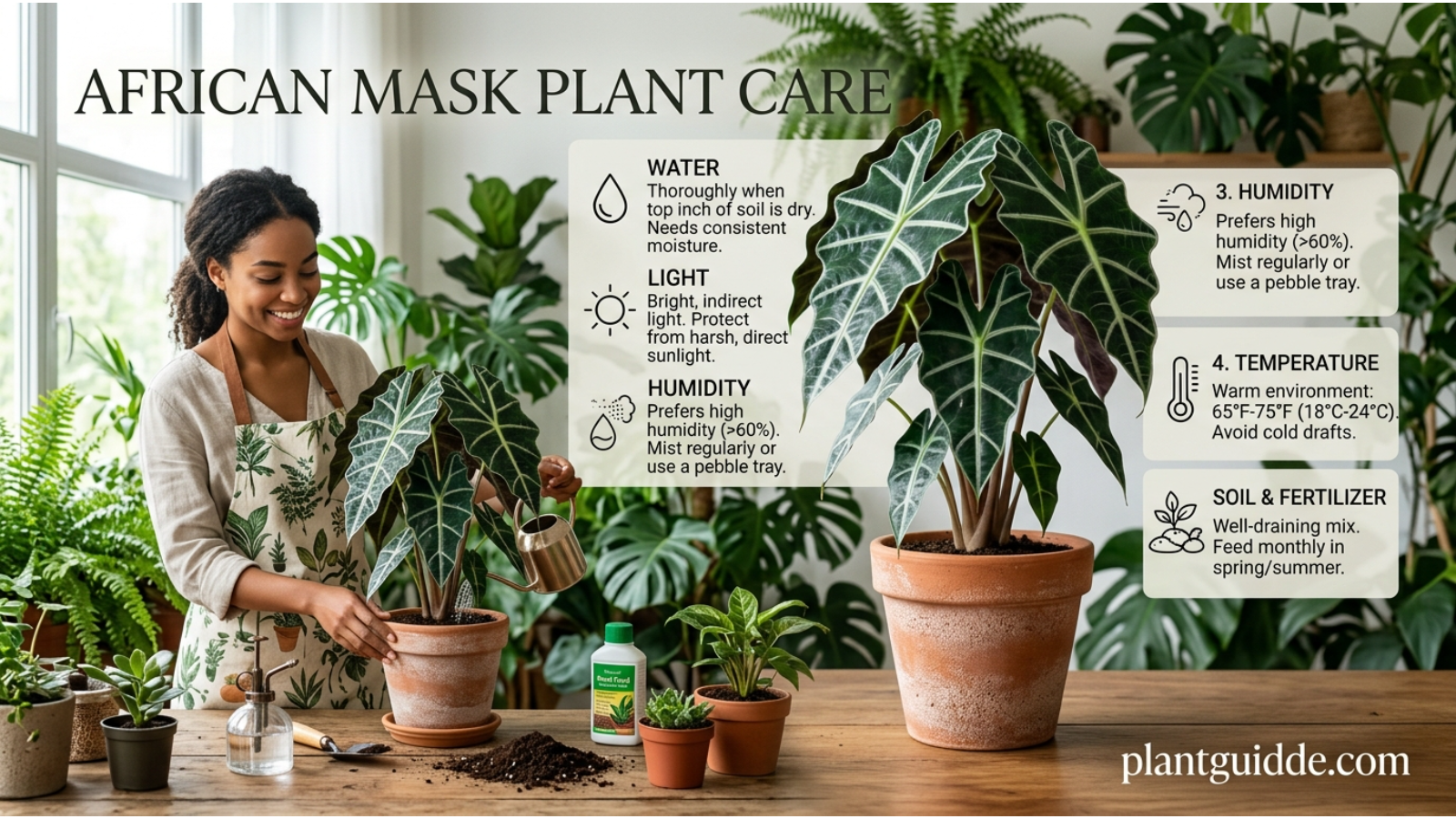
African mask plants prefer bright indirect light. A location near a bright window where the plant receives plenty of filtered daylight is often ideal.
The goal is to give the plant enough light to support healthy foliage without exposing the leaves to intense midday sun for long periods.
Signs of too little light
An African mask plant may receive insufficient light if you notice:
- Slow or weak growth
- Smaller new leaves
- Long, stretched stems
- Fading foliage
- Soil remaining wet for an unusually long time
Low light can also indirectly create watering problems because the plant uses water more slowly.
Signs of excessive direct light
Too much intense sunlight can cause:
- Brown or bleached patches
- Crispy leaf edges
- Faded areas
- Scorched sections of leaves
If strong sunlight hits the leaves through glass for several hours, move the plant farther from the window or filter the light with a sheer curtain.
Practical tip: Brightness is not the same as direct sun. An indoor location can be very bright while still providing the filtered light an African mask plant prefers.
Image Suggestion: A healthy African mask plant positioned beside a bright window with filtered indirect sunlight.
How to Water an African Mask Plant
Watering is one of the most important parts of African mask plant care because the plant likes moisture but does not tolerate poorly drained, permanently saturated soil.
Instead of watering according to a fixed calendar, check the soil.
Insert your finger into the upper portion of the potting mix. If the surface has begun to dry while the deeper mix remains slightly moist, it may be time to water.
When watering:
- Water thoroughly until excess moisture drains from the bottom.
- Allow the excess water to escape completely.
- Empty standing water from a saucer or decorative outer pot.
- Do not water again simply because the top looks dry if the deeper soil is still saturated.
During warmer, brighter periods, the plant may use water more quickly. During winter or in a darker room, watering frequency may decrease substantially.
Should African mask plants dry out completely?
Repeatedly allowing the entire root ball to become bone dry is generally not a good strategy. Severe drying can contribute to wilting, crispy edges, and leaf stress.
At the same time, keeping the soil constantly soaked is equally problematic.
The useful middle ground is consistent moisture with adequate drainage.
Best Soil for African Mask Plant Care
African mask plants need a potting mix that can hold some moisture while allowing excess water and air to move through the root zone.
A heavy garden soil or dense potting mix can stay wet for too long inside a container. This reduces aeration around the roots and increases the risk of root problems.
A suitable mix can contain combinations of:
- Quality indoor potting mix
- Perlite or pumice
- Orchid bark
- Coco coir or another moisture-retentive component
The exact recipe does not need to be complicated. The important characteristics are good drainage, airflow, and moderate moisture retention.
How to tell if the soil is too heavy
Your mix may be unsuitable if:
- Water sits on the surface for a long time.
- The pot remains extremely heavy days after watering.
- The soil becomes hard and compacted.
- Roots repeatedly develop problems despite careful watering.
- The plant stays wet much longer than expected.
Changing the soil can help, but avoid disturbing healthy roots unnecessarily. Repot when there is a genuine drainage, root, or container-size problem rather than simply because a particular calendar date has arrived.
Humidity for African Mask Plants
Humidity is another important part of successful African mask plant care.
Dry indoor air can contribute to:
- Brown leaf tips
- Crispy edges
- Curling leaves
- Increased moisture loss
- Poor-looking foliage
A humidifier is often more reliable than frequent misting if your indoor air is consistently dry.
Grouping several tropical plants together can also slightly increase the local humidity, although it should not replace good ventilation.
Does misting increase humidity?
Misting can temporarily wet the foliage, but it does not reliably maintain higher humidity around the plant for an extended period.
If your home is genuinely dry, focus on creating a more stable environment rather than repeatedly spraying the leaves.
A small humidity meter can be useful because indoor air can feel comfortable to people while being relatively dry for tropical plants.
Temperature and African Mask Plant Care
African mask plants prefer warm and relatively stable conditions.
Protect them from:
- Cold drafts
- Air-conditioning vents
- Very cold windows
- Sudden temperature changes
- Direct blasts from heaters
A plant sitting beside a heating vent may lose moisture quickly even if the room itself seems comfortable.
Likewise, placing it directly against a cold window during winter can expose the foliage and roots to stressful temperatures.
Practical tip: A stable location is often better than repeatedly moving the plant around while trying to correct individual symptoms.
Fertilizing an African Mask Plant
African mask plants benefit from nutrients during active growth, particularly when they are producing new leaves.
Use a balanced houseplant fertilizer according to the product’s instructions rather than assuming that more fertilizer means faster growth.
Overfertilization can cause salt buildup in the potting mix and damage roots.
A sensible routine is to:
- Feed during periods of active growth.
- Follow the fertilizer’s recommended dilution.
- Avoid heavily fertilizing a stressed or recently repotted plant.
- Reduce feeding when growth naturally slows.
- Water appropriately so excess salts do not continually accumulate.
If leaf tips become brown after a prolonged period of heavy fertilization, consider whether fertilizer salts, inconsistent watering, or dry air may be contributing.
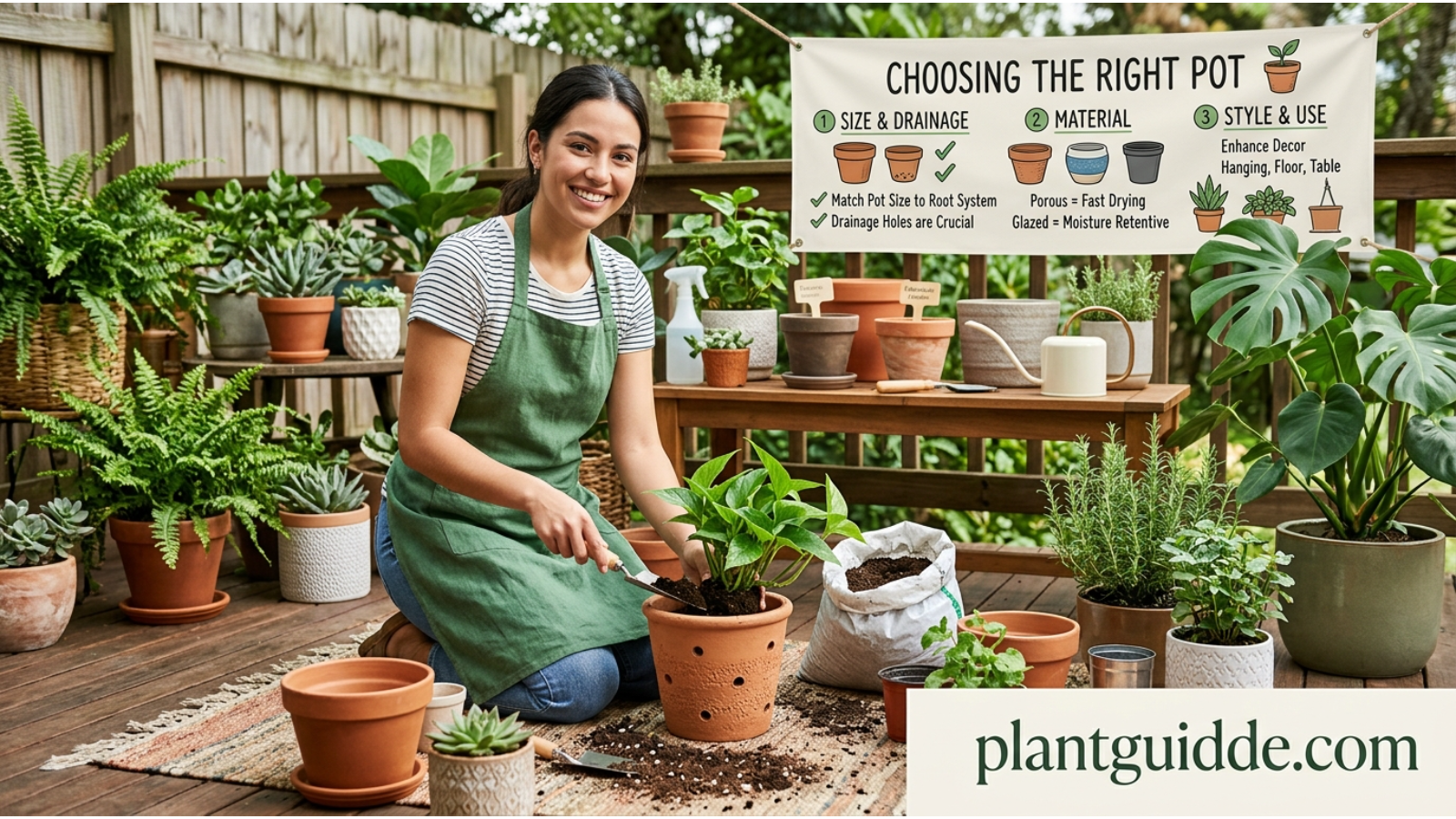
Choosing the Right Pot
The container is more important than many beginners realize.
Always choose a pot with drainage holes. Decorative containers without drainage can trap excess water around the roots.
When repotting, avoid jumping from a small pot into a dramatically oversized container. A very large volume of wet soil can remain moist for too long after watering.
A slightly larger pot with good drainage is usually more practical.
When should you repot an African mask plant?
Consider repotting when:
- Roots are tightly circling the container.
- Water runs straight through because the root ball is extremely crowded.
- The potting mix has broken down or become poorly draining.
- The plant is repeatedly drying out unusually fast because the root system has filled the pot.
- There are signs of root problems requiring inspection.
Repotting is not automatically the solution to yellow leaves. First identify whether the underlying issue is watering, light, roots, temperature, or another environmental factor.
Why Are African Mask Plant Leaves Turning Yellow?
Yellow leaves are a symptom, not a diagnosis.
The most common possibilities include:
- Overwatering
- Poor drainage
- Root stress
- Insufficient light
- Natural aging of an older leaf
- Temperature stress
- Nutrient problems
If one of the oldest leaves gradually turns yellow while the plant is otherwise producing healthy new growth, natural leaf aging may be involved.
If several leaves turn yellow at once and the soil remains wet for long periods, investigate the roots and drainage before adding fertilizer.
The mistake to avoid: treating every yellow leaf as a nutrient deficiency. Adding fertilizer to a plant whose roots are already stressed can make the situation worse.
Why Are African Mask Plant Leaves Turning Brown?
Brown areas can develop for several different reasons.
Brown leaf tips
Dry air, inconsistent watering, salt buildup, or root stress can all contribute to brown tips.
Brown crispy patches
Intense direct sunlight or severe dryness may cause localized crispy damage.
Brown soft areas
Soft or rapidly deteriorating tissue is more concerning and can indicate significant moisture or disease-related problems, particularly when combined with an overly wet root environment.
Look at the pattern rather than reacting to the color alone.
A single brown tip after a dry spell is very different from widespread browning accompanied by soggy soil and declining roots.
Why Are African Mask Plant Leaves Curling?
Curling leaves are often a sign that the plant is experiencing environmental stress.
Possible causes include:
- Dry soil
- Low humidity
- Excessive heat
- Strong direct sunlight
- Root problems
- Sudden environmental changes
Start with the basics. Check the soil moisture, inspect the roots if other symptoms suggest a root problem, and evaluate the plant’s light and humidity.
Avoid immediately increasing watering just because the leaves are curling. If the roots are already sitting in saturated soil, additional water can make the underlying problem worse.
Why Is My African Mask Plant Drooping?
Drooping can occur when the plant is thirsty, stressed by heat, exposed to unsuitable temperatures, or experiencing root problems.
Check the soil before watering.
If the mix is noticeably dry, provide a thorough watering and allow excess water to drain.
If the soil is already wet, investigate other causes instead of watering again. Healthy roots need access to oxygen as well as water.
A plant that remains wilted despite consistently wet soil deserves closer inspection of the root system.
African Mask Plant Root Rot: What to Do
Root rot is one of the most serious problems associated with poor watering and drainage.
Possible warning signs include:
- Persistent wilting despite wet soil
- Yellowing leaves
- Soft or deteriorating roots
- Unpleasant smell from the potting mix
- Slow growth
- Rapid decline after prolonged overwatering
If root problems are suspected, carefully remove the plant from its container and inspect the roots.
Healthy roots should generally be firm rather than mushy. Remove clearly damaged tissue with a clean tool, refresh the potting mix, and use a container with proper drainage.
Afterward, avoid returning to the same watering pattern that caused the problem.
How to Clean African Mask Plant Leaves
Large leaves collect dust easily, and a thick layer of dust can make the foliage look dull.
Gently wipe leaves with a clean, damp, soft cloth. Support the leaf from underneath while cleaning so you do not put unnecessary pressure on the petiole.
Avoid aggressive rubbing and unnecessary leaf-shine products.
Clean foliage also makes it easier to notice pests, discoloration, and developing damage early.
Common Pests on African Mask Plants
Indoor African mask plants can encounter pests such as:
- Spider mites
- Mealybugs
- Scale insects
- Thrips
- Aphids
Inspect the undersides of leaves and the areas around new growth.
Early signs can include stippling, distorted new leaves, sticky residue, tiny insects, webbing, or unusual patches of discoloration.
If you discover pests, isolate the affected plant from nearby houseplants and identify the pest before choosing a treatment. Repeated inspection is important because eggs and immature stages may survive an initial treatment.
Should You Cut Off Damaged African Mask Plant Leaves?
Removing a badly damaged leaf can improve the plant’s appearance and allow you to focus on healthier growth, but pruning will not correct the underlying problem.
If a leaf has only minor brown edges, there is usually no need to remove the entire leaf.
If a leaf is extensively damaged, yellowing, or deteriorating, use a clean, sharp tool to remove it near its base without damaging surrounding growth.
Then address the cause.
Pruning a yellow leaf without correcting excessive moisture, poor light, or root stress simply treats the symptom.
A Simple African Mask Plant Care Routine
For beginners, a simple routine is often more successful than trying to manage the plant according to a complicated schedule.
Weekly check
Inspect:
- Soil moisture
- Leaf condition
- New growth
- Undersides of leaves
- Humidity if your home is dry
- Signs of pests
When the soil begins to dry
Water thoroughly and allow excess water to drain.
Every few weeks
Rotate the plant slightly if its growth is leaning toward the light, and inspect the foliage closely for pests or developing damage.
During active growth
Provide suitable light and feed according to the fertilizer manufacturer’s directions.
During slower growth
Expect water requirements and fertilizer needs to decrease. Do not maintain summer watering habits automatically when light and growth have declined.
African Mask Plant Care Mistakes to Avoid
Several mistakes repeatedly cause problems for indoor growers.
Watering on a fixed schedule
A calendar cannot account for differences in light, temperature, pot size, and soil.
Better approach: check the soil before watering.
Using a pot without drainage
A decorative pot can look attractive but create a persistently wet root environment.
Better approach: use a nursery pot with drainage or a container specifically designed to release excess water.
Placing it in harsh sunlight
More light is not always better.
Better approach: provide bright filtered or indirect light.
Letting the plant experience repeated drought
African mask plants are not ideal candidates for prolonged neglect.
Better approach: monitor soil moisture and avoid allowing the root ball to repeatedly become completely dry.
Fertilizing a stressed plant
Nutrients cannot compensate for damaged roots, poor light, or incorrect watering.
Better approach: solve environmental problems first.
Constantly moving the plant
Frequent changes in location can create additional stress.
Better approach: find a stable position with appropriate light, temperature, and humidity.
How to Make an African Mask Plant Grow New Leaves
Healthy new growth depends on several factors working together.
Focus on:
- Bright indirect light to provide enough energy for growth.
- Consistent moisture without saturated soil.
- Warm temperatures to support active growth.
- Adequate humidity to reduce excessive moisture loss.
- Healthy roots capable of absorbing water and nutrients.
- Appropriate nutrition during active growth.
If your plant has stopped producing leaves, do not automatically increase fertilizer. Check whether it has enough light and whether its roots are healthy first.
A plant cannot produce strong foliage above the soil if its root environment is continually stressed.
Can African Mask Plants Go Dormant?
Yes. Alocasias can experience periods of reduced growth or dormancy, particularly when conditions become cooler or light levels fall.
A plant that grows rapidly in warm, bright conditions may slow down considerably during a darker season.
During slower growth:
- Water less frequently according to actual soil moisture.
- Avoid keeping the soil constantly wet.
- Reduce or pause fertilizer when the plant is not actively growing.
- Maintain appropriate warmth.
- Continue providing suitable indirect light.
Do not assume that every period of slow growth means the plant is dying.
Is an African Mask Plant Toxic?
African mask plants contain calcium oxalate crystals and can be harmful if chewed or ingested. Keep the plant away from children and pets that may bite or eat houseplants.
If ingestion occurs, contact an appropriate medical or veterinary professional or a local poison-control service for specific advice.
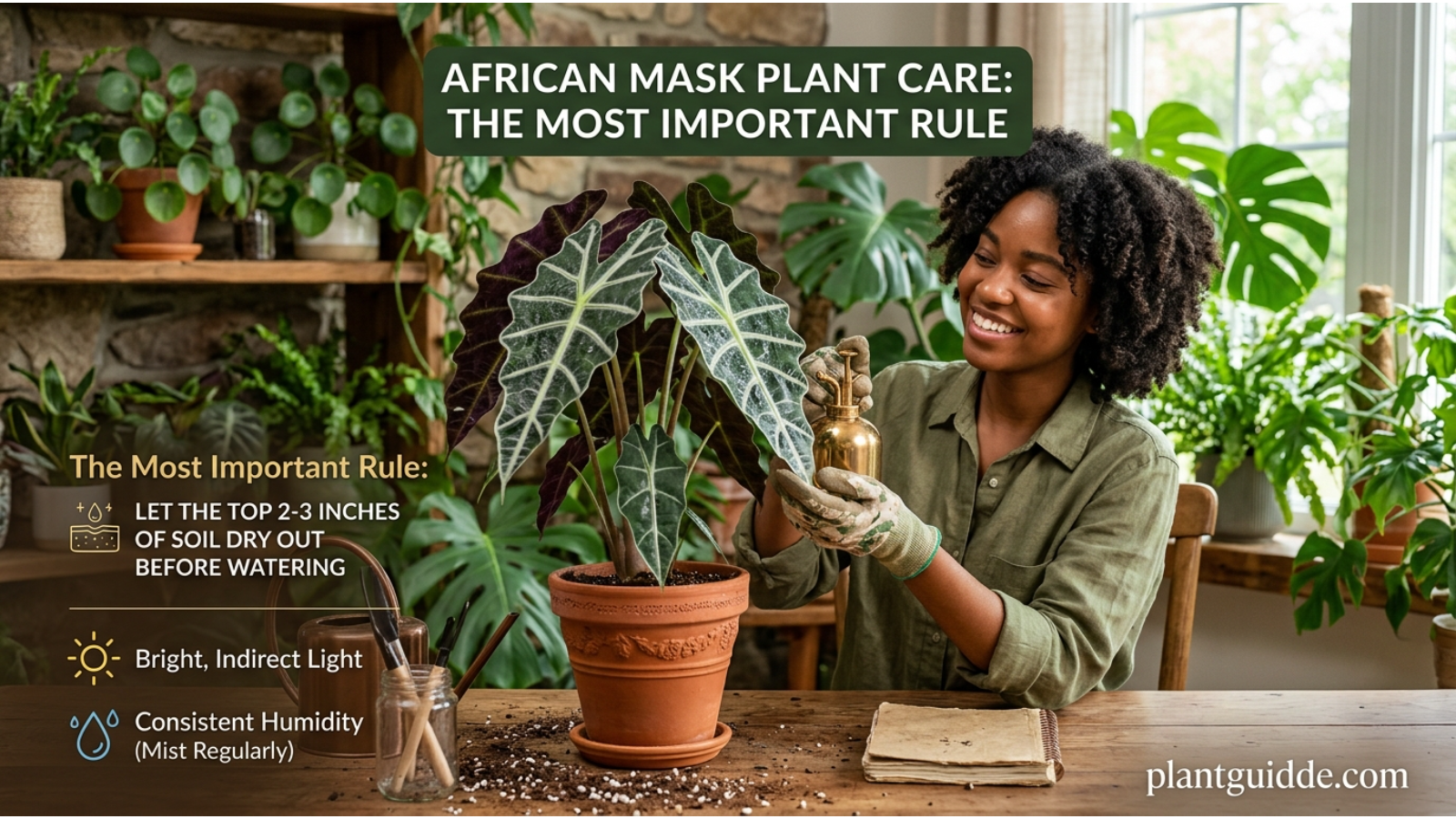
African Mask Plant Care: The Most Important Rule
If you remember only one thing, remember this:
African mask plants prefer consistently suitable conditions rather than extremes.
Do not compensate for low humidity by drowning the soil. Do not compensate for poor light with extra fertilizer. Do not place a stressed plant in direct afternoon sunlight because you think it needs more light.
Instead, look at the entire environment.
When the leaves begin curling, yellowing, browning, or drooping, ask:
What changed, and what does the soil and root environment look like right now?
That approach is much more reliable than treating individual symptoms in isolation.
FAQs:
How often should I water an African mask plant?
Water when the upper portion of the potting mix has begun to dry rather than following a strict weekly schedule. Water thoroughly, then allow excess water to drain completely. The exact interval depends on light, temperature, humidity, soil, and pot size.
Do African mask plants need direct sunlight?
No. They generally perform best in bright indirect or filtered light. A small amount of gentle morning sun may be tolerated in some indoor locations, but strong direct sunlight can scorch the leaves.
Why is my African mask plant turning yellow?
Yellow leaves can result from overwatering, poor drainage, root stress, insufficient light, temperature problems, or natural aging. Check the soil and overall growing conditions before assuming the plant needs fertilizer.
How do I increase humidity for an African mask plant?
A humidifier is usually the most dependable option when indoor air is consistently dry. Grouping plants can also help create a slightly more humid local environment. Avoid relying on occasional misting as the primary humidity solution.
Are African mask plants easy to care for?
They are manageable for indoor growers who can provide warm temperatures, bright indirect light, appropriate moisture, and reasonable humidity. They are less forgiving of prolonged dryness or poorly draining, constantly wet soil than some drought-tolerant houseplants.
Final Thoughts
Successful African mask plant care is less about following a perfect watering calendar and more about creating a stable root and leaf environment. Give the plant bright indirect light, an airy and well-draining potting mix, consistent moisture without waterlogging, warmth, and adequate humidity.
When something goes wrong, resist the urge to change everything at once. Check the soil first, examine the light, look at the roots when necessary, and inspect the leaves for pests or environmental damage.
That simple diagnostic approach helps you solve the actual problem rather than repeatedly treating the symptom, and gives your African mask plant a much better chance of producing the dramatic, healthy foliage that makes it such a popular tropical houseplant.

Asad Mumtaz is a dedicated plant enthusiast and gardening writer with a passion for helping people care for their plants successfully. He specializes in plant care guides, indoor gardening, and practical growing tips for all skill levels. His content focuses on making gardening simple, enjoyable, and rewarding. Through his work, Asad shares reliable advice to help readers create thriving green spaces.