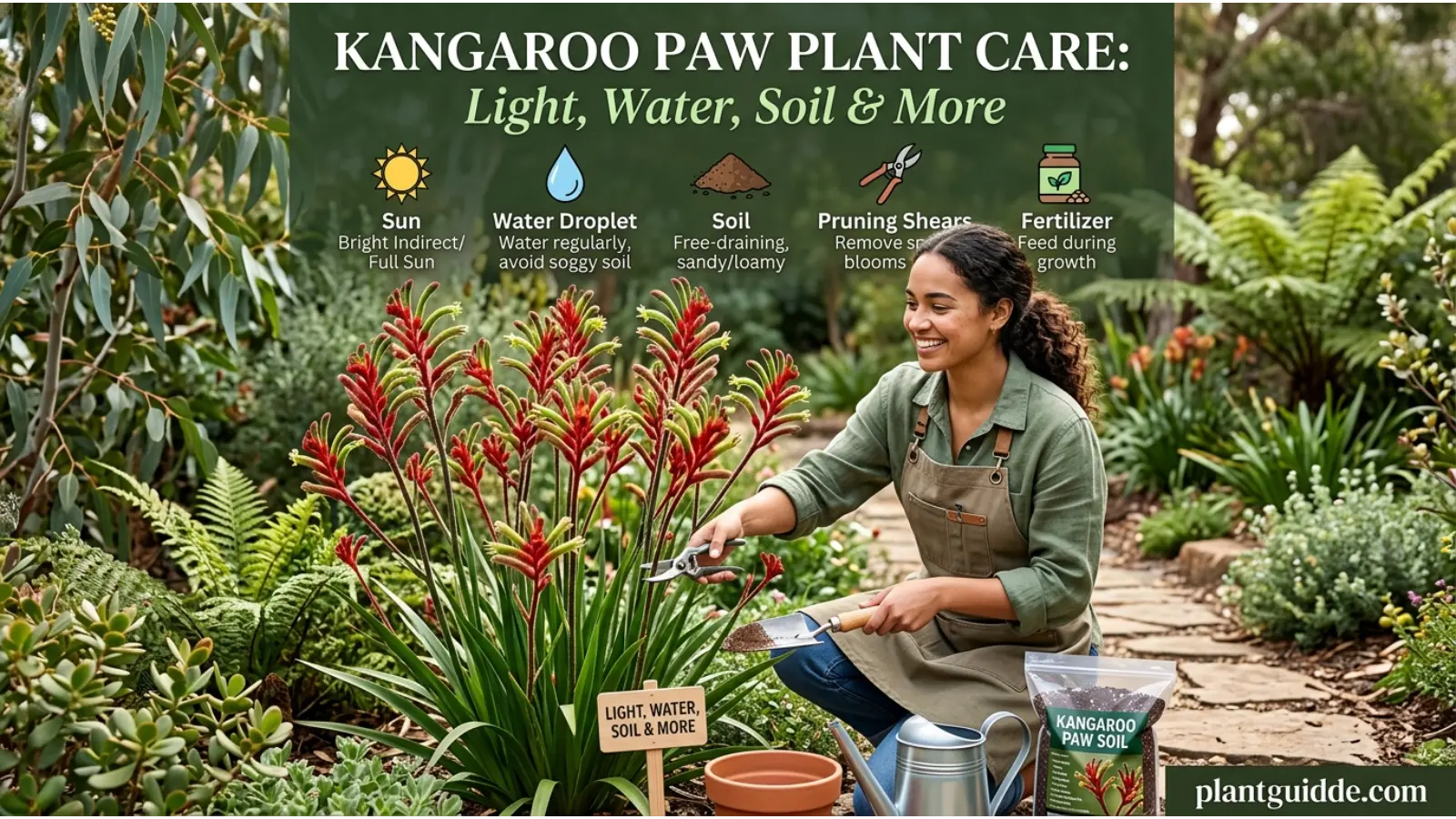
Kangaroo paw plant care (Anigozanthos) is a distinctive Australian plant known for its tubular, fuzzy flowers and upright, strap-like foliage. Its unusual blooms make it especially attractive in sunny borders, containers, and drought-tolerant gardens.
Although kangaroo paw is often described as easy to grow, it can struggle when planted in heavy soil or watered too frequently. The most important part of kangaroo paw plant care is understanding that this plant prefers sun, drainage, and controlled moisture rather than constantly damp roots.
Once those basic conditions are right, the plant can produce impressive flowers with relatively little maintenance.
Quick Answer
Kangaroo paw plant care focuses on bright sunlight, sharply draining soil, careful watering, good airflow, and regular removal of spent flowers. Anigozanthos species are drought-tolerant Australian plants that perform best when their roots are not kept constantly wet. Give them several hours of direct sun, water deeply but infrequently once established, and prune old flower stems after blooming to encourage fresh growth.
What Is a Kangaroo Paw Plant?
Kangaroo paw is the common name for plants in the genus Anigozanthos, a group of perennial plants native to Australia. The name comes from the unusual flower shape, which resembles a kangaroo’s paw.
Depending on the species and cultivar, flowers may appear in shades of:
- Red
- Yellow
- Orange
- Pink
- Green
- Burgundy
- Purple
The flowers are usually held above the foliage on tall, branching stems, making them useful as both garden accents and cut flowers.
Their tubular shape also makes kangaroo paw flowers attractive to nectar-feeding birds and other pollinators.
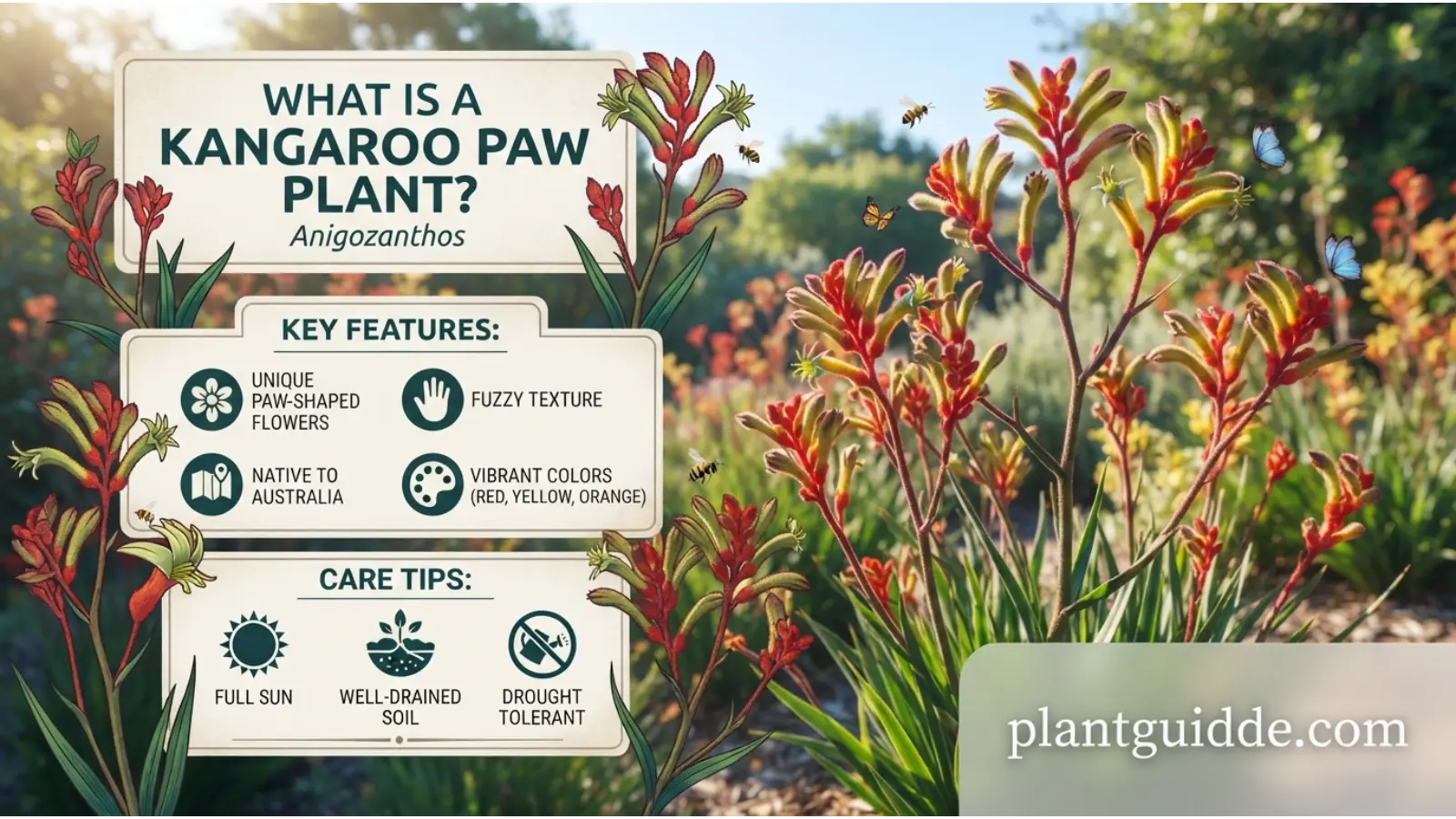
Kangaroo Paw Plant Care Requirements at a Glance
| Care factor | What kangaroo paw prefers |
|---|---|
| Light | Full sun to very bright light |
| Soil | Sandy, gritty, or sharply draining soil |
| Water | Deep watering followed by partial drying |
| Humidity | Generally prefers relatively dry conditions |
| Temperature | Warm conditions; protect from severe frost |
| Fertilizer | Light feeding during active growth |
| Pruning | Remove spent flowers and damaged foliage |
| Airflow | Good airflow around the foliage |
| Container | Must have drainage holes |
| Main risk | Overwatering and poor drainage |
The exact requirements vary somewhat among Anigozanthos species and cultivars, but excellent drainage and abundant light are consistently important.
How Much Sun Does Kangaroo Paw Need?
Kangaroo paw generally performs best in full sun, particularly when the goal is strong flowering.
Aim for around 6 or more hours of direct sunlight per day when growing it outdoors.
Insufficient light can lead to:
- Fewer flowers
- Weak or stretched growth
- Floppy flower stems
- Less vigorous foliage
- Poor overall flowering performance
A position with morning and afternoon sun is usually more suitable than a deeply shaded location.
In extremely hot climates, intense afternoon heat combined with reflected heat from walls or concrete can stress container-grown plants. In that situation, bright morning sun with some protection from the harshest afternoon conditions may be useful, but excessive shade can reduce flowering.
Signs of insufficient light
If your kangaroo paw receives too little light, you may notice that the plant produces plenty of leaves but relatively few flowers. Flower stems may also become weaker as the plant stretches toward a brighter location.
Kangaroo paw plant care possible, move a container gradually into a sunnier position rather than suddenly exposing a shade-grown plant to intense sunlight.
What Soil Is Best for Kangaroo Paw?
Fast-draining soil is one of the most important parts of kangaroo paw plant care.
Kangaroo paw naturally grows in conditions where water does not remain around the roots for long periods. Heavy clay or compacted potting soil can therefore create problems even when watering itself seems reasonable.
A suitable soil should:
- Drain excess water quickly
- Contain some organic matter without becoming soggy
- Remain reasonably open around the roots
- Allow air to reach the root zone
For containers, use a high-quality potting mix amended with materials that improve drainage rather than relying on dense garden soil.
If your garden soil is heavy clay, consider growing kangaroo paw in a raised bed or improving the planting area substantially before planting.
Why drainage matters more than frequent watering
A common mistake is trying to compensate for poor drainage by changing the watering schedule.
That usually does not solve the underlying problem.
If water remains trapped around the roots, even relatively small amounts of repeated watering can keep the root zone too wet. Improving the soil and drainage is usually more effective than simply watering less often.
How to Water Kangaroo Paw
Kangaroo paw is relatively drought tolerant once established, but that does not mean it should be completely neglected.
The goal is to provide enough moisture for healthy growth while allowing excess water to drain away.
A practical approach is:
- Check the soil before watering.
- If the upper portion of the soil has dried, water thoroughly.
- Let excess water drain completely.
- Wait until the plant actually needs water again rather than following a rigid daily schedule.
Outdoor plants planted in the ground may need more frequent watering while establishing than mature plants with established root systems.
Container-grown plants generally dry out faster, especially during hot weather, so check them more frequently.
How often should you water kangaroo paw?
There is no single watering schedule that works in every garden.
Frequency depends on:
- Temperature
- Rainfall
- Container size
- Soil composition
- Plant maturity
- Sun exposure
- Seasonal growth
- Air movement
During prolonged hot and dry weather, a plant may need water more often. During cool or rainy periods, watering may need to be reduced substantially.
The soil is a better guide than the calendar.
Watering Kangaroo Paw in Containers
Container-grown kangaroo paw requires particular attention because drainage problems can develop quickly.
Always use a container with drainage holes. Avoid allowing the pot to sit permanently in a saucer filled with water.
A useful test is to lift the container occasionally. A noticeably lighter pot often indicates that much of the available moisture has been used.
However, do not rely on weight alone. Check the growing medium as well.
The goal is not bone-dry soil at all times. The goal is a root zone that receives water and then has enough opportunity to drain and breathe.
Temperature and Humidity
Kangaroo paw is adapted to relatively warm and dry Australian conditions, although cold tolerance varies among species and cultivars.
Protect plants from severe frost and prolonged freezing temperatures, particularly young or container-grown plants.
Humidity is generally less of a concern than it is for tropical houseplants. In fact, excessive moisture combined with poor airflow can increase disease problems.
This makes kangaroo paw quite different from plants that need constantly humid conditions.
How to Fertilize Kangaroo Paw
Kangaroo paw does not need excessive fertilization to remain healthy.
A light application of a suitable balanced fertilizer during active growth can support foliage and flowering, particularly when the plant is growing in a container or relatively poor soil.
Avoid assuming that more fertilizer will automatically produce more flowers.
Excessive fertilizer can encourage lush vegetative growth while creating unnecessary stress or nutrient imbalance.
Follow the fertilizer label for application rates, and avoid fertilizing severely stressed, drought-stricken, or recently transplanted plants until they have recovered.
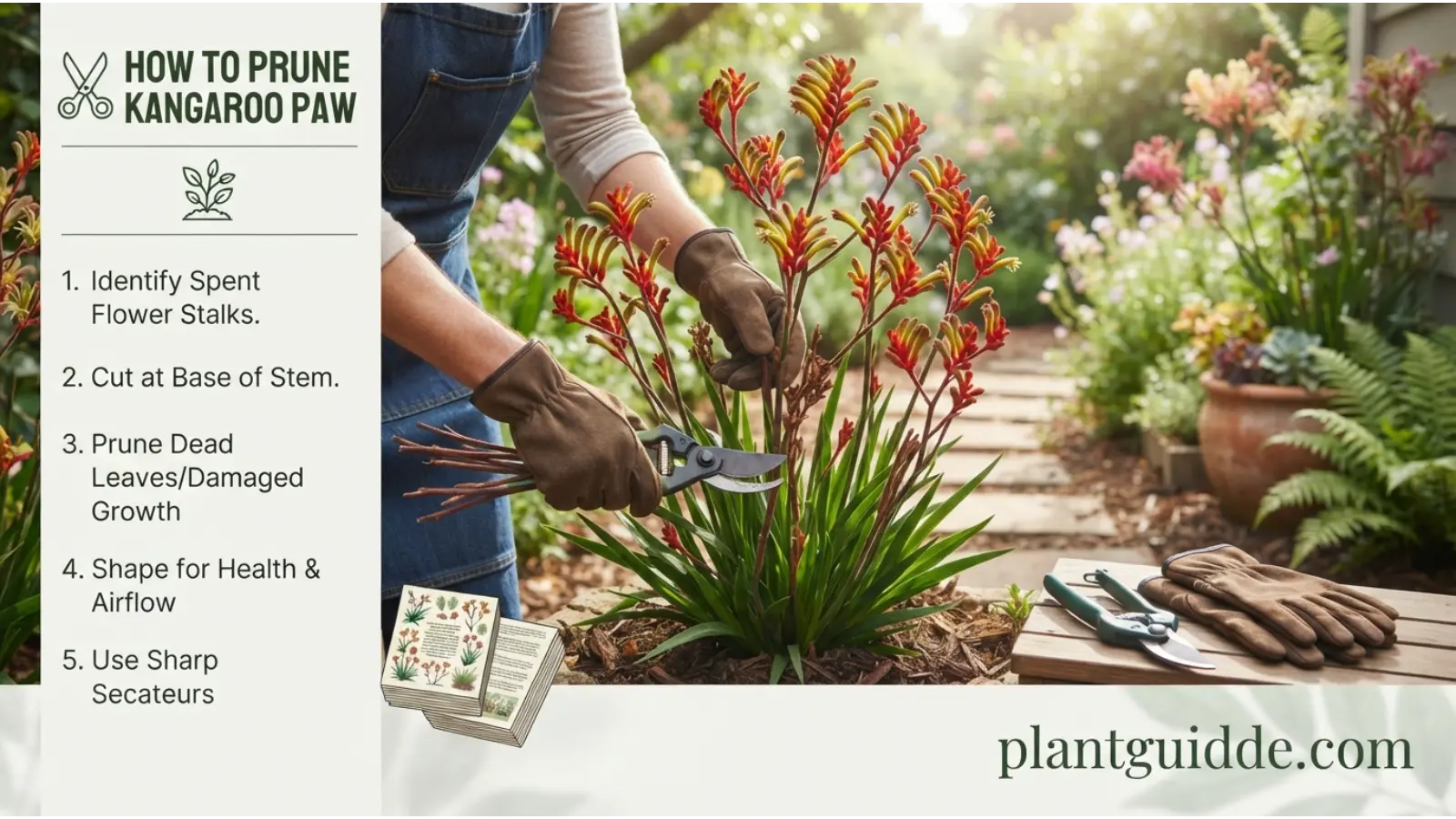
How to Prune Kangaroo Paw
Pruning is one of the easiest ways to keep kangaroo paw looking tidy and encourage continued flowering.
Remove spent flower stems
Once a flower stem has finished flowering, cut it back toward the base rather than leaving a long, declining stalk in place.
This redirects the plant’s energy toward new growth and improves its appearance.
Remove damaged foliage
Cut away foliage that is:
- Completely dead
- Severely damaged
- Diseased
- Collapsed or decaying
Avoid removing large amounts of healthy green foliage unnecessarily.
Rejuvenating older plants
Established kangaroo paw plants can sometimes become congested or unattractive as older foliage accumulates. Selective removal of old growth can improve airflow and appearance.
For major pruning, timing depends on the climate and cultivar, so avoid severe cuts immediately before periods of extreme cold or heat.
How to Encourage More Kangaroo Paw Flowers
If your kangaroo paw is healthy but not flowering well, check the growing conditions before adding more fertilizer.
The main factors to review are:
Light: Is the plant receiving enough direct sunlight?
Water: Is the soil staying wet for too long?
Drainage: Does water drain freely from the planting area or container?
Pruning: Are old flower stems being removed?
Plant maturity: Is the plant still establishing?
Season: Is it currently in an active flowering period for your climate and cultivar?
Moving a poorly lit container to a brighter position can sometimes make a greater difference than increasing fertilizer.
Common Kangaroo Paw Problems
Yellow Leaves
Yellowing leaves can have several causes, but consistently wet soil is an important possibility.
Check the root zone before increasing watering.
If the soil is staying wet for extended periods, improve drainage and reduce watering frequency as appropriate.
Older leaves can also naturally yellow and decline as the plant produces new growth.
Brown or Dry Leaf Tips
Brown tips can result from several forms of stress, including:
- Prolonged drought
- Extreme heat
- Root problems
- Excessive fertilizer
- Environmental stress
Look at the whole plant rather than treating brown tips as proof that it simply needs more water.
If the soil is already wet, adding more water can make the problem worse.
Kangaroo Paw Leaves Turning Black
Blackened foliage can indicate serious stress or disease, especially when affected tissue is soft, rapidly spreading, or associated with prolonged wet conditions.
Remove clearly affected plant material and improve airflow. Avoid overhead irrigation that keeps foliage wet for extended periods.
If the problem continues to spread, identify the specific disease or pathogen before applying treatment.
Kangaroo Paw Not Flowering
Poor flowering is commonly associated with inadequate sunlight, unsuitable seasonal conditions, excessive nitrogen, or general plant stress.
Start with light and drainage before changing fertilizer.
Kangaroo Paw Wilting
Wilting does not always mean the plant needs water.
Check the soil first.
If the soil is dry and the plant is exposed to hot conditions, drought stress may be responsible. If the soil is wet but the plant continues to wilt, root damage or another underlying problem may be preventing the plant from taking up water effectively.
This distinction is particularly important because watering a plant with damaged roots can intensify the problem.
Is Kangaroo Paw Drought Tolerant?
Yes, established kangaroo paw plants are generally drought tolerant, particularly when grown in suitable soil and full sun.
However, drought tolerance does not mean zero maintenance.
Newly planted specimens need consistent moisture while establishing roots. Once established, watering can generally become less frequent, provided the plant is growing in well-drained soil.
This is one reason kangaroo paw works well in many water-wise landscapes.
Growing Kangaroo Paw in Pots
Kangaroo paw can perform well in containers when the pot and growing medium provide excellent drainage.
Choose:
- A container with several drainage holes
- A potting mix that drains quickly
- A sunny location
- A container large enough for the plant’s root system
- A position with good airflow
Do not automatically choose an enormous container. An oversized pot can retain moisture around the roots for longer than a smaller, appropriately sized container.
Repot when the plant has outgrown its current container or when the growing medium has deteriorated and no longer drains properly.
Kangaroo Paw in the Garden
For outdoor planting, choose a sunny site with naturally well-drained soil.
Before planting, consider what happens after heavy rain. A location that remains muddy or waterlogged for days is usually a poor match.
If drainage is marginal, a raised planting area can be more effective than simply creating a shallow hole and filling it with a different soil mix.
Space plants so mature foliage has room for airflow. Crowding can increase humidity around leaves and make maintenance more difficult.
Common Kangaroo Paw Care Mistakes
Watering on a fixed schedule
Watering every few days regardless of weather and soil conditions can lead to unnecessary moisture.
Better approach: Check the soil and environmental conditions first.
Planting in heavy, poorly drained soil
Even careful watering cannot completely compensate for soil that holds water around the roots.
Better approach: Improve drainage before planting.
Growing it in deep shade
Kangaroo paw is valued partly for its flowers, and insufficient sunlight can significantly reduce flowering.
Better approach: Give it a bright, sunny position suited to your local climate.
Over-fertilizing
More fertilizer is not necessarily better.
Better approach: Feed lightly during active growth and follow the product’s instructions.
Ignoring airflow
Dense planting and persistently wet foliage can create a favorable environment for disease.
Better approach: Provide reasonable spacing and avoid unnecessary overhead watering.
Treating wilting as automatic proof of underwatering
A wilted plant may be dry, but it may also have root problems caused by excessive moisture.
Better approach: Inspect the soil before reaching for the watering can.
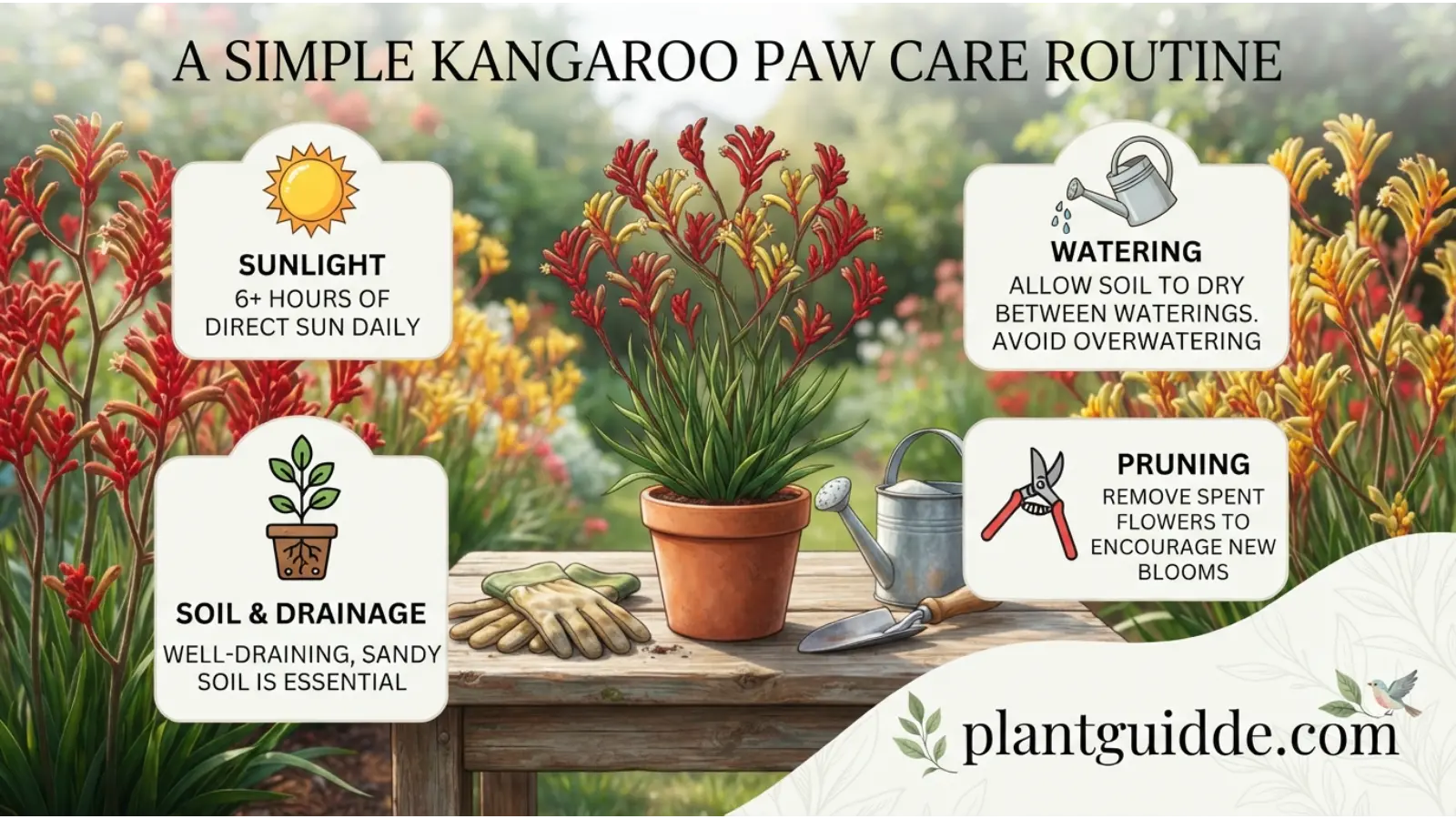
A Simple Kangaroo Paw Care Routine
For beginners, kangaroo paw care can be reduced to a straightforward routine:
Every few days: Check the soil rather than automatically watering.
During active growth: Watch for new flower stems and remove finished blooms.
After heavy rain: Make sure water is not remaining around the roots.
During hot weather: Check containers more frequently because they can dry quickly.
Throughout the growing season: Watch leaves for yellowing, browning, blackening, or unusual wilting.
After flowering: Remove old flower stems and tidy damaged foliage.
This approach is more reliable than following a rigid watering calendar because conditions change throughout the year.
FAQs:
How much sun does a kangaroo paw need?
Kangaroo paw generally prefers full sun and performs best with several hours of direct sunlight each day. Strong light is particularly important for abundant flowering.
How often should I water kangaroo paw?
Water when the soil has had an opportunity to dry rather than following a fixed schedule. Newly planted plants need more regular moisture, while established plants can tolerate considerably drier conditions.
Why is my kangaroo paw turning yellow?
Yellow leaves can be caused by excessive moisture, poor drainage, natural aging, nutritional problems, or other stress. Check the soil moisture and root-zone drainage before increasing watering.
Can kangaroo paw grow in pots?
Yes. Kangaroo paw can grow successfully in containers when it receives sufficient sunlight and is planted in a fast-draining growing medium. A container with adequate drainage holes is essential.
Should I cut back kangaroo paw after flowering?
Removing spent flower stems is useful for maintaining the plant’s appearance and encouraging new flowering growth. Damaged or dead foliage can also be removed as needed.
Conclusion
Successful kangaroo paw plant care is less about constant attention and more about getting the growing conditions right from the beginning. Give the plant plenty of sunlight, sharply draining soil, sensible watering, good airflow, and regular removal of spent flowers.
If your kangaroo paw is struggling, start with the basics: check the light, inspect the soil moisture, and make sure excess water can escape. These three checks often reveal the underlying problem before more complicated treatments are necessary.

Asad Mumtaz is a dedicated plant enthusiast and gardening writer with a passion for helping people care for their plants successfully. He specializes in plant care guides, indoor gardening, and practical growing tips for all skill levels. His content focuses on making gardening simple, enjoyable, and rewarding. Through his work, Asad shares reliable advice to help readers create thriving green spaces.