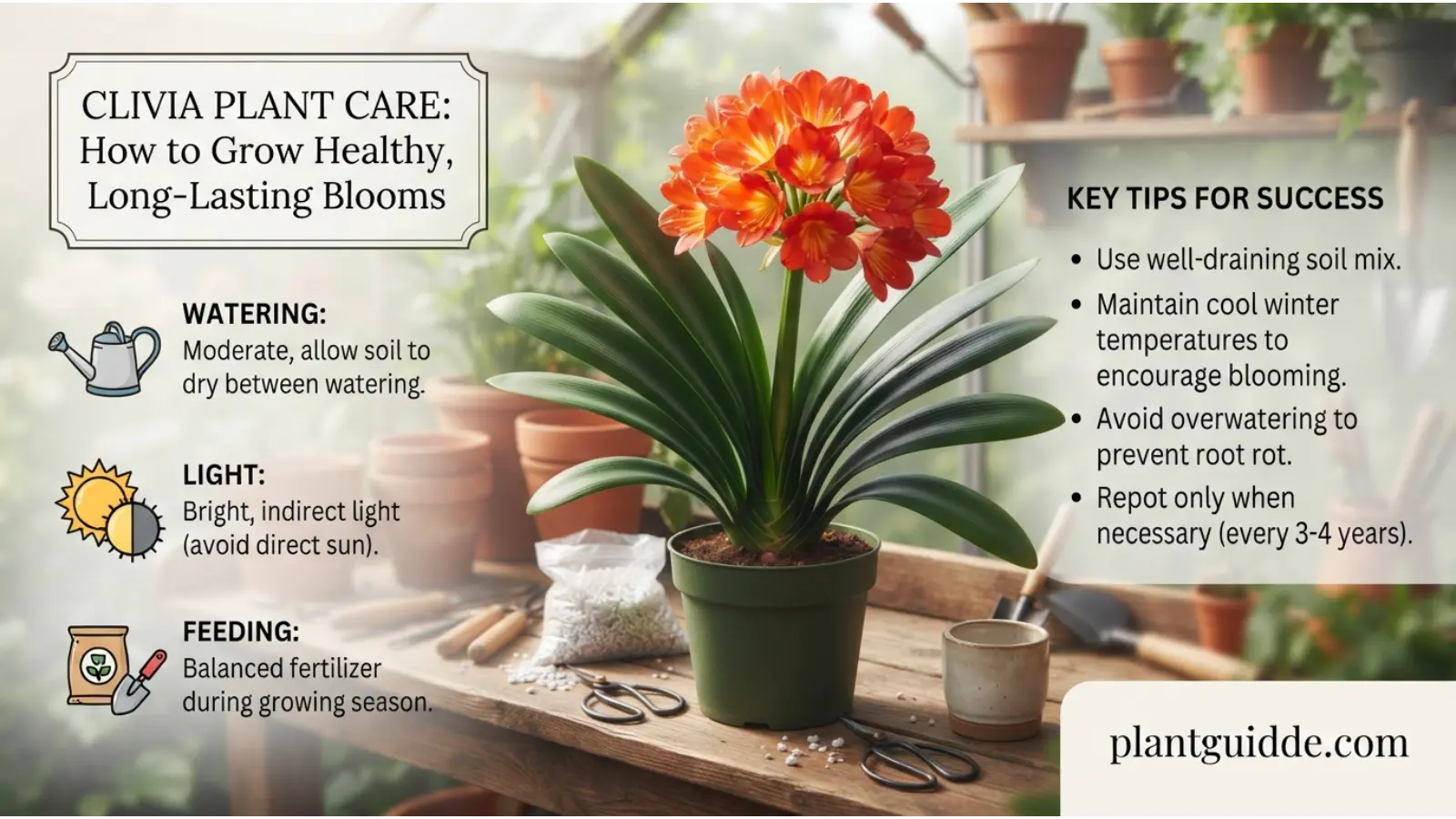
Clivia plant care is a rewarding houseplant for anyone who wants attractive foliage as well as dramatic seasonal flowers. Its thick, strap-like leaves stay attractive throughout the year, while mature plants can produce clusters of orange, yellow, or reddish flowers above the foliage.
The key to successful clivia plant care is understanding that clivia does not grow like an ordinary tropical houseplant. It prefers stable conditions, dislikes excessive watering, and generally benefits from a cooler, drier period before flowering. Many problems occur when the plant is kept too wet or encouraged to grow continuously without the seasonal rest it naturally responds to.
Once you understand its growth cycle, clivia becomes much easier to maintain.
Quick Answer
Clivia plant care is mainly about bright, indirect light, well-draining soil, careful watering, and seasonal changes in temperature and moisture. Let the soil dry somewhat between waterings, avoid keeping the roots constantly wet, and give mature plants a cooler, drier rest period in autumn and winter. With the right routine, clivia can remain healthy for years and produce spectacular flowers.
What Is a Clivia Plant?
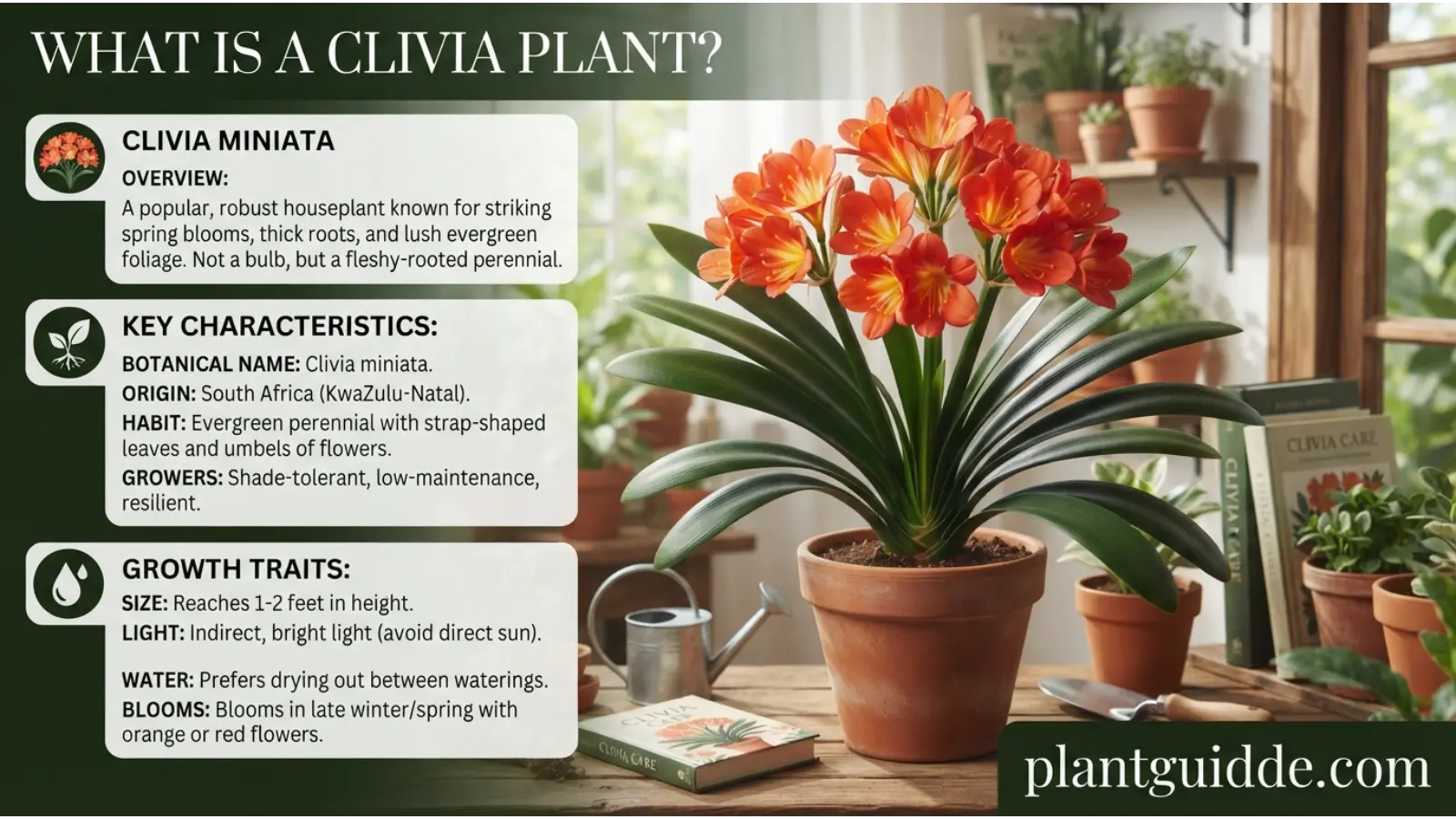
Clivia is a flowering plant in the Amaryllidaceae family, commonly grown as a houseplant in climates where temperatures are too cold for outdoor cultivation.
The most familiar cultivated species is Clivia miniata, known for its broad, dark-green leaves and rounded clusters of trumpet-shaped flowers.
Unlike many bulbs that die back completely, clivia forms a persistent crown and fleshy roots. It can remain attractive for many years and gradually develop into a larger clump with multiple growth points.
Common features include:
- Thick, strap-shaped evergreen leaves
- Orange flowers on tall stalks in many common cultivars
- Slow to moderate growth
- Fleshy roots that are sensitive to prolonged wet soil
- Better flowering as plants become mature
- A preference for being somewhat root-bound
- A seasonal rest that can encourage flowering
Clivia is often confused with amaryllis because both belong to the same family, but their growth habits and care requirements are different.
Clivia Plant Care Requirements at a Glance
| Care factor | Best approach |
|---|---|
| Light | Bright, indirect light |
| Direct sun | Gentle morning sun can be suitable; avoid harsh midday exposure |
| Water | Water thoroughly, then allow the soil to dry somewhat |
| Soil | Loose, fertile, sharply draining mix |
| Pot | Container with drainage holes |
| Humidity | Average indoor humidity is usually adequate |
| Temperature | Moderate temperatures during active growth |
| Winter rest | Cooler and drier conditions can encourage flowering |
| Fertilizer | Regular feeding during active growth |
| Repotting | Infrequently; clivia generally tolerates being root-bound |
| Flowering | Strongly influenced by maturity and seasonal conditions |
How Much Light Does Clivia Need?
Clivia grows best in bright, indirect light. A position near an east-facing window can work particularly well because it provides bright morning light without exposing the leaves to intense afternoon sun.
A little gentle direct sunlight is not necessarily harmful, but strong summer sun through glass can scorch the foliage.
Signs your clivia needs more light
Insufficient light can contribute to:
- Slow growth
- Dark, weak-looking foliage
- Long gaps between leaves
- Poor flowering
- Failure to produce a flower stalk
If your clivia produces healthy leaves but rarely flowers, light is one factor worth checking. However, moving it directly into strong sunlight is not the solution. Increase light gradually and protect it from intense midday exposure.
Practical tip: Rotate the pot occasionally if the plant grows toward the window. This helps maintain more even growth.
How to Water a Clivia
Watering is one of the most important parts of clivia plant care because the plant’s fleshy roots can suffer when the potting mix remains wet for too long.
Rather than watering according to a fixed calendar, check the soil first.
During active growth:
- Check the upper portion of the potting mix.
- If it has dried somewhat, water thoroughly.
- Allow excess water to drain from the bottom.
- Empty standing water from a saucer or cachepot.
- Wait until the soil has dried somewhat again before watering.
Clivia does not need constantly moist soil.
Reduce watering during the resting period
After the active growing season, watering should generally be reduced, particularly if the plant is being kept in cooler conditions to encourage flowering.
The combination of cooler temperatures and reduced watering helps create the seasonal conditions associated with flowering.
Avoid interpreting a resting clivia’s slower growth as a sign that it needs more water. During this period, excessive moisture can be more damaging than moderate dryness.
What Soil Is Best for Clivia?
The ideal clivia soil should hold enough moisture to support healthy growth while allowing excess water to escape quickly.
A suitable mix can contain:
- Quality indoor potting mix
- Fine or medium-grade bark
- Perlite or another drainage-improving material
The exact recipe is less important than the final texture. When you water the plant, excess water should move through the container rather than sitting around the roots.
Heavy, compacted soil is a common problem because it can stay wet for too long.
Why drainage matters
Clivia has fleshy roots designed to store resources. Constantly saturated conditions reduce air around the roots and can eventually lead to root deterioration.
Clivia plant care the soil stays wet for many days after watering, do not simply water less frequently. Consider whether the potting mix is too dense or the container is too large.
Choosing the Right Pot for Clivia
Clivia generally does not need a large pot.
In fact, it often performs well when somewhat root-bound. A container that is dramatically larger than the root system can hold excess moisture for too long.
Choose a pot that:
- Has drainage holes
- Is only moderately larger than the existing root system
- Is stable enough to support the mature plant
- Allows adequate drainage
A slightly snug container is usually preferable to an oversized pot.
Temperature and Seasonal Clivia Care
Clivia benefits from different conditions during active growth and its seasonal rest.
During active growth, provide comfortable indoor temperatures and bright, filtered light. Avoid placing the plant directly beside a heating vent, air conditioner, or other source of sudden temperature changes.
For flowering, mature clivia generally benefits from a cooler rest period in autumn and winter. During this period, watering should be reduced.
The plant should not be exposed to freezing conditions. The purpose of the rest is to provide a cooler, drier seasonal signal rather than to subject the plant to extreme cold.
Why the rest period matters
A common mistake is keeping clivia warm, heavily watered, and actively growing all year.
While this may keep the foliage alive, it does not necessarily provide the seasonal conditions associated with reliable flowering.
Think of the rest period as part of the plant’s annual rhythm rather than as neglect.
Humidity for Clivia
Clivia generally does not require the very high humidity demanded by some tropical houseplants.
Normal household humidity can be adequate when other conditions are good.
Clivia plant care your indoor air is exceptionally dry, particularly during prolonged heating or air-conditioning, you can improve the surrounding environment by:
- Grouping plants together
- Using a room humidifier
- Keeping the plant away from dry heat sources
Avoid keeping the pot sitting directly in water. Constantly wet conditions around the container can create more problems than dry indoor air.
How to Fertilize Clivia
Clivia benefits from regular nutrition while it is actively growing.
Use a balanced, diluted houseplant fertilizer according to the product’s instructions rather than applying concentrated fertilizer frequently.
A practical approach is to feed during active growth and reduce or stop routine feeding during the cooler resting period.
Overfertilization does not compensate for inadequate light, poor drainage, or improper watering. If the plant is struggling, correct its growing conditions before increasing fertilizer.
How to Encourage Clivia to Bloom
If your clivia is healthy but refuses to flower, consider several factors rather than assuming it needs more fertilizer.
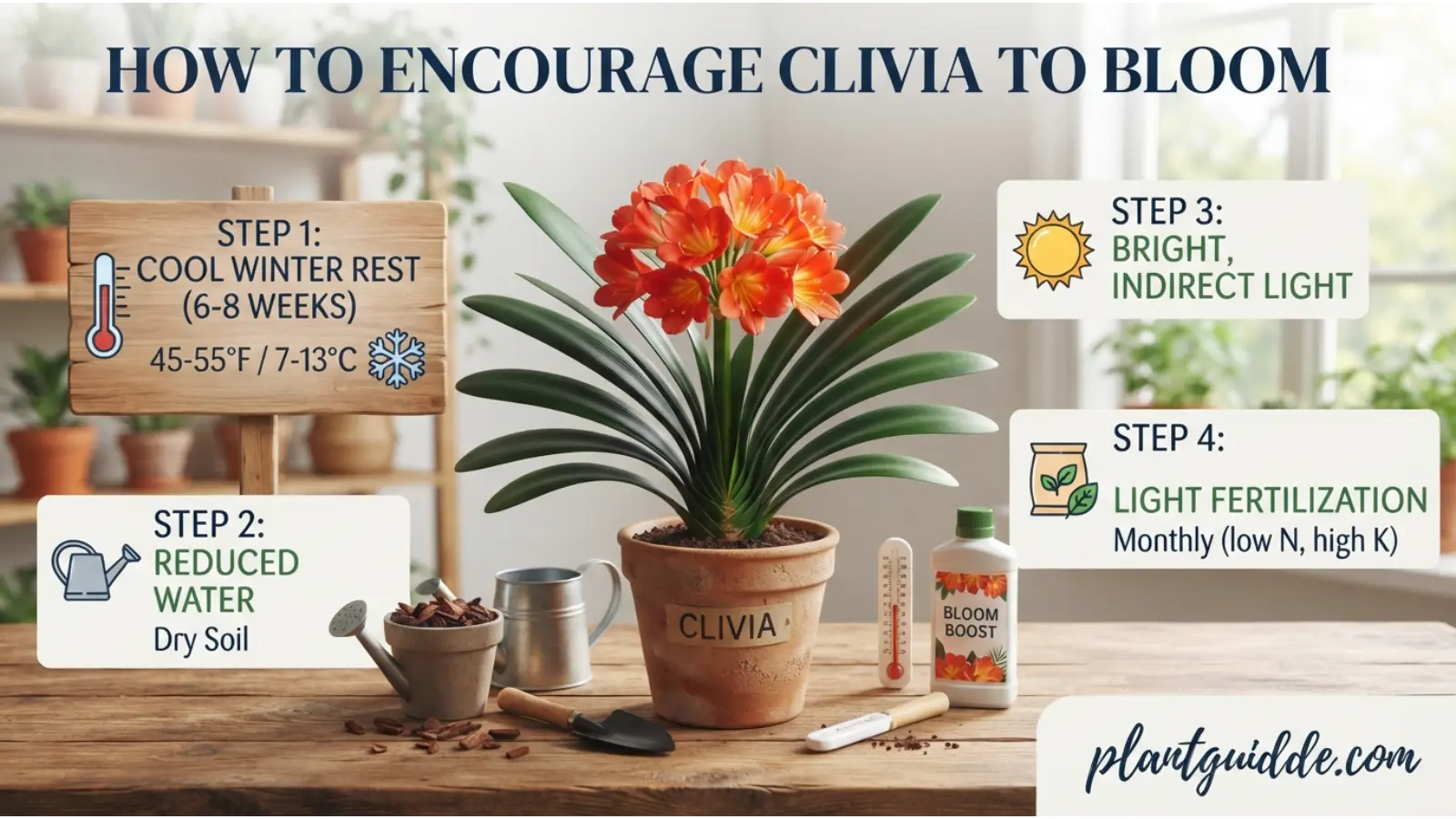
1. Give it enough light
Bright, indirect light supports strong foliage and flowering.
2. Allow the plant to mature
Young clivia may need several years before they flower reliably, especially when grown from seed.
3. Provide a seasonal rest
A cooler, drier autumn and winter period can help mature plants transition toward flowering.
4. Avoid excessive watering during dormancy
The plant does not need the same amount of water when growth slows.
5. Avoid unnecessary repotting
Clivia generally prefers to remain somewhat root-bound. Frequent repotting can disturb the plant unnecessarily and may reduce the conditions it prefers.
6. Keep conditions consistent
Sudden changes in temperature, light, or watering can stress the plant. Stable conditions are particularly useful when a flower stalk is developing.
How to Repot a Clivia
Clivia is not a plant that needs annual repotting.
Repot when the container is genuinely overcrowded, the potting mix has deteriorated, drainage has become poor, or the plant needs to be divided.
When repotting:
- Choose a container only slightly larger if additional space is needed.
- Remove the plant carefully.
- Inspect the roots for damaged or deteriorating sections.
- Replace old, compacted soil with a fresh, well-draining mix.
- Position the plant at approximately the same depth.
- Water appropriately after repotting and allow excess water to drain.
Do not repeatedly move clivia into increasingly large containers simply because the roots are visible.
How to Propagate Clivia
Clivia can be propagated from offsets or from seed.
Propagating from offsets
Offsets are young plants that develop around the parent plant. When a mature clump has multiple growth points, these can sometimes be separated during repotting.
Each division should have an adequate root system and growing point.
Division is generally much faster for producing a flowering-size plant than growing from seed.
Growing clivia from seed
Seed propagation is slower and requires patience. Seed-grown plants can also differ from the parent plant, particularly when pollination involves different plants.
For gardeners primarily interested in quickly expanding an existing clivia collection, offsets are usually the more practical method.
Common Clivia Problems and How to Fix Them
Yellow Leaves
An occasional older yellow leaf is not automatically a serious problem. However, widespread yellowing can indicate environmental stress.
Check:
- How wet the soil remains
- Whether the container drains properly
- Whether the plant is receiving adequate light
- Whether watering has recently increased
If several leaves turn yellow while the soil remains consistently wet, investigate the roots and growing medium before simply adding fertilizer.
Brown Leaf Tips
Brown tips can result from several environmental factors, including dry indoor conditions, inconsistent watering, accumulated salts, or root stress.
Instead of treating the symptom alone, examine the entire care routine.
If the potting mix remains wet for long periods, improving drainage may be more important than increasing humidity.
Drooping Leaves
Clivia leaves can droop because of watering problems, root stress, temperature stress, or other unfavorable conditions.
Check the soil before watering.
- Very dry soil: the plant may need water.
- Wet soil plus drooping: avoid adding more water and investigate drainage or root health.
- Sudden drooping after environmental change: check temperature and light exposure.
No Flowers
A mature clivia that produces plenty of leaves but no flowers may be affected by:
- Insufficient light
- Lack of a proper seasonal rest
- Excessive watering during the rest period
- Immaturity
- Excessive disturbance or repotting
- General growing stress
Do not assume that adding more fertilizer will solve the problem.
Root or Crown Rot
Soft, dark, deteriorating roots or a collapsing crown can indicate serious moisture-related damage.
If rot is suspected, remove the plant from its container and inspect the root system. Healthy roots should not be mushy and deteriorating.
Remove damaged tissue with clean tools, replace heavily degraded potting mix, and improve drainage and watering practices.
Severely damaged plants may be difficult to save, so prevention is much easier than recovery.
Clivia Care Through the Seasons
Spring
Spring is typically a period of increasing activity.
- Increase watering gradually as growth resumes.
- Provide bright, indirect light.
- Begin regular feeding during active growth.
- Watch for emerging flower stalks.
Summer
Maintain steady growing conditions.
- Keep the plant in bright filtered light.
- Water when the soil has dried somewhat.
- Protect foliage from intense afternoon sun.
- Avoid placing the plant beside hot windows or heating sources.
Autumn
This is an important transition period.
- Gradually reduce watering.
- Reduce feeding as growth slows.
- Provide cooler conditions when appropriate.
- Avoid keeping the soil constantly wet.
Winter
The goal is to maintain the seasonal rest without exposing the plant to damaging cold.
- Keep it cool but frost-free.
- Water sparingly.
- Avoid routine fertilization while growth is largely inactive.
- Continue checking the plant rather than completely ignoring it.
Once growth resumes, gradually return to the active-growth routine.
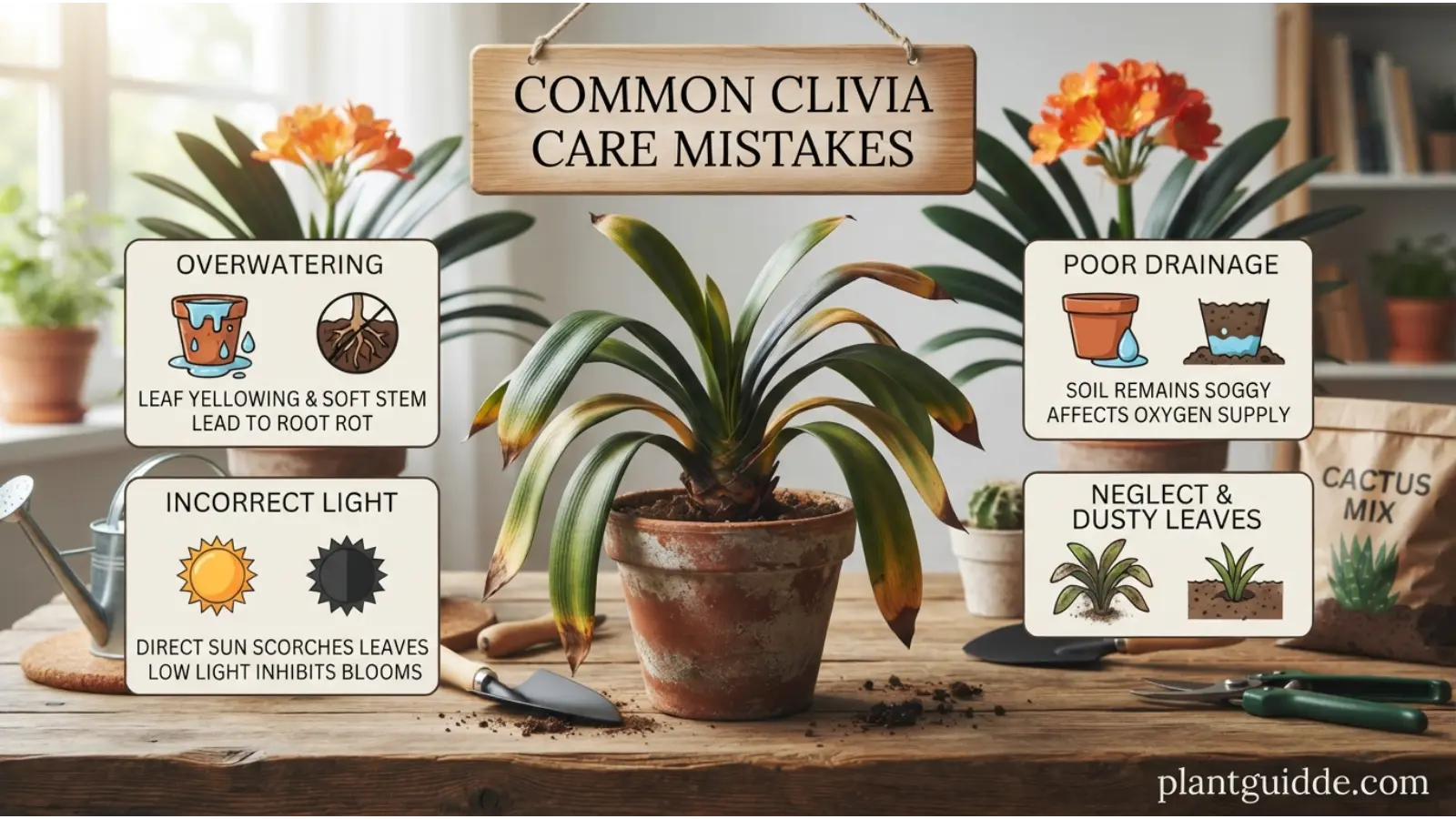
Common Clivia Care Mistakes
Some of the most avoidable problems come from treating clivia like a typical thirsty tropical plant.
Watering on a fixed schedule: Indoor conditions change throughout the year, so the soil should determine when watering is needed.
Using an oversized pot: More soil means more moisture around the roots, especially after watering.
Keeping soil constantly wet: Clivia roots need oxygen as well as moisture.
Giving harsh afternoon sun: Bright light is beneficial, but intense direct sunlight can damage foliage.
Repotting too often: Clivia generally tolerates and can benefit from being somewhat root-bound.
Keeping it warm and wet all winter: A cooler, drier seasonal period can be important for flowering.
Using fertilizer to solve every problem: Nutrition cannot correct poor drainage, inadequate light, or excessive watering.
An Easy Clivia Care Routine for Beginners
If you want a simple routine rather than a complicated schedule, use this approach:
- Place it in bright, indirect light.
- Check the soil before watering.
- Water thoroughly only when the soil has dried somewhat.
- Always use a pot with drainage holes.
- Keep it in a loose, well-draining potting mix.
- Fertilize during active growth according to the fertilizer label.
- Allow a cooler, drier rest period as autumn and winter approach.
- Avoid unnecessary repotting.
- Watch the leaves and soil for changes instead of following a rigid calendar.
The most useful habit is to observe the plant regularly. A clivia that is receiving appropriate light, draining properly, and following a reasonable seasonal watering pattern usually does not require constant intervention.
FAQs:
How often should I water a clivia?
Water when the potting mix has dried somewhat rather than following a strict weekly schedule. During active growth, the plant generally needs more water than during its cooler resting period. Always allow excess water to drain completely.
Does clivia need direct sunlight?
Clivia generally prefers bright, indirect light. Gentle morning sunlight can be suitable, but strong afternoon or midday sun can scorch the leaves. If moving a plant into brighter conditions, acclimate it gradually.
Why is my clivia not flowering?
For a mature plant, insufficient light, lack of a cool seasonal rest, excessive watering during dormancy, frequent repotting, or general stress can contribute to poor flowering. Young plants may simply not be mature enough to bloom.
Should clivia be kept root-bound?
Clivia generally tolerates being root-bound and does not need frequent repotting. Repot when the plant has genuinely outgrown its container or the potting medium has deteriorated rather than automatically repotting every year.
Can clivia grow indoors?
Yes. Clivia can make an excellent indoor plant when given bright, indirect light, well-draining soil, careful watering, and suitable seasonal temperature changes. Keep it away from harsh direct sun and extreme temperature fluctuations.
Conclusion
Successful clivia plant care comes down to working with the plant’s natural growth cycle rather than trying to keep it constantly wet and actively growing. Give it bright filtered light, fast-draining soil, careful watering, modest feeding during active growth, and a cooler, drier rest period when appropriate.
If your clivia is struggling, start with the basics: check the light, feel the soil, inspect drainage, and consider the season. Those four observations can often reveal more than following a rigid watering or fertilizing schedule.

Asad Mumtaz is a dedicated plant enthusiast and gardening writer with a passion for helping people care for their plants successfully. He specializes in plant care guides, indoor gardening, and practical growing tips for all skill levels. His content focuses on making gardening simple, enjoyable, and rewarding. Through his work, Asad shares reliable advice to help readers create thriving green spaces.