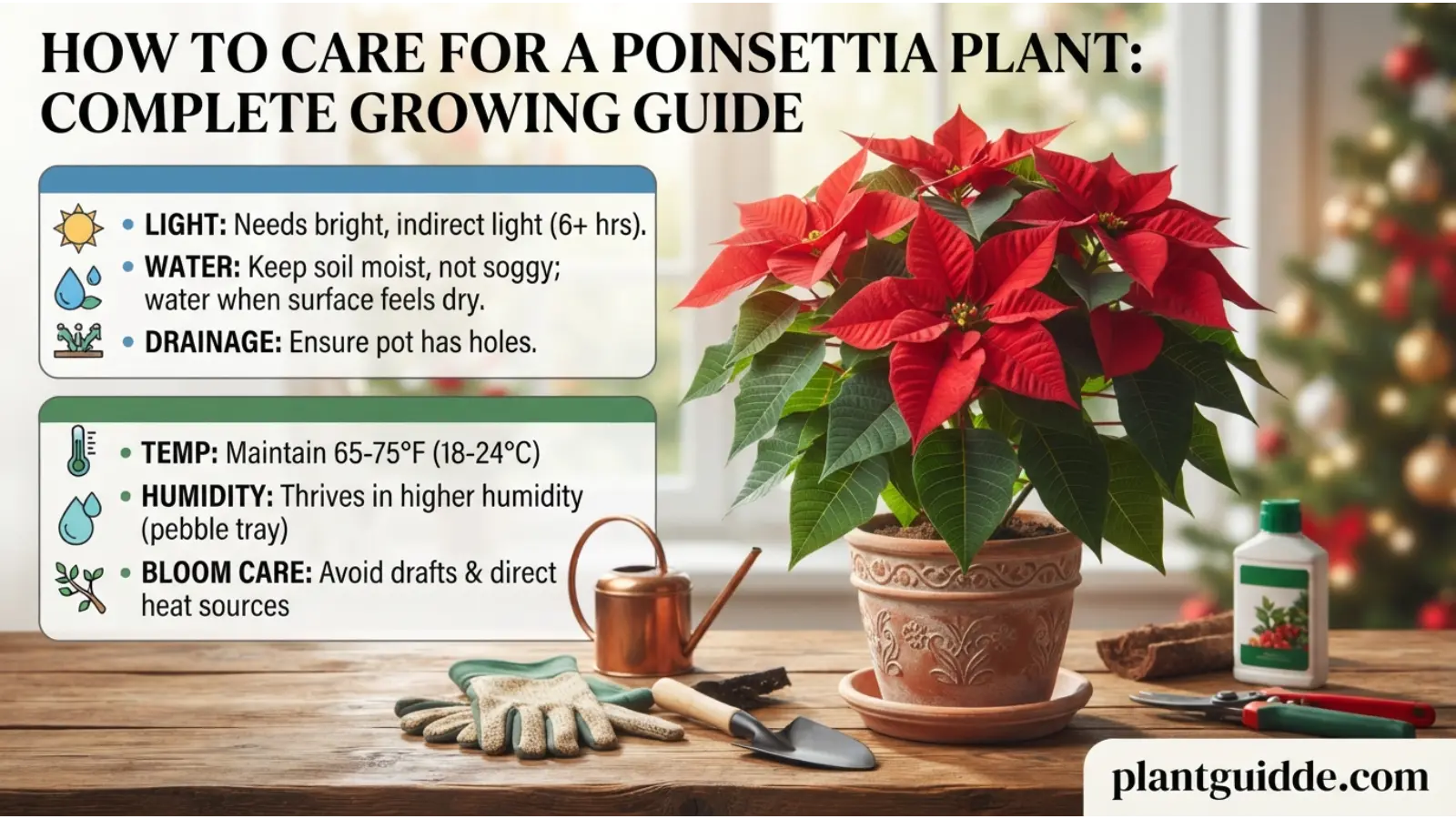
Care for a poinsettia plant are best known for their vivid red holiday display, but they are living plants that can remain attractive long after the festive season ends. The challenge is that many poinsettias decline because they are treated as temporary decorations rather than plants with specific growing requirements.
Learning how to care for a poinsettia plant is mostly about controlling moisture, light, temperature, and seasonal growth. Yellow leaves, wilting, leaf drop, and fading color are often signs that one of these conditions is out of balance.
Whether you have just brought home a poinsettia or want to keep one growing for another season, the goal is not to follow a rigid watering schedule. Instead, learn to read the soil and plant, then adjust care to the conditions around it.
Quick Answer
To care for a poinsettia plant, provide bright indirect light, warm and stable temperatures, and water when the top inch of soil feels dry. Use a pot with drainage holes and never let the roots sit in standing water. After the colorful bracts fade, continue caring for the plant rather than discarding it. With proper pruning, light, watering, and seasonal care, a poinsettia can stay healthy and rebloom.
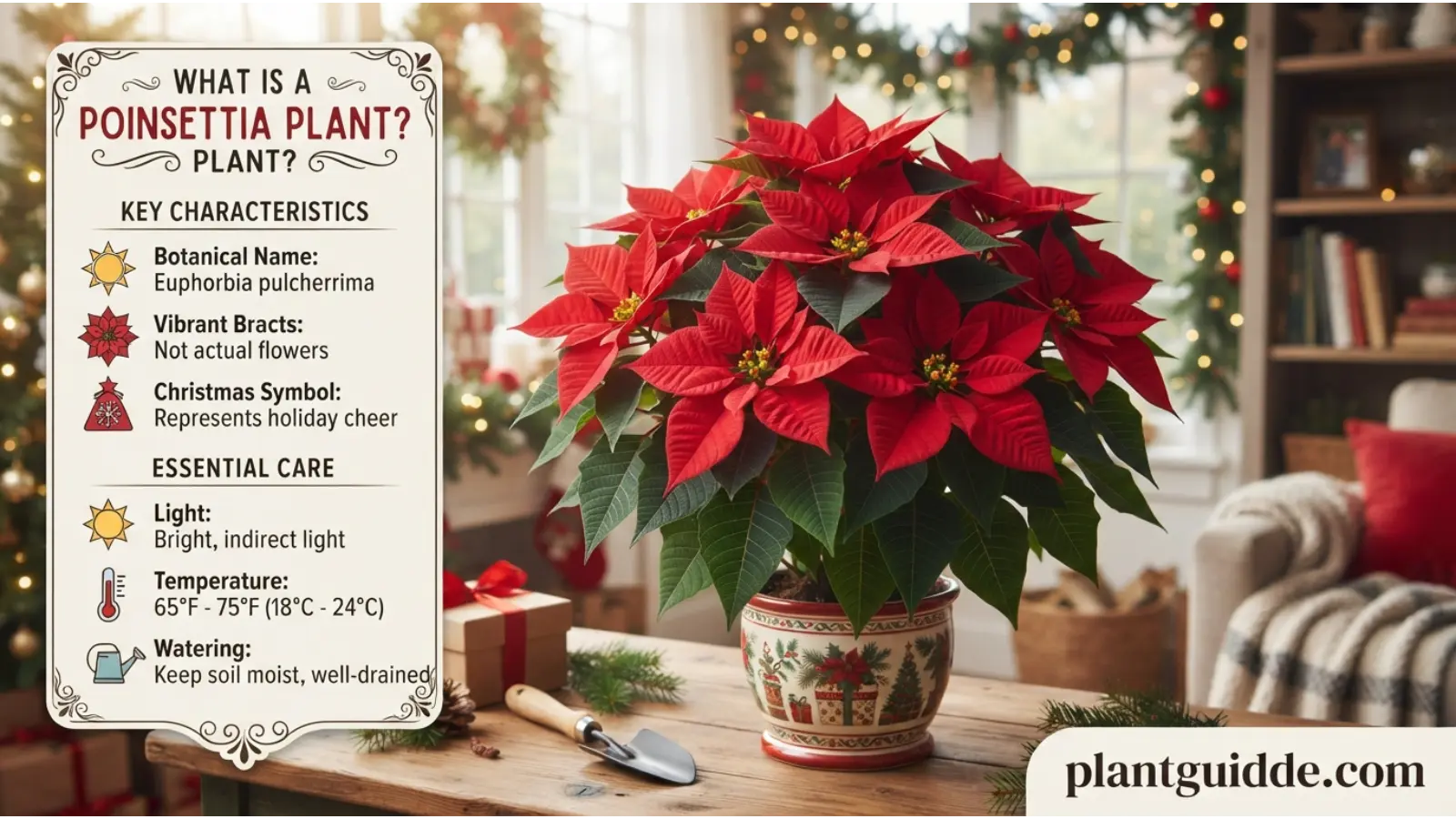
What Is a Poinsettia Plant?
Poinsettia (Euphorbia pulcherrima) is a tropical and subtropical plant native to Mexico and Central America. It belongs to the spurge family, Euphorbiaceae.
The brightly colored parts that most people associate with poinsettias are bracts, or modified leaves, rather than the plant’s true flowers. The tiny yellow-green flowers, called cyathia, develop in the center of the colorful bracts.
Although red is the traditional color, cultivated poinsettias are available in shades including:
- Red
- Pink
- White or cream
- Salmon
- Burgundy
- Marbled and variegated combinations
Poinsettias naturally respond to shorter day lengths. This seasonal response is what allows the plant to develop its colorful bracts and flower during the winter period.
How to Care for a Poinsettia Plant
Successful poinsettia care comes down to giving the plant conditions that resemble its natural preference: plenty of light, warmth, moderate moisture, and protection from sudden environmental changes.
Give It Bright, Indirect Light
Place your poinsettia near a bright window where it receives plenty of natural light.
A location with strong indirect light is usually ideal indoors. Some gentle direct sunlight can be tolerated, particularly during the cooler part of the day, but intense hot sunlight through glass can stress the foliage.
A good location might be:
- Near an east-facing window
- A few feet from a bright south- or west-facing window
- In a bright room with filtered sunlight
Avoid putting the plant in a dark corner simply because it is being used as holiday décor.
Practical tip: If the stems become unusually long and weak or the plant starts looking sparse, insufficient light may be contributing to the problem.
Keep Temperatures Warm and Stable
Poinsettias prefer warm indoor conditions and can react badly to cold drafts or sudden temperature changes.
Aim to keep the plant away from:
- Cold windows during freezing weather
- Exterior doors that open frequently
- Air-conditioning vents
- Heating vents
- Fireplaces and strong sources of dry heat
Normal comfortable indoor temperatures are generally suitable. The important point is consistency rather than constantly adjusting the thermostat for the plant.
Cold exposure can cause leaves to droop or drop, sometimes quite quickly.
Water When the Soil Needs It
Watering is one of the most important parts of poinsettia plant care.
Do not water simply because it is a particular day of the week. Instead, check the soil.
Push your finger about an inch into the growing medium. If the surface and upper layer feel dry, it is generally time to water.
When watering:
- Slowly apply water over the soil.
- Continue until excess water drains from the bottom.
- Allow the pot to drain completely.
- Empty decorative containers, saucers, or trays that collect excess water.
The roots need moisture, but they also need oxygen. Permanently wet soil can reduce oxygen around the roots and increase the risk of root problems.
One of the most common mistakes: giving a poinsettia small amounts of water frequently while allowing the soil to remain constantly damp.
Choose a Pot With Drainage
A drainage hole is essential.
If your poinsettia comes wrapped in decorative foil, check whether the foil is preventing water from escaping. During watering, remove the plant from the decorative covering if necessary, or make sure excess water can drain freely.
Never leave the pot sitting in collected water.
A decorative container can look attractive while quietly creating a drainage problem underneath.
Use Well-Draining Soil
Poinsettias perform better in a growing medium that holds some moisture without remaining saturated.
A quality commercial indoor potting mix can work well. The exact recipe is less important than avoiding heavy, compacted soil that stays wet for long periods.
Care for a poinsettia plant water takes a very long time to move through the pot, or the soil remains wet for many days despite reasonable indoor conditions, investigate drainage and soil structure before simply watering less.
How Often Should You Water a Poinsettia?
There is no single watering interval that works for every poinsettia.
A small plant in a warm, bright room may dry faster than a larger plant in a cooler, dimmer location. Pot size, soil composition, humidity, season, and root development also influence drying time.
Instead of following a fixed schedule, check the soil every few days.
Water when:
- The upper portion of the soil has dried.
- The pot feels noticeably lighter than after watering.
- The plant is beginning to show mild dryness rather than severe wilting.
Do not wait for severe wilting every time. A poinsettia that repeatedly becomes extremely dry can experience unnecessary stress.
What to Do After Buying a Poinsettia
A newly purchased poinsettia may have experienced several environmental changes before reaching your home.
It may have moved from:
greenhouse → shipping area → store → vehicle → home
That transition can cause some leaf drop even when you provide appropriate care afterward.
After bringing one home:
- Place it in bright indirect light.
- Keep it away from drafts.
- Check the soil before watering.
- Make sure the container drains properly.
- Avoid immediately repotting unless there is a clear drainage or root-related problem.
- Give it time to adjust to its new environment.
A small amount of leaf loss after moving does not automatically mean the plant is dying.
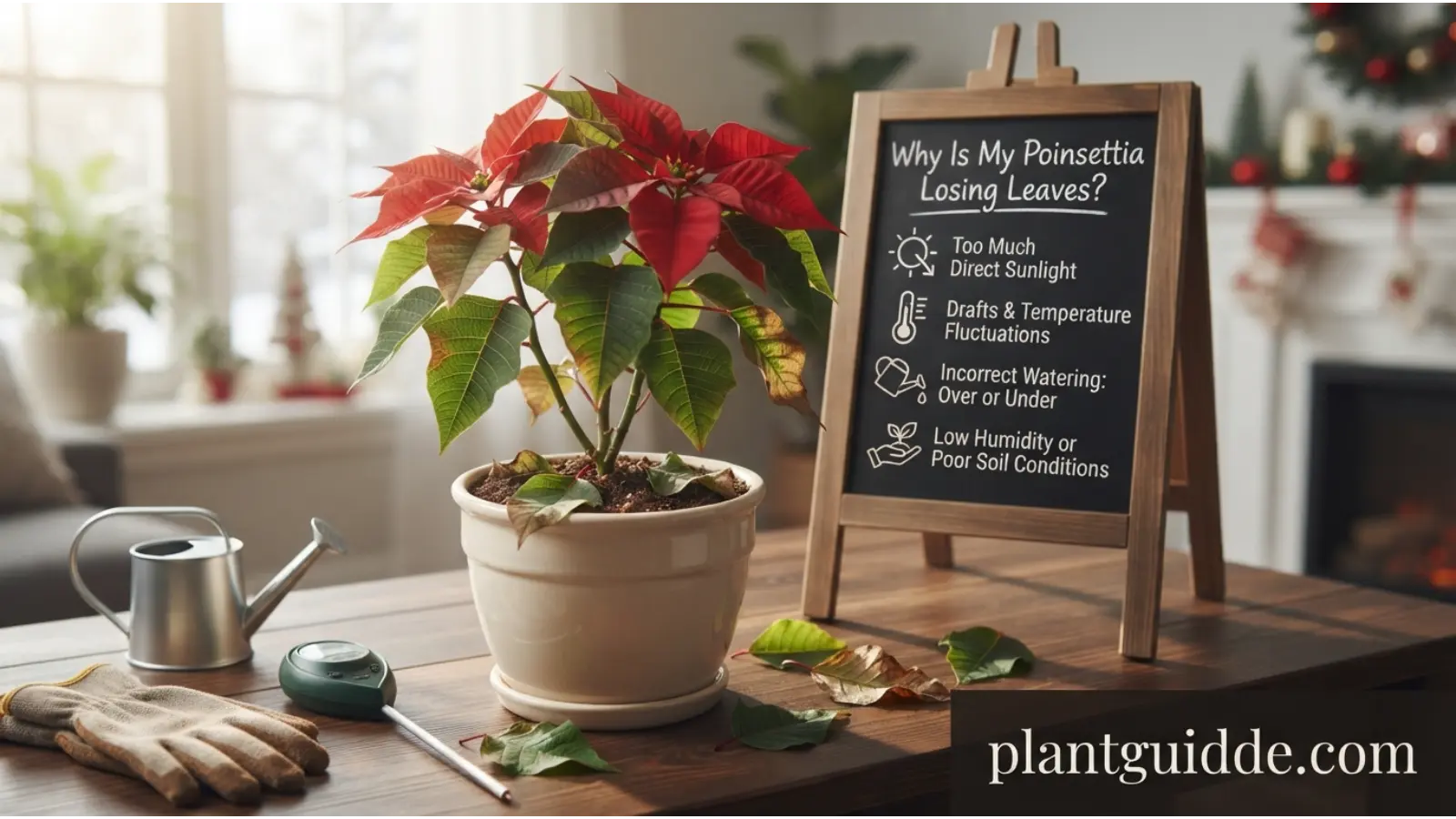
Why Is My Poinsettia Losing Leaves?
Leaf drop is one of the most common poinsettia problems.
Several different conditions can cause it, so look at the surrounding circumstances rather than assuming the plant simply needs more water.
Cold Stress
Exposure to cold air can cause rapid leaf drop.
If leaves began falling soon after transportation or after the plant was placed near a cold window or drafty doorway, temperature stress may be involved.
Overwatering
Consistently wet soil can damage roots and eventually cause yellowing, wilting, and leaf loss.
Ironically, an overwatered plant may also look wilted because damaged roots cannot function properly.
Underwatering
Very dry soil can also cause wilting and leaf drop.
If the soil has pulled away from the sides of the container or water runs immediately down the sides without soaking into the root ball, the plant may have become severely dry.
Poor Light
A poinsettia kept in a dark room may gradually become weak and lose foliage.
Move it toward a brighter location rather than compensating with excessive watering.
Sudden Environmental Changes
Poinsettias do not appreciate abrupt changes in temperature, light, or moisture.
When several environmental stresses occur together, leaf drop can become particularly noticeable.
Why Are My Poinsettia Leaves Turning Yellow?
Yellow leaves can have several causes, but watering problems are among the first things to investigate.
Check:
- Is the soil staying wet for a long time?
- Does the container have drainage holes?
- Is water collecting underneath the pot?
- Has the plant been allowed to become extremely dry?
- Is the plant receiving enough light?
- Are only a few older leaves yellowing, or is the whole plant affected?
A few older yellow leaves are not necessarily alarming. Widespread yellowing accompanied by soft stems, persistent wet soil, or leaf drop deserves closer attention.
How to Keep Poinsettia Bracts Colorful
The colorful display naturally changes as the plant moves through its flowering cycle.
To preserve the appearance of an existing poinsettia:
- Provide bright light.
- Maintain stable temperatures.
- Avoid overwatering.
- Protect it from drafts.
- Remove badly damaged leaves.
- Avoid unnecessary environmental changes.
Remember that the colorful bracts are part of the plant’s natural reproductive cycle. Once the flowering period ends, the bracts will eventually fade or drop even when the plant is healthy.
That does not necessarily mean the poinsettia has died.
How to Care for a Poinsettia After Christmas
Once the holiday display begins fading, continue normal plant care.
Keep the plant in bright light and continue watering according to soil dryness. As the colorful bracts age and fall, you can gradually transition from enjoying the decorative display to maintaining the plant as foliage.
When growth becomes less attractive, pruning can help encourage a more compact plant.
Pruning Poinsettias
After the flowering and colorful-bract period has finished, pruning can help encourage branching.
Use clean, sharp pruning shears and remove weak or excessively long growth. Avoid removing large amounts of healthy growth unnecessarily.
As the plant enters active growth, new shoots can develop from the remaining stems.
The exact timing of pruning can vary depending on your growing conditions and whether your goal is simply to maintain the plant or prepare it for another seasonal display.
How to Get a Poinsettia to Rebloom
Getting a poinsettia to produce its characteristic colorful bracts again requires more than ordinary houseplant care.
The plant responds to long, uninterrupted periods of darkness combined with suitable daytime light and growing conditions.
For home growers attempting reblooming, consistency is critical.
During the appropriate season, the plant needs:
- Bright daytime light
- Long uninterrupted nights
- Suitable temperatures
- Adequate moisture without waterlogging
- Healthy new growth
Even small amounts of light during the dark period can interfere with the short-day response needed for reliable color development.
For many beginners, maintaining the plant as a healthy green houseplant is much easier than controlling the precise light schedule required for a strong holiday display.
Should You Repot a Poinsettia?
You generally do not need to repot a newly purchased poinsettia immediately.
Wait unless there is a specific reason, such as:
- Severe root crowding
- Poor drainage
- Damaged container
- Compacted or problematic soil
- Roots remaining excessively wet
When repotting becomes appropriate, choose a container only modestly larger than the existing root system. An oversized pot can hold excess moisture for longer and create another watering problem.
Always use a container with drainage.
Fertilizing a Poinsettia
A poinsettia that is actively growing can benefit from regular fertilization, particularly after the flowering display has ended.
Use a balanced, complete houseplant fertilizer according to its label directions. Avoid assuming that more fertilizer will produce faster or better growth.
Overfertilization can damage roots and create additional problems.
During periods of reduced growth, the plant generally requires less nutritional input than during active growth.
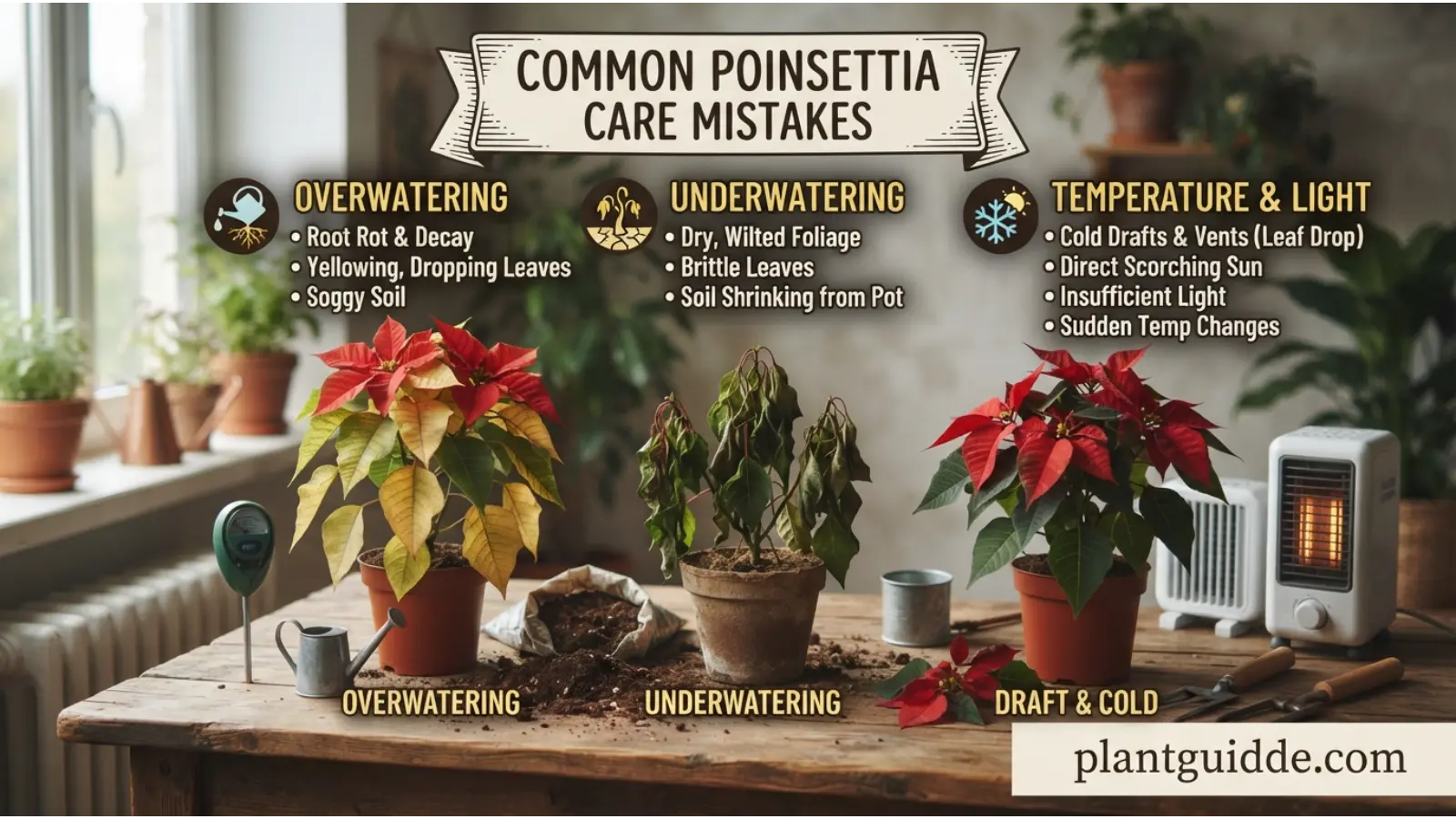
Common Poinsettia Care Mistakes
Many poinsettia problems are caused by a small number of repeated mistakes.
Watering on a Fixed Schedule
Watering every Monday or every few days regardless of soil condition can lead to either drought stress or chronically wet roots.
Better approach: check the soil first.
Keeping It in a Dark Corner
Poinsettias may be sold as seasonal decorations, but they still need adequate light.
Better approach: keep it in a bright indoor location.
Leaving It Wrapped in Watertight Packaging
Decorative foil can prevent drainage if water accumulates inside it.
Better approach: allow excess water to escape completely.
Placing It Beside a Heater
Hot, dry air can stress foliage and cause the growing medium to dry unevenly.
Better approach: keep the plant away from direct heat sources.
Throwing It Away When the Bracts Fade
Fading bracts are part of the plant’s natural cycle.
Better approach: continue caring for the plant if you want to keep it growing.
Repotting Too Quickly
A newly purchased poinsettia is already adjusting to a new environment.
Better approach: stabilize its conditions first and repot only when there is a practical reason.
Poinsettia Care at a Glance
| Care requirement | What to provide |
|---|---|
| Light | Bright indirect light |
| Water | Water when the upper soil becomes dry |
| Soil | Well-draining potting mix |
| Pot | Container with drainage holes |
| Temperature | Warm, stable indoor conditions |
| Humidity | Average indoor humidity is usually adequate |
| Fertilizer | Regular feeding during active growth |
| Pruning | After the flowering/color display, as needed |
| Reblooming | Requires controlled long, uninterrupted nights |
| Main risk | Overwatering and poor drainage |
FAQs:
How do you keep a poinsettia alive indoors?
Keep it in bright indirect light, maintain warm and stable temperatures, and water when the upper layer of soil becomes dry. Make sure excess water drains completely from the pot.
How often should I water a poinsettia?
Watering frequency depends on temperature, light, pot size, and soil. Check the soil rather than following a fixed schedule. Water when the upper portion has dried and allow excess water to drain.
Why is my poinsettia dropping leaves?
Leaf drop can result from cold temperatures, sudden environmental changes, overwatering, underwatering, insufficient light, or other stress. Consider what changed recently before adjusting care.
Can a poinsettia survive after Christmas?
Yes. A poinsettia can continue growing after its colorful bracts fade. Provide suitable light, moisture, warmth, and nutrition during active growth, and prune it when appropriate.
How can I make my poinsettia turn red again?
Poinsettias require the correct seasonal conditions, particularly long, uninterrupted periods of darkness, to develop their characteristic colorful bracts. Consistent light and darkness schedules are important when attempting to rebloom the plant.
Conclusion
Knowing how to care for a poinsettia plant is less about keeping a strict routine and more about understanding what the plant needs at each stage of growth. Give it bright light, stable warmth, well-draining soil, and water based on actual soil moisture rather than the calendar.
If your poinsettia begins losing leaves or turning yellow, check its environment before assuming it needs more water. Good drainage, appropriate light, and stable conditions solve many common problems. And when the holiday bracts eventually fade, remember that the plant itself can continue growing long after the seasonal display is over.

Asad Mumtaz is a dedicated plant enthusiast and gardening writer with a passion for helping people care for their plants successfully. He specializes in plant care guides, indoor gardening, and practical growing tips for all skill levels. His content focuses on making gardening simple, enjoyable, and rewarding. Through his work, Asad shares reliable advice to help readers create thriving green spaces.