Columbine plant care are valued for their delicate, nodding flowers, distinctive spurs, and attractive divided foliage. They can look wonderfully effortless in a garden, but their best growth depends on getting a few fundamentals right, especially light, moisture, drainage, and summer conditions.
The good news is that established columbines generally need less attention than many gardeners expect. The bigger challenge is recognizing when conditions are too dry, too wet, or poorly ventilated and adjusting care before foliage and flowering decline.
Quick Answer
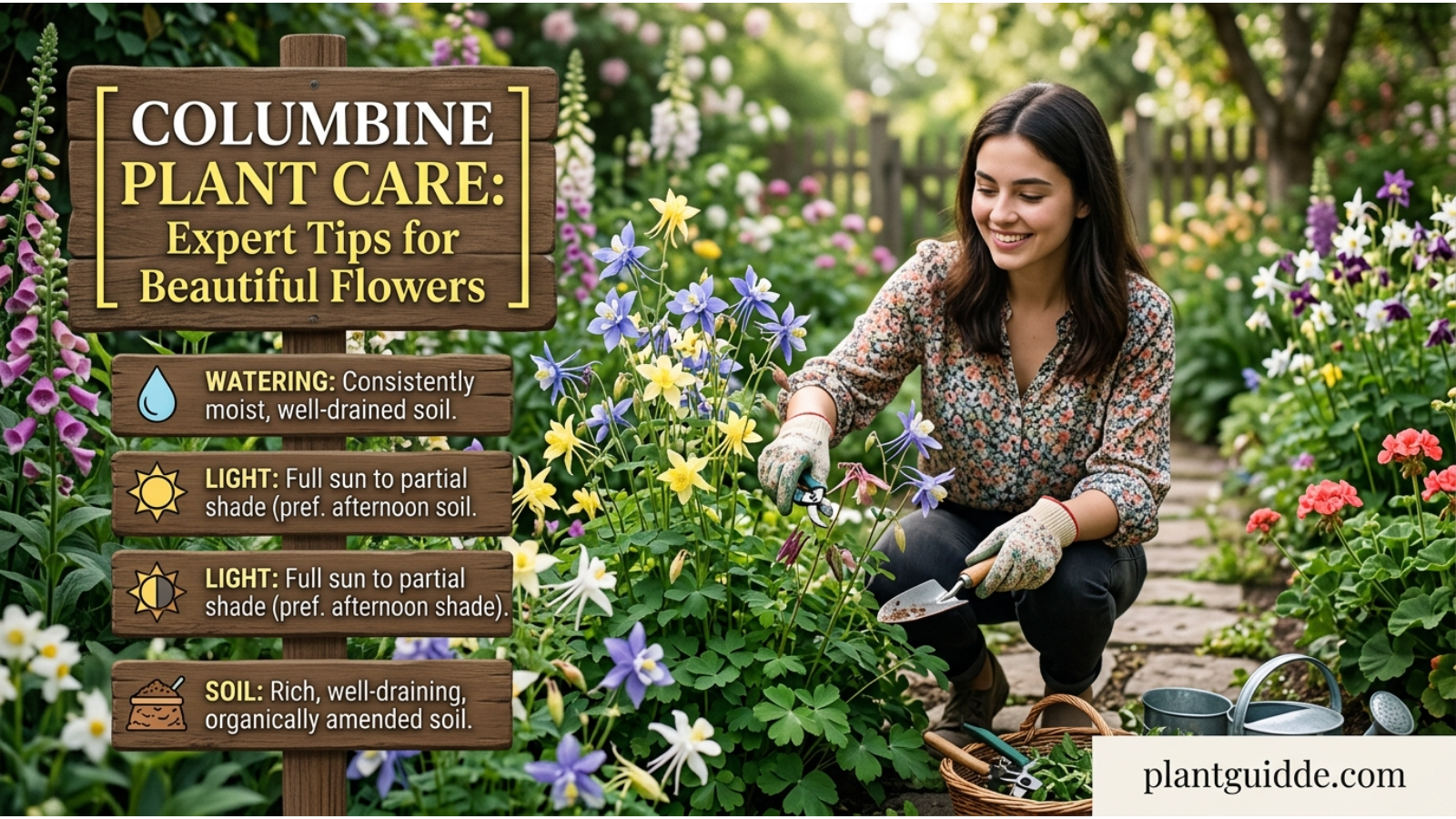
Columbine plant care is easiest when you provide fertile, well-draining soil, consistent moisture, and full sun to partial shade. Most columbines, also called Aquilegia, perform especially well where the soil stays lightly moist without becoming waterlogged. Deadheading can extend the tidy appearance, while allowing some flowers to form seed pods encourages natural self-seeding.
What Is a Columbine Plant?
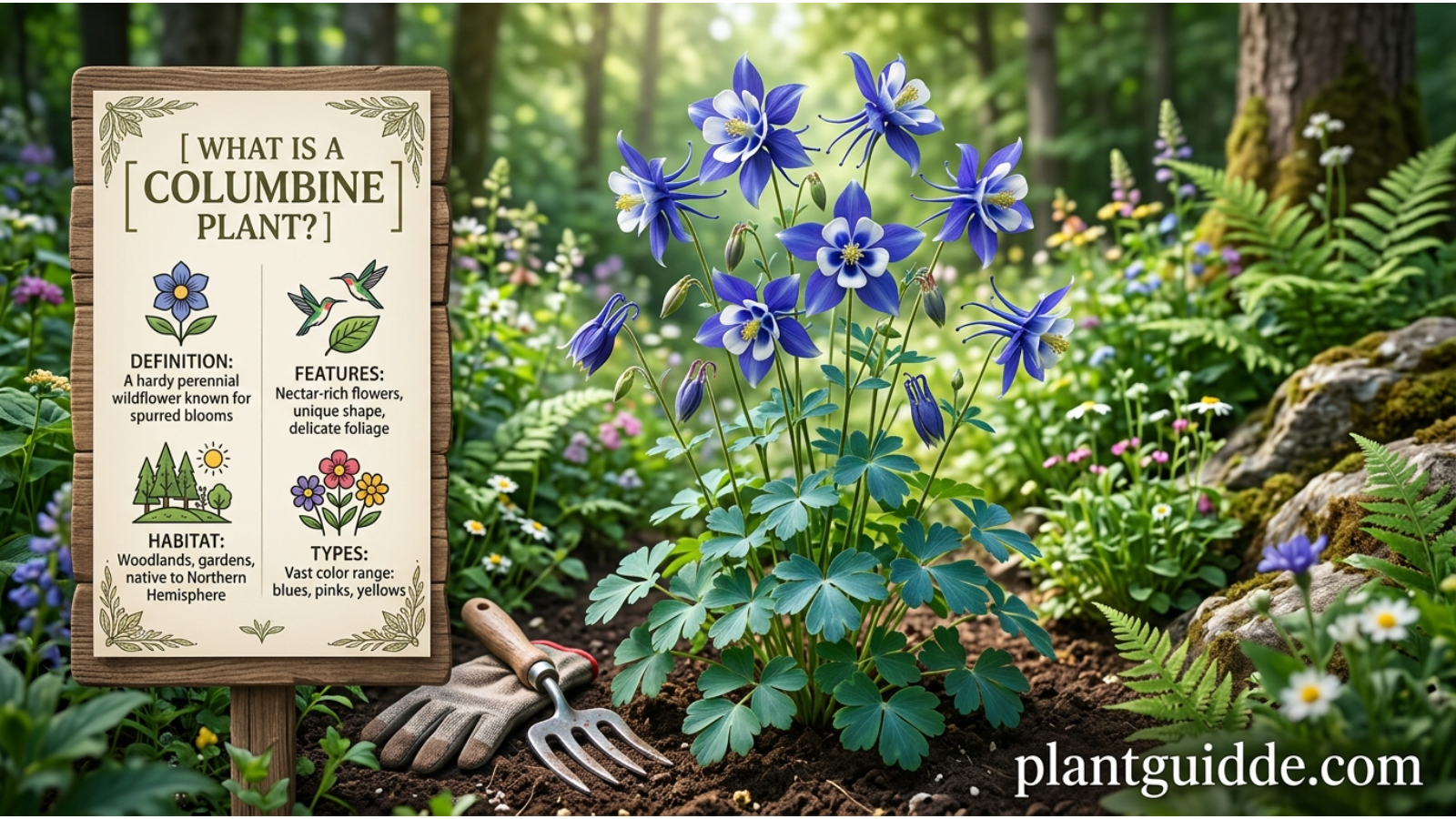
Columbine is the common name for plants in the Aquilegia genus, which belongs to the buttercup family, Ranunculaceae. These herbaceous perennials form clumps of rounded, divided foliage and produce distinctive flowers in shades such as blue, purple, pink, red, yellow, and white.
Many varieties bloom from late spring into early summer. Depending on the species and cultivar, plants can remain relatively compact or develop flowering stems around 2 feet tall.
Columbines are particularly useful in cottage gardens, informal borders, wildlife gardens, woodland-style plantings, and containers. Their nectar-rich flowers can also attract pollinating insects such as bumblebees.
One important characteristic is that many columbines are relatively short-lived perennials. Fortunately, they can readily produce seedlings when allowed to self-seed.
Columbine Plant Care at a Glance
| Care Requirement | What Columbine Needs |
|---|---|
| Light | Full sun to partial shade |
| Soil | Fertile, moisture-retentive but well-draining |
| Water | Even moisture while establishing; avoid soggy soil |
| Feeding | Usually little fertilizer in good soil |
| Flowering | Generally late spring to early summer |
| Pruning | Deadhead for tidiness; cut back after flowering if desired |
| Propagation | Mainly by seed; division is possible but can disturb roots |
| Common Problems | Powdery mildew, leaf spots, sawfly, leaf miners, aphids |
| Lifespan | Many types are relatively short-lived but may self-seed |
How Much Sun Does Columbine Need?
Columbines generally grow well in full sun or partial shade, but the ideal exposure depends on your climate and the particular species.
In areas with mild summers, a sunny position can produce strong growth and abundant flowers. In hotter climates, some afternoon shade can help prevent excessive stress, particularly when soil dries quickly.
A practical approach is to look at the plant rather than following a rigid light rule:
- Too little light: stems may become stretched or weak, and flowering can be reduced.
- Good light: foliage remains compact and flowering stems develop strongly.
- Intense heat plus dry soil: leaves may wilt, scorch, or become more vulnerable to powdery mildew.
Some columbine species have more specialized preferences. Woodland types can appreciate cooler, partially shaded conditions, while alpine species generally need brighter light and sharper drainage.
If you are unsure which conditions your plant prefers, check the cultivar or species label rather than assuming every Aquilegia behaves identically.
Best Soil for Columbine
The best soil for columbine is fertile, moisture-retentive, and well-draining.
The goal is not soil that dries out immediately after watering, but neither should the roots sit in saturated conditions. Heavy, persistently wet soil can cause poor growth and shorten the plant’s life.
Before planting, improve poor garden soil with organic matter such as well-rotted compost. If the soil is extremely compacted, improve drainage rather than simply adding more water or fertilizer.
For containers, use a quality potting mix that holds some moisture while allowing excess water to drain freely.
Why Drainage Matters
A common mistake is interpreting wilted leaves as a signal to water immediately. Wilting can occur because soil is genuinely dry, but plants can also wilt when roots are damaged by excessive moisture.
Before watering, check the soil around the root zone.
If it feels:
- Dry several centimeters down: water thoroughly.
- Cool and moderately moist: wait and check again later.
- Wet or saturated: improve drainage and avoid adding more water.
This simple check is more reliable than watering according to a fixed calendar.
How to Water Columbine
Young columbines need more consistent watering while their roots become established. Water deeply enough to moisten the root zone, then allow excess water to drain.
Once established, many garden-grown columbines become considerably less demanding.
During prolonged dry weather:
- Check the soil before watering.
- Water deeply when the upper soil begins to dry.
- Direct water toward the soil rather than repeatedly wetting the foliage.
- Avoid keeping the planting area constantly saturated.
- Add a layer of organic mulch to help moderate soil moisture.
Do not assume that a plant described as easy-care should be left completely dry. Columbines generally prefer soil that does not become excessively dry during active summer growth.
Should You Fertilize Columbine?
Columbines usually do not require heavy feeding when grown in reasonably fertile soil.
If the soil is poor, a modest application of a balanced general-purpose fertilizer during active growth may help. Avoid excessive nitrogen because producing large amounts of soft foliage is not necessarily beneficial when your goal is sturdy plants and good flowering.
Compost incorporated into the soil before planting is often a more useful long-term improvement than repeatedly applying fertilizer.
If your columbine has healthy foliage and is flowering normally, there is usually no reason to increase feeding simply because the plant is present in the garden.
How to Plant Columbine
Planting correctly gives columbines a much better start.
Step 1: Choose the Location
Select a site with full sun to partial shade and enough space for the mature plant.
In hot regions, consider protection from harsh afternoon sun.
Step 2: Prepare the Soil
Loosen compacted soil and incorporate compost or other suitable organic matter if needed.
Make sure water can drain away after rainfall or irrigation.
Step 3: Plant at the Correct Depth
Set the plant into the soil at approximately the same depth at which it was growing in its container.
Avoid burying the crown deeply.
Step 4: Water Thoroughly
Water after planting to settle the soil around the roots.
Step 5: Maintain Even Moisture
Keep newly planted columbines reasonably moist while they establish, especially during warm or dry weather.
Once established, gradually reduce supplemental watering according to rainfall and soil conditions.
When Do Columbines Bloom?
Most garden columbines bloom in late spring and early summer, although the exact timing varies by species, cultivar, climate, and growing conditions.
Flowering can be affected by:
- Insufficient light
- Excessive heat
- Drought stress
- Poor soil
- Immature plants
- Cultivar characteristics
If a healthy-looking plant does not flower as expected, do not automatically assume it needs more fertilizer. Check its light exposure, moisture, age, and variety first.
How to Deadhead Columbine
Deadheading is optional, but it can make the plant look cleaner and redirect its energy away from producing mature seeds.
To deadhead:
- Wait until individual flowers fade.
- Follow the flower stem downward.
- Cut the spent flower stem above healthy foliage.
- Continue removing faded flowers throughout the bloom period if you want a tidier appearance.
There is an important trade-off.
If you want more natural seedlings, leave some flowers in place so they can develop seed pods. Columbines can self-seed readily, although seedlings may not look exactly like the parent plants because different columbines can cross-pollinate.
Should You Cut Columbine Back After Flowering?
Yes, you can cut columbines back after flowering if the foliage becomes unattractive or you want to encourage fresh growth.
Cutting the plant back after flowering can also help tidy the garden and remove foliage affected by fungal problems.
Do not treat post-flowering pruning as mandatory, though. A healthy plant can simply be left to complete its seasonal growth if you prefer a more natural garden appearance.
How to Propagate Columbine
Growing Columbine From Seed
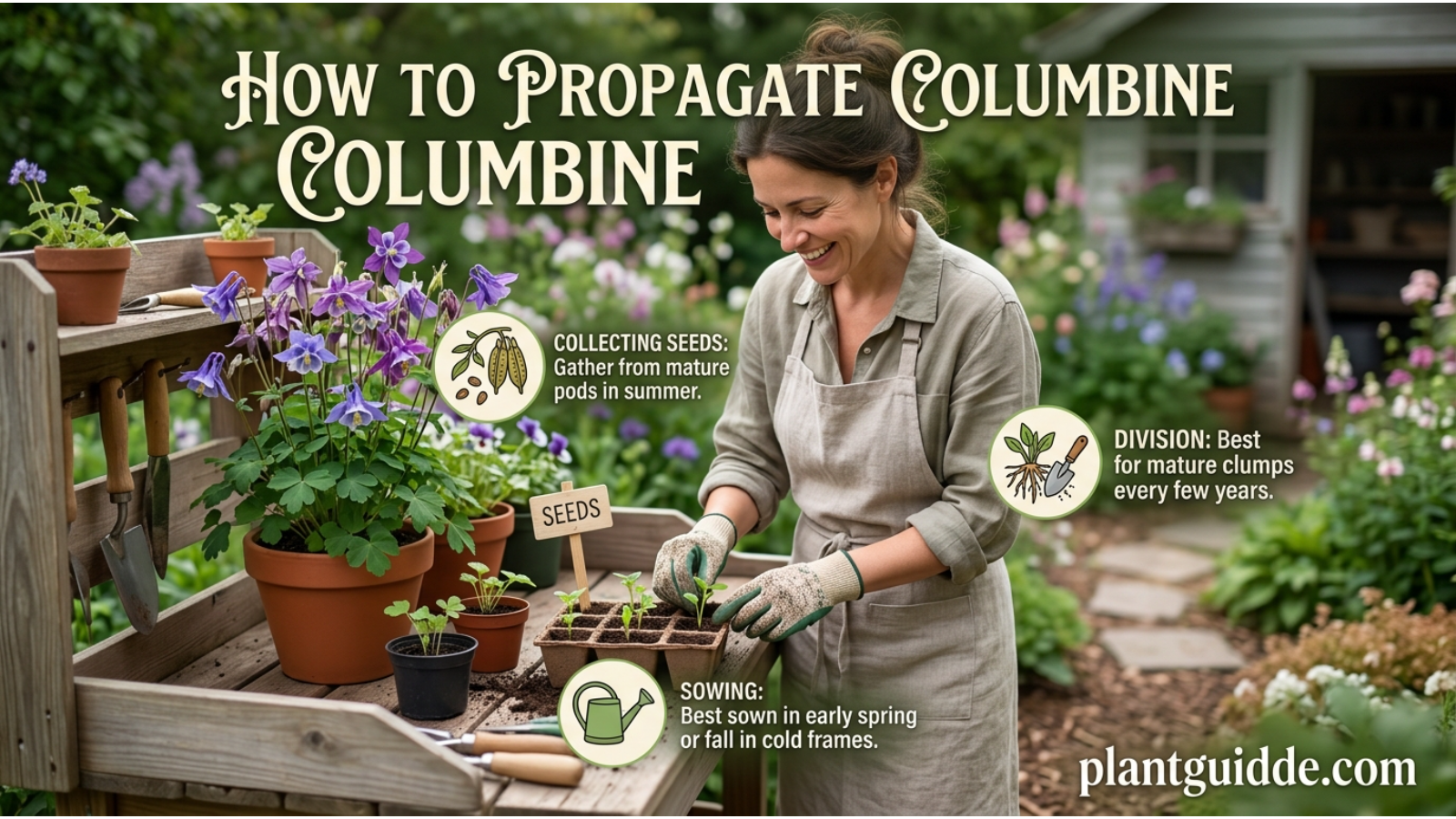
Seed propagation is one of the easiest ways to produce new columbines.
Allow seed pods to mature and turn brown before collecting them. Fresh seed can be sown according to the requirements of the particular species or cultivar.
Some columbine seeds can be slow to germinate. Certain seeds benefit from a period of cold, moist stratification before they germinate.
If you are growing named hybrids, remember that seedlings from saved seed may not reproduce the exact flower color, form, or characteristics of the parent plant.
Can You Divide Columbine?
Established columbines can sometimes be divided, but this is not always the best propagation method.
Their roots dislike disturbance, and divided plants may take time to recover. Seed propagation is often more practical when you want several new plants.
Columbine in Containers
Columbines can be grown in containers, particularly compact varieties.
Choose a container with:
- Adequate drainage holes
- Enough depth for the root system
- Quality potting mix
- Space for the plant’s mature size
Container plants dry out faster than plants growing in the ground, so check moisture more frequently during warm weather.
At the same time, avoid leaving a container sitting in water. Good drainage is just as important in a pot as it is in a garden bed.
Common Columbine Plant Problems
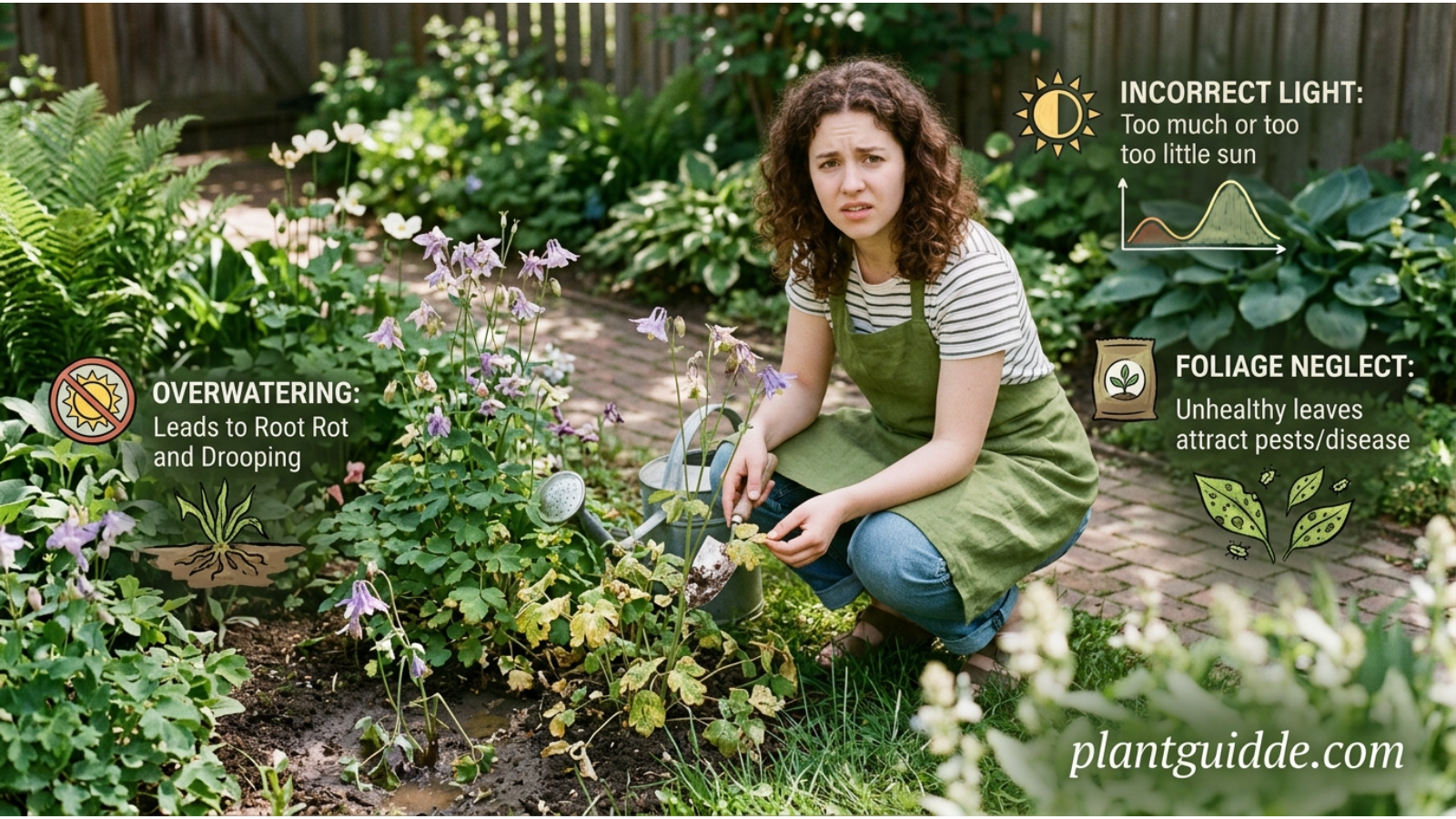
Columbine Leaves Turning Brown
Brown foliage can have several causes.
Dry soil, hot weather, excessive sun, poor root conditions, or fungal disease can all contribute to browning.
Check the soil first. If it is very dry, provide a thorough watering. If it is persistently wet, increasing irrigation will make the problem worse.
Columbine Leaves Turning Yellow
Yellow leaves may occur naturally as older foliage ages, particularly later in the season.
If widespread yellowing occurs while the soil remains wet, investigate drainage and root conditions. Nutrient problems are also possible, but they should not be assumed without considering water and soil conditions first.
Powdery Mildew
Powdery mildew can appear as a pale, powdery coating on leaves, especially when plants experience stressful conditions.
Good air circulation, appropriate spacing, sensible watering, and avoiding unnecessary wetting of foliage can help reduce favorable conditions for fungal problems.
columbine plant care foliage becomes heavily affected, removing diseased leaves can help improve the plant’s appearance and reduce the amount of infected material.
Leaf Miners
Leaf miners create winding or blotchy trails inside leaves.
The damage may look dramatic, but the most important step is to monitor the plant and remove badly affected foliage when appropriate rather than automatically treating the entire plant with pesticides.
Columbine Sawfly
Sawfly larvae can chew through foliage and may leave a plant looking severely defoliated.
Inspect the undersides of leaves and stems when damage appears suddenly. Early identification makes control easier.
Aphids
Aphids may cluster on young growth or flower stems.
Small infestations can sometimes be removed with a strong stream of water. Encourage beneficial insects where possible and monitor the plant before reaching for chemical controls.
Common Columbine Care Mistakes
Watering on a Fixed Schedule
A calendar-based watering routine can easily lead to overwatering during cool or rainy periods.
Check the soil and weather instead.
Keeping Soil Constantly Wet
Columbines appreciate moisture, but moisture does not mean waterlogged soil.
Good drainage is one of the most important parts of successful columbine plant care.
Giving Every Variety the Same Light
Different Aquilegia species and cultivars can have different environmental preferences.
A woodland species and an alpine species should not automatically be treated the same way.
Removing Every Flower
columbine plant care you deadhead every bloom, you prevent the plant from producing the seed that can naturally replenish your planting.
columbine plant care you want a self-sustaining patch, leave some flowers to mature.
Overfertilizing
More fertilizer does not automatically mean more flowers.
Start with good soil and only supplement nutrients when there is a genuine need.
Ignoring Summer Conditions
A columbine that thrives in cool spring weather may struggle when summer becomes hot and dry.
Watch for changes in soil moisture, leaf quality, and afternoon heat rather than assuming spring conditions will continue indefinitely.
How to Keep Columbines Healthy Year After Year
A simple seasonal approach works well.
Spring: Check emerging growth, remove damaged debris, and make sure the soil drains properly. Water newly established plants as needed.
Late spring to early summer: Enjoy flowering and deadhead if you want a tidier display. Watch for aphids, sawfly damage, and leaf diseases.
Summer: Monitor soil moisture carefully, particularly during prolonged heat or drought. Avoid allowing plants to remain excessively dry.
After flowering: Cut plants back if desired, or leave some flowers to develop seed pods if you want self-seeding.
Autumn: Remove declining foliage when appropriate and keep the planting area reasonably clean.
Are Columbines Good for Pollinators?
Yes. Columbine flowers provide nectar and can be useful in wildlife-friendly gardens.
Their unusual flower shape makes them especially attractive as an ornamental addition to mixed perennial plantings. Rather than growing columbines alone, consider combining them with plants that bloom at different times so pollinators have food sources throughout the season.
Image Suggestion: A realistic garden scene showing blooming columbine flowers with a bumblebee, divided green foliage, well-drained soil, and a partial-shade garden setting.
FAQs:
Does columbine prefer sun or shade?
Most columbines grow well in full sun to partial shade. In hot climates, partial shade can help protect plants from excessive afternoon heat and drying soil. Always consider the requirements of the particular species or cultivar.
How often should I water columbine?
Water according to soil moisture rather than a fixed schedule. Young plants need more regular watering while establishing, while established plants generally need supplemental water mainly during prolonged dry periods.
Should I deadhead columbine flowers?
Deadheading is optional. Remove faded flowers if you want a tidier plant or want to reduce self-seeding. If you want more volunteer seedlings, leave some flowers to form mature seed pods.
Why is my columbine not flowering?
Check light, moisture, plant maturity, and variety before adding fertilizer. Too little light, drought stress, excessive heat, or simply growing a young plant can all contribute to reduced flowering.
Do columbines come back every year?
Many columbines are herbaceous perennials and can return from year to year, but individual plants may be relatively short-lived. Their ability to self-seed often helps maintain a planting even when older plants decline.
Final Thoughts
Successful columbine plant care comes down to balance: good light, fertile but well-drained soil, appropriate moisture, and sensible pruning. Avoid treating the plant as either completely drought-tolerant or constantly thirsty.
Pay attention to the soil and foliage, especially when weather changes. With the right location and a little seasonal maintenance, columbines can provide distinctive flowers, attractive foliage, and natural renewal through self-seeding without demanding constant attention.

Asad Mumtaz is a dedicated plant enthusiast and gardening writer with a passion for helping people care for their plants successfully. He specializes in plant care guides, indoor gardening, and practical growing tips for all skill levels. His content focuses on making gardening simple, enjoyable, and rewarding. Through his work, Asad shares reliable advice to help readers create thriving green spaces.