Catnip plant care is best known for the strong reaction it can produce in many cats, but it is also an attractive, aromatic perennial herb with gray-green foliage and small flowers. For gardeners, it is generally an easy plant once its basic growing preferences are understood.
The main challenge with catnip plant care is usually not keeping the plant alive but preventing common problems caused by excessive moisture, insufficient sunlight, overcrowding, or aggressive pruning at the wrong time. Catnip naturally handles relatively dry conditions, so treating it like a moisture-loving herb can quickly lead to weak growth or root problems.
If you want a bushy, productive plant with fragrant foliage, focus on three fundamentals: sunlight, drainage, and controlled watering.
Quick Answer
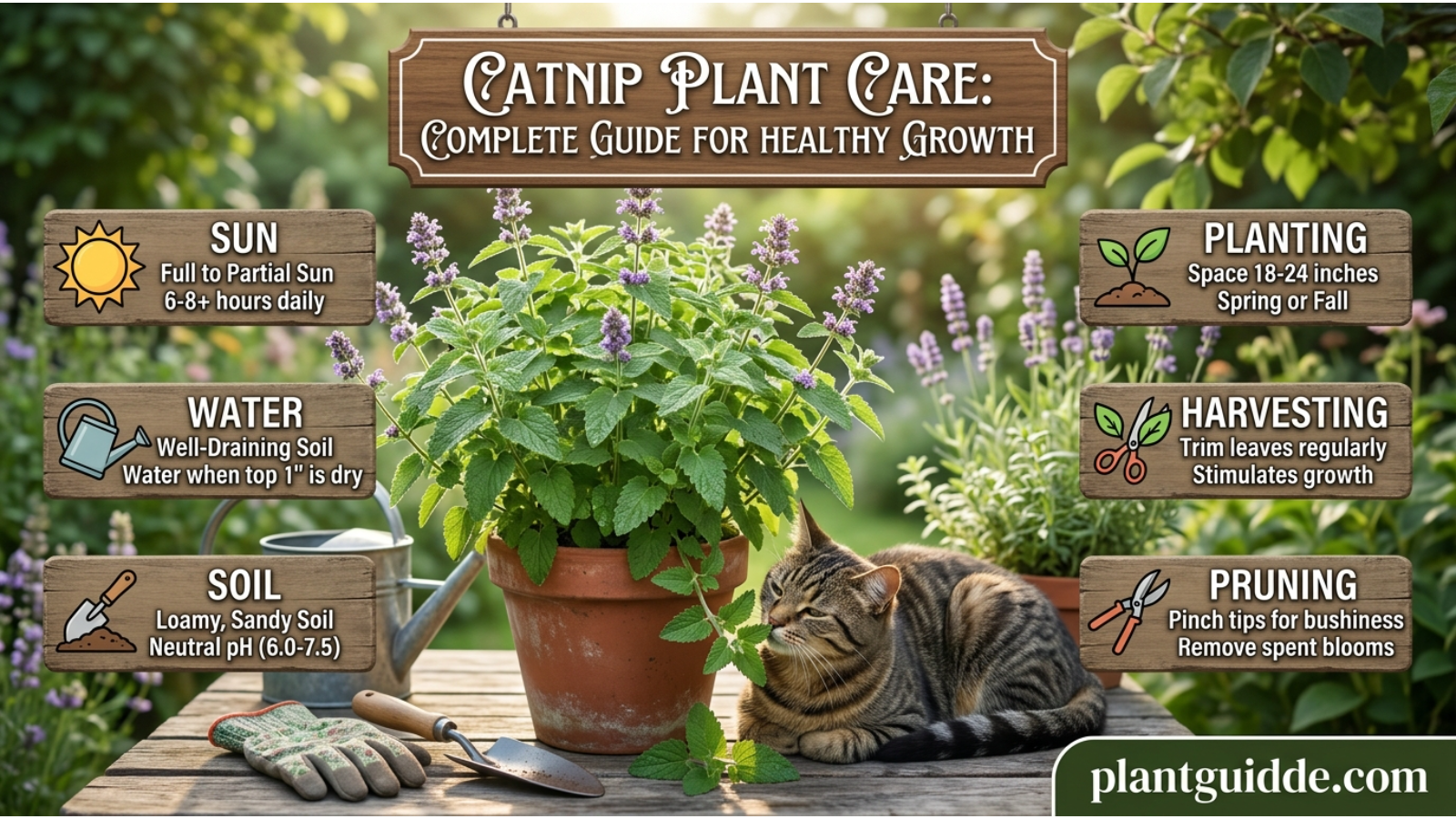
Catnip plant care is relatively simple because Nepeta cataria prefers plenty of sunlight, well-draining soil, and moderate watering rather than constantly wet conditions. Give catnip a sunny location, water when the upper soil begins to dry, avoid poor drainage, and prune after flowering to keep growth compact. Regular harvesting also encourages fresh foliage and helps prevent the plant from becoming overly leggy.
What Is Catnip?
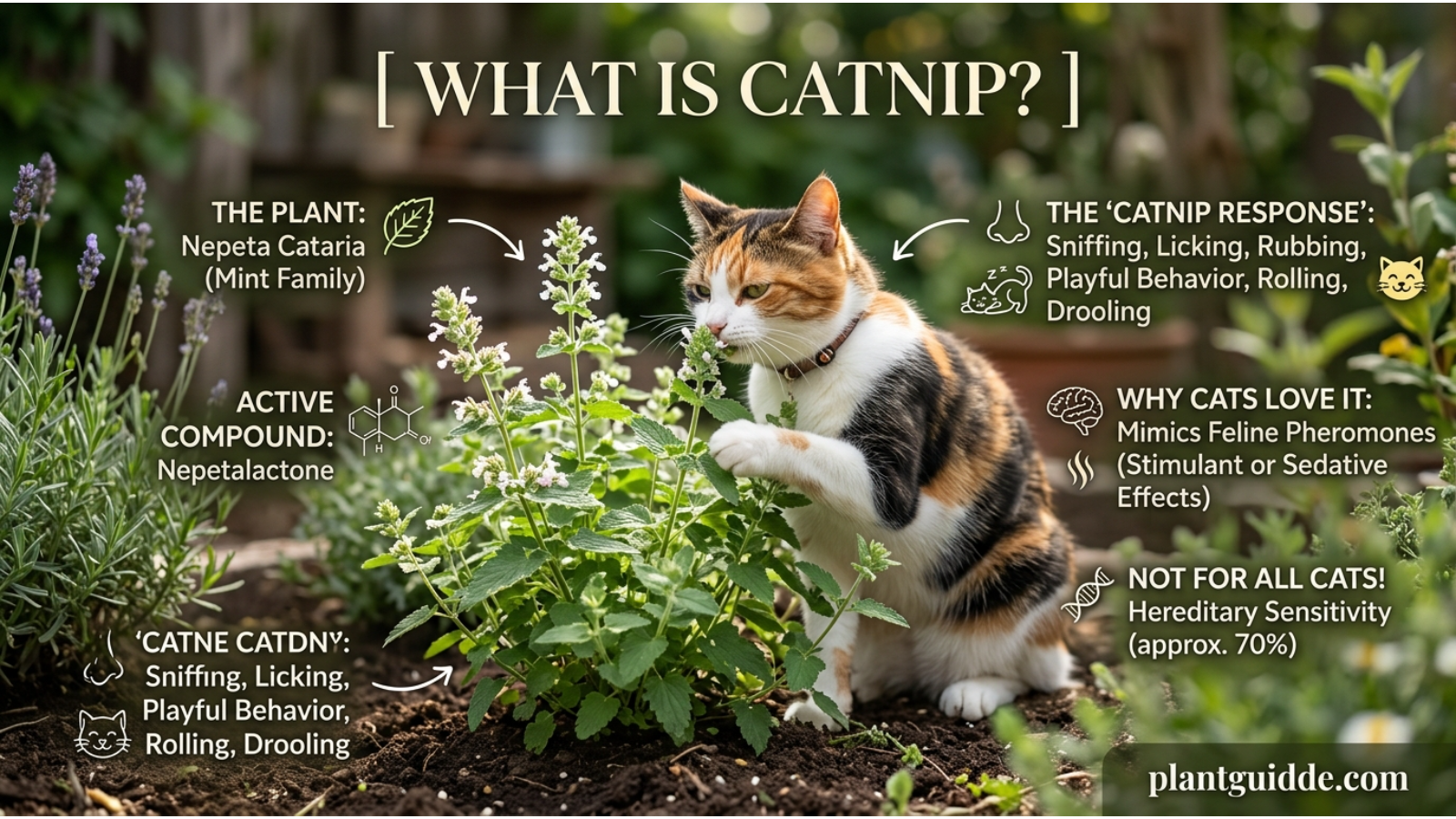
Catnip is the common name for Nepeta cataria, a member of the mint family, Lamiaceae. It is a herbaceous perennial that produces aromatic gray-green leaves and small white flowers marked with violet or purple. Under suitable conditions, plants can reach roughly 0.5–1 meter in height and spread.
The plant contains nepetalactone, the compound associated with the characteristic response that many cats have to catnip. Not every cat responds to it, however, so growing a healthy plant does not guarantee that every cat will react to it.
Catnip can be grown in garden beds, herb gardens, containers, and other sunny locations with freely draining soil.
Catnip Plant Care Requirements at a Glance
| Care factor | What catnip prefers |
|---|---|
| Light | Full sun |
| Soil | Well-draining soil |
| Water | Moderate; allow soil to dry somewhat between waterings |
| Drainage | Excellent |
| Fertilizer | Light feeding is usually sufficient |
| Pruning | Trim after flowering or harvest regularly |
| Propagation | Seeds, cuttings, or division |
| Common pests | Slugs and snails |
| Growth habit | Bushy, aromatic perennial |
RHS guidance recommends growing Nepeta cataria in full sun and well-drained soil. It also notes that the plant has good drought resistance and can be propagated by seed, cuttings, or division.
How Much Sun Does Catnip Need?
Catnip grows best in full sun, where it can receive several hours of direct sunlight each day. Strong light helps produce sturdier stems, denser foliage, and better flowering.
A location that receives morning and afternoon sunlight is generally preferable to a deeply shaded area.
What Happens in Too Little Light?
When catnip does not receive enough light, you may notice:
- Long, weak stems
- Sparse foliage
- Floppy growth
- Reduced flowering
- A plant that becomes difficult to keep upright
If your catnip is growing indoors, place it near the brightest suitable window. However, outdoor catnip generally performs better because it naturally prefers strong light and good airflow.
Practical tip: If a container-grown plant repeatedly stretches toward a window, do not immediately compensate with more fertilizer. First check whether inadequate light is causing the weak growth.
Best Soil for Catnip
Good catnip plant care starts with soil that drains quickly.
Catnip does not need rich, constantly moist soil. It can grow in a range of soil types as long as excess water can escape efficiently. RHS specifically recommends well-drained soil and lists chalk, loam, and sand among suitable soil types.
A practical container mix can include:
- Quality potting soil
- Compost in moderation
- Perlite, pumice, or another material that improves drainage
Avoid heavy soil that stays saturated for long periods.
Why Drainage Matters
Wet soil reduces the amount of air available around the roots and can create conditions that encourage root problems. This is particularly important in containers without adequate drainage holes.
A decorative pot may look attractive, but if it traps water around the root ball, it can create more problems than a simpler nursery pot with drainage.
How to Water Catnip
Catnip generally prefers moderate watering rather than constantly moist soil.
Instead of watering according to a rigid calendar, check the soil first. When the upper portion has started to dry, water thoroughly enough to moisten the root zone, then allow excess water to drain away.
A useful routine is:
- Check the soil with your finger.
- If the surface and upper layer are still noticeably moist, wait.
- If the soil has begun to dry, water deeply.
- Allow excess water to drain completely.
- Empty standing water from a saucer or outer container.
Established catnip is relatively drought tolerant, so occasional dryness is generally less concerning than repeatedly keeping the roots wet.
Signs You May Be Overwatering
Watch for:
- Yellowing leaves
- Soft or weak growth
- Persistently wet soil
- Wilting despite wet soil
- Root or stem deterioration
One of the most important lessons in catnip plant care is that wilting does not always mean the plant needs more water. A plant with damaged roots can wilt even when its soil is excessively wet.
Temperature and Humidity
Catnip is a hardy outdoor perennial in suitable climates and generally does not require tropical levels of humidity.
Good airflow is especially helpful when growing plants closely together. Crowded, stagnant conditions can make foliage more vulnerable to fungal problems.
If you grow catnip indoors, avoid placing it directly beside a strong heat source or in a poorly ventilated corner.
For outdoor plants, choose a position that combines sunlight with reasonable airflow.
How to Fertilize Catnip
Catnip usually does not require heavy fertilization.
If the soil is reasonably fertile, excessive feeding can encourage soft, overly vigorous foliage rather than the compact growth many gardeners want.
A sensible approach is:
- Improve poor soil with a modest amount of mature compost.
- Use a balanced fertilizer only when growth indicates that additional nutrition is needed.
- Avoid repeatedly applying high-nitrogen fertilizer.
- Reduce unnecessary feeding when the plant is already producing healthy foliage.
In many gardens, getting light and drainage right has a greater effect on catnip performance than adding large amounts of fertilizer.
How to Prune Catnip
Pruning is useful for keeping catnip compact and encouraging fresh growth.
RHS recommends trimming Nepeta cataria after flowering to maintain a more compact shape.
You can also harvest stems and leaves during active growth rather than allowing every stem to become tall and floppy.
How to Prune Catnip Properly
Use clean, sharp scissors or pruning shears and:
- Remove spent flower stems after flowering.
- Cut back excessively long or floppy stems.
- Avoid removing the entire plant at once unless you are intentionally cutting it back.
- Leave enough healthy foliage for continued growth.
- Remove damaged or diseased material promptly.
Regular harvesting can also help maintain a fuller appearance.
How to Harvest Catnip
Harvesting is one of the easiest ways to keep catnip useful and manageable.
For fresh foliage, select healthy stems and cut them above a leaf node. Avoid stripping every leaf from the plant at one time.
For drying, harvest healthy stems when the foliage is well developed and allow them to dry thoroughly in a clean, dry, well-ventilated location.
Once completely dry, store the leaves in an airtight container away from direct sunlight and excessive moisture.
Important: If you are growing catnip specifically for your cat, avoid plants treated with pesticides, herbicides, or other garden chemicals that are not appropriate for animal exposure.
How to Grow Catnip in a Pot
Catnip can grow successfully in containers, and container cultivation can actually make the plant easier to manage.
Choose a pot with:
- Drainage holes
- Enough depth for a healthy root system
- A well-draining growing medium
- Enough weight or stability to prevent the plant from tipping
A container around the size of a standard herb pot can work for a young plant, but larger plants may eventually need a bigger container.
Container-grown catnip can dry faster than plants growing in the ground, particularly during hot weather. Check the soil rather than assuming it needs water simply because the weather is warm.
Growing Catnip Indoors
Growing catnip indoors is possible, but light is usually the biggest limitation.
Place the plant near a bright window where it receives substantial direct or strong natural light. Rotate the container occasionally if growth becomes noticeably one-sided.
Indoor catnip can also become attractive to curious cats before it has established enough growth to tolerate repeated chewing.
If your cat repeatedly damages the plant, consider growing a second plant in a protected location and allowing the first one to recover.
How to Propagate Catnip
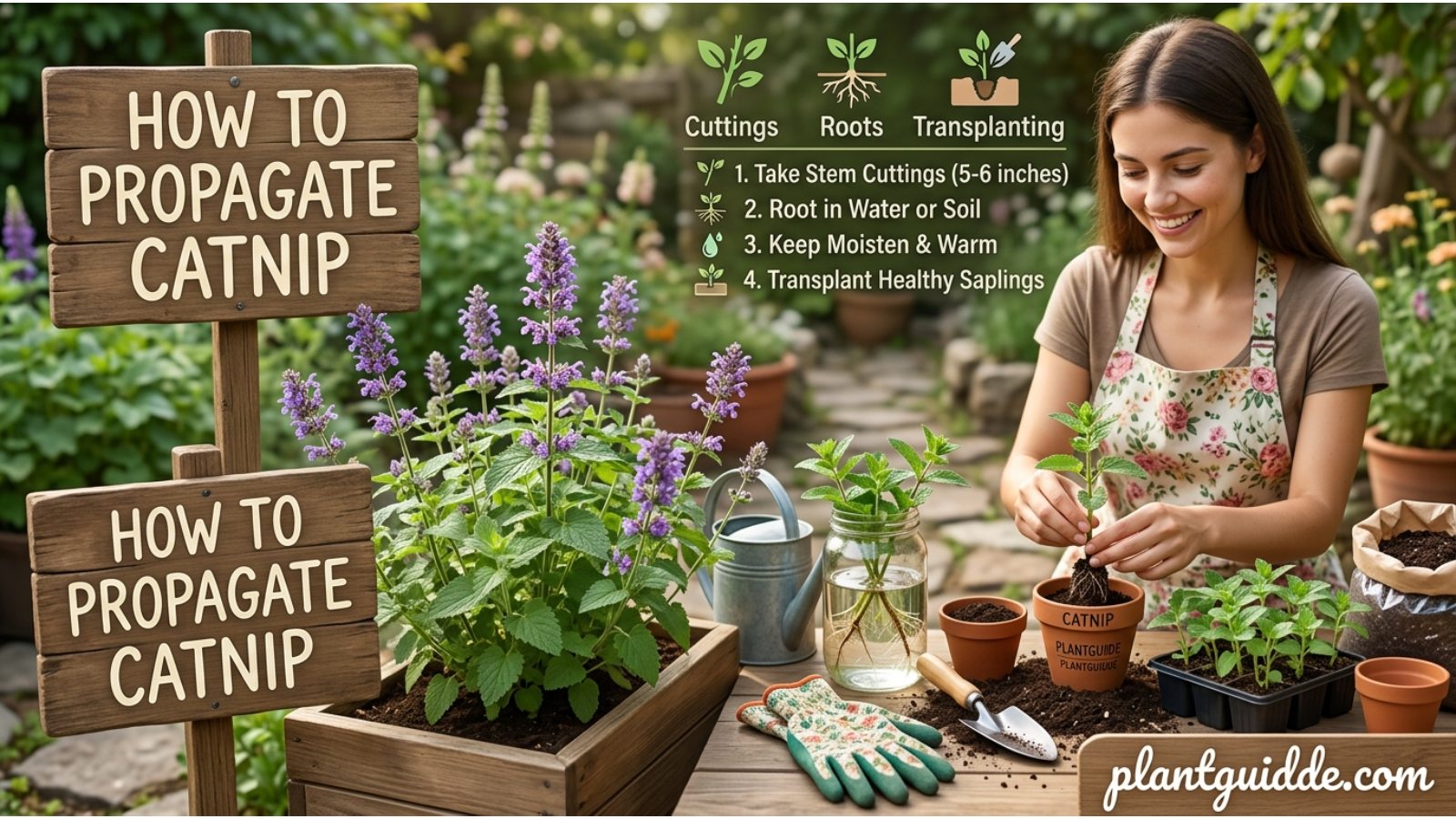
Catnip can be propagated from seeds, softwood cuttings, or division. RHS lists all three methods for Nepeta cataria.
Propagation From Seed
Starting from seed is useful when you want several plants.
Sow seeds in a suitable growing medium and keep the medium lightly moist while germination and early establishment occur. Once seedlings develop into stronger plants, gradually give them more space and stronger light.
Avoid keeping seedlings saturated simply because they are young. Consistent moisture is important during establishment, but poor drainage can still cause problems.
Propagation From Cuttings
Cuttings can provide a faster way to produce genetically identical plants.
Take healthy non-flowering or softwood growth, remove the lower leaves, and place the cutting in a suitable propagation medium. Keep it lightly moist and provide bright, indirect light while roots develop.
Propagation by Division
Established clumps can also be divided. Carefully separate sections with healthy roots and shoots, then replant them in well-draining soil.
Division is particularly useful when an older plant has become crowded or overly large.
Common Catnip Problems and How to Fix Them
Catnip Is Turning Yellow
Yellow foliage can have several causes, but consistently wet soil is an important one to investigate first.
Check:
Is the soil staying wet for several days? Does the container drain freely?
If yes, improve drainage and adjust watering rather than simply adding fertilizer.
Catnip Is Wilting
Check the soil before watering.
If it is dry, the plant may need water. If it is already wet, adding more water can make the underlying problem worse.
This simple soil check prevents one of the most common mistakes in herb care: treating every instance of wilting as drought stress.
Catnip Is Leggy
Leggy growth usually points toward insufficient light, excessive competition, or a combination of environmental factors.
Move the plant toward a brighter location and prune overly long stems to encourage a more compact shape.
Catnip Is Not Flowering
Insufficient sunlight is one of the first things to investigate.
Catnip naturally prefers full sun, so plants growing in deep shade may produce weaker, less productive growth.
Also consider whether excessive nitrogen fertilizer is encouraging foliage at the expense of flowering.
Catnip Is Falling Over
Catnip can develop a sprawling habit as stems lengthen.
Rather than continually trying to support every stem, improve light exposure and prune after flowering to keep the plant compact. RHS specifically recommends trimming after flowering for this purpose.
Catnip Pests and Diseases
Catnip is generally considered an easy-care plant, but it is not completely pest-free.
RHS identifies slugs and snails as potential pests and notes that powdery mildew can occur, particularly under certain dry-summer conditions.
To reduce problems:
- Avoid overcrowding.
- Provide good airflow.
- Water the soil rather than repeatedly wetting the foliage.
- Remove badly affected plant material.
- Inspect leaves regularly.
- Address slug and snail activity early.
Good growing conditions often prevent minor problems from becoming major ones.
Why Do Cats Like Catnip?
Catnip contains nepetalactone, the compound associated with the characteristic behavioral response in cats. Responses can vary significantly between individual cats. Some may become stimulated or playful, while others may appear more relaxed.
A cat’s response is therefore not a reliable indicator of whether the plant itself is healthy.
If you are growing catnip for feline enrichment, consider harvesting and drying some leaves rather than allowing a cat to repeatedly destroy the entire living plant.
Is Catnip Safe for Cats?
There is an important distinction between a plant being commonly used around cats and assuming that unlimited ingestion is harmless.
ASPCA lists catnip (Nepeta cataria) as toxic to cats, with vomiting and diarrhea among the reported clinical signs.
This means cat owners should avoid treating fresh or dried catnip as something a cat should consume in unlimited quantities. If your cat has eaten a large amount and develops vomiting, diarrhea, unusual behavior, or other concerning symptoms, contact a veterinarian for appropriate advice.
Also avoid exposing cats to garden chemicals used on the plant.
Common Catnip Plant Care Mistakes
The easiest way to maintain healthy catnip is often to avoid a few common mistakes.
1. Watering too frequently
Catnip tolerates relatively dry conditions. Constantly wet soil is unnecessary and can be harmful.
2. Growing it in deep shade
The plant performs best in full sun.
3. Using a pot without drainage holes
Even a good soil mix cannot compensate for a container that traps excess water.
4. Overfertilizing
More fertilizer does not automatically mean better growth.
5. Ignoring pruning
Older stems can become floppy and untidy. Trimming after flowering helps maintain a compact plant.
6. Letting cats destroy young plants
A newly planted catnip plant may need time to establish before repeated chewing or rolling can be tolerated.
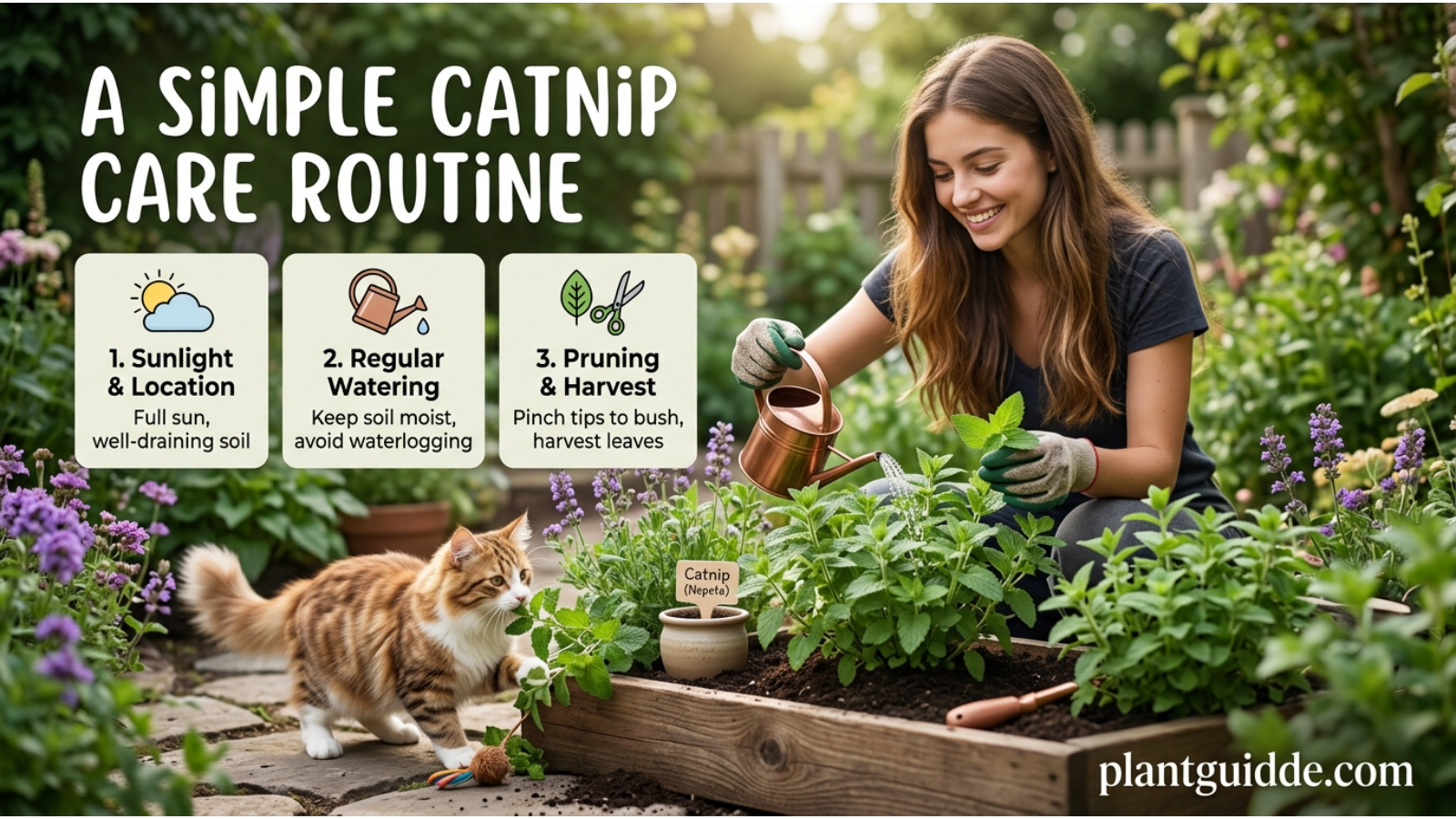
A Simple Catnip Care Routine
For beginners, this routine is enough to keep the plant on track:
Weekly:
Check the soil moisture, inspect leaves, and look for pests or damaged stems.
When the soil begins to dry:
Water thoroughly, then allow excess water to drain.
During active growth:
Harvest healthy stems or pinch back excessive growth to maintain shape.
After flowering:
Trim spent flower stems and overly long growth.
Throughout the season:
Make sure the plant continues receiving strong light and that surrounding plants are not crowding it.
This approach is more reliable than following a fixed watering schedule because moisture requirements change with temperature, sunlight, pot size, soil type, and rainfall.
FAQs:
How often should I water catnip?
Water catnip when the upper layer of soil has started to dry rather than following a fixed schedule. Water thoroughly and allow excess moisture to drain. Established plants tolerate relatively dry conditions, so consistently saturated soil should be avoided.
Does catnip need full sun?
Yes. Nepeta cataria grows best in full sun. Strong light supports healthier, more compact growth and flowering. Plants grown in deep shade may become weak or leggy.
Can catnip grow indoors?
Yes, but indoor plants need a very bright location. A sunny window is usually preferable. Container drainage is also important because indoor pots can remain wet longer than expected.
Why is my catnip plant falling over?
Catnip can become floppy when it does not receive enough light or when stems become long and overgrown. Improve light exposure and prune after flowering to maintain a more compact shape.
Is catnip safe for cats to eat?
Catnip is commonly used for feline enrichment, but ASPCA lists Nepeta cataria as toxic to cats and reports vomiting and diarrhea as possible clinical signs. Do not assume unlimited consumption is safe; if a cat eats a large amount or develops symptoms, consult a veterinarian.
Conclusion
Successful catnip plant care is mostly about giving the plant the conditions it naturally prefers: plenty of sunlight, well-draining soil, moderate watering, and occasional pruning. The biggest mistake is usually keeping the roots too wet rather than allowing the soil to dry somewhat between waterings.
Start with a sunny location and a container or garden bed that drains freely. Check the soil before watering, harvest or prune regularly, and watch for pests and overcrowding. With those basics in place, catnip can remain a productive, aromatic, and attractive addition to an herb garden or container collection.

Asad Mumtaz is a dedicated plant enthusiast and gardening writer with a passion for helping people care for their plants successfully. He specializes in plant care guides, indoor gardening, and practical growing tips for all skill levels. His content focuses on making gardening simple, enjoyable, and rewarding. Through his work, Asad shares reliable advice to help readers create thriving green spaces.