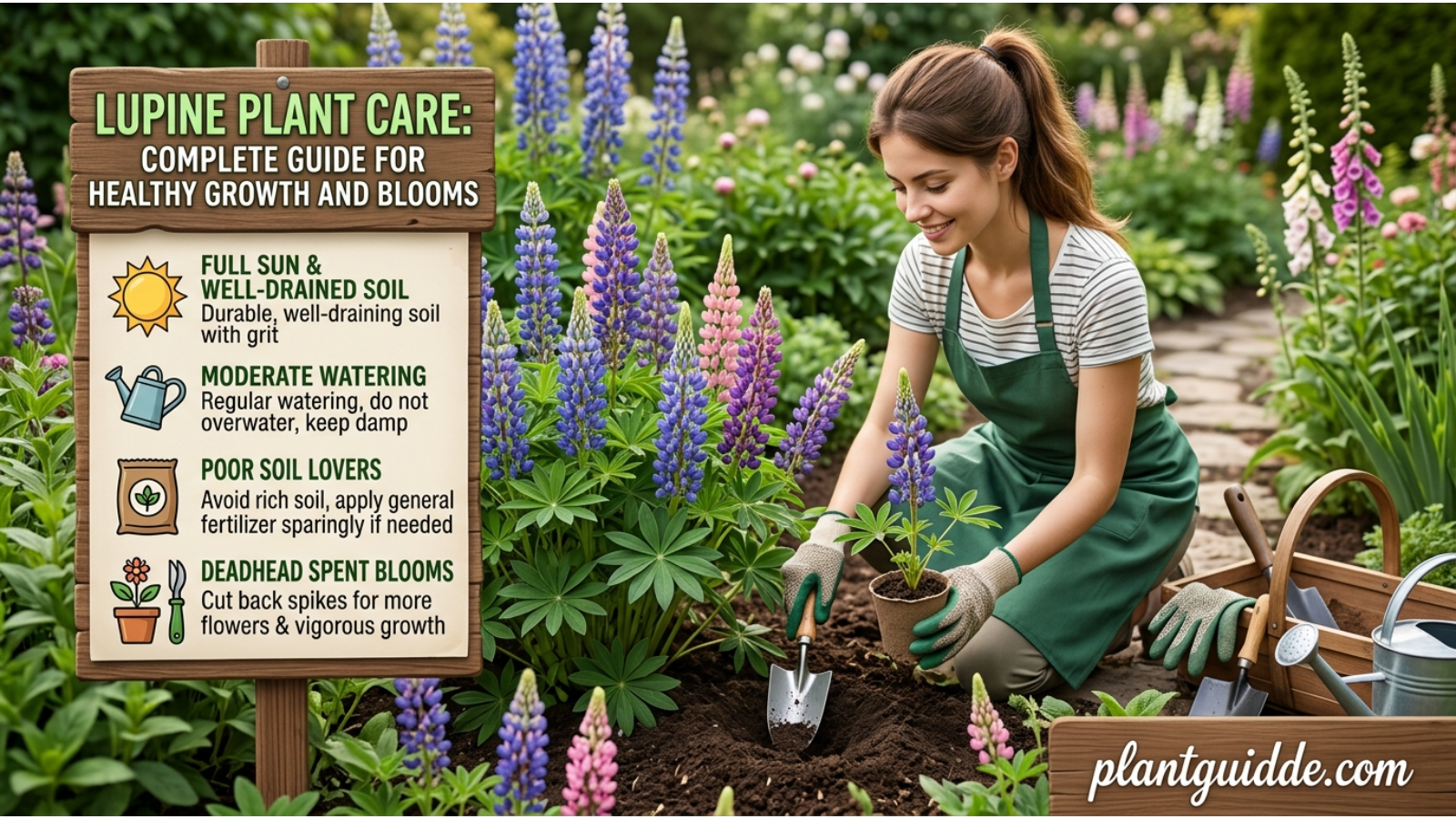
Lupine Plant Care are known for their tall flower spikes, attractive palmate foliage, and vivid shades of blue, purple, pink, red, yellow, and white. They can make a dramatic addition to perennial borders, cottage gardens, containers, and informal plantings.
Despite their impressive appearance, lupines are not difficult plants when their basic growing requirements are understood. Most problems come from a mismatch between the plant and its growing conditions, especially poor drainage, insufficient sunlight, drought during active growth, or unnecessary disturbance of the roots.
Good lupine plant care is therefore less about following a rigid watering or feeding schedule and more about creating the conditions the plant naturally prefers.
Quick Answer
Lupine plant care is easiest when you give lupines full sun, well-draining soil, and consistent moisture while they are becoming established. Once mature, many garden lupines tolerate short dry periods, but they dislike heavy, waterlogged soil. Deadheading spent flower spikes can encourage additional blooms, while tall varieties may need support. Choose a planting site carefully because lupines develop deep roots and do not always transplant well.
What Is a Lupine Plant?
Lupine is the common name for plants in the genus Lupinus, a large group in the pea family, Fabaceae. Depending on the species or cultivar, lupines can be annuals, herbaceous perennials, or woody shrubs commonly called tree lupines.
Garden lupines are especially valued for their upright flower spikes. Individual flowers are small and pea-like, but hundreds can be packed closely along a tall stem, creating the distinctive vertical display associated with the plant.
Many popular border lupines are hybrids or cultivars related to species such as Lupinus polyphyllus. Their mature size varies considerably, so checking the plant label before planting is important.
Some compact cultivars remain relatively short, while taller forms can reach around 3 to 4 feet. Tree lupines are substantially larger and have a shrubby growth habit.
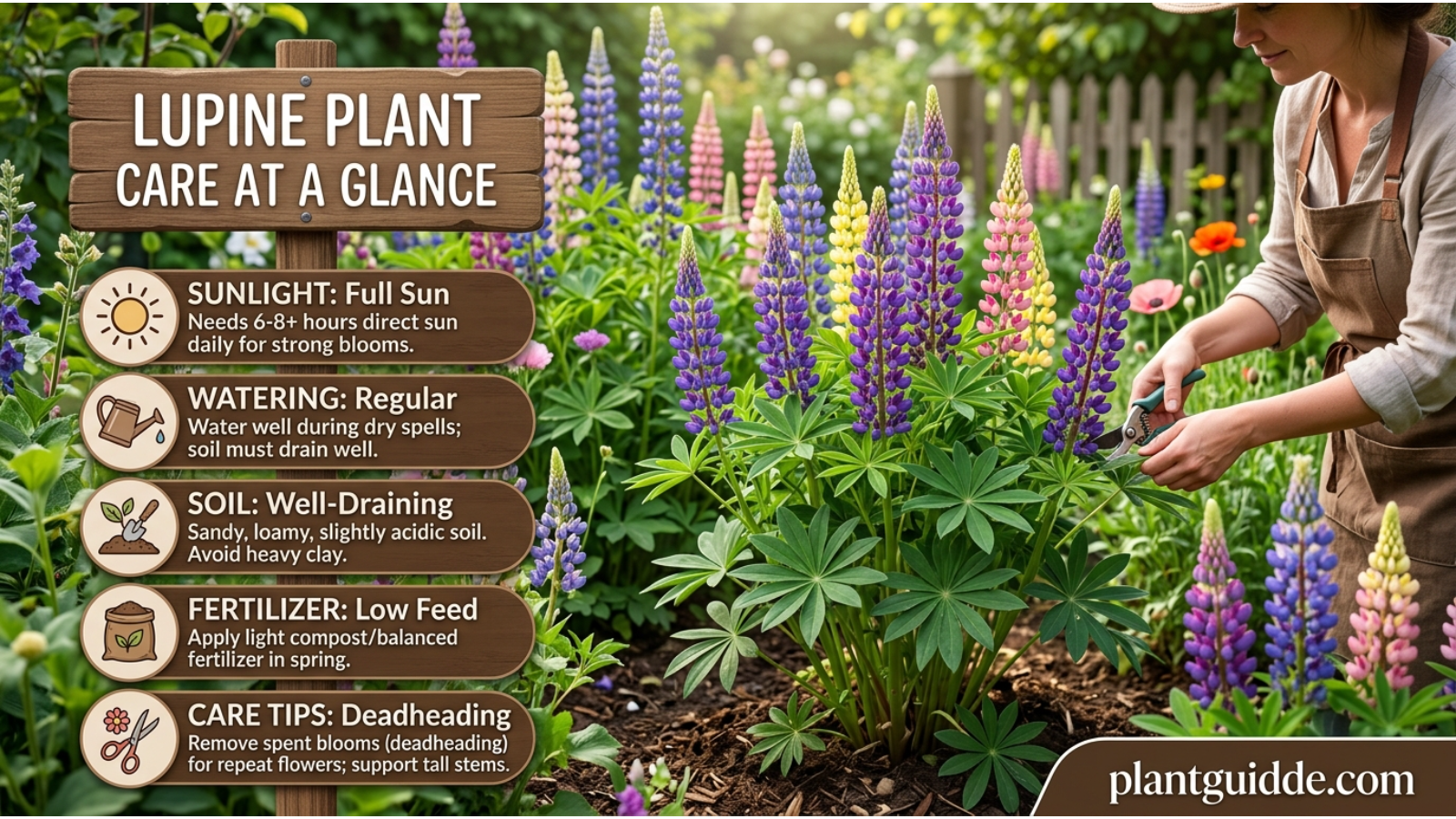
Lupine Plant Care at a Glance
| Care factor | What lupines prefer |
|---|---|
| Light | Full sun; light shade may be tolerated |
| Soil | Light, well-drained soil |
| Soil pH | Neutral to slightly acidic is generally suitable |
| Water | Regular moisture while establishing; less once mature |
| Drainage | Excellent drainage is important |
| Fertilizer | Usually little fertilizer is needed |
| Pruning | Deadhead spent flowers |
| Support | Tall varieties may need staking |
| Propagation | Seeds or basal cuttings, depending on type |
| Common pests | Slugs, snails, and lupin aphids |
| Common diseases | Powdery mildew, anthracnose, rots, and some viruses |
How Much Sun Does a Lupine Need?
Lupines grow best in full sun.
A position receiving several hours of direct sunlight helps produce stronger stems, healthier foliage, and better flowering. In too much shade, a lupine may produce plenty of leaves but fewer flower spikes.
Light shade can be tolerated by some varieties, especially where afternoon conditions are very hot, but a consistently shaded location is generally not a good choice for heavy flowering.
Where to plant lupines
Choose a location that:
- Receives abundant direct sunlight
- Has good air circulation
- Does not remain wet after rain
- Gives the mature plant enough vertical and horizontal space
- Protects very tall varieties from excessive wind when possible
lupine plant care your garden becomes extremely hot, observe the plant rather than assuming that more sun is always better. Morning sun with some protection from intense afternoon heat can sometimes provide a better balance in hot climates.
Best Soil for Lupines
Soil drainage is one of the most important parts of lupine plant care.
Lupines prefer soil that drains freely rather than staying saturated around their roots. Light, well-drained soil with a slightly acidic to neutral reaction is generally suitable.
Heavy clay becomes problematic when it holds water for long periods. Constantly wet soil reduces oxygen around the roots and can contribute to root problems and poor growth.
How to improve heavy soil
lupine plant care your garden soil is heavy:
- Avoid planting lupines in a naturally waterlogged location.
- Improve the planting area with organic matter where appropriate.
- Consider a raised bed if drainage remains poor.
- Choose a container for smaller cultivars when garden drainage cannot be corrected.
- Avoid creating a planting hole that acts like a bowl and collects water.
The goal is not simply to make soil dry. Lupines need access to moisture during active growth, especially while young. The important combination is moisture availability plus reliable drainage.
How Often Should You Water Lupines?
Watering should change as the plant matures.
Newly planted lupines need regular watering while their root system becomes established. During hot or dry weather, check the soil more frequently rather than relying on a fixed calendar.
Once established in the ground, many lupines become reasonably drought tolerant. However, drought tolerance does not mean that they should be allowed to become severely dry during active growth.
A useful approach is to check the soil around the root zone before watering.
Watering established lupines
Water when the soil is becoming dry and the plant shows a genuine need for moisture, particularly during prolonged hot or dry periods.
Avoid repeatedly giving small amounts of water that only wet the surface. When watering is necessary, water deeply enough to moisten the root zone.
Container-grown lupines
Lupines in containers usually need more frequent attention because pots dry faster than garden soil.
Check container moisture more often during:
- Hot weather
- Flowering
- Strong winds
- Periods of rapid growth
At the same time, never compensate for fast-drying containers by using a poorly draining potting mix. A container must have drainage holes, and excess water should be able to escape.
Do Lupines Need Fertilizer?
Usually, not much.
Lupines are not heavy-feeding plants, and excessive fertilizer is not a reliable way to produce more flowers. Overfeeding can encourage lush vegetative growth when the real problem is insufficient light, unsuitable soil, or poor watering.
If a plant is growing well and flowering normally, regular heavy fertilization is unnecessary.
lupine plant care flowering is weak despite suitable light and soil conditions, first investigate the growing environment before reaching for fertilizer.
For container-grown lupines, nutrients can be depleted more quickly. A suitable fertilizer used according to its label may be helpful during active growth.
The practical rule is simple: fix light, drainage, watering, and root conditions before assuming fertilizer is the answer.
How to Plant Lupines
Lupines develop substantial roots, so planting them carefully is important.
Step 1: Choose the location
Select a sunny position with well-drained soil. Check the mature height of your cultivar before deciding where it belongs.
Tall varieties are usually better toward the middle or back of a border, while compact cultivars can work closer to paths or in containers.
Step 2: Prepare the soil
Loosen the soil around the planting area and improve drainage if necessary.
Do not create an overly rich planting pocket in otherwise poor soil. The objective is a stable growing environment rather than a concentrated pocket of fertilizer.
Step 3: Plant at the correct depth
Set the plant at approximately the same depth at which it was growing in its container.
Avoid burying the crown unnecessarily.
Step 4: Water thoroughly
Water after planting so the soil settles around the roots.
Continue monitoring moisture during the establishment period, especially during warm and dry weather.
Step 5: Avoid unnecessary root disturbance
Lupines can have deep roots, and established plants do not always respond well to repeated transplanting.
This is one reason it is worth choosing the final planting position carefully.
When Do Lupines Bloom?
Many garden lupines produce their main flower display in late spring or early summer, although exact timing varies with species, cultivar, climate, and growing conditions.
Flower spikes generally rise above the foliage and may require support if they become heavy or exposed to wind.
The first flowering period is often the most dramatic, but good maintenance can help some cultivars produce another flush.
Should You Deadhead Lupines?
Yes, deadheading is useful if you want to encourage additional flowering and maintain a tidy appearance.
Once a flower spike has faded, cut it back before the plant puts significant energy into seed production.
Rather than removing healthy foliage indiscriminately, focus on the spent flower stem.
lupine plant care you want to collect seeds, leave selected flower spikes in place and allow them to mature.
Deadheading also gives you an opportunity to inspect the plant for pests, damaged stems, or signs of disease.
Do Lupines Need Staking?
Tall lupines may need support.
A plant growing in full sun with strong, sturdy growth can sometimes stand upright on its own. However, heavy flower spikes combined with wind or rain can cause tall stems to lean or fall.
Install support before the plant becomes extremely tall rather than waiting until stems have already collapsed.
A discreet stake or plant-support system placed early is generally less noticeable than trying to rescue a leaning plant later.
How to Grow Lupines From Seed
Growing lupines from seed can be rewarding, but germination and transplanting require more attention than simply scattering seeds into the garden.
Lupine seeds have a relatively hard outer coating. Some growing methods use scarification followed by soaking to help water penetrate the seed coat.
Sowing in individual containers can also reduce root disturbance when seedlings are moved.
Basic seed-starting method
- Use a clean, free-draining seed-starting medium.
- Sow seeds according to the recommended depth for your species or seed supplier.
- Keep the medium lightly moist rather than saturated.
- Provide suitable light and temperature.
- Allow seedlings to develop before carefully planting them into their final position.
- Minimize unnecessary disturbance to the roots.
Because lupine types differ, follow the specific seed packet instructions when they conflict with general advice.
Can You Propagate Lupines From Cuttings?
Some lupines can be propagated from basal cuttings, particularly selected perennial and cultivated forms.
This method can be useful when you want plants with characteristics matching the parent plant.
Propagation from seed can produce variation depending on the type of lupine, while vegetative propagation is generally more appropriate when maintaining a particular cultivated form.
For home gardeners, seed propagation is often the simplest starting point, while cuttings are useful when you already have a healthy plant and want additional plants with similar characteristics.
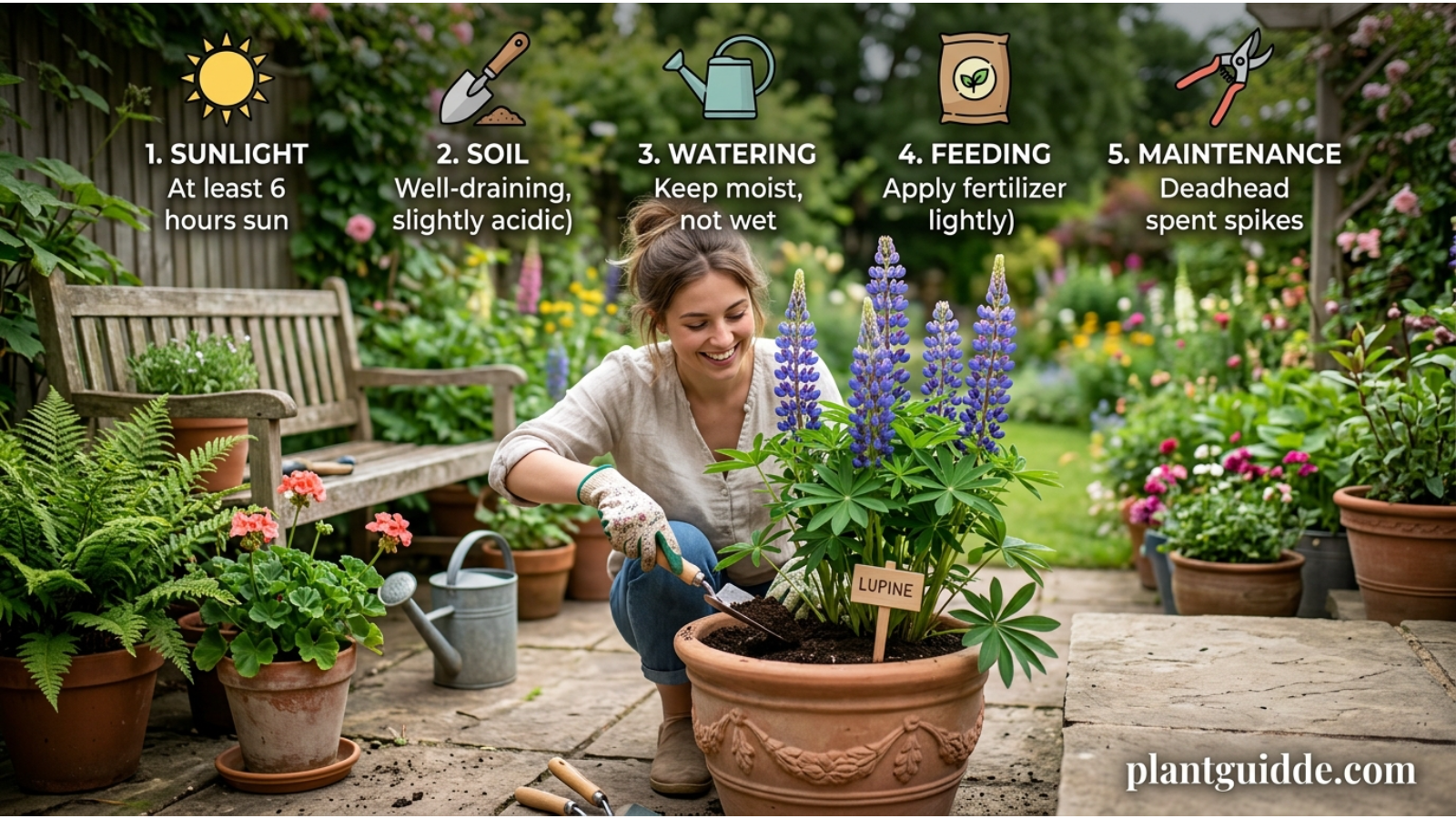
Lupine Care in Containers
Compact lupines can be grown in containers, provided the pot is deep enough and drains well.
A shallow decorative pot may look attractive but can restrict the root system and dry out rapidly.
Container tips
- Choose a deep container with drainage holes.
- Use a free-draining potting mix.
- Avoid leaving the container sitting in water.
- Monitor moisture more frequently than you would for plants in the ground.
- Provide plenty of sunlight.
- Select a compact cultivar when possible.
- Protect container roots from extreme winter cold where relevant.
Container-grown lupines also have fewer soil resources than plants growing in the ground, so occasional feeding during active growth may be more useful than it is for established garden plants
Common Lupine Problems and How to Fix Them
Lupine has lots of leaves but few flowers
The most common environmental issue is insufficient sunlight.
Move the plant or reduce surrounding competition if practical.
Other possibilities include excessive nitrogen, poor root conditions, or a cultivar that naturally flowers later.
Lupine is wilting
Wilting does not automatically mean the plant needs water.
Check the soil first.
lupine plant care the soil is dry, provide a thorough watering. If the soil is already wet, adding more water can make the problem worse.
Root damage, heat stress, transplant shock, and disease can all produce similar symptoms.
Lupine leaves are turning yellow
Yellow leaves can have several causes.
Check:
- Soil moisture
- Drainage
- Recent weather
- Root damage
- Overall plant vigor
- Natural aging of older leaves
If the soil stays wet for extended periods, improve drainage rather than simply reducing the amount of water you pour on the surface.
Lupine stems are falling over
Tall flower spikes may simply need support, particularly after rain or strong winds.
If the entire plant is weak and stretched, inadequate light may be contributing to poor structure.
Lupine leaves have white powder
A white, dusty coating on foliage can be associated with powdery mildew.
Improve airflow, avoid unnecessary wetting of foliage, and remove badly affected material where appropriate.
Persistent disease problems may require a more detailed diagnosis because several fungal or virus-related problems can affect lupines.
Lupine has holes in its leaves
Inspect the plant closely, especially around new growth.
Slugs and snails are common problems, particularly when plants are young. Lupin aphids can also colonize plants.
Look beneath leaves and around the base of the plant rather than assuming every hole is caused by the same pest.
Lupine Pests to Watch For
The most common pests include:
- Slugs
- Snails
- Lupin aphids
Young shoots are particularly vulnerable to slug and snail damage.
Regular inspection is often more useful than waiting until a plant has suffered severe damage. Check new growth, leaf undersides, and the soil surface around the crown.
For aphids, a strong stream of water can sometimes dislodge small populations. Encourage beneficial insects where possible and use pest-control products only when necessary and according to their labels.
Lupine Diseases
Lupines can be affected by several diseases, including powdery mildew, anthracnose, rots, and some viral diseases.
Good growing conditions reduce the risk of many problems.
Focus on:
- Well-drained soil
- Adequate spacing
- Good air circulation
- Avoiding chronically wet conditions
- Removing severely diseased plant material when appropriate
- Buying healthy plants from reputable sources
When symptoms are severe or unusual, identify the disease before applying a treatment. Brown spots, yellowing, wilting, and leaf distortion can have multiple causes.
Is Lupine Toxic?
Yes. Lupines should be treated as potentially harmful if eaten.
The seeds and other plant material contain compounds that can cause poisoning, and reputable horticultural sources identify lupines as toxic to pets if eaten.
Keep seeds and plant material away from children and pets, and wear gloves when handling plants if recommended for the particular cultivar.
Do not assume that because lupine belongs to the pea family it is automatically safe to eat. Some lupine species and properly processed lupin foods are used as food crops, but ornamental garden lupines should not be treated as edible plants.
Lupine Care Through the Seasons
Spring
Spring is an important period for new growth.
Check for slugs and snails, remove damaged material, and begin monitoring soil moisture as growth accelerates.
This is also a good time to install support before tall stems become difficult to manage.
Summer
Keep newly planted plants adequately watered during hot or dry periods.
Established garden lupines may need little additional water unless conditions become unusually dry, while container plants generally require more frequent checks.
Deadhead faded flower spikes to encourage further flowering where the cultivar is capable of reblooming.
Autumn
Allow seed heads to mature if you want to collect seed.
Otherwise, remove spent flowering material and tidy the plant according to the needs of your garden.
Avoid unnecessary disturbance of the root system.
Winter
Winter care depends heavily on the lupine type and local climate.
Perennial garden lupines can be hardy in suitable conditions, but cold, wet soil is more problematic than cold alone.
Container plants are more exposed because their roots have less insulation. Moving pots to a sheltered position can help protect them from excessive winter rain and severe cold.
Common Lupine Care Mistakes
Watering on a fixed schedule
A calendar cannot account for temperature, rainfall, soil type, container size, or plant maturity.
Check the soil and weather instead.
Planting in heavy, wet soil
This is one of the most damaging mistakes because lupines strongly prefer good drainage.
If water remains around the roots for long periods, correcting drainage is more important than adding fertilizer.
Growing tall lupines in deep shade
A lupine may survive with limited light but produce disappointing flowering and weaker growth.
Give it the brightest suitable location available.
Moving established plants unnecessarily
Lupines can develop deep roots and may dislike disturbance.
Choose the planting position carefully from the beginning.
Overfeeding
More fertilizer does not automatically mean more flowers.
When flowering is poor, examine sunlight, drainage, plant age, root health, and watering first.
Ignoring cultivar differences
Not every lupine behaves the same way.
A compact perennial, a tall hybrid, and a tree lupine can have very different mature sizes and growing requirements.
How to Get More Flowers From Lupines
For a stronger flowering display, concentrate on the fundamentals:
- Give the plant plenty of sunlight.
- Use well-drained soil.
- Keep young plants adequately hydrated.
- Avoid prolonged waterlogging.
- Do not overfertilize.
- Stake tall varieties before they flop.
- Deadhead spent flower spikes.
- Reduce competition from aggressively growing neighboring plants.
- Select a cultivar suited to your climate and available space.
If a healthy lupine still flowers poorly, look first at light and growing conditions rather than assuming it needs more fertilizer.

FAQs:
Do lupines like full sun or shade?
Lupines generally perform best in full sun. Some varieties tolerate light or partial shade, but insufficient sunlight can reduce flowering and contribute to weaker growth.
How often should I water a lupine?
Water newly planted lupines regularly while they establish, especially during hot or dry weather. Mature plants grown in the ground are more drought tolerant, but they may still need water during prolonged dry periods. Container-grown lupines usually need more frequent watering.
Why is my lupine not flowering?
Insufficient sunlight is a common reason. Other possibilities include excessive fertilizer, poor drainage, root problems, plant maturity, or cultivar-specific flowering behavior. Check the growing conditions before changing the feeding routine.
Should I cut back lupines after flowering?
Deadhead spent flower spikes to encourage another flush of flowers where the variety is capable of reblooming. If you want seeds, leave selected flower spikes to mature instead.
Are lupines safe for pets?
Lupines can be toxic if eaten, and horticultural sources identify them as potentially harmful to pets. Keep plants and seeds away from dogs, cats, rabbits, and other animals that may chew garden plants.
Final Thoughts
Successful lupine plant care comes down to getting a few important conditions right: plenty of sunlight, excellent drainage, appropriate moisture, and minimal root disturbance.
You do not need to constantly feed or water a healthy established lupine. Instead, pay attention to the soil, If , foliage, flowering, and overall structure of the plant. If the soil drains well and the plant receives enough light, many lupines can reward you with striking flower spikes with relatively little ongoing maintenance.
Before planting, check the mature size and specific requirements of your lupine cultivar. That small step can prevent many of the problems gardeners later try to solve.

Asad Mumtaz is a dedicated plant enthusiast and gardening writer with a passion for helping people care for their plants successfully. He specializes in plant care guides, indoor gardening, and practical growing tips for all skill levels. His content focuses on making gardening simple, enjoyable, and rewarding. Through his work, Asad shares reliable advice to help readers create thriving green spaces.