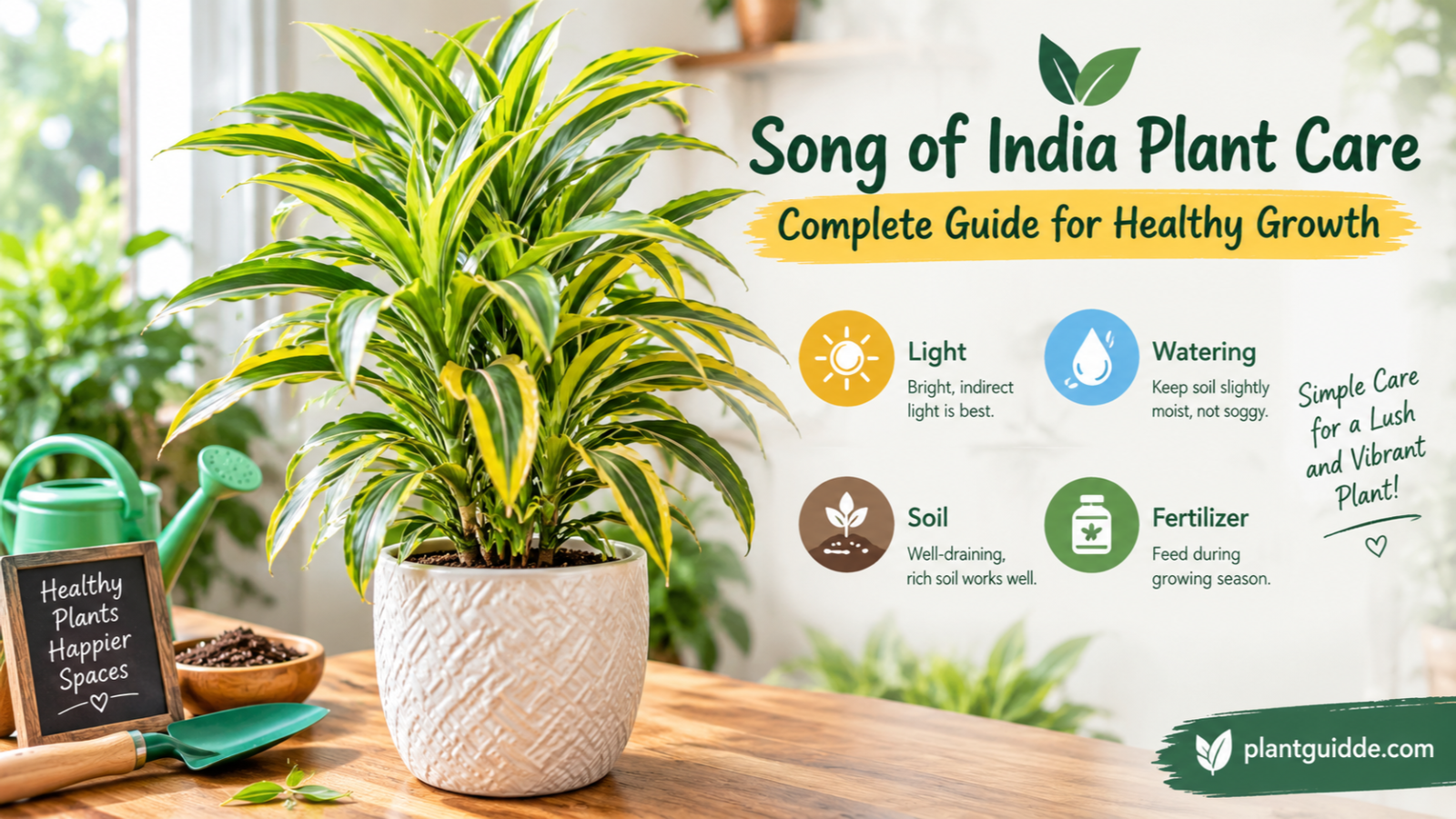
The Song of India is an easy-care houseplant known for its narrow green leaves edged with yellow-green song of india plant care. It can brighten shelves, bedrooms, offices, and other indoor spaces, but poor growing conditions can quickly lead to brown tips, yellow leaves, drooping, or slow growth.
The plant commonly sold as Song of India is Dracaena reflexa ‘Song of India’, a tropical evergreen that prefers bright, indirect light, well-drained soil, moderate moisture, and protection from temperature extremes.
Successful Song of India plant care is less about following a fixed watering schedule and more about understanding what your plant needs. A plant in a bright, warm room may need water much sooner than one growing in a cool, dim corner.
In this guide, you’ll learn how to provide the right light, water, soil, humidity, and temperature, and how to fix common problems before they become serious.
Quick Answer
Song of India plant care is mainly about providing bright, indirect light, well-draining soil, moderate watering, warmth, and reasonable humidity. The plant, commonly sold as Dracaena reflexa ‘Song of India’, should be watered when the upper layer of soil has dried rather than on a fixed schedule. Protect it from harsh direct sun, cold drafts, soggy soil, and excessive fertilizer. With stable conditions and occasional pruning, it can remain attractive and produce healthy new growth for years.
What Is a Song of India Plant?
The Song of India is a cultivated form of Dracaena reflexa. It belongs to the Asparagaceae family and is valued primarily as a foliage houseplant.
Its most recognizable feature is its narrow, pointed leaves with deep green centers and yellow-green margins. The leaves grow densely around slender stems, giving mature plants an upright, architectural appearance. The RHS lists ‘Song of India’ as reaching roughly 1–1.5 m in height under suitable conditions.
Although it is often treated as a relatively easy indoor plant, it is still tropical in origin. That explains why it performs best with:
- Warm temperatures
- Bright but filtered light
- Moderate humidity
- Well-drained soil
- Consistent, careful watering
Song of India vs. other Dracaenas
Song of India is related to other popular Dracaena houseplants, but its care should not be reduced to a generic “water occasionally” routine.
Its variegated foliage is particularly useful as a visual indicator of light. If growth becomes weak and the plant starts producing less attractive foliage, inadequate light may be part of the problem.
Image Suggestion: Close-up labeled illustration of Dracaena reflexa ‘Song of India’ showing its variegated leaves, stems, and growth points.
Song of India Plant Care Requirements
The easiest way to understand this plant is to think of its care as a balance:
| Care factor | What Song of India prefers | What to avoid |
|---|---|---|
| Light | Bright, indirect light | Harsh afternoon sun |
| Water | Moderate, based on soil dryness | Constantly wet soil |
| Soil | Loose and well-draining | Heavy, compacted soil |
| Humidity | Moderate to high | Extremely dry air |
| Temperature | Warm and stable | Cold drafts |
| Fertilizer | Moderate feeding during growth | Excess fertilizer |
| Pot | Drainage hole essential | Pots that trap water |
| Pruning | Occasional shaping | Ignoring long, bare stems |
The most important lesson is that none of these factors works independently.
For example, a plant in low light uses water more slowly. If you continue watering it according to the same schedule you use for a plant in bright light, the soil can remain wet for too long.
That is one of the most common mistakes in Song of India plant care.
Light Requirements for Song of India
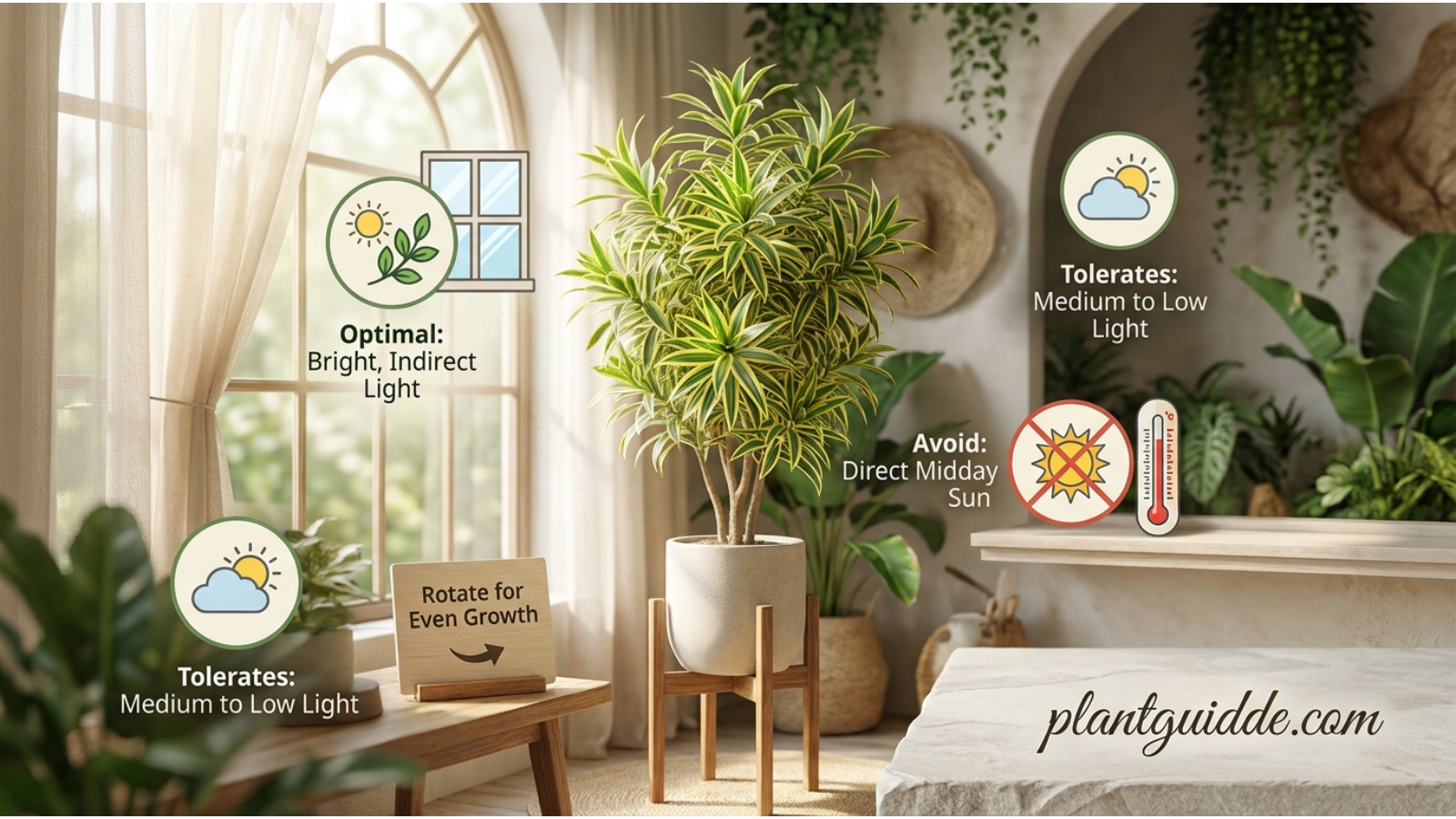
Song of India grows best in bright, indirect light. It can tolerate somewhat lower light conditions, but growth is generally stronger when the plant receives plenty of filtered brightness.
The RHS recommends full light with protection from hot sun for Dracaena reflexa ‘Song of India’.
Where should you place it?
Good locations include:
- Near an east-facing window
- Near a bright west-facing window with some protection
- A few feet from a sunny south-facing window
- A bright room where sunlight is filtered through a sheer curtain
Direct, intense afternoon sunlight can scorch the leaves, especially when a plant has been growing in lower light and is suddenly moved into strong sun.
How do you know it needs more light?
Watch the new growth.
A Song of India receiving insufficient light may:
- Produce smaller or weaker new leaves
- Grow slowly
- Develop long gaps between leaves
- Lean toward a window
- Lose some of its strong variegated appearance
Do not respond to slow growth by immediately adding more fertilizer. If light is the limiting factor, fertilizer cannot compensate for it.
A practical test
Place your hand between the plant and its light source.
If the light is bright but the shadow is relatively soft, the location may be suitable for filtered light. If the plant receives only faint ambient light and casts almost no shadow, it may be too dark for vigorous growth.
Image Suggestion: Diagram showing ideal Song of India placement near east, west, and filtered south-facing windows.
How to Water a Song of India Plant
Watering is where many beginners make their biggest mistake.
Do not water Song of India simply because a certain number of days has passed.
Instead, check the soil.
The RHS recommends watering when the upper 5 cm (about 2 inches) of compost has dried, while also warning that constantly wet compost can lead to root rot.
The correct watering method
- Insert your finger about 2 inches into the soil.
- Feel whether the upper layer has dried.
- If it still feels noticeably moist, wait.
- If it has dried, water thoroughly.
- Allow excess water to drain from the bottom.
- Empty any standing water from the saucer or outer container.
The goal is moisture followed by some drying, not permanently wet soil.
How much water should you use?
Water thoroughly enough to moisten the root zone rather than giving the plant a few drops around the stem.
However, thorough watering only works when the pot has drainage.
A decorative container with no drainage hole can turn an otherwise sensible watering routine into a root-rot problem.
Does Song of India need less water in winter?
Usually, yes.
Growth slows when light levels and temperatures decrease, so the plant may use water more slowly. The RHS specifically recommends watering more sparingly during winter.
This does not mean abandoning the plant for months. Continue checking the soil, but expect watering intervals to become longer.
Best Soil for Song of India
Song of India needs soil that holds enough moisture for the roots while allowing excess water to escape.
A practical indoor mix can contain:
- Quality indoor potting mix
- Perlite or pumice for aeration
- A small amount of fine bark or another structure-building component
The exact recipe is less important than the final result.
What should good soil do?
After watering, it should become evenly moist without turning into a dense, airless mass.
If water remains trapped around the roots for long periods, the plant becomes much more vulnerable to root problems.
The RHS recommends a loam-based, peat-free growing medium for Dracaena reflexa and describes its preferred moisture conditions as moist but well drained.
A simple drainage test
After watering, observe how quickly excess water begins leaving the drainage hole.
song of india plant care water sits on the surface for a long time or the soil remains saturated for many days, the growing medium may be too compact or the pot may be too large.
Temperature and Humidity
Song of India is a tropical plant, so stable warmth is more important than many beginners realize.
The RHS general Dracaena guide recommends approximately 18–30°C (65–86°F) for best growth and advises avoiding cold drafts and hot radiators.
Protect the plant from:
- Cold windows during winter
- Air-conditioning vents
- Sudden temperature changes
- Heating vents
- Radiators
- Very hot glass in direct summer sun
A plant may receive enough light and still struggle if it is repeatedly exposed to cold drafts.
What about humidity?
Moderate to higher humidity can help Song of India maintain attractive foliage.
If the room is very dry, you may notice:
- Brown leaf tips
- Crispy margins
- Faster moisture loss from leaves
Instead of relying only on misting, consider more stable solutions such as grouping plants together or using a humidifier when indoor air is consistently dry.
The RHS suggests grouping plants, using a moist-gravel tray, and occasional misting as ways to increase humidity around Dracaenas.
Fertilizing Song of India
Song of India does not need heavy feeding.
During active growth, a balanced liquid houseplant fertilizer can be applied according to the product’s directions. The RHS recommends monthly feeding during the growing season for Dracaena reflexa.
Why more fertilizer is not better
Excess fertilizer can accumulate in the growing medium and damage roots.
A common beginner reaction to slow growth is:
“The plant isn’t growing, so I should fertilize it more.”
But slow growth can also result from:
- Insufficient light
- Cold temperatures
- Root problems
- Poor watering
- Seasonal dormancy
Always diagnose the environment before increasing fertilizer.
Pruning Song of India for Fuller Growth
Pruning is one of the most useful techniques for managing a mature Song of India.
If the plant develops a tall, bare stem with foliage concentrated near the top, you can shorten the stem to encourage new shoots.
The RHS notes that weak stems can be shortened to around 15 cm in spring, with cuttings potentially used for propagation.
How to prune it
Use clean, sharp pruning shears.
Choose the height where you want new growth to develop and make a clean cut.
Do not panic if the remaining stem looks bare.
Under suitable conditions, new shoots can develop below the cut.
Why pruning works better than simply rotating the pot
Rotating a plant helps maintain balanced exposure to light, but it cannot make an already bare stem produce foliage everywhere.
Pruning allows you to reshape the plant and encourage branching.
Image Suggestion: Before-and-after diagram showing a tall, sparse Song of India being pruned and producing new shoots below the cut.
Repotting Song of India
Song of India does not need frequent repotting simply because it has been in the same container for a year.
Repot when the plant shows signs that the existing root environment is becoming restrictive, such as:
- Roots circling heavily inside the pot
- Roots emerging from drainage holes
- Soil drying unusually quickly
- Water running through the pot immediately
- The plant becoming unstable because it has outgrown its container
Choose a pot only moderately larger than the current root ball.
Why oversized pots can cause trouble
A much larger pot contains more unused soil. That soil can retain moisture for longer than the plant’s root system can absorb it.
For a plant that dislikes constantly wet roots, unnecessarily large containers can therefore make watering more difficult.
Water Quality and Brown Leaf Tips
One frequently overlooked part of Song of India plant care is water quality.
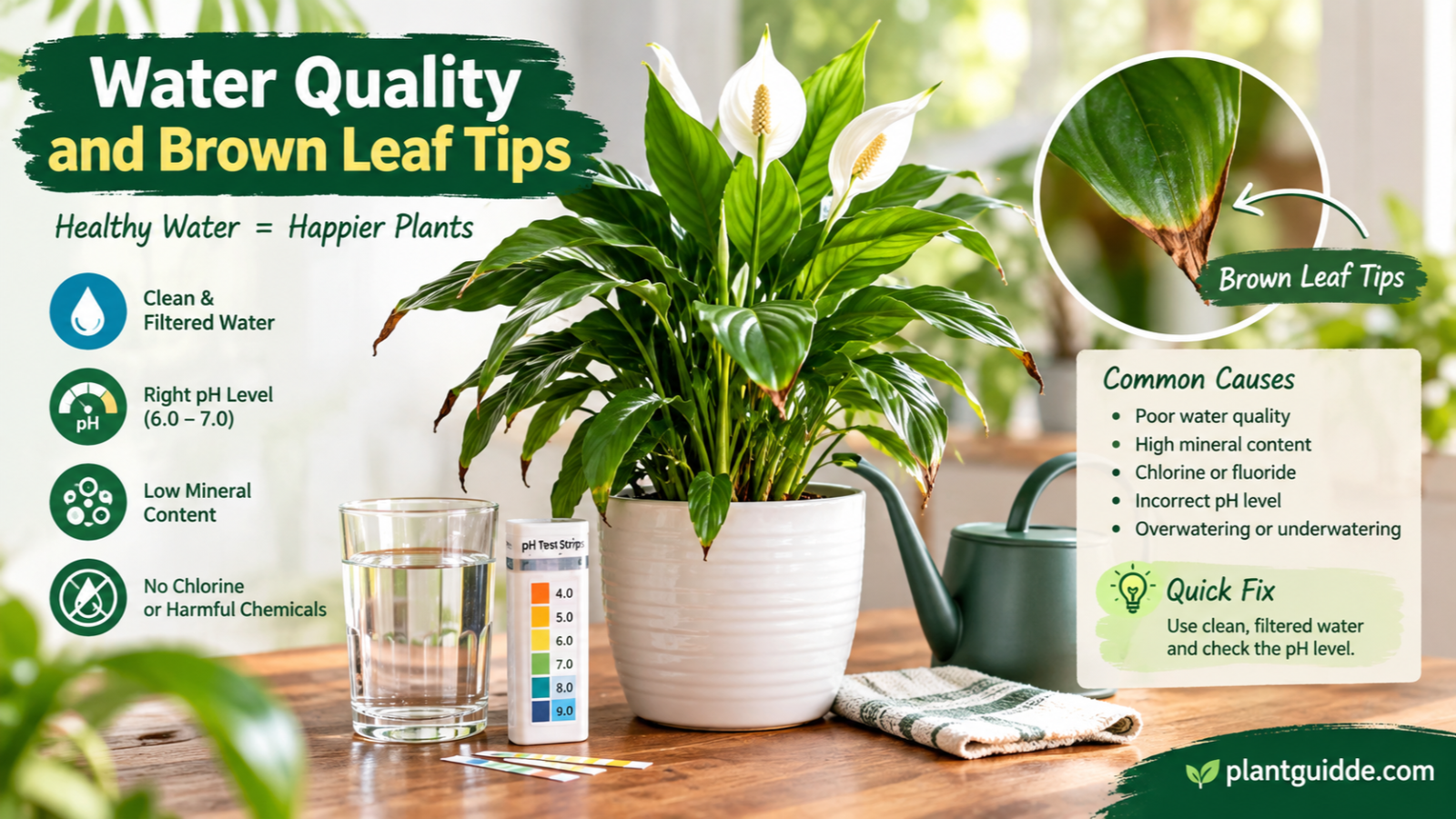
Dracaenas can be sensitive to fluoride and mineral buildup. The RHS recommends rainwater or filtered water where possible and notes that fluoride can contribute to damaged foliage and brown tips.
If your plant repeatedly develops brown tips despite reasonable watering, light, and humidity, consider whether your tap water could be contributing.
Other causes of brown tips
Brown tips do not automatically mean the plant needs more water.
Possible causes include:
- Dry air
- Underwatering
- Overwatering
- Fluoride or mineral buildup
- Excess fertilizer
- Hot direct sunlight
- Cold drafts
- Radiator or heater exposure
This is why diagnosing the whole environment is more useful than treating one symptom.
Common Song of India Plant Problems
Why are my Song of India leaves turning yellow?
Yellow leaves can have several causes.
If many leaves are turning yellow while the soil remains wet for long periods, investigate overwatering and poor drainage first.
If only an occasional older leaf yellows and the rest of the plant looks healthy, natural aging may be involved.
What to check
- Is the soil staying wet?
- Does the pot have drainage?
- Is the plant receiving adequate light?
- Did watering frequency recently increase?
- Are the stems soft or showing signs of decline?
Do not automatically add fertilizer when leaves turn yellow.
Why are the leaves turning brown?
Look at where the browning occurs.
Brown tips
Often associated with:
- Dry air
- Water quality
- Underwatering
- Excess fertilizer
Brown patches
Could indicate:
- Direct sun damage
- Physical damage
- Environmental stress
Widespread browning and decline
Investigate the roots and soil moisture, particularly if the plant has been kept wet.
Why are Song of India leaves curling?
Curling leaves are often a sign that the plant is under environmental stress.
Check:
- Soil moisture
- Humidity
- Temperature
- Light intensity
- Recent changes in location
Do not immediately increase watering.
If the soil is already wet, adding more water can make the original problem worse.
Why is my Song of India dropping leaves?
Sudden leaf drop can follow a significant environmental change.
Common triggers include:
- Moving the plant
- Cold exposure
- Overwatering
- Underwatering
- Sudden changes in light
- Root damage
First identify what changed during the previous few weeks.
Plants often reveal environmental problems through their timeline, not just through their current appearance.
Song of India Plant Care: Common Mistakes
1. Watering on a calendar
“Every Sunday” sounds simple, but plants do not consume water at identical rates every week.
Better approach: Check the soil first.
2. Keeping the soil constantly wet
More moisture does not mean better growth.
Roots need both water and oxygen.
3. Putting it in deep shade
Song of India may tolerate lower light, but tolerance is not the same as optimal growth.
4. Moving it into harsh sunlight
A sudden jump from low light to intense direct sun can damage foliage.
5. Using a pot without drainage
This is especially risky for a plant that prefers well-drained conditions.
6. Fertilizing a stressed plant
If the plant has root problems or insufficient light, fertilizer may add stress rather than solve the underlying issue.
7. Ignoring water quality
Persistent brown tips can sometimes continue despite apparently good watering because the water itself may be contributing to the problem.
A Simple Weekly Song of India Care Routine
You do not need to constantly fuss over this plant.
Once a week, inspect:
Leaves
- Are they firm?
- Are new leaves developing?
- Are brown tips increasing?
Soil
- Is the upper layer dry?
- Is the soil still saturated?
Location
- Has the plant been exposed to stronger sun?
- Is an air conditioner or heater blowing toward it?
Pests
- Check leaf undersides and stems for scale, mealybugs, or mites.
Then make only the adjustment the plant actually needs.
This approach is much safer than changing several things at once.
Seasonal Song of India Care
Spring and Summer
As light and growth increase:
- Check soil more frequently
- Resume regular feeding
- Watch for excessive direct sun
- Monitor humidity
- Consider pruning or repotting if necessary
Fall
Growth may begin slowing.
- Reduce fertilizer as growth decreases
- Check soil before watering
- Watch for changes in indoor humidity
Winter
This is often when watering mistakes become most damaging.
- Water less frequently when the soil dries more slowly
- Keep the plant away from cold drafts
- Avoid placing it directly beside heaters
- Give it the brightest suitable indirect light available
The RHS specifically recommends more sparing watering during winter for Dracaena reflexa.
How to Make a Song of India Grow Faster
There is no safe shortcut that forces a plant to grow dramatically faster.
Instead, optimize the conditions that control growth:
- Provide bright filtered light.
- Keep temperatures consistently warm.
- Use an airy, well-draining growing medium.
- Water according to soil moisture.
- Feed moderately during active growth.
- Maintain reasonable humidity.
- Prune strategically if you want branching.
If growth remains slow, look at light first rather than automatically adding fertilizer.
A plant cannot produce vigorous new growth without enough energy from photosynthesis.
How to Propagate Song of India
Song of India can be propagated from stem cuttings.
A practical method is:
- Select a healthy stem.
- Cut a section using clean shears.
- Remove unnecessary lower foliage.
- Place the cutting in an appropriate propagation medium.
- Keep it warm and lightly moist.
- Provide bright, indirect light.
- Wait for rooting and new growth before moving it into a larger container.
The RHS lists semi-ripe cuttings as a propagation method for Dracaena reflexa and notes that bottom heat may help rooting.
Image Suggestion: Step-by-step propagation infographic showing stem selection, cutting, rooting medium, and new growth.
Are Song of India Plants Toxic to Pets?
Yes. The RHS lists Dracaena reflexa ‘Song of India’ as harmful if eaten by pets, including cats and dogs.
If you have pets that chew plants, keep Song of India somewhere inaccessible to them.
This is an important consideration before choosing its location, especially in homes where cats can easily reach elevated shelves or plant stands.
Expert Troubleshooting: Fix One Variable at a Time
When a Song of India starts declining, avoid changing everything simultaneously.
For example, suppose the plant has brown tips.
Do not immediately:
- Move it into full sun
- Double the watering
- Add fertilizer
- Repot it
- Start misting several times daily
Instead, investigate systematically.
If the soil is constantly wet
Start with drainage and watering.
If the soil is extremely dry
Correct watering and observe recovery.
If the plant is very dark
Improve its light gradually.
If it is beside a heater
Move it away from the heat source.
If the care looks correct but brown tips persist
Investigate water quality, humidity, fertilizer buildup, and previous environmental stress.
This diagnostic approach prevents the common cycle of problem → drastic change → new problem.

FAQs:
How often should I water a Song of India plant?
There is no universal schedule. Check the soil and water when the upper few inches have dried. Plants in brighter, warmer conditions may need water more often than those in cool, low-light locations.
Does Song of India need direct sunlight?
It can tolerate strong light, but bright indirect light is generally safer indoors. Protect it from harsh hot sun, particularly through intense afternoon exposure.
Why are my Song of India leaves turning yellow?
Overwatering and poor drainage are important possibilities, but yellowing can also result from natural aging, insufficient light, or other environmental stress. Check soil moisture and the overall growing conditions before changing fertilizer.
Can Song of India grow in low light?
It can tolerate lower light, but growth is usually stronger in brighter indirect light. Extremely dark locations can lead to weak or slow growth.
What soil is best for Song of India?
Use a loose, well-draining indoor potting mix. The goal is to retain some moisture without leaving the roots in saturated soil.
Should I mist my Song of India?
Occasional misting may temporarily increase moisture around the foliage, but it should not be treated as the primary solution for persistently dry indoor air. More stable humidity can come from grouping plants or using a humidifier.
How do I fix brown tips on Song of India?
Check watering, humidity, light exposure, fertilizer use, and water quality. Dracaenas can be sensitive to fluoride in tap water, so filtered or rainwater may help when water quality is contributing to foliage damage.
Can I cut the top off my Song of India?
Yes. Pruning can help control height and encourage new shoots. Use clean, sharp tools and make a clean cut at the desired height.
Can Song of India grow outdoors?
It can be grown outdoors in suitable warm climates, but it is a tropical plant and should be protected from cold conditions. For most temperate regions, it is better treated as a houseplant or moved indoors when temperatures become unsuitable.
Is Song of India the same as Dracaena reflexa?
Song of India is commonly identified as Dracaena reflexa ‘Song of India’. The RHS lists the cultivar under Dracaena reflexa.
Final Thoughts
Successful Song of India plant care is not about watering more often or following a complicated routine. It is about giving the plant a stable environment and responding to what the soil and foliage are telling you.
Start with bright filtered light, well-draining soil, careful watering, warmth, and moderate humidity. Avoid keeping the roots constantly wet, protect the foliage from harsh sun and cold drafts, and investigate brown tips rather than assuming the plant simply needs more water.
If your Song of India is struggling, fix the biggest environmental problem first. Once light, moisture, drainage, and temperature are balanced, the plant becomes much easier to maintain, and its colorful foliage can remain attractive for years.

Asad Mumtaz is a dedicated plant enthusiast and gardening writer with a passion for helping people care for their plants successfully. He specializes in plant care guides, indoor gardening, and practical growing tips for all skill levels. His content focuses on making gardening simple, enjoyable, and rewarding. Through his work, Asad shares reliable advice to help readers create thriving green spaces.