Bamboo is often considered an easy plant, but that reputation can be misleading care for a bamboo plant. The biggest challenge is knowing which type of bamboo you actually have and understanding how its roots respond to water, light, soil, and temperature.
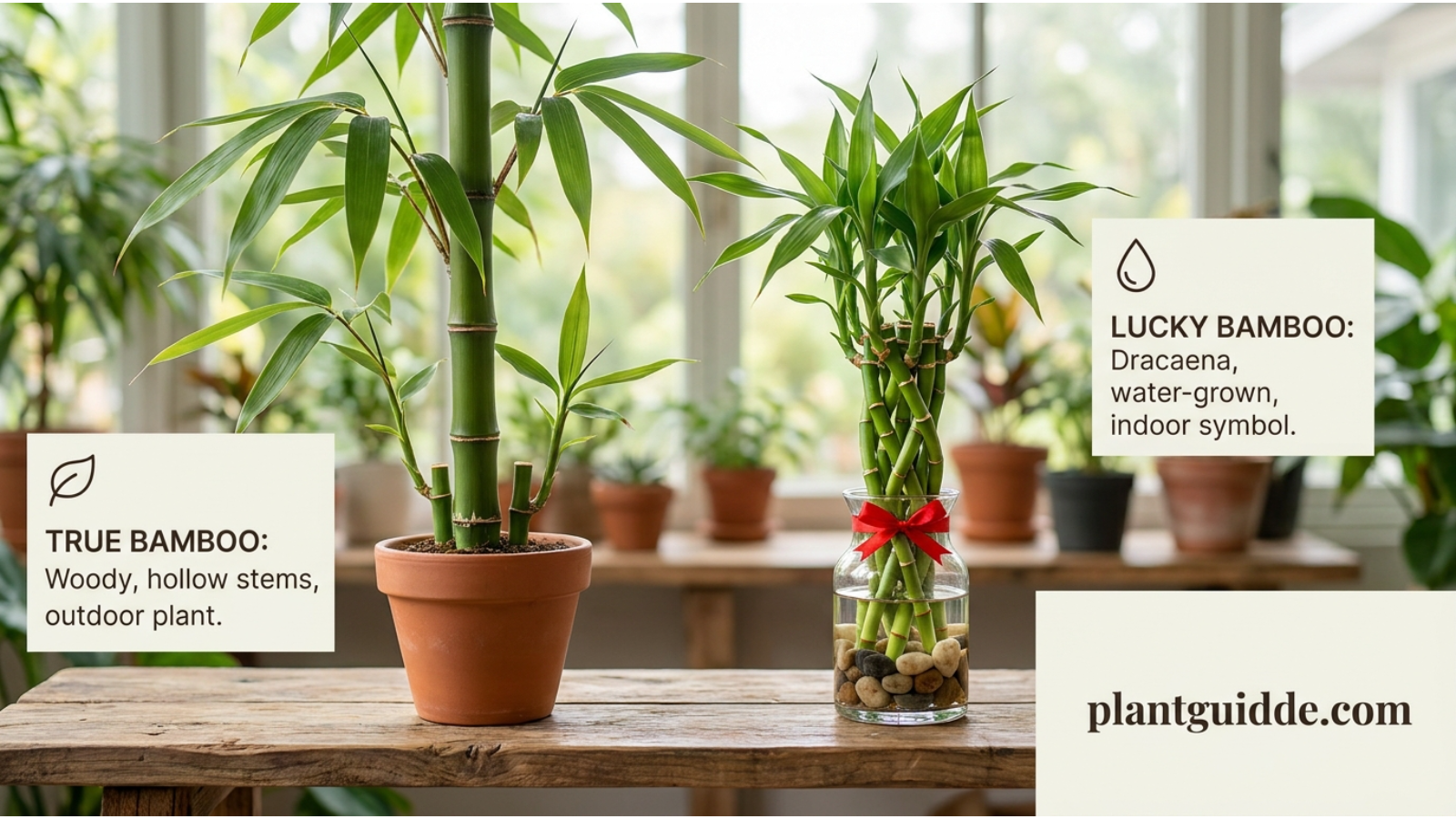
True bamboo species are grasses that can grow vigorously outdoors, while the small decorative plant sold as “lucky bamboo” is a tropical Dracaena. Treating both plants the same can lead to problems such as yellow leaves, weak growth, brown tips, root rot, or a plant that gradually declines despite regular watering.
Learning how to care for a bamboo plant is therefore less about following a rigid watering schedule and more about creating the right growing environment. Light should be sufficient without causing scorching, soil should retain some moisture without becoming saturated, and temperatures should remain reasonably stable.
This guide explains how to identify your bamboo, establish the right care routine, recognize common problems, and make adjustments before minor stress turns into serious damage.
Quick Answer
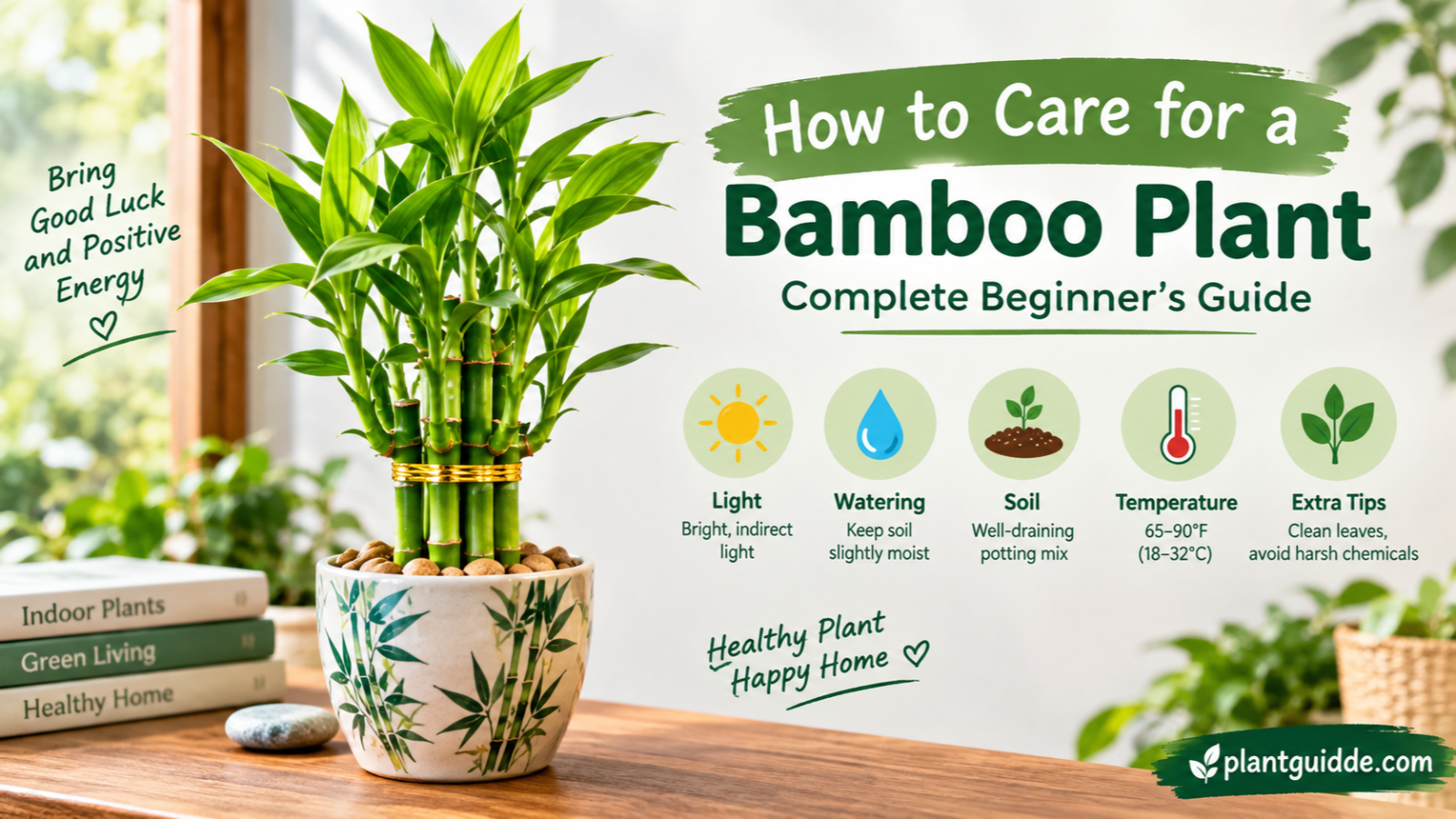
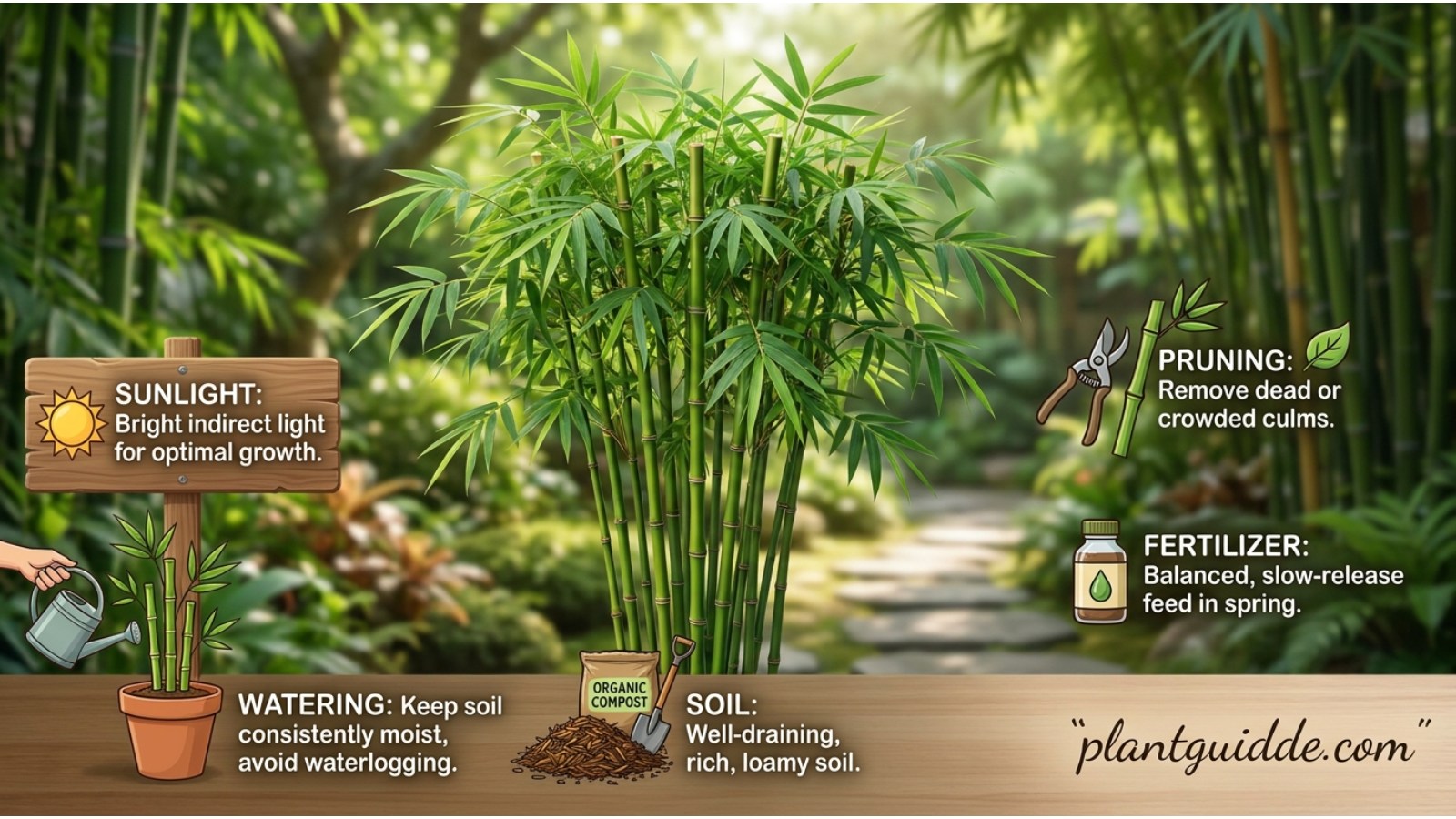
To care for a bamboo plant, provide bright indirect light, well-draining soil, moderate moisture, warmth, and good airflow. Water when the upper layer of soil begins to dry rather than keeping the roots constantly wet. If you are growing lucky bamboo, remember that it is actually Dracaena sanderiana, not true bamboo, and its watering and light requirements are slightly different.
First: Is It True Bamboo or Lucky Bamboo?
Before changing your care routine, identify the plant.
| Feature | True Bamboo | Lucky Bamboo |
|---|---|---|
| Botanical group | Grass family (Poaceae) | Dracaena family |
| Common indoor use | Less common as a small houseplant | Extremely common |
| Stems | Jointed, cane-like culms | Smooth segmented stalks |
| Leaves | Narrow grass-like foliage | Longer, softer lance-shaped leaves |
| Water growing | Generally unsuitable as a permanent indoor method | Commonly grown in water |
| Soil | Usually preferred | Can grow in soil or water |
| Typical use | Garden, patio, landscape | Indoor decorative plant |
The term lucky bamboo causes much of the confusion. Although it resembles bamboo, it is not botanically bamboo.
care for a bamboo plant your plant has a few green stalks growing in a glass container filled with water and decorative stones, it is most likely lucky bamboo. Its care is covered separately below.
Image Suggestion: Side-by-side identification graphic showing true bamboo and lucky bamboo with labels for stems, leaves, roots, and botanical identity.
How to Care for a True Bamboo Plant
True bamboo includes many species with very different growth habits. A small clumping bamboo grown in a container does not have exactly the same requirements as a large landscape species.
Still, several principles apply to most cultivated bamboo.
Give Bamboo Plenty of Light
Most true bamboo grows best with strong light. Outdoor bamboo generally performs well in a bright location with several hours of sunlight, although the ideal exposure depends on the species and climate.
Container-grown bamboo may need protection from intense afternoon sun, particularly when it has been raised in a nursery or greenhouse.
A useful approach is to observe the foliage rather than automatically assuming that more sunlight is always better.
Signs of insufficient light
- Weak or stretched growth
- Smaller leaves
- Sparse foliage
- Slow development
- Pale or less vigorous-looking leaves
Signs of excessive or stressful light
- Scorched leaf edges
- Bleached patches
- Crispy foliage
- Sudden wilting during very hot weather
care for a bamboo plant moving a bamboo plant from shade to strong sun, acclimate it gradually. A sudden change in light intensity can stress foliage even when the final location is suitable.
Practical tip
For indoor bamboo-like plants, bright indirect light is usually safer than placing the plant directly against a hot, south- or west-facing window.
Water According to the Soil, Not the Calendar
One of the most common bamboo care mistakes is watering on a fixed schedule.
Temperature, pot size, soil composition, humidity, sunlight, and season all affect how quickly the soil dries.
Instead of thinking, “I need to water every Sunday,” check the growing medium.
For container-grown true bamboo:
- Insert your finger into the upper portion of the soil.
- Feel whether it is still noticeably moist.
- If the surface has begun drying but the root zone is not completely dry, water thoroughly.
- Allow excess water to drain away.
- Empty standing water from a saucer or decorative container.
Bamboo generally appreciates consistent moisture during active growth, but wet roots are not the same thing as well-watered roots.
Constantly saturated soil reduces the air available around roots and can encourage root problems.
A better rule
Keep the root zone evenly moist when the plant is actively growing, but never leave it sitting in stagnant water.
During hot or windy weather, a container may dry much faster than expected. During cool or cloudy periods, the same plant may need significantly less water.
Use Soil That Drains Well
Good bamboo soil should hold enough moisture to prevent rapid drying while allowing excess water to escape.
A heavy, compacted medium can become a problem because water may remain around the roots for too long.
For container bamboo, look for a quality potting mix with good drainage and enough organic matter to support growth.
care for a bamboo plant your existing soil stays wet for many days after watering, the issue may not be that you are watering too often. The growing medium itself may be the problem.
What good drainage looks like
After thorough watering:
- Water should be able to leave the drainage holes.
- The pot should not remain submerged.
- Soil should gradually dry between waterings.
- Roots should have access to both moisture and air.
Image Suggestion: Diagram comparing well-draining bamboo soil with compacted, waterlogged soil around roots.
Choose a Container With Drainage Holes
A decorative pot without drainage may look attractive, but it can make watering much harder.
care for a bamboo plant bamboo is growing in a container, choose a pot with drainage holes and a size appropriate for the root system.
Avoid moving a small plant into an excessively large container simply because you want it to grow faster. A very large volume of wet soil can remain moist for a long time after watering.
When should you repot?
Consider repotting when:
- Roots are circling heavily around the container.
- Water runs through unusually quickly because the pot is root-bound.
- Growth has slowed despite suitable light and moisture.
- Roots are emerging from drainage holes.
- The plant repeatedly dries out much faster than before.
When repotting, move up only moderately in container size rather than making a dramatic jump.
How to Care for Lucky Bamboo
care for a bamboo plant you actually have lucky bamboo, your care routine should be different.
Lucky bamboo is Dracaena sanderiana, a tropical foliage plant commonly grown in water or soil.
Its ability to live in water is one reason it is so popular as a desk and houseplant.
Lucky Bamboo Light Requirements
Lucky bamboo prefers bright, indirect light.
A location near a bright window can work well if the plant is protected from intense direct sunlight.
Too much harsh sun may cause:
- Brown or bleached patches
- Faded leaves
- Crispy edges
- General foliage stress
Very little light, on the other hand, can contribute to weak, elongated growth.
The goal is not darkness. Lucky bamboo still needs light to maintain healthy growth.
Lucky Bamboo Watering
If lucky bamboo is growing in water, keep enough water around the roots to prevent them from drying out, but do not assume that simply adding water forever is sufficient.
Change the water regularly rather than allowing the same water to become stagnant.
Use a clean container and rinse away accumulated residue when changing the water.
An overlooked issue: water quality
Lucky bamboo can be sensitive to certain substances commonly present in tap water, particularly fluoride and salts.
care for a bamboo plant your plant repeatedly develops brown leaf tips despite otherwise reasonable care, water quality is worth considering.
Filtered water or another suitable low-mineral water source may help in situations where tap water appears to be causing problems.
Should Lucky Bamboo Grow in Water or Soil?
Both methods can work, but they require different routines.
| Growing Method | Main Advantage | Main Risk |
|---|---|---|
| Water | Easy to monitor roots and water level | Stagnant or poor-quality water |
| Soil | More closely resembles conventional houseplant growing | Overwatering |
| Water + stones | Attractive decorative display | Roots can suffer if water becomes stagnant |
If you grow lucky bamboo in soil, allow the upper portion of the growing medium to dry somewhat before watering again.
If you grow it in water, keep the roots covered but avoid treating the entire stalk as though it should be submerged.
Temperature and Humidity
Bamboo and lucky bamboo respond poorly to extreme environmental changes.
True bamboo grown outdoors is generally adapted to local seasonal conditions depending on species, while lucky bamboo prefers warm indoor conditions.
For lucky bamboo, avoid placing the plant directly beside:
- Air-conditioning vents
- Heaters
- Cold drafts
- Frequently opened exterior doors
- Very hot windows
Humidity can also affect leaf quality.
Dry indoor air may contribute to brown tips, particularly when combined with low soil moisture or poor-quality water.
However, constantly misting the leaves is not a complete solution.
Stable growing conditions matter more than repeatedly spraying the foliage.
Fertilizing Bamboo Without Overdoing It
Bamboo is a vigorous grower, particularly when planted outdoors under favorable conditions, but more fertilizer does not automatically mean healthier growth.
For container bamboo, use a balanced fertilizer according to the product’s directions during active growth.
Avoid repeatedly applying strong fertilizer because excess salts can accumulate in containers and damage roots.
Lucky bamboo generally requires relatively modest feeding. If grown in water, use a fertilizer specifically appropriate for hydroponic or water-grown plants and apply it sparingly.
A useful beginner principle
If a plant is already stressed, fix light, water, roots, and temperature before reaching for more fertilizer.
Fertilizer cannot compensate for root rot, inadequate light, or chronic overwatering.
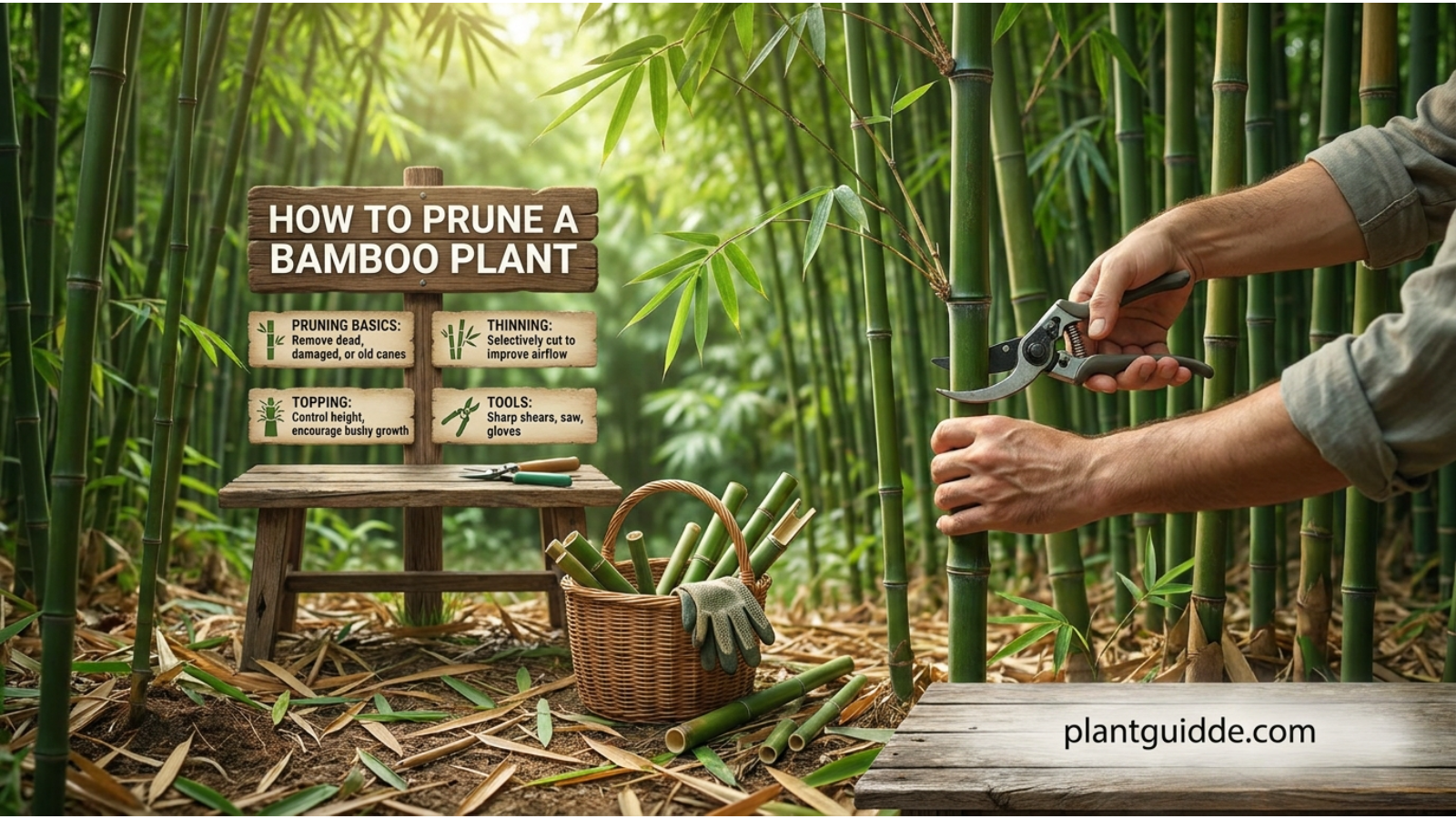
How to Prune a Bamboo Plant
Pruning depends heavily on the type of bamboo.
True bamboo can be pruned to control height, remove damaged culms, or improve the appearance of a planting.
When removing an unwanted culm, use clean, sharp tools and make a clean cut.
Avoid randomly cutting healthy foliage simply to make the plant look smaller. Different bamboo species respond differently to pruning, and cutting mature culms will not necessarily produce new growth from the cut point.
For lucky bamboo, pruning is more straightforward.
If a stalk becomes too tall or the arrangement becomes uneven, a clean cut can be used to manage its appearance. New shoots may develop from nodes below the cut.
Image Suggestion: Annotated pruning diagram showing where to cut a lucky bamboo stalk and how new shoots can develop.
Why Is My Bamboo Turning Yellow?
Yellow leaves are a symptom, not a diagnosis.
The correct solution depends on where the yellowing occurs and what has changed in the plant’s environment.
Common causes include:
Too much water:
If soil stays wet for long periods and leaves are yellowing, inspect the roots and drainage.
Poor light:
Insufficient light can weaken growth and cause foliage to lose its healthy appearance.
Natural aging:
An occasional older leaf turning yellow can be completely normal.
Environmental stress:
Sudden changes in temperature, light, or watering can cause foliage problems.
Poor water quality:
This is particularly worth considering with lucky bamboo.
What to check first
Instead of immediately adding fertilizer, ask:
- How wet is the soil?
- Does the pot drain properly?
- How much light does the plant receive?
- Is the plant exposed to drafts or heat?
- Are the roots healthy?
- Has anything recently changed?
This diagnostic approach is much more useful than treating every yellow leaf as a nutrient deficiency.
Why Are Bamboo Leaves Turning Brown?
Brown tips or edges often indicate environmental stress.
Possible causes include:
- Dry soil
- Low humidity
- Excessive fertilizer salts
- Poor-quality water
- Excessive sunlight
- Heat stress
- Root problems
For lucky bamboo, brown tips are especially common when the plant is exposed to unsuitable water or dry indoor conditions.
Do not automatically cut off every brown leaf.
If only the damaged portion is affected, you can trim the brown tissue for appearance. But if new leaves continue turning brown, address the underlying growing conditions first.
Bamboo Leaves Curling: What Does It Mean?
Curling leaves can be an early warning sign that the plant is losing water faster than its roots can supply it.
Check the soil before watering.
If it is dry, provide a thorough watering and monitor the plant.
If the soil is already wet, do not assume the plant needs more water. Damaged roots can also cause wilting or curling because unhealthy roots cannot function properly.
This distinction is important:
A wilted plant does not always mean a thirsty plant.
If the soil is wet and the plant continues to wilt, inspect the roots and drainage rather than repeatedly adding water.
How to Recognize Root Problems
Root problems are easier to prevent than to reverse.
Warning signs include:
- Persistent yellow leaves
- Soft or collapsing stems
- Bad-smelling soil or water
- Soil that remains wet for unusually long periods
- Sudden decline despite regular watering
- Dark, mushy roots
Healthy roots should generally feel firm rather than slimy or mushy.
If root damage is suspected, remove the plant carefully, inspect the root system, and remove clearly dead or rotting material with clean tools. Replant into an appropriate fresh growing medium if necessary.
For lucky bamboo grown in water, clean the container and refresh the water while inspecting the roots.
Common Bamboo Care Mistakes Beginners Make
1. Watering on a Fixed Schedule
Plants do not drink the same amount of water every week.
Better approach: Check the growing medium and environmental conditions.
2. Assuming Yellow Leaves Always Mean Fertilizer Deficiency
Yellow foliage can have many causes.
Better approach: Check roots, water, drainage, and light before fertilizing.
3. Keeping Soil Permanently Wet
Moisture is useful; saturation is not.
Better approach: Use drainage holes and allow the appropriate portion of the soil to dry between waterings.
4. Giving Lucky Bamboo Harsh Direct Sun
Lucky bamboo is often sold as a low-maintenance indoor plant, but that does not mean it prefers intense sunlight.
Better approach: Provide bright filtered or indirect light.
5. Ignoring Water Quality
Repeated brown tips may have more to do with water chemistry than watering frequency.
Better approach: If the problem persists, consider whether your water source is contributing to the issue.
6. Changing Everything at Once
When a plant looks unhealthy, beginners sometimes move it, repot it, fertilize it, mist it, and change its watering routine on the same day.
That makes diagnosis much harder.
Better approach: Identify the most likely problem and make one or two targeted changes first.
A Simple Bamboo Care Routine
For beginners, the following routine is easier to maintain than trying to remember dozens of rules.
Weekly
- Check the soil moisture.
- Look for yellow or brown leaves.
- Inspect the foliage for pests.
- Check whether the plant is receiving appropriate light.
- Remove dead leaves.
Every Few Weeks
- Check drainage.
- Look at the soil surface for salt buildup.
- Rotate an indoor plant if growth is becoming uneven.
- Inspect lucky bamboo water and container cleanliness.
Seasonally
- Adjust watering according to temperature and growth.
- Check whether the plant has outgrown its container.
- Increase or reduce protection from intense sunlight when seasonal conditions change.
- Resume or adjust fertilization according to active growth.
The exact frequency matters less than consistently observing the plant.
Seasonal Bamboo Care
Spring
Spring is often a period of active growth.
Check the root system and container before growth becomes vigorous. Container plants may begin using water faster as light and temperatures increase.
Summer
Heat can dramatically increase water loss.
Check plants more frequently, especially container-grown bamboo exposed to sun or wind.
However, do not compensate for heat by keeping roots permanently saturated.
Fall
Growth may slow as conditions change.
Reduce watering only when the plant actually begins using less water. Do not follow a seasonal watering rule blindly.
Winter
Indoor lucky bamboo should be protected from cold drafts and heating vents.
For true bamboo, winter care depends strongly on the species and whether it is grown indoors, outdoors, or in a container.
How to Make Bamboo Grow Faster
Healthy growth comes from correcting limiting factors rather than forcing the plant with fertilizer.
Focus on these priorities:
- Appropriate light
- Healthy roots
- Consistent moisture
- Good drainage
- Suitable temperature
- Adequate nutrition
If any of these is seriously deficient, adding extra fertilizer is unlikely to solve the problem.
For container bamboo, root restriction can eventually become another limiting factor. If the plant has become heavily root-bound, repotting may restore access to water and nutrients.
Bamboo Care Troubleshooting Chart
| Problem | Likely Causes | What to Check First |
|---|---|---|
| Yellow leaves | Overwatering, low light, aging, root stress | Soil moisture and roots |
| Brown leaf tips | Dryness, water quality, salts, low humidity | Water source and moisture |
| Curling leaves | Water stress, heat, root problems | Soil and temperature |
| Soft stems | Severe moisture/root problems | Roots and drainage |
| Slow growth | Low light, poor roots, limited nutrition | Light and root condition |
| Scorched leaves | Excessive direct sun or heat | Location and exposure |
| Mushy roots | Waterlogged conditions | Drainage and soil |
| Algae in lucky bamboo water | Excess light and stagnant water | Container and water routine |
Expert Tips for Healthier Bamboo
Let the plant tell you when to adjust watering
A calendar is convenient for people but does not account for changing environmental conditions. Soil moisture is a much better indicator.
Pay attention to the roots
The leaves show symptoms, but the roots often reveal the cause.
If a plant repeatedly struggles despite reasonable light and watering, inspect what is happening below the soil line.
Don’t confuse moisture with saturation
This is one of the most important concepts in bamboo care.
Roots need water, but they also need oxygen. Healthy soil provides both.
Make environmental changes gradually
Moving a plant from low light directly into intense sunlight can create a new problem while trying to solve the old one.
Treat lucky bamboo as a Dracaena
This single distinction prevents many care mistakes. Lucky bamboo should not be managed like outdoor true bamboo.
FAQs:
How often should I water a bamboo plant?
There is no universal weekly schedule. For container-grown true bamboo, water when the growing medium begins to dry while maintaining consistent moisture during active growth. Always provide drainage.
Does bamboo need direct sunlight?
True bamboo generally benefits from substantial light, but the ideal amount varies by species. Lucky bamboo usually performs best in bright, indirect light and can suffer from harsh direct sun.
Can bamboo grow indoors?
Some true bamboo species can be grown indoors temporarily or in containers, but many are better suited to outdoor conditions. Lucky bamboo is much better adapted to typical indoor environments.
Why is my bamboo turning yellow?
Yellow leaves can result from overwatering, poor drainage, inadequate light, natural leaf aging, environmental stress, or other issues. Check the roots and moisture level before assuming the plant needs fertilizer.
Can lucky bamboo grow in water?
Yes. Lucky bamboo is commonly grown in water, provided its roots remain hydrated and the water is kept clean and suitable for the plant.
Can I grow lucky bamboo in soil?
Yes. Lucky bamboo can grow successfully in a well-draining potting medium. Avoid keeping the soil continuously saturated.
How much water does lucky bamboo need?
When grown in water, keep the roots covered while avoiding unnecessary submersion of the entire stalk. Refresh the water regularly and monitor the roots and foliage.
Why are my lucky bamboo leaves turning brown?
Brown tips may be associated with unsuitable water, dry conditions, excessive sunlight, fertilizer salts, or other environmental stress. Check the plant’s location and water source before changing its entire care routine.
Can bamboo grow in low light?
Some plants sold as indoor bamboo can tolerate lower light, but tolerance does not mean ideal growth. True bamboo generally needs considerably more light than lucky bamboo.
Should I mist my bamboo plant?
Misting is not a substitute for proper watering, humidity, drainage, or suitable environmental conditions. Focus first on the plant’s root environment and overall growing conditions.
Conclusion
Successful bamboo care starts with identifying the plant and understanding what its roots actually need. True bamboo generally requires strong light, consistent moisture, fertile but well-draining soil, and enough room for its vigorous root system. Lucky bamboo, despite its name, is a Dracaena and is better suited to bright indirect light, clean water or well-draining soil, and stable indoor conditions
The most important lesson is to avoid treating plant care as a fixed schedule. Check the soil, observe the leaves, inspect the roots when something seems wrong, and make changes based on the plant’s actual environment.
When you understand the relationship between light, moisture, drainage, roots, and temperature, learning how to care for a bamboo plant becomes much simpler, and problems such as yellow leaves, brown tips, curling foliage, and root damage become far easier to prevent and diagnose.

Asad Mumtaz is a dedicated plant enthusiast and gardening writer with a passion for helping people care for their plants successfully. He specializes in plant care guides, indoor gardening, and practical growing tips for all skill levels. His content focuses on making gardening simple, enjoyable, and rewarding. Through his work, Asad shares reliable advice to help readers create thriving green spaces.