Take care of a pineapple plant are often mistaken for ordinary tropical houseplants, but their needs are a little different. Their stiff, sword-shaped leaves grow in a compact rosette, and the plant is adapted to storing water rather than sitting in constantly wet soil.
That makes pineapple plant care relatively forgiving in some situations and surprisingly easy to get wrong in others. Overwatering, insufficient light, cold temperatures, poor drainage, and overly heavy soil can gradually lead to yellow leaves, brown tips, weak growth, or root problems.
The good news is that you do not need a greenhouse to grow a healthy pineapple plant. With the right balance of light, warmth, moisture, and drainage, a pineapple can grow successfully indoors for years and may eventually produce fruit under favorable conditions.
Quick Answer
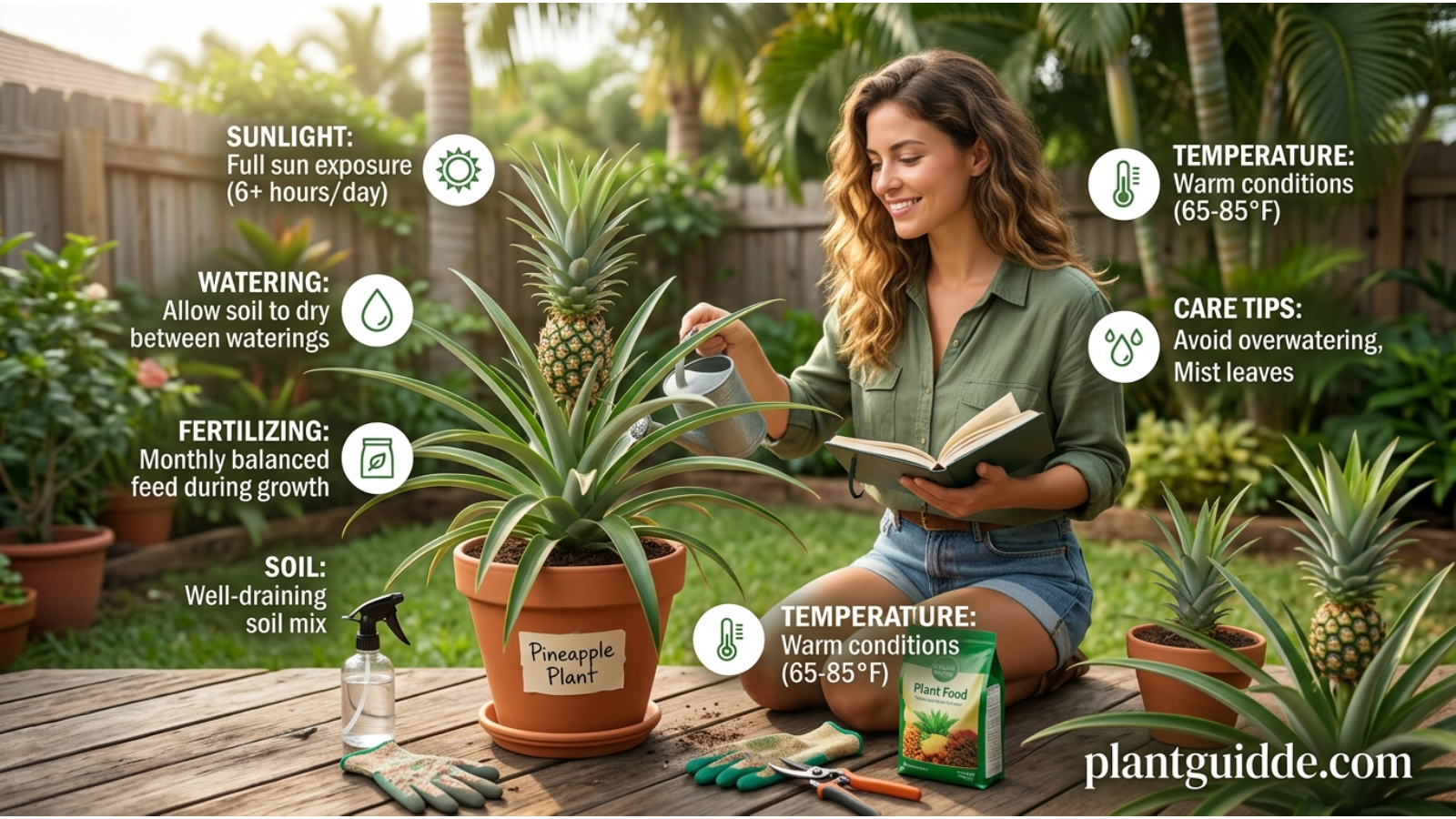
To learn how to take care of a pineapple plant, give it bright light, warm temperatures, fast-draining soil, and water only when the upper part of the soil has started to dry. Pineapple plants tolerate short dry periods better than constantly wet roots. Use a pot with drainage holes, protect the plant from cold temperatures, and fertilize lightly during active growth.
What Is a Pineapple Plant?
The pineapple plant, Ananas comosus, is a tropical bromeliad grown primarily for its edible fruit. Unlike many familiar houseplants, it does not develop a conventional tree-like stem. Instead, its long, rigid leaves emerge from a central growing point and form a dense rosette.
Pineapple plants have several characteristics that explain their care requirements:
- They prefer strong light and warmth.
- Their thick leaves can conserve moisture.
- Their roots dislike prolonged saturation.
- They grow relatively slowly indoors.
- Mature plants can produce a single pineapple fruit before producing offsets or new growth.
Although pineapples are tropical plants, they are not plants that need constantly wet soil. In fact, keeping the roots excessively wet is one of the easiest ways to create problems.
How to Take Care of a Pineapple Plant
Successful pineapple plant care comes down to creating conditions that resemble its natural warm, bright environment without keeping the roots continuously saturated.
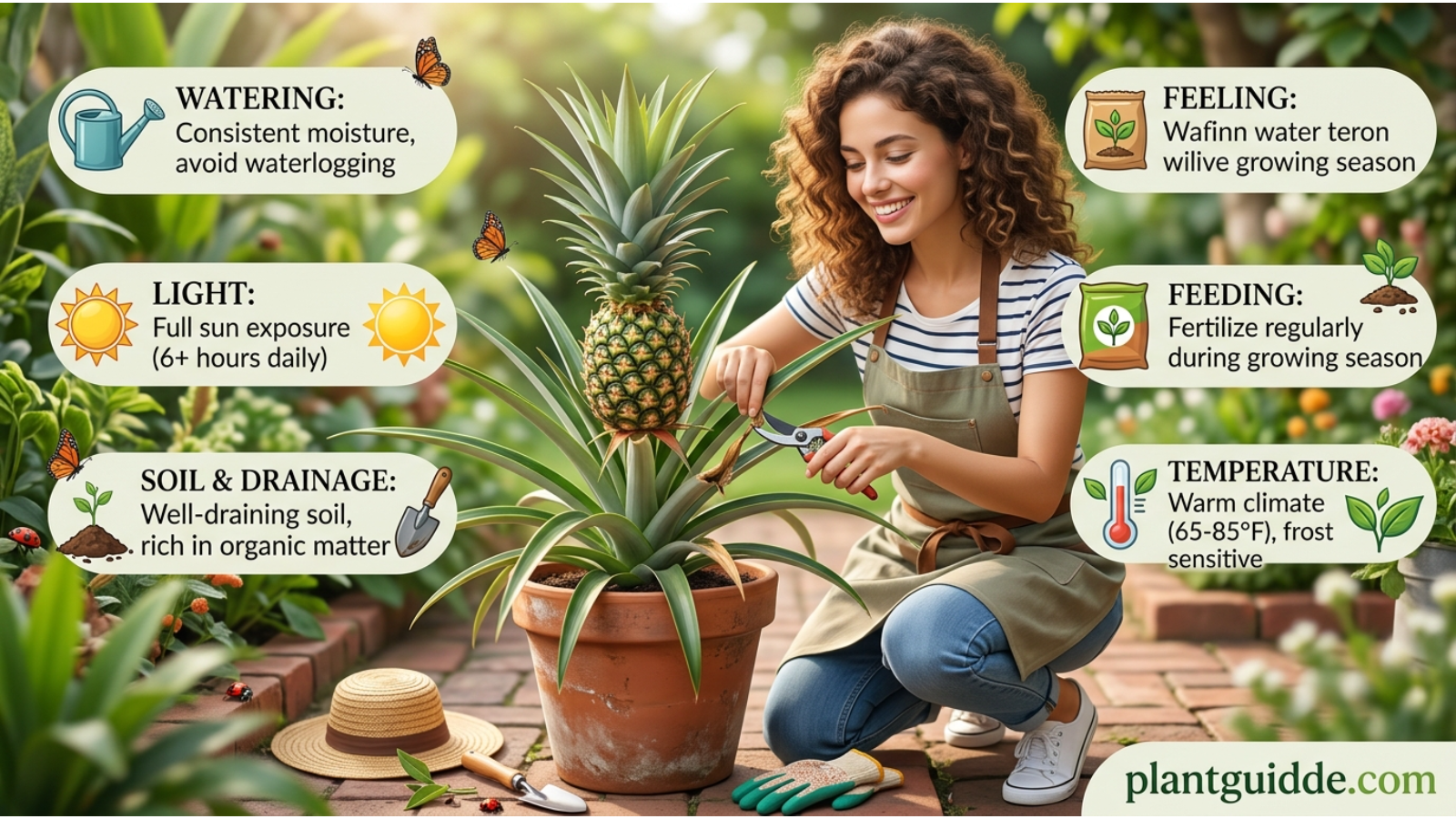
The most important factors are light, watering, drainage, temperature, soil, humidity, feeding, and pot size.
1. Give Your Pineapple Plant Plenty of Light
Light is one of the most important factors in growing a pineapple indoors.
Place the plant near a bright window where it receives several hours of strong light each day. A south- or west-facing window can work well indoors, although very intense afternoon sunlight through glass may need to be moderated if the leaves begin to scorch.
A pineapple plant receiving too little light may show:
- Slow growth
- Pale or less vigorous foliage
- A stretched or loose appearance
- Poor fruit development
- Weak new leaves
If your home does not receive enough natural light, a suitable grow light can supplement the available sunlight.
Practical tip: If you are moving a pineapple from a relatively dim location into strong direct sunlight, increase its exposure gradually. A sudden change can cause leaf scorch even though the plant ultimately benefits from brighter conditions.
2. Water When the Soil Begins to Dry
Pineapple plants need water, but they do not need constantly wet soil.
A useful approach is to check the soil before watering. If the upper portion has dried and the pot feels noticeably lighter, it is generally time to water thoroughly.
When watering:
- Pour water evenly over the soil.
- Continue until excess water drains from the bottom.
- Allow the pot to drain completely.
- Empty any water sitting in the saucer or outer container.
Avoid watering according to a rigid weekly schedule. Indoor conditions change with temperature, sunlight, pot size, soil composition, and season.
During bright, warm periods, the plant may use water more quickly. In cooler or darker conditions, the soil may remain moist much longer.
The key rule is simple: check the soil rather than the calendar.
3. Use Fast-Draining Pineapple Plant Soil
Good drainage is essential.
A pineapple plant should be grown in a loose, well-draining potting mix rather than dense garden soil. A suitable mix can contain regular quality potting soil combined with materials such as perlite, coarse sand, orchid bark, or another component that improves aeration and drainage.
The exact recipe is less important than the result: water should move through the soil instead of remaining trapped around the roots.
Heavy, compacted soil can create an environment where roots remain wet for too long. This becomes especially problematic when the plant is also receiving limited light.
4. Choose a Pot With Drainage Holes
Even excellent soil cannot compensate for a container that does not drain.
Choose a pot with one or more drainage holes at the bottom. The container should be large enough to support the root system but not dramatically oversized.
An excessively large pot can hold more wet soil around a relatively small root system, increasing the time it takes for the mix to dry.
When repotting, move up only modestly in container size.
5. Keep the Plant Warm
Pineapple plants prefer warm conditions and can suffer when exposed to prolonged cold.
A comfortable indoor environment is usually much easier for them than a cold windowsill or unheated room.
Protect the plant from:
- Frost
- Freezing temperatures
- Cold drafts
- Very cold windows
- Sudden temperature changes
If temperatures are dropping significantly, move an outdoor pineapple indoors before cold weather becomes a problem.
6. Provide Moderate Humidity and Good Airflow
Because pineapples originate from warm climates, they can appreciate reasonable humidity. However, extremely high humidity is not necessary for a healthy indoor plant if other conditions are appropriate.
Instead of focusing entirely on misting, prioritize:
- Adequate light
- Appropriate watering
- Good drainage
- Reasonable humidity
- Air movement
Constantly wet foliage combined with poor airflow can create a more favorable environment for fungal and bacterial problems.
If indoor air is extremely dry, increasing ambient humidity can help, but there is no need to keep the leaves permanently wet.
7. Fertilize Lightly During Active Growth
Pineapple plants are not heavy feeders compared with some fast-growing houseplants.
During active growth, a balanced fertilizer diluted according to the product’s directions can provide useful nutrients. Regular but modest feeding is generally more appropriate than applying a large amount of fertilizer at once.
Overfertilizing can contribute to salt accumulation in the soil and may damage roots.
If the plant is growing slowly during a darker or cooler period, reduce feeding rather than trying to force growth with extra fertilizer.
How Often Should You Water a Pineapple Plant?
There is no single number of days that works for every pineapple plant.
Instead, check the growing medium regularly. Water when the upper portion of the soil has begun to dry rather than keeping the entire pot continuously moist.
Several factors affect how quickly a pineapple plant dries out:
| Condition | Effect on Watering |
|---|---|
| Bright light | Soil may dry faster |
| Warm temperatures | Usually increases water use |
| Large pot | Often stays wet longer |
| Dense soil | Dries slowly |
| Small pot | May dry quickly |
| Cool, dark room | Water use usually decreases |
| Dry indoor air | Can increase moisture loss |
A common mistake is to water because the leaves look slightly less firm. Check the soil first. A drooping plant can sometimes be suffering from root problems caused by excessive moisture rather than a lack of water.
Should You Put Water in the Center of a Pineapple Plant?
Pineapples are bromeliads, and their rosette structure can hold water. However, indoor growers should not rely on keeping the central cup permanently filled.
The safest routine is to focus watering on the growing medium and avoid allowing stagnant water to sit in the crown for extended periods.
If water collects between the leaves, especially in a cool room with poor airflow, gently removing excess water can reduce the chance of crown-related problems.
This is particularly important when temperatures are low or the plant is already showing signs of rot.
How Much Sun Does a Pineapple Plant Need?
Pineapple plants generally perform best with bright light and substantial sun exposure.
A plant grown indoors near a bright window will usually have better growth than one placed several feet into a dim room.
Watch the leaves for clues:
Too little light may cause:
- Slow growth
- Pale foliage
- Weak or stretched growth
- Reduced flowering and fruiting potential
Excessively intense sunlight after sudden exposure may cause:
- Bleached patches
- Brown or scorched areas
- Damaged leaf surfaces
Rather than assuming that all direct sun is harmful, consider how gradually the plant was introduced to it and how intense the window exposure is.
How to Grow a Pineapple Plant Indoors
Growing a pineapple indoors is relatively straightforward if you provide the right environment.
A simple setup looks like this:
Bright window → well-draining soil → drainage pot → warm room → careful watering
If you are growing a pineapple from a grocery-store crown, remove excess fruit tissue from the base, allow the cut portion to dry for a short period, and then place the crown into a suitable well-draining medium.
Do not bury the entire crown. The base should be supported while the growing point and leaves remain above the soil.
Root development can take time, so avoid repeatedly disturbing the crown to check for roots.
How Long Does a Pineapple Plant Take to Grow?
Pineapple plants are slow compared with many common houseplants.
A plant grown from a crown needs time to establish roots and produce new foliage. Producing fruit can take considerably longer, particularly indoors where light levels may be lower than outdoors.
Fruit production depends on factors such as:
- Plant maturity
- Light intensity
- Temperature
- Nutrition
- Growing conditions
- Propagation method
This is why buying a small pineapple crown should be viewed as a long-term growing project rather than a quick way to produce fruit.
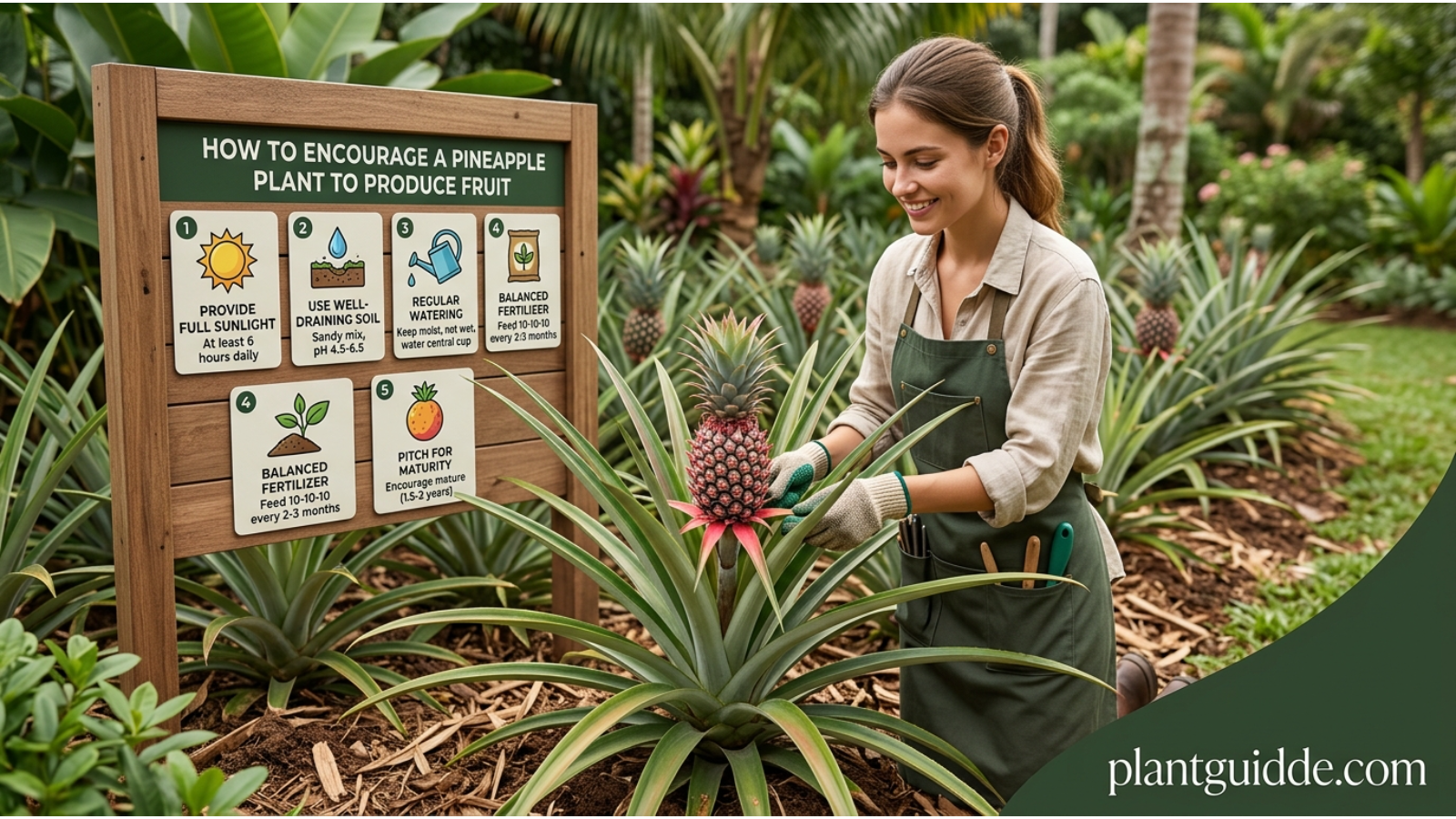
How to Encourage a Pineapple Plant to Produce Fruit
Strong light is one of the most important things you can provide when growing a pineapple for fruit.
A healthy, mature plant needs enough energy to support flowering and fruit development. Indoor plants that receive weak light may remain attractive but fail to reach the maturity needed for reliable fruit production.
Keep the plant:
- Brightly lit
- Warm
- Properly watered
- Well drained
- Adequately nourished
Do not respond to a lack of fruit by dramatically increasing fertilizer. More fertilizer cannot compensate for inadequate light or an immature plant.
Commercial pineapple production uses controlled techniques to encourage flowering, but home growers generally get better results by first creating strong growing conditions and allowing the plant to mature.
When Should You Repot a Pineapple Plant?
Pineapples usually do not need frequent repotting.
Consider repotting when:
- Roots are becoming crowded.
- The pot no longer remains stable.
- The growing medium has broken down or become compacted.
- Drainage has deteriorated.
- The plant has clearly outgrown its container.
Choose a container only slightly larger than the previous one and use fresh, well-draining soil.
After repotting, avoid excessive watering simply because fresh soil has been added. Allow the plant to settle while maintaining appropriate moisture.
Common Pineapple Plant Problems
Pineapple Plant Leaves Turning Yellow
Yellow leaves can have several causes.
Older leaves naturally age and eventually decline, but widespread yellowing is more concerning.
Possible causes include:
- Overwatering
- Poor drainage
- Insufficient light
- Root damage
- Nutritional problems
- Stress from environmental changes
Start by checking the soil moisture and drainage before adding fertilizer. If the soil remains wet for a long time, improving drainage is usually more important than feeding the plant.
Pineapple Plant Leaves Turning Brown
Brown leaf tips or edges are commonly associated with environmental stress.
Potential causes include:
- Dry air
- Inconsistent watering
- Excessive fertilizer salts
- Intense sunlight after sudden exposure
- Physical damage
- Poor root function
Brown tissue will not turn green again. Focus on correcting the underlying conditions and allow new growth to develop normally.
Pineapple Plant Leaves Curling
Curling leaves can indicate that the plant is under stress.
Check:
- Soil moisture
- Recent changes in sunlight
- Room temperature
- Humidity
- Root condition
Do not automatically assume curling means the plant needs more water. If the soil is already wet, additional watering can make the original problem worse.
Pineapple Plant Not Growing
Slow growth is not automatically a problem because pineapple plants naturally grow slowly.
However, very little new growth may occur when the plant is kept in a dark room, exposed to cold conditions, or grown in unsuitable soil.
Move it toward stronger light, maintain warm conditions, and make sure the roots are not sitting in saturated soil.
Pineapple Plant Rotting at the Base
A soft, dark, or foul-smelling base is a serious warning sign.
Rot is often associated with excessive moisture and poor drainage. If the growing point or crown is becoming soft, reduce moisture exposure and inspect the plant carefully.
Prevention is much easier than recovery: use fast-draining soil, a pot with drainage holes, and avoid keeping the plant constantly wet.
Pineapple Plant Care Mistakes to Avoid
Some problems come from trying to help the plant too much.
Overwatering
This is probably the most important mistake to avoid. Pineapples appreciate moisture but do not want permanently saturated roots.
Using Heavy Garden Soil
Dense soil can restrict airflow around the roots and stay wet for too long.
Keeping It in a Dark Corner
A pineapple may survive in lower light for a while, but survival is not the same as vigorous growth.
Fertilizing Too Heavily
More fertilizer does not automatically mean faster or healthier growth. Excess nutrients can damage roots and accumulate in the growing medium.
Using a Huge Pot
A much larger container can hold moisture for an unnecessarily long time.
Moving It Suddenly Into Harsh Sun
A pineapple needs strong light, but a plant accustomed to indoor shade should be acclimated gradually to intense direct sunlight.
Ignoring Cold Weather
A tropical plant exposed to prolonged cold can decline quickly. Move outdoor plants inside before temperatures become dangerously low.
A Simple Pineapple Plant Care Routine
You do not need to monitor the plant constantly.
Once or twice a week, inspect the plant and ask:
- Is the soil still wet?
- Has the upper layer dried enough to water?
- Is the plant receiving bright light?
- Are the leaves changing color?
- Is the base firm?
- Is new growth appearing?
- Is the pot draining properly?
This quick inspection can catch problems before they become severe.
A particularly useful habit is to lift the pot occasionally. You will eventually learn the difference between a container full of recently watered soil and one that has become noticeably lighter. This can make watering decisions much more reliable than following a calendar.
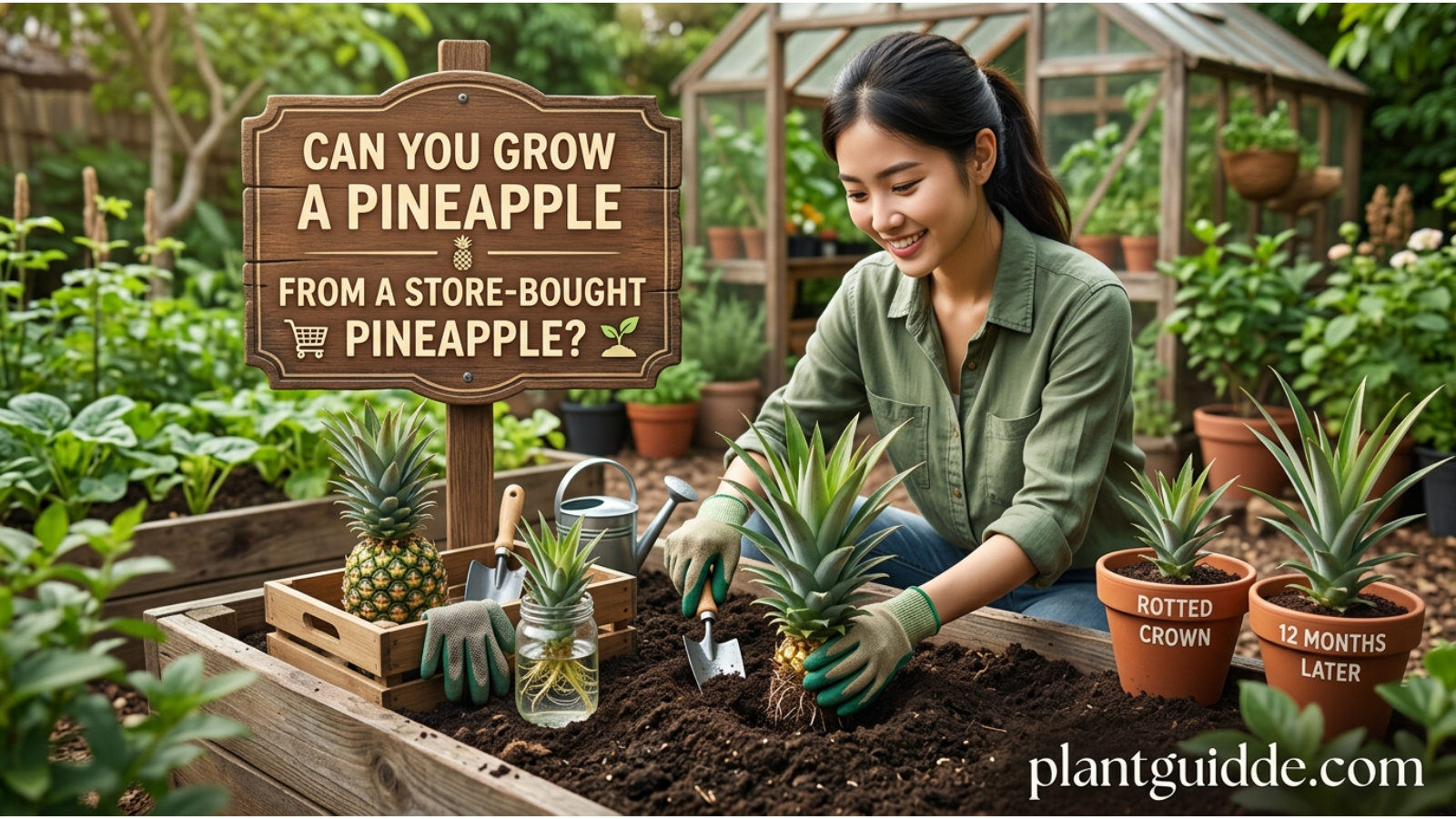
Can You Grow a Pineapple From a Store-Bought Pineapple?
Yes. A pineapple crown can be propagated and grown into a new plant.
Choose a healthy pineapple with a firm, green crown. Remove the fruit from the base of the crown, allow the cut area to dry briefly, and plant it in a well-draining medium.
Rooting can take time, so patience is important.
Once established, treat the new plant like a normal pineapple: provide strong light, warmth, appropriate moisture, and good drainage.
The resulting plant may eventually produce fruit, but fruiting indoors requires patience and favorable growing conditions.
Image Suggestion: A step-by-step visual showing a pineapple crown being prepared, rooted, planted in well-draining soil, and growing into a mature rosette.
FAQs:
How do you take care of a pineapple plant indoors?
Place it in bright light, use fast-draining soil, keep it warm, and water when the upper soil begins to dry. Always use a container with drainage holes and avoid keeping the roots constantly wet.
How often should I water a pineapple plant?
Watering frequency depends on light, temperature, pot size, and soil. Check the soil instead of following a fixed schedule. Water thoroughly when the upper portion has started to dry, then let excess water drain away.
Does a pineapple plant need full sun?
Pineapple plants benefit from strong light and can tolerate substantial direct sunlight when acclimated properly. Indoor plants should be introduced gradually to very intense sun to reduce the risk of leaf scorch.
Why are my pineapple plant leaves turning brown?
Brown tips or edges can result from dry conditions, inconsistent watering, excessive fertilizer salts, intense sunlight, or root stress. Check the soil and growing conditions before making changes.
How long does it take for a pineapple plant to produce fruit?
Pineapple plants can take a long time to reach fruiting maturity, particularly when grown indoors. The timeline varies according to the plant’s maturity, propagation method, light, temperature, and overall growing conditions.
Conclusion
Learning how to take care of a pineapple plant is mainly about finding the right balance rather than keeping the plant constantly wet or heavily fertilized. Give it bright light, warmth, fast-draining soil, a properly sized pot, and careful watering, and it can remain healthy for years.
If your pineapple is struggling, check the basics first: light, soil moisture, drainage, and temperature. These four factors often reveal the cause of problems such as yellow leaves, brown tips, curling foliage, and slow growth.
For the healthiest long-term growth, focus less on a strict care schedule and more on observing how quickly your particular plant uses water and responds to its environment.

Asad Mumtaz is a dedicated plant enthusiast and gardening writer with a passion for helping people care for their plants successfully. He specializes in plant care guides, indoor gardening, and practical growing tips for all skill levels. His content focuses on making gardening simple, enjoyable, and rewarding. Through his work, Asad shares reliable advice to help readers create thriving green spaces.