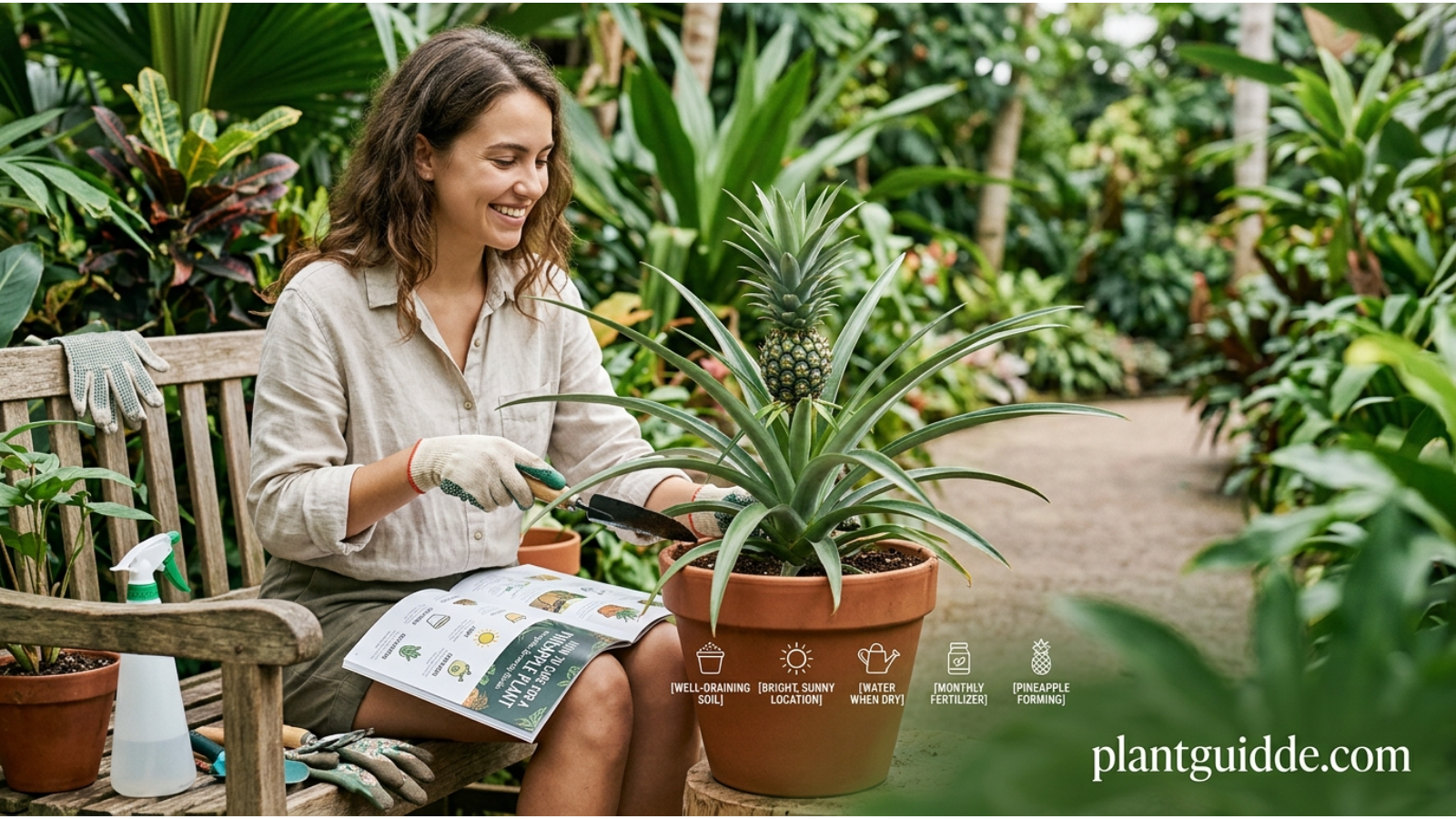
Care for a pineapple plant are often mistaken for ordinary tropical houseplants, but their needs are a little different. Their stiff, sword-shaped leaves form a compact rosette, and the plant is adapted to storing water rather than growing in constantly wet soil.
That makes pineapple plant care relatively forgiving in some areas, and surprisingly easy to get wrong in others. Overwatering, insufficient light, cold temperatures, poor drainage, and overly heavy soil can gradually cause yellow leaves, brown tips, weak growth, or root problems.
The good news is that you do not need a greenhouse to grow a healthy pineapple plant. With the right balance of light, warmth, moisture, and drainage, a pineapple can remain attractive indoors for years and may eventually produce fruit under suitable conditions.
Quick Answer
To learn how to care for a pineapple plant, give it bright light, warm temperatures, well-draining soil, and water only when the upper part of the soil begins to dry. Pineapple plants tolerate short dry periods better than constantly wet roots. Keep the plant warm, provide good airflow, fertilize lightly during active growth, and avoid letting water sit around the base.
What Is a Pineapple Plant?
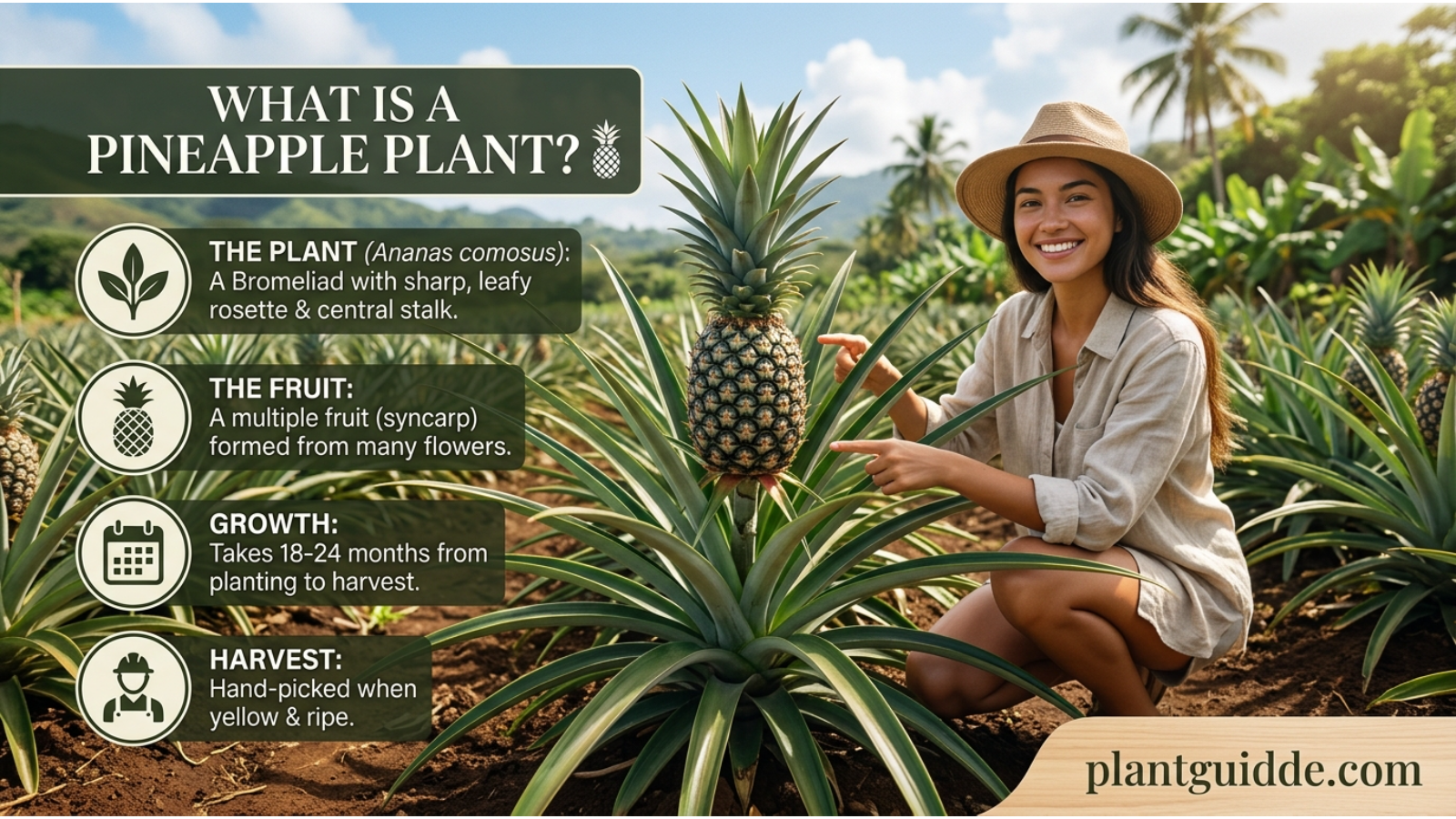
The pineapple plant is Ananas comosus, a tropical bromeliad grown for its distinctive foliage and edible fruit. Unlike many common houseplants, it does not develop a large conventional root system. Instead, its rosette of leaves is designed to collect and use moisture efficiently.
A mature pineapple plant produces a central flower stalk when it reaches the appropriate stage of development. The individual flowers eventually develop into the familiar pineapple fruit.
Pineapple plants are bromeliads, but they are not epiphytic in the same way as many popular bromeliads. They grow naturally in soil and depend substantially on their roots for water and nutrients.
This distinction matters when choosing soil and watering habits. A pineapple plant generally performs better when excess water can drain away quickly rather than remaining around its roots.
Pineapple Plant Care Requirements at a Glance
| Care factor | Best practice |
|---|---|
| Light | Bright light, with several hours of direct sun when acclimated |
| Water | Water thoroughly, then allow the soil to partially dry |
| Soil | Loose, porous, and fast-draining |
| Pot | Container with drainage holes |
| Temperature | Warm conditions; protect from cold |
| Humidity | Average indoor humidity is usually adequate |
| Fertilizer | Light, regular feeding during active growth |
| Repotting | Only when necessary |
| Propagation | Crown, slips, suckers, or offsets |
| Fruiting | Requires maturity, strong light, warmth, and suitable growing conditions |
Give Your Pineapple Plant Plenty of Light
Light is one of the most important factors in growing a pineapple plant indoors.
Place it in the brightest location available, preferably near a sunny south- or west-facing window. A few hours of direct sunlight can help maintain compact growth and strong foliage.
If your plant has been kept in low light, do not suddenly move it into intense afternoon sun. Leaves that have adapted to weaker light can develop sun damage when exposed abruptly.
Instead, increase its exposure gradually over several days.
Signs that your pineapple plant may need more light include:
- Long, weak-looking growth
- Pale or dull foliage
- Slow development
- Leaves leaning strongly toward the window
- Little or no progress toward maturity
If natural light is limited, a quality grow light can supplement the available daylight.
Practical tip: Rotate the pot every week or two if the plant receives light primarily from one direction. This helps prevent strongly one-sided growth.
Image Suggestion: A healthy pineapple plant positioned beside a bright south-facing indoor window, showing its compact rosette and strong green leaves.
Water When the Soil Partially Dries
One of the most common pineapple plant care mistakes is treating it like a moisture-loving tropical plant.
Pineapples appreciate moisture, but their roots should not remain continuously saturated.
Before watering, check the soil with your finger. If the upper layer has begun to dry and the pot feels noticeably lighter, it is usually time to water.
When you water:
- Moisten the soil thoroughly.
- Allow excess water to drain through the bottom.
- Empty any water collected in the saucer.
- Wait until the soil partially dries before watering again.
The exact interval varies with temperature, light, pot size, soil, and season. A pineapple growing in bright light during summer may need water much more often than one sitting in a cool, dim room during winter.
Should You Put Water in the Pineapple Plant’s Center?
It is generally better not to rely on keeping the central rosette permanently filled with water indoors.
Although some bromeliads can collect water in their central cups, a soil-grown pineapple should not be treated like a vase. Stagnant water around the crown can contribute to rot, particularly in cool conditions or when airflow is poor.
For routine indoor care, concentrate on maintaining appropriately moist but well-drained soil and avoid leaving the plant sitting in water.
Use Fast-Draining Pineapple Plant Soil
Pineapple plant soil should allow both water and air to move through the root zone.
A heavy garden soil that stays wet for long periods is a poor choice for container-grown pineapple plants.
A useful potting mix can contain:
- Quality indoor potting mix
- Perlite or pumice
- Coarse material such as orchid bark
The goal is not to create extremely dry soil. The goal is to prevent the roots from sitting in stagnant moisture.
If water takes a long time to drain through the container, the mix may be too dense.
Choose a Pot With Drainage Holes
A drainage hole is far more important than an attractive decorative pot.
The container should allow excess water to escape freely. If you use a decorative cachepot without drainage, keep the pineapple in a nursery pot with holes and remove it when watering.
Avoid choosing an excessively large container. A huge volume of wet soil can stay moist for too long after watering, especially indoors.
A slightly larger pot is usually enough when the plant actually needs more space.
Keep the Plant Warm
Pineapple plants prefer warm conditions and can struggle when exposed to cold temperatures.
Keep the plant away from:
- Cold drafts
- Unheated windows during winter
- Air-conditioning vents
- Heating vents
- Sudden temperature changes
Warmth becomes particularly important if you are hoping for fruit. A plant that survives in a cool room may remain alive but grow slowly and may not develop as expected.
Humidity Usually Does Not Need to Be Extreme
Pineapples come from tropical environments, so it is easy to assume that they require very high indoor humidity.
In practice, a healthy pineapple plant can often adapt to ordinary household conditions if light, temperature, watering, and drainage are appropriate.
If your home is extremely dry, you can improve the surrounding environment by:
- Grouping plants together
- Using a humidifier
- Keeping the plant away from dry heating airflow
Regularly misting the foliage is not a substitute for proper watering or adequate humidity.
Fertilize Lightly During Active Growth
Pineapple plants do not need heavy feeding.
During active growth, use a balanced fertilizer at a conservative rate according to the product’s directions. Overfertilizing can cause salt buildup and may damage roots or produce excessive foliage at the expense of overall plant balance.
Reduce feeding when growth slows significantly.
If the plant is growing in fresh, nutrient-containing potting mix, you may not need to fertilize immediately after repotting.
A useful rule: If you are unsure whether a weak-looking pineapple needs more fertilizer or more light, evaluate the light first. Poor light is often overlooked.
How Often Should You Water a Pineapple Plant?
There is no single correct watering schedule for every pineapple plant.
Instead of watering every certain number of days, check the growing conditions and soil moisture.
Your plant may need water more frequently when:
- Light levels are high
- Temperatures are warm
- The plant is actively growing
- The pot is small
- The potting mix drains quickly
It may need water less frequently when:
- Light is weak
- Temperatures are cooler
- Growth has slowed
- Humidity is higher
- The pot is large relative to the plant
The important distinction is between watering thoroughly and watering constantly. A good watering should moisten the root zone, while the following dry period allows excess moisture to disappear.
How to Grow a Pineapple Plant Indoors
Growing a pineapple indoors is surprisingly achievable, especially if you have a bright window.
Start by placing the plant where it receives strong light. Use a container with drainage and a porous potting mix. Water when the soil has partially dried rather than following a calendar.
As the plant grows, watch the leaves rather than expecting rapid changes. Pineapples are naturally slow-growing compared with many common houseplants.
A healthy plant should maintain firm, reasonably upright foliage. Older outer leaves may naturally decline as new growth develops from the center.
If you want fruit, patience becomes even more important. A pineapple grown from a grocery-store crown can take a substantial amount of time to reach fruiting size, and indoor conditions may influence how quickly it matures.
Can You Grow a Pineapple From a Store-Bought Pineapple?
Yes. One of the easiest ways to propagate a pineapple is by using the leafy crown from a mature fruit.
How to Propagate a Pineapple Crown
- Cut or twist the leafy crown away from the fruit.
- Remove excess fruit tissue from the bottom.
- Allow the cut area to dry for several days.
- Place the crown into a small container of well-draining potting mix.
- Keep the mix lightly moist while roots develop.
- Provide bright light and warmth.
- Gradually transition the young plant into stronger sunlight.
The most important part is preventing the crown from remaining wet. A freshly planted crown has limited roots, so constantly wet soil can encourage rot before the plant becomes established.
You can also see new growth from the center as the plant begins establishing itself.
How Long Does a Pineapple Plant Take to Grow Fruit?
Pineapple plants are not fast fruit producers.
The time from planting to fruit can vary considerably depending on whether the plant was grown from a crown, sucker, or another propagation method, as well as its maturity, light, temperature, nutrition, and growing environment.
A supermarket pineapple crown generally requires substantial time to establish and mature before producing fruit.
Once a mature plant flowers, the fruit develops from the central flowering structure. After fruiting, the original plant gradually completes its main growth cycle while producing new offsets that can continue the plant.
This is why a pineapple that has produced fruit is not necessarily finished as a plant.
How to Encourage a Pineapple Plant to Fruit
If your goal is fruit rather than foliage alone, concentrate first on overall plant health.
Provide:
- Strong light
- Warm temperatures
- Adequate nutrition
- Good drainage
- Consistent care
- Enough time for the plant to reach maturity
Do not assume that adding extra fertilizer will force a young pineapple to fruit. A plant needs to reach an appropriate developmental stage before flowering is likely.
Commercial growers can use controlled techniques to induce flowering, but home growers should prioritize healthy growth rather than attempting aggressive flowering methods without understanding the risks.
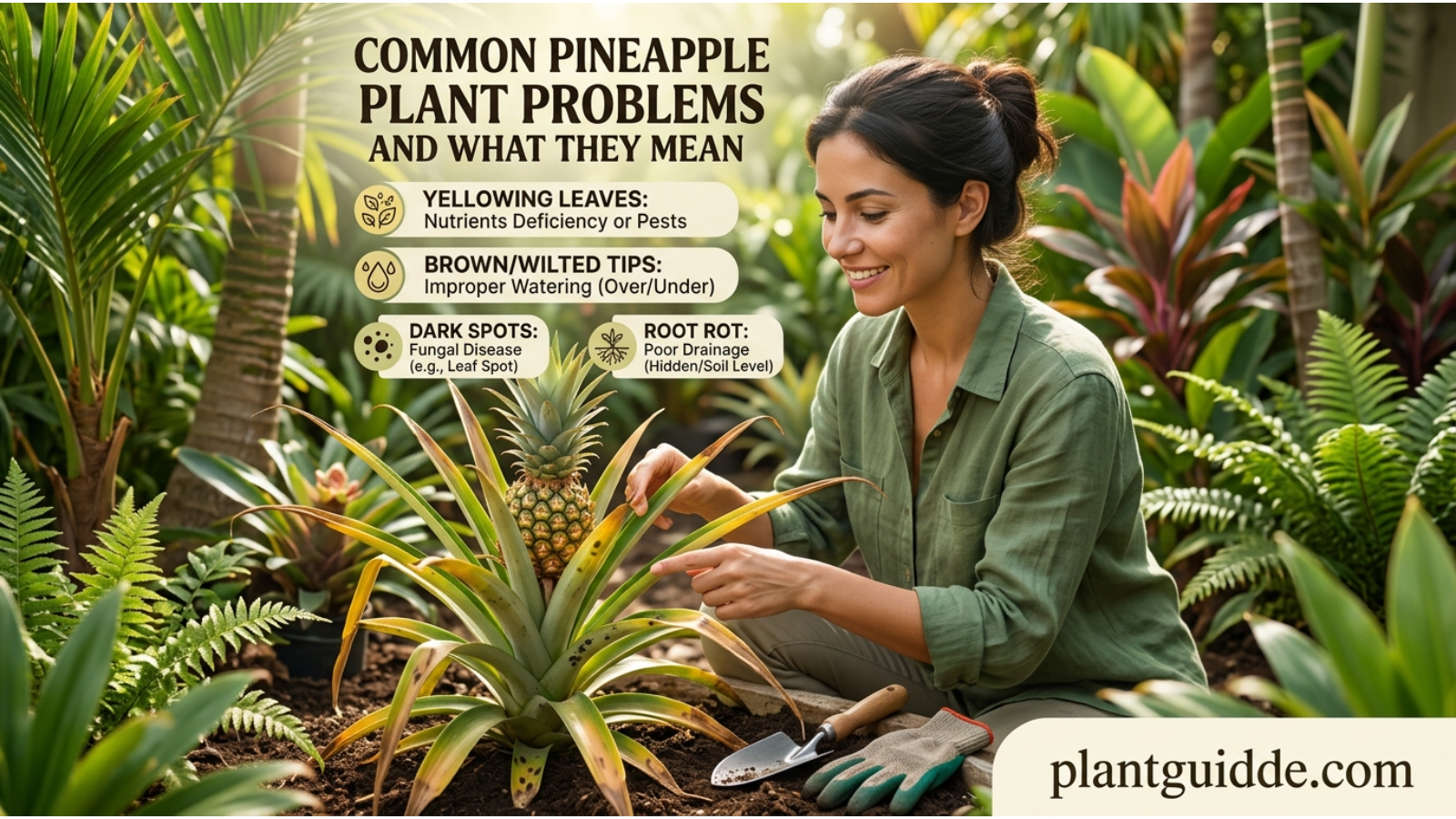
Common Pineapple Plant Problems and What They Mean
Pineapple Plant Leaves Turning Yellow
Yellow leaves can have several causes, so the pattern matters.
If older leaves gradually yellow and die while the center remains healthy, this may be part of normal aging.
If many leaves are turning yellow at once, investigate:
- Overwatering
- Poor drainage
- Low light
- Root problems
- Nutrient imbalance
- Sudden environmental changes
Wet soil combined with yellowing leaves is especially worth investigating.
Pineapple Plant Leaves Turning Brown
Brown tips or edges are often associated with environmental stress.
Possible causes include:
- Dry air
- Inconsistent watering
- Excess fertilizer salts
- Strong sudden sunlight
- Root problems
Do not automatically respond to brown tips by watering more. First inspect the soil and growing conditions.
If the soil is already wet, additional water can make the underlying problem worse.
Pineapple Plant Leaves Curling
Curling leaves can indicate water stress, intense heat, low humidity, root problems, or excessive sunlight.
Check the plant systematically:
- Feel the soil.
- Check the roots if the plant is persistently declining.
- Assess recent changes in sunlight.
- Look for pests.
- Check whether the plant is exposed to hot or cold drafts.
A symptom is not always a diagnosis. The surrounding growing conditions provide the missing information.
Pineapple Plant Drooping
Pineapple leaves can droop when the plant is severely thirsty, stressed by temperature, or experiencing root problems.
If the soil is very dry, give the plant a thorough watering and allow excess water to drain.
If the soil is already wet, do not automatically add more water. Persistent drooping in wet soil can point toward root or crown problems.
Pineapple Plant Not Growing
Slow growth is not automatically a sign of disease.
Pineapple plants naturally grow at a moderate pace, but extremely slow growth can result from insufficient light, cold temperatures, poor nutrition, or root problems.
Move the plant into brighter conditions if necessary and make sure the roots have access to oxygen through a well-draining mix.
Pineapple Plant Has Soft or Rotting Leaves
Soft tissue near the crown is more concerning than a dry leaf tip.
Check for:
- Excessive moisture
- Poor drainage
- Stagnant water
- Cold, wet conditions
- Crown rot
If rot is developing, improving airflow and drainage is more useful than simply changing the watering schedule.
Do Pineapple Plants Need Direct Sunlight?
Pineapple plants benefit from strong light and can tolerate direct sunlight once properly acclimated.
A plant that has been grown indoors under weak light should not immediately be placed outside in intense midday sun. Gradual acclimation reduces the risk of leaf scorch.
For indoor plants, a bright sunny window is often an excellent starting point.
If leaves become bleached, scorched, or develop unusually pale patches after a sudden move into intense sunlight, reduce the exposure temporarily and acclimate the plant more gradually.
When Should You Repot a Pineapple Plant?
Pineapple plants generally do not need frequent repotting.
Consider repotting when:
- Roots are filling the container
- Water runs through unusually quickly because the root mass has become dense
- The pot is unstable
- The growing medium has broken down
- Drainage has deteriorated
Repot into a container only modestly larger than the current one.
After repotting, avoid immediately compensating with excessive fertilizer or water. Give the plant time to adjust to its new root environment.
Should You Cut Brown Leaves From a Pineapple Plant?
You can remove completely dead or badly damaged leaves for appearance and cleanliness.
Use clean, sharp scissors and cut damaged material without unnecessarily cutting into healthy green tissue.
If only the tip is brown, you do not need to remove the entire leaf. You can trim the damaged portion while leaving most of the healthy leaf intact.
However, pruning only treats the visible symptom. If new leaves continue developing brown tips, investigate the underlying growing conditions.
Are Pineapple Plants Toxic to Pets?
Pineapple plants are not generally considered highly toxic like some common ornamental houseplants, but pets should still not be encouraged to chew large quantities of plant material. The tough, fibrous leaves can also cause mechanical irritation.
If a pet has eaten a substantial amount of any unfamiliar plant and develops concerning symptoms, contact a veterinarian or an appropriate animal poison service for guidance.
Outdoor Pineapple Plant Care
In warm climates, pineapple plants can be grown outdoors where temperatures remain suitable.
Choose a location with strong light and excellent drainage. Avoid areas where water collects after rain.
Outdoor plants may grow faster because they receive stronger light and greater airflow, but they can also face problems that indoor plants usually avoid, including:
- Heavy rainfall
- Cold nights
- Strong wind
- Sun exposure after sudden relocation
- Pests
If moving an indoor pineapple outside, acclimate it gradually rather than placing it immediately into full outdoor sun.
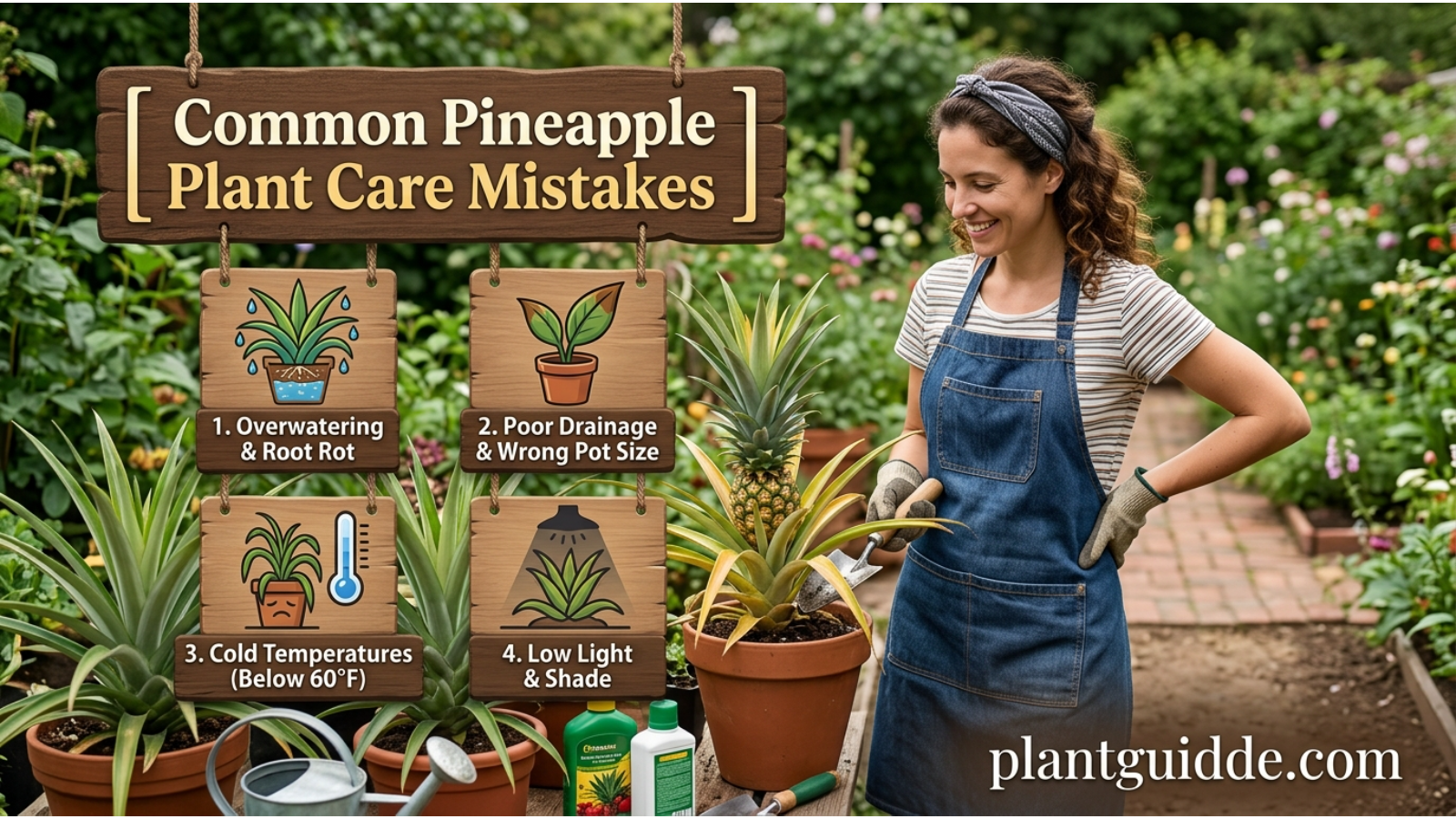
Common Pineapple Plant Care Mistakes
Some of the most damaging mistakes are surprisingly simple.
Watering on a fixed calendar
The plant does not know whether it is Tuesday or Saturday. Soil moisture changes according to light, temperature, pot size, and season.
Better approach: Check the soil before watering.
Keeping the soil permanently wet
Pineapples appreciate moisture but do not need saturated roots.
Better approach: Use porous soil and allow partial drying between thorough waterings.
Keeping the plant in poor light
A pineapple may survive in a dim room, but survival is not the same as vigorous growth or successful fruit production.
Better approach: Give it the brightest suitable location available.
Using a huge decorative pot
Large containers can retain moisture around a relatively small root system.
Better approach: Increase pot size gradually and prioritize drainage.
Fertilizing too aggressively
More fertilizer does not automatically mean faster or better growth.
Better approach: Feed conservatively during active growth and follow the fertilizer label.
Ignoring temperature
Cold conditions can cause significant stress, particularly when the soil remains wet.
Better approach: Keep the plant warm and protect it from cold drafts.
A Simple Weekly Pineapple Plant Care Routine
You do not need to spend much time caring for a pineapple plant.
Once a week, check:
- Soil: Is the upper layer beginning to dry?
- Leaves: Are they firm and healthy-looking?
- Light: Is anything blocking the plant’s usual light?
- Pests: Are there insects, scale, or unusual marks?
- Pot: Is excess water draining freely?
- Temperature: Has the plant been exposed to cold or hot drafts?
This five-minute inspection is often more useful than following a rigid care calendar.
FAQs:
How often should I water a pineapple plant?
Water when the soil has partially dried rather than according to a fixed schedule. Water thoroughly, let excess water drain, and avoid leaving the pot sitting in water.
Does a pineapple plant need full sun?
Pineapple plants prefer strong light and can tolerate direct sunlight when acclimated. Indoors, place the plant near a bright window and increase direct exposure gradually if it has previously been kept in lower light.
Why are the tips of my pineapple plant turning brown?
Brown tips can result from inconsistent moisture, dry conditions, fertilizer salt buildup, intense sunlight, or root stress. Check the soil and recent environmental changes before increasing watering.
Can I grow a pineapple from the leafy top?
Yes. A healthy pineapple crown can be rooted in a well-draining growing medium. Allow the cut end to dry before planting and keep the mix from staying excessively wet while roots develop.
How long does it take for a pineapple plant to produce fruit?
It can take a long time, especially when starting from a grocery-store crown. Fruiting depends on plant maturity and growing conditions, including light, warmth, nutrition, and overall health.
Final Takeaway
The best way to care for a pineapple plant is to give it strong light, warmth, fast-draining soil, sensible watering, and patience. It is much easier to recover from a short period of dryness than from roots that remain saturated for weeks.
If your pineapple is struggling, do not change everything at once. Start with the basics: check the soil moisture, inspect drainage, evaluate the available light, and look for temperature stress. Once those conditions are right, consistent rather than complicated care is usually what keeps a pineapple plant healthy and steadily growing.

Asad Mumtaz is a dedicated plant enthusiast and gardening writer with a passion for helping people care for their plants successfully. He specializes in plant care guides, indoor gardening, and practical growing tips for all skill levels. His content focuses on making gardening simple, enjoyable, and rewarding. Through his work, Asad shares reliable advice to help readers create thriving green spaces.