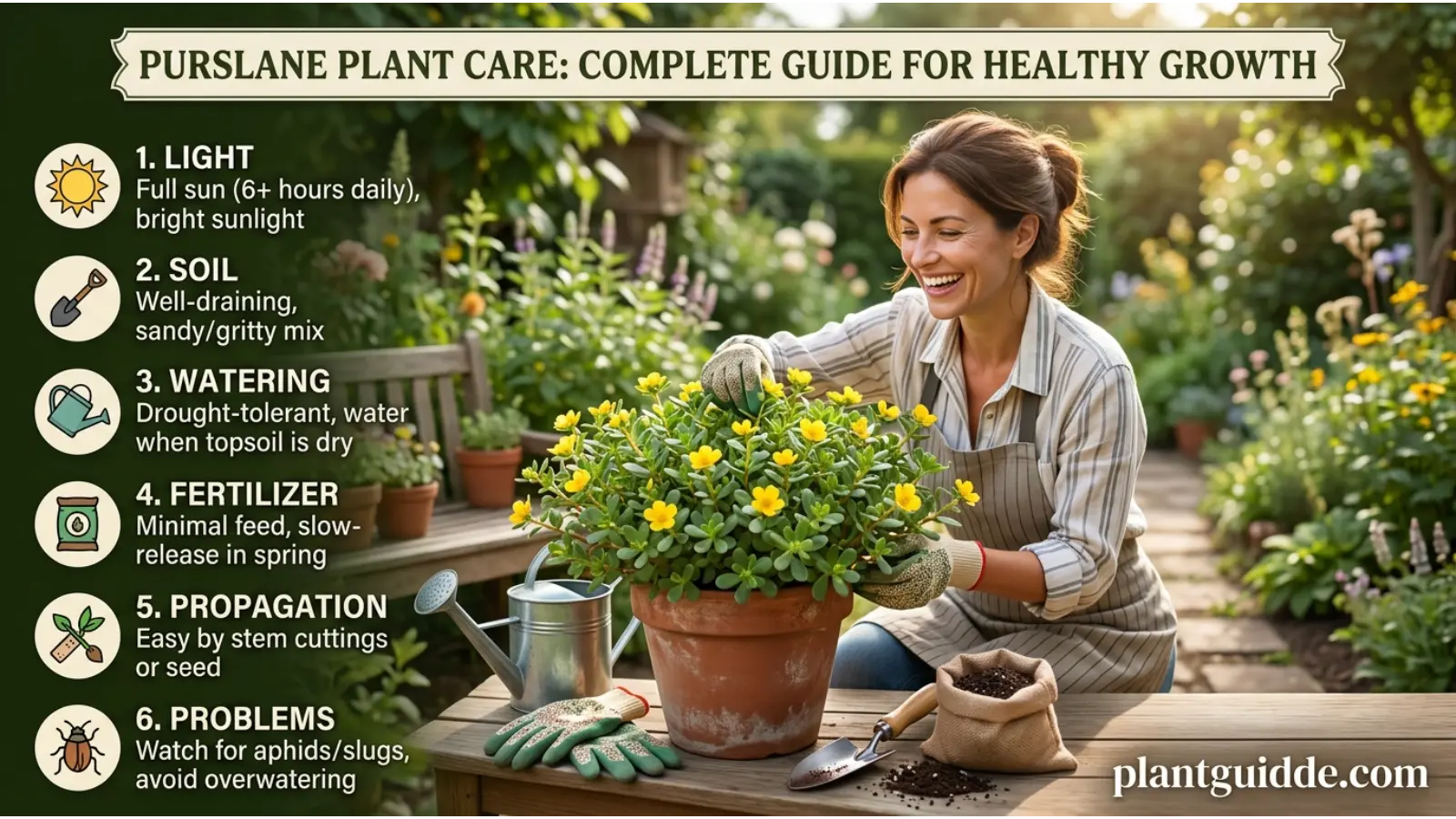
Purslane plant care is one of those plants that can thrive with surprisingly little attention, but that does not mean it grows well under every condition. The biggest mistakes usually involve too much water, poor drainage, or insufficient sunlight. Understanding how purslane stores water in its fleshy leaves and stems makes its needs much easier to manage.
Purslane plant care you are growing purslane in a garden bed, container, hanging basket, or sunny windowsill, good purslane plant care comes down to recreating the warm, bright, relatively dry conditions the plant prefers. With the right setup, it can produce lush succulent foliage and, depending on the type, attractive flowers throughout the warm growing season.
Quick Answer
Purslane plant care is simple when you provide plenty of sunlight, fast-draining soil, and careful watering. Portulaca oleracea is a drought-tolerant succulent that prefers warm conditions and can handle dry soil better than consistently wet roots. Water deeply when the soil has mostly dried, avoid waterlogged containers, and give plants enough space and airflow to reduce problems.
What Is Purslane?
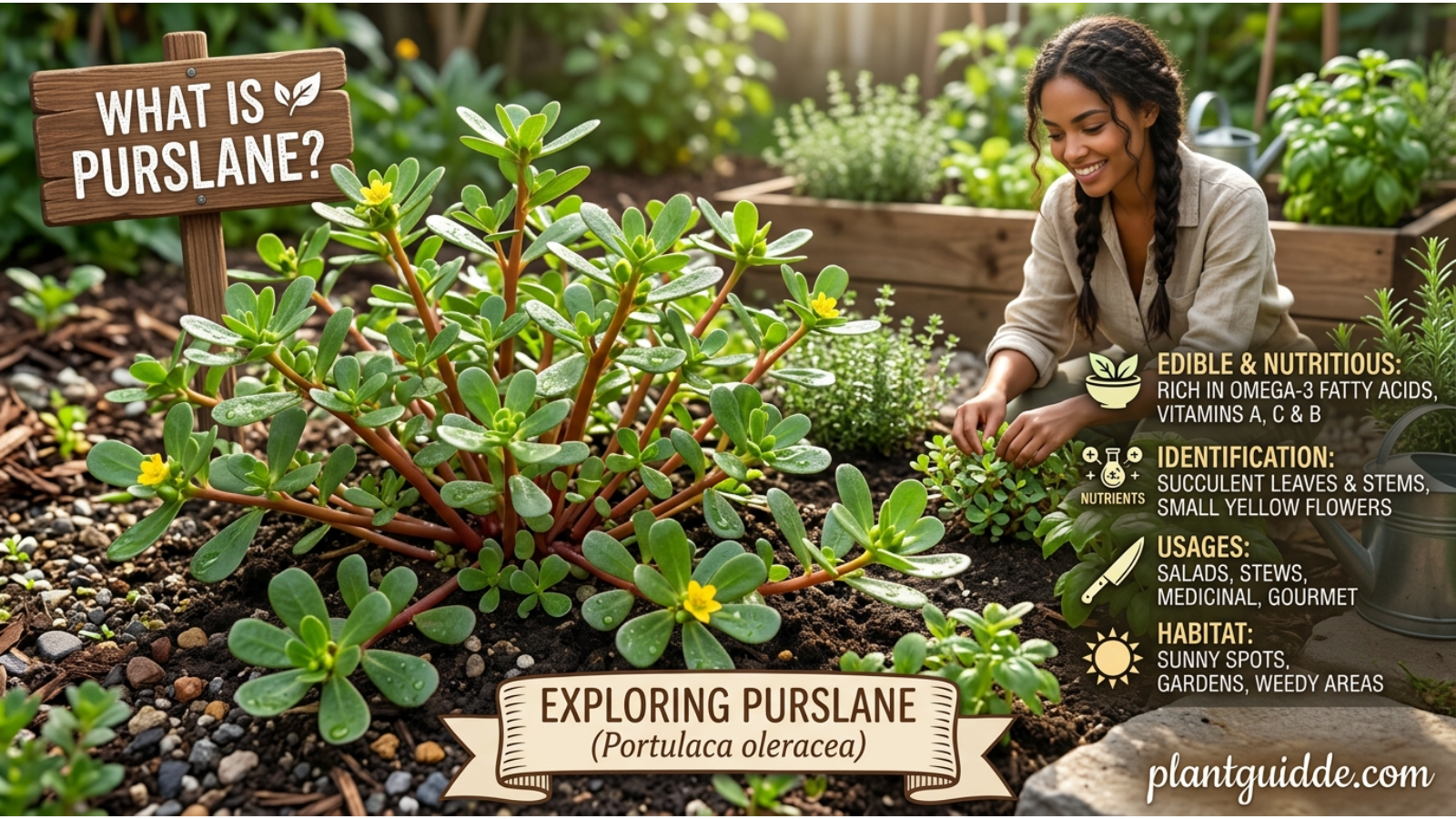
Purslane (Portulaca oleracea) is a low-growing succulent plant known for its fleshy, smooth leaves and reddish, often trailing stems. It is commonly found growing in warm regions and is valued both as an edible plant and as a hardy garden plant.
Its succulent leaves and stems store water, which helps purslane tolerate periods of dryness. This water-storage ability is also why constantly wet soil can become a problem: the plant does not need roots sitting in moisture for long periods.
Purslane should also be distinguished from ornamental flowering purslane varieties such as moss rose (Portulaca grandiflora). They are related and have similar succulent characteristics, but their growth habits and typical uses differ.
Purslane Plant Care Requirements at a Glance
| Care factor | What purslane prefers |
|---|---|
| Light | Full sun, ideally 6+ hours of direct light |
| Soil | Loose, sandy or gritty, very well-draining soil |
| Water | Deep watering followed by drying of the soil |
| Temperature | Warm conditions |
| Humidity | Average outdoor humidity is generally suitable |
| Fertilizer | Light feeding; avoid excessive fertilizer |
| Container | Must have drainage holes |
| Pruning | Optional; useful for controlling sprawling growth |
| Propagation | Seeds or stem cuttings |
| Main problem | Overwatering and poor drainage |
How Much Sunlight Does Purslane Need?
Purslane grows best in full sun. Aim for at least six hours of direct sunlight per day, with more light generally supporting stronger, more compact growth.
Adequate sunlight is especially important if you want vigorous growth and flowering in ornamental varieties. A plant receiving too little light may become elongated, sparse, or less productive.
Signs of insufficient light
Watch for:
- Long, weak stems
- Sparse foliage
- Slow growth
- Reduced flowering
- Plants leaning strongly toward a window
- Pale or less vigorous growth
If your purslane is growing indoors, place it in the brightest available window. A south- or west-facing window can work well where the indoor environment allows sufficient direct sunlight.
When moving a plant from shade to strong sun, increase exposure gradually if it has been growing under low-light conditions. Sudden changes can cause leaf stress or sun damage.
What Soil Is Best for Purslane?
The best soil for purslane is fast-draining and relatively lean rather than heavy and moisture-retentive.
A typical garden soil that stays wet after watering can create problems. For containers, use a well-draining succulent or cactus-style mix, or improve ordinary potting soil with materials that increase drainage and air space.
Good soil should allow excess water to move away from the root zone quickly.
Why drainage matters
Purslane’s drought tolerance sometimes leads gardeners to assume that it can tolerate any soil. It cannot.
A plant may survive dry conditions for quite a while, but roots exposed to continually wet, poorly aerated soil can become stressed and eventually rot.
For container-grown purslane:
- Choose a pot with drainage holes.
- Use a loose, fast-draining growing medium.
- Avoid placing the pot inside a cachepot where drained water remains trapped.
- Empty standing water after heavy watering.
How Often Should You Water Purslane?
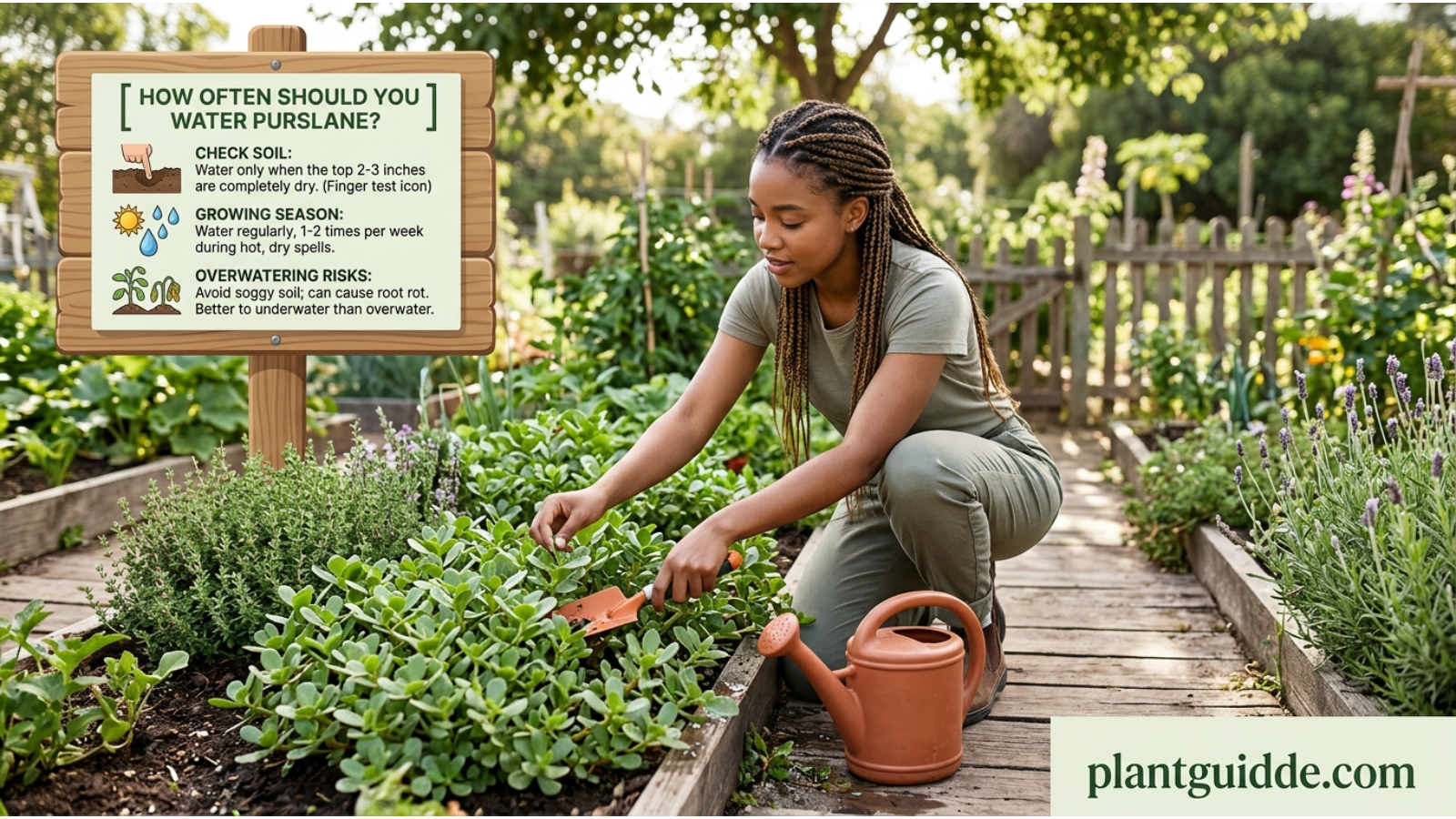
Water purslane when the soil has mostly dried, rather than following a rigid daily or weekly schedule.
The exact frequency depends on temperature, sunlight, container size, soil composition, rainfall, and whether the plant is indoors or outdoors.
During hot, sunny weather, a container may dry considerably faster than a garden plant. Conversely, during cool or rainy periods, watering may need to be reduced substantially.
A practical watering method
Instead of watering according to the calendar:
- Check the soil with your finger.
- If the upper portion has dried and the soil is no longer consistently moist, assess the plant and container.
- Water thoroughly until excess water drains from the bottom.
- Allow the soil to dry again before watering.
The goal is not to keep purslane permanently dry. The goal is to provide water when needed while allowing the root zone to dry between waterings.
How do you know purslane needs water?
Thirst can show up as:
- Slightly limp or less-firm foliage
- Shriveled leaves
- Dry growing medium
- Slower growth during prolonged drought
Do not wait for severe wilting every time. Checking the soil is a better routine than relying exclusively on leaf appearance.
Can You Overwater Purslane?
Yes. Overwatering is one of the most common purslane plant care mistakes.
Because purslane is drought tolerant, frequent watering can be especially counterproductive. The roots need oxygen as well as moisture, and saturated soil reduces the air available around them.
Potential signs of excessive moisture include:
- Yellowing leaves
- Soft or translucent foliage
- Mushy stems
- Sudden leaf drop
- Darkening at the base
- Unpleasant-smelling or deteriorating roots
If the stem base becomes soft and the soil remains wet for long periods, inspect the root system rather than simply adding more water.
Expert tip: If you repeatedly struggle with overwatering, improve the drainage setup before trying to create a more complicated watering schedule.
Does Purslane Need Fertilizer?
Purslane generally does not require heavy feeding.
If the plant is growing in reasonably fertile soil, excessive fertilizer can encourage soft, overly lush growth rather than creating a healthier plant. Container plants may benefit from occasional light feeding because nutrients can become depleted more quickly.
A balanced fertilizer used according to its label can be sufficient during active growth. Avoid repeatedly applying concentrated fertilizer to dry soil, as this can stress roots.
If growth is healthy and foliage looks vigorous, there is usually little reason to increase feeding simply because the plant is growing slowly compared with another species.
What Temperature Does Purslane Prefer?
Purslane is a warm-weather plant and performs best when temperatures are comfortably warm.
Growth slows when conditions become cool, and frost can damage or kill plants. In areas with cold winters, treat purslane as a seasonal plant unless you are growing it indoors or preserving plants through suitable protection.
During extremely hot weather, container plants may dry out quickly. This does not necessarily mean they need constant watering; instead, check the soil and make sure the container is not overheating while the roots remain poorly ventilated.
Does Purslane Need High Humidity?
Usually, no.
Outdoor purslane generally handles normal environmental humidity without requiring the high humidity associated with tropical houseplants. Good airflow is more useful than trying to create a constantly humid environment.
Avoid crowding plants tightly together. Space allows foliage to dry more quickly after rain or watering and can reduce conditions favorable to fungal problems.
How to Grow Purslane in Containers
Purslane is well suited to containers because its shallow, spreading growth habit can be easily managed.
Choose a container with:
- Several drainage holes
- Enough width for spreading growth
- A fast-draining growing medium
- Good exposure to sunlight
A shallow-to-moderately deep container can work well, provided it has enough volume for the plant and does not remain saturated.
Container care tips
Container-grown purslane often needs more frequent observation than garden-grown plants because pots heat up and dry out faster.
Check the soil more often during hot weather, but do not automatically water every time the surface looks slightly dry. Examine the moisture deeper in the container and consider the plant’s overall condition.
How to Prune Purslane
Pruning is not essential for survival, but it can help control sprawling growth and encourage a fuller appearance.
If stems become excessively long, use clean scissors or pruning shears to remove selected sections. Avoid removing too much foliage at once.
The trimmed stems can sometimes be used for propagation, depending on the purslane type and growing conditions.
Regular harvesting of edible purslane can also naturally keep plants compact while encouraging fresh growth.
How to Propagate Purslane
Purslane can be propagated from seeds or stem cuttings.
Propagating from stem cuttings
For a simple cutting method:
- Select a healthy stem.
- Cut a section with several nodes.
- Allow the cut surface to dry briefly if appropriate for the growing conditions.
- Place the cutting in a lightly moist, well-draining growing medium.
- Keep it warm and provide bright light.
- Avoid keeping the medium constantly wet.
Because purslane is succulent, excessive moisture during propagation can cause the cutting to deteriorate rather than root.
Growing purslane from seed
Seeds should be planted in suitable growing conditions with warmth, light, and appropriate moisture. Avoid burying very small seeds deeply; follow the seed supplier’s recommendations for sowing depth.
Once seedlings emerge, provide strong light to prevent weak, stretched growth.
Common Purslane Plant Care Mistakes
Even an easy plant can struggle when its basic needs are misunderstood.
Watering too frequently
Purslane stores water in its leaves and stems. Watering every day without checking the soil can keep roots unnecessarily wet.
Using a pot without drainage
A decorative container may look attractive but can become a serious problem if excess water has nowhere to escape.
Growing it in heavy soil
Dense soil can hold moisture around the roots for too long. Improve drainage or choose a more appropriate growing medium.
Keeping it in too much shade
Purslane may survive reduced light, but survival is not the same as strong, attractive growth. Give it substantially more light when possible.
Overfertilizing
More fertilizer does not automatically mean faster, healthier growth. Purslane generally performs well without heavy feeding.
Ignoring seasonal changes
A watering routine that works during hot summer conditions may be excessive during cool or rainy weather. Adjust watering according to the actual growing environment.
Purslane Problems and How to Fix Them
Why is my purslane turning yellow?
Yellow leaves can have several causes, but consistently wet soil is an important one to investigate first.
Check:
- Whether the soil stays wet for several days
- Whether the container drains properly
- Whether the roots or stem base are soft
- Whether the plant has recently received excessive rainfall
If the soil is constantly wet, reduce watering and correct the drainage problem rather than simply removing yellow leaves.
Why is my purslane wilting?
Wilting can result from insufficient moisture, intense heat, root damage, or other environmental stress.
Check the soil before watering. If it is very dry, provide a thorough watering. If it is already wet and the plant is wilting, adding more water may make the underlying problem worse.
Why is my purslane getting leggy?
Insufficient light is a common cause of stretched growth.
Move the plant toward a brighter location and prune excessively long stems if necessary. Increase direct sunlight gradually when the plant has been growing in shade.
Why are purslane leaves falling off?
Leaf drop can occur after environmental stress, excessive moisture, drought, physical damage, or sudden changes in conditions.
Look at the entire plant rather than diagnosing the problem from leaf drop alone. Check soil moisture, stem firmness, light levels, and recent weather or watering changes.
Why is the base of my purslane turning soft?
A soft or mushy stem base is a warning sign, particularly when the growing medium is wet. This can indicate serious moisture-related damage.
Remove the plant from persistently wet conditions and inspect healthy tissue. If rot has progressed extensively, saving the entire plant may not be possible.
Edible Purslane: An Important Consideration
Common purslane is also known as an edible plant and is used in various cuisines. However, correct plant identification matters before eating any wild or homegrown plant.
Do not assume that every plant sold or described as “purslane” has the same culinary properties. Ornamental Portulaca varieties should not automatically be treated as edible simply because they resemble common purslane.
If you intend to eat purslane, verify the species and growing conditions and avoid plants exposed to pesticides, herbicides, contaminated soil, or other pollutants.
Purslane vs. Moss Rose
Common purslane and moss rose are closely related but are often grown for different purposes.
| Feature | Common purslane | Moss rose |
|---|---|---|
| Botanical name | Portulaca oleracea | Portulaca grandiflora |
| Main use | Edible plant and groundcover | Ornamental flowering plant |
| Foliage | Fleshy, smooth leaves | Succulent, narrow foliage |
| Growth | Low and spreading | Low and spreading |
| Sun | Full sun | Full sun |
| Water needs | Low once established | Low once established |
| Main care concern | Excess moisture | Excess moisture |
Knowing which plant you have helps prevent incorrect expectations about flowers, foliage, and use.
When Is the Best Time to Grow Purslane?
Purslane is best suited to the warm growing season.
Start or transplant it when temperatures are reliably warm and frost is no longer a concern. In warm climates, it may continue growing for much longer than it would in regions with cold winters.
For gardeners in very hot regions, monitor container moisture closely during periods of intense heat. The plant may tolerate drought well, but a small pot can dry much faster than a garden bed.
How to Keep Purslane Healthy Long Term
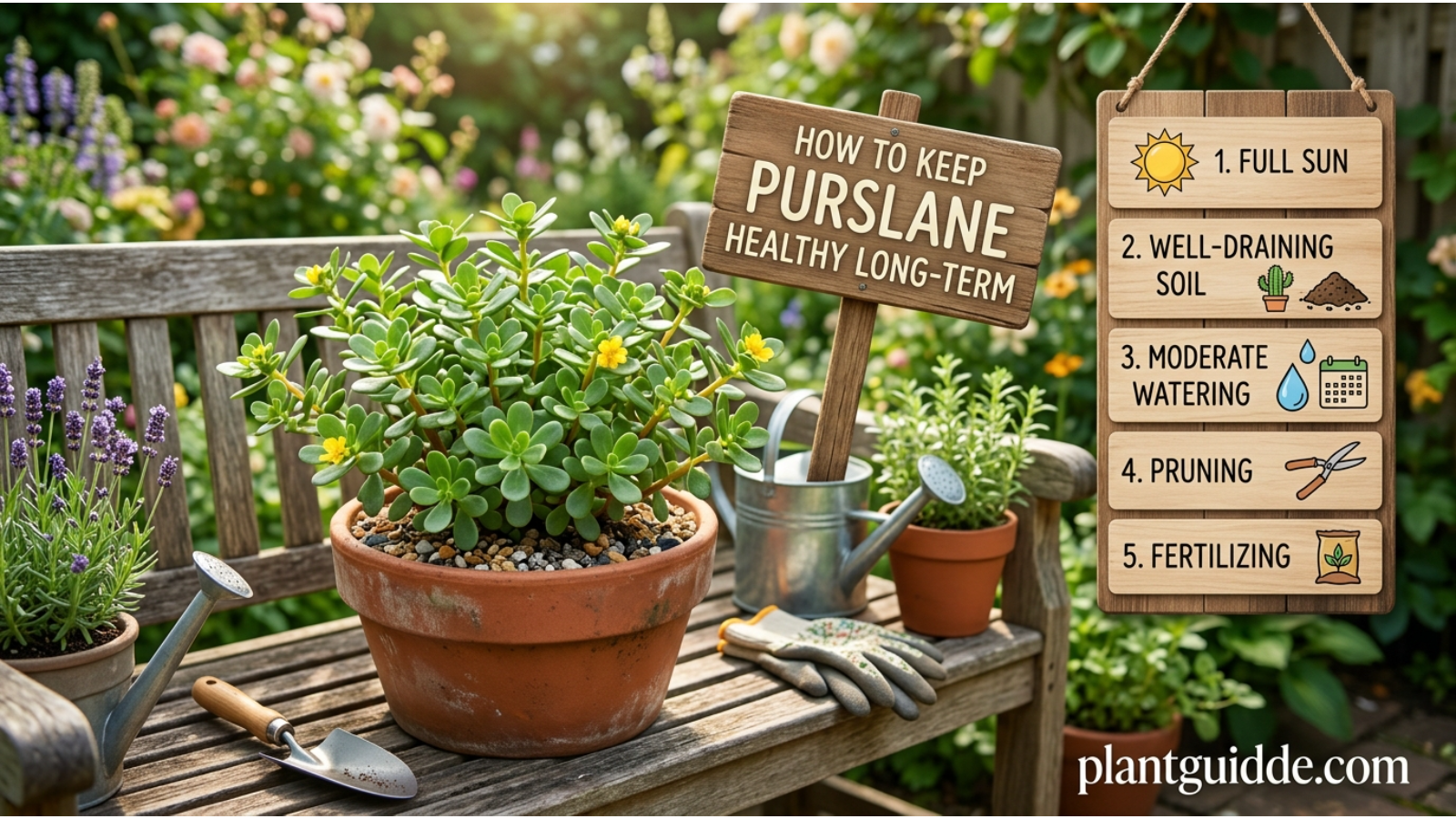
A simple routine is often more effective than constant intervention:
- Give it plenty of direct sunlight.
- Use soil that drains quickly.
- Water thoroughly rather than constantly.
- Let the soil dry between waterings.
- Use containers with drainage holes.
- Avoid excessive fertilizer.
- Prune sprawling stems when necessary.
- Watch for soft stems and persistently wet soil.
- Adjust watering as temperatures and rainfall change.
The most useful habit is to observe the plant and its soil together. A watering schedule written on a calendar cannot account for a heat wave, several rainy days, a new container, or a sudden change in light.
FAQs:
How much sunlight does purslane need?
Purslane prefers full sun and generally grows best with at least six hours of direct sunlight daily. Strong light helps maintain compact growth and supports flowering in ornamental varieties.
How often should you water purslane?
Water when the soil has mostly dried rather than following a fixed schedule. Water thoroughly, allow excess water to drain, and then let the soil dry again before watering.
Can purslane grow indoors?
Yes, purslane can be grown indoors if it receives strong sunlight. Place it in the brightest suitable window and use a container with excellent drainage. Insufficient indoor light can lead to weak, stretched growth.
Why is my purslane turning yellow?
Overwatering and poor drainage are among the first things to check. Examine the soil and roots before increasing watering. Yellowing can also result from other forms of environmental stress, so consider light and temperature as well.
Does purslane come back every year?
It depends on the climate and species. Common purslane can behave as an annual in colder regions but may persist or reseed in warmer climates. Frost can end its outdoor growth in cold areas.
Conclusion
Successful purslane plant care is mostly about giving the plant what it naturally prefers: strong sunlight, warm conditions, fast-draining soil, and periods of dryness between thorough waterings. Its succulent leaves make it well adapted to limited moisture, but they do not protect the roots from problems caused by constantly wet soil.
If you are starting with purslane, focus on three things first: sunlight, drainage, and watering only when needed. Get those basics right, and this low-maintenance plant can provide vigorous growth without demanding constant attention.

Asad Mumtaz is a dedicated plant enthusiast and gardening writer with a passion for helping people care for their plants successfully. He specializes in plant care guides, indoor gardening, and practical growing tips for all skill levels. His content focuses on making gardening simple, enjoyable, and rewarding. Through his work, Asad shares reliable advice to help readers create thriving green spaces.