A peace lily can look almost effortless when it is healthy: glossy green leaves, upright growth, and elegant white spathes that brighten an indoor space. But peace plant care becomes more challenging when the plant suddenly droops, develops brown leaf tips, turns yellow, or refuses to flower.
The good news is that these symptoms are usually clues rather than mysteries. Peace lilies communicate their growing conditions through their leaves. A dramatically wilted plant may simply need water, while persistent yellowing with wet soil can point toward a completely different problem, poor drainage or overwatering.
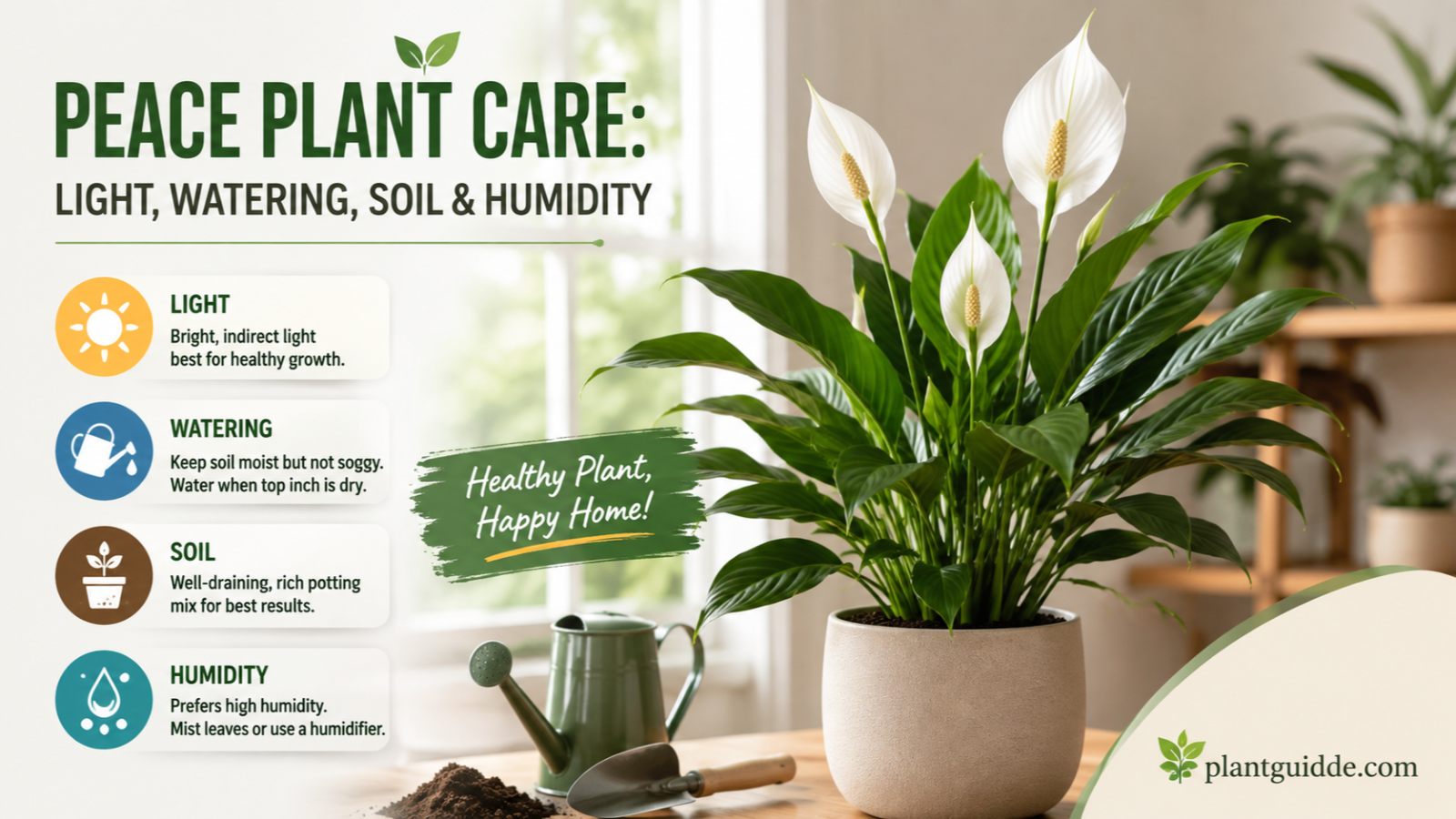
The key is not to follow a rigid watering calendar. Instead, learn to read the soil, light, pot, and leaves together. Peace lilies prefer indirect light, consistent moisture without waterlogging, warmth, and moderate humidity.
Quick Answer
For successful peace plant care, place your peace lily in bright, indirect light, use a loose, well-draining potting mix, and water thoroughly when the top inch of soil begins to dry. Keep the plant warm, provide moderate humidity, and never leave its roots sitting in water. Feed lightly during active growth and protect it from harsh direct sun, cold drafts, and overwatering.
What Is a Peace Lily?
The peace lily belongs to the genus Spathiphyllum in the arum family, Araceae. Although it is commonly called a lily, it is not a true lily.
Its most recognizable feature is the white structure people often call the flower. Botanically, the white “petal” is a spathe, a modified leaf surrounding the small central spadix.
Peace lilies are tropical plants adapted to the filtered light of forest understories. That explains an important part of their indoor behavior: they can tolerate relatively low light, but they generally perform and flower better when given brighter indirect light.
Image Suggestion: Close-up botanical illustration labeling the peace lily’s leaves, spathe, spadix, stems, and root system.
Peace Plant Care Requirements at a Glance
| Care factor | Best approach |
|---|---|
| Light | Bright, indirect light |
| Water | Water when the top inch of soil begins to dry |
| Soil | Moisture-retentive but well-draining mix |
| Humidity | Moderate to higher humidity is beneficial |
| Temperature | About 65–80°F (18–27°C) |
| Fertilizer | Light feeding during active growth |
| Pot | Drainage holes are essential |
| Repotting | When roots become crowded or drainage declines |
| Pruning | Remove yellow, brown, or spent growth |
| Pet safety | Toxic if chewed or eaten by cats and dogs |
These conditions reflect guidance from horticultural and extension sources, although individual plants can vary with pot size, soil, light exposure, and indoor climate.
Give Your Peace Lily the Right Light
Light is one of the most important parts of peace plant care because it influences both growth and flowering.
Best light
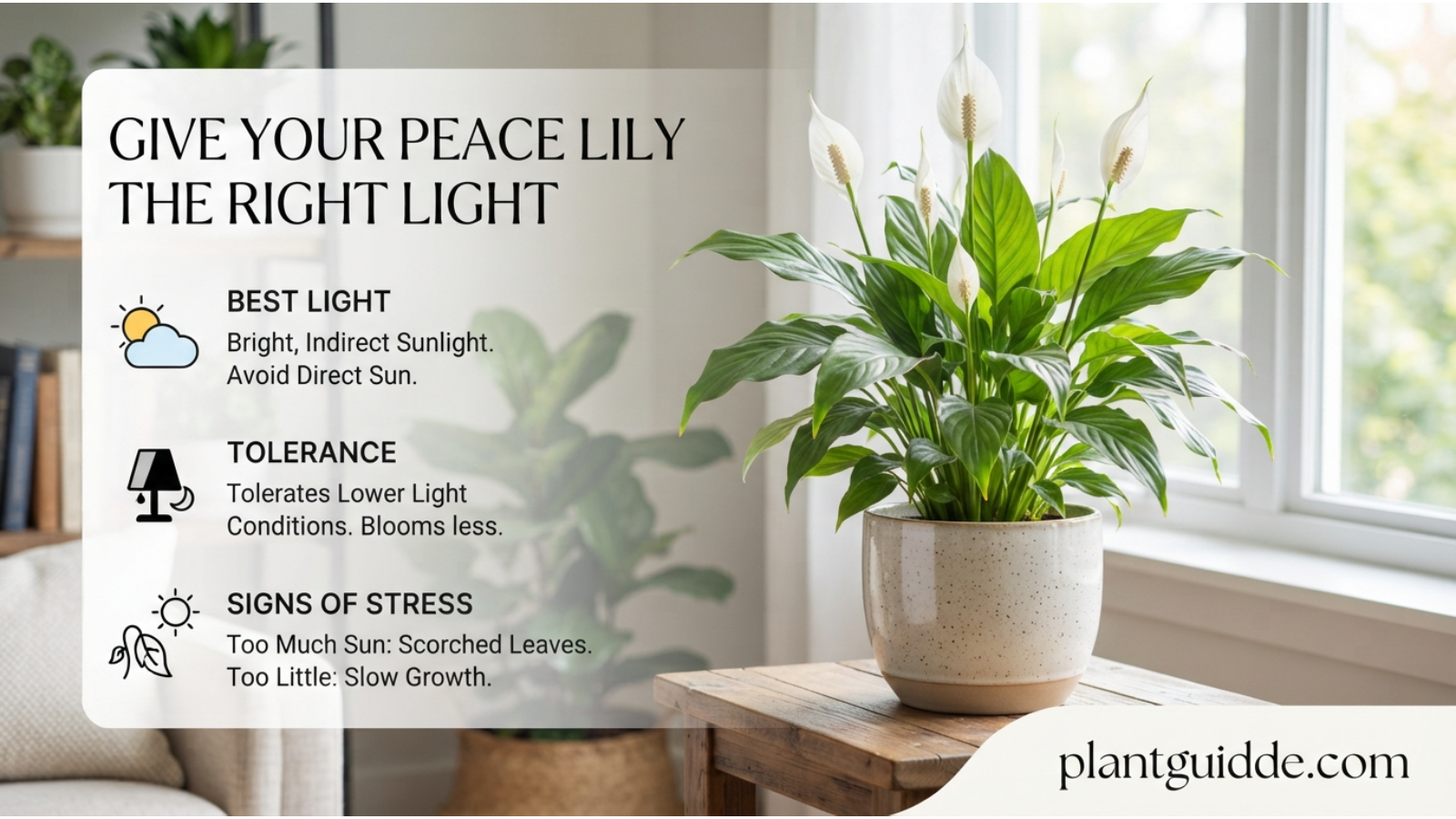
Place the plant where it receives bright, indirect or filtered light. An east-facing window can work particularly well, while a bright room near a south- or west-facing window may also work if direct sunlight is filtered.
Peace lilies tolerate lower light, but there is a trade-off: growth can become slower and flowering may decrease. Direct, intense sunlight can scorch the leaves.
Signs the light is wrong
Too much light:
- Brown or bleached patches
- Scorched-looking leaves
- Faded foliage
- Crispy edges
Too little light:
- Very slow growth
- Few or no flowers
- Smaller new leaves
- Long, weak-looking growth
Practical tip
Don’t move a struggling peace lily immediately from a dark corner into strong sunlight. Increase its light gradually by moving it closer to a bright window while keeping harsh direct rays off the foliage.
Image Suggestion: Peace lily positioned correctly near a bright window, showing filtered sunlight versus harsh direct sunlight.
How to Water a Peace Lily Correctly
Watering is where many beginners make mistakes.
Peace lilies like moisture, but moist soil does not mean permanently wet soil. Their roots still need oxygen, and constantly saturated soil can encourage root problems. University of Florida guidance specifically recommends keeping Spathiphyllum moist without allowing it to sit in water.
The simple watering method
- Check the top inch of soil with your finger.
- If it has started to dry, water the plant thoroughly.
- Allow excess water to drain through the bottom.
- Empty the saucer or cachepot.
- Wait until the upper layer dries again before watering.
This is more reliable than saying “water every seven days,” because indoor conditions vary considerably.
A plant in bright light may dry faster than one in a dim room. Pot size, soil composition, temperature, humidity, and root density also change how quickly moisture disappears.
One of the best peace lily clues
Peace lilies are famous for dramatic drooping when thirsty.
That doesn’t mean you should deliberately let the plant collapse every time. Instead, use the droop as an additional signal alongside the soil.
If the leaves are drooping and the soil is dry: watering is likely needed.
If the leaves are drooping but the soil is already wet: don’t automatically add more water. Investigate drainage, root health, temperature, and light first.
Choose a Well-Draining Soil Mix
The ideal peace lily soil needs to accomplish two things at once:
- Hold enough moisture for the roots.
- Allow excess water and air to move through the pot.
A dense mix that remains wet for too long can create root problems. A very sandy mix that dries immediately can make consistent watering difficult.
A practical starting mix is a quality indoor potting mix amended with material such as perlite or fine bark to improve drainage and aeration. RHS recommends improving drainage and avoiding excessively large pots because oversized containers can remain wet for too long.
Avoid this common mistake
Don’t assume that adding a huge amount of drainage material automatically makes poor watering harmless. Pot size, soil structure, watering volume, and drainage holes all work together.
Best rule: choose a loose mix and a container with drainage holes rather than trying to compensate for poor drainage later.
Maintain the Right Humidity
Peace lilies come from tropical environments, so they appreciate humid air.
However, you don’t need to turn your entire home into a greenhouse.
Moderate household humidity can be workable, while higher humidity can help reduce crispy leaf edges and improve overall comfort for the plant. Bathrooms with suitable indirect light can be naturally favorable locations.
If your air is very dry
Consider:
- A room humidifier
- Grouping plants together
- Moving the plant away from heating vents
- Keeping it away from strong drafts
A pebble tray may increase humidity immediately around the plant somewhat, but it should not leave the pot sitting directly in water.
What about misting?
Misting can temporarily wet the foliage, but it is not a substitute for maintaining appropriate room humidity or correcting an overly dry environment.
Keep Temperatures Stable
Peace lilies prefer warm indoor conditions and dislike cold drafts.
A practical target is approximately 65–80°F (18–27°C). Avoid prolonged exposure to temperatures around 55°F (13°C) or below.
Keep your plant away from:
- Cold exterior doors
- Drafty windows
- Air-conditioning vents
- Space heaters
- Hot radiators
A stable location is usually better than repeatedly moving the plant between dramatically different environments.
Fertilize Without Overdoing It
Peace lilies don’t need heavy feeding.
During active growth, a balanced houseplant fertilizer used at a reduced strength can support healthy foliage and flowering. The important point is moderation.
Too much fertilizer can contribute to salt accumulation and root stress.
A practical approach
Feed lightly during spring and summer when the plant is actively growing. Reduce or stop routine feeding when growth slows significantly.
If you notice brown leaf tips accompanied by fertilizer residue or crusty material on the soil surface, consider whether excess salts are contributing to the problem.
How to Encourage More Peace Lily Flowers
One of the most common complaints is:
“My peace lily grows leaves but won’t flower.”
The first thing to examine is light.
Peace lilies can survive in relatively low light, but surviving is not the same as producing abundant flowers. Brighter indirect light generally provides better conditions for flowering.
Before adding more fertilizer, check:
- Is the plant receiving enough indirect light?
- Is it growing actively?
- Is the pot extremely rootbound?
- Are you overwatering?
- Is the plant exposed to cold drafts?
- Has the plant recently been stressed or repotted?
Expert tip: More fertilizer is not the automatic answer to a non-flowering peace lily. If light is inadequate, additional fertilizer won’t solve the underlying problem.
Image Suggestion: Side-by-side comparison of a peace lily in low light with foliage growth versus one receiving bright indirect light with healthy spathes.
How to Prune a Peace Lily
Pruning is simple and mainly involves removing damaged or spent growth.
Use clean, sharp scissors or pruning shears.
Remove:
- Completely yellow leaves
- Brown, dead leaves
- Severely damaged foliage
- Spent flower stalks
Cut the stem close to its base rather than leaving a long dead stalk.
Don’t remove healthy green leaves simply because they are older. They still contribute to photosynthesis and support the plant.
Repotting a Peace Lily
Peace lilies can become rootbound over time.
Signs that repotting may be appropriate include:
- Roots emerging from drainage holes
- Roots circling heavily inside the container
- Water passing through unusually quickly
- Soil drying much faster than before
- The plant becoming unstable or crowded
Choose a container only slightly larger than the existing one. A dramatically oversized pot can hold excess moisture around the roots for too long.
Repotting steps
- Water lightly if the soil is extremely dry.
- Gently remove the plant from its container.
- Inspect the roots.
- Remove obviously damaged or rotten material with clean tools.
- Place it into fresh, well-draining potting mix.
- Water thoroughly.
- Return it to bright, indirect light.
Expect some temporary adjustment after repotting.
Peace Lily Problems: What the Leaves Are Telling You
One of the most useful skills in peace plant care is learning to diagnose symptoms instead of treating every problem with more water.
| Symptom | Likely causes | What to check first |
|---|---|---|
| Drooping + dry soil | Underwatering | Water thoroughly |
| Drooping + wet soil | Root stress, poor drainage | Check roots and drainage |
| Yellow leaves + wet soil | Overwatering | Let mix dry appropriately; inspect roots |
| Brown crispy tips | Dry air, inconsistent moisture, salts | Check humidity and watering |
| Bleached/brown patches | Excess direct sun | Move to filtered light |
| No flowers | Insufficient light or stress | Improve indirect light |
| Slow growth | Low light, cold, root issues | Check location and roots |
| Soft/mushy roots | Root rot | Improve drainage and remove damaged roots |
Symptoms can overlap, so don’t diagnose based on one leaf alone.
Why Are My Peace Lily Leaves Turning Yellow?
Yellow leaves are one of the most common peace lily problems.
A single older leaf turning yellow can simply be part of the plant’s normal aging process. But widespread yellowing deserves closer attention.
Check the soil first
If the soil stays wet for long periods and several leaves are turning yellow, overwatering or poor drainage becomes more likely.
If the soil is extremely dry and the plant is repeatedly wilting, underwatering may be involved.
The important lesson is:
Don’t treat yellow leaves by automatically adding or removing water. Check the soil and growing conditions first.
Why Are Peace Lily Leaf Tips Turning Brown?
Brown tips can have several causes, including:
- Dry indoor air
- Inconsistent watering
- Excess fertilizer salts
- Water-quality issues
- Root stress
RHS notes that very dry air can contribute to leaf browning, while other horticultural guidance emphasizes avoiding excessive fertilizer and maintaining appropriate moisture.
What to do
Start with the simplest checks:
- Feel the soil.
- Check room humidity.
- Look for fertilizer buildup.
- Make sure the pot drains freely.
- Check whether the plant is exposed to strong sun or hot air.
Don’t cut off healthy portions of leaves just to make the plant look perfect. Trim damaged edges for appearance, but fix the underlying condition.
Why Is My Peace Lily Drooping?
Drooping is particularly useful because peace lilies can react dramatically to water shortage.
Dry soil + drooping
Water thoroughly until excess drains from the pot.
Wet soil + drooping
This is different.
If the plant is repeatedly drooping despite wet soil, adding more water can make the situation worse. Check:
- Drainage holes
- Soil compactness
- Root condition
- Pot size
- Temperature
- Recent watering frequency
This distinction prevents one of the most common beginner mistakes: using water as the solution to every peace lily problem.
Common Peace Plant Care Mistakes
1. Watering on a fixed schedule
“Every Sunday” might work temporarily, but plant water requirements change.
Better: check the soil.
2. Keeping the soil constantly soaked
Peace lilies like moisture, but roots also require oxygen.
Better: maintain moisture without waterlogging.
3. Putting the plant in harsh sunlight
A bright window doesn’t automatically mean direct sun is beneficial.
Better: use filtered or indirect light.
4. Using an oversized pot
More soil means more moisture retention.
Better: increase pot size gradually when repotting.
5. Fertilizing a stressed plant heavily
More nutrients won’t fix poor light, root problems, or bad watering.
Better: solve the environmental problem first.
6. Ignoring drainage
A beautiful decorative pot is not enough if water has nowhere to escape.
Better: use a nursery pot or container with drainage holes.
Seasonal Peace Plant Care
Spring and Summer
Growth is usually more active, so the plant may use water faster.
- Check soil more frequently.
- Provide bright indirect light.
- Feed moderately during active growth.
- Watch for overheating near windows.
Fall and Winter
Growth often slows.
- Check the soil before watering.
- Avoid placing the plant next to heaters.
- Protect it from cold windows and drafts.
- Reduce fertilizer when growth slows.
The biggest mistake is keeping the exact same watering routine all year regardless of changes in light and temperature.
Is a Peace Lily Safe Around Pets?
This is an important part of responsible peace plant care.
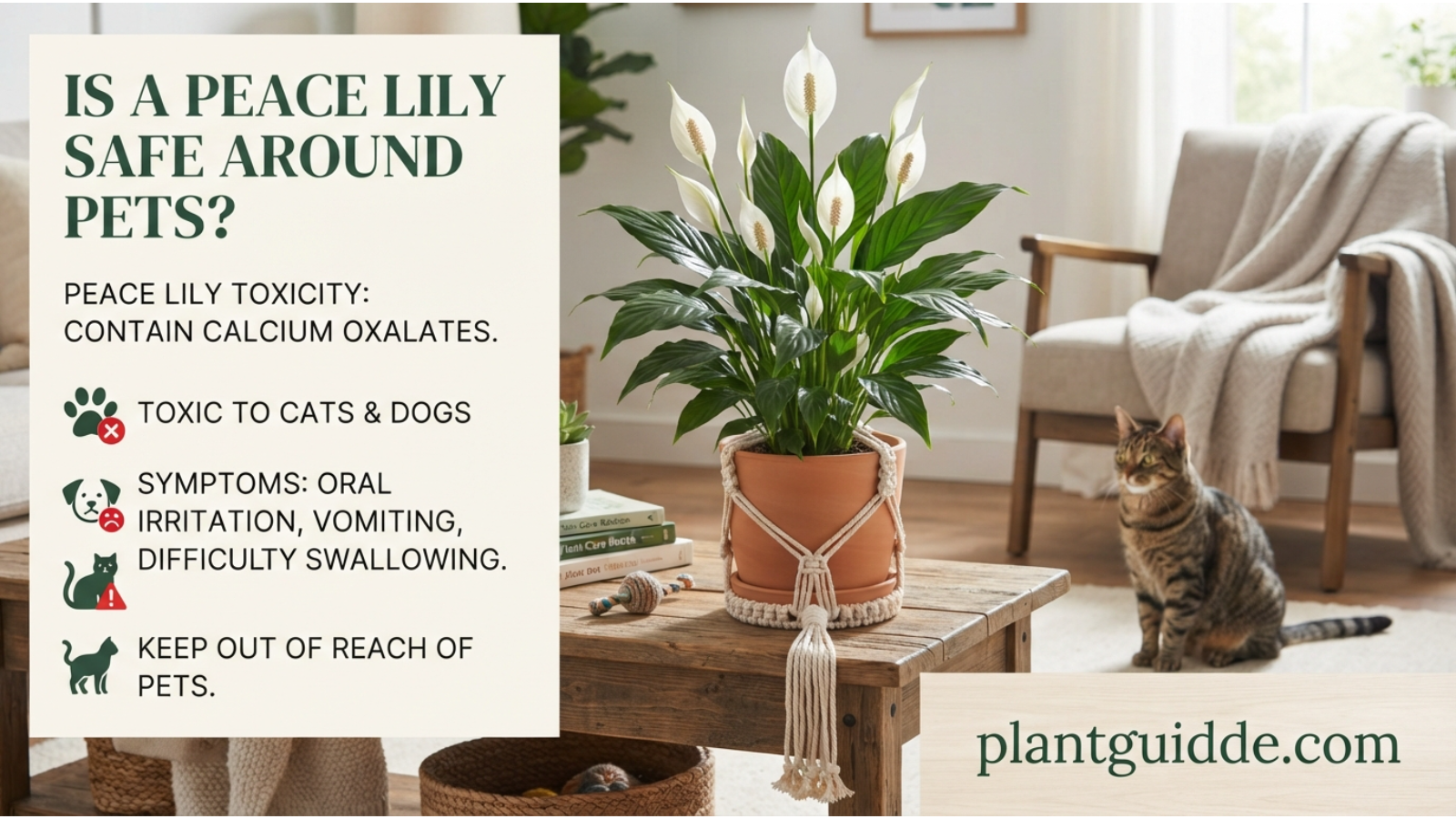
The ASPCA lists peace lily (Spathiphyllum) as toxic to cats and dogs because it contains insoluble calcium oxalates. Chewing or ingesting the plant can cause oral irritation, drooling, vomiting, and difficulty swallowing.
Keep peace lilies where pets and children cannot chew the leaves.
Also note that a peace lily is not the same plant as the highly dangerous true lilies associated with severe kidney injury in cats. Nevertheless, peace lilies should still be kept away from pets because ingestion can cause significant irritation.
A Simple Weekly Peace Lily Check
You don’t need a complicated plant-care routine.
Once or twice a week, quickly inspect:
1. Soil: Is the top inch beginning to dry?
2. Leaves: Are they firm, green, and free of new damage?
3. Light: Has the plant been receiving indirect light?
4. Pot: Is water draining freely?
5. Environment: Is the plant near a heater, AC vent, or cold draft?
6. Growth: Is there new foliage or flowering activity?
This five-minute inspection is often more useful than following a rigid watering app or calendar.
The Best Peace Plant Care Routine for Beginners
If you want the simplest routine possible, remember these six rules:
- Bright indirect light rather than harsh direct sun.
- Water when the upper soil begins to dry, not simply because the calendar says so.
- Drain excess water completely.
- Use an airy, well-draining potting mix.
- Keep temperatures stable and reasonably warm.
- Watch the leaves and soil together instead of treating symptoms blindly.
Once these fundamentals are right, peace lilies are generally much easier to manage.
FAQs,
How often should I water a peace lily?
There is no universal schedule. Check the soil and water when the top inch begins to dry. The interval depends on light, temperature, pot size, soil, and plant size.
Does a peace lily need direct sunlight?
No. Bright, indirect light is generally preferable. Direct intense sunlight can scorch the foliage, while very low light can reduce growth and flowering.
Why is my peace lily drooping after watering?
If the soil is still wet, don’t immediately water again. Persistent drooping in wet soil can indicate poor drainage or root stress rather than thirst.
How do I get my peace lily to bloom?
Start by providing brighter indirect light. Low light can keep the plant alive while limiting flowering. Also check watering, temperature, root health, and overall stress before increasing fertilizer.
Should I mist my peace lily?
Misting can temporarily wet the leaves but isn’t a replacement for appropriate room humidity. If the air is consistently dry, improving the surrounding humidity is a more reliable approach.
Can peace lilies grow in low light?
Yes, they can tolerate lower light, but growth and flowering are usually better in bright indirect light.
Why are my peace lily leaves turning brown?
Dry air, inconsistent watering, fertilizer salts, water-quality issues, direct sun, and root stress can all contribute. Check the soil and environment before deciding on a solution.
Are peace lilies poisonous to cats?
Yes. The ASPCA identifies peace lily as toxic to cats and dogs because of insoluble calcium oxalates.
Conclusion
Successful peace plant care is less about following a perfect schedule and more about understanding what the plant is telling you. Give your peace lily bright indirect light, moisture without soggy soil, good drainage, warm temperatures, and reasonable humidity. When something goes wrong, inspect the soil and environment before reaching for fertilizer or watering again.
The most useful habit is simple: look at the soil, then look at the leaves, and consider both together. That small change in approach can prevent overwatering, improve flowering, and make peace lily care much easier for beginners and experienced houseplant growers alike.

Asad Mumtaz is a dedicated plant enthusiast and gardening writer with a passion for helping people care for their plants successfully. He specializes in plant care guides, indoor gardening, and practical growing tips for all skill levels. His content focuses on making gardening simple, enjoyable, and rewarding. Through his work, Asad shares reliable advice to help readers create thriving green spaces.