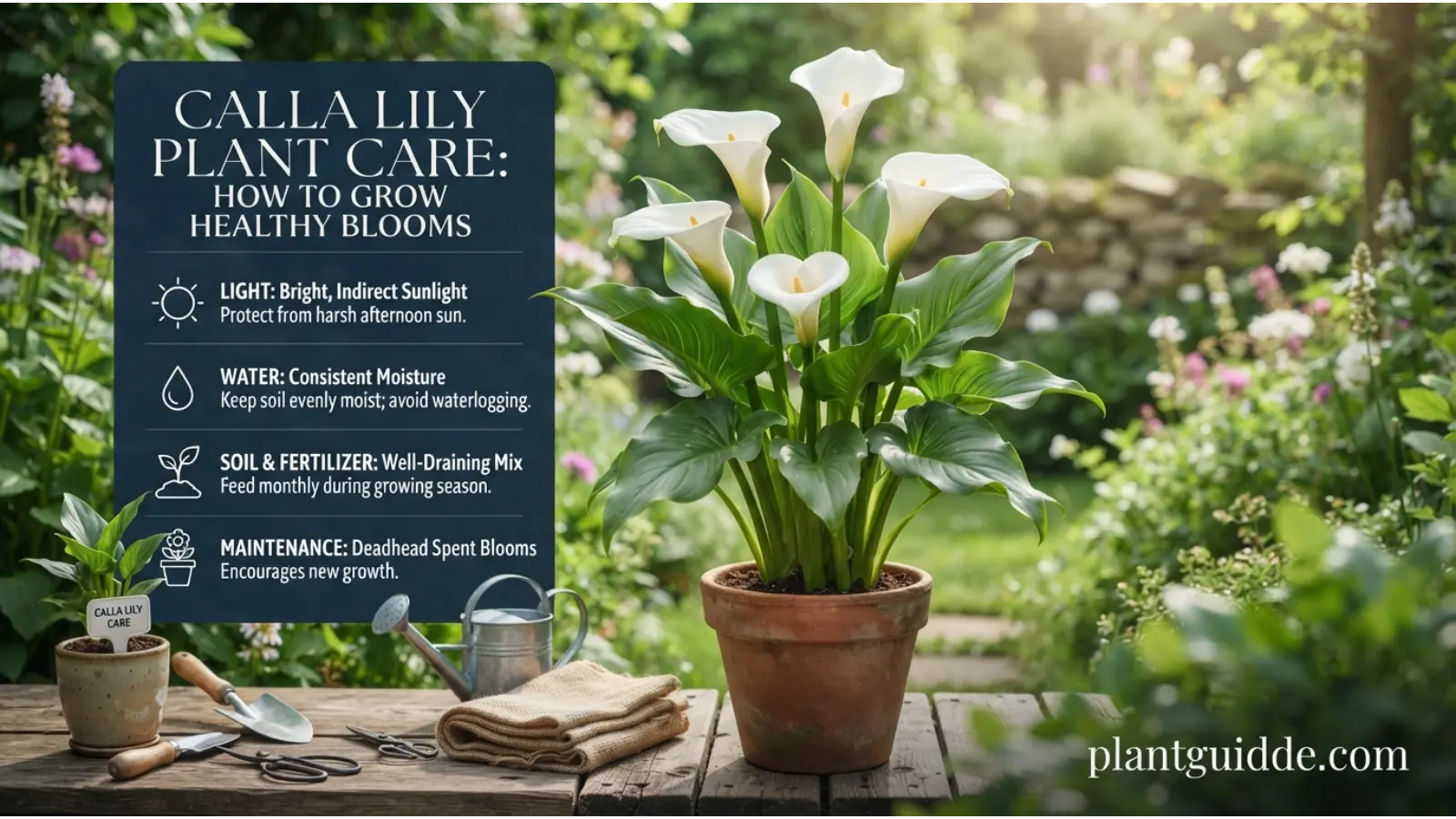
Calla lily plant care lilies are known for their elegant, trumpet-shaped flowers and attractive foliage, but their care is slightly different from that of ordinary houseplants. The biggest problems usually begin when watering, light, temperature, or dormancy needs are misunderstood.
Good calla lily plant care is less about following a rigid watering schedule and more about observing the plant and its growing conditions.
A calla lily receiving strong light in a warm room may need water much sooner than one growing in a cooler, darker location. Learning to recognize these differences makes it much easier to maintain healthy foliage and encourage reliable flowering.
Quick Answer
Calla lily plant care depends on bright light, consistently moist but well-drained soil, moderate humidity, and suitable temperatures. Water when the soil surface begins to dry, avoid letting the roots sit in water, and provide regular feeding during active growth. After flowering, care changes depending on whether you are growing the plant as an indoor perennial, seasonal container plant, or garden plant.
Understanding Calla Lilies Before You Start
Calla lilies belong to the genus Zantedeschia. Despite the common name, they are not true lilies. Different calla types also have somewhat different growing habits.
The familiar white calla lily, Zantedeschia aethiopica, can behave differently from many colorful hybrid callas. Some colorful varieties are often grown as seasonal container or garden plants, while Z. aethiopica can remain actively growing for longer periods under suitable conditions.
This distinction matters because a calla lily that naturally enters dormancy should not be treated as though declining foliage automatically means the plant is dying.
The colored structure commonly mistaken for the flower is actually a spathe, a modified leaf surrounding the small true flowers on the central spadix.
Calla Lily Light Requirements
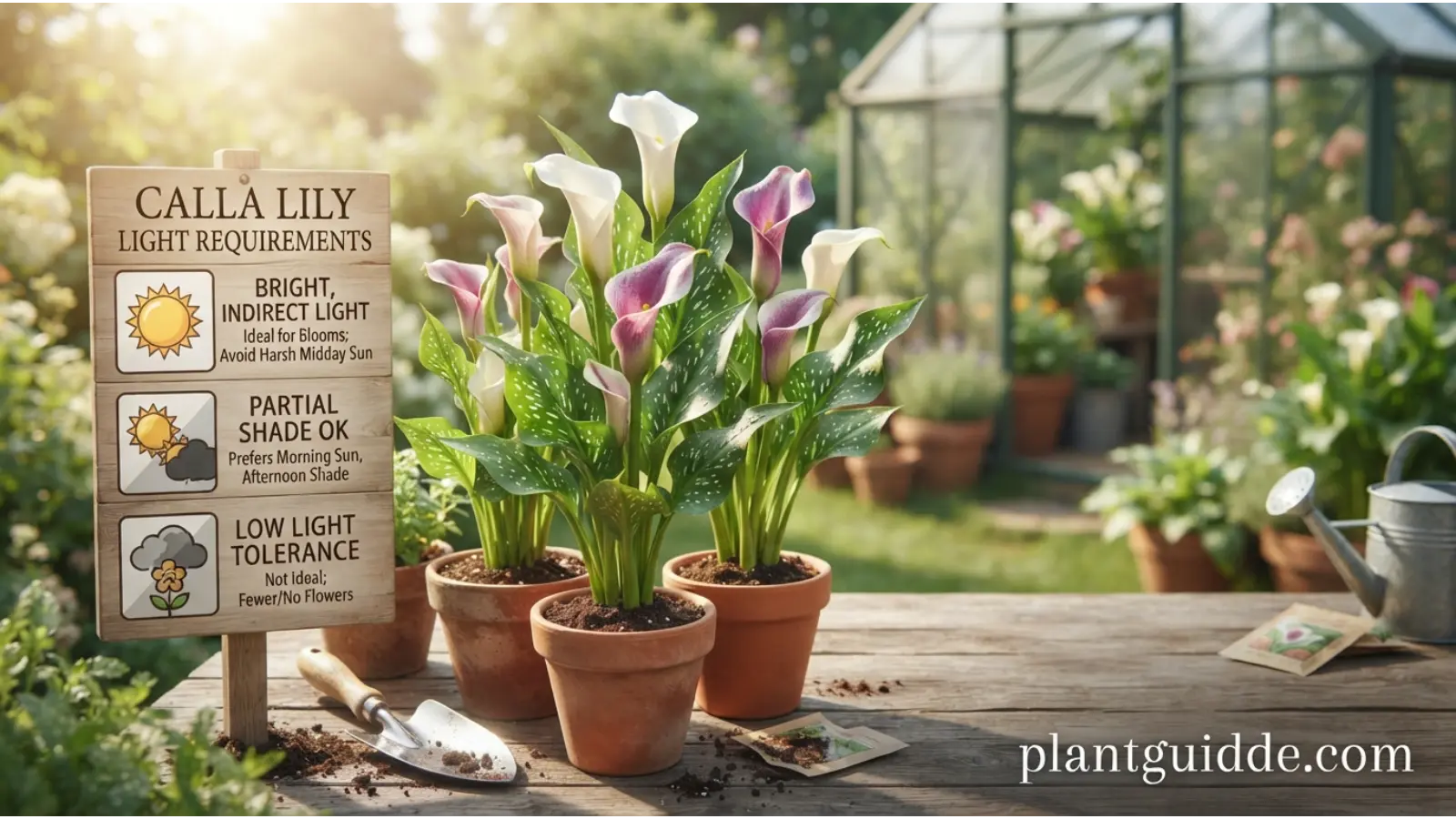
Calla lilies grow best with plenty of light, but the ideal intensity depends on the growing environment and climate.
For indoor plants, place a calla lily near a bright window where it receives strong indirect light. Gentle morning sun can be beneficial, while intense afternoon sunlight through hot glass may scorch foliage.
Outdoor calla lilies can generally tolerate more direct sun when temperatures are moderate. In very hot climates, some afternoon protection can prevent excessive heat stress and leaf scorching.
Signs of insufficient light may include:
- Weak or stretched growth
- Fewer flowers
- Smaller or less vigorous leaves
- Plants leaning toward the window
- Slow development
Calla lily plant care your calla lily produces attractive leaves but rarely flowers, inadequate light is one of the first growing conditions worth checking.
Practical tip: Increase light gradually when moving a plant from a dim indoor location to direct outdoor sunlight. A sudden change can cause leaf scorch even when the final location is appropriate.
How Often Should You Water a Calla Lily?
Calla lilies generally prefer more consistent moisture than drought-tolerant plants such as snake plants or jade plants. However, consistently wet, oxygen-poor soil can damage the roots.
Instead of watering on a fixed calendar, check the soil.
Water when the upper portion of the soil has begun to dry while deeper soil still retains some moisture. Then water thoroughly until excess water drains from the bottom of the container.
Avoid allowing the pot to remain in a saucer filled with standing water.
During active growth, flowering, and warm weather, a calla lily may use water quickly. In cooler conditions or during dormancy, its water requirement can drop considerably.
Signs of watering problems
Too little water may cause:
- Drooping leaves
- Dry or curling foliage
- Rapid wilting
- Dry soil pulling away from the container
Too much water may cause:
- Yellowing leaves
- Soft or declining foliage
- Persistently wet soil
- Unpleasant-smelling roots or soil
- Root deterioration
A drooping plant does not automatically mean it needs more water. Always check the soil before adding more.
Choosing the Right Soil and Pot
The best soil for calla lilies holds moisture without becoming stagnant.
A useful container mix should be:
- Moisture-retentive
- Nutrient-rich
- Loose enough for air movement around the roots
- Well drained
A general high-quality potting mix amended with material that improves drainage and structure can work well.
The container itself should have drainage holes. Decorative pots without drainage can become particularly problematic because excess water has nowhere to escape.
Why drainage matters
Calla lilies appreciate moisture, but their roots still require oxygen. When soil remains saturated for long periods, air spaces become filled with water and roots can begin to decline.
This is one reason a plant can appear thirsty even when its soil is constantly wet. Damaged roots cannot function normally, so adding still more water only makes the underlying problem worse.
Temperature and Humidity for Calla Lilies
Calla lilies generally perform best in mild to warm growing conditions rather than extreme heat or cold.
Protect container-grown plants from:
- Freezing temperatures
- Cold drafts
- Sudden temperature changes
- Extremely hot, dry conditions
Average household humidity is often adequate if watering and soil moisture are managed correctly. You do not necessarily need to create a highly humid environment simply because calla lilies have attractive tropical-looking foliage.
Calla lily plant care indoor air is very dry, especially near heating or cooling equipment, leaf edges may become stressed. Moving the plant away from direct blasts of hot or cold air can often help more than constantly misting the leaves.
How to Fertilize a Calla Lily
Calla lilies benefit from nutrients during active growth, particularly when producing foliage and flowers.
A balanced fertilizer used according to its label directions is generally sufficient for container-grown plants. Avoid assuming that more fertilizer will produce more flowers. Excess fertilizer can accumulate in the soil and damage roots.
During active growth:
- Water the plant appropriately.
- Apply fertilizer at the recommended dilution and frequency.
- Avoid repeatedly increasing the dose because growth seems slow.
- Reduce or stop feeding when the plant enters dormancy.
A plant struggling because of poor light, damaged roots, or inappropriate watering will not necessarily improve simply because more fertilizer is added.
How to Encourage Calla Lily Blooms
Getting calla lilies to flower consistently is largely about providing the conditions that support healthy growth before flowering begins.
Focus on these fundamentals:
- Give the plant sufficient light.
- Maintain appropriate soil moisture.
- Use well-draining soil.
- Avoid excessive nitrogen fertilizer.
- Keep temperatures within a suitable range.
- Do not disturb the roots unnecessarily.
- Allow the plant to complete its natural growth cycle.
Calla lily plant care a calla lily has lots of foliage but no flowers, look at the entire growing environment rather than immediately changing fertilizer.
Insufficient light is a common reason for weak flowering, but an inappropriate dormancy cycle, immature plant, poor root health, or stressful growing conditions can also contribute.
What to Do After Calla Lily Flowers Fade
After flowering, the plant may still need care because its foliage can continue supporting the underground storage structures.
Do not immediately remove every green leaf simply because the flowers have finished.
Instead:
- Remove spent flowers once they begin to fade.
- Keep healthy foliage in place.
- Continue appropriate watering while the plant is actively growing.
- Allow yellowing foliage to decline naturally when dormancy begins.
- Adjust watering as growth slows.
Green leaves are still producing energy for the plant. Removing them prematurely can interfere with the plant’s ability to prepare for its next growth cycle.
Calla Lily Dormancy: Why the Leaves May Turn Yellow
One of the most confusing parts of calla lily care is dormancy.
Some calla lilies naturally experience a period when growth slows and foliage dies back. Yellowing leaves during this stage do not necessarily mean the plant has been overwatered or is dying.
The important question is when and why the leaves are turning yellow.
Calla lily plant care yellowing occurs while the plant is actively growing in wet soil, investigate watering and root health. If flowering has finished and the plant is naturally entering a resting period, yellowing and dieback may be part of its normal cycle.
As dormancy develops, gradually reduce watering rather than continuing to treat the plant as though it is in peak growth.
The exact dormancy pattern depends on the type of Zantedeschia and the growing conditions, so avoid applying one seasonal schedule to every calla lily.
Growing Calla Lilies in Containers
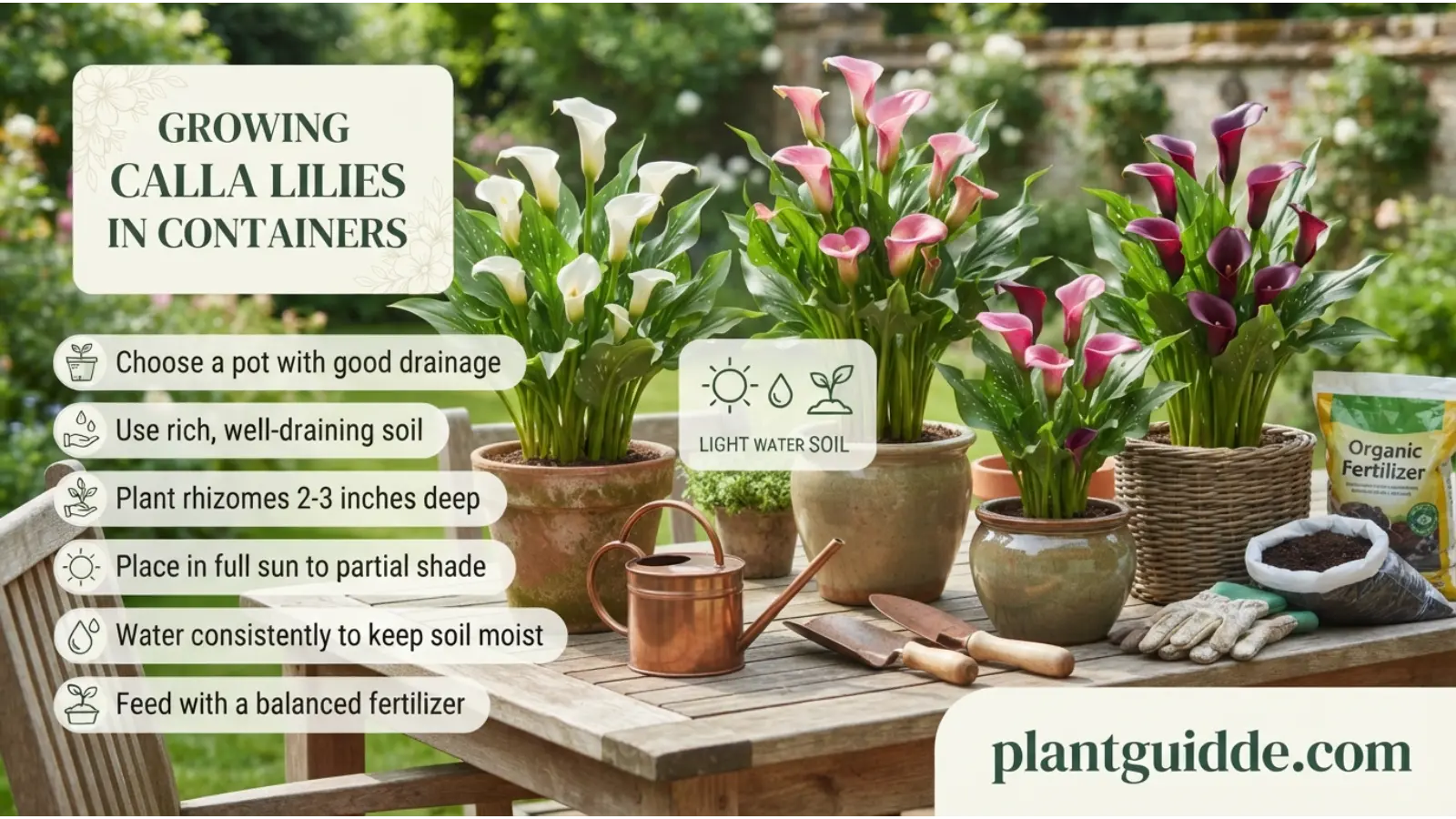
Containers make calla lilies convenient for patios, balconies, and indoor growing, but they also make watering mistakes easier to create.
Choose a pot that has:
- Adequate drainage holes
- Enough room for root development
- A stable base for tall foliage
- A size appropriate for the plant
Avoid choosing an extremely large container simply because you want the plant to grow faster. A very large volume of wet soil can take longer to dry, increasing the risk of root problems.
Container-grown plants may also need more frequent watering than plants growing in the ground because their available soil volume is limited.
Growing Calla Lilies Outdoors
In suitable climates, calla lilies can be grown in garden beds or outdoor containers.
Choose a location with good light and soil that drains reliably. In hot climates, protection from harsh afternoon conditions can help prevent heat and leaf stress.
Before planting outdoors, consider the seasonal temperature in your area. Cold-sensitive calla types may need to be lifted, protected, or moved indoors when temperatures become unsuitable.
In regions with mild conditions, plants may remain in the ground for longer periods. In colder climates, seasonal handling may be necessary.
Common Calla Lily Problems and What They Mean
Yellow Leaves
Yellow leaves can have several causes.
Possible explanations include:
- Natural aging
- Dormancy
- Overwatering
- Poor drainage
- Root stress
- Nutrient problems
- Environmental stress
Check the soil and growing stage before changing your care routine.
Drooping Leaves
Drooping can occur when the plant lacks water, but it can also appear when roots have been damaged by excessive moisture.
Check the soil first. If it is dry, thorough watering may solve the problem. If it is saturated and the plant continues to droop, investigate drainage and root health instead of watering again.
Brown Leaf Edges
Brown edges can develop because of dry conditions, inconsistent moisture, intense heat, excessive fertilizer salts, or other environmental stresses.
Look at recent changes in the plant’s environment. A plant placed beside a heating vent, for example, may develop stressed leaf margins even when the soil is being watered correctly.
No Flowers
If your calla lily grows leaves but produces few or no flowers, examine:
- Light exposure
- Plant maturity
- Root health
- Fertilization
- Growing temperatures
- Previous dormancy or resting conditions
Increasing fertilizer should not be the first response.
Soft or Rotting Roots
Soft, dark, deteriorating roots are often associated with prolonged excess moisture and poor drainage.
If root problems are suspected, remove the plant carefully and inspect the root system. Healthy roots should have a firm appearance appropriate to the plant rather than being consistently mushy or decomposing.
Correct the drainage problem before returning the plant to a regular watering routine.
Common Calla Lily Care Mistakes
Treating Calla Lilies Like Drought-Tolerant Houseplants
Calla lilies generally need more consistent moisture than plants adapted to dry conditions. Allowing them to become severely dry repeatedly can cause unnecessary stress.
Keeping the Soil Wet All the Time
The opposite mistake is equally problematic. Moisture-loving does not mean permanently waterlogged.
Removing Green Leaves Too Early
After flowering, some growers cut the foliage immediately. If the leaves are still green and the plant is actively growing, leaving them in place allows continued photosynthesis.
Using a Pot Without Drainage
Even excellent soil cannot compensate for a container that traps excess water.
Increasing Fertilizer When Flowering Is Poor
Flowering problems often involve light or overall growing conditions. Fertilizer cannot replace adequate light or healthy roots.
Following a Fixed Watering Calendar
“Water every Sunday” may sound convenient, but plant water use changes with temperature, light, pot size, soil, and season.
Check the plant and soil instead.
A Simple Calla Lily Care Routine
For beginners, a simple routine is often more useful than a complicated schedule.
Once or twice a week: Check the soil moisture, but water only when the plant actually needs it.
Every few days: Look at the leaves for changes in color, firmness, curling, or damage.
During active growth: Provide strong light and appropriate feeding.
During flowering: Keep moisture reasonably consistent and avoid major environmental changes.
After flowering: Remove spent blooms while keeping healthy foliage.
As dormancy begins: Allow natural foliage decline and reduce watering according to the plant’s growth stage.
Before repotting or moving outdoors: Check the roots, drainage, temperature, and light conditions rather than changing everything at once.
This observation-based approach is more reliable than following a rigid calendar.
Calla Lily Care: Indoor vs. Outdoor
| Growing condition | Indoor calla lily | Outdoor calla lily |
|---|---|---|
| Light | Bright window with strong indirect light | Bright light or suitable sun exposure |
| Watering | Check soil regularly | Monitor soil, rainfall, and heat |
| Drainage | Essential in containers | Essential in beds and containers |
| Temperature | Protect from drafts and extremes | Protect from unsuitable cold or extreme heat |
| Humidity | Usually moderate household humidity is adequate | Usually determined by local climate |
| Dormancy | Depends on type and conditions | Often follows seasonal growth patterns |
| Fertilizer | Feed during active growth | Feed during active growth |
The biggest difference is environmental control. Indoor growers control light, temperature, and watering more directly, while outdoor growers must account for rainfall, heat, wind, and seasonal temperatures.
When Should You Repot a Calla Lily?
Repotting is most useful when the container has become restrictive, the soil structure has deteriorated, or drainage has become poor.
Signs that repotting may be appropriate include:
- Roots becoming severely crowded
- Water draining unusually quickly because the root mass has filled the pot
- Poor soil structure
- The plant repeatedly becoming unstable
- Roots emerging substantially from drainage holes
Do not repot simply because the plant has stopped flowering. Flowering is influenced by several factors besides pot size.
When repotting, use fresh, well-draining potting mix and a container with drainage holes. Avoid moving the plant into a dramatically oversized pot.
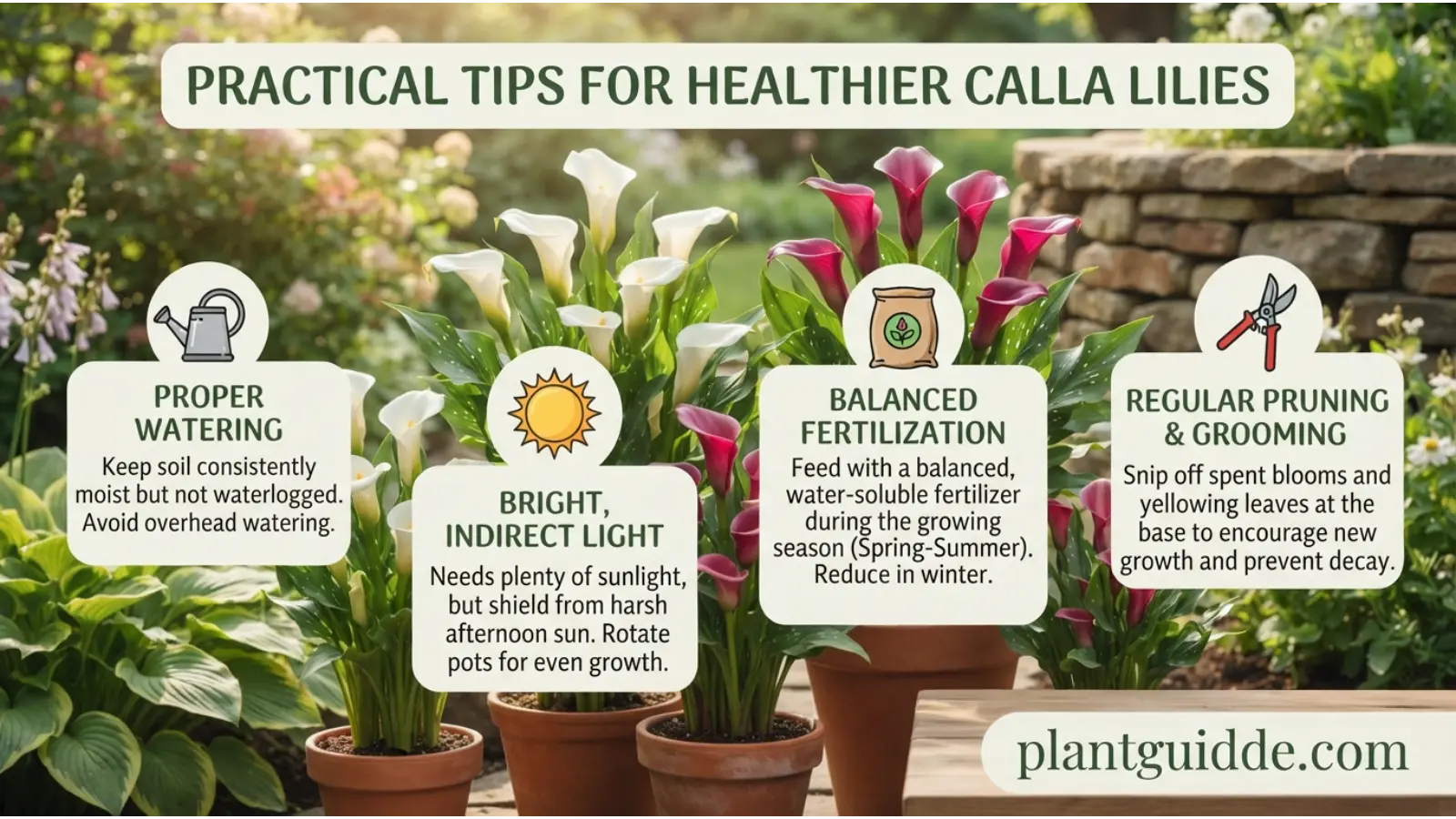
Practical Tips for Healthier Calla Lilies
A few small adjustments can make a noticeable difference:
- Rotate indoor plants periodically so growth remains more even.
- Check soil moisture before watering rather than relying on a schedule.
- Keep foliage away from direct contact with very hot windows.
- Remove faded flowers to keep the plant tidy.
- Do not cut healthy green foliage simply because flowering has ended.
- Clean fallen leaves and dead plant material from the soil surface.
- Change one major growing condition at a time when troubleshooting.
- Keep newly purchased plants under observation before assuming their existing care routine is ideal.
One particularly useful habit is to note what changed before a problem appeared. If yellowing began after moving a plant to a darker room, for example, light deserves attention. If the soil has remained wet since moving into a larger pot, drainage and pot size become more relevant.
Are Calla Lilies Toxic to Pets?
Calla lilies contain insoluble calcium oxalate crystals and can cause irritation if plant material is chewed or swallowed. Pets and children should therefore be prevented from chewing the leaves, stems, or other plant parts.
If ingestion occurs and concerning symptoms develop, contact a veterinarian or appropriate poison-control service for guidance.
FAQs:
How often should I water a calla lily?
Water when the upper layer of soil begins to dry, then water thoroughly and allow excess water to drain. The exact frequency varies with temperature, light, pot size, soil, and season, so checking the soil is more reliable than following a fixed schedule.
Do calla lilies need full sun?
Calla lilies need plenty of light, but full sun is not ideal in every climate. Bright light and some direct sun can encourage strong growth and flowering, while intense hot afternoon sunlight can cause stress or scorching.
Why are my calla lily leaves turning yellow?
Yellow leaves may result from natural aging or dormancy, but they can also indicate overwatering, poor drainage, root stress, or other environmental problems. Check the soil moisture and consider whether the plant is actively growing or entering its natural resting period.
Why is my calla lily not flowering?
Insufficient light is one possible cause, but flowering can also be affected by plant maturity, root health, nutrition, temperature, and the plant’s growth cycle. Check the overall growing conditions before adding extra fertilizer.
Can a calla lily grow indoors?
Yes. Calla lilies can be grown indoors when provided with bright light, suitable temperatures, appropriate moisture, and well-draining soil. A bright window is often a good starting location, provided the plant is protected from excessive heat through the glass.
Conclusion
Successful calla lily plant care comes down to balancing moisture, light, drainage, temperature, and the plant’s natural growth cycle. Keep the soil appropriately moist without leaving the roots waterlogged, provide strong light, feed during active growth, and recognize that yellowing foliage after flowering may be part of dormancy rather than an emergency.
If your calla lily is struggling, start with the basics: check the soil, inspect the roots if necessary, evaluate the light, and identify the plant’s current growth stage. Those observations usually provide a clearer answer than changing several care practices at once.

Asad Mumtaz is a dedicated plant enthusiast and gardening writer with a passion for helping people care for their plants successfully. He specializes in plant care guides, indoor gardening, and practical growing tips for all skill levels. His content focuses on making gardening simple, enjoyable, and rewarding. Through his work, Asad shares reliable advice to help readers create thriving green spaces.