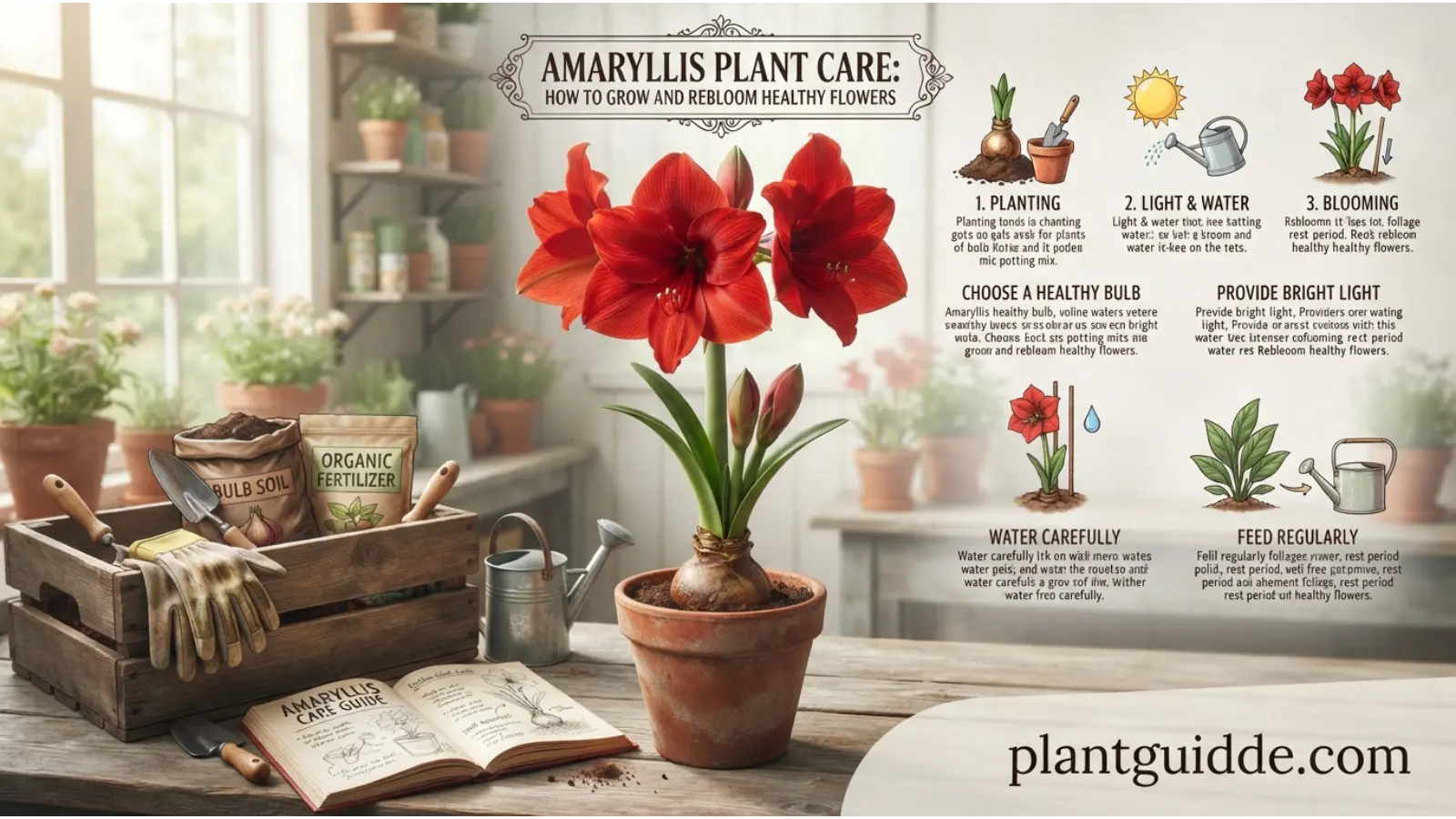
Amaryllis plant care is one of those plants that can look almost effortless when it is blooming, yet its care changes noticeably before and after flowering. The large trumpet-shaped flowers appear from a bulb packed with stored energy, so the goal is not simply to keep the flowers looking good, it is to help the bulb remain healthy enough to grow and flower again,
The biggest mistakes with amaryllis plant care usually involve too much water, poor drainage, insufficient light after flowering, or cutting healthy foliage too early. Understanding what the bulb needs during each stage makes the plant much easier to manage.
One important naming detail is worth knowing: the plants commonly sold as indoor “amaryllis” around the holidays are usually Hippeastrum, while the true genus Amaryllis is a different group native to South Africa. Many indoor-care recommendations therefore refer specifically to Hippeastrum, even though the common name amaryllis is widely used.
Quick Answer
Amaryllis plant care mainly depends on bright light, well-draining soil, careful watering, and proper feeding during active growth. Keep the bulb partly above the soil, avoid waterlogged conditions, and continue caring for the leaves after flowering so the bulb can rebuild energy. Depending on the type and growing method, a cool resting period can also help trigger future blooms.
What Does an Amaryllis Plant Need to Grow Well?
A healthy amaryllis needs four things above all:
- Bright light
- Free-draining growing medium
- Controlled watering
- Continued nutrition after flowering
The bulb stores carbohydrates and water, which gives amaryllis an advantage over many foliage houseplants. However, that does not mean it should be neglected. The plant still needs enough light and active growth after flowering to replenish the bulb’s reserves.
For indoor plants, place the pot near a bright window where the plant receives plenty of light. Once flowers open, protecting the blooms from intense direct sunlight can help prolong their display.
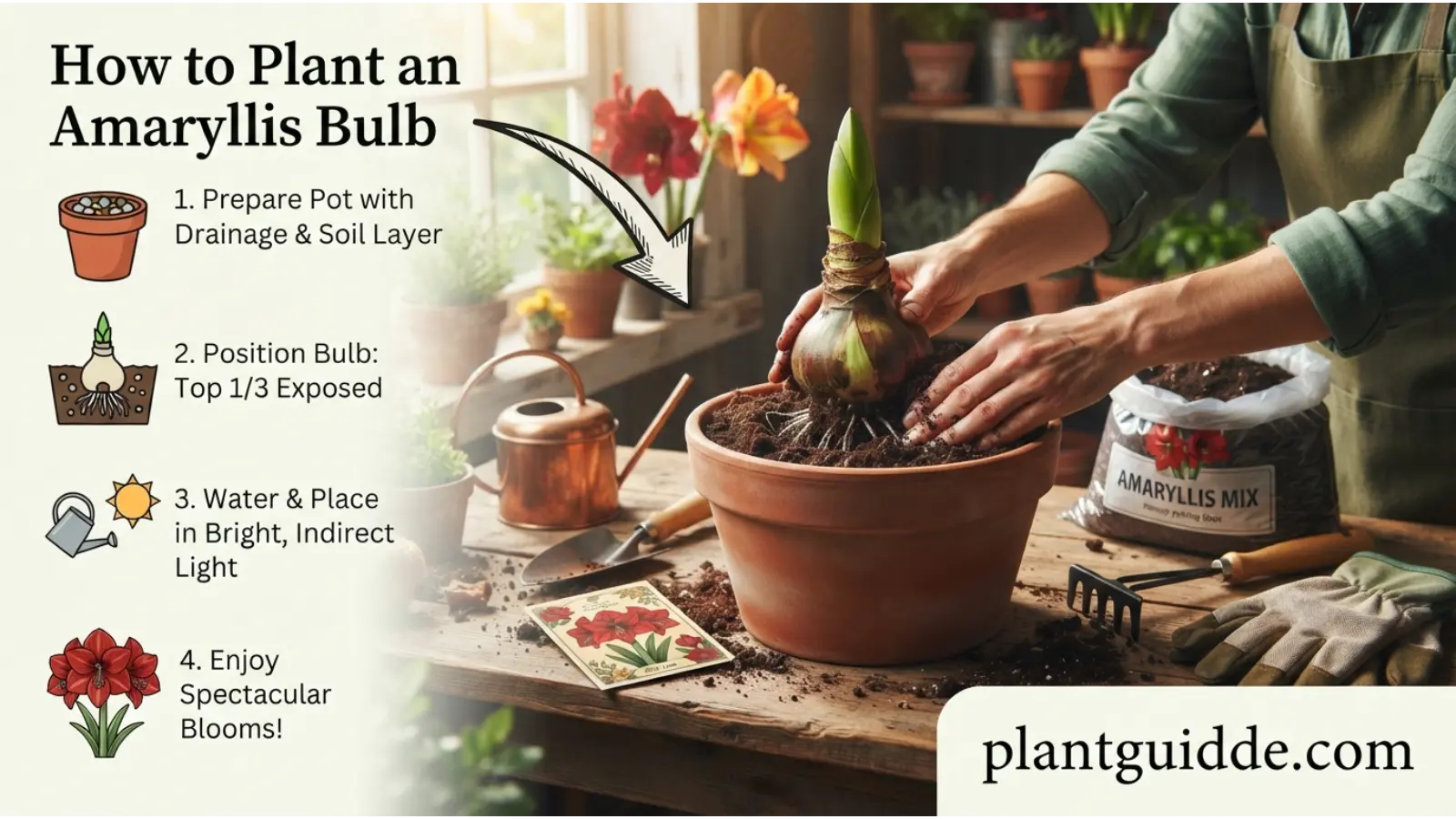
How to Plant an Amaryllis Bulb
Planting depth is particularly important because burying the bulb too deeply can increase the risk of moisture-related problems.
Choose:
- A pot with drainage holes
- A container only slightly wider than the bulb
- A loose, well-draining potting mix
- A healthy, firm bulb without soft or damaged areas
The University of Minnesota recommends a container roughly 1 inch wider than the bulb’s widest point and about twice as tall as the bulb. Only about one-third to one-half of the bulb should be covered by the growing medium.
Step-by-Step Planting
- Fill the lower portion of the pot with fresh, well-draining potting mix.
- Position the bulb with the roots resting on the soil.
- Add soil around the bulb while keeping the upper portion exposed.
- Firm the mix gently without compacting it.
- Water thoroughly once, allowing excess water to drain completely.
- Place the pot somewhere bright and warm enough for active growth.
Do not plant the bulb deep enough that only the tip is visible. The exposed upper portion is an important part of successful container culture.
Practical tip: A heavy pot can be useful for tall-flowering varieties because the flower stalks can become top-heavy. A stable container reduces the chance of the plant tipping as the flowers open.
Amaryllis Light Requirements
Bright light is essential for strong growth and future flowering.
During active growth, place indoor amaryllis in the brightest suitable location available, such as a sunny window. After flowering, keeping the plant in strong light is especially important because its leaves use photosynthesis to replenish the bulb’s stored energy.
If your plant receives too little light, you may notice:
- Long, weak or stretched growth
- Leaves leaning strongly toward the window
- Poor overall vigor
- Failure to flower later
For outdoor summer growth, gradually acclimate an indoor plant instead of moving it immediately into intense sunlight. Sudden changes can stress the foliage. Iowa State University recommends hardening plants over approximately 7–10 days before moving them into more direct outdoor light.
How Often Should You Water Amaryllis?
Watering is one of the most important parts of amaryllis plant care because the bulb is vulnerable to rot when the growing medium remains excessively wet.
A useful approach is to check the soil rather than watering according to a rigid calendar.
When the plant is actively growing:
- Feel the upper layer of soil.
- If it has dried noticeably, water thoroughly.
- Let excess water escape through the drainage holes.
- Empty standing water from the saucer.
The University of Minnesota recommends watering when the top 2 inches of soil feel dry and emphasizes allowing the container to drain completely.
Avoid keeping the soil constantly wet. The combination of a water-retentive medium, poor drainage, and frequent watering is much more dangerous than allowing the surface to dry somewhat between waterings.
What About a Dormant Bulb?
A dormant amaryllis needs dramatically less water.
Amaryllis plant care you are deliberately inducing dormancy for reblooming, watering is generally withheld during the resting period. Iowa State University recommends keeping the dormant bulb cool and dry for the required resting period.
Best Soil for Amaryllis
Amaryllis performs best in a loose, well-draining potting medium rather than dense garden soil in a container.
A suitable mix should:
- Drain excess water quickly
- Hold enough moisture for roots without remaining soggy
- Allow air around the roots
- Resist becoming compacted over time
Drainage matters because constantly wet conditions can encourage bulb and root rot.
Amaryllis plant care your current potting mix stays wet for many days after watering, changing the mix may be more effective than simply watering less often.
Should You Fertilize Amaryllis?
Yes, particularly while the plant is actively growing after flowering.
Once new growth is visible, regular feeding can help the plant maintain vigorous foliage and replenish the bulb. The University of Minnesota recommends fertilizing with a houseplant fertilizer at half the label-recommended strength when watering during active growth.
The exact fertilizer analysis is less important than avoiding excessive feeding. Always follow the product label and avoid applying concentrated fertilizer to dry roots.
For container-grown plants, consistent nutrition during the leafy growth period is particularly useful because the leaves are essentially working to recharge the bulb for its next flowering cycle.
What to Do After Amaryllis Blooms
This is where many people accidentally weaken their plant.
When the flowers fade, remove the spent flowers, but do not immediately remove healthy green leaves or a still-green flower stalk.
The faded flowers no longer provide much visual value, but the green foliage continues photosynthesis. Those leaves help manufacture and store energy in the bulb for future growth. The University of Minnesota specifically recommends allowing the green flower stalk to remain until it turns yellow.
After-Flowering Routine
- Remove faded flowers.
- Keep green foliage intact.
- Move the plant to a bright location.
- Continue watering when the soil has dried appropriately.
- Continue feeding during active growth.
- Allow the leaves to mature naturally.
- Reduce watering when the foliage begins entering its resting stage.
The key idea is simple: the flowering period is not the end of the plant’s yearly care cycle.
The weeks and months after flowering are when the bulb prepares itself for another display.
How to Get Amaryllis to Rebloom
Getting amaryllis to flower again is largely a matter of managing the bulb’s energy reserves and, for many indoor Hippeastrum, providing an appropriate rest period.
There are slightly different approaches depending on the cultivar, growing conditions, and whether you are growing true Amaryllis or the commonly sold indoor Hippeastrum. For this reason, product instructions or cultivar-specific guidance should take priority when available.
For traditional indoor forcing, Iowa State University recommends a cool resting period of roughly 8–10 weeks at about 50–55°F (10–13°C) before restarting growth.
A Practical Reblooming Cycle
1. Finish flowering
Remove spent flowers while preserving healthy foliage.
2. Build the bulb
Keep the plant growing in strong light. Water and feed appropriately.
3. Allow a rest
For varieties that benefit from dormancy, move the plant to a cool, dark or semi-dark location and stop watering.
4. Wait through the resting period
A cool period of around 8–10 weeks is commonly used for indoor Hippeastrum forcing.
5. Restart growth
Bring the bulb back into a bright, warmer location and begin watering carefully.
6. Watch for new growth
A flower stalk may emerge before the leaves, although the exact growth pattern can vary.
7. Resume normal care
Once active growth begins, return to appropriate watering and feeding.
University of Minnesota guidance notes that flowering can occur roughly 4–6 weeks after a dormant bulb is brought back into active growth, provided the bulb has sufficient stored energy.
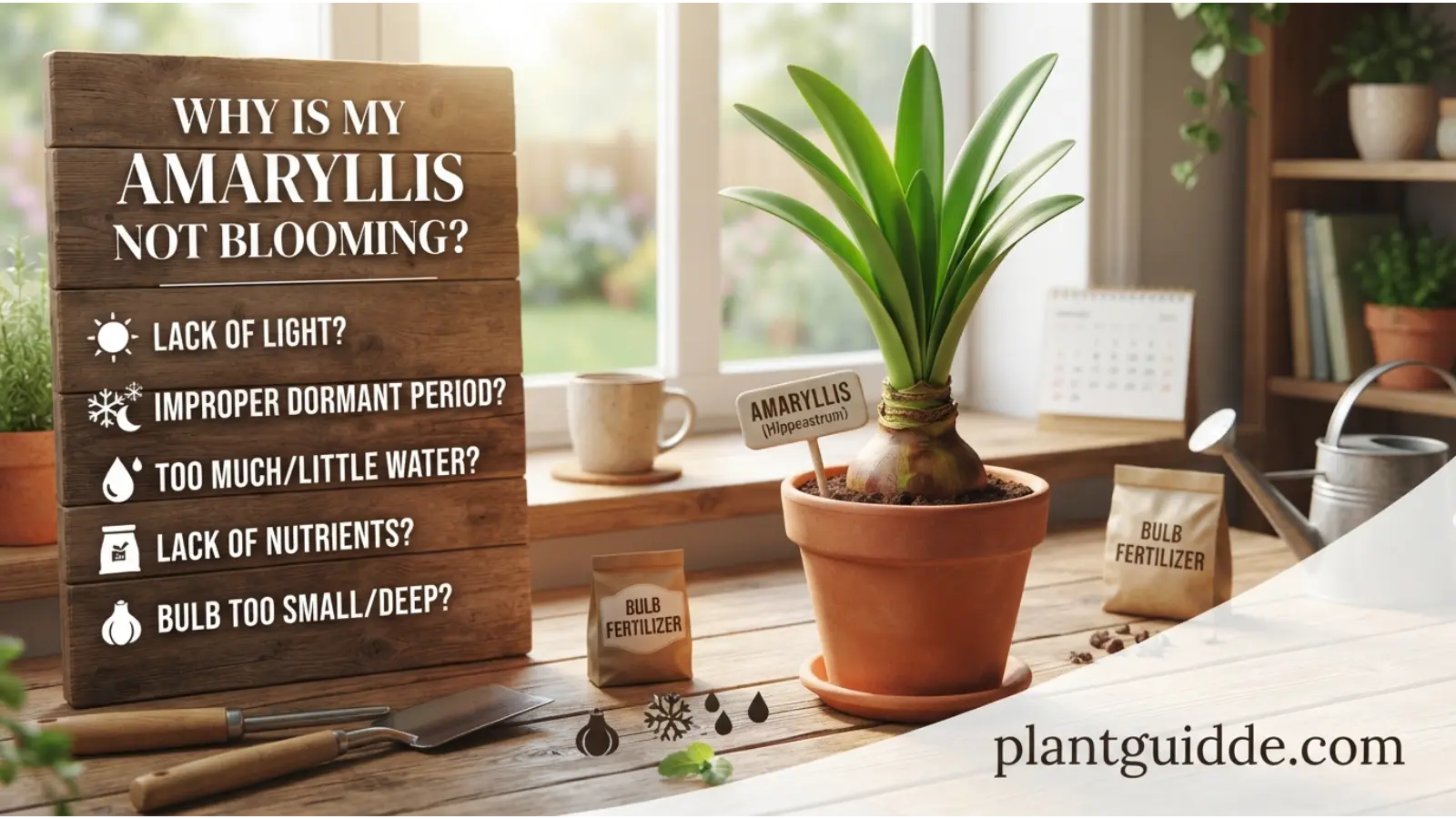
Why Is My Amaryllis Not Blooming?
A healthy-looking plant can still fail to flower if its bulb did not accumulate enough energy or its seasonal cycle was disrupted.
Common causes include:
Not Enough Light
A plant that receives weak light after flowering may produce leaves without building sufficient reserves for a strong flowering cycle.
What to do: Move it to a brighter location during active growth.
Cutting Leaves Too Early
Removing green leaves immediately after flowering reduces the plant’s ability to photosynthesize.
What to do: Keep healthy foliage until it naturally begins to yellow and decline.
Overwatering
Constantly wet soil can damage roots and the bulb.
What to do: Improve drainage and allow the appropriate portion of the soil to dry between waterings.
Insufficient Rest for Cultivars That Need It
Some indoor Hippeastrum require or respond to a cool rest period for reliable forcing.
What to do: Follow the recommended dormancy or forcing cycle for your specific bulb.
The Bulb Is Too Small or Weak
Flowering requires sufficient stored energy. A bulb may produce leaves while recovering from previous flowering without immediately producing another flower stalk.
The Plant Was Dried Down Too Early
Prematurely ending the growing period can limit how much energy the bulb stores.
RHS guidance identifies premature drying, excessive shade, and inadequate watering during the previous growing season as possible contributors to flowering problems in Hippeastrum.
Why Are Amaryllis Leaves Turning Yellow?
Yellow leaves do not always mean something is wrong.
Amaryllis plant care the plant is naturally entering dormancy, older leaves can yellow and eventually dry out as part of the seasonal cycle.
The timing matters.
Yellow leaves during active growth: Investigate watering, drainage, light, root health, and environmental stress.
Yellowing near the end of the growth cycle: This may be a normal sign that the plant is entering dormancy.
Avoid automatically increasing watering whenever a leaf turns yellow. If the soil is already wet, additional water can make the underlying problem worse.
Why Is My Amaryllis Drooping?
A drooping plant can have several causes, so check the soil before reaching for the watering can.
Possible causes include:
- Soil that is excessively dry
- Waterlogged roots
- Weak or insufficient light
- A top-heavy flower stalk
- Natural leaf aging
- Root or bulb damage
If the leaves are limp and the soil is bone dry, watering may help. If the soil is wet and the bulb feels soft, adding more water is likely to make the situation worse.
A useful diagnostic habit: Check the bulb and soil condition together rather than diagnosing the leaf symptom alone.
What to Do If the Amaryllis Bulb Is Rotting
Bulb rot is commonly associated with excessive moisture and poor drainage.
Warning signs can include:
- Soft or collapsing bulb tissue
- Dark or sunken areas
- Unpleasant odor
- Mushy roots
- Persistent wet soil
A healthy bulb should feel firm rather than soft and decayed. The University of Minnesota recommends selecting firm, dry bulbs without mold, injury, or decay.
If you suspect rot, remove the bulb from its pot and inspect it rather than continuing to water and hoping it improves. Remove obviously damaged tissue with a clean tool, discard severely rotted bulbs, and repot salvageable material into fresh, well-draining medium.
Can You Grow Amaryllis Outdoors?
Yes, depending on the species, climate, and local winter conditions.
Container-grown indoor Hippeastrum can often benefit from spending the warmer growing season outdoors. However, they should be gradually acclimated to outdoor conditions and protected from frost and freezing temperatures.
True Amaryllis has somewhat different outdoor requirements and can be grown in suitable climates in free-draining soil and full sun. The RHS notes that true Amaryllis prefers sheltered conditions, free-draining soil, and full sun.
This distinction matters if you are following an outdoor care guide: advice written for true Amaryllis should not automatically be applied to a holiday-season Hippeastrum.
Does Amaryllis Need to Be Repotted Every Year?
Usually, no.
Amaryllis does not necessarily need a dramatically larger container every year. The University of Minnesota notes that established plants may only require repotting every three or four years, while RHS guidance for Hippeastrum recommends repotting periodically when the pot becomes well filled with roots.
When repotting:
- Choose fresh, well-draining potting medium.
- Use a container only slightly larger if more space is actually needed.
- Inspect the roots and bulb for damage.
- Keep the bulb’s upper portion above the soil line.
Repotting simply because the calendar says it is time can create unnecessary disturbance.
Can You Grow Amaryllis From Offsets?
Yes. Mature bulbs can produce offsets around the base.
Offsets can be separated when they have developed their own roots and then planted individually. However, young bulbs generally need time to mature before producing large flowering displays. RHS guidance notes that offsets may take several years to reach flowering size.
Growing from seed is even slower and is primarily useful when experimenting with breeding or raising plants from scratch rather than wanting a quick flowering specimen.
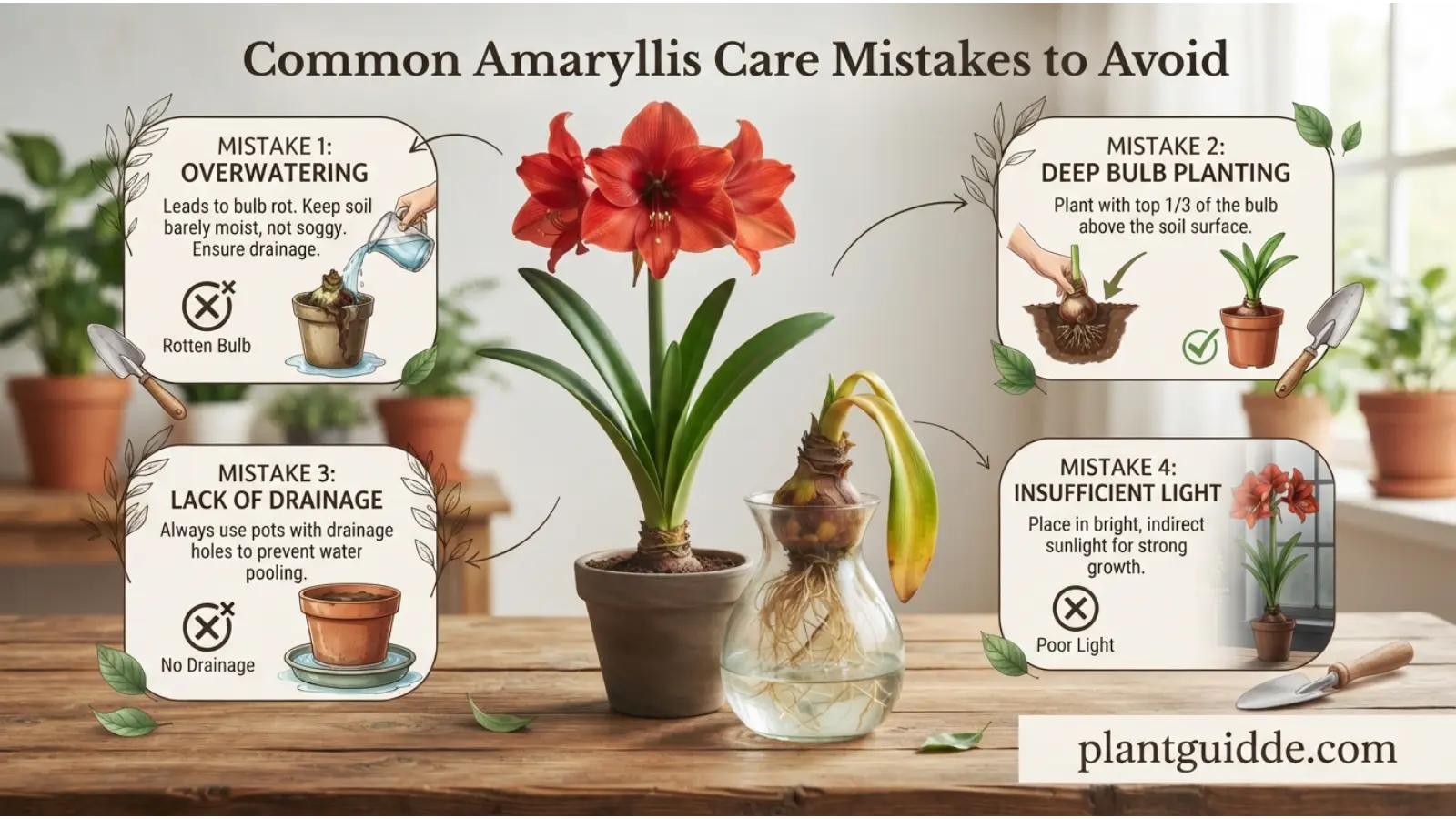
Common Amaryllis Care Mistakes to Avoid
Watering on a Fixed Schedule
A calendar cannot account for pot size, light, temperature, humidity, or soil composition.
Better approach: Check the soil before watering.
Burying the Bulb Completely
Deep planting keeps more of the bulb surrounded by moisture.
Better approach: Keep a substantial portion of the bulb above the soil line.
Cutting Green Leaves After Flowering
This removes the plant’s energy-producing tissue.
Better approach: Allow healthy leaves to remain during the active growth period.
Keeping the Pot in Standing Water
Even good soil cannot compensate for a pot sitting in water.
Better approach: Use drainage holes and empty the saucer after watering.
Assuming Every “Amaryllis” Has Identical Requirements
The common name covers plants that are botanically different.
Better approach: Identify whether you have true Amaryllis or the commonly sold indoor Hippeastrum before following a detailed seasonal schedule.
Throwing Away the Plant After It Flowers
The bulb can potentially be maintained for years with appropriate care.
Better approach: Treat flowering as one stage in a longer growth cycle.
Amaryllis Plant Care at a Glance
| Care factor | What to do |
|---|---|
| Light | Provide bright light during active growth |
| Soil | Use a loose, well-draining potting mix |
| Pot | Choose a container with drainage holes |
| Planting depth | Keep the upper portion of the bulb exposed |
| Water | Water thoroughly when the appropriate soil layer has dried |
| Fertilizer | Feed during active growth according to label directions |
| After flowering | Remove spent flowers but preserve healthy foliage |
| Dormancy | Use a cool resting period when appropriate for the type and forcing method |
| Repotting | Repot when needed rather than automatically every year |
| Outdoor growing | Acclimate gradually and protect tender indoor types from frost |
FAQs:
How often should I water an amaryllis?
Water when the upper portion of the potting mix has dried appropriately rather than following a fixed schedule. During active growth, water thoroughly and allow excess water to drain. Avoid keeping the bulb in consistently wet soil because excessive moisture can contribute to rot.
Should I cut off the amaryllis leaves after flowering?
No, not while they are still green and healthy. The leaves continue photosynthesis and help replenish the bulb’s energy reserves. Allow them to yellow and decline naturally before removing them.
How do I make my amaryllis bloom again?
Keep the plant actively growing after flowering so the bulb can rebuild its energy reserves. For many indoor Hippeastrum, a cool resting period of approximately 8–10 weeks can then be used to initiate another flowering cycle.
Why does my amaryllis grow leaves but no flowers?
The bulb may not have stored enough energy, especially if it received insufficient light or was allowed to go dormant too early. Excess shade, inadequate previous-season watering, and an unsuitable dormancy cycle can also contribute to poor flowering.
Can I keep an amaryllis growing without dormancy?
Some Hippeastrum can be maintained as actively growing plants rather than being deliberately forced into dormancy. RHS guidance specifically describes keeping some indoor Hippeastrum actively growing in moderate warmth without inducing dormancy.
Final Thoughts
Successful amaryllis plant care is less about following a rigid watering calendar and more about understanding the bulb’s growth cycle. Give it bright light, excellent drainage, sensible watering, and enough time with healthy foliage after flowering to rebuild its reserves.
If your goal is another flush of flowers, resist the temptation to treat the bulb as disposable once the blooms fade. Keep the leaves working, protect the bulb from excessive moisture, and use an appropriate resting period when your particular Hippeastrum and growing method call for one. That simple shift, from caring only for the flowers to caring for the bulb, makes long-term amaryllis growing much more successful.

Asad Mumtaz is a dedicated plant enthusiast and gardening writer with a passion for helping people care for their plants successfully. He specializes in plant care guides, indoor gardening, and practical growing tips for all skill levels. His content focuses on making gardening simple, enjoyable, and rewarding. Through his work, Asad shares reliable advice to help readers create thriving green spaces.