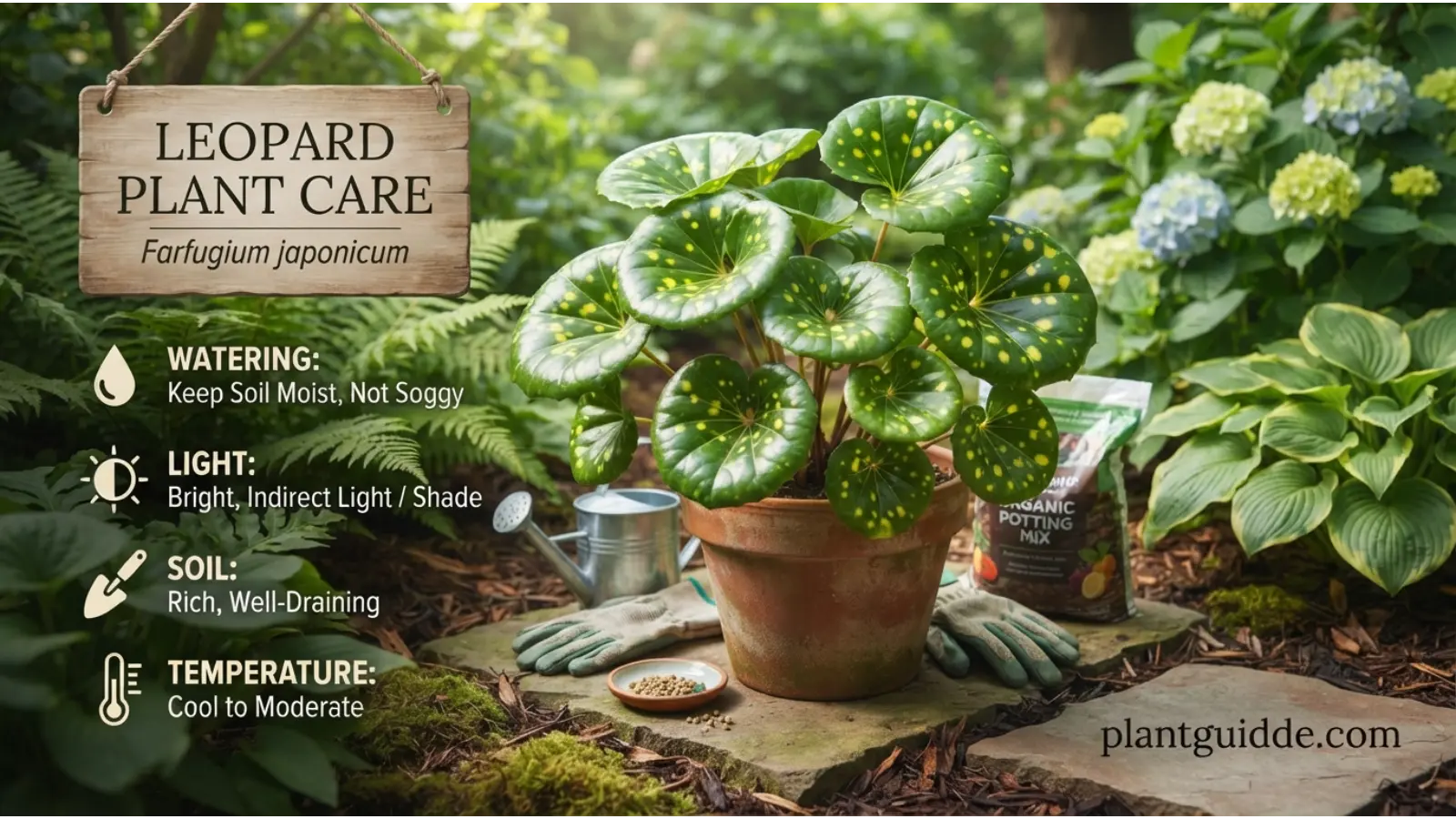
Leopard plant care is an excellent choice when you want bold, tropical-looking foliage in a shady garden. Its large, rounded leaves can bring structure and visual interest to places where many flowering plants struggle to perform well. Some varieties also have distinctive yellow or cream spotting that explains the common name.
Despite its dramatic appearance, leopard plant care is fairly straightforward once you understand its main preference: moisture without constantly waterlogged soil. The biggest problems usually come from the wrong light, drying out too severely, poor drainage, or exposure to hot conditions.
Botanically, leopard plant is commonly grown as Farfugium japonicum, a rhizomatous perennial in the daisy family, Asteraceae. It is native to Japan and eastern Asia, where it naturally occurs in moist environments such as streambanks and moist meadows.
Quick Answer
Leopard plant (Farfugium japonicum) grows best in partial to deep shade, consistently moist but well-drained, fertile soil, and protection from hot sun and drying winds. Water deeply when the soil begins to dry, keep the root zone evenly moist, and watch for slugs and snails. With the right moisture and light, its large glossy leaves and yellow daisy-like flowers can remain attractive with relatively little pruning.
Leopard Plant Care at a Glance
| Care requirement | What leopard plant prefers |
|---|---|
| Botanical name | Farfugium japonicum |
| Common name | Leopard plant, spotted colt’s foot |
| Plant family | Asteraceae |
| Light | Partial shade to shade |
| Soil | Fertile, moisture-retentive but well-drained |
| Water | Consistent moisture; deep watering during dry periods |
| Humidity | Naturally prefers moist conditions |
| Temperature | Mild to warm conditions; protect from severe cold |
| Flower color | Usually yellow |
| Bloom period | Often late summer through fall or fall into winter, depending on climate and cultivar |
| Propagation | Division or seed |
| Common pests | Slugs and snails |
| Growth habit | Clumping, rhizomatous perennial |
RHS describes the species as an evergreen, clump-forming perennial reaching roughly 0.5–1 m in height and spread, while North Carolina Extension lists it as a clumping perennial suited to moist, shady conditions.
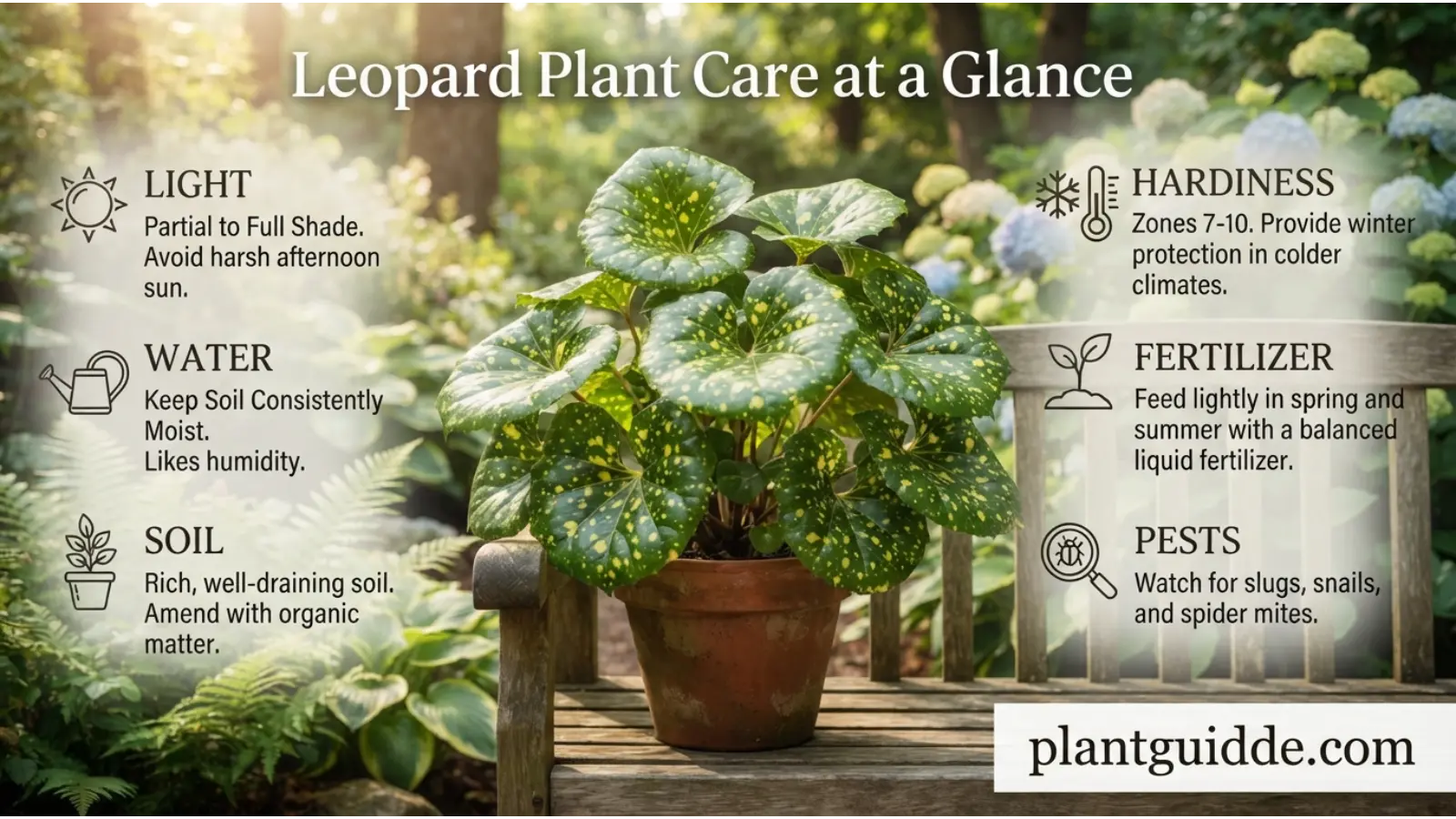
What Is a Leopard Plant?
Leopard plant is a shade-loving perennial valued primarily for its foliage. The species has large, glossy, rounded to kidney-shaped leaves, while several cultivars have yellow, cream, white, or other contrasting markings. Yellow daisy-like flowers rise above the foliage and can add seasonal interest.
The name can be slightly confusing because different plants may be sold under the common name “leopard plant.” Farfugium japonicum is the plant most commonly associated with this name, but North Carolina Extension also notes that Ligularia stenocephala may be called leopard plant. Checking the botanical name on the plant label is therefore useful when buying one.
One of the plant’s most useful characteristics is its ability to bring substantial foliage into shaded areas. Farfugium is also suitable for containers, borders, woodland-style gardens, and areas around ponds or streams where the soil can remain consistently moist.
How Much Light Does a Leopard Plant Need?
Leopard plants generally perform best in partial shade to shade. North Carolina Extension specifically notes that the leaves can burn easily in sun, while RHS recommends partial shade for the species.
A bright location with filtered sunlight is often ideal. For example, a spot beneath a tree canopy can provide enough ambient light while protecting the broad leaves from intense afternoon sun.
Signs the light is too intense
Watch for:
- Brown or scorched patches on exposed leaves
- Crispy leaf edges
- Faded or bleached-looking foliage
- Wilting during hot afternoons despite adequate soil moisture
- Damage concentrated on the side receiving the strongest sunlight
A common mistake is assuming that a plant with large green leaves needs full sun to grow well. Leopard plant is different. Its broad foliage can lose moisture quickly and become damaged when exposed to harsh direct sunlight.
Some cultivars tolerate more sun than the standard species. For example, RHS lists Farfugium japonicum ‘Kaimon Dake’ for full sun or partial shade, provided it has moist, well-drained soil and shelter.
How to Water a Leopard Plant
Watering is one of the most important parts of leopard plant care.
The goal is consistently moist soil rather than constantly saturated soil. North Carolina Extension recommends rich, moist soil and notes that the plant benefits from deep watering during summer. RHS similarly specifies moist but well-drained conditions.
Instead of watering according to a fixed calendar, check the soil and the plant’s growing conditions.
A practical watering method
- Check the soil several inches below the surface.
- If the soil is beginning to dry, water deeply around the root zone.
- Allow excess water to drain away.
- Check more frequently during hot, dry weather.
- Reduce watering when temperatures fall and plant growth slows.
Leopard plant generally does not appreciate prolonged drought, especially when grown in containers or exposed locations. At the same time, continually stagnant water can create unhealthy root conditions.
Practical tip: If the leaves wilt during a hot afternoon but recover later, check the soil before immediately adding more water. If the soil is already saturated, the problem may be heat stress or poor root function rather than a simple lack of water.
Best Soil for Leopard Plant
Leopard plant prefers fertile, moisture-retentive soil that still drains reasonably well. North Carolina Extension recommends high-organic-matter soil with good drainage, while RHS describes the ideal conditions as fertile and moist but well-drained.
A useful soil mixture should hold enough moisture for the plant’s broad foliage without remaining stagnant around the roots.
For garden beds, improve poor soil with organic matter such as well-decomposed compost. In containers, use a quality potting mix rather than heavy garden soil that can compact inside the pot.
Why drainage still matters
“Moisture-loving” does not mean “waterlogged.”
Leopard plant care water remains around the roots for long periods, oxygen availability in the root zone can decline and the plant may begin to show poor growth, yellowing, or general decline.
A container should always have drainage holes, and a decorative outer pot should not be allowed to hold standing water after irrigation.
Temperature and Humidity
Leopard plant prefers mild conditions and benefits from protection against severe cold and drying winds. RHS rates the species H3 under its UK hardiness system and recommends winter protection in colder climates.
North Carolina Extension lists Farfugium generally for USDA Zones 7–10, although actual performance depends on cultivar and local conditions.
In colder areas, a layer of winter mulch can help protect the root zone. RHS specifically recommends deep winter mulch in colder climates.
Hot, dry wind can also be problematic. A sheltered position beneath trees, near a wall, or in a protected garden bed can reduce moisture loss from the large leaves.
Does Leopard Plant Need Fertilizer?
Leopard plant generally benefits from fertile soil, but it does not need an aggressive feeding program.
If the soil is rich and regularly amended with compost, additional fertilizer may be limited. In poorer soil, a balanced, slow-release fertilizer can be used according to the product directions during active growth.
Avoid assuming that more fertilizer will automatically produce better foliage. Excessive feeding can encourage soft, uneven growth and is unnecessary when the plant already has adequate nutrition.
A better approach is to improve the soil first and use fertilizer as a supplement rather than as a substitute for good growing conditions.
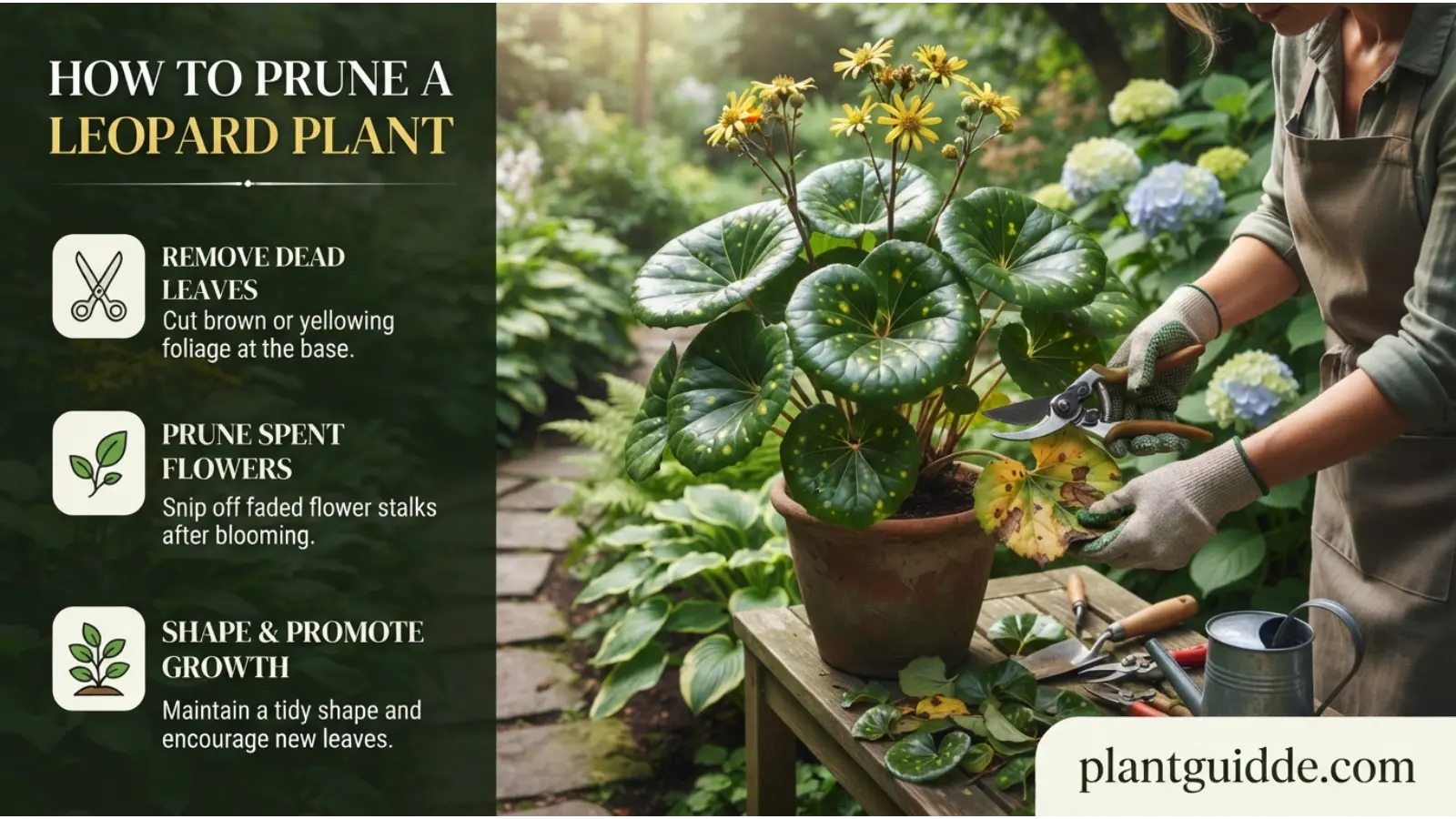
How to Prune a Leopard Plant
Leopard plant does not require regular pruning. RHS lists pruning as unnecessary for the species.
Instead, remove leaves when they become:
- Completely brown
- Severely damaged
- Diseased-looking
- Dead after winter damage
Use clean, sharp pruners and cut damaged foliage close to its base without unnecessarily disturbing healthy leaves.
In colder climates, some foliage may deteriorate during winter. RHS recommends trimming dead leaves in spring for certain forms such as Farfugium japonicum var. giganteum.
How to Encourage Healthy Growth and Flowers
Healthy leopard plants do not need complicated treatment. Focus on consistency.
1. Give it protection from harsh sun
Bright filtered light or shade is usually more suitable than intense afternoon sunlight.
2. Keep the soil evenly moist
Do not allow the plant to repeatedly swing from extremely dry to saturated conditions.
3. Improve poor soil
Add organic matter when the native soil is thin, compacted, or low in fertility.
4. Protect it from drying winds
A sheltered position can reduce leaf stress, particularly in hot or exposed gardens.
5. Leave healthy foliage alone
Because the foliage is one of the plant’s main attractions, avoid unnecessary pruning.
6. Monitor slugs and snails
Broad, tender-looking leaves can attract these pests, particularly in damp garden conditions. Both RHS and North Carolina Extension identify slugs and snails as occasional leopard plant pests.
Leopard Plant Care in Containers
Leopard plant can grow well in containers, and container culture can be especially useful if your garden soil is unsuitable.
Choose a container with:
- Several drainage holes
- Enough width for the plant’s clumping growth
- A moisture-retentive but well-drained potting mix
- A stable location protected from strong afternoon sun
Containers dry out faster than garden beds, particularly in hot weather. Check the pot more frequently rather than automatically using the same watering schedule as plants growing in the ground.
At the same time, do not place the container in a saucer filled permanently with water.
North Carolina Extension and UF/IFAS both identify containers as suitable growing options for Farfugium.
Image Suggestion: A realistic comparison showing a healthy leopard plant growing in a shaded garden bed beside a container-grown specimen, with moist soil, large glossy leaves, and filtered sunlight.
How to Propagate Leopard Plant
The simplest practical method for multiplying an established leopard plant is division.
RHS recommends propagation by division in spring, while North Carolina Extension also lists division as a recommended propagation strategy.
Propagating by division
- Choose a healthy, established clump in spring.
- Carefully lift the plant from the soil.
- Separate a portion of the rhizomatous crown with healthy roots and shoots.
- Replant the division at an appropriate depth.
- Water thoroughly.
- Keep the new division consistently moist while it establishes.
Division is generally more predictable for gardeners than starting from seed because you are working with an established portion of the plant.
Leopard plant can also be grown from seed, although RHS recommends sowing it in containers in a cold frame during winter or spring.
Common Leopard Plant Problems
Leopard plant leaves turning brown
Brown foliage can have several causes, so look at the growing conditions before changing the watering routine.
Possible causes include:
- Excessive direct sun
- Dry soil
- Hot, drying wind
- Cold damage
- Physical damage
- Inconsistent moisture
If the brown areas are primarily on the sun-facing side, excessive light is worth investigating first.
Leopard plant wilting
Temporary wilting during extreme heat does not always mean the plant needs more water.
Check the soil before irrigating. If it is dry, water deeply. If it is already very wet, investigate drainage, root health, or excessive heat instead.
Leopard plant leaves getting damaged by sun
This is a particularly common issue because the species performs best in shade and its leaves can burn in strong sunlight.
Move container plants to a more sheltered position. For plants in the ground, use surrounding trees or taller shade plants where appropriate, or consider whether the planting location is fundamentally too exposed.
Leopard plant leaves have holes
Slugs and snails are among the first things to check. Look beneath leaves and around the soil surface, especially in the evening or after damp weather.
Reducing hiding places and improving garden hygiene can help, while the specific control method should match your local conditions and gardening practices.
Leopard plant is not flowering
Flowers are not necessarily the best measure of whether your leopard plant is healthy. The plant is primarily valued for its bold foliage, and some gardeners remove flowers to emphasize the leaves.
If flowering is unusually poor, review light, moisture, fertility, and seasonal conditions rather than immediately adding fertilizer.
Common Leopard Plant Care Mistakes
Giving it too much sun
This is one of the easiest mistakes to make. A sunny position may work for some cultivars, but the standard species generally prefers shade or partial shade.
Letting the soil become bone dry
Leopard plant tolerates some drying better than certain moisture-loving relatives, but it performs best with consistent moisture, especially during active summer growth.
Keeping the roots constantly saturated
Moist soil and waterlogged soil are not the same thing. Good drainage remains important.
Planting it in an exposed location
Large leaves can lose moisture rapidly when exposed to hot, dry wind.
Pruning healthy leaves unnecessarily
The foliage is one of the plant’s main ornamental features. Remove damaged leaves rather than cutting the plant back simply because it looks large.
Leopard Plant vs. Ligularia: Are They the Same?
Leopard plant and Ligularia can be confusing because the names have historically overlapped.
Farfugium japonicum has previously been listed under names including Ligularia tussilaginea and Ligularia kaempferi. RHS and North Carolina Extension both document these synonyms.
This matters when researching care because online gardening information may refer to older botanical names. When buying a plant, checking the current botanical name and cultivar name is the safest way to make sure the advice applies to your specific plant.
FAQs:
Is leopard plant easy to grow?
Yes, when its basic environmental requirements are met. It is particularly well suited to shaded gardens with fertile, consistently moist soil. The main challenges are usually excessive sun, drying conditions, poor drainage, and slug or snail damage.
Does leopard plant like full sun or shade?
The species generally prefers partial shade to shade. Its leaves can burn in strong sunlight, although some cultivars tolerate more sun when adequate moisture is maintained.
How often should I water a leopard plant?
There is no useful universal schedule because watering depends on soil, temperature, rainfall, container size, and exposure. Check the soil regularly and water deeply when it begins to dry. During hot, dry weather, it may need more frequent attention.
Can leopard plant grow indoors?
It can be grown in a suitable container in a bright but sheltered indoor or conservatory environment, but it is primarily used as an outdoor garden plant. RHS lists conservatories and greenhouses among suitable growing settings for some Farfugium forms.
Why does my leopard plant have holes in the leaves?
Slugs and snails are common suspects. Inspect the plant and surrounding soil, particularly during damp weather and at night. Both RHS and North Carolina Extension identify these pests as occasional problems.
Final Thoughts
Successful leopard plant care comes down to recreating the conditions this shade-loving perennial naturally prefers: protection from harsh sun, fertile soil, reliable moisture, and good drainage.
Rather than following a rigid watering calendar, pay attention to the soil and the leaves. If foliage is scorching, reconsider the light. If the plant repeatedly wilts, check moisture and exposure. If leaves are being eaten, inspect for slugs and snails.
For most gardeners, the best next step is simple: choose a sheltered, partly shaded location, prepare moisture-retentive but well-drained soil, and keep the root zone consistently moist while the plant establishes. Once those fundamentals are right, leopard plant can provide bold foliage and seasonal yellow flowers with surprisingly little routine maintenance.

Asad Mumtaz is a dedicated plant enthusiast and gardening writer with a passion for helping people care for their plants successfully. He specializes in plant care guides, indoor gardening, and practical growing tips for all skill levels. His content focuses on making gardening simple, enjoyable, and rewarding. Through his work, Asad shares reliable advice to help readers create thriving green spaces.