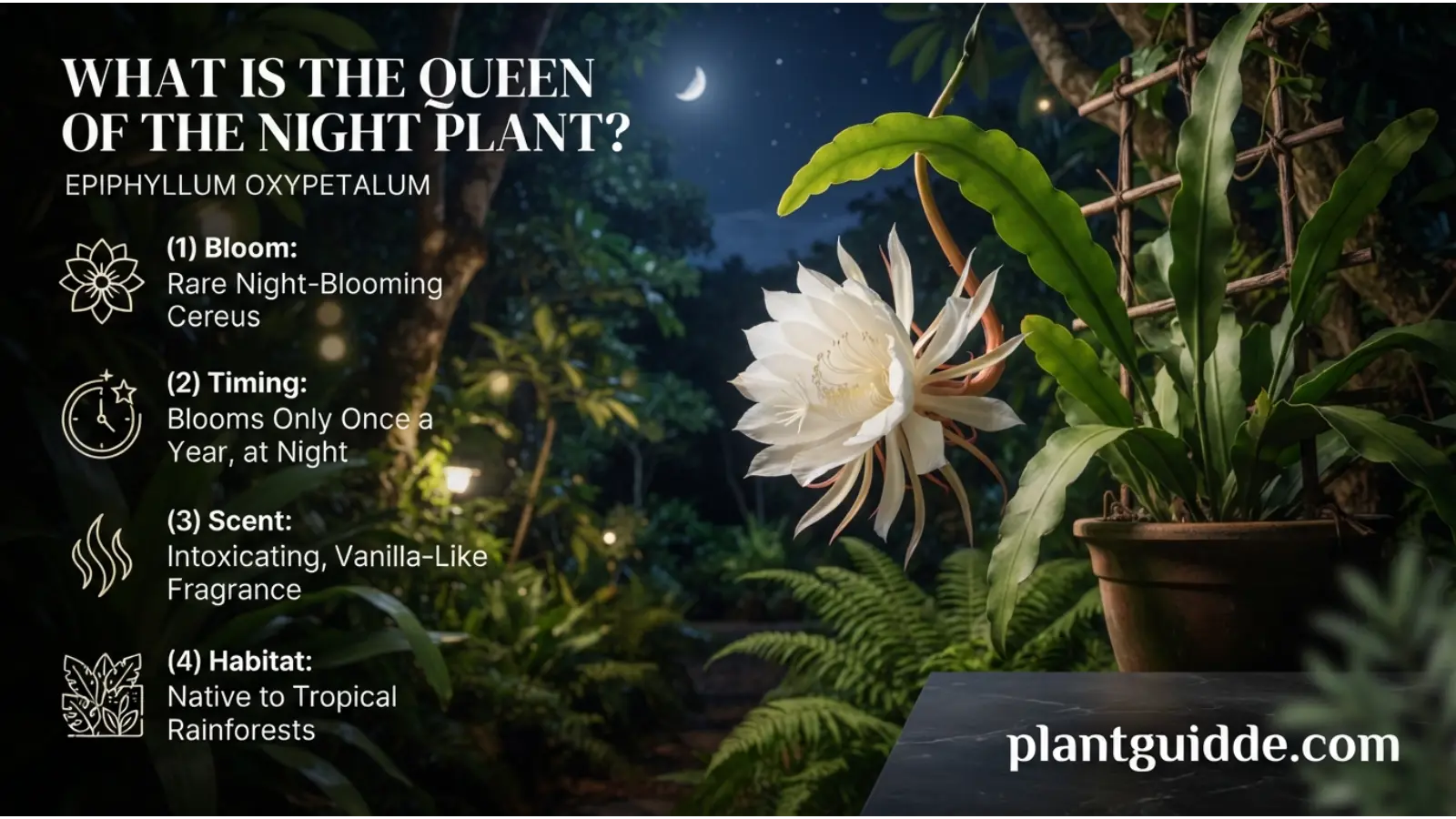
The queen of the night plant care is best known for its spectacular, fragrant flowers that open around dusk and close by morning. The name usually refers to Epiphyllum oxypetalum, an epiphytic cactus with long, flat, leaf-like stems and large white flowers.
Unlike desert cacti, it naturally grows in warm, humid forest environments, so its care routine is somewhat different from what you might expect from a typical cactus.
For many growers, the biggest challenge is not keeping the plant alive. It is getting the plant to flower reliably. Too much direct sun, soggy soil, excessive feeding, low humidity, cold conditions, or unnecessary repotting can all interfere with healthy growth and flowering.
Quick Answer
Queen of the night plant care is easiest when you treat this tropical epiphytic cactus more like a forest plant than a desert cactus. Give it bright filtered light, fast-draining soil, moderate to high humidity, regular watering during active growth, and less water in winter. Avoid harsh midday sun, waterlogged roots, cold temperatures, and frequent repotting.
What Is the Queen of the Night Plant?
The queen of the night, Epiphyllum oxypetalum, is an epiphytic cactus in the Cactaceae family. It is native to parts of Mexico and Guatemala and produces long, branching, flat stems that can become trailing or cascading as the plant matures. Mature plants can become quite large, making them particularly attractive in hanging baskets or elevated containers.
Its flowers are the main attraction. They can become very large, highly fragrant, and waterlily-like, with individual blooms opening in the evening and closing the following morning. Flowering generally occurs in late spring or summer under suitable conditions.
One important point is that queen of the night is not a desert cactus. Epiphyllum cacti naturally grow as epiphytes in tropical and subtropical forests, where they receive filtered light and moisture rather than intense desert sunshine.
That difference explains many common care mistakes.
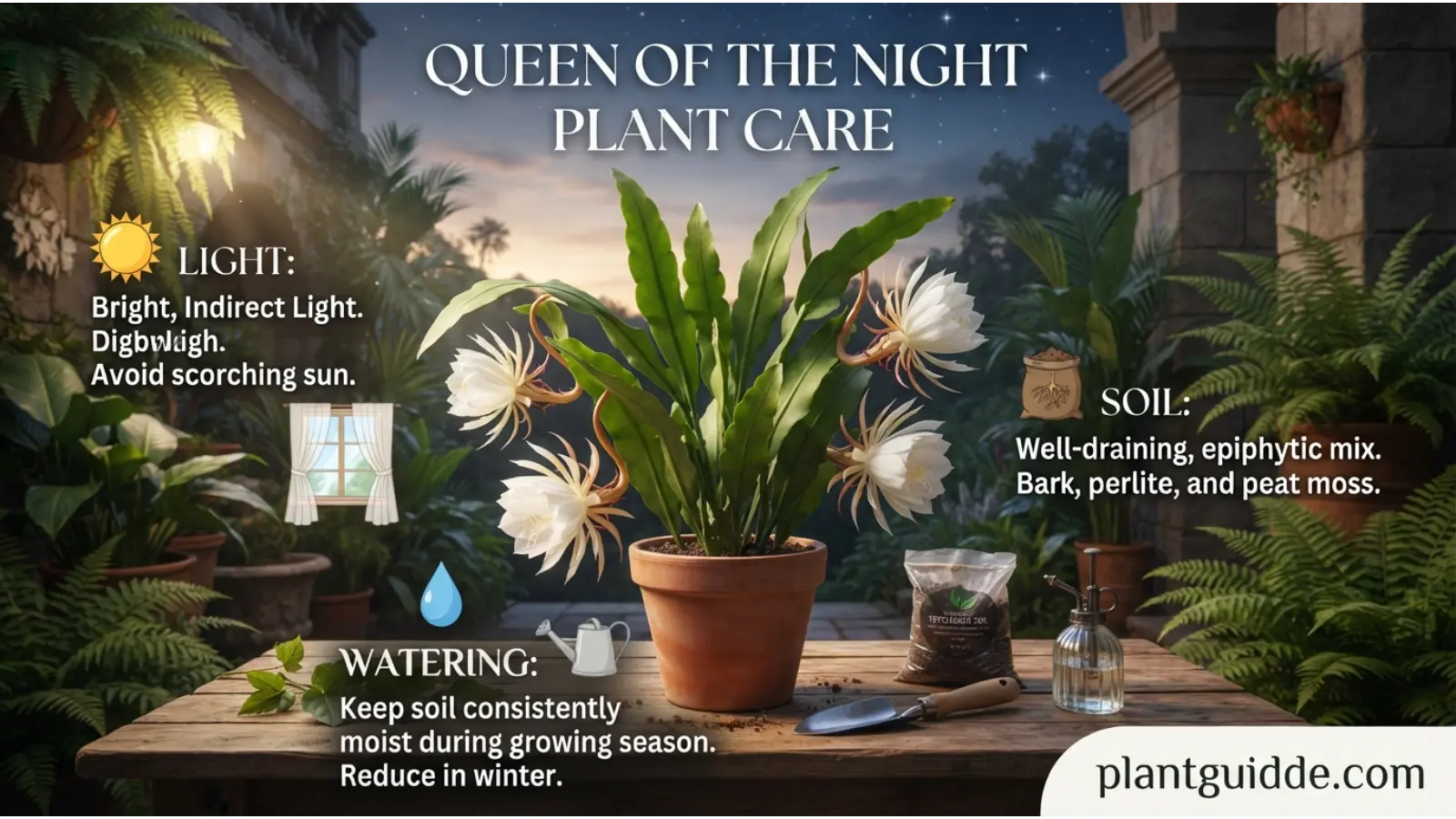
Queen of the Night Plant Care Requirements at a Glance
| Care factor | What the plant prefers |
|---|---|
| Light | Bright, filtered or indirect light |
| Direct sun | Avoid strong midday and summer sun |
| Water | Regular watering during active growth |
| Soil | Loose, fast-draining, moisture-retentive mix |
| Humidity | Moderate to high |
| Temperature | Warm during growth; cooler in winter |
| Winter care | Reduce watering and provide a cooler rest |
| Fertilizer | Light, regular feeding during active growth |
| Pot | Drainage hole and only slightly larger than root ball |
| Repotting | Infrequent; preferably after flowering |
| Propagation | Stem cuttings are the easiest method |
These conditions reflect the plant’s natural epiphytic growth habit and established cultivation guidance for Epiphyllum cacti.
How Much Light Does a Queen of the Night Plant Need?
Give queen of the night bright filtered light rather than intense direct sunlight.
An east-facing window can work particularly well indoors. A bright west- or south-facing location can also work if the plant is protected from strong afternoon sunshine with a sheer curtain or some other filtering.
The goal is enough light to support vigorous growth and flowering without exposing the flat stems to scorching heat.
Signs the Light Is Too Strong
Watch for:
- Brown or scorched-looking patches
- Pale or discolored sections of stem
- Sudden damage after moving the plant into direct sun
- Dry, stressed-looking growth
RHS specifically recommends bright filtered or indirect light and warns that strong summer sunshine can scorch Epiphyllum stems.
Signs the Plant Needs More Light
If growth is weak, sparse, or unusually elongated and the plant receives very little natural light, gradually move it toward a brighter position.
Avoid making a sudden change from deep shade to strong sunlight. Acclimate the plant gradually instead.
Practical tip: If your queen of the night produces plenty of green growth but rarely flowers, light is one of the first environmental factors worth reviewing.
How to Water Queen of the Night
Watering is one of the most important parts of queen of the night plant care.
During active growth, water when the potting mix has begun to dry rather than following a rigid calendar. Give the plant a thorough watering, allowing excess water to escape through the drainage holes.
Do not leave the pot sitting in water.
Epiphyllum prefers moisture during active growth but does not tolerate permanently saturated roots. RHS recommends keeping the compost slightly moist during the growing season while allowing excess water to drain away.
A Better Way to Judge Watering
Instead of asking, “Does it need water today?” check:
- How dry is the upper portion of the potting mix?
- Does the container feel noticeably lighter?
- Is the plant actively growing?
- Is the room hot, dry, or humid?
- Is the plant in a small or large container?
A plant growing in a warm, bright environment may need water much sooner than one sitting in a cool, dim room.
Winter Watering
Queen of the night generally benefits from a cooler, drier winter period. Water less frequently, but do not allow the potting mix to become completely dry for prolonged periods.
This seasonal change is particularly important if your goal is flowering.
Best Soil for Queen of the Night
Queen of the night needs a loose, fast-draining growing medium that provides moisture without staying saturated.
A cactus or succulent mix can work, but a tropical epiphytic cactus often benefits from a somewhat more moisture-retentive mix than a desert cactus.
A practical homemade approach is to combine:
- A quality potting or peat-free compost
- Coarse grit or perlite
- Fine bark or another chunky material that improves aeration
The finished mix should drain freely while still holding enough moisture for the roots.
RHS recommends a loose, fast-draining compost and notes that prolonged dampness around the roots can encourage root problems.
Why Heavy Soil Causes Problems
Dense garden soil can remain wet around the roots for too long. This reduces air availability around the root system and increases the risk of rot.
A drainage hole is just as important as the soil itself.
What Temperature Does Queen of the Night Need?
This plant prefers warm conditions during active growth and should be protected from cold temperatures.
RHS recommends keeping Epiphyllum plants above about 10°C (50°F) and maintaining warmer conditions during active growth. A cooler winter period of approximately 11–14°C (52–57°F) can help encourage flowering.
Keep the plant away from:
- Cold drafts
- Frost
- Unheated outdoor locations during cold weather
- Strong heating vents
- Radiators and other intense heat sources
If you grow queen of the night outdoors during summer, move it back indoors before temperatures become too cold.
Does Queen of the Night Need High Humidity?
Yes. Moderate to high humidity generally suits queen of the night because it originates from humid tropical and subtropical environments.
However, high humidity does not mean the soil should remain wet.
You can improve humidity by:
- Grouping plants together
- Using a humidifier
- Placing the pot near other plants
- Using a pebble tray while keeping the pot above the water level
- Providing good airflow around the foliage
RHS also recommends misting from spring to autumn in hot, dry conditions and emphasizes keeping the container itself out of standing water.
If your home is already humid, additional misting may not be necessary. Good airflow remains important, particularly when humidity is high.
Fertilizing Queen of the Night
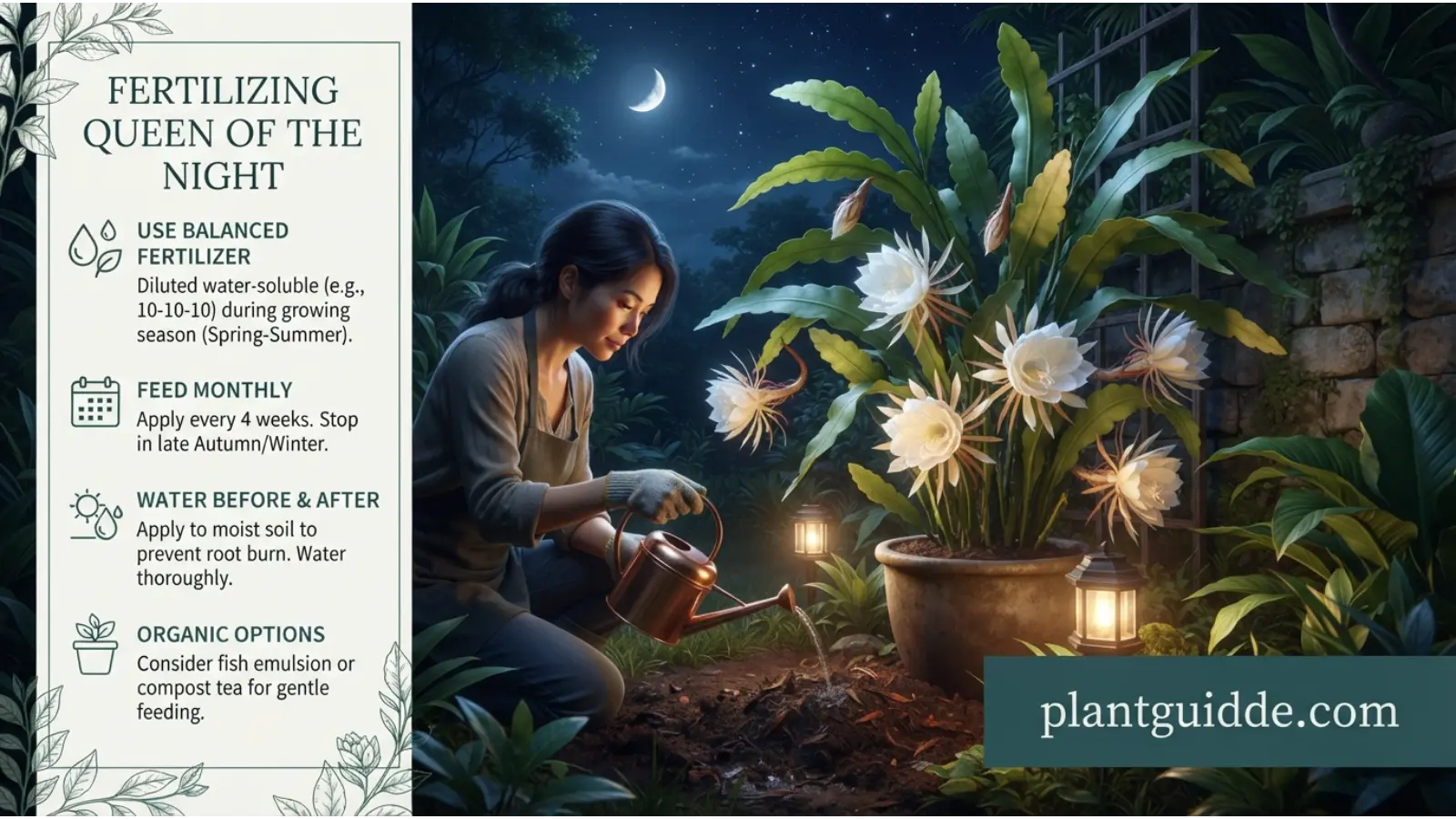
Queen of the night benefits from feeding during active growth, but more fertilizer is not necessarily better.
RHS recommends light feeding during the growing season and notes that Epiphyllum naturally grows in relatively low-nutrient environments.
A diluted cactus or suitable flowering-plant fertilizer can be used according to the product instructions.
Avoid excessive nitrogen-heavy feeding if flowering is your main goal. Excessive feeding can encourage vegetative growth without solving the environmental factors that control flowering.
The simplest approach is:
Active growth = light, regular feeding.
Winter rest = reduce or stop routine feeding.
How to Encourage Queen of the Night to Bloom
Getting a queen of the night plant to flower often requires more than simply adding fertilizer.
The plant responds to seasonal changes.
1. Provide Plenty of Bright Filtered Light
Low light can limit growth and flowering. Give the plant a bright position while protecting it from harsh midday sun.
2. Avoid Constantly Warm Conditions in Winter
A cooler winter rest can help initiate flower buds. RHS recommends approximately 11–14°C (52–57°F) during winter for Epiphyllum, with reduced watering.
3. Do Not Overwater During the Rest Period
The plant should be kept much drier in winter than during active growth, although RHS advises against allowing the compost to become completely dry.
4. Avoid Overpotting
This is an often-overlooked flowering issue.
Epiphyllum generally flowers better when its roots have filled the container. Moving it into a much larger pot can encourage excessive root and vegetative growth and may interfere with flowering.
5. Keep Conditions Stable
Once flower buds appear, avoid suddenly changing the plant’s environment. Protect it from cold drafts, extreme heat, major watering changes, and unnecessary movement.
Important: A mature plant may have the potential to flower, but there is no reliable shortcut that forces blooms on demand. Light, seasonal temperature, watering, root conditions, and plant maturity all work together.
Why Is My Queen of the Night Not Flowering?
Queen of the night plant care your queen of the night plant is healthy but refuses to bloom, examine its growing conditions before reaching for more fertilizer.
Common possibilities include:
- Insufficient light
- No cooler winter rest
- Excessive winter watering
- A container that is much too large
- Immature plant
- Excessive fertilizer
- Major environmental changes
- Poor overall growing conditions
RHS specifically identifies the absence of a cooler, drier winter period and overpotting as potential reasons for poor flowering.
A useful troubleshooting approach is to change one major factor at a time. That makes it easier to understand what your plant actually responds to.
How to Repot Queen of the Night
Queen of the night does not need frequent repotting.
In fact, unnecessary repotting can work against flowering because Epiphyllum often performs well when its roots have filled the existing container.
Repot when:
- The growing medium has broken down
- Drainage has become poor
- The container is damaged
- Roots have genuinely outgrown the pot
- The plant requires a fresh growing medium
When repotting, choose a container only slightly larger than the current root ball.
Repotting after flowering is generally preferable. Handle the long stems carefully because they can be damaged during the process.
Pruning and Supporting Queen of the Night
The long, flat stems naturally create a trailing or cascading appearance, so pruning is not required simply to keep the plant alive.
However, pruning can help control size and remove:
- Old damaged stems
- Weak growth
- Dead sections
- Extremely long or awkward stems
Large plants can become difficult to manage because the stems become heavy. A stable, heavy container is often better than relying on elaborate supports.
If you prune heavily, remember that the plant has less foliage afterward and therefore may use less water. Avoid automatically maintaining the same watering frequency after major pruning.
How to Propagate Queen of the Night
Stem cuttings are the easiest practical way to propagate queen of the night.
RHS recommends taking healthy stem sections, allowing the cut ends to dry and callus for several days, then planting them in a suitable cactus-type growing medium. Under warm conditions, cuttings can root within several weeks.
Simple Propagation Method
- Choose a healthy, vigorous stem.
- Cut a section approximately 15–23 cm (6–9 inches) long.
- Allow the cut end to dry and callus for several days.
- Place the cutting in a well-draining growing medium.
- Keep the medium lightly moist rather than saturated.
- Maintain warm conditions.
- Wait for roots to develop before treating the new plant as an established specimen.
RHS gives approximately 18–24°C (65–75°F) as a suitable temperature range for rooting cuttings, with rooting often occurring within three to six weeks.
Common Queen of the Night Plant Care Mistakes
Treating It Like a Desert Cactus
This is probably the most important misunderstanding.
Queen of the night is a tropical forest epiphyte, not a plant adapted to intense desert conditions. It prefers filtered light, humidity, and more regular moisture during active growth than many desert cacti.
Keeping the Soil Constantly Wet
Its need for moisture does not mean saturated soil is acceptable.
Queen of the night plant care the mix stays wet for long periods, improve drainage, reduce watering frequency, and reassess the container.
Putting It in Harsh Afternoon Sun
More sunlight is not automatically better. Strong summer sun can scorch Epiphyllum stems.
Bright filtered light is usually the safer target.
Using an Oversized Pot
A large decorative pot may look attractive, but excess soil can remain wet around a relatively small root system.
Choose a pot based on the root system rather than the eventual size of the plant.
Expecting Flowers Without a Seasonal Change
A plant kept in exactly the same warm, wet conditions all year may not receive the seasonal signal that helps initiate flowering.
A cooler and somewhat drier winter period can make a meaningful difference.
Queen of the Night Plant Problems and Solutions
| Problem | Likely cause | What to do |
|---|---|---|
| No flowers | Low light, no winter rest, overpotting | Increase filtered light and provide a cooler winter period |
| Brown or scorched stems | Strong direct sunlight | Move to bright filtered light |
| Soft or declining stems | Excess moisture or poor drainage | Check roots, improve drainage, reduce watering |
| Wrinkled stems | Insufficient water or root problems | Check soil moisture and roots before watering more |
| Slow growth | Low light, poor nutrition, cold conditions | Review light, temperature and feeding |
| Buds fail to develop | Environmental stress or unsuitable winter conditions | Stabilize conditions and review winter care |
| Pests | Indoor growing conditions | Inspect regularly and treat early |
RHS identifies overwatering, underwatering, strong sunshine, and pests such as mealybugs, aphids, and red spider mites among potential Epiphyllum problems.
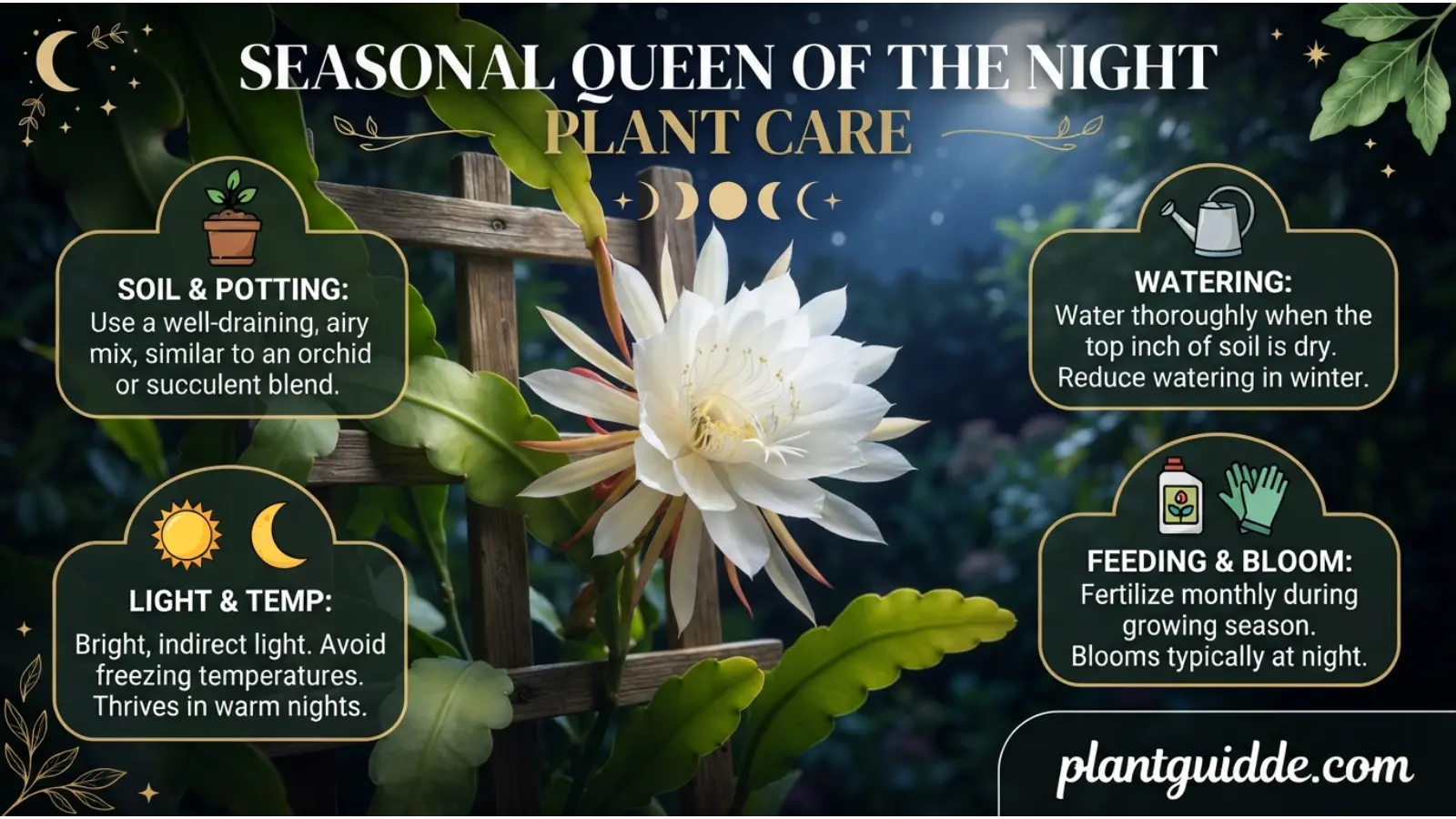
Seasonal Queen of the Night Plant Care
Spring
As growth begins, gradually increase watering and resume light feeding. Give the plant bright filtered light and watch for new shoots and developing buds.
Summer
Maintain bright filtered light, regular watering, and good humidity. Protect the plant from intense midday sunshine and extreme heat.
If temperatures are suitable, the plant can spend summer outdoors in a warm, sheltered, lightly shaded position.
Autumn
Begin preparing the plant for its winter rest. If it has been outdoors, bring it inside before temperatures become too cold.
Reduce watering as growth slows.
Winter
Provide a cooler location around 11–14°C (52–57°F) where possible and keep the growing medium only slightly moist. This cooler, drier period can help stimulate flower-bud formation.
Once buds form, return the plant to its normal warmer growing environment.
Is Queen of the Night an Indoor or Outdoor Plant?
In climates where temperatures remain warm enough, queen of the night can be grown outdoors in a sheltered, lightly shaded location.
In cooler climates, it is better treated as a houseplant, conservatory plant, or greenhouse specimen because it is tender and should not be exposed to freezing temperatures. RHS recommends protecting Epiphyllum from temperatures below approximately 10°C (50°F).
For indoor growing, a hanging basket can be particularly effective because the long stems naturally cascade over the sides.
FAQs:
How often should I water a queen of the night plant?
Water when the potting mix begins to dry during active growth, then allow excess water to drain completely. Reduce watering during the cooler winter rest. Avoid keeping the roots constantly saturated.
Does queen of the night need full sun?
No. It generally performs better in bright filtered or indirect light. Strong summer or midday sunlight can scorch its flat stems.
Why is my queen of the night plant not flowering?
Common factors include insufficient light, lack of a cooler winter rest, excessive winter watering, overpotting, and unsuitable growing conditions. A mature plant also needs sufficient time and resources to reach flowering size.
Can queen of the night grow indoors?
Yes. It can be grown successfully indoors when provided with bright filtered light, suitable humidity, good drainage, and appropriate seasonal temperature changes. Hanging baskets are particularly useful for displaying its trailing growth.
Can I grow queen of the night from a cutting?
Yes. Healthy stem cuttings are a practical propagation method. Allow the cut end to callus for several days before planting it in a well-draining medium, then keep it warm and lightly moist while roots develop.
Final Thoughts
Successful queen of the night plant care comes down to understanding what makes this cactus different from a typical desert succulent. Give it bright filtered light rather than harsh sun, moisture without waterlogged roots, warm and humid conditions during active growth, and a cooler, drier winter rest.
If flowering is your goal, focus less on forcing blooms and more on creating the seasonal conditions the plant responds to naturally. Keep the pot reasonably snug, avoid unnecessary repotting, and make changes gradually. With consistent care, a mature queen of the night can reward you with enormous, fragrant flowers that make its evening bloom worth waiting for.

Asad Mumtaz is a dedicated plant enthusiast and gardening writer with a passion for helping people care for their plants successfully. He specializes in plant care guides, indoor gardening, and practical growing tips for all skill levels. His content focuses on making gardening simple, enjoyable, and rewarding. Through his work, Asad shares reliable advice to help readers create thriving green spaces.