If you bought a houseplant labeled angel plant, you may have noticed that different care guides recommend completely different watering and lighting routines. That confusion has a simple explanation: the name does not identify one particular plant.
In many stores, Exotic Angel® Plants refers to a large collection of indoor plants rather than a single species. Costa Farms, which owns the collection, currently describes it as containing more than 300 varieties. The collection includes plants with very different requirements, from pothos and philodendrons to begonias, ferns, snake plants, and other tropical foliage plants.
That means the most important part of angel plant care is identification. Once you know whether your plant is a pothos, aglaonema, begonia, calathea, philodendron, or another species, its care becomes much more predictable.
Quick Answer
Angel plant care depends on what plant you actually have. “Angel plant” is not one botanical species, and Exotic Angel® Plants is a collection containing hundreds of different houseplant varieties. Start by identifying the plant on its tag, then match its light, watering, soil, humidity, and feeding needs to that species. For most tropical foliage varieties, bright indirect light, good drainage, and careful watering are reliable starting points.
What Is an Angel Plant?
There is no single botanical species called an “angel plant” that has one universal care routine.
The term is most commonly encountered in connection with Exotic Angel® Plants, a branded collection of indoor plants. Costa Farms explains that the collection includes more than 300 varieties, so two plants carrying an Exotic Angel label can have noticeably different care requirements.
For example, one plant may tolerate drying between waterings, while another may prefer more consistent moisture. A succulent-like plant may need much brighter light than a tropical foliage plant adapted to filtered conditions.
This distinction matters because following the wrong care routine can create problems even when the advice itself is reasonable for another species.
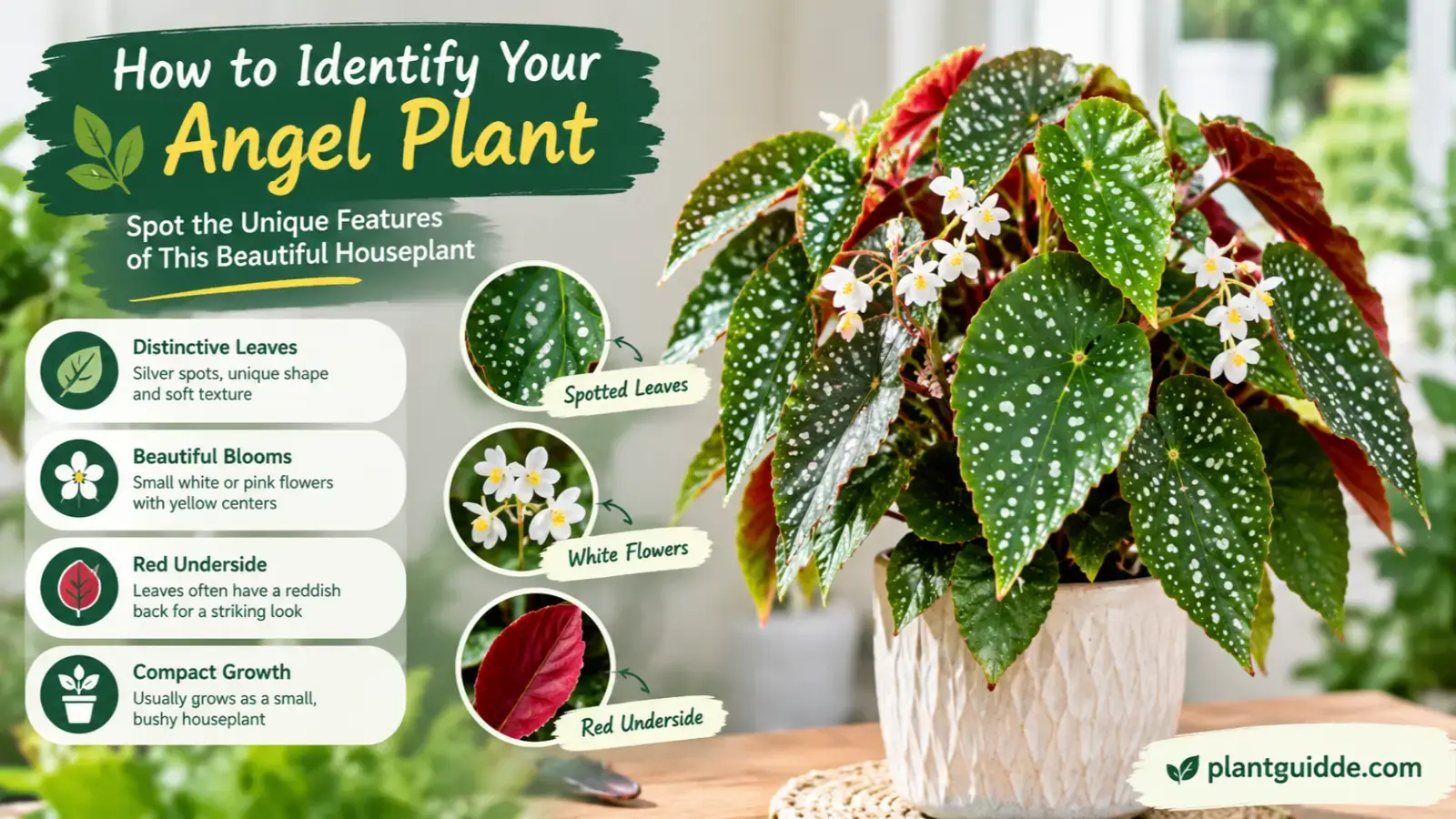
How to identify your angel plant
Check the plant tag first. Look for:
- Common plant name
- Botanical or scientific name
- Variety or cultivar
- Light requirements
- Watering instructions
- Brand information
If the tag is missing, take a clear photograph showing the entire plant, leaves, stems, and growth habit. Costa Farms specifically recommends sending a photo when a plant’s identity is unclear so it can be identified before applying variety-specific care instructions.
Practical tip: Do not choose a watering schedule simply because the plant was sold under the name “angel plant.” The actual species is much more useful than the marketing label.
Angel Plant Care at a Glance
| Care factor | Good starting point for many tropical Exotic Angel plants |
|---|---|
| Light | Bright, filtered or indirect light |
| Water | Water according to soil moisture and plant type |
| Soil | Well-draining indoor potting mix |
| Pot | Container with drainage holes |
| Temperature | Warm, stable indoor conditions |
| Humidity | Moderate humidity for many tropical varieties |
| Fertilizer | During active growth, according to species needs |
| Repotting | When roots become crowded or soil structure declines |
| Location | Away from heating/cooling drafts |
These are general starting points, not universal rules. Costa Farms emphasizes that there is no single care formula for the entire Exotic Angel collection because different varieties prefer different environments.
Light Requirements for Angel Plants
Light is one of the first things to get right.
Many tropical foliage plants sold under the Exotic Angel collection perform well in bright, indirect light. An east-facing window can provide useful morning light, while plants near stronger south- or west-facing windows may need some distance from intense direct afternoon sun.
The goal is not simply to find the brightest possible window. The goal is to provide enough usable light without exposing foliage to excessive heat or harsh direct sunlight.
Signs your angel plant needs more light
Watch for:
- Long, stretched stems
- Large gaps between leaves
- Slow new growth
- Loss of strong variegation
- Leaning toward the window
- Poor flowering in plants grown for blooms
Signs of excessive light
Depending on the species, excessive direct sun can cause:
- Bleached-looking leaves
- Brown or crispy patches
- Scorched foliage
- Faded variegation
- Rapid moisture loss
A useful approach is to change light gradually. If a plant has been growing in a relatively dim store or room, immediately placing it against a hot, sunny window can create unnecessary stress.
How to Water an Angel Plant
Watering is where many angel plants run into trouble.
There is no reliable rule such as “water every three days” or “water every Sunday.” Indoor soil dries at different speeds depending on pot size, temperature, humidity, light intensity, plant species, and the type of potting mix.
Instead, check the soil before watering.
For many foliage plants, insert your finger into the upper portion of the soil. If the appropriate depth feels dry according to the plant’s specific requirements, water thoroughly. If the soil is still wet, wait.
When watering:
- Water slowly and evenly across the soil.
- Continue until excess water begins leaving the drainage holes.
- Allow the pot to drain completely.
- Empty standing water from the saucer or decorative container.
- Check the soil again before the next watering.
Costa Farms specifically advises avoiding overwatering because saturated conditions can cause roots to drown and decline.
Why overwatering is often misunderstood
Overwatering does not simply mean giving a plant too much water on one particular day.
It often means the roots remain surrounded by wet soil for too long.
A plant can therefore be overwatered even when you use a modest amount of water if the container has poor drainage or the soil remains saturated for days.
Common warning signs include:
- Yellowing leaves
- Persistent drooping despite wet soil
- Soft stems
- Leaf drop
- A sour or unpleasant smell from the soil
- Slow growth
- Dark or deteriorating roots
However, these symptoms can have multiple causes. Always check the soil and growing conditions before assuming root rot.
Best Soil for Angel Plant Care
For most tropical foliage plants, choose a potting mix that holds enough moisture for the roots while still allowing excess water and air to move through the root zone.
A quality indoor potting mix can work well. Depending on the species, adding materials such as perlite or orchid bark can increase drainage and aeration.
The exact recipe should follow the plant rather than the “angel plant” label.
For example:
- Pothos: generally appreciates an airy, well-draining mix.
- Philodendron: benefits from an aerated mix that does not stay saturated.
- Calathea: usually needs moisture retention while still avoiding stagnant, waterlogged soil.
- Succulent-type plants: require substantially faster drainage than moisture-loving tropical foliage.
The container is equally important. A beautiful decorative pot is not a substitute for drainage.
If a nursery pot fits inside a decorative cachepot, make sure excess water is emptied rather than allowing the plant to sit in collected water.
Humidity and Temperature
Many plants sold as Exotic Angel varieties originate from tropical or subtropical environments, so stable indoor conditions generally help.
Avoid placing the plant directly beside:
- Air-conditioning vents
- Heating vents
- Radiators
- Frequently opened cold windows
- Strong hot drafts
- Very hot appliances
Costa Farms also recommends protecting Exotic Angel plants from drafts and sudden environmental changes.
Humidity requirements vary considerably between species. A fern or calathea may appreciate higher humidity than a pothos or snake plant.
If indoor air is very dry, a room humidifier can be more effective and consistent than repeatedly misting individual leaves.
Important: Increasing humidity cannot compensate for constantly wet soil. Root health still depends on proper drainage and watering.
Fertilizing Angel Plants
Fertilizer supports active growth, but more is not better.
For many foliage plants, feeding during periods of active growth is more useful than maintaining a heavy fertilizer routine throughout the year.
A balanced liquid houseplant fertilizer, diluted according to its label, can be appropriate for many common foliage varieties. Species-specific instructions should take priority.
Avoid fertilizing:
- Extremely dry soil
- A severely stressed or recently damaged plant
- Immediately after major root disturbance unless the plant’s instructions recommend it
- During periods when growth has substantially slowed
Excess fertilizer can accumulate in the soil and damage roots, particularly when watering is inconsistent.
Pruning and General Maintenance
Pruning depends on the plant’s natural growth habit.
For trailing plants such as pothos and some philodendrons, trimming long vines can encourage a fuller appearance. For cane-forming or upright plants, selective pruning can help manage height and shape.
Regularly remove:
- Completely dead leaves
- Severely damaged foliage
- Spent flowers where appropriate
- Diseased-looking plant material
Use clean, sharp scissors or pruning shears.
Do not remove healthy leaves simply because they are older or slightly imperfect. Green leaves still contribute to photosynthesis and can support the plant while it produces new growth.
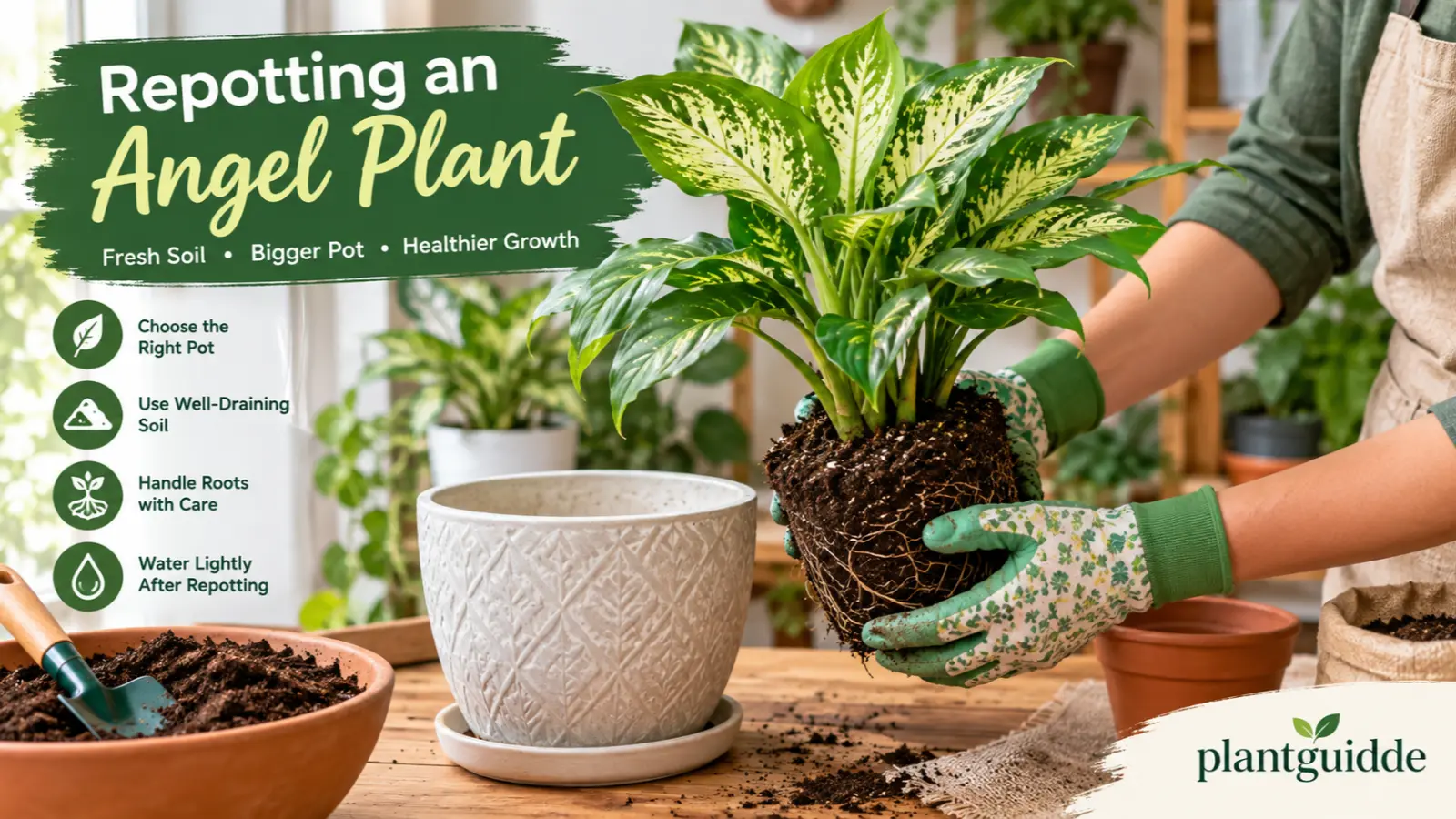
Repotting an Angel Plant
Do not repot simply because a plant has been in the same container for a certain number of months.
Look for evidence that repotting is actually needed:
- Roots circling heavily around the root ball
- Roots emerging from drainage holes
- Soil drying unusually quickly
- Severely compacted or degraded potting mix
- Growth becoming restricted despite suitable conditions
- A container that has clearly become too small
When repotting, avoid jumping into a dramatically larger container.
A pot that is much larger than the root system can hold more unused wet soil, potentially slowing drying and increasing the risk of root problems.
Costa Farms similarly recommends identifying the plant first and adapting care to its specific variety rather than applying one generic routine to every Exotic Angel plant.
Common Angel Plant Care Mistakes
Treating every angel plant the same
This is the biggest mistake.
A pothos, begonia, calathea, and succulent do not have identical needs simply because they carry the same collection label.
Following a fixed watering calendar
Indoor conditions change throughout the year. Soil that dries in five days during a bright, warm period may take considerably longer during cooler, darker conditions.
Check the soil instead.
Keeping the soil permanently wet
Moisture-loving does not mean waterlogged. Healthy roots need both water and access to oxygen.
Moving the plant repeatedly
A struggling plant often gets moved from one window to another every few days.
That can make diagnosis harder. Costa Farms notes that newly purchased plants may experience stress after moving from greenhouse to store to home and recommends giving them time to adjust rather than constantly changing their location.
Choosing a pot without drainage
A container without drainage makes watering much harder to control. If possible, keep the plant in a nursery pot with drainage inside the decorative container.
Adding fertilizer to solve every problem
Yellow leaves, slow growth, and pale foliage do not automatically mean nutrient deficiency. Light, roots, watering, temperature, pests, and natural leaf aging can all produce similar symptoms.
Find the cause before adding fertilizer.
Angel Plant Troubleshooting Guide
| Problem | Possible cause | What to check first |
|---|---|---|
| Yellow leaves | Excess moisture, aging foliage, stress | Check soil moisture and roots |
| Brown crispy tips | Dry air, inconsistent watering, intense light | Check humidity, soil, and window exposure |
| Drooping leaves | Dry soil, root problems, temperature stress | Feel the soil before watering |
| Leggy growth | Insufficient light | Move gradually toward brighter filtered light |
| Slow growth | Low light, root restriction, seasonal slowdown | Check light and roots |
| Leaf spots | Water on foliage, disease, environmental stress | Inspect leaves and airflow |
| Sudden leaf drop | Environmental change, watering issue, temperature stress | Review recent changes |
| Mushy roots | Prolonged saturation | Improve drainage and assess root damage |
Symptoms should be interpreted in context. For example, a drooping plant in completely dry soil requires a different response from a drooping plant sitting in saturated soil.
How to Revive a Struggling Angel Plant
Start with diagnosis instead of immediately changing everything.
1. Check the soil
Determine whether it is dry, slightly moist, or saturated.
2. Inspect the roots if necessary
If the soil stays wet for unusually long periods and the plant is declining, gently inspect the root system for signs of deterioration.
3. Evaluate light
Look at the plant’s current location rather than simply asking whether the room “feels bright.” A room can look bright to people while providing relatively weak light for plants.
4. Check for pests
Inspect both sides of the leaves and areas around stems and leaf joints. Look for webbing, cottony clusters, scale-like bumps, sticky residue, or unusual stippling.
5. Stop making multiple changes at once
Correct the most obvious problem first. Then observe the plant’s response.
This approach gives you useful information about what actually helped.
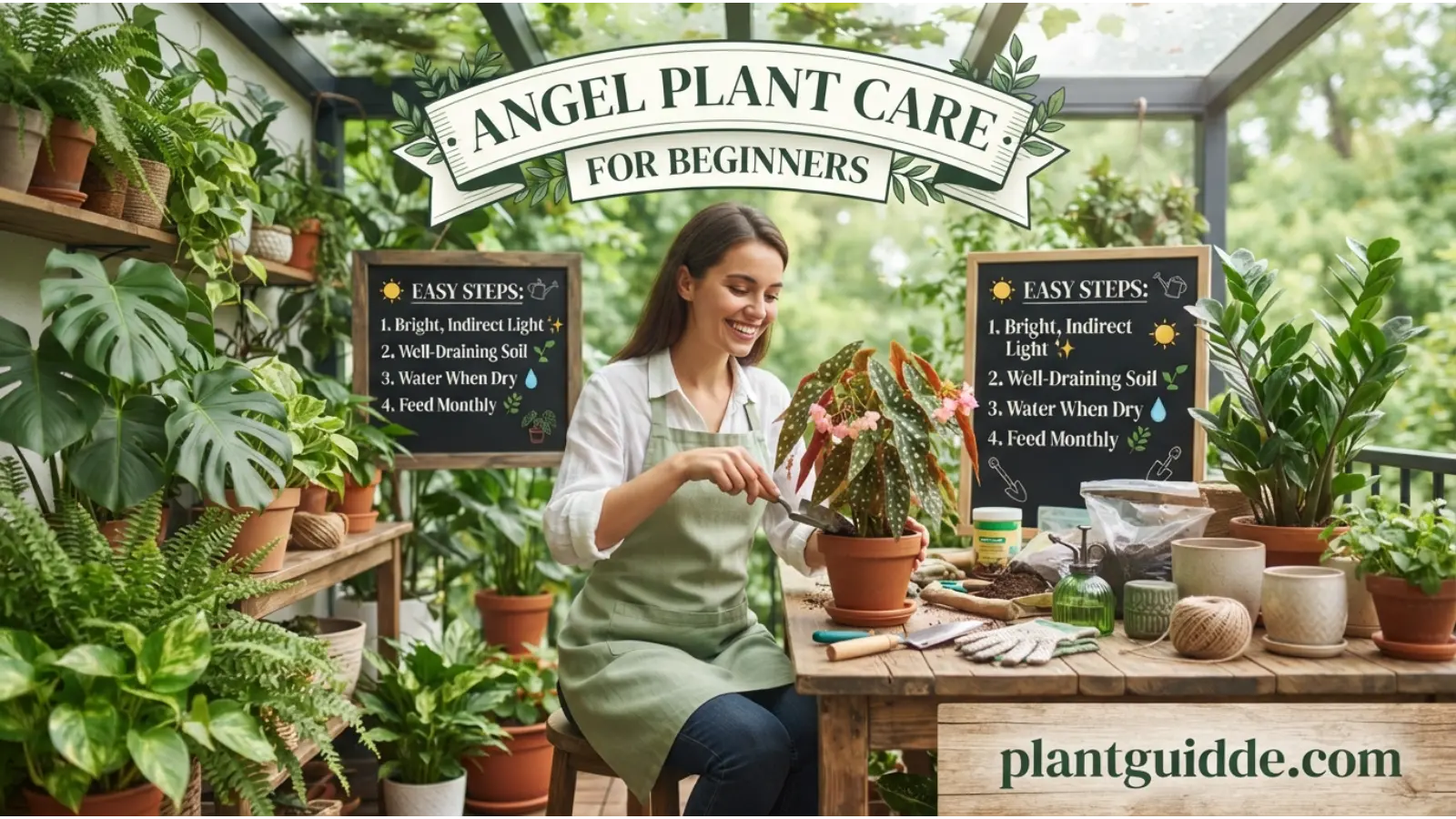
Angel Plant Care for Beginners
If you are new to houseplants, keep the routine simple:
Identify → place → observe → water when needed → reassess.
You do not need an elaborate collection of products to maintain most indoor plants.
Focus on five fundamentals:
- Know the plant’s actual identity.
- Give it appropriate light.
- Use a container with drainage.
- Water according to soil moisture and species requirements.
- Watch new growth for evidence that conditions are working.
Healthy new leaves are often more informative than trying to make every older leaf look perfect.
FAQs:
Is angel plant easy to care for?
It depends on the actual plant. Some varieties sold as Exotic Angel plants are very forgiving, while others require more consistent humidity, moisture, or light. Identification should come before choosing a care routine.
How often should I water an angel plant?
There is no universal schedule. Check the soil and water according to the species, pot size, light, temperature, and season. Avoid keeping the soil continuously saturated.
Does an angel plant need direct sunlight?
Many tropical foliage plants sold as Exotic Angel varieties prefer bright, filtered or indirect light rather than harsh direct afternoon sun. However, the correct light level depends on the specific species.
Why are my angel plant leaves turning yellow?
Yellow leaves can result from excess moisture, natural aging, environmental stress, root problems, or other issues. Check the soil first and consider recent changes in light, temperature, and watering.
What should I do if I don’t know which angel plant I have?
Look for the original plant tag. If it is missing, take a clear photo of the entire plant and its leaves and identify the species before changing its care routine. Costa Farms also advises customers with unidentified Exotic Angel plants to provide a photo for identification.
Final Thoughts
Successful angel plant care starts with recognizing that “angel plant” is not a single set of botanical requirements. If your plant belongs to the Exotic Angel collection, the brand label tells you where it came from, but the plant’s actual species tells you how to care for it.
Identify the plant, provide the right amount of light, keep water moving through well-draining soil, avoid unnecessary environmental changes, and respond to what the plant is actually showing you. That approach is far more reliable than following a rigid watering calendar or treating every angel-labeled plant the same.

Asad Mumtaz is a dedicated plant enthusiast and gardening writer with a passion for helping people care for their plants successfully. He specializes in plant care guides, indoor gardening, and practical growing tips for all skill levels. His content focuses on making gardening simple, enjoyable, and rewarding. Through his work, Asad shares reliable advice to help readers create thriving green spaces.