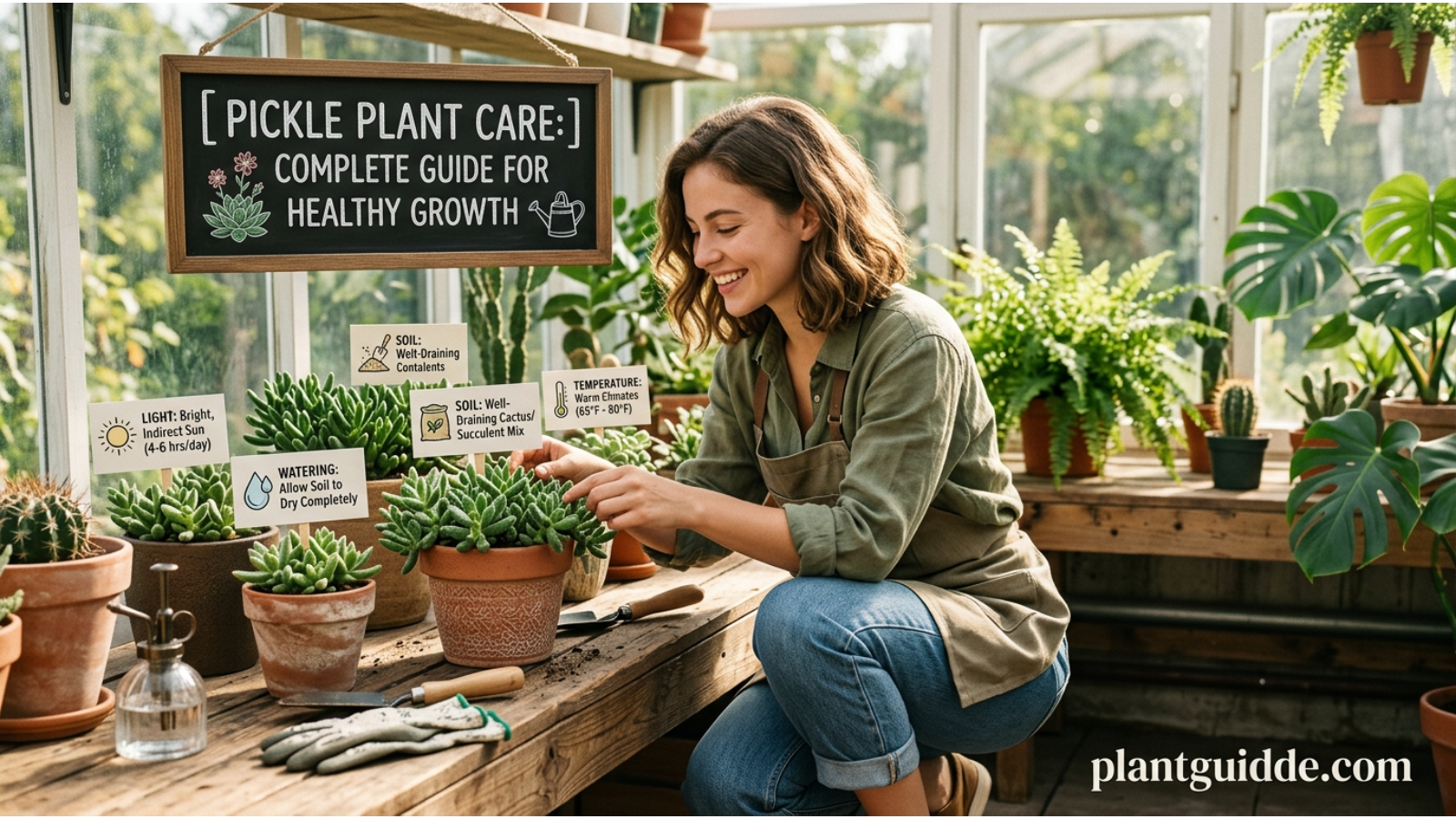
Pickle Plant Care, is a charming succulent known for its unusual, cucumber-like leaves covered with tiny translucent bumps. Its compact growth and drought tolerance make it appealing to beginners, but its unusual appearance can sometimes encourage overwatering.
Like many succulents, the biggest challenge is not giving it enough water, it is giving it water too often.
Good pickle plant care focuses on reproducing the dry, bright conditions this succulent prefers. With the right light, soil, watering routine, temperature, and occasional feeding, it can maintain firm green leaves and produce attractive growth without demanding constant attention.
Quick Answer
Pickle plant care is relatively easy when you provide bright light, fast-draining soil, and careful watering. The pickle plant (Delosperma echinatum) is a drought-tolerant succulent that stores moisture in its plump, pickle-shaped leaves. Let the soil dry thoroughly between waterings, avoid standing water, and protect the plant from prolonged cold or overly wet conditions.
What Is a Pickle Plant?
The pickle plant is commonly identified as Delosperma echinatum, a small succulent in the ice plant family, Aizoaceae. It gets its common name from its short, rounded leaves, which resemble tiny pickles.
The leaves are green, fleshy, and covered with small, bead-like structures that give the plant a distinctive texture. These leaves function as water-storage organs, allowing the plant to tolerate periods of dryness.
Pickle plants can be grown indoors in containers, where they usually remain relatively compact. In suitable warm climates, they may also be grown outdoors in a sunny, well-drained location.
One important point for beginners is that common plant names can vary by region. “Pickle plant” is sometimes used for other succulent species, so checking the botanical name on the plant label is useful when buying or diagnosing a plant.
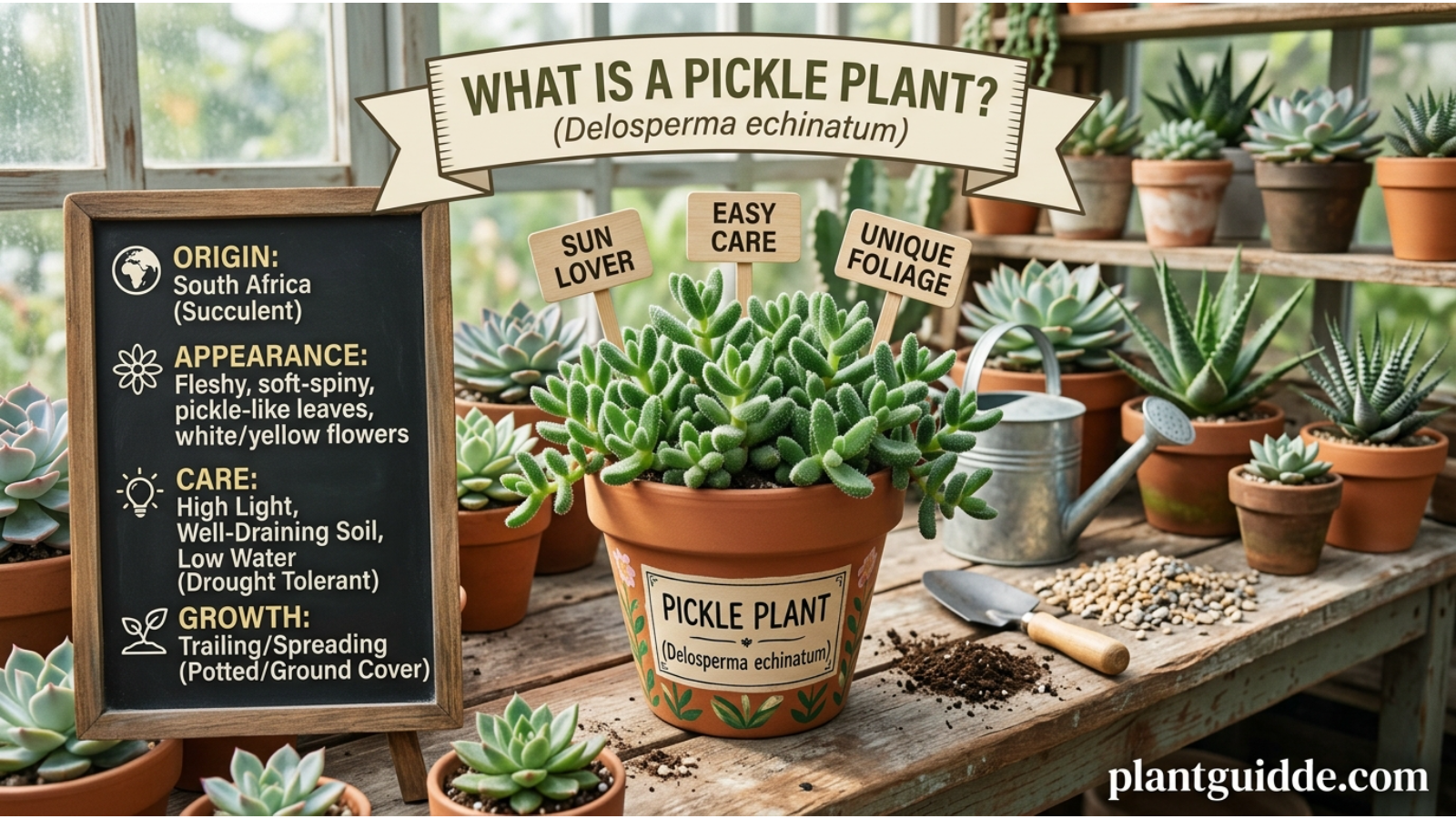
Pickle Plant Care Requirements at a Glance
| Care factor | Best condition |
|---|---|
| Light | Bright light with several hours of gentle direct sun |
| Soil | Fast-draining succulent or cactus mix |
| Water | Thoroughly water, then allow soil to dry well |
| Humidity | Average indoor humidity is generally suitable |
| Temperature | Warm conditions; protect from frost and prolonged cold |
| Fertilizer | Light feeding during active growth |
| Pot | Drainage hole is essential |
| Growth | Compact, branching, succulent growth |
| Propagation | Stem cuttings are a practical method |
How Much Light Does a Pickle Plant Need?
Bright light is one of the most important parts of successful pickle plant care.
Place the plant near a bright south- or west-facing window indoors, or another location that receives strong natural light. Several hours of gentle direct sunlight can help maintain compact growth and healthy, well-formed leaves.
A plant receiving too little light may become stretched or sparse. The stems can elongate as the plant searches for stronger light, leaving larger spaces between leaves.
Signs Your Pickle Plant Needs More Light
Watch for:
- Long, stretched stems
- Wide gaps between leaves
- Weak or floppy growth
- Slow development
- Reduced branching
- Pale-looking foliage
If your plant has been growing in low light, avoid suddenly moving it into intense midday sun. Gradually increase its exposure over several days or weeks to reduce the risk of sun damage.
Practical tip: Rotate the container occasionally so growth remains more balanced rather than leaning strongly toward the window.
How to Water a Pickle Plant
Watering is where many pickle plant owners make mistakes.
Although the plant needs water for active growth, its fleshy leaves hold moisture. Constantly damp soil can deprive the roots of oxygen and increase the risk of root problems.
Instead of watering according to a fixed calendar, check the soil.
A Better Watering Method
- Check the upper and middle portion of the potting mix.
- If the soil is still noticeably moist, wait.
- Once the mix has dried thoroughly, water deeply.
- Allow excess water to drain completely from the bottom.
- Empty any water collected in a saucer or decorative outer pot.
During bright, warm growing conditions, the plant may need water more frequently. In cooler or darker conditions, the soil generally dries more slowly, so watering should be reduced.
The goal is not to keep the soil slightly damp all the time. The goal is to provide a thorough drink followed by a sufficiently dry period.
How Do You Know When a Pickle Plant Needs Water?
The soil is usually a better indicator than the leaves alone.
A thirsty pickle plant may have leaves that look slightly less plump or feel somewhat softer than usual. However, do not wait for severe shriveling every time you water. Check the growing medium and the overall growing conditions.
What Soil Is Best for a Pickle Plant?
Pickle plants need a growing medium that drains quickly.
A standard moisture-retaining houseplant mix can stay wet around the roots for too long, particularly in a large container or poorly ventilated room.
A good succulent mix is usually a better starting point. You can improve drainage further by incorporating materials such as perlite, pumice, or coarse mineral components.
The exact recipe is less important than the result: water should move through the soil rather than remain trapped around the roots.
What Makes Good Pickle Plant Soil?
Look for a mix that:
- Drains rapidly
- Does not become compacted
- Allows air around the roots
- Dries reasonably quickly
- Does not remain soggy after watering
Avoid choosing a pot simply because it looks attractive. A beautiful container without drainage can create much more serious problems than an ordinary nursery pot with a proper drainage hole.
Choosing the Right Pot
The container should have a drainage hole at the bottom.
A pot that is dramatically larger than the root system is usually unnecessary. Excess soil around a small root system can stay wet for a long time after watering.
Choose a container that gives the roots enough room to develop without surrounding them with a large volume of unused, moisture-holding soil.
Terracotta can be particularly useful for succulent growers because its porous walls can allow the potting mix to dry more readily.
Temperature and Humidity
Pickle plants prefer warm growing conditions and generally perform well at ordinary indoor temperatures.
Protect them from frost and prolonged exposure to very cold conditions. Sudden temperature drops can cause stress, particularly when combined with wet soil.
Humidity is usually less of a concern than it is for tropical houseplants. You generally do not need to place a pickle plant beside a humidifier or regularly mist its leaves.
In fact, improving airflow and controlling watering is often more useful than deliberately increasing humidity.
Should You Fertilize a Pickle Plant?
Pickle plants do not require heavy feeding.
During active growth, a diluted balanced succulent or houseplant fertilizer can be applied occasionally according to the product’s directions. Avoid repeatedly applying concentrated fertilizer, particularly when the plant is stressed or the soil is very dry.
A simple approach is to fertilize lightly during the growing season and reduce or stop feeding when growth naturally slows.
Too much fertilizer can contribute to weak or excessively soft growth and may cause salt buildup in the potting mix.
How to Prune a Pickle Plant
Pruning is usually optional, but it can help maintain a compact appearance.
If stems become too long or uneven, use clean, sharp scissors or pruning shears to remove unwanted growth. Avoid making large cuts when the plant is already stressed by excessive moisture, cold, or poor light.
Healthy cuttings can also provide an opportunity for propagation.
Remove dead, damaged, or severely unhealthy portions as needed, but avoid repeatedly cutting healthy growth simply to make the plant look perfectly symmetrical.
How to Propagate a Pickle Plant
Stem cuttings are one of the easiest ways to propagate a healthy pickle plant.
Propagation by Stem Cutting
- Select a healthy stem with several leaves.
- Make a clean cut using sterilized scissors or shears.
- Allow the cut end to dry and form a callus.
- Place the cutting in a suitable, well-draining succulent medium.
- Keep the medium only lightly managed rather than constantly wet.
- Provide bright, indirect or filtered light while the cutting establishes.
- Once roots and new growth develop, gradually treat it like a mature plant.
Avoid burying a large portion of the cutting in wet soil. Succulent cuttings are particularly vulnerable to rot when moisture remains around fresh wounds.
How Fast Does a Pickle Plant Grow?
Growth depends heavily on light, temperature, watering, and the plant’s overall health.
A pickle plant receiving strong light during active growth can produce new stems relatively steadily. In darker indoor conditions, growth may become slower and more elongated.
Do not assume slow growth automatically means the plant needs more fertilizer. First check whether it has enough light and whether the roots and soil are healthy.
Increasing fertilizer cannot compensate for inadequate light.
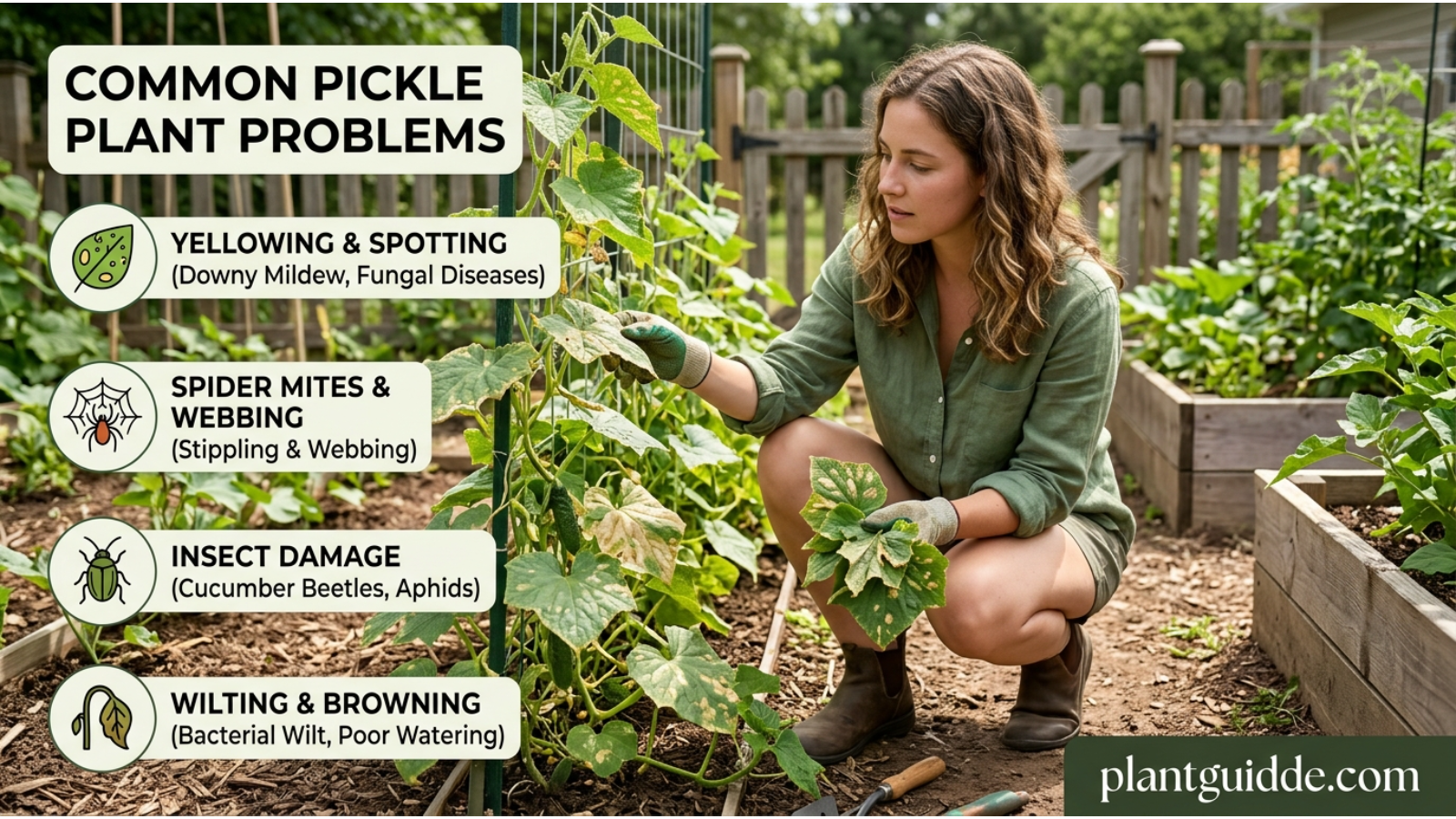
Common Pickle Plant Problems
Understanding symptoms is more useful than reacting to every change with additional water or fertilizer.
Pickle Plant Leaves Turning Yellow
Yellow leaves can have several causes, but excessive moisture is an important one to investigate.
Check:
- How often you are watering
- Whether the soil is still wet
- Whether the pot has a drainage hole
- Whether the container is excessively large
- Whether the plant is receiving enough light
If several leaves are turning yellow while the soil stays wet for long periods, rethink the watering and drainage conditions before adding anything to the soil.
Pickle Plant Leaves Are Soft or Mushy
Soft, translucent, or mushy tissue is more concerning than ordinary slight shriveling.
It can indicate excess moisture, tissue damage, or developing rot.
Remove the plant from its container if you suspect serious root problems and inspect the roots and lower stems. Healthy roots should not be persistently slimy, foul-smelling, or extensively decomposed.
If rot has affected a stem but healthy tissue remains above the damaged area, propagation from healthy portions may sometimes be possible.
Pickle Plant Is Shriveling
Shriveling does not always mean the plant needs immediate watering.
Check the soil first.
If the soil is completely dry and the plant has been in bright, warm conditions, dehydration is a reasonable possibility. Give it a thorough watering and allow excess water to drain.
If the soil is already wet, adding more water can make the underlying problem worse.
Pickle Plant Is Becoming Leggy
Leggy growth usually points toward insufficient light.
Move the plant gradually toward a brighter location. Once it receives stronger light, new growth should have shorter spaces between leaves.
Pruning the stretched stems can improve appearance, but correcting the light is the long-term solution.
Pickle Plant Dropping Leaves
Leaf drop can occur after environmental stress, including:
- Sudden changes in light
- Cold temperatures
- Overwatering
- Root damage
- Major changes in watering
- Poor growing conditions
Look at the pattern rather than treating leaf drop as a single diagnosis.
If leaves are dropping while the soil is consistently wet, inspect the roots and improve drainage. If the plant is dry and severely shriveled, dehydration may be more likely.
Pickle Plant Care Mistakes to Avoid
The easiest way to improve your routine is to avoid the mistakes that repeatedly cause problems.
Watering on a Fixed Schedule
“Water every Sunday” sounds simple, but indoor conditions change.
A plant in a bright, warm window may dry much faster than one several feet away in a cool room. Check the soil instead.
Using Heavy Potting Soil
Succulents generally perform better when excess water can leave the root zone efficiently. Dense soil can make otherwise reasonable watering habits problematic.
Keeping the Plant in Low Light
Pickle plants may tolerate less-than-ideal conditions temporarily, but weak light can produce stretched growth and slower development.
Using a Decorative Pot Without Drainage
A container that traps water at the bottom can create a hidden root problem even when the surface of the soil appears dry.
Watering a Sick Plant Automatically
Yellow, soft, or dropping leaves do not automatically mean the plant is thirsty. Always inspect the soil before watering.
Moving It Into Harsh Sun Too Quickly
A plant accustomed to indoor low light can suffer leaf damage if suddenly exposed to intense direct sunlight. Acclimate it gradually.
Indoor Pickle Plant Care: A Practical Setup
For a simple indoor arrangement, place your pickle plant near the brightest suitable window in your home.
Use a container with drainage and a fast-draining succulent mix. Keep it away from locations where water repeatedly splashes onto the foliage or where cold drafts are common.
A useful routine is:
- Check the soil every few days rather than automatically watering.
- Rotate the pot periodically.
- Inspect the stems and leaves during watering.
- Remove dead material when necessary.
- Fertilize lightly during active growth.
- Reduce watering when light and temperatures decrease.
This approach is more reliable than trying to follow a rigid watering calendar.
Outdoor Pickle Plant Care
In suitable warm climates, pickle plants can be grown outdoors where drainage is excellent.
Choose a location that receives plenty of light and does not remain waterlogged after rain. If your outdoor soil is heavy clay or holds water, growing the plant in a raised or containerized setup may be more reliable.
Outdoor plants may require more attention to extreme heat, prolonged rainfall, sudden cold, and intense sun exposure.
A plant that thrives in a protected indoor window may need gradual acclimation before being placed outside.
Image Suggestion: A realistic close-up of a healthy pickle plant showing its plump, cucumber-like leaves, branching stems, well-draining succulent soil, and a drainage-hole pot beside a bright sunny window.
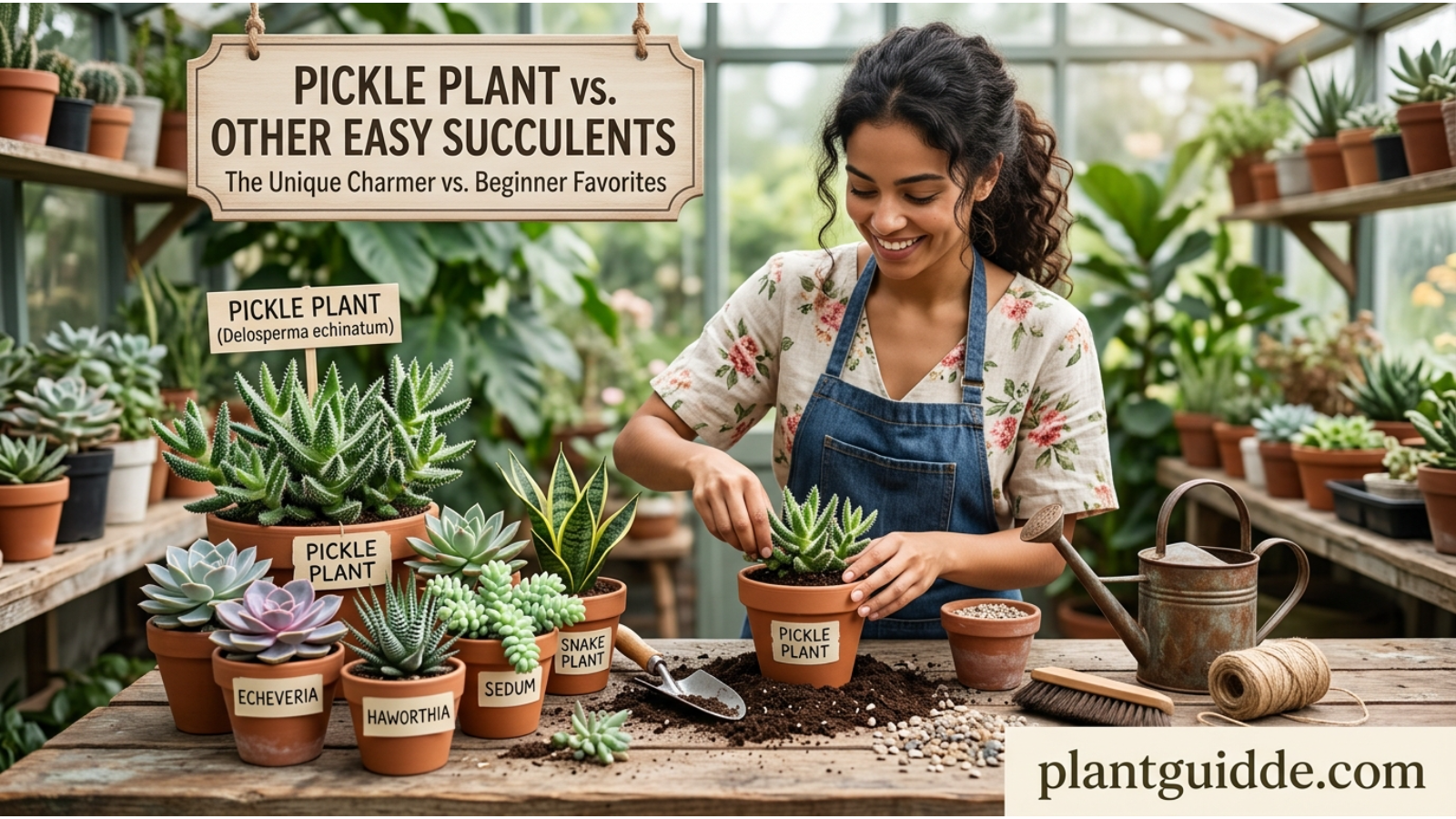
Pickle Plant vs. Other Easy Succulents
Pickle plants share many basic requirements with other drought-tolerant succulents, but their appearance and growth habit are distinctive.
| Feature | Pickle Plant | Typical Succulent |
|---|---|---|
| Water storage | Fleshy leaves | Leaves, stems, or both |
| Light | Bright light preferred | Usually bright light |
| Soil | Fast draining | Fast draining |
| Overwatering tolerance | Low | Usually low |
| Humidity requirement | Generally modest | Usually modest |
| Indoor growing | Possible | Common for many species |
| Main beginner concern | Excess moisture and weak light | Excess moisture |
The important lesson is that “drought tolerant” does not mean “immune to poor care.” Succulents can survive dry periods, but their roots still need oxygen and healthy growing conditions.
FAQs:
How often should you water a pickle plant?
Water when the soil has dried thoroughly rather than following a fixed weekly schedule. Water deeply enough to moisten the root zone, then allow excess water to drain completely. Bright, warm conditions may require more frequent watering than cool, low-light conditions.
Does a pickle plant need full sun?
A pickle plant benefits from bright light and can handle direct sunlight when properly acclimated. If it has been growing indoors under weaker light, introduce stronger direct sun gradually to reduce the risk of leaf damage.
Why is my pickle plant turning yellow?
Yellow leaves can result from excessive moisture, poor drainage, inadequate light, root problems, or other stress. Start by checking the soil moisture and drainage rather than automatically watering or fertilizing the plant.
Can you grow a pickle plant indoors?
Yes. Pickle plants can grow successfully indoors when placed in a bright location and planted in a fast-draining medium. A sunny window, suitable container, and careful watering routine are more important than high humidity.
Can you propagate a pickle plant from cuttings?
Yes. Healthy stem cuttings can be used for propagation. Allow a fresh cutting to callus before placing it into a suitable succulent growing medium, and avoid keeping the medium constantly wet while roots are developing.
Final Thoughts on Pickle Plant Care
Successful pickle plant care comes down to giving the plant conditions that match its succulent nature: strong light, rapid drainage, sensible watering, and warm, stable growing conditions.
The most useful habit is to stop treating watering as a calendar task. Check the soil, consider the light and temperature, and then decide whether the plant actually needs water.
When you combine that approach with a well-draining pot and adequate light, the pickle plant can remain compact, healthy, and attractive with surprisingly little maintenance.

Asad Mumtaz is a dedicated plant enthusiast and gardening writer with a passion for helping people care for their plants successfully. He specializes in plant care guides, indoor gardening, and practical growing tips for all skill levels. His content focuses on making gardening simple, enjoyable, and rewarding. Through his work, Asad shares reliable advice to help readers create thriving green spaces.