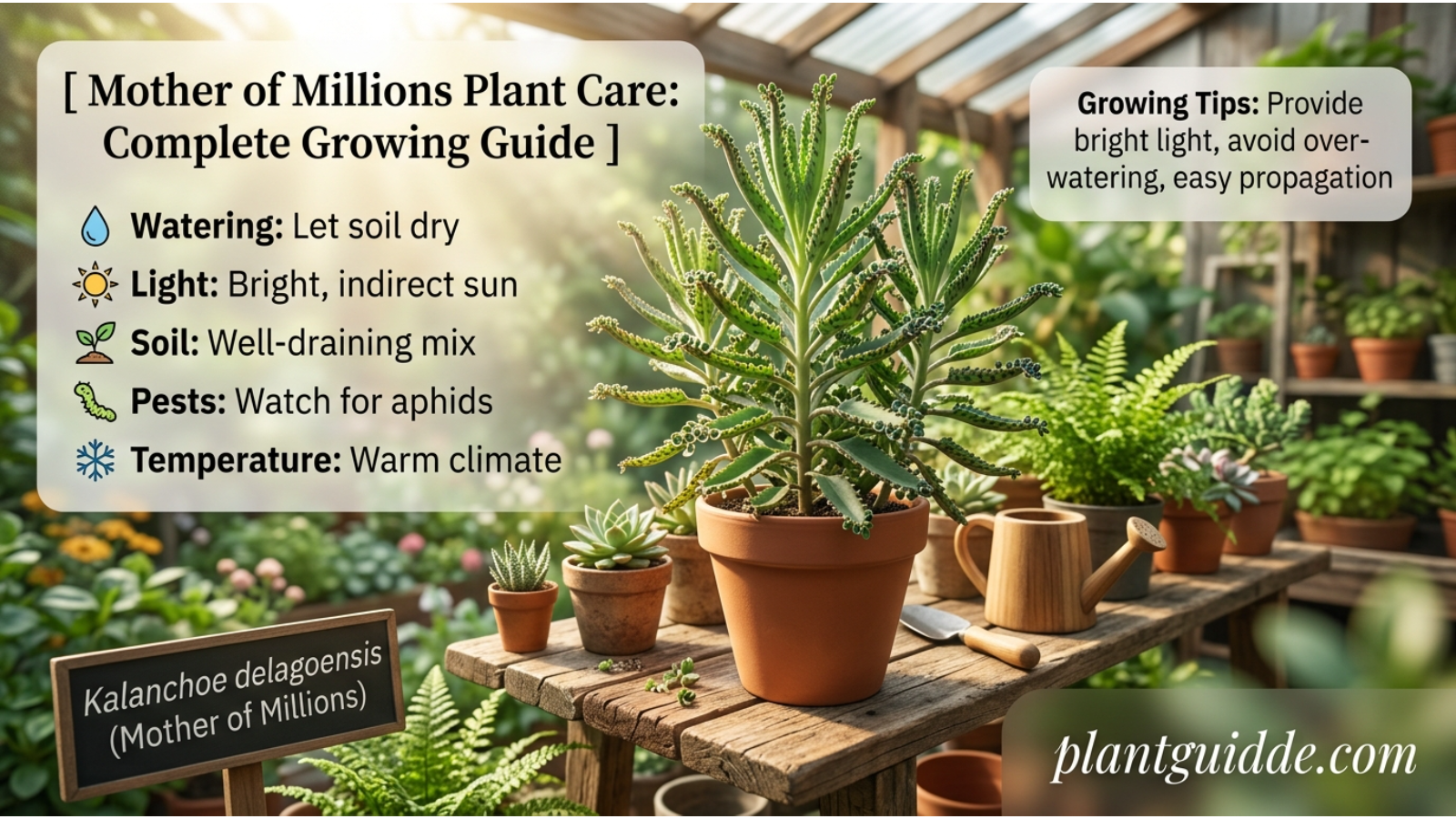
Mother of Millions Plant Care (Kalanchoe delagoensis) is a striking succulent known for producing tiny plantlets along the edges of its narrow, upright leaves. Those plantlets make propagation remarkably easy, but they can also make the plant surprisingly prolific.
The biggest mistake with mother of millions plant care is usually treating it like an ordinary tropical houseplant. It stores water in its leaves and prefers conditions that allow the growing medium to dry between waterings.
Too little light can also cause weak, stretched growth and reduce the plant’s compact appearance.
With strong light, excellent drainage, and careful watering, Mother of Millions can remain healthy for years with relatively little maintenance.
Quick Answer
Mother of Millions plant care is easiest when you treat this Kalanchoe as a drought-tolerant succulent. Give it several hours of bright light, fast-draining soil, a pot with drainage holes, and water only after the soil has dried well.
Avoid frequent watering and consistently damp soil, which can quickly lead to root or stem problems. Remove fallen plantlets to prevent unwanted spread.
What Is a Mother of Millions Plant?
Mother of Millions is a succulent in the genus Kalanchoe, commonly associated with Kalanchoe delagoensis. It is sometimes sold under names such as chandelier plant or mother of millions.
Its most recognizable feature is the production of small plantlets along the margins or tips of its leaves. Once mature enough, these plantlets can detach and root wherever they land on suitable soil.
The plant typically develops narrow, upright, gray-green leaves and can become quite tall when grown under favorable conditions. With strong sunlight, the leaves may develop attractive reddish or purplish markings around their edges.
Unlike many leafy houseplants, it does not need constantly moist soil. Its succulent tissues are designed to store water, making the plant much more tolerant of short dry periods than prolonged wet conditions.
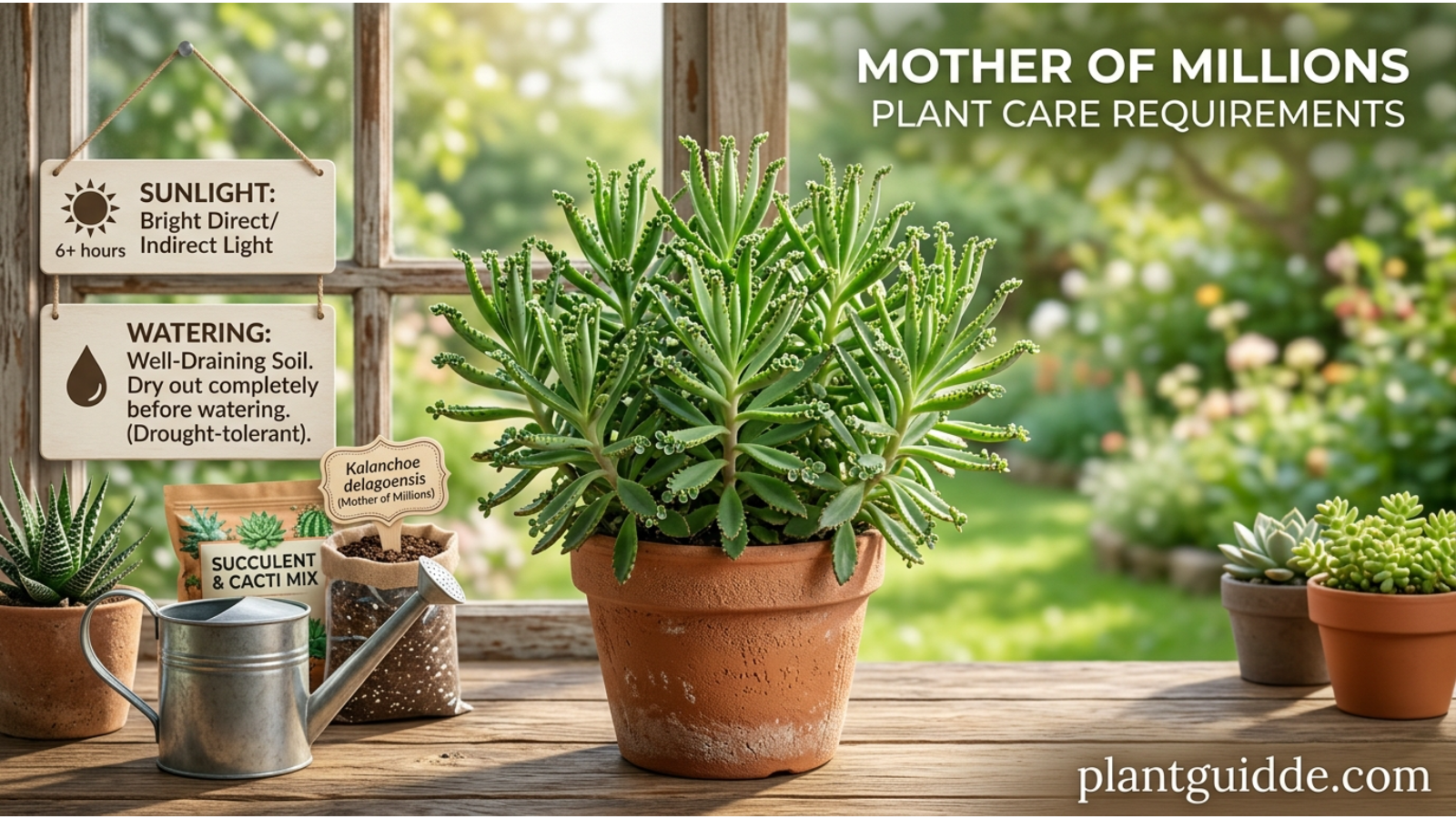
Mother of Millions Plant Care Requirements
| Care factor | Best conditions |
|---|---|
| Light | Bright light, including several hours of direct sun when acclimated |
| Soil | Fast-draining cactus or succulent mix |
| Water | Thoroughly water, then allow the soil to dry well |
| Humidity | Average household humidity is usually sufficient |
| Temperature | Warm conditions; protect from frost |
| Fertilizer | Light feeding during active growth |
| Pot | Container with drainage holes |
| Propagation | Plantlets, stem cuttings, or suitable leaf material |
| Repotting | When roots become crowded or soil drainage declines |
| Main risk | Overwatering and poor drainage |
How Much Light Does Mother of Millions Need?
Bright light is one of the most important parts of successful mother of millions plant care.
A sunny window, bright conservatory, greenhouse, or well-lit outdoor position can work well. Indoors, a south- or west-facing window may provide enough light, although intense afternoon sun through glass can be harsh in some climates.
A plant that receives inadequate light may become:
- Tall and stretched
- Thin or weak
- Less compact
- Pale or dull in color
- Less attractive in its overall shape
If you are moving a plant from a low-light indoor location into direct outdoor sunlight, do it gradually. Sudden exposure to intense sun can cause leaf scorch.
Practical tip: If the plant is leaning strongly toward a window or producing unusually long gaps between leaves, light is one of the first conditions to check.
How to Water Mother of Millions
Watering is where many problems with Mother of Millions begin.
Rather than watering on a fixed weekly schedule, check the soil. When the growing medium has dried substantially, water thoroughly until excess water drains from the bottom of the pot. Then allow the soil to dry again before watering.
Avoid giving small amounts of water repeatedly while the soil remains damp underneath.
Signs the plant needs water
A thirsty Mother of Millions may show:
- Slightly softer or less firm leaves
- Mild leaf wrinkling
- Reduced growth
- A noticeably dry growing medium
One dry period is generally less concerning than repeatedly keeping the roots wet.
Signs of overwatering
Persistent excess moisture can contribute to:
- Yellowing leaves
- Soft or mushy stems
- Leaf drop
- Darkened or damaged roots
- Unpleasant-smelling soil
- Root rot
If the soil stays wet for many days after watering, do not simply reduce the amount of water. Check the drainage, pot size, soil composition, and light level.
Best Soil for Mother of Millions
Mother of Millions needs a growing medium that drains rapidly rather than holding moisture around the roots.
A quality commercial cactus or succulent mix is a convenient starting point. If the mix remains wet for too long, improve drainage by incorporating an appropriate mineral component such as pumice or perlite.
The exact recipe matters less than the result: water should move through the root zone rather than creating a permanently wet environment.
Avoid heavy garden soil or dense potting mixes when growing the plant in containers.
Choosing the Right Pot
A drainage hole is more important than the material or appearance of the container.
A decorative pot without drainage can allow water to accumulate around the roots, even when the surface of the soil looks dry.
Choose a pot that:
- Has at least one functional drainage hole
- Is appropriate for the current root system
- Does not hold an excessive volume of wet soil
- Allows excess water to escape freely
When repotting, avoid jumping into a dramatically oversized container. A very large pot can retain moisture for longer than the plant’s root system can use.
Temperature and Humidity
Mother of Millions prefers warm growing conditions and should be protected from frost and freezing temperatures.
Typical indoor temperatures are usually suitable. Problems become more likely when the plant is exposed to cold conditions, especially when wet soil is combined with low temperatures.
Unlike many tropical houseplants, it does not require high humidity to remain healthy. Average indoor humidity is generally adequate.
This means there is usually no need to place it beside a humidifier simply because it is a Kalanchoe.
Better approach: Focus on strong light, warm temperatures, airflow, and well-draining soil rather than trying to create a very humid environment.
Does Mother of Millions Need Fertilizer?
Mother of Millions is not a heavy feeder.
During active growth, you can use a balanced fertilizer diluted according to the product’s instructions. Feeding too frequently or using a strong concentration can contribute to excessive, weak growth or fertilizer accumulation in the soil.
A practical approach is to fertilize sparingly during the growing season and reduce or stop feeding when growth naturally slows.
If the plant is growing well in fresh, nutrient-containing succulent soil, frequent fertilization is usually unnecessary.
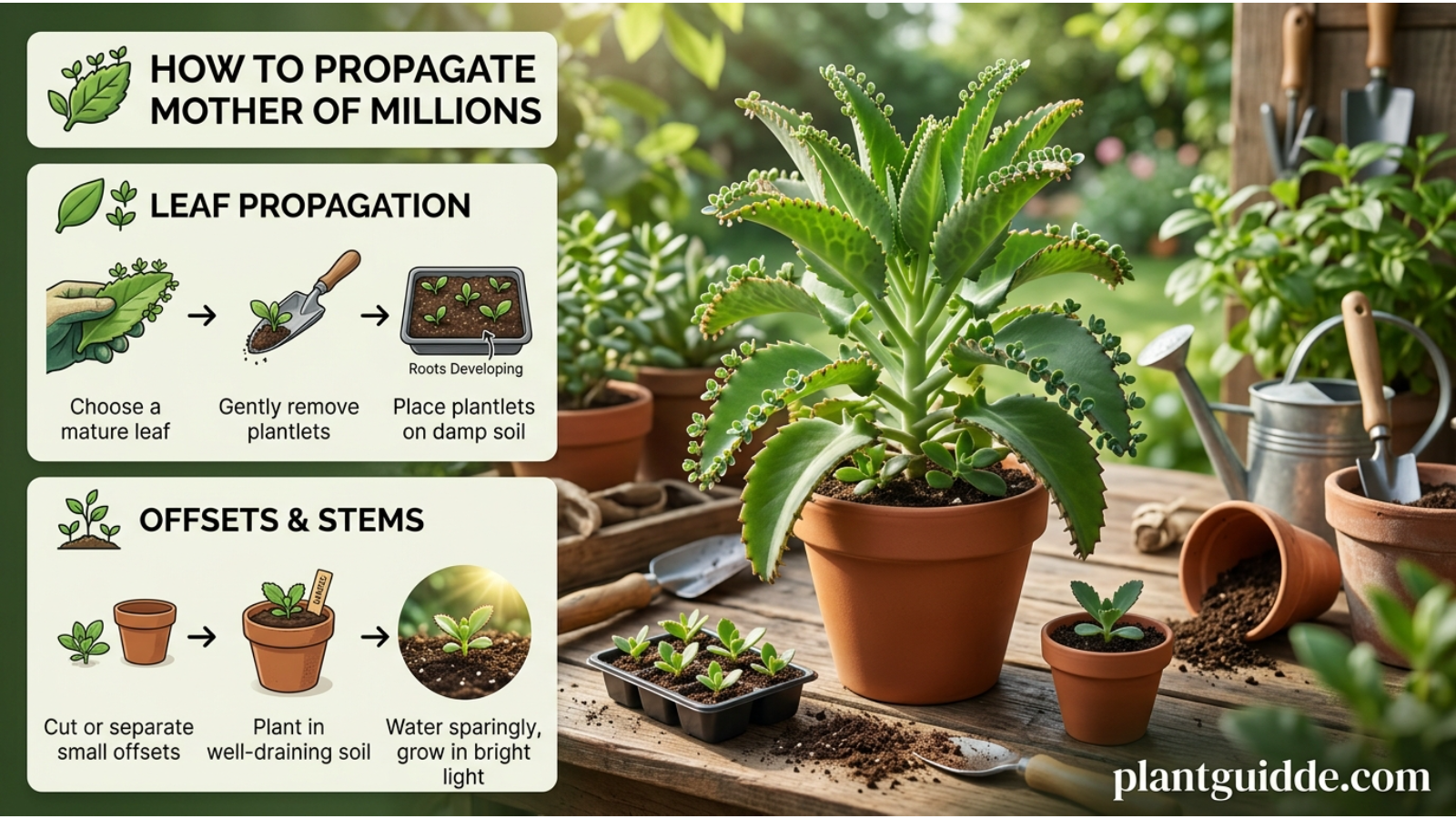
How to Propagate Mother of Millions
Propagation is one of the easiest parts of Mother of Millions plant care.
The plant naturally produces tiny plantlets along its leaves. These can eventually detach and establish themselves in suitable growing conditions.
Propagating from plantlets
- Allow mature plantlets to develop.
- Gently collect detached or well-developed plantlets.
- Place them on or lightly into a well-draining succulent growing medium.
- Provide bright, indirect-to-bright light while they establish.
- Keep the medium from becoming constantly wet.
- Once rooted and actively growing, gradually transition them to stronger light as appropriate.
You do not need to bury a small plantlet deeply. Excess moisture around a tiny developing root system can be more harmful than a slightly dry surface.
Why propagation can become a problem
The same feature that makes this plant easy to propagate can allow it to spread beyond the container.
Plantlets may fall onto nearby pots, garden beds, cracks, or other areas where they can establish. In warm climates, this can become difficult to control.
If you grow Mother of Millions outdoors, check local guidance regarding invasive plants and dispose of unwanted plant material responsibly.
When and How to Repot Mother of Millions
Repot when the plant has outgrown its container, roots are becoming crowded, or the existing growing medium has broken down and no longer drains properly.
Spring or the beginning of active growth is generally a convenient time for repotting.
To repot:
- Select a container with drainage holes.
- Prepare a fresh, fast-draining succulent mix.
- Remove the plant carefully.
- Inspect the roots for obvious damage or rot.
- Remove severely damaged material with clean tools if necessary.
- Place the plant at approximately the same depth.
- Fill around the root ball with fresh soil.
- Allow the plant to settle before returning to its normal watering routine.
Do not automatically water a freshly repotted succulent simply because it has been moved into a new pot. The appropriate timing depends on the condition of the roots, soil, and plant.
Pruning Mother of Millions
Pruning is mainly useful for controlling height, removing damaged growth, and maintaining a manageable shape.
If the plant becomes tall or top-heavy, a healthy stem can be cut back with a clean tool. The remaining plant may produce new growth, while the healthy cutting can potentially be used for propagation.
Remove dead or badly damaged leaves as needed.
Because the plant can produce numerous plantlets, regularly removing unwanted offspring can also help prevent overcrowding.
Common Mother of Millions Plant Problems
Mother of Millions leaves turning yellow
Yellow leaves can have several causes, but excessive moisture is one of the first things to investigate.
Check:
- How often you water
- Whether the soil is actually drying
- Whether the pot has drainage
- Whether the soil is dense
- Whether the plant receives enough light
If several lower leaves are yellow while the soil remains wet, overwatering becomes particularly suspicious.
Leaves becoming soft or mushy
Soft leaves or stems are more concerning than normal dryness.
Inspect the plant and root zone for signs of rot. Reduce moisture and correct the underlying drainage problem rather than simply waiting for the plant to recover.
If rot has progressed into the stem or roots, healthy portions may need to be separated and propagated.
Mother of Millions becoming tall and leggy
Leggy growth is often associated with insufficient light.
Move the plant toward a brighter location gradually. Avoid immediately placing a plant that has been living in shade under intense midday sunlight, because sudden exposure can scorch the foliage.
Pruning can improve the shape, but better light is what addresses the underlying cause.
Leaves dropping
Occasional lower-leaf loss can occur naturally as a plant grows older, but widespread leaf drop deserves investigation.
Possible causes include:
- Excessive watering
- Root damage
- Sudden temperature changes
- Poor lighting
- Severe drought
- Physical damage
Look at the soil and roots rather than diagnosing the problem from the fallen leaves alone.
Brown or scorched leaves
Brown patches can result from intense sunlight, particularly when the plant was previously grown under lower light.
If scorching occurs after a sudden change in exposure, provide temporary protection and increase sunlight more gradually.
Mother of Millions Plant Care: Common Mistakes to Avoid
The easiest way to improve your routine is to avoid these common errors:
Watering by calendar: A fixed schedule ignores changes in temperature, light, soil, and pot size. Check the growing medium instead.
Using heavy soil: Succulents generally perform poorly when their roots remain in dense, wet soil.
Keeping it in deep shade: Drought tolerance does not mean the plant thrives without sufficient light.
Using a pot without drainage: Excess water needs a way to escape.
Overfertilizing: More fertilizer does not automatically mean faster or healthier growth.
Moving it suddenly into harsh sun: A plant adapted to indoor or shaded conditions needs time to acclimate.
Ignoring plantlets: A few fallen plantlets can quickly turn into many new plants.
Keeping the plant constantly humid: Mother of Millions does not need the high-humidity conditions required by many tropical foliage plants.
Is Mother of Millions Toxic?
Mother of Millions and other Kalanchoe plants can contain compounds that are toxic if eaten, particularly to pets and livestock.
Keep the plant away from animals that may chew its leaves or fallen plantlets. Children should also be discouraged from handling or consuming plant material.
If ingestion occurs, contact an appropriate veterinarian, poison-control service, or medical professional for guidance rather than waiting for symptoms to develop.
When handling large amounts of plant material, especially during pruning or propagation, basic hygiene such as washing your hands afterward is a sensible precaution.
Mother of Millions vs. Mother of Thousands
The names are often confused because both plants produce numerous plantlets.
Mother of Millions is commonly associated with Kalanchoe delagoensis and typically has narrow, upright leaves with plantlets concentrated toward the leaf margins or tips.
Mother of Thousands commonly refers to related Kalanchoe plants with broader leaves and plantlets developing along the leaf edges.
The exact names used by nurseries can vary, so checking the botanical name is more reliable than relying only on the common name.
A Simple Mother of Millions Care Routine
For beginners, you do not need a complicated schedule.
Every few days: Check the plant visually for obvious changes, pests, or damage.
Before watering: Feel the growing medium rather than watering automatically.
When the soil has dried: Water thoroughly and allow excess water to drain completely.
Every few weeks during active growth: Check whether the plant needs feeding, pruning, or repositioning.
Every few months: Inspect the roots, pot drainage, plantlets, and overall shape.
Throughout the year: Adjust watering according to light, temperature, season, and how quickly the soil dries.
The goal is not to make the plant follow a rigid calendar. The goal is to respond to what the plant and growing medium are actually telling you.

FAQs:
How often should I water a Mother of Millions plant?
Water when the growing medium has dried substantially, then soak the soil thoroughly and let excess water drain away. The exact interval varies with light, temperature, pot size, and soil, so calendar-based watering is less reliable than checking the soil.
Does Mother of Millions need full sun?
It grows best with plenty of bright light and can tolerate direct sun when properly acclimated. Plants moved suddenly from low light into intense sunlight can suffer leaf scorch, so increase exposure gradually.
Why are my Mother of Millions leaves falling off?
Leaf drop can result from overwatering, root problems, inadequate light, temperature stress, drought, or natural aging of older leaves. Check the soil moisture and root condition before changing your care routine.
Can Mother of Millions grow indoors?
Yes. It can grow well indoors when placed in a bright location with good airflow and a fast-draining growing medium. A very dark room is unlikely to provide enough light for strong, compact growth.
Can Mother of Millions survive winter?
It can tolerate cooler conditions better than many tropical houseplants, but freezing temperatures can seriously damage it. In cold climates, grow it in a container and move it to a protected location before frost or freezing weather.
Final Thoughts
Successful mother of millions plant care comes down to a few fundamentals: provide plenty of light, use fast-draining soil, choose a pot with drainage, and let the growing medium dry well between thorough waterings.
The plant’s ability to produce countless plantlets is both its most interesting feature and the reason it deserves some management. Keep unwanted plantlets contained, protect the plant from freezing temperatures, and avoid the temptation to water it like a typical foliage houseplant.
If you remember only one principle, make it this: give Mother of Millions more attention to drainage and light than to frequent watering.

Asad Mumtaz is a dedicated plant enthusiast and gardening writer with a passion for helping people care for their plants successfully. He specializes in plant care guides, indoor gardening, and practical growing tips for all skill levels. His content focuses on making gardening simple, enjoyable, and rewarding. Through his work, Asad shares reliable advice to help readers create thriving green spaces.