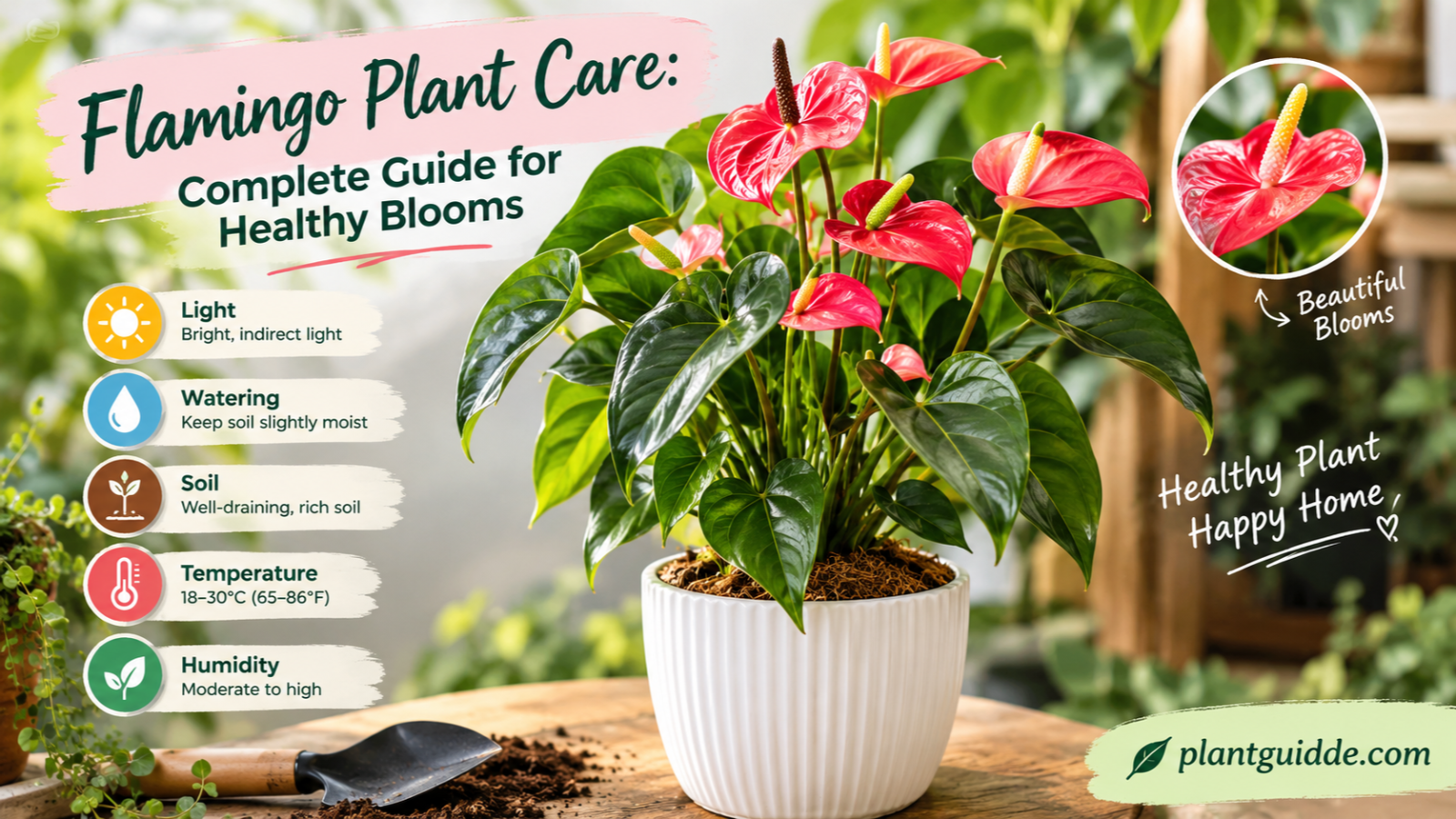
Flamingo plant care are popular houseplants because their glossy green leaves and brightly colored flowers can make a room feel instantly more tropical. The flowers are often mistaken for petals, but the colorful structure is actually a modified leaf called a spathe, surrounding the plant’s small true flowers on a spike called a spadix.
The challenge is that anthuriums can be less forgiving of inconsistent conditions than their appearance suggests. Brown leaf tips, yellow leaves, drooping, curling foliage, root problems, and a lack of flowers are usually signs that something in the growing environment needs attention.
Good flamingo plant care is therefore not about constantly adjusting the plant. It is about creating conditions that remain reasonably stable. Once light, moisture, humidity, temperature, and drainage are balanced, anthuriums are capable of producing attractive foliage and flowers with surprisingly little daily attention.
Quick Answer
Flamingo plant care is mainly about bright, indirect light, evenly moist but well-draining soil, moderate to high humidity, warmth, and gentle feeding during active growth. The flamingo plant, commonly sold as an Anthurium, is sensitive to overwatering, harsh sunlight, cold drafts, and very dry air. With stable conditions and occasional pruning, it can produce colorful flowers and healthy glossy foliage for much of the year.
What Is a Flamingo Plant?
The name “flamingo plant” commonly refers to Anthurium, a large genus of tropical plants in the arum family, Araceae. One of the most widely grown houseplant species is Anthurium andraeanum, along with numerous hybrids and cultivars.
Depending on the variety, the colorful spathe may be red, pink, white, orange, purple, or combinations of these shades. The leaves are typically thick, glossy, and heart-shaped.
Anthuriums naturally grow in warm, humid tropical environments, often with their roots receiving plenty of oxygen rather than sitting in dense, constantly saturated soil. This explains an important part of indoor care: they like moisture, but they do not like suffocating, waterlogged roots.
Flamingo Plant Care Requirements at a Glance
| Care factor | What your plant needs |
|---|---|
| Light | Bright, indirect light |
| Water | Water when the upper layer of soil begins to dry |
| Soil | Loose, airy, fast-draining mix |
| Humidity | Moderate to high humidity |
| Temperature | Warm, stable indoor temperatures |
| Fertilizer | Diluted fertilizer during active growth |
| Pot | Drainage holes are essential |
| Repotting | Usually when roots become crowded or soil deteriorates |
| Pruning | Remove damaged leaves and spent flowers |
| Flowering | Strong indirect light, adequate nutrition, and stable conditions |
The most important point is that these requirements work together. For example, a plant in brighter light may use water faster, while a plant kept in a cool, dim room may remain wet much longer.
How Much Light Does a Flamingo Plant Need?
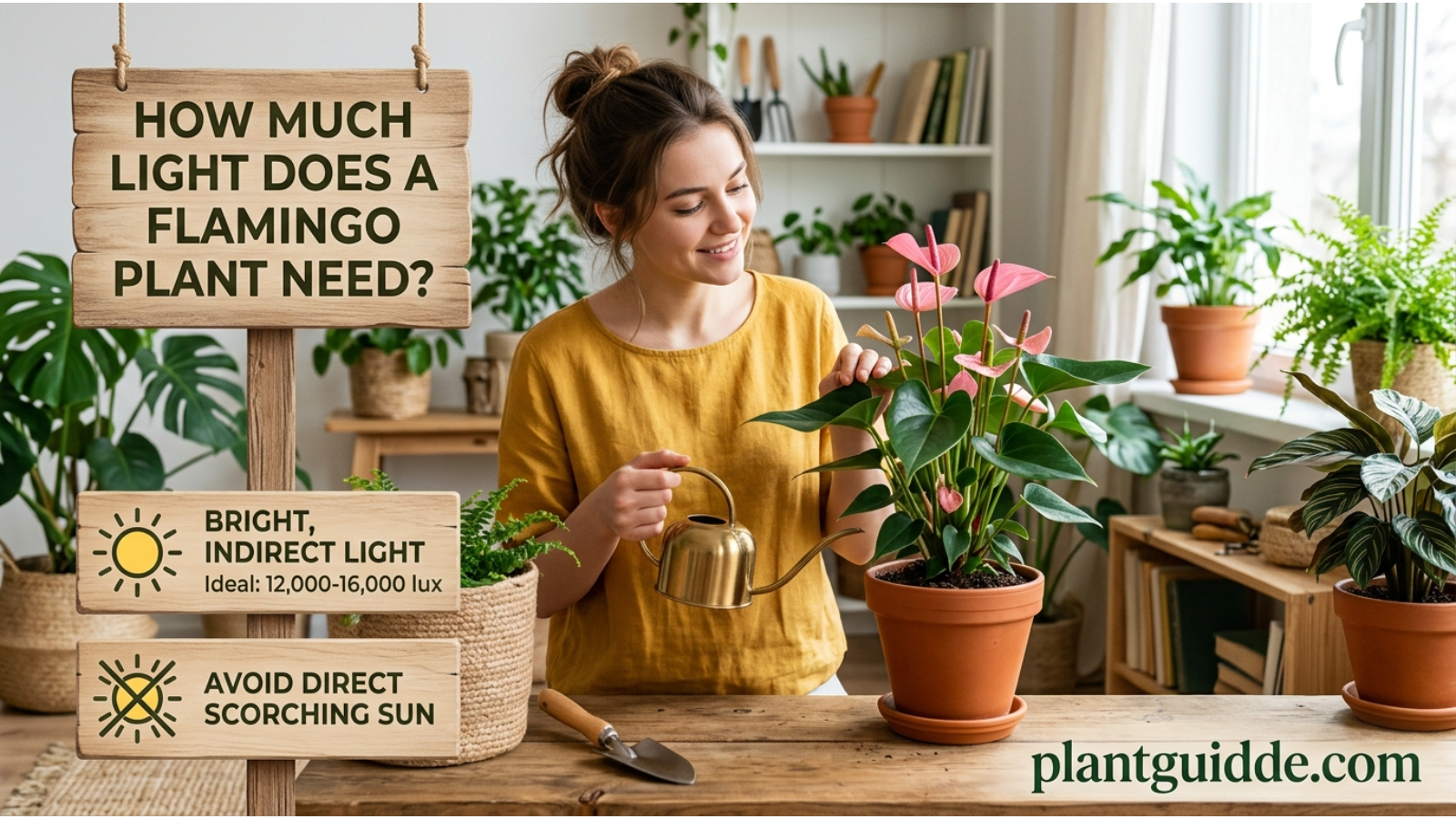
Bright, indirect light is usually the best choice for anthuriums.
Place the plant near a bright window where it receives plenty of filtered daylight without prolonged exposure to intense direct afternoon sun. A few feet away from a bright window can work well, depending on the direction and strength of the light.
Too little light can cause:
- Slow growth
- Smaller leaves
- Weak or stretched growth
- Fewer flowers
- Longer gaps between leaves
Too much intense direct sunlight can cause:
- Bleached-looking foliage
- Brown or crispy patches
- Scorched leaves
- Excessive moisture loss
An easy practical test is to look at the shadows. Your flamingo plant should receive substantial daylight, but harsh sunlight should not continuously hit the leaves.
Tip: Flamingo plant care the plant produces healthy leaves but refuses to flower, light is one of the first things worth checking. Do not immediately assume it needs more fertilizer.
Flamingo Plant Watering: How Often Should You Water?
There is no reliable universal watering schedule for a flamingo plant. The correct interval depends on pot size, soil composition, temperature, humidity, season, and light levels.
Instead of watering every Monday or according to a fixed calendar, check the soil.
Insert your finger into the upper portion of the potting mix. If the surface and upper layer have begun to dry while the lower soil remains slightly moist, it is generally time to water thoroughly.
When watering:
- Slowly soak the potting mix.
- Allow excess water to drain through the bottom.
- Empty standing water from the saucer or decorative container.
- Do not water again simply because the surface looks dry the next day.
The goal is even moisture with adequate drainage, not permanently wet soil.
Signs of Underwatering
A thirsty flamingo plant may develop:
- Drooping leaves
- Curling foliage
- Dry, crispy edges
- Rapidly drying soil
- Leaves that feel less firm than usual
If the plant is severely dry, water thoroughly rather than giving it several tiny sips over multiple days.
Signs of Overwatering
Overwatering is more dangerous when the soil stays saturated for long periods. Possible symptoms include:
- Yellowing leaves
- Persistent wilting despite wet soil
- Mushy or dark roots
- Foul-smelling soil
- Slow growth
- Sudden leaf decline
One of the most common mistakes is treating drooping as an automatic signal to add water. A plant with damaged roots can droop because it is too wet, not because it is thirsty.
What Soil Is Best for a Flamingo Plant?
Flamingo plants need a potting mix that holds some moisture while allowing plenty of air around the roots.
A heavy garden soil or compact indoor potting mix can remain wet for too long. A better approach is an airy tropical-houseplant mix containing ingredients such as:
- High-quality potting mix or coco coir
- Orchid bark
- Perlite or another aerating material
The exact recipe does not need to be complicated. The important characteristics are drainage, airflow, and moderate moisture retention.
If water sits on the surface for a long time or takes unusually long to drain through the pot, the mix may be too dense.
Why Drainage Matters More Than a Fancy Soil Recipe
A complicated soil recipe cannot compensate for a container with no drainage hole.
The pot should allow excess water to escape. Decorative cachepots are fine, but the plant should ideally remain in a nursery pot with drainage holes inside the decorative container.
How Much Humidity Does a Flamingo Plant Need?
Anthuriums generally appreciate higher humidity than the average dry indoor environment provides.
Humidity can be especially important when:
- Indoor heating is running
- Air conditioning is used frequently
- The plant is near a dry air vent
- Leaf edges repeatedly become brown and crispy
A humidifier is often more reliable than occasional misting if the surrounding air is consistently dry.
Grouping several humidity-loving plants together can also slightly improve the local environment, although it should not replace good airflow.
Does Misting Help?
Misting may temporarily increase moisture around the foliage, but it is not a dependable substitute for maintaining suitable room humidity.
Constantly wet leaves can also be undesirable if the plant has poor airflow.
For persistent dry-air problems, focus on the room environment rather than repeatedly spraying the leaves.
Best Temperature for Flamingo Plants
Flamingo plants prefer warm, stable conditions.
Keep them away from:
- Cold drafts
- Exterior doors that are frequently opened
- Very cold windows
- Heating vents
- Air-conditioning outlets
- Sudden temperature changes
A comfortable indoor environment is generally preferable to a location that repeatedly swings between hot and cold.
Cold stress can appear as drooping, discoloration, slowed growth, or general decline. If several problems begin shortly after a seasonal temperature change, check the plant’s location before changing its watering routine.
How to Fertilize a Flamingo Plant
Flamingo plants benefit from nutrients during active growth, but more fertilizer does not automatically mean more flowers.
Use a balanced, water-soluble houseplant fertilizer diluted according to the product’s instructions. Applying a weaker solution at appropriate intervals is generally safer than repeatedly using concentrated fertilizer.
Before fertilizing:
- Make sure the plant is not severely drought-stressed.
- Avoid fertilizing saturated, unhealthy roots.
- Follow the fertilizer label.
- Reduce feeding when growth naturally slows.
Excess fertilizer can accumulate in the soil and contribute to root or leaf-edge problems.
If you notice a crusty buildup on the soil surface or unexplained brown leaf edges after frequent feeding, reassess your fertilizer routine.
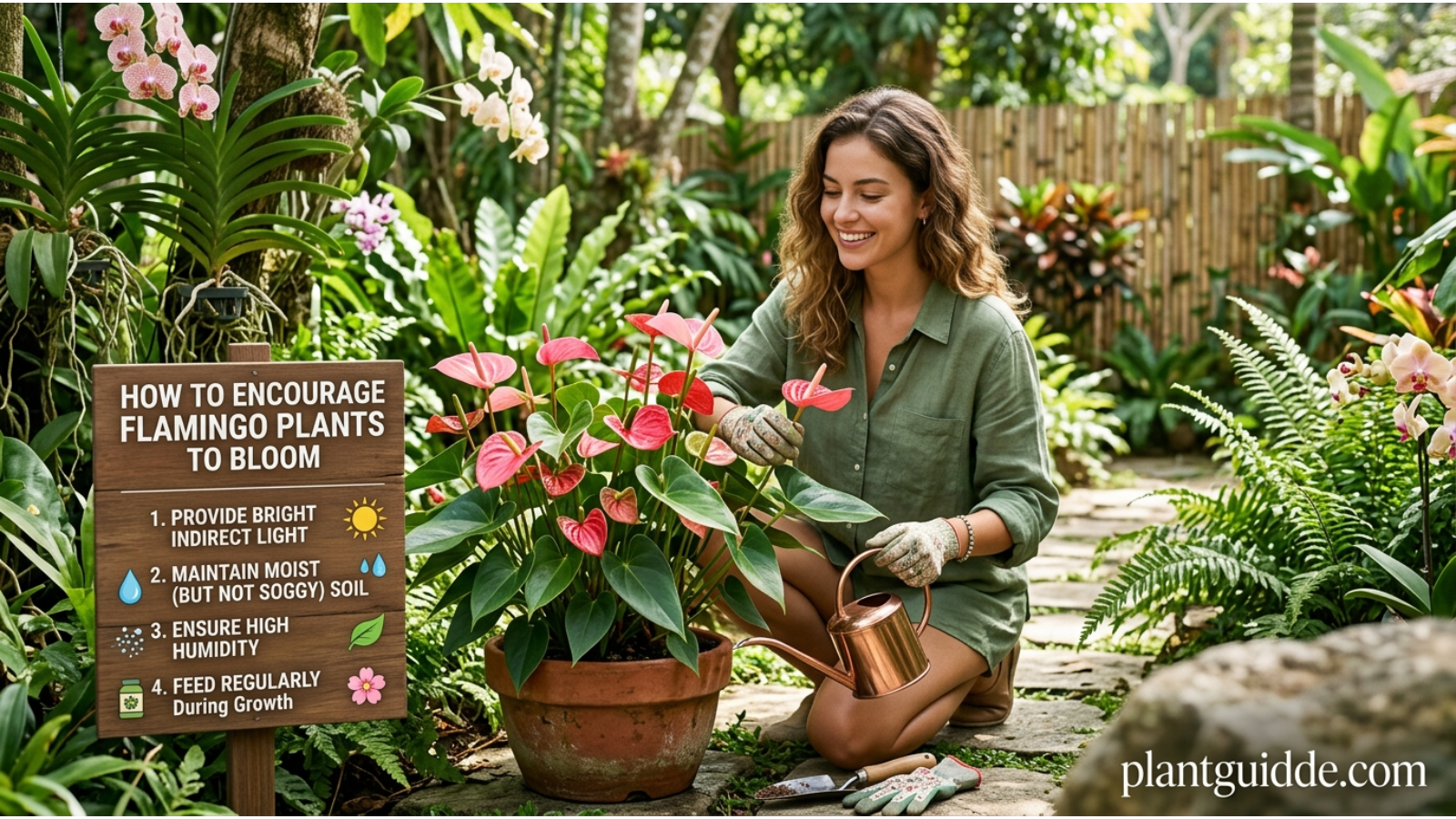
How to Encourage Flamingo Plants to Bloom
Healthy flowering depends on more than fertilizer.
If your anthurium has attractive leaves but rarely produces flowers, examine these factors first:
1. Light
Insufficient light is a common reason for poor flowering. Move the plant gradually toward a brighter location with indirect light.
2. Plant Health
A plant struggling with root problems, pests, severe dryness, or nutrient deficiencies is unlikely to prioritize abundant flowering.
3. Nutrition
Consistent but moderate feeding during active growth can support flowering. Avoid the assumption that heavy fertilizer will force blooms.
4. Stable Conditions
Repeatedly moving the plant, exposing it to drafts, or allowing severe drying followed by saturation can create unnecessary stress.
5. Time
Young plants and recently repotted plants may need time to establish before flowering regularly.
Practical observation: If an anthurium suddenly starts producing flowers after being moved to a brighter room, the improvement may have more to do with increased usable light than with a new fertilizer.
How to Repot a Flamingo Plant
Repotting is useful when roots have filled the container, the potting mix has broken down, drainage has become poor, or the plant is becoming unstable.
Choose a container only moderately larger than the existing root ball. Moving a small plant into a very large pot can leave a large volume of soil wet around the roots for too long.
Repotting Steps
- Water the plant lightly if the soil is extremely dry.
- Carefully remove it from the existing container.
- Examine the roots for healthy, firm tissue and signs of decay.
- Remove obviously dead or severely damaged roots with clean tools.
- Place fresh, airy potting mix into the new container.
- Position the plant at approximately the same depth as before.
- Fill around the root ball without compacting the mix heavily.
- Water appropriately and allow excess water to drain.
Avoid burying the central stem deeper than it was previously planted.
When Should You Repot a Flamingo Plant?
Do not repot simply because a calendar says it is time.
Consider repotting when:
- Roots are circling densely around the pot.
- Roots are emerging from drainage holes.
- Water runs straight through because the mix has become severely compacted.
- The potting mix has decomposed significantly.
- The plant dries out unusually quickly because the root system has filled the container.
If the plant is healthy and the soil still drains well, unnecessary repotting can create more stress than benefit.
How to Prune a Flamingo Plant
Pruning is mainly about removing damaged, dying, or spent growth rather than aggressively shaping the plant.
Use clean, sharp scissors or pruning shears.
Remove:
- Completely yellow or dead leaves
- Severely damaged foliage
- Spent flower stalks
- Brown, declining tissue when appropriate
Cut the flower stalk near its base once the bloom has clearly finished.
Avoid removing large amounts of healthy foliage at once. Leaves are the plant’s energy-producing organs, so excessive pruning can temporarily reduce its ability to grow.
Why Are My Flamingo Plant Leaves Turning Yellow?
Yellow leaves can have several causes, so the color alone does not provide a diagnosis.
Check the soil first.
If the soil remains wet for long periods, overwatering or poor drainage becomes a strong possibility. If the plant is extremely dry and the leaves are also curling or crisping, underwatering may be involved.
Other possibilities include:
- Natural aging of older leaves
- Insufficient light
- Root damage
- Temperature stress
- Nutritional problems
Look at the pattern of symptoms, not just one leaf.
For example, one older lower leaf turning yellow while the rest of the plant looks healthy may be normal aging. Several leaves turning yellow while the soil stays constantly wet deserves a much closer look at the roots and drainage.
Why Are Flamingo Plant Leaves Turning Brown?
Brown edges or tips are often associated with environmental stress.
Potential causes include:
- Low humidity
- Irregular watering
- Excessive fertilizer
- Salt accumulation
- Harsh direct sunlight
- Root problems
If only the tips are brown but new growth looks healthy, the issue may be relatively minor. If entire leaves are developing large brown areas, inspect light, roots, moisture, and temperature more carefully.
Do not automatically cut off every leaf with a small brown tip. If most of the leaf remains healthy, it is still contributing energy to the plant.
Why Are My Flamingo Plant Leaves Curling?
Curling leaves are a stress signal rather than a diagnosis.
Common causes include:
- Soil becoming too dry
- Very low humidity
- Excessive heat
- Strong direct sunlight
- Root damage
- Pest activity
Start by checking the simplest things: soil moisture, recent temperature changes, and light exposure.
If the soil is wet but the plant is still curling and drooping, watering more is unlikely to solve the problem. Inspect the roots and growing conditions instead.
Why Is My Flamingo Plant Drooping?
Drooping can result from both underwatering and root problems.
Check the soil before doing anything else.
Dry soil + drooping: The plant may need water.
Wet soil + drooping: Investigate drainage, compacted soil, root damage, or environmental stress.
This distinction is important because repeatedly watering a plant with damaged roots can make the underlying problem worse.
Common Flamingo Plant Care Mistakes
Watering on a Fixed Schedule
A calendar cannot account for seasonal changes, humidity, light, and soil differences. Check the plant and soil instead.
Using a Pot Without Drainage
Even excellent potting mix cannot perform properly if excess water has nowhere to escape.
Placing It in Harsh Sun
Anthuriums need light, but intense direct sunlight through glass can damage foliage.
Keeping the Soil Permanently Wet
Moisture is useful; saturation is not. Roots need oxygen as well as water.
Fertilizing Every Time You Water
More fertilizer is not necessarily better. Excess salts can create additional problems.
Moving the Plant Constantly
If a plant is repeatedly moved whenever a leaf changes, it may never experience stable conditions. Make one sensible environmental adjustment and give the plant time to respond.
Ignoring the Roots
When watering, light, and humidity seem reasonable but the plant continues declining, inspect the root system. Healthy roots are central to successful anthurium care.
Flamingo Plant Pests to Watch For
Indoor flamingo plants can occasionally attract common houseplant pests such as:
- Spider mites
- Aphids
- Mealybugs
- Scale insects
- Thrips
Inspect new growth, leaf undersides, stems, and areas where leaves join the plant.
Early detection is much easier to manage than a large infestation. If you see insects, sticky residue, fine webbing, distorted new growth, or unexplained stippling, isolate the affected plant from nearby houseplants while you investigate.
Use an appropriate treatment labeled for the pest and plant, and follow its directions carefully.
How to Clean Flamingo Plant Leaves
Large glossy leaves collect dust, which can make them look dull.
Gently wipe the leaves with a soft, damp cloth. Support the leaf from underneath rather than pulling against the stem.
Avoid relying on leaf-shine products. They can leave residues on foliage and are unnecessary for maintaining a healthy plant.
Clean leaves also make it easier to notice pests and early signs of stress.
Can Flamingo Plants Grow in Low Light?
They can survive in lower light for a period, but low light is not ideal if your goal is vigorous growth and regular flowering.
A dim location may keep the plant alive while reducing:
- Flower production
- Growth rate
- Leaf size
- Overall vigor
If flowering is your priority, provide brighter indirect light rather than simply increasing fertilizer.
A Simple Weekly Flamingo Plant Care Routine
You do not need to spend a lot of time caring for anthuriums.
Once a week, check:
- Soil: Is the upper layer beginning to dry?
- Leaves: Are there yellow, brown, curled, or damaged areas?
- Light: Is the plant still receiving suitable indirect light?
- Pests: Are there insects or unusual marks?
- Pot: Is water draining normally?
- Environment: Has the plant been exposed to a draft, heater, or major temperature change?
This quick inspection is more useful than automatically watering or fertilizing.
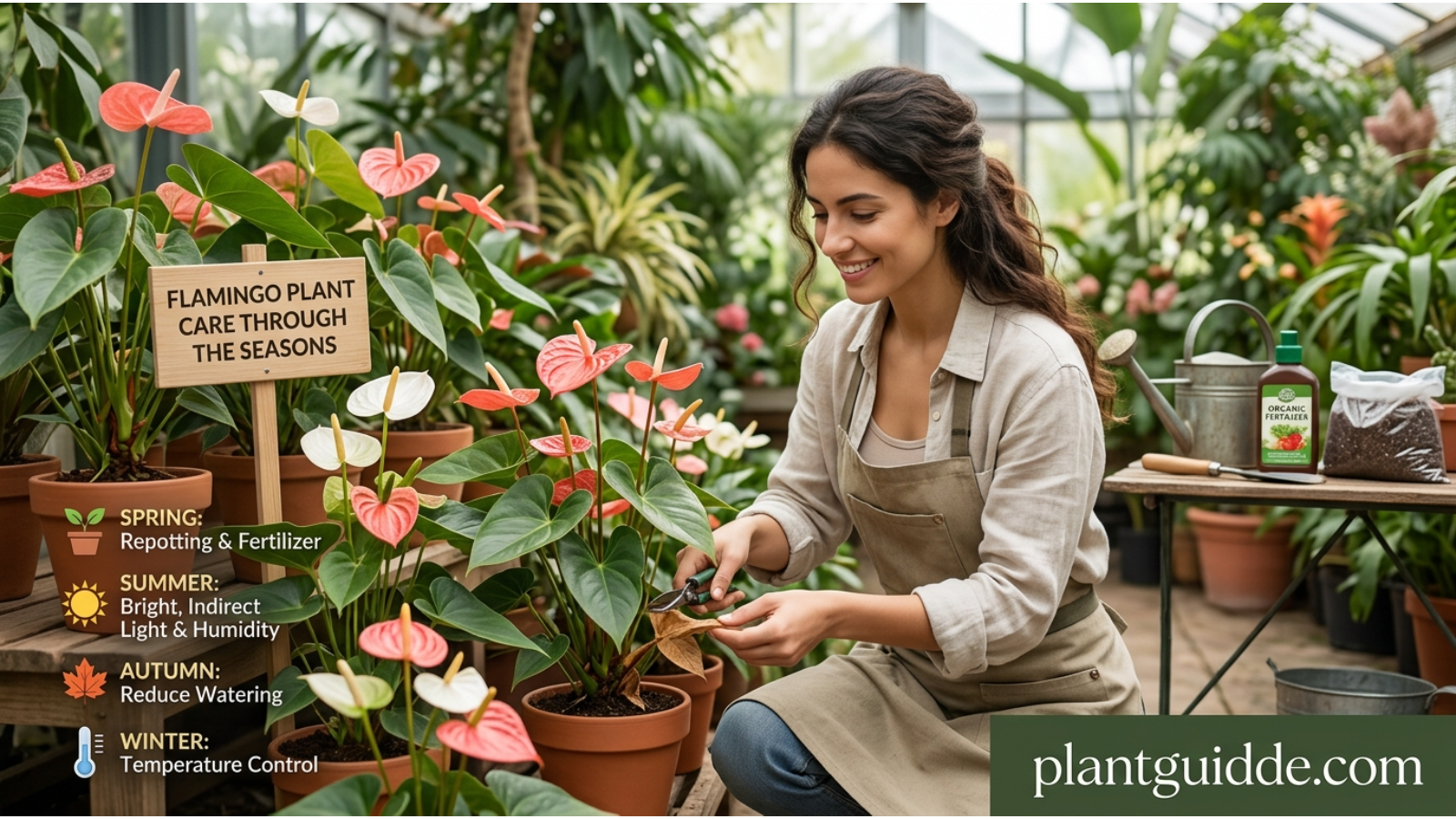
Flamingo Plant Care Through the Seasons
During periods of active growth and stronger indoor light, your plant may use water more quickly and benefit from regular but moderate feeding.
During darker or cooler periods, growth can slow. The soil may stay moist longer, so watering frequency should usually decrease rather than remain locked to the same schedule.
This seasonal adjustment is one of the simplest ways to avoid overwatering.
FAQs:
How often should I water a flamingo plant?
Water when the upper portion of the potting mix has begun to dry rather than following a fixed schedule. Water thoroughly and allow excess water to drain completely before returning the plant to its saucer or decorative container.
Is a flamingo plant an indoor plant?
Yes. Anthuriums are widely grown as indoor plants because they prefer warm temperatures, indirect light, and stable humidity. A bright room away from harsh direct sunlight is usually a good starting location.
Why is my flamingo plant not flowering?
Insufficient light is one possibility, especially when the foliage is healthy but flowers are scarce. Also check plant maturity, nutrition, root health, watering, and temperature stability before adding more fertilizer.
Can a flamingo plant grow in direct sunlight?
Strong direct sunlight can scorch anthurium foliage. Bright filtered or indirect light is generally safer. If moving a plant from a dim location to a brighter one, make the change gradually.
How do I save an overwatered flamingo plant?
Stop watering until the appropriate portion of the soil has dried and inspect drainage. If the soil remains saturated or the plant continues declining, remove it from the pot and examine the roots. Damaged roots may need to be removed before repotting into a fresh, airy, well-draining mix.
Conclusion
Successful flamingo plant care comes down to balance rather than constant attention. Give your anthurium bright indirect light, an airy potting mix, thorough but appropriately timed watering, good drainage, warm temperatures, and consistent humidity.
When something goes wrong, resist the urge to change everything at once. Check the soil, roots, light, temperature, and humidity, then correct the most likely problem first. That method makes it much easier to understand what your plant is telling you and helps prevent small issues from becoming serious ones.
For most indoor growers, the best next step is simple: check your flamingo plant’s light and soil moisture today, then make one targeted adjustment if either is clearly unsuitable.

Asad Mumtaz is a dedicated plant enthusiast and gardening writer with a passion for helping people care for their plants successfully. He specializes in plant care guides, indoor gardening, and practical growing tips for all skill levels. His content focuses on making gardening simple, enjoyable, and rewarding. Through his work, Asad shares reliable advice to help readers create thriving green spaces.