Pineapple plants are often mistaken for ordinary tropical houseplants, but they have a very different growth habit from leafy indoor plants. pineapple plant care, Their stiff, sword-shaped leaves form a compact rosette, and the plant stores water in its tissues rather than depending on constantly moist soil.
That makes pineapple plant care relatively forgiving in some areas, and surprisingly easy to get wrong in others. Overwatering, insufficient light, cold temperatures, and poor drainage are among the most common reasons a pineapple plant develops yellow leaves, brown tips, soft roots, or slow growth.
The good news is that you do not need a greenhouse to grow one. With the right container, soil, light, and watering routine, a pineapple can remain attractive indoors for years and may eventually produce fruit under suitable conditions.
Quick Answer
Pineapple plant care is surprisingly simple when the plant receives plenty of bright light, warm temperatures, fast-draining soil, and careful watering. Let the upper portion of the soil dry before watering again, avoid standing water in the pot or crown, and provide good airflow. Indoor pineapple plants can grow successfully in containers, although producing a mature pineapple may take considerable time.
What Is a Pineapple Plant?
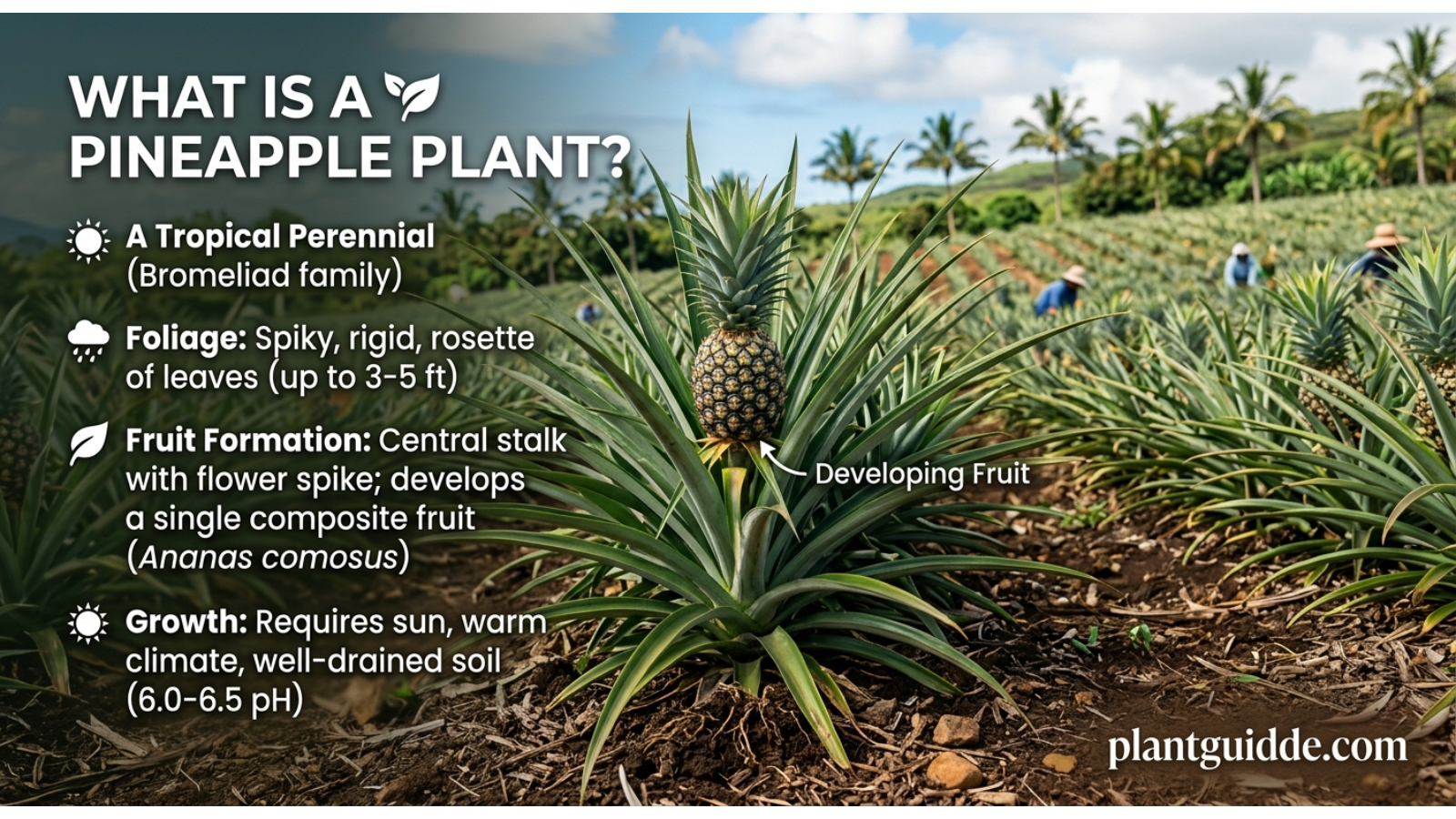
The pineapple plant, Ananas comosus, is a tropical bromeliad grown primarily for its edible fruit. Unlike many fruit trees, it does not develop a large woody trunk. Instead, its long, narrow leaves emerge from a central growing point and form a dense rosette.
Pineapples are adapted to warm environments and relatively well-drained conditions. Their roots do not perform well when continuously surrounded by water, which is why drainage is one of the most important parts of pineapple plant care.
A mature plant produces a flower cluster that eventually develops into the familiar pineapple fruit. After fruiting, the original plant gradually declines while producing offsets, commonly called pups or suckers, that can continue the plant’s life cycle.
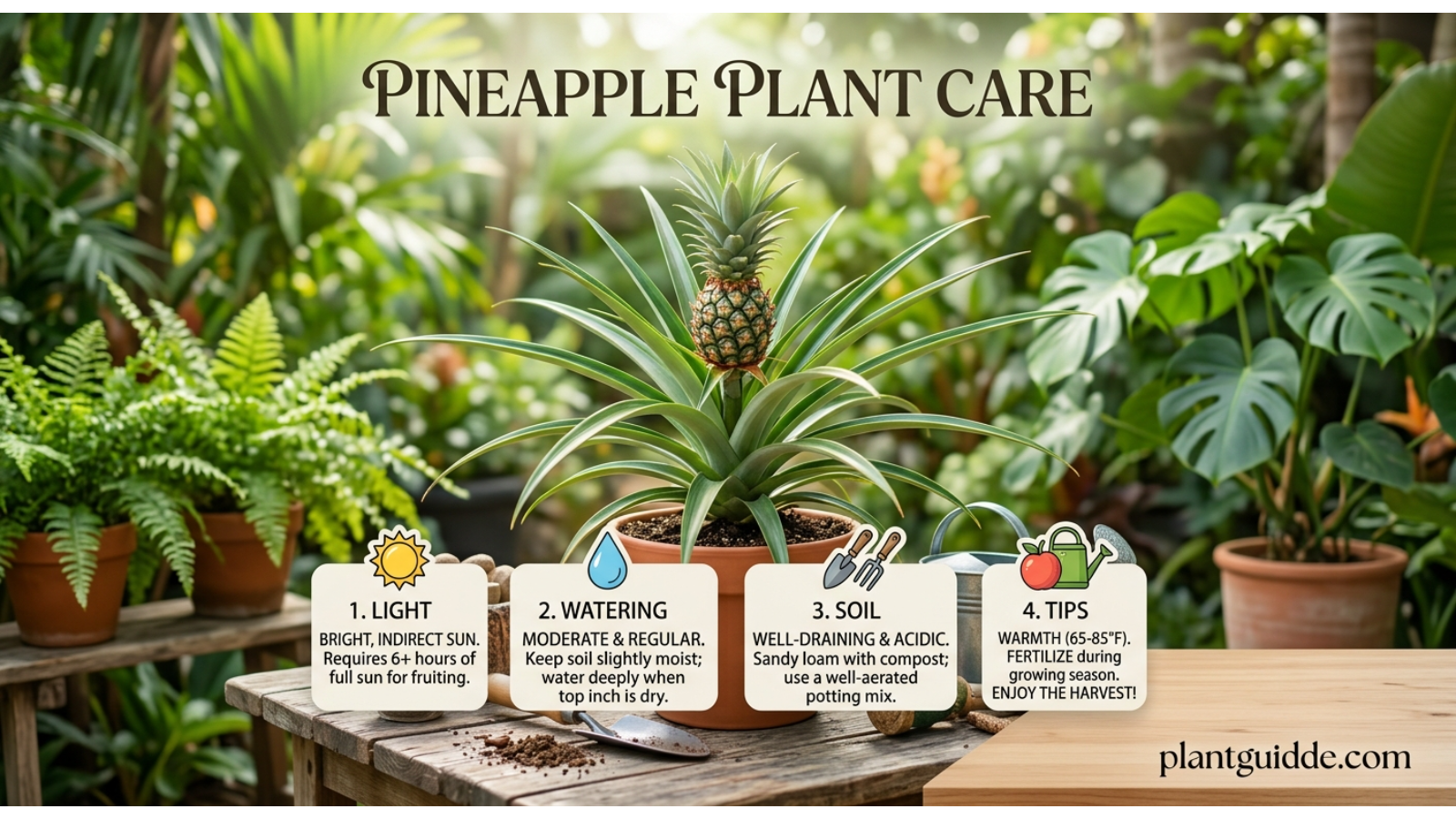
Pineapple Plant Care Requirements at a Glance
| Care factor | What a pineapple plant prefers |
|---|---|
| Light | Bright light with several hours of direct sun when acclimated |
| Water | Moderate watering with some drying between waterings |
| Soil | Loose, fast-draining, slightly acidic to neutral mix |
| Temperature | Warm conditions; protect from cold |
| Humidity | Average indoor humidity is usually adequate |
| Fertilizer | Light, regular feeding during active growth |
| Pot | Container with excellent drainage |
| Growth rate | Slow to moderate |
| Fruit production | Possible indoors but requires patience and suitable conditions |
How Much Light Does a Pineapple Plant Need?
Light is one of the biggest factors affecting pineapple plant growth.
Give your pineapple plant the brightest location available, ideally near a sunny south- or west-facing window indoors. Pineapples tolerate and generally benefit from substantial sunlight, especially when they are actively growing.
A plant receiving too little light may remain alive but produce weak, slow growth and a less vigorous appearance.
Signs your pineapple needs more light
Watch for:
- Slow or stalled growth
- Pale or less vigorous-looking foliage
- Long, weakly positioned leaves
- A plant leaning strongly toward a window
- Little progress toward maturity
If your pineapple has been grown in lower light, do not suddenly move it into intense outdoor sun. Gradually increase exposure over several days or weeks to reduce the risk of leaf scorch.
Practical tip: Rotate the container occasionally if the plant grows toward one side of the window. This encourages more balanced growth.
How to Water a Pineapple Plant
Watering is where many indoor growers make their biggest mistake.
A pineapple plant needs water, but it does not need constantly wet soil. Its fleshy tissues and bromeliad growth habit allow it to tolerate periods of relative dryness better than prolonged waterlogging.
Water thoroughly when the growing medium has begun to dry, allowing excess water to escape through the drainage holes.
Do not water simply because a certain number of days has passed.
Instead, check the soil and the plant’s growing conditions. A pineapple sitting in bright light and warm temperatures may use water faster than one growing in a cool, dim room.
A simple watering routine
- Check the soil before watering.
- If the upper portion has dried and the pot feels noticeably lighter, water thoroughly.
- Allow excess water to drain completely.
- Empty water collected in a saucer.
- Wait until the soil has dried to an appropriate degree before watering again.
Avoid keeping the pot permanently wet.
Should you pour water into the pineapple’s center?
Pineapples are bromeliads, and their rosette can naturally collect water. However, indoor growers should not rely on keeping the central crown constantly filled with water.
Waterlogged conditions around the crown, especially in poorly ventilated environments, can contribute to rot.
For container-grown plants, focus primarily on maintaining appropriate moisture in the growing medium while ensuring the crown remains healthy and well ventilated.
Best Soil for Pineapple Plants
The best soil for a pineapple plant is loose, porous, and fast draining.
Heavy garden soil can remain wet for too long in a container and restrict oxygen around the roots. A compact potting mix is particularly risky if the container has poor drainage.
A suitable mix can contain:
- Quality potting mix
- Coarse material such as perlite or pumice
- Orchid bark or another chunky component
- A modest amount of organic matter
The goal is not to create soil that dries immediately. It should retain enough moisture for the roots to use while allowing excess water and air to move through the root zone.
Why drainage matters so much
When soil stays saturated for long periods, roots can become stressed and eventually decay. The visible symptoms may appear above the soil as yellowing leaves, wilting, slow growth, or a generally declining plant.
This is why changing the watering schedule alone may not solve a problem. If the soil itself drains poorly, watering less frequently may only partly address the underlying issue.
Choosing the Right Pot for a Pineapple Plant
A pineapple plant does not need an enormous container.
Choose a pot with drainage holes and enough weight to keep the plant stable. Pineapple foliage can become broad and top-heavy, so a lightweight container may tip easily.
A slightly snug container is often preferable to moving the plant into a dramatically oversized pot.
An oversized pot holds more soil, and more soil generally means more moisture remains around the roots after watering. This can increase the risk of overwatering.
When repotting, move up only as much as necessary.
Temperature Requirements
Warm temperatures are important for healthy pineapple growth.
Pineapples are tropical plants and perform best when protected from prolonged cold conditions. Indoor plants should be kept away from cold drafts, unheated rooms, and sudden temperature drops.
Avoid placing the plant directly beside:
- Cold windows during winter
- Exterior doors with frequent drafts
- Air-conditioning vents
- Heating vents that produce strong, dry airflow
If temperatures become too cold, growth can slow considerably and the plant may become more vulnerable to stress.
Humidity for Pineapple Plants
Pineapple plants generally tolerate ordinary household humidity better than many tropical foliage plants.
You do not normally need to create a highly humid environment just to keep a pineapple alive.
Instead, prioritize the fundamentals:
- Bright light
- Warm temperatures
- Good drainage
- Appropriate watering
- Air movement
If your home is exceptionally dry, especially during winter, modestly increasing humidity may help overall plant health. However, increasing humidity while keeping the soil constantly wet is not a good trade-off.
Good airflow remains important.
Fertilizing a Pineapple Plant
Pineapples benefit from nutrients during active growth, but heavy fertilization is unnecessary.
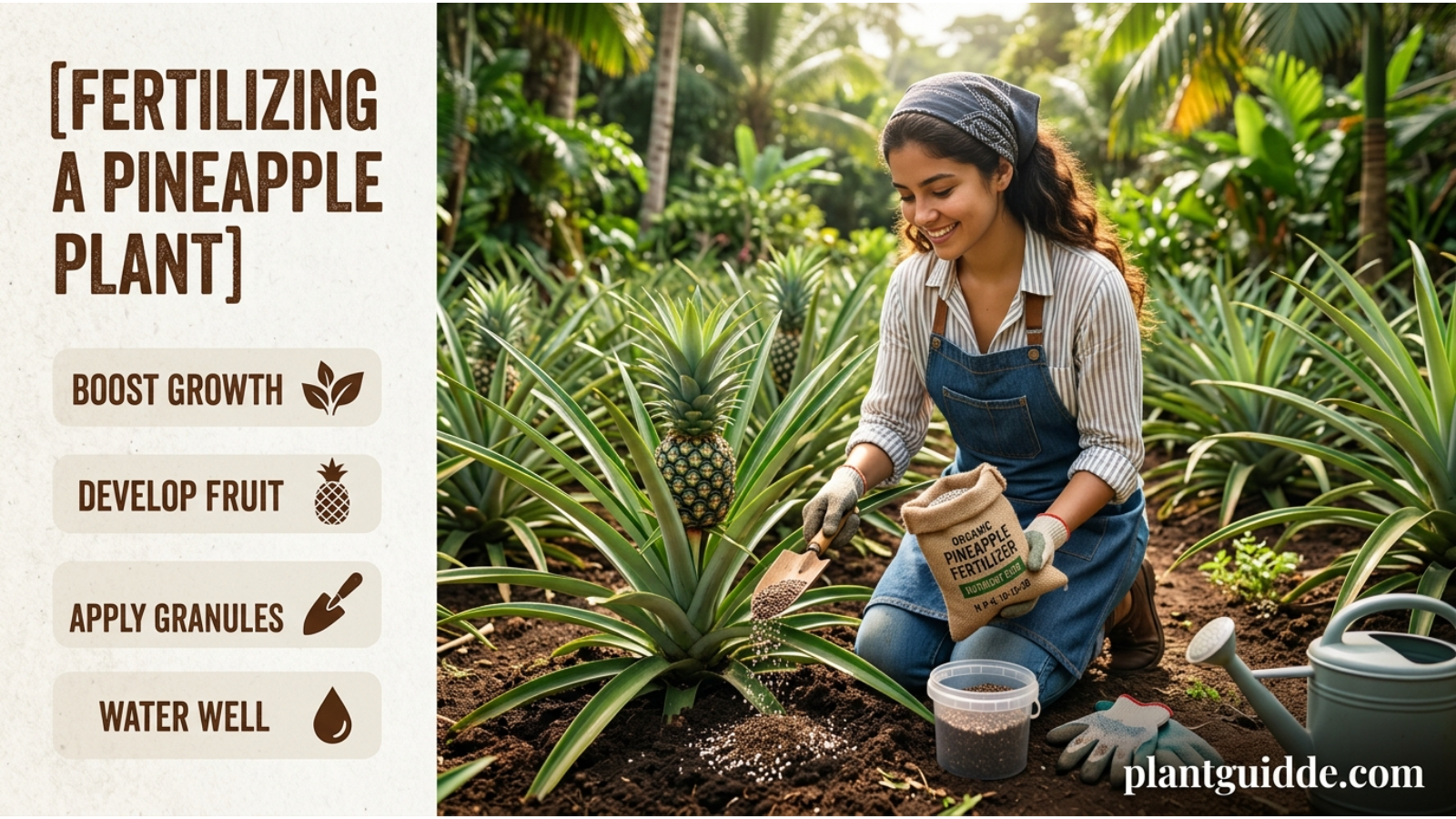
Use a balanced fertilizer at a conservative rate according to the product’s directions. Regular, moderate feeding is generally preferable to applying a large amount at once.
Overfertilizing can cause salt accumulation in the growing medium and may damage roots or contribute to brown leaf tips.
If your plant is growing slowly, do not immediately assume it needs more fertilizer. Check light, temperature, drainage, watering, and root health first.
Expert-style rule of thumb: If a pineapple is sitting in weak light, adding more fertilizer rarely fixes the underlying problem.
How to Grow a Pineapple Plant From a Pineapple Top
One of the easiest ways to start a pineapple plant is by propagating the leafy crown from a grocery-store pineapple.
Choose a healthy pineapple with a firm, green crown.
Step-by-step propagation
- Remove the leafy crown from the fruit.
- Carefully remove excess fruit tissue around the base.
- Allow the cut portion to dry for a short period so the wound can begin to callus.
- Place the crown into a well-draining growing medium.
- Keep the medium lightly moist rather than saturated.
- Provide bright light and warmth.
- Watch for signs of new growth, which indicate that rooting is progressing.
Do not bury the entire crown. The base should be positioned securely while the leaves remain above the soil.
Rooting can take time, so avoid repeatedly pulling the crown out of the soil to check for roots. That can disturb newly developing roots.
How Long Does It Take for a Pineapple Plant to Produce Fruit?
Patience is essential.
A pineapple plant grown from a crown generally requires a significant amount of time to reach flowering and fruiting size. The exact timeline varies according to growing conditions, plant maturity, cultivar, and propagation method.
Indoor plants may take considerably longer than plants growing in consistently warm, bright outdoor conditions.
If your main goal is fruit production, focus on creating strong vegetative growth first rather than trying to force a young plant to flower.
A healthy plant should have:
- Strong, well-developed leaves
- Consistent growth
- A healthy root system
- Adequate light
- Warm growing conditions
Fruit production is a long-term project rather than a quick houseplant experiment.
Can You Grow a Pineapple Plant Indoors?
Yes. Pineapple plants can make excellent indoor container plants when they receive enough light.
An indoor pineapple is especially useful for people who want an unusual tropical plant without maintaining a large tree or climbing vine.
Place it near the brightest suitable window and monitor its growth.
The biggest challenge indoors is usually light, not humidity.
If the plant is far from a bright window, growth may become slow and the plant may never develop enough energy for reliable fruit production.
Pineapple Plant Care Outdoors
In warm climates, pineapple plants can be grown outdoors where they receive plenty of sunlight and remain protected from damaging cold.
Outdoor plants generally have access to stronger light and better airflow, but they can also face problems that indoor plants avoid.
Pay attention to:
- Heavy rainfall
- Poorly draining soil
- Extreme heat
- Cold weather
- Strong winds
- Sudden changes in sun exposure
If a container-grown pineapple is moved outdoors, acclimate it gradually rather than exposing a plant accustomed to indoor light to intense midday sun immediately.
Common Pineapple Plant Problems
Pineapple plants usually communicate stress through their foliage and growth pattern. Learning to interpret those signs is more useful than following a rigid care calendar.
Pineapple plant leaves turning yellow
Yellow leaves can have several causes.
Possible reasons include:
- Excessive watering
- Poor drainage
- Insufficient light
- Natural aging of older leaves
- Root problems
- Nutritional stress
Start by checking the soil rather than immediately adding fertilizer.
If the soil remains wet for a long time, improve drainage and adjust watering. If the plant is in a dark location, increase light gradually.
Pineapple plant leaves turning brown
Brown tips or edges may result from inconsistent moisture, dry conditions, accumulated fertilizer salts, environmental stress, or damaged foliage.
Trim badly damaged portions with clean scissors if desired, but identify the underlying cause first.
Removing brown tissue improves appearance; it does not correct the condition that caused it.
Pineapple plant leaves curling
Curling leaves can indicate environmental stress.
Check:
- Soil moisture
- Light intensity
- Temperature
- Recent changes in location
- Root health
Do not automatically respond by watering more. Curling leaves in a plant sitting in wet soil can indicate a root-zone problem rather than a simple lack of water.
Pineapple plant is not growing
Slow growth is not always a sign that something is wrong. Pineapples are not fast-growing houseplants.
However, extremely slow or stalled growth deserves investigation.
Start with light. Then check temperature, drainage, watering, and nutrition.
If all of those conditions are appropriate, patience may be the missing ingredient.
Pineapple plant is leaning
A pineapple may lean toward its strongest light source.
Rotate the container periodically and make sure the plant receives sufficient light from a suitable direction.
If the entire plant is unstable, consider a heavier container rather than simply adding more soil.
Pineapple Plant Pests
Pineapple plants can occasionally experience pest problems, particularly when grown indoors alongside other houseplants.
Inspect the foliage regularly for:
- Mealybugs
- Scale insects
- Aphids
- Spider mites
Look closely around leaf bases and sheltered areas where pests can be difficult to notice.
Early detection makes control much easier. If you see insects, isolate the affected plant from other houseplants when practical and identify the pest before choosing a treatment.
Avoid applying strong pesticide products unnecessarily, particularly indoors.
Common Pineapple Plant Care Mistakes
Even though pineapple plants are relatively resilient, several common mistakes repeatedly cause problems.
Watering on a fixed schedule
“Water every Sunday” sounds convenient but ignores temperature, light, soil, pot size, and seasonal growth.
Check the plant instead.
Using a pot without drainage
A decorative container may look attractive but become a serious problem if excess water has nowhere to escape.
If you want to use a decorative cachepot, keep the pineapple in a nursery pot with drainage inside it.
Keeping the soil constantly wet
More water does not mean more growth.
Pineapple roots need both moisture and access to oxygen.
Giving a newly purchased plant too much direct sun
A plant that was previously grown under filtered light can scorch after a sudden move into intense sunlight.
Acclimate it gradually.
Fertilizing a stressed plant heavily
If a pineapple has yellow leaves or stopped growing, fertilizer is not automatically the solution.
Diagnose the environment first.
Expecting fast fruit production
Growing a pineapple from a crown is rewarding, but it requires patience. The plant needs time to establish itself and reach maturity.
A Simple Pineapple Plant Care Routine
For beginners, keep the routine simple.
Weekly: Check the foliage and soil, look for pests, and inspect the plant for signs of stress.
When the soil dries appropriately: Water thoroughly and allow excess water to drain.
Throughout active growth: Provide strong light and feed moderately when needed.
Every few months: Check whether roots are healthy, the container still drains freely, and the plant remains stable.
Seasonally: Adjust watering according to changes in temperature, light, and growth rather than following the same schedule year-round.
This approach is more reliable than trying to follow an exact watering calendar.
Pineapple Plant Care: What Matters Most
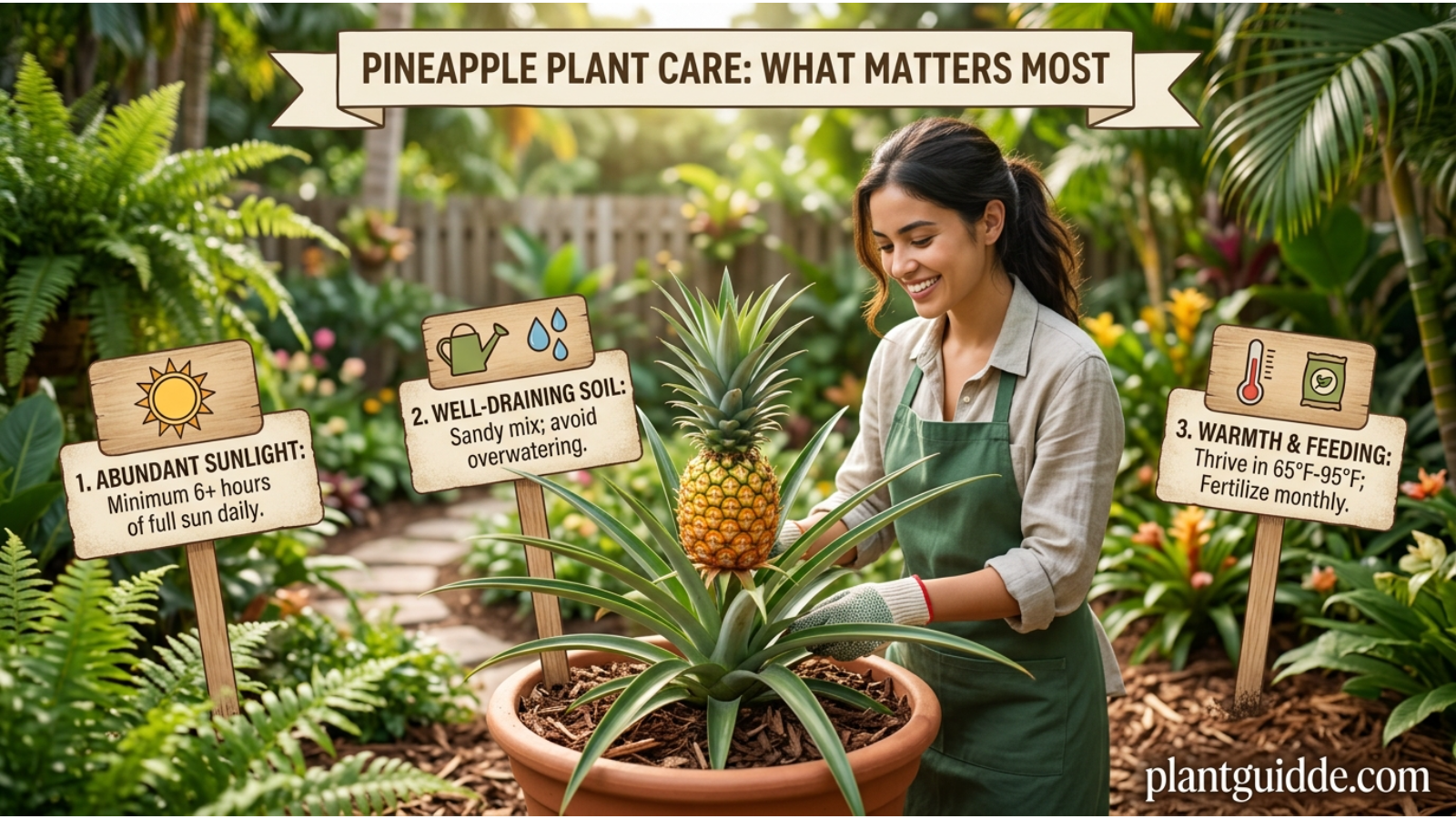
If you remember only a few things, prioritize these:
- Give the plant plenty of bright light.
- Use a pot with drainage holes.
- Choose a loose, fast-draining growing medium.
- Water thoroughly but allow excess water to escape.
- Do not keep the soil continuously saturated.
- Keep the plant warm and away from cold drafts.
- Fertilize moderately during active growth.
- Give newly propagated or newly purchased plants time to establish.
- Diagnose yellowing, browning, or curling before changing several care factors at once.
A useful troubleshooting principle is to change one major variable at a time when possible. If you move the plant, change the watering routine, repot it, and fertilize it all in the same week, you may not know which change helped, or caused additional stress.
FAQs:
How often should I water a pineapple plant?
Water when the growing medium has dried sufficiently rather than watering according to a fixed calendar. Bright, warm conditions generally increase water use, while cool, low-light conditions slow it down. Always allow excess water to drain from the pot.
Does a pineapple plant need full sun?
Pineapple plants benefit from strong light and can tolerate substantial direct sunlight once acclimated. Indoor plants should be placed in the brightest suitable location, while outdoor plants should be gradually introduced to stronger sun if they were previously grown indoors.
Can a pineapple plant survive indoors?
Yes. Pineapple plants can grow successfully indoors when provided with bright light, warmth, suitable soil, and careful watering. The main indoor limitation is often insufficient light, especially when fruit production is the goal.
Why are my pineapple plant leaves turning brown?
Brown tips or edges can be associated with inconsistent watering, dry conditions, excessive fertilizer salts, environmental stress, or damaged foliage. Check soil moisture, drainage, light, and recent environmental changes before treating the symptom.
How long does it take to grow a pineapple?
Growing a pineapple from a crown is a long-term process. The time to fruit varies substantially depending on the plant’s starting maturity and growing conditions. Strong light, warmth, adequate nutrition, and healthy roots support the development needed for eventual fruiting.
Final Thoughts
Successful pineapple plant care is less about complicated techniques and more about getting a few fundamentals right. Give the plant strong light, warm conditions, a well-drained root environment, and water only as needed.
The most important mistake to avoid is treating a pineapple like a thirsty tropical foliage plant. Its ability to tolerate some dryness does not mean it should be neglected, but keeping its roots constantly wet is far more likely to create problems than allowing the growing medium to dry appropriately.
If your pineapple is currently struggling, start with the basics: check the light, feel the soil, inspect the drainage, and look at the roots if symptoms persist. Correcting the growing environment is usually more effective than trying to fix individual brown or yellow leaves.

Asad Mumtaz is a dedicated plant enthusiast and gardening writer with a passion for helping people care for their plants successfully. He specializes in plant care guides, indoor gardening, and practical growing tips for all skill levels. His content focuses on making gardening simple, enjoyable, and rewarding. Through his work, Asad shares reliable advice to help readers create thriving green spaces.