Corn Plant Care Indoor are popular indoor plants because they provide a tall, tropical look without requiring constant attention. Their long, arching leaves and cane-like stems can add height and greenery to living rooms, offices, bedrooms, and other indoor spaces.
However, even a relatively forgiving corn plant can develop brown leaf tips, yellow leaves, drooping foliage, leaf curling, or slow growth when its environment is inconsistent. These symptoms are often confusing because several different problems can look similar.
The key to successful corn plant care indoor is not watering on a strict schedule. Instead, pay attention to light, soil moisture, drainage, humidity, and the plant’s overall response. Once those conditions are balanced, maintenance becomes much easier.
Quick Answer
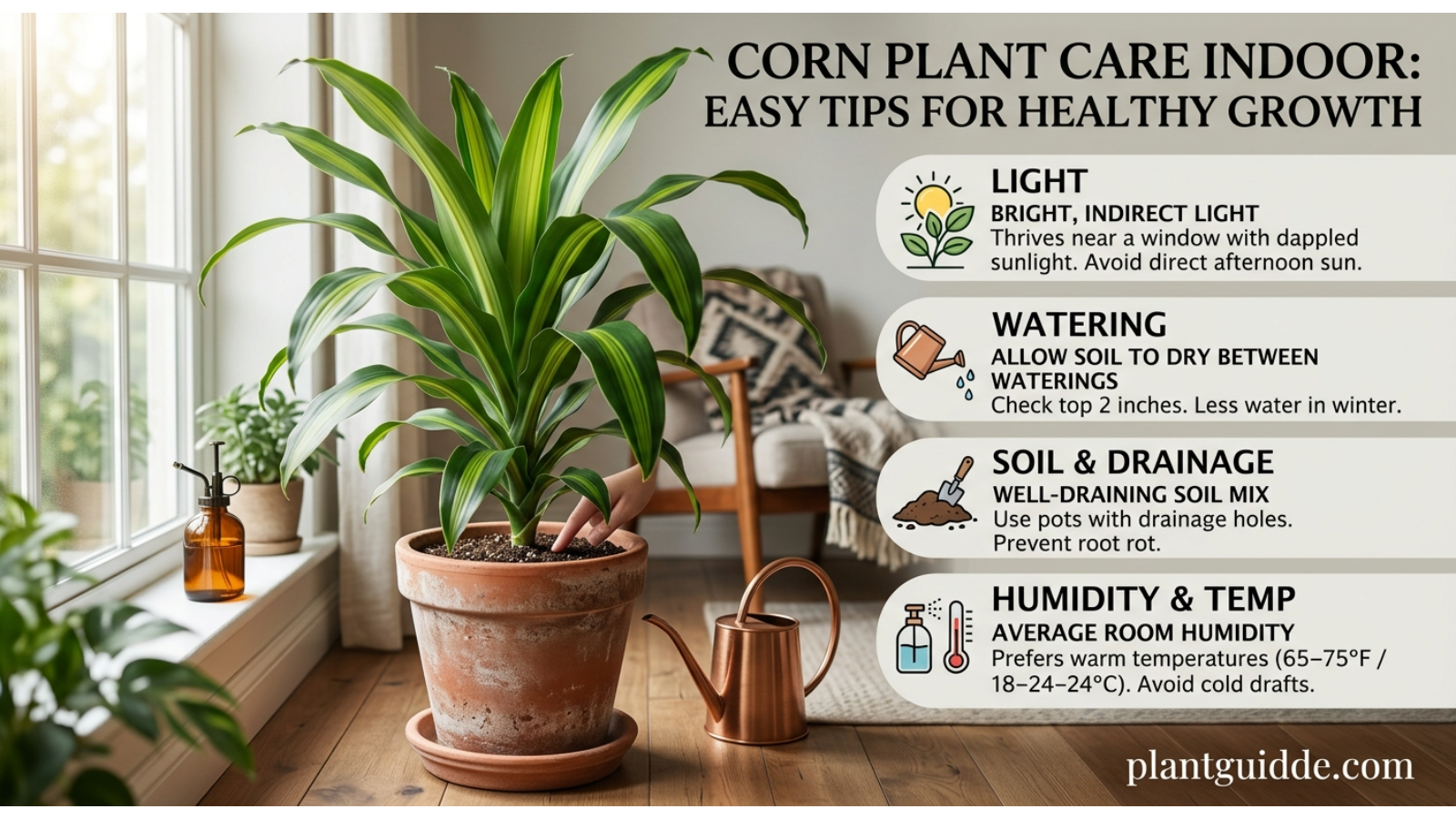
Corn plant care indoor is mainly about bright, indirect light, careful watering, well-draining soil, moderate humidity, and stable temperatures. Let the top portion of the soil dry before watering again, keep the plant away from harsh direct sun and cold drafts, and use a pot with drainage holes. With consistent conditions, a corn plant can remain healthy and attractive for years.
What Is a Corn Plant?
The corn plant commonly grown as a houseplant is Dracaena fragrans, a tropical plant known for its upright canes and long, strap-like leaves. Despite its common name, it is not the same plant as agricultural corn.
Its ability to tolerate indoor conditions has made it a long-standing houseplant choice. Mature plants can develop a tree-like appearance, while smaller specimens work well on tables, shelves, or plant stands.
Corn plants generally prefer conditions that resemble their tropical origins: bright but filtered light, moderate moisture, warmth, and protection from sudden environmental changes.
Corn Plant Care Requirements at a Glance
| Care factor | What your corn plant prefers |
|---|---|
| Light | Bright, indirect light |
| Water | Water when the upper soil has dried |
| Soil | Loose, well-draining potting mix |
| Humidity | Moderate humidity |
| Temperature | Warm, stable indoor conditions |
| Fertilizer | Light feeding during active growth |
| Pot | Container with drainage holes |
| Pruning | Remove damaged leaves and control height |
The most important point is balance. More water does not necessarily mean more growth, and more sunlight is not always better.
How Much Light Does a Corn Plant Need Indoors?
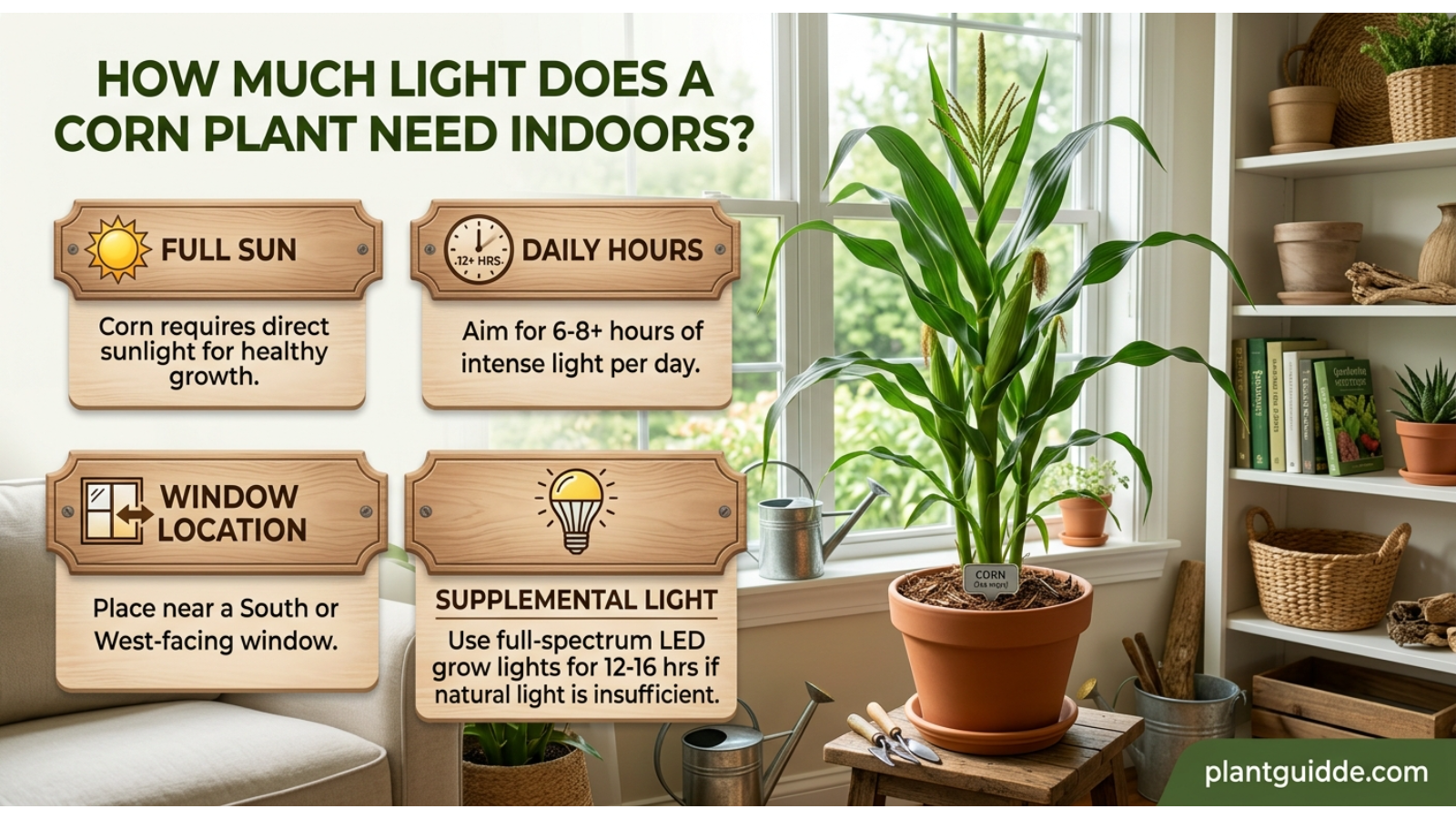
Corn plants do best in bright, indirect light. A location near a window where the plant receives plenty of ambient daylight but is protected from intense midday sun is usually a good starting point.
Too little light can cause slow growth and weaker, stretched foliage. On the other hand, strong direct sunlight through glass can scorch the leaves, especially if the plant has been growing in lower light.
Signs the Light Is Too Low
Watch for:
- Very slow new growth
- Long gaps between leaves
- Pale or less vigorous foliage
- Leaves leaning strongly toward a window
Corn Plant Care Indoor these signs appear, gradually move the plant closer to a bright window rather than suddenly placing it in intense sunlight.
Can a Corn Plant Tolerate Low Light?
It can tolerate lower light better than many tropical houseplants, but tolerating low light is not the same as thriving in it. Growth will generally be slower, and watering needs may decrease because the plant uses moisture more slowly.
A practical rule is simple: if the soil remains wet for a long time because the plant is sitting in a very dim location, improve the light before increasing watering.
Image Suggestion: A corn plant positioned beside a bright window with a sheer curtain showing the difference between indirect and direct sunlight.
How to Water a Corn Plant Indoors
Watering is one of the most common areas where indoor corn plants run into trouble.
Rather than watering according to a fixed weekly calendar, check the soil. When the upper portion has dried sufficiently, water thoroughly until excess water flows from the drainage holes.
Then empty any collected water from the saucer or decorative container.
How Often Should You Water a Corn Plant?
There is no single correct schedule. Indoor watering frequency depends on:
- Light levels
- Temperature
- Humidity
- Pot size
- Soil composition
- Plant size
- Season
- Drainage
A plant in bright light and warm conditions may need water considerably sooner than one growing in a cool, dim room.
How to Tell When It Needs Water
Push a finger into the soil or use another simple moisture-checking method. Do not judge moisture solely from the surface because the top layer can dry while deeper soil remains wet.
The goal is moist soil with enough time for excess water to drain, rather than permanently saturated roots.
The Biggest Watering Mistake
The most common mistake is watering again simply because the plant’s leaves look slightly less firm.
Corn plants can suffer when roots remain constantly wet. Repeated overwatering can reduce oxygen around the roots and eventually contribute to root problems.
What Soil Is Best for a Corn Plant?
Corn plants need a potting medium that holds some moisture while allowing excess water to escape.
A quality indoor potting mix amended with materials that improve drainage can work well. The exact recipe is less important than the result: the soil should not remain dense and waterlogged for extended periods.
Look for a mix that is:
- Well draining
- Airy rather than compacted
- Capable of retaining moderate moisture
- Suitable for container-grown houseplants
Avoid heavy garden soil in indoor containers. It can compact easily and may interfere with drainage and root aeration.
Choose the Right Pot and Drainage
A drainage hole is far more important than an attractive decorative pot.
Corn Plant Care Indoor a container has no way for excess water to escape, it becomes much easier to accidentally keep the roots too wet.
When repotting, choose a container that is only moderately larger than the current root system. Moving a small plant into a very large pot can leave a large volume of wet soil around relatively few roots.
That can make moisture management more difficult.
Humidity for Indoor Corn Plants
Corn plants appreciate moderate humidity, but you do not need to create a tropical greenhouse in your home.
Very dry indoor air can contribute to brown leaf tips and crispy leaf edges, particularly when combined with inconsistent watering or other environmental stress.
Corn Plant Care Indoor your home is especially dry, practical options include:
- Grouping compatible plants together
- Using a room humidifier
- Keeping the plant away from strong heating or cooling vents
- Maintaining consistent watering
Avoid assuming that daily misting will solve every humidity problem. Misting provides only a temporary increase in surface moisture and is not a substitute for improving overall room humidity when the air is persistently dry.
What Temperature Does a Corn Plant Need?
Corn plants prefer warm, stable indoor temperatures.
Keep them away from:
- Cold drafts
- Frequently opened exterior doors
- Air-conditioning vents
- Heating vents
- Sudden temperature changes
A plant may tolerate a brief change better than repeated exposure. Consistency is especially important when a corn plant is already showing stress.
Fertilizing a Corn Plant
Corn plants do not need heavy feeding.
During active growth, a balanced houseplant fertilizer applied according to the product’s label can support healthy foliage. Reduce or stop routine feeding when growth naturally slows.
More fertilizer is not better. Excess salts can accumulate in the soil and contribute to leaf-tip damage.
Corn Plant Care Indoor the plant has brown tips despite otherwise reasonable care, consider the entire environment rather than immediately adding fertilizer.
How to Repot a Corn Plant
Repotting is usually needed when the plant has significantly outgrown its container, the roots have become crowded, or the existing potting mix has deteriorated.
A good time to repot is generally during active growth.
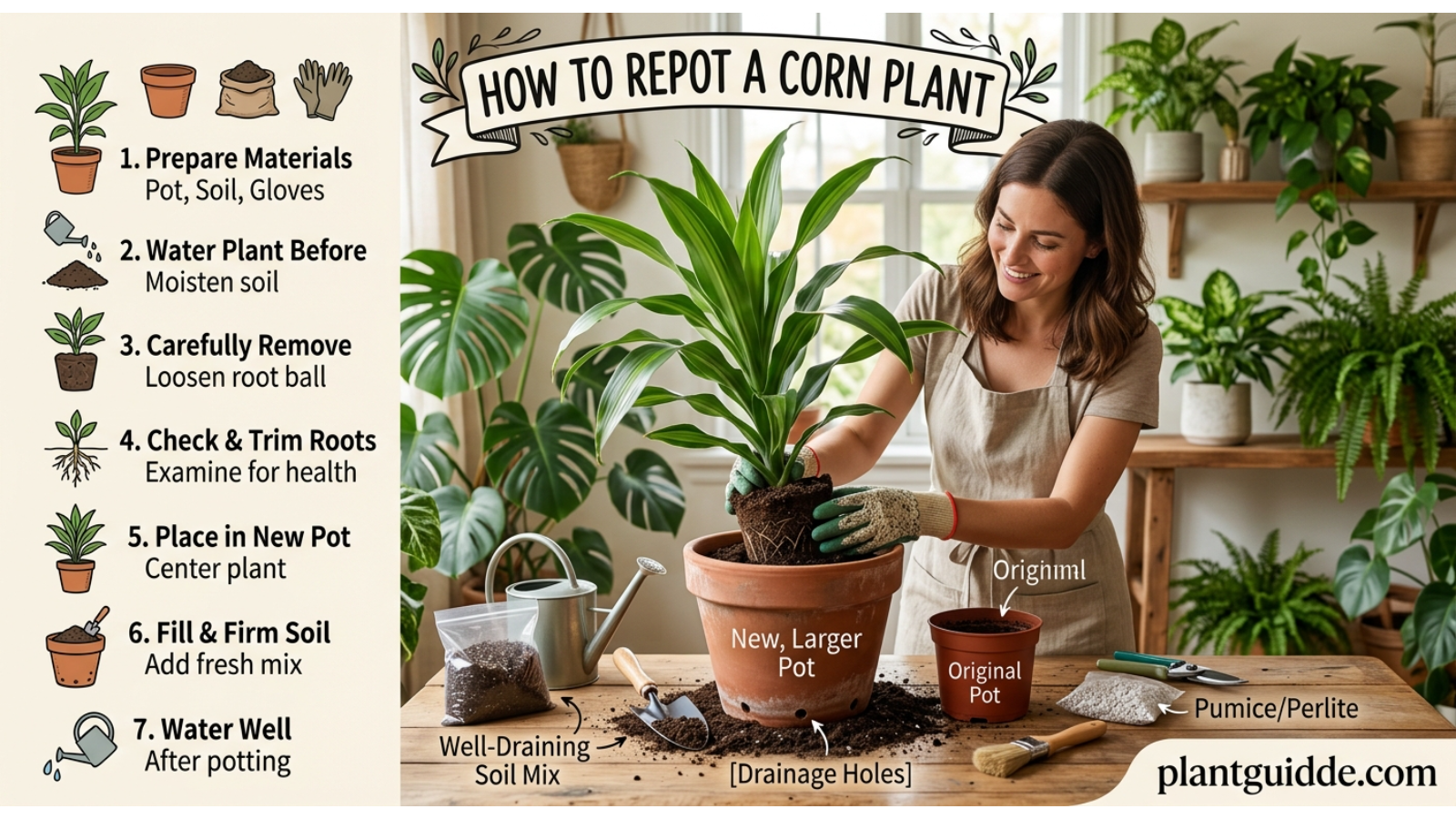
Simple Repotting Steps
- Select a pot with drainage holes.
- Choose a container only somewhat larger than the current one.
- Remove the plant carefully without aggressively disturbing healthy roots.
- Inspect the root system for obvious damage or decay.
- Place fresh, well-draining potting mix around the roots.
- Set the plant at approximately the same depth as before.
- Water appropriately and allow excess moisture to drain.
Avoid burying the cane deeper than it was originally planted.
How to Prune a Corn Plant
Pruning can remove damaged foliage and help manage an indoor plant that has become too tall.
Remove completely dead or badly damaged leaves using clean, sharp tools. If a cane has become excessively tall, it can also be cut back to encourage new growth from below the cut.
Do not remove large amounts of healthy foliage without a reason. Leaves are the plant’s primary energy-producing structures, so excessive pruning can temporarily reduce vigor.
Why Are My Corn Plant Leaves Turning Brown?
Brown leaves are one of the most common corn plant problems, but brown tips do not automatically mean the plant needs more water.
Possible causes include:
- Dry indoor air
- Inconsistent watering
- Excess fertilizer or salt buildup
- Poor-quality water sensitivity
- Excessive direct sunlight
- Root stress
- Environmental changes
Look at the pattern.
Brown, crispy tips with otherwise healthy foliage often point toward environmental or moisture-related stress.
Dark, soft, deteriorating tissue combined with persistently wet soil is more concerning for excessive moisture and root problems.
The solution should match the symptoms rather than treating every brown leaf with additional water.
Why Are Corn Plant Leaves Turning Yellow?
Yellow leaves can happen naturally as older leaves age, but widespread or sudden yellowing deserves investigation.
Check:
- How wet the soil is.
- How quickly the pot drains.
- Whether the plant receives enough light.
- Whether the roots have been disturbed.
- Whether watering has recently increased.
- Whether the plant is experiencing temperature stress.
Corn Plant Care Indoor several lower leaves gradually yellow and the plant continues producing healthy new growth, natural aging may be involved.
If many leaves turn yellow while the soil remains wet for long periods, excessive moisture should be investigated first.
Why Is My Corn Plant Drooping?
Drooping can result from either insufficient moisture or root stress caused by excessive moisture.
Check the soil before watering.
Corn Plant Care Indoor the soil is quite dry and the foliage is limp, watering may resolve the problem. If the soil is already wet, adding more water is likely to make the situation worse.
This is why checking the soil is more reliable than reacting to drooping alone.
Why Are Corn Plant Leaves Curling?
Leaf curling can indicate environmental stress.
Common possibilities include:
- Low moisture
- Dry air
- Excessive sunlight
- Temperature stress
- Root problems
- Sudden changes in growing conditions
Consider what changed recently. Did the plant move to a sunny window? Has the heating or air conditioning been running more? Has the watering pattern changed?
That context can help identify the cause much faster than treating the symptom in isolation.
How to Keep a Corn Plant Healthy Long Term
The best corn plant care routine is surprisingly simple.
1. Give It Stable Light
Choose bright, filtered light and protect the leaves from harsh direct sun.
2. Check Soil Before Watering
Do not automatically water because a certain number of days has passed.
3. Make Drainage Non-Negotiable
Use a container with drainage holes and never allow the pot to sit permanently in standing water.
4. Avoid Environmental Extremes
Keep the plant away from drafts, heating vents, and intense temperature fluctuations.
5. Watch New Growth
New leaves often tell you more about current conditions than old damaged leaves. Existing brown areas will not turn green again, so judge improvements by the health of emerging foliage.
6. Inspect the Plant Regularly
When watering, take a few seconds to examine the leaves and stems. Early detection of pests, discoloration, or unusual growth makes problems easier to manage.
Common Corn Plant Care Mistakes
Watering on a Fixed Schedule
A calendar cannot account for changes in temperature, light, humidity, and soil moisture. Check the plant instead.
Keeping the Soil Permanently Wet
Corn plants need moisture, but their roots also need access to air. Constant saturation is not healthy.
Putting It in Harsh Sun
A bright window is useful, but intense direct sunlight can damage foliage.
Using a Pot Without Drainage
Decorative containers can be used as outer covers, but the actual growing pot should allow excess water to escape.
Cutting Off Every Brown Tip
Removing damaged tissue improves appearance, but it does not fix the underlying cause. Correct the growing conditions first.
Fertilizing a Stressed Plant Heavily
Adding fertilizer when a plant is already struggling can create additional problems. Stabilize light, moisture, drainage, and temperature before increasing feeding.
A Practical Corn Plant Care Routine
If you want a simple routine rather than a complicated schedule, use this approach:
Weekly:
Check the foliage, inspect for pests, and test soil moisture.
When the soil dries sufficiently:
Water thoroughly and allow excess water to drain completely.
Monthly during active growth:
Assess whether the plant needs feeding based on its growth and your fertilizer’s directions.
Every few months:
Rotate the pot if growth is leaning toward the light, clean dusty leaves gently, and inspect the pot and drainage.
When problems appear:
Look for changes in light, watering, temperature, humidity, or soil condition before trying multiple treatments at once.
This last point is particularly useful. If you change five things simultaneously, you may not know which change helped.
FAQs:
How often should I water a corn plant indoors?
Water when the upper portion of the soil has dried sufficiently rather than following a strict weekly schedule. Thoroughly water the soil and allow excess water to drain from the container.
Can a corn plant grow in low light?
Yes, corn plants can tolerate relatively low indoor light, but growth is usually slower. Brighter indirect light generally supports stronger, healthier growth.
Why does my corn plant have brown leaf tips?
Brown tips can result from dry air, inconsistent moisture, excess fertilizer salts, intense sunlight, or other environmental stress. Check the entire growing environment before changing the watering routine.
Should I mist my corn plant?
Misting is not essential. If indoor air is consistently dry, improving room humidity with a humidifier is generally a more reliable approach than repeatedly misting the leaves.
How do I make my corn plant grow taller?
Provide adequate indirect light, appropriate watering, good drainage, and suitable temperatures. Mature corn plants naturally develop height over time. Pruning can also influence branching and overall shape.
Conclusion
Successful corn plant care indoor comes down to consistency rather than complicated techniques. Give your Dracaena fragrans bright indirect light, water according to soil moisture, use well-draining soil and a container with drainage, maintain reasonable humidity, and protect it from temperature extremes.
If your plant is already showing brown tips, yellow leaves, or drooping, do not immediately add more water or fertilizer. Check the soil, light, drainage, and recent environmental changes first. That simple diagnostic habit will help you solve problems more accurately and keep your corn plant looking healthy for the long term.

Asad Mumtaz is a dedicated plant enthusiast and gardening writer with a passion for helping people care for their plants successfully. He specializes in plant care guides, indoor gardening, and practical growing tips for all skill levels. His content focuses on making gardening simple, enjoyable, and rewarding. Through his work, Asad shares reliable advice to help readers create thriving green spaces.