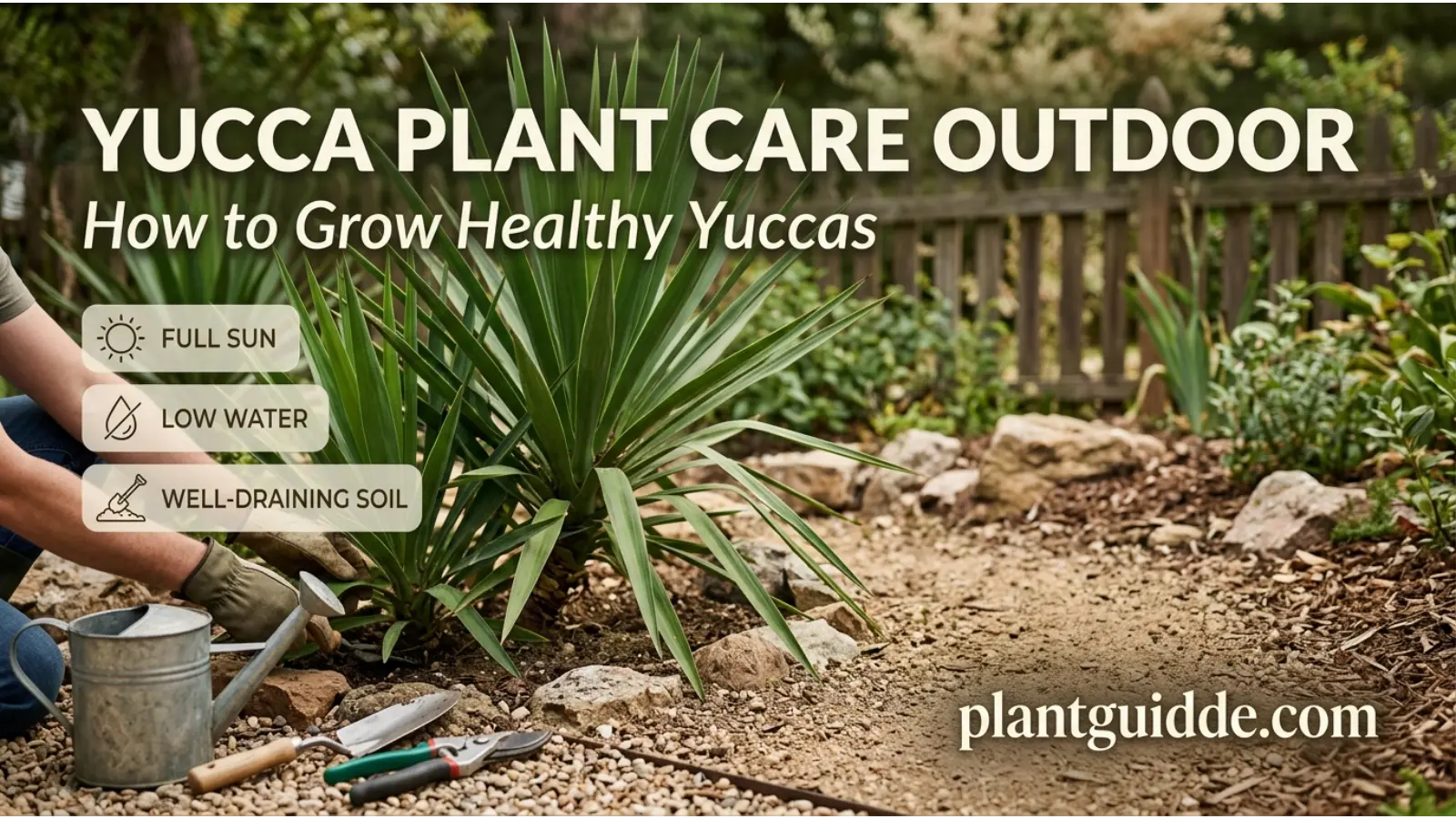
Yucca plant care outdoor are popular outdoor plants because they combine dramatic, architectural foliage with relatively low maintenance.
Their stiff, sword-shaped leaves can add structure to a garden bed, rock garden, patio container, or dry landscape without requiring constant attention.
The biggest mistake with yucca plant care outdoor is often giving the plant too much water. Yuccas are adapted to conditions where their roots can dry between watering sessions.
Heavy, poorly draining soil can therefore cause more trouble than dry weather. Once you understand how to balance sunlight, drainage, watering, soil, and temperature, yucca care becomes much easier.
Quick Answer
Yucca plant care outdoor is mainly about giving the plant plenty of sunlight, sharply draining soil, and avoiding frequent watering. Established yuccas tolerate heat, drought, and poor soil better than many landscape plants.
Water deeply when the soil has dried, keep the crown from staying wet, and protect young plants from prolonged freezing or excessively wet conditions.
Understanding Outdoor Yucca Growing Conditions
Yuccas are a diverse group of plants, and their hardiness varies considerably by species. Some are suited to hot, dry landscapes, while others tolerate colder climates better.
Regardless of species, most outdoor yuccas perform best when their basic environmental needs are met:
- Bright sunlight for strong growth
- Well-draining soil
- Moderate to low supplemental watering once established
- Good airflow around the foliage
- Enough space for mature growth
- Protection from persistently wet soil
Before planting, identify the yucca species if possible. This is particularly important in regions with cold winters because the plant’s ability to survive freezing temperatures depends on the species and local growing conditions.
How Much Sun Does an Outdoor Yucca Need?
Most landscape yuccas prefer full sun, which generally means around six or more hours of direct sunlight each day.
Strong light helps maintain compact growth and keeps the leaves firm and upright. A yucca growing in insufficient light may become less vigorous, develop weaker growth, or lean toward the brightest direction.
When choosing a planting location, look for an area that receives direct sunlight for much of the day.
What About Hot Afternoon Sun?
Established yuccas generally handle strong sun and high temperatures well, especially when planted in suitable soil. However, a newly planted yucca can experience stress while its roots are becoming established.
Yucca plant care outdoor a young plant is suddenly moved from a sheltered nursery environment into intense outdoor sun, some temporary leaf discoloration or scorching can occur.
A practical approach is to acclimate container-grown plants gradually when necessary rather than immediately exposing a shade-grown plant to extreme conditions.
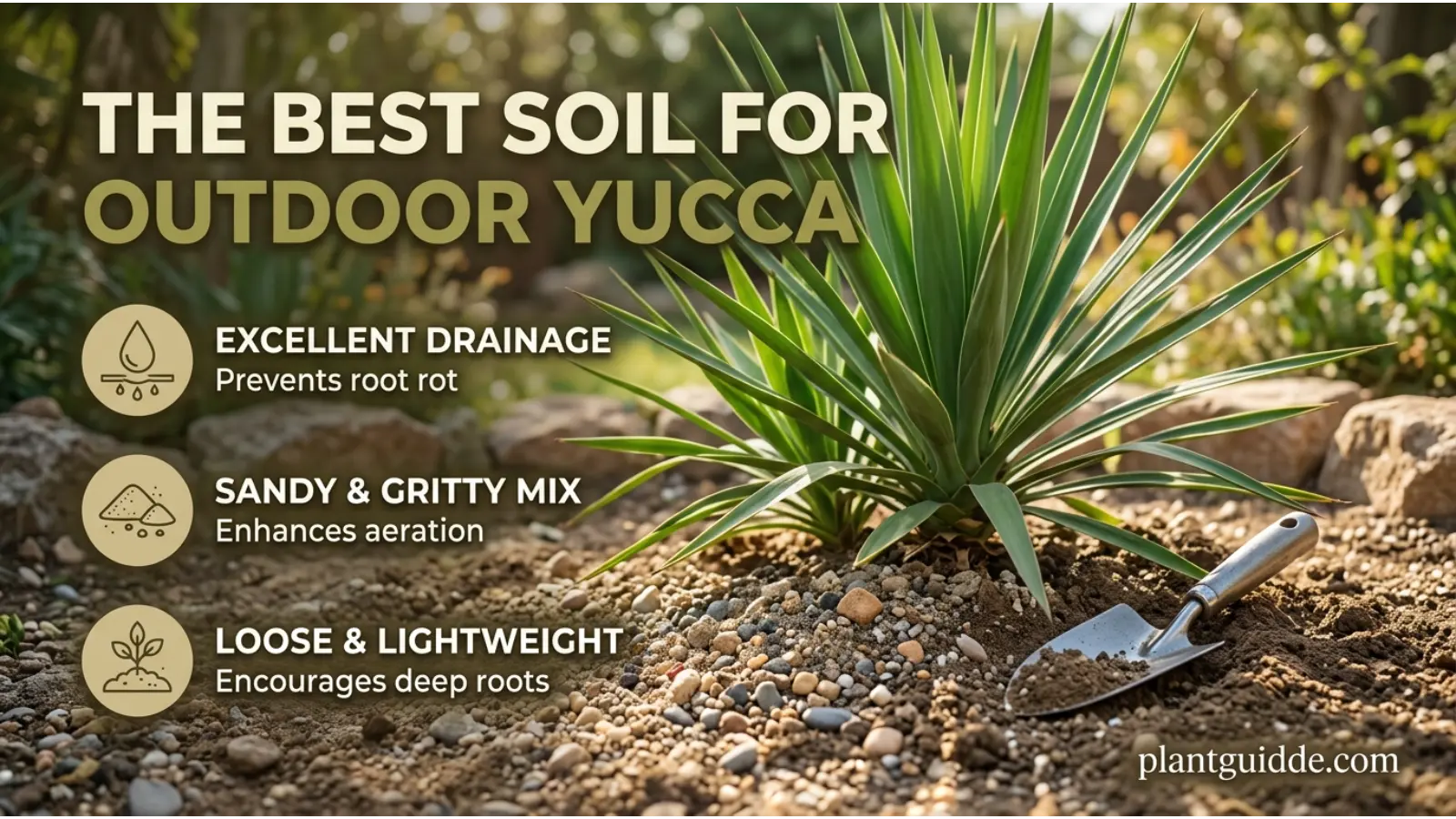
The Best Soil for Outdoor Yucca
Drainage is one of the most important parts of successful yucca care.
Yuccas generally do not perform well when their roots remain surrounded by water for long periods. Heavy clay, compacted soil, or a low-lying planting site can hold moisture around the root system and increase the risk of root problems.
A suitable planting area should allow excess water to move away relatively quickly.
For heavy soil, improve the planting site with organic matter and, where appropriate, coarse mineral material or other amendments suited to the local soil. However, simply adding a small amount of material to a deep hole in heavy clay can sometimes create a poorly drained pocket.
Yucca plant care outdoor the native soil remains extremely wet after rain, choosing a raised planting position can be more effective.
Practical test: After a substantial watering or rainfall, observe the planting area. Yucca plant care outdoor water remains pooled around the yucca for an extended period, drainage needs attention.
How to Water a Yucca Plant Outdoors
Watering is where many yucca problems begin.
A newly planted yucca needs more consistent moisture while establishing its root system. Once established, many outdoor yuccas become considerably more drought tolerant.
Instead of following a rigid weekly schedule, check the soil and consider recent weather.
Newly Planted Yucca
During establishment:
- Water thoroughly after planting.
- Allow the upper soil to begin drying before watering again.
- Water deeply rather than giving small amounts every day.
- Adjust frequency during hot, rainy, or unusually cool weather.
- Reduce unnecessary watering during periods of frequent rainfall.
The goal is to encourage roots to establish deeper into the surrounding soil rather than keeping the surface constantly wet.
Established Yucca
An established outdoor yucca usually needs much less supplemental irrigation than a newly planted specimen.
During extended dry periods, water deeply when the soil has dried sufficiently. During regular rainfall, additional irrigation may be unnecessary.
Remember that drought tolerance does not mean a plant should never be watered. A yucca can tolerate dry conditions, but prolonged extreme drought can still cause stress, especially in containers or very sandy soil.
How to Plant a Yucca Outdoors
Choosing the right planting position is often more important than adding fertilizer later.
Step 1: Choose a Sunny Location
Select an area with abundant direct sunlight and enough room for the plant to reach its mature size.
Avoid planting too close to pathways if the species has sharp leaf tips.
Step 2: Check Drainage
Dig a planting area appropriate for the root system and assess whether the soil drains adequately.
Avoid naturally waterlogged locations.
Step 3: Plant at the Correct Depth
Position the yucca so it sits at approximately the same depth as it was growing in its container.
Do not bury the stem or crown unnecessarily. Keeping the crown too wet or too deeply planted can create problems.
Step 4: Backfill Carefully
Use suitable soil around the roots and gently firm it to eliminate major air pockets without compacting the soil excessively.
Step 5: Water Thoroughly
Give the plant a deep watering after planting so the soil settles around the roots.
Step 6: Monitor During Establishment
For the first several weeks, pay closer attention to soil moisture than you would with an established yucca. The plant needs enough moisture to establish roots but should not remain constantly saturated.
Image Suggestion: A step-by-step visual showing an outdoor yucca being planted in a sunny, well-drained garden bed.
Should You Fertilize an Outdoor Yucca?
Yuccas generally do not require heavy feeding.
If the plant is growing steadily with healthy foliage, there may be little reason to fertilize frequently. Excessive fertilizer can encourage growth that is unnecessary for an already vigorous landscape plant and may contribute to salt buildup in some soils.
If a yucca is growing poorly, first investigate the environment.
Check:
- Sunlight exposure
- Drainage
- Watering practices
- Root damage
- Soil condition
- Winter or heat stress
- Pests
If soil testing indicates a nutrient deficiency, fertilization can be targeted rather than based on guesswork.
Pruning Outdoor Yucca Plants
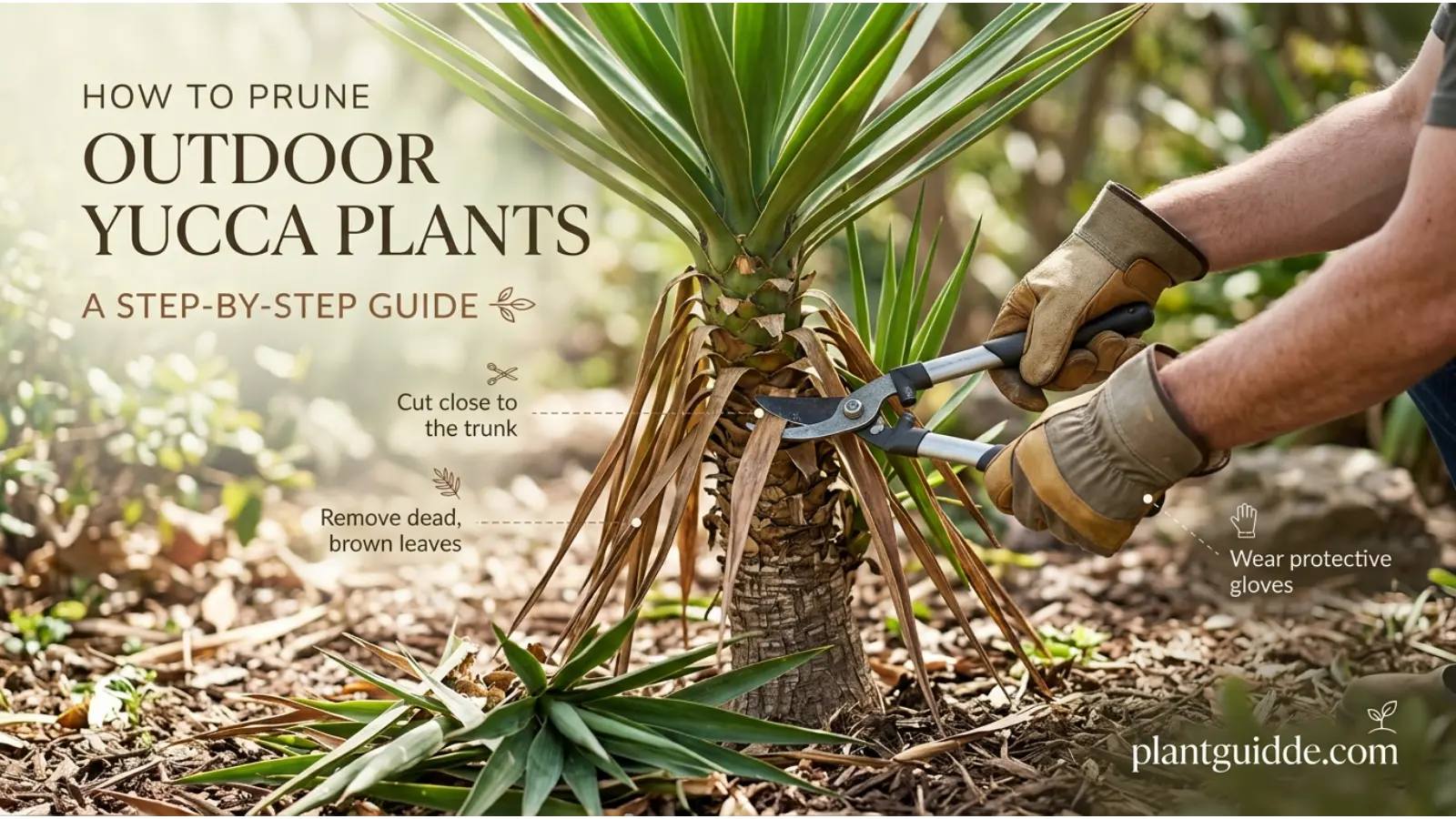
Yucca pruning is usually about removing damaged or unwanted growth rather than forcing the plant into a particular shape.
Remove leaves that are:
- Completely brown or dead
- Severely damaged
- Broken
- Creating an obvious maintenance hazard
Use clean, sharp tools and wear protective gloves because yucca foliage can be surprisingly sharp.
Avoid removing large amounts of healthy green foliage simply to make the plant look smaller. Excessive pruning can weaken the plant’s appearance and remove foliage that is still contributing to growth.
Some yucca species also produce tall flower stalks. After flowering, the spent stalk can be removed when it has dried and is no longer attractive.
Yucca Flowers: What to Expect
A mature yucca can produce an impressive flower stalk, often rising well above the foliage.
Flowering depends on species, plant maturity, environmental conditions, and growing climate. A yucca that does not flower immediately is not necessarily unhealthy.
If your plant is producing healthy leaves and maintaining strong growth but has not bloomed, avoid responding with excessive fertilizer or watering. Those changes may not address the actual reason for a lack of flowers.
Growing Yucca in Containers Outdoors
Yuccas can also perform well in outdoor containers when the pot and growing medium provide excellent drainage.
Container-grown plants usually require more attention than plants established directly in the ground because pots heat and dry more quickly.
Choose:
- A container with drainage holes
- A fast-draining growing medium
- A pot large enough for the root system
- A sunny location
- A container that is stable enough to support the plant’s height
Avoid leaving the pot sitting permanently in a saucer filled with water.
Container yuccas may also be more vulnerable to cold temperatures because their roots have less insulation than roots growing in the ground.
Yucca Care in Winter
Winter care depends heavily on the yucca species and your climate.
Some yuccas are remarkably cold tolerant, while others are better suited to mild or warm regions. Before taking protective measures, determine the species and its expected hardiness.
In cold climates:
- Avoid keeping the soil unnecessarily wet before freezing weather.
- Protect young plants when severe cold is expected.
- Consider the vulnerability of container roots.
- Remove badly damaged foliage only after the extent of cold injury becomes clear.
Cold-damaged leaves can sometimes look unsightly while the plant itself remains alive. Cutting everything back immediately can make it harder to determine which tissue will recover.
Common Yucca Problems and What They Mean
The appearance of yucca leaves can provide useful clues about growing conditions.
Yellow Leaves
An occasional old yellow leaf may be part of normal aging, but widespread yellowing can indicate a problem.
Common possibilities include:
- Excessive moisture
- Poor drainage
- Root stress
- Sudden environmental changes
- Nutritional problems
If several leaves are turning yellow while the soil remains consistently wet, investigate watering and drainage first.
Brown Leaf Tips
Brown tips can result from environmental stress, inconsistent moisture, salt buildup, physical damage, or other factors.
Do not automatically assume that brown tips mean the yucca needs more water. Check the entire growing environment before changing your watering routine.
Drooping or Soft Leaves
Healthy yucca leaves are generally firm and structurally strong.
If foliage becomes unusually soft or the base of the plant appears weak, examine the roots and soil moisture. Persistent wetness is particularly concerning because root damage can eventually affect the firmness of the entire plant.
Leaf Spots
Spots can have multiple causes, including fungal or bacterial problems, physical injury, environmental stress, and prolonged moisture on foliage.
Improve airflow, avoid unnecessary overhead watering, and remove severely affected tissue when appropriate.
Why Is My Outdoor Yucca Not Growing?
Slow growth does not automatically mean something is wrong.
Yucca growth can vary according to species, season, age, temperature, available light, and moisture.
If growth seems unusually slow, examine the basics first:
- Is the plant receiving enough direct sunlight?
- Does water drain away quickly?
- Is the soil being kept constantly moist?
- Has the plant recently been transplanted?
- Has the weather been unusually cold or hot?
- Are the roots restricted in a container?
- Are pests or disease affecting the foliage?
A yucca planted in a stressful location may survive while showing little new growth. Moving toward better light and drainage can often make a greater difference than simply adding fertilizer.
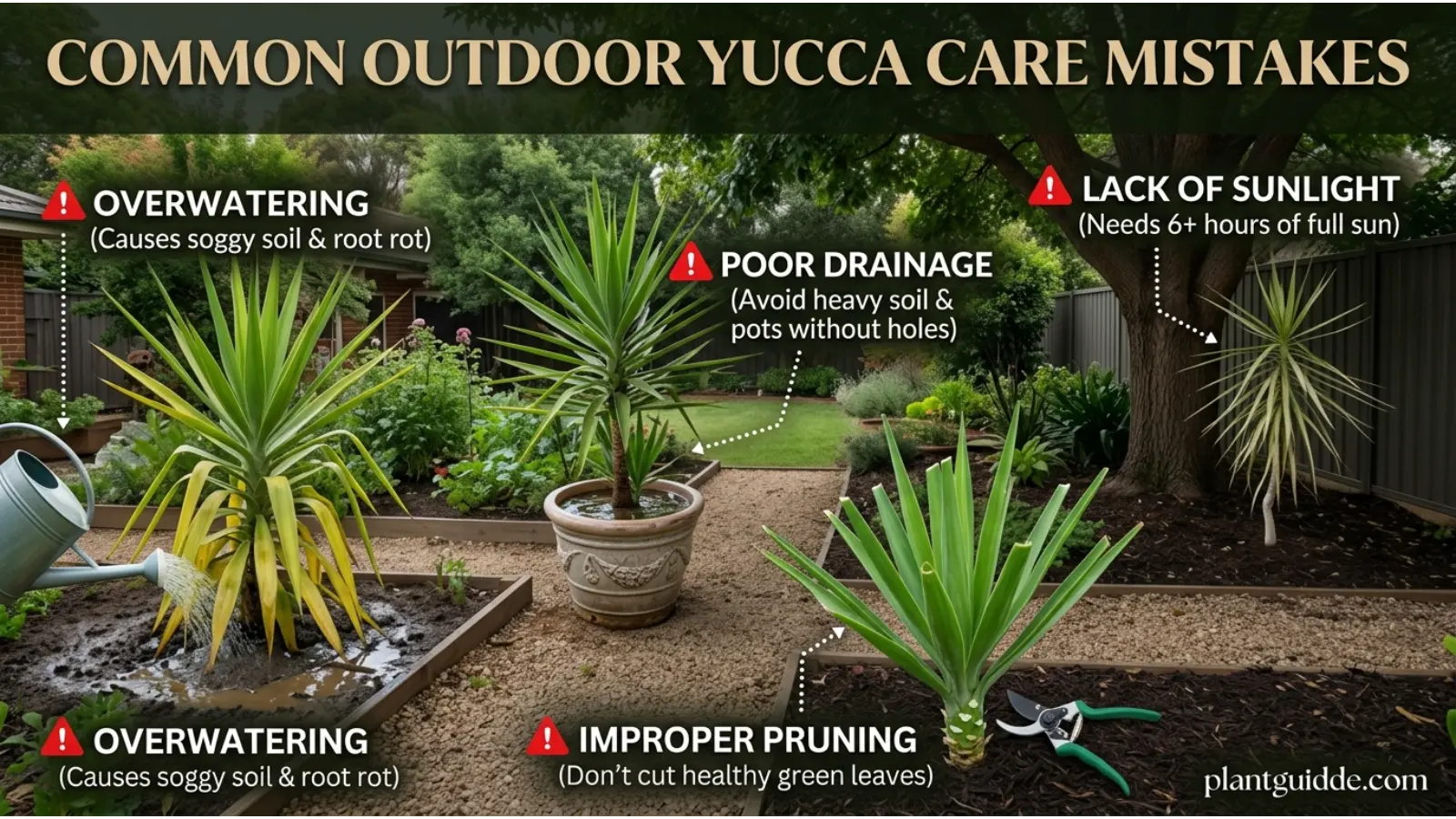
Common Outdoor Yucca Care Mistakes
Watering on a Fixed Schedule
Giving the plant water simply because it is “watering day” can keep the soil wetter than necessary.
Better approach: Check soil moisture and recent rainfall before watering.
Planting in Poorly Drained Soil
A sunny location does not compensate for constantly saturated roots.
Better approach: Prioritize drainage when selecting the planting site.
Giving Too Little Sun
Yuccas are often chosen for sunny landscapes, yet placing them in deep shade can result in weaker growth.
Better approach: Match the species with a location that provides the light it needs.
Over-Fertilizing
More fertilizer does not necessarily mean a healthier yucca.
Better approach: Diagnose the reason for weak growth before feeding.
Ignoring Mature Size
A small nursery yucca can eventually become a substantial landscape plant.
Better approach: Research the mature height and spread before planting.
Forgetting About Sharp Leaves
The foliage can be hazardous around narrow paths, entrances, children’s play areas, or frequently used seating spaces.
Better approach: Position yuccas where their mature foliage will not interfere with foot traffic.
How to Keep an Outdoor Yucca Healthy Long Term
The easiest way to maintain a yucca is to create conditions that match its natural strengths rather than trying to compensate for an unsuitable location.
A good long-term routine is simple:
- Provide strong sunlight.
- Use well-drained soil.
- Water deeply when needed rather than constantly.
- Allow the soil to dry appropriately between watering.
- Avoid planting in standing water.
- Fertilize only when there is a clear reason.
- Remove dead or damaged leaves when necessary.
- Monitor for pests and disease.
- Protect vulnerable species from extreme winter conditions.
- Give the plant enough space to mature.
Once established, a well-positioned yucca can require surprisingly little maintenance.
FAQs:
How often should I water a yucca plant outdoors?
Watering frequency depends on climate, soil, plant age, and rainfall. Newly planted yuccas need more regular watering while establishing. Established plants should generally be watered deeply when the soil has dried rather than kept constantly moist.
Can yucca plants grow in full sun?
Yes. Many outdoor yuccas perform very well in full sun. Strong sunlight helps maintain healthy, compact growth, although newly transplanted plants may need time to acclimate to intense exposure.
Do yuccas need a lot of water?
No. Many established yuccas are drought tolerant and can perform well with relatively little supplemental water. The important point is not to confuse drought tolerance with complete freedom from watering during prolonged extreme dryness.
Why are my outdoor yucca leaves turning yellow?
Yellow leaves can result from several issues, but excessive moisture and poor drainage are important possibilities. Check the soil before increasing watering, particularly if the plant is already receiving regular irrigation or rainfall.
Can a yucca survive winter outdoors?
Some yucca species can tolerate significant cold, while others are much less hardy. The answer depends on the species and local climate. Identify the yucca before deciding whether it needs winter protection.
Final Takeaway
Successful yucca plant care outdoor comes down to working with the plant rather than constantly adjusting it.
Give it plenty of sunlight, provide fast drainage, avoid excessive watering, and allow the plant time to establish its roots. If problems appear, investigate moisture, drainage, light, temperature, and root health before reaching for fertilizer or other treatments.
For most outdoor growers, the best next step is simple: check the planting site today and make sure your yucca has enough sun and soil that drains freely.

Asad Mumtaz is a dedicated plant enthusiast and gardening writer with a passion for helping people care for their plants successfully. He specializes in plant care guides, indoor gardening, and practical growing tips for all skill levels. His content focuses on making gardening simple, enjoyable, and rewarding. Through his work, Asad shares reliable advice to help readers create thriving green spaces.