
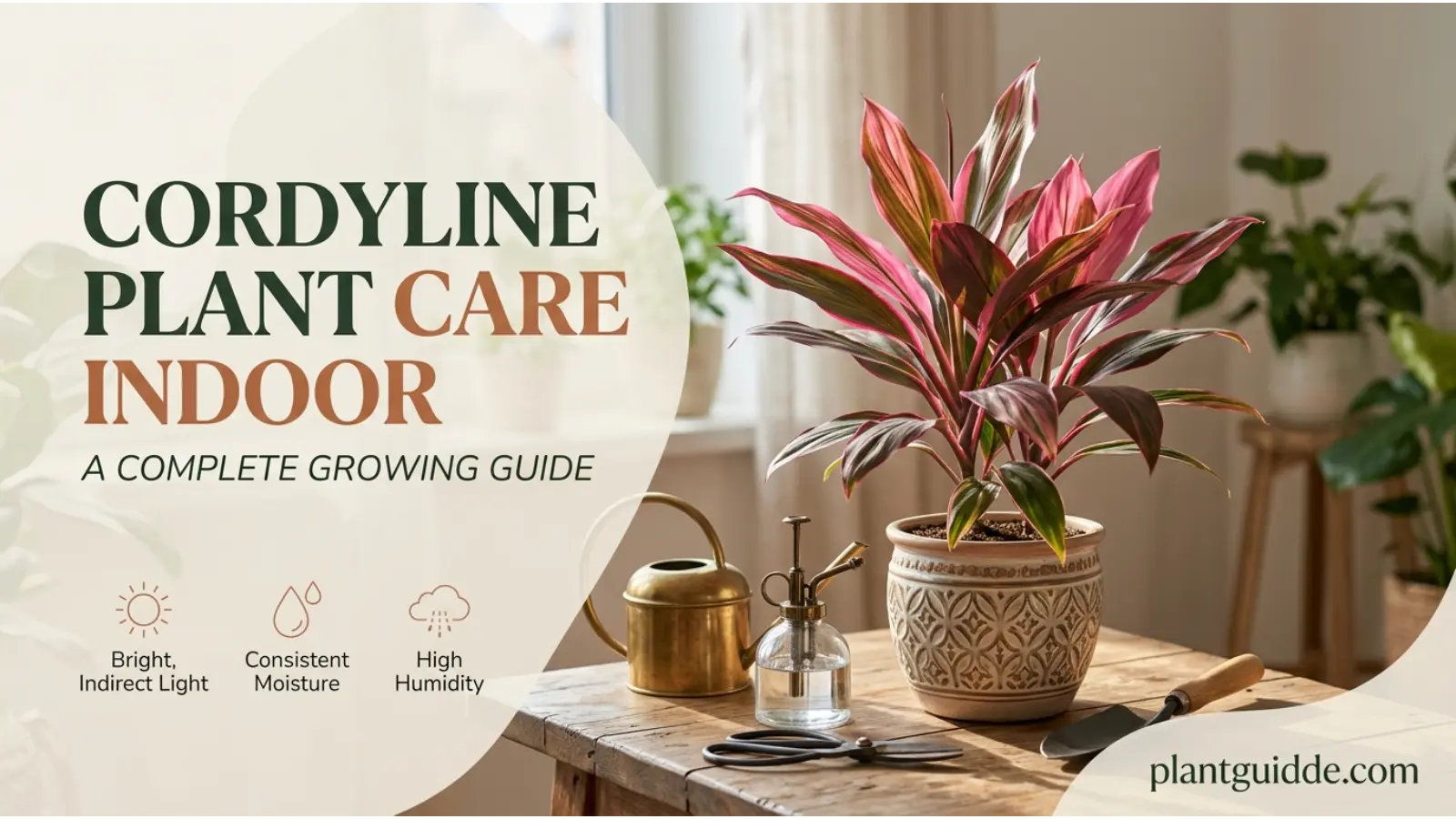
Cordyline plant care indoor bring a tropical appearance indoors with their long, sword-shaped leaves and striking colors. Depending on the variety, the foliage may feature deep green, burgundy, pink, red, or purple shades, making cordylines attractive choices for living rooms, offices, and bright indoor spaces.
However, growing a cordyline indoors can be more challenging than caring for some common houseplants. Brown leaf tips, fading colors, yellow leaves, and drooping foliage may develop when light, moisture, humidity, or temperature conditions are unsuitable.
Understanding the specific needs of your plant is the key to successful cordyline plant care indoor. This guide explains how to choose the right location, water correctly, maintain colorful foliage, prevent common problems, and encourage healthy growth throughout the year.
Quick Answer
For successful cordyline plant care indoors, place your plant in bright, indirect light, use a well-draining potting mix, and water when the top 1–2 inches of soil feel dry. Maintain warm temperatures, provide moderate humidity, and feed lightly during active growth. Avoid waterlogged soil, cold drafts, and harsh direct sunlight to help keep the colorful foliage healthy and vibrant.
Understanding the Indoor Cordyline Plant
Cordyline is a genus of tropical and subtropical plants grown for their decorative foliage. One of the most common ornamental species is Cordyline fruticosa, often called the ti plant. Other cordylines, including Cordyline australis, are also sold as ornamental plants, although their mature size and growing preferences can differ.
Before establishing a care routine, identify which cordyline you have. A tropical ti plant generally benefits from warmer, more humid indoor conditions, while some other cordylines can tolerate cooler conditions once established.
Popular cordyline varieties include:
- Red Sister: Known for broad leaves with pink, burgundy, and reddish tones.
- Kiwi: Features green foliage edged with cream and pink.
- Florida Beauty: Displays variegated leaves with green, cream, and pink markings.
- Purple Compacta: Offers dark purple foliage and a relatively compact growth habit.
- Cordyline australis: Produces narrow, sword-like leaves and can eventually develop a taller, trunk-like form.
Variety names and colors can vary between growers, so use the plant label when available. Correct identification helps you choose appropriate light, temperature, and humidity conditions.
Best Conditions for Cordyline Plant Care Indoors
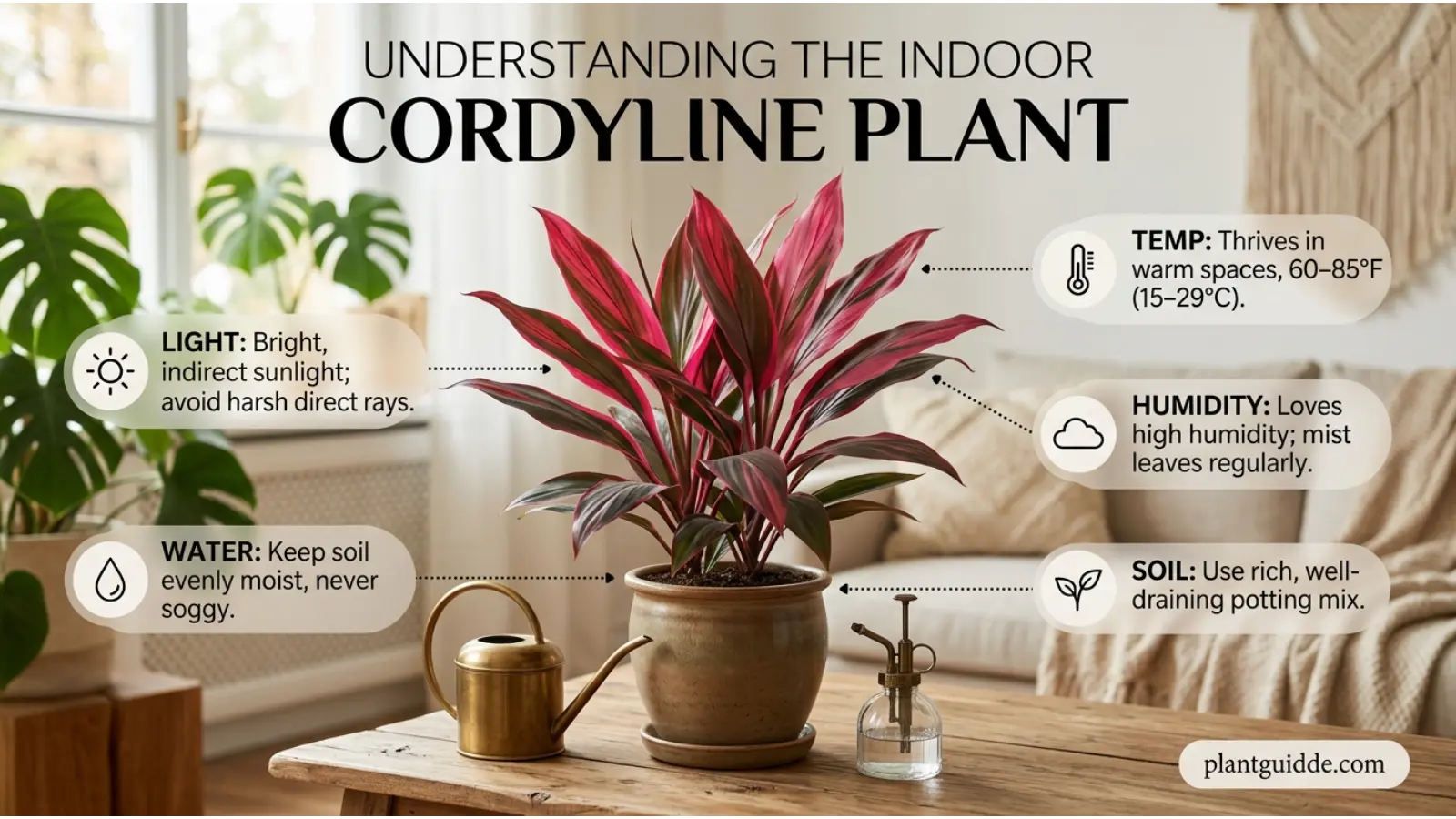
Cordylines generally perform best indoors when their environment resembles the warm, bright conditions they prefer outdoors.
| Care factor | Recommended conditions | What to avoid |
|---|---|---|
| Light | Bright, indirect light | Deep shade or sudden intense sunlight |
| Water | Water when the upper soil begins to dry | Constantly wet soil |
| Soil | Rich, airy, well-draining potting mix | Dense, waterlogged soil |
| Temperature | Around 65–80°F (18–27°C) for tropical types | Cold drafts and sudden temperature changes |
| Humidity | Moderate to higher humidity for tropical varieties | Extremely dry air near heating vents |
| Fertilizer | Balanced houseplant fertilizer during active growth | Excessive feeding |
| Pot | Container with drainage holes | Standing water around the roots |
These are general guidelines rather than rigid rules. The species, potting mix, indoor temperature, and amount of available light all influence how quickly the plant uses water.
How Much Light Does an Indoor Cordyline Need?
Light is especially important for cordylines because it affects both growth and foliage color. Many colorful varieties need brighter conditions than homeowners expect.
Bright, indirect light
Place your cordyline near a bright window where it receives plenty of natural light without prolonged exposure to intense midday or afternoon sun.
An east-facing window can be a good choice. A south- or west-facing window may also work if the plant is set back from the glass or protected by a sheer curtain.
Adequate light helps maintain vivid leaf colors and supports stronger growth. If a pink or burgundy cordyline gradually becomes dull or greener, insufficient light may be contributing to the change.
Can cordyline grow in low light?
Some cordylines can survive in moderately lower light, but prolonged dim conditions may lead to slow growth, faded foliage, and increased watering problems because the soil dries more slowly.
Cordyline plant care indoor your plant sits far from a window, move it gradually to a brighter location. A suitable grow light can help when natural light is limited, particularly during darker months.
Signs of too much sunlight
Strong direct sunlight can scorch leaves, especially when an indoor plant is suddenly moved outdoors or placed against a hot window.
Look for pale, bleached, or crispy patches on the side facing the light source. If these appear after a change in location, reduce the intensity of the sunlight and allow the plant to adjust gradually.
Practical tip: Rotate the pot occasionally so the foliage receives light more evenly, but avoid repeatedly moving the plant between very different environments.
How Often Should You Water an Indoor Cordyline?
Cordylines need consistent moisture during active growth, but their roots should not remain waterlogged. The correct watering frequency depends on the variety, pot size, soil, light, and indoor temperature.
For many indoor cordylines, checking the upper 1–2 inches of soil is a useful starting point. Water when this layer has begun to dry, adjusting for the plant’s actual conditions.
Step-by-step watering method
- Check the soil: Feel the upper layer with your finger. For a large pot, check slightly deeper as well.
- Water thoroughly: Apply water evenly across the soil until excess water begins flowing from the drainage holes.
- Let the pot drain: Empty the saucer or decorative outer container so the roots do not sit in standing water.
- Check before watering again: Do not follow a fixed daily or weekly schedule. Wait until the soil has dried to the appropriate depth.
- Adjust seasonally: Reduce watering when growth slows and the soil takes longer to dry.
Cordylines generally need more frequent monitoring during warm, bright growing conditions. In winter, lower light and cooler temperatures can slow water use.
What happens if you overwater a cordyline?
Overwatering can deprive roots of oxygen and encourage root rot. Warning signs include yellowing leaves, persistently wet soil, soft stems, and a decline in overall plant health.
Cordyline Plant Care Indoor these symptoms appear, check the drainage holes and inspect the roots if necessary. Healthy roots should be firm, while rotting roots may be dark, soft, or unpleasant-smelling.
Remove severely damaged roots with clean tools and repot the plant in fresh, well-draining soil. Do not try to solve root rot simply by withholding water for a few days if the existing soil is dense or the roots are already damaged.
What happens if you underwater a cordyline?
Underwatering can cause drooping leaves, dry edges, and a generally wilted appearance. Check the soil before watering because root damage can also prevent a plant from absorbing enough moisture.
Cordyline Plant Care Indoor the root zone is dry, water thoroughly and allow excess water to drain. Avoid repeatedly giving small amounts of water that wet only the soil surface.
Best Soil and Pot for Indoor Cordyline
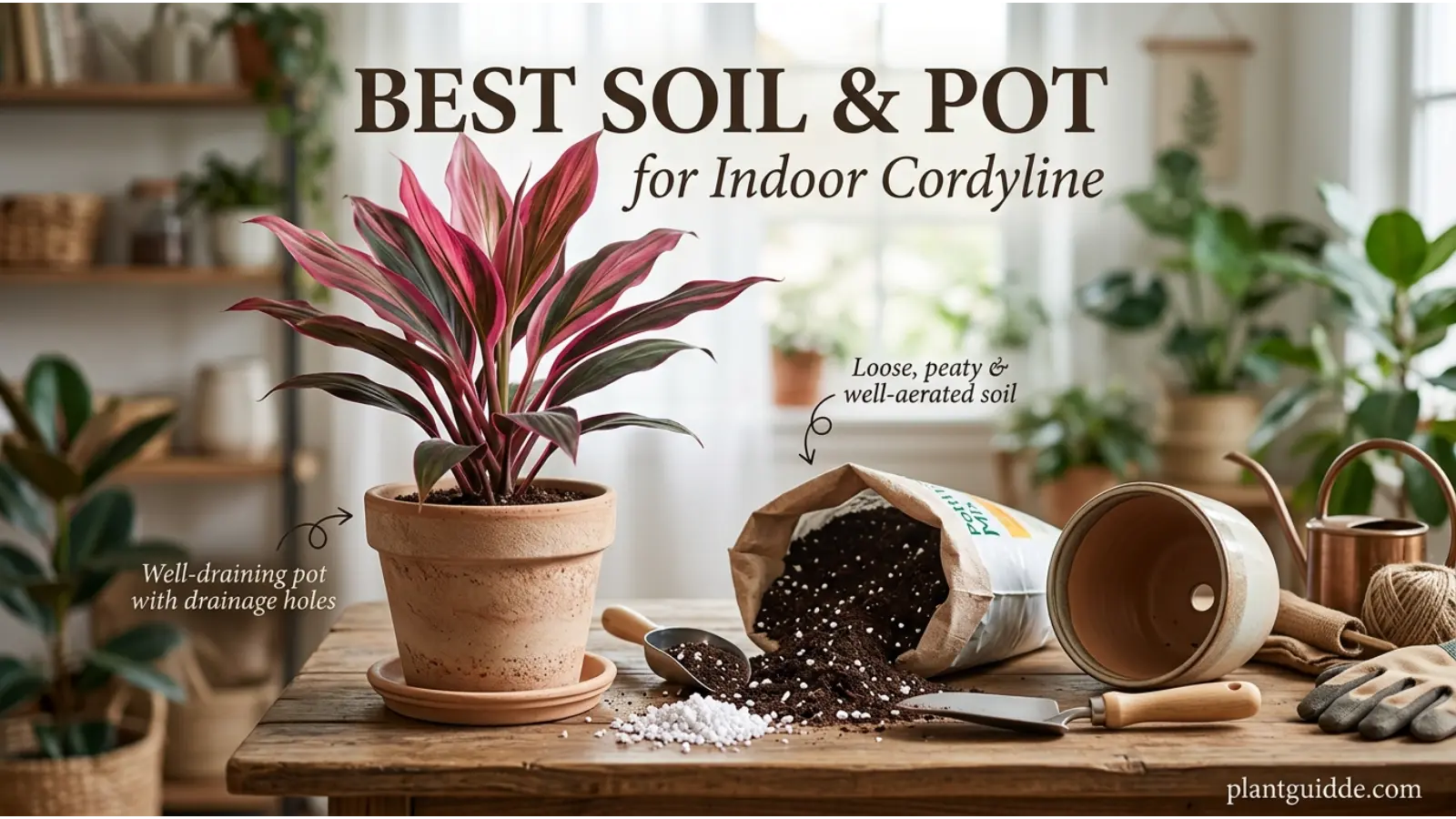
Cordylines benefit from a potting mix that holds some moisture while allowing excess water to drain. A quality indoor potting mix is often suitable, provided it does not become compacted or remain saturated for long periods.
For improved aeration, consider combining:
- Two parts quality indoor potting mix
- One part perlite or pumice
This is a practical starting point, not a universal formula. Adjust the mixture according to how quickly it dries in your home.
Why drainage matters
Even a well-watered plant can develop root problems when its soil stays wet for too long. Air spaces in the potting mix help roots function properly, while drainage holes allow excess water to escape.
Choose a pot with drainage holes that fits the root system without leaving an excessive volume of unused soil around it. An oversized pot can take longer to dry and increase the risk of root problems.
Cordyline Plant Care Indoor you use a decorative container without drainage, keep the cordyline in a separate nursery pot and remove it for watering. Allow it to drain fully before returning it to the outer container.
Ideal Temperature and Humidity for Cordyline
Temperature and humidity are important, particularly for tropical cordylines such as Cordyline fruticosa.
Temperature
Many tropical indoor cordylines grow well at approximately 65–80°F (18–27°C). Protect them from cold drafts, air-conditioning vents, and sudden temperature changes.
Avoid placing the plant beside a frequently opened exterior door during cold weather. Chilling can cause leaf discoloration and general decline.
The temperature tolerance of Cordyline australis differs from that of tropical ti plants, so identify the species before applying a specific cold-tolerance recommendation.
Humidity
Tropical cordylines generally appreciate moderate to higher humidity. Dry indoor air, especially near heaters, can contribute to crispy leaf edges.
Cordyline Plant Care Indoor your home is very dry, consider using a room humidifier. Grouping plants together may provide a small local humidity benefit, although it is less predictable than using a humidifier.
Misting is not essential and usually provides only a temporary increase in moisture around the leaves. Avoid keeping foliage continuously wet, especially in poorly ventilated spaces.
How to Fertilize an Indoor Cordyline
Fertilizer supports new growth, but applying too much can damage roots and cause brown leaf tips. Cordylines do not need constant feeding to remain attractive.
During spring and summer, use a balanced liquid houseplant fertilizer according to the label. Feeding every four to eight weeks may be sufficient for many actively growing indoor plants, depending on fertilizer strength and the potting mix.
Follow these guidelines:
- Apply fertilizer only at the recommended dilution.
- Avoid fertilizing a plant with severe root damage or dehydration.
- Reduce or stop feeding during periods of slow winter growth.
- Watch for salt buildup if leaf tips repeatedly turn brown.
- Do not assume yellow leaves always indicate nutrient deficiency.
Cordyline Plant Care Indoor the plant has recently been repotted into fresh, fertilized potting mix, additional fertilizer may not be necessary immediately.
How to Prune and Maintain Cordyline Foliage
Pruning helps remove damaged leaves and control the plant’s shape. Unlike some bushy houseplants, cordylines often grow from a central stem or trunk, so cutting the growing tip can change their growth pattern.
Removing yellow or brown leaves
Remove completely dead or badly damaged leaves using clean, sharp scissors or pruning shears. Cut close to the main stem without damaging healthy tissue.
If only the tips are brown, you can trim the damaged portions to improve appearance. Follow the natural outline of the leaf rather than cutting straight across healthy green tissue.
Before trimming, identify the cause of the damage. Otherwise, new leaves may develop the same symptoms.
Controlling height
Some cordylines can become tall indoors. If your plant has developed a long, bare stem, it may be possible to cut the stem back and encourage new shoots below the cut.
However, the response depends on the species, plant health, and growing conditions. Use clean tools and avoid removing too much healthy foliage at once.
A healthy cutting may also be suitable for propagation if it includes an appropriate section of stem. Keep the plant in bright, indirect light while it recovers.
Image Suggestion: A close-up of an indoor cordyline showing healthy colorful leaves, a clean pruning cut, and the difference between healthy foliage and brown leaf tips.
How to Repot an Indoor Cordyline
Cordylines do not need frequent repotting. Move your plant to a larger container when roots crowd the pot, emerge from the drainage holes, or the root ball dries unusually quickly despite appropriate watering.
Spring is often a convenient time to repot because many indoor cordylines are entering active growth.
Repotting steps
- Select a pot with drainage holes that is only slightly larger than the current container.
- Carefully remove the plant and loosen tightly packed soil around the root ball.
- Inspect the roots and remove any clearly rotten or damaged sections.
- Place the plant at approximately its previous soil depth.
- Fill around the roots with fresh, well-draining potting mix.
- Water as appropriate and allow excess moisture to drain.
Avoid burying the trunk or stem more deeply than it was previously planted. Keep the plant in stable conditions after repotting and delay fertilizing until it has settled.
If the plant is declining because of root rot, repotting may be necessary immediately rather than waiting for the usual growing season.
Common Indoor Cordyline Problems and Solutions
Leaf changes often provide clues about growing conditions, but the same symptom can have several causes. Check the soil, roots, light, temperature, and recent care changes before choosing a solution.
| Problem | Possible cause | What to do |
|---|---|---|
| Brown leaf tips | Dry air, inconsistent watering, or fertilizer salts | Review moisture levels, humidity, and feeding |
| Yellow leaves | Overwatering, root stress, or natural aging | Check soil moisture and drainage |
| Drooping foliage | Underwatering, root damage, or temperature stress | Inspect the soil and growing environment |
| Faded leaf colors | Insufficient light or other plant stress | Provide brighter indirect light gradually |
| Brown or bleached patches | Excessive direct sunlight or physical damage | Reduce harsh sun exposure |
| Soft stem or base | Possible root or stem rot | Inspect roots and remove damaged tissue |
| Slow growth | Low light, seasonal slowdown, or root restriction | Review light and check whether repotting is needed |
| Crispy edges | Low humidity, watering problems, or salt buildup | Evaluate the overall care routine |
Why are cordyline leaves turning brown?
Brown leaf tips are common on indoor cordylines, but they do not automatically mean the plant needs more water.
Possible causes include dry air, inconsistent moisture, fertilizer salts, root damage, and unsuitable water quality. In some locations, mineral-rich tap water may contribute to leaf-tip damage in sensitive plants.
Start by checking soil moisture and drainage. If watering is appropriate, consider whether the air is excessively dry or fertilizer has accumulated in the potting mix.
Why are cordyline leaves turning yellow?
A few older leaves may yellow naturally as the plant grows. Widespread yellowing, especially when the soil remains wet, may indicate overwatering or root damage.
Allow the soil to dry to the appropriate depth between waterings. If the plant continues to decline, inspect the roots and replace unhealthy soil if needed.
Why is my indoor cordyline drooping?
Drooping can result from dry soil, waterlogged roots, cold exposure, or other environmental stress. Touch the soil and inspect the stem before watering.
If the soil is wet and the leaves are limp, adding more water can make the problem worse. If the soil is dry throughout the root zone, thorough watering may help.
How can I prevent pests?
Indoor cordylines may occasionally develop spider mites, mealybugs, or scale insects. Inspect the undersides of leaves, leaf joints, and stems, especially when the plant is stressed.
If you find pests:
- Isolate the affected plant from other houseplants.
- Remove small infestations with an appropriate gentle cleaning method.
- Use a houseplant-labeled insecticidal soap if necessary, following the product directions.
- Recheck the plant regularly and repeat treatment only as directed.
Test products on a small area first, and avoid spraying in strong direct sunlight.
Common Mistakes in Cordyline Plant Care Indoors
Several seemingly helpful habits can cause problems when growing cordylines indoors.
Watering too frequently: A cordyline may enjoy moisture, but its roots still need oxygen. Check the soil rather than watering automatically every few days.
Keeping the plant in a dark corner: Low light can weaken growth and reduce the intensity of colorful foliage.
Using a pot without drainage: Water trapped around the roots increases the risk of rot.
Placing the plant beside a heater: Hot, dry air can contribute to crispy leaf tips and uneven moisture loss.
Fertilizing to fix every problem: Nutrients will not solve root rot, poor drainage, or insufficient light.
Ignoring the species: Tropical ti plants and other cordylines do not necessarily have identical temperature requirements.
Changing several conditions at once: If a plant develops brown tips, first investigate the likely cause and make measured adjustments. Changing light, watering, fertilizer, and humidity simultaneously makes it harder to identify what helped.
A simple care record can be useful. Note when you water, how long the soil takes to dry, and whether new leaves appear healthy. Over time, this provides a more reliable guide than a generic watering calendar.
Is Cordyline Safe for Pets?
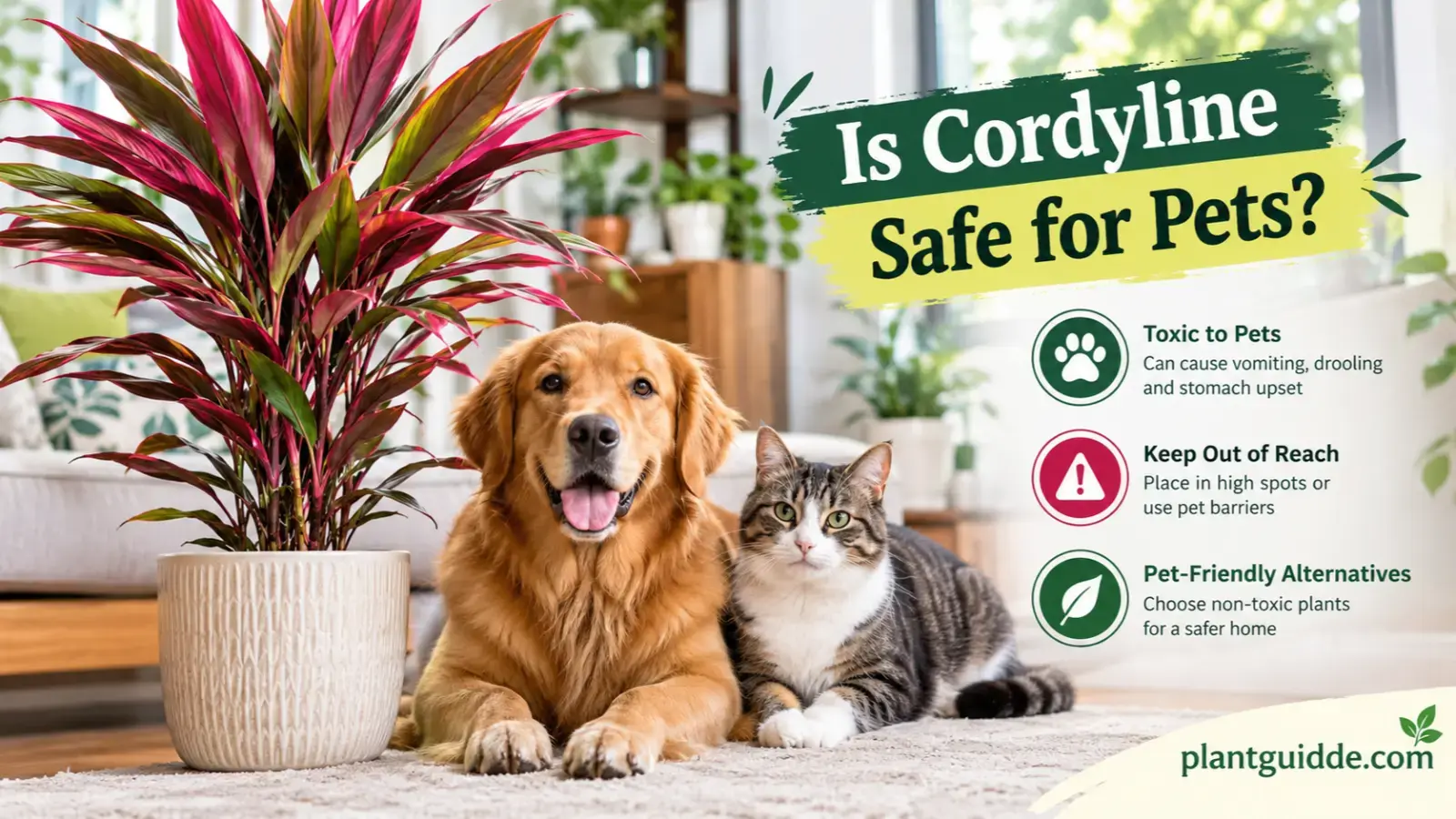
Do not assume every cordyline is pet-safe. Some plants sold under the common name cordyline can be confused with other ornamental species, and toxicity depends on the exact plant.
The ti plant (Cordyline fruticosa) is reported as toxic to cats and dogs. If you have pets, identify your plant accurately and keep it out of reach. If an animal chews the foliage and develops symptoms, contact a veterinarian for guidance.
When buying a cordyline, use the botanical name on the plant label rather than relying on the common name alone.
FAQs:
How often should I water an indoor cordyline?
Water when the upper 1–2 inches of soil begin to dry, adjusting for the species, pot size, temperature, and light. Water thoroughly and let excess water drain. Tropical cordylines may need closer moisture monitoring than some other varieties, but none should be left standing in water.
Can cordyline grow indoors without direct sunlight?
Yes. Bright, indirect light is generally suitable for indoor cordylines. They do not need strong direct sunlight, which can scorch the leaves, but very dim conditions may reduce growth and fade colorful foliage. A grow light can help when natural light is limited.
Why does my indoor cordyline have brown tips?
Brown tips can result from dry air, inconsistent watering, fertilizer salts, root stress, or mineral-rich water. Check the soil and drainage first, then review humidity and fertilizer use. Trim damaged tips if desired, but correct the underlying cause to reduce further damage.
Do indoor cordylines need high humidity?
Tropical varieties such as Cordyline fruticosa generally benefit from moderate to higher humidity, particularly in dry homes. A humidifier can help if the air is very dry. Regular misting is not essential and does not provide lasting humidity.
Why is my cordyline losing its color?
Insufficient light is a common reason colorful cordylines develop duller foliage. Move the plant gradually to a brighter location with indirect light. Also check watering, roots, and temperature, because general stress can affect leaf appearance.
Conclusion
Successful cordyline plant care indoors comes down to balancing light, moisture, warmth, and drainage. Give your plant bright, indirect light, use an airy potting mix, water according to soil dryness, and provide suitable humidity for its species. Watch for brown tips, yellow leaves, and drooping foliage so you can address problems before they become severe.
Start by checking your cordyline’s current location and soil moisture. Small, appropriate adjustments to its environment are often more effective than frequent watering, excessive fertilizer, or constant changes in care.

Asad Mumtaz is a dedicated plant enthusiast and gardening writer with a passion for helping people care for their plants successfully. He specializes in plant care guides, indoor gardening, and practical growing tips for all skill levels. His content focuses on making gardening simple, enjoyable, and rewarding. Through his work, Asad shares reliable advice to help readers create thriving green spaces.












