Wandering dude plant care is a popular name for several trailing plants in the Tradescantia group, especially Tradescantia zebrina and closely related varieties. They are valued as easy-care houseplants because their fast-growing stems can spill beautifully from hanging baskets, shelves, and containers.
However, “easy” does not mean completely maintenance-free. The most common problems with wandering dude plants, leggy growth, faded coloring, brown leaves, yellowing, and root problems, usually come from a mismatch between light, watering, and soil drainage.
Understanding what the plant is showing you makes wandering dude plant care much easier.
Quick Answer
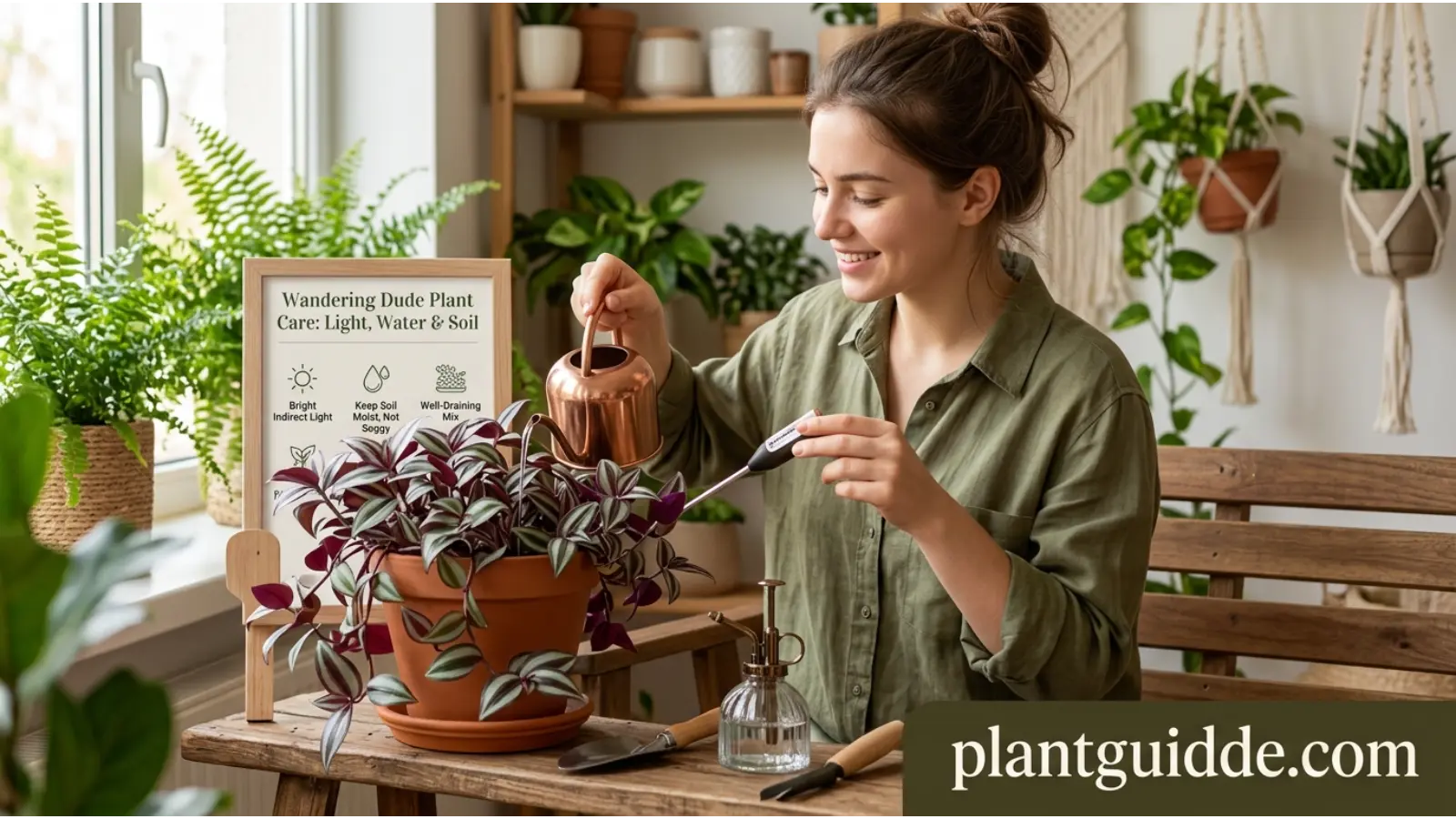
Wandering dude plant care is easiest when you provide bright, indirect light, moderately moist but well-draining soil, and warm temperatures. Water when the top inch of soil feels dry, avoid letting the roots sit in water, and pinch back leggy stems regularly. Good light helps maintain the plant’s attractive purple, green, or silver foliage and encourages fuller growth.
What Is a Wandering Dude Plant?
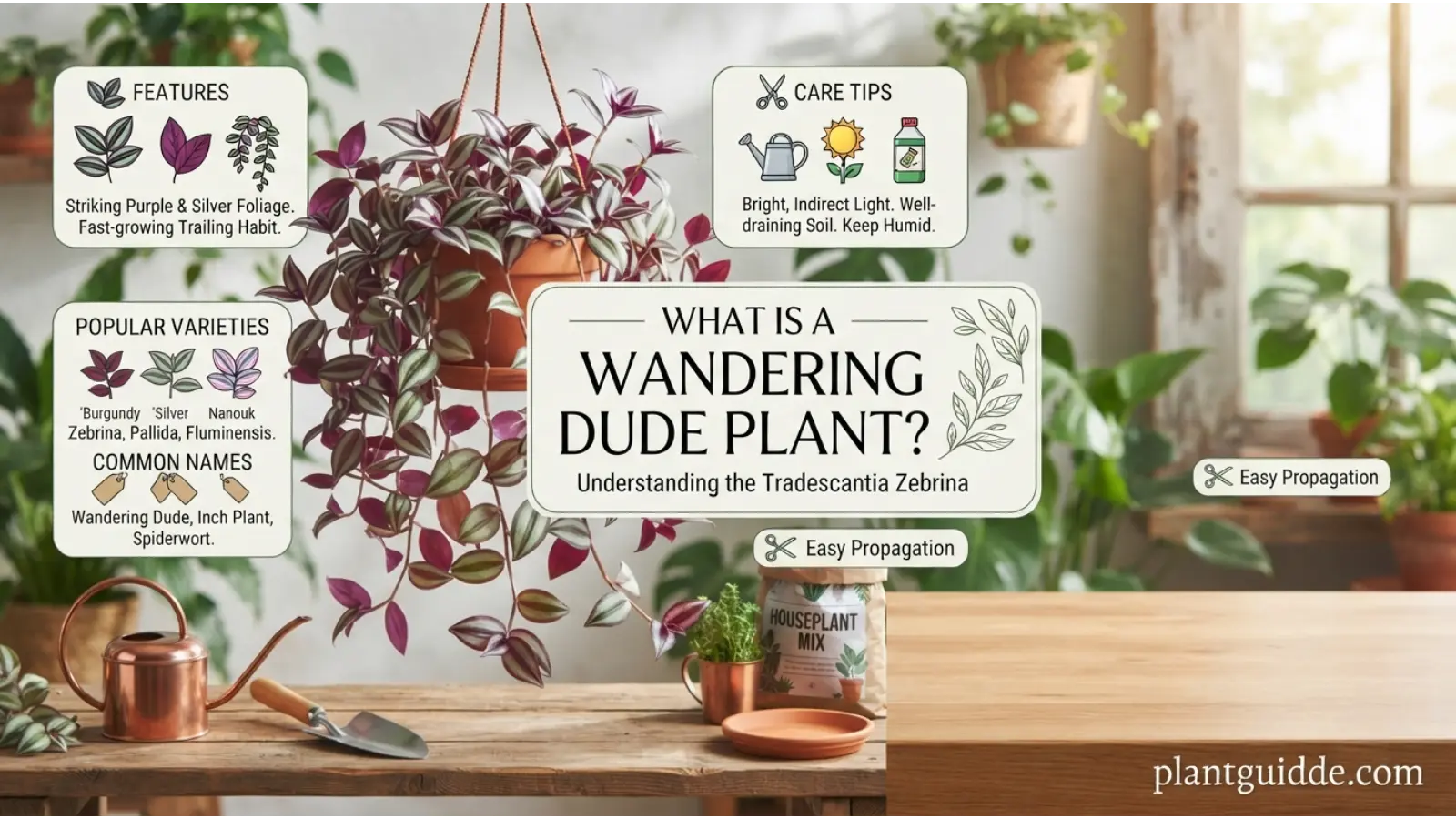
Wandering dude is a common name used for trailing Tradescantia plants. Tradescantia zebrina is one of the best-known types, recognized by its striped foliage in shades of green, silver, and purple.
The plant produces long, flexible stems that naturally trail rather than grow upright. This makes it particularly useful for:
- Hanging baskets
- Shelves and plant stands
- Windowsills with suitable light
- Indoor containers
- Warm outdoor containers in appropriate climates
Its fast growth is one of its biggest advantages, but it also means the plant can become sparse or unruly if it is not trimmed periodically.
How Much Light Does a Wandering Dude Need?
Bright, indirect light is generally the best starting point for wandering dude plant care.
Place it near a bright window where it receives plenty of ambient light without being exposed to intense, prolonged midday sun through glass. A little gentle direct morning or late-afternoon sunlight can be useful, but harsh sun can scorch foliage.
Light also affects the plant’s appearance.
When a variegated wandering dude receives insufficient light, you may notice:
- Longer spaces between leaves
- Weak or stretched stems
- Smaller leaves
- Less noticeable striping
- Fading purple or silver coloration
- Sparse growth
If the plant is becoming leggy despite adequate watering, consider light first rather than immediately adding fertilizer.
Practical tip: Rotate the pot every week or two so different sides receive similar light. This can help produce more balanced growth.
Watering Wandering Dude Correctly
Wandering dude plants prefer consistent moisture during active growth, but their roots should not remain in constantly saturated soil.
Instead of following a rigid watering schedule, check the soil.
Insert your finger about an inch into the potting mix. If that upper layer feels dry, water thoroughly until some water drains from the bottom of the container.
Then empty any water collected in the saucer or outer pot.
The exact frequency depends on:
- Light intensity
- Temperature
- Humidity
- Pot size
- Soil composition
- Season
- Root development
A plant in bright light and a small pot may need water much more often than one growing in lower light.
Signs of Overwatering
Too much moisture can lead to:
- Yellowing leaves
- Soft or collapsing stems
- Persistent wet soil
- Leaf drop
- Root deterioration
- An unpleasant smell from the potting mix
The problem is not simply “too much water” on one occasion. Repeatedly keeping the root zone wet and poorly aerated is what creates trouble.
Signs of Underwatering
A plant that stays too dry may develop:
- Limp or curled foliage
- Crispy leaf edges
- Dry, lightweight soil
- Drooping stems
- Premature leaf loss
If the soil has become extremely dry and pulled away from the sides of the pot, water slowly and thoroughly rather than giving only a small splash.
Choose a Fast-Draining Potting Mix
Good soil drainage is one of the easiest ways to prevent watering problems.
A quality indoor potting mix can work well when combined with material that improves drainage and aeration, such as perlite. The goal is a mix that holds enough moisture for the roots while allowing excess water to escape.
Avoid heavy garden soil in indoor containers. It can become compacted and remain wet around the roots for too long.
The container itself matters too. Always use a pot with drainage holes.
A decorative cachepot can still be used, but make sure the actual growing container can drain freely.
Best Temperature and Humidity
Wandering dude generally grows well in warm indoor conditions. Protect it from cold drafts, sudden temperature changes, and prolonged exposure to chilly windows during winter.
Normal household humidity is often sufficient, but the plant may appreciate moderate humidity when indoor air becomes very dry.
You usually do not need to mist the leaves repeatedly. Better strategies include:
- Keeping the plant away from heating vents
- Avoiding extremely dry locations
- Grouping compatible plants when practical
- Maintaining consistent room conditions
Good airflow is also important. High humidity combined with stagnant air and constantly wet foliage can encourage fungal or bacterial problems.
Fertilizing Wandering Dude
Because wandering dude can grow quickly, occasional feeding during active growth can support healthy foliage and new stems.
Use a balanced, water-soluble houseplant fertilizer according to the product’s instructions. Avoid applying concentrated fertilizer to dry soil because this can stress the roots.
During periods of slow growth, particularly when light levels are low, reduce or pause feeding rather than trying to compensate for poor growing conditions with extra fertilizer.
More fertilizer is not a substitute for more light.
Pruning and Pinching for Fuller Growth
One of the most useful wandering dude plant care techniques is regular pruning.
These plants can become long and sparse, especially when grown indoors with insufficient light. Rather than allowing increasingly long bare stems to develop, pinch or cut back the growing tips.
Pruning encourages branching and gives the plant a fuller appearance.
You can:
- Identify long or bare stems.
- Cut just above a healthy leaf node.
- Remove damaged or unattractive growth.
- Use healthy cuttings for propagation.
- Continue light trimming as the plant grows.
Don’t wait until the plant has become extremely bare before pruning. Small, regular trims are usually easier to manage.
How to Propagate a Wandering Dude Plant
Wandering dude is particularly convenient to propagate from stem cuttings.
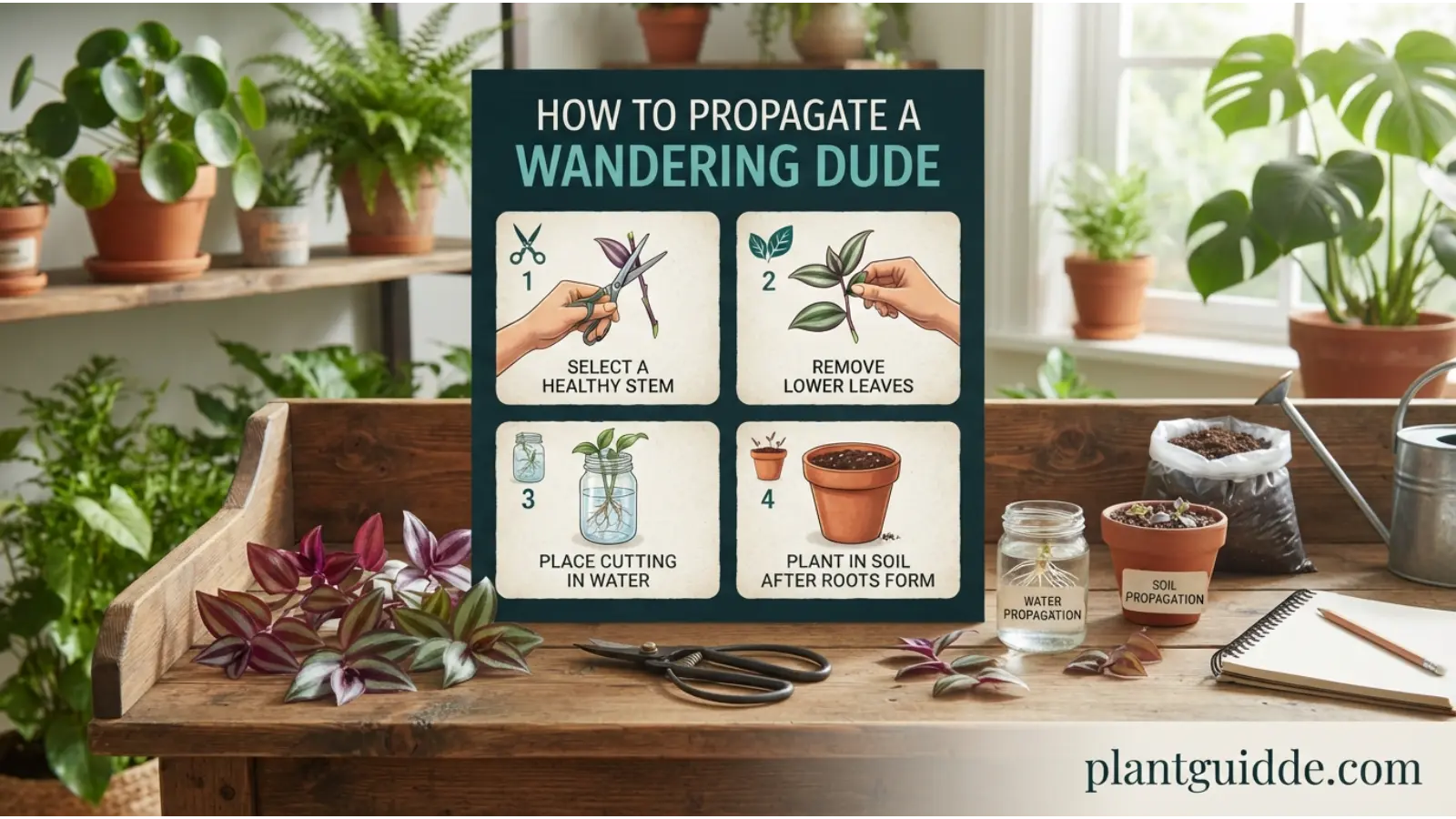
Propagation in Water
Take a healthy stem cutting several inches long and remove the lower leaves. Place the exposed nodes in water while keeping most foliage above the waterline.
Put the cutting in bright, indirect light.
Once roots develop, you can transfer it into a suitable potting mix. Give the new plant time to adjust rather than immediately exposing it to intense sunlight.
Propagation Directly in Soil
You can also place fresh cuttings directly into a moist, well-draining potting mix.
Make sure at least one or more nodes are in contact with the growing medium because roots develop from the nodes.
This method eliminates the need to transition established water roots into soil.
Image Suggestion: A step-by-step visual showing a wandering dude stem cutting, leaf removal, rooting nodes, water propagation, and the resulting rooted plant.
Why Is My Wandering Dude Plant Getting Leggy?
Leggy growth is one of the most common complaints with indoor wandering dude plants.
The usual cause is insufficient light. When light is weak, the plant stretches toward the nearest light source, producing longer stems with more space between leaves.
Move it gradually toward a brighter location with suitable indirect light.
Pruning afterward can help the plant develop a more compact shape.
If you simply cut the plant back without improving the light, the same leggy growth is likely to return.
Why Are the Leaves Losing Their Purple or Silver Color?
Color loss is often associated with insufficient light, especially in strongly variegated Tradescantia varieties.
Move the plant to a brighter location and monitor its response over the following weeks.
Avoid suddenly placing a plant that has been in dim indoor light into intense direct afternoon sun. A gradual adjustment can reduce the risk of leaf scorch.
Why Are My Wandering Dude Leaves Turning Brown?
Brown foliage can have several causes, so look at the entire growing environment rather than assuming it is always a watering problem.
Possible causes include:
- Soil becoming excessively dry
- Very dry indoor air
- Intense direct sunlight
- Root damage
- Inconsistent watering
- Physical damage to older leaves
If only a few older leaves are affected, some natural aging may be involved. If browning is spreading quickly, check the soil moisture, roots, light exposure, and recent changes in care.
Why Is My Wandering Dude Plant Turning Yellow?
Yellow leaves are not automatically proof of overwatering.
Check whether the soil remains wet for long periods. If it does, poor drainage or excessive watering may be contributing.
Also inspect:
- Drainage holes
- Root condition
- Light levels
- Pot size
- Recent watering changes
If the soil is consistently soggy and the stems are becoming soft, address the moisture problem before adding fertilizer.
Common Wandering Dude Care Mistakes
Watering by Calendar
“Water every Sunday” sounds simple, but plants do not use water at exactly the same rate every week.
Check the soil instead.
Keeping It in Very Low Light
Wandering dude may survive in less-than-ideal light, but survival and attractive, compact growth are different things.
Brighter conditions generally help maintain stronger growth and better foliage coloration.
Using a Pot Without Drainage
A decorative container without drainage can trap excess water around the roots.
Use a draining nursery pot inside the decorative container if necessary.
Never Pruning Long Stems
Fast-growing Tradescantia can quickly become sparse and untidy. Regular pinching keeps it fuller and provides useful propagation material.
Overwatering After Leaves Droop
Drooping does not always mean the plant needs water. Check the soil first. A plant with damaged roots can droop even when its soil is already wet.
A Simple Wandering Dude Care Routine
For beginners, this routine keeps things straightforward:
| Care factor | What to do |
|---|---|
| Light | Provide bright, indirect light |
| Water | Water when the upper soil layer becomes dry |
| Soil | Use a loose, well-draining potting mix |
| Pot | Choose a container with drainage holes |
| Temperature | Keep conditions warm and avoid cold drafts |
| Humidity | Moderate household humidity is usually adequate |
| Fertilizer | Feed lightly during active growth |
| Pruning | Pinch long stems to encourage fuller growth |
| Propagation | Root healthy stem cuttings in water or soil |
| Troubleshooting | Check light and soil moisture before changing multiple factors |
Can Wandering Dude Grow Outdoors?
Yes, wandering dude can grow outdoors in suitable warm conditions.
It can work well in containers, hanging baskets, or protected garden locations where temperatures remain appropriate. Outdoor plants may grow considerably faster because they receive stronger natural light.
However, outdoor conditions can also introduce greater exposure to:
- Intense sunlight
- Heavy rain
- Temperature fluctuations
- Wind
- Pests
If moving an indoor plant outside, acclimate it gradually rather than placing it immediately in strong sunlight.
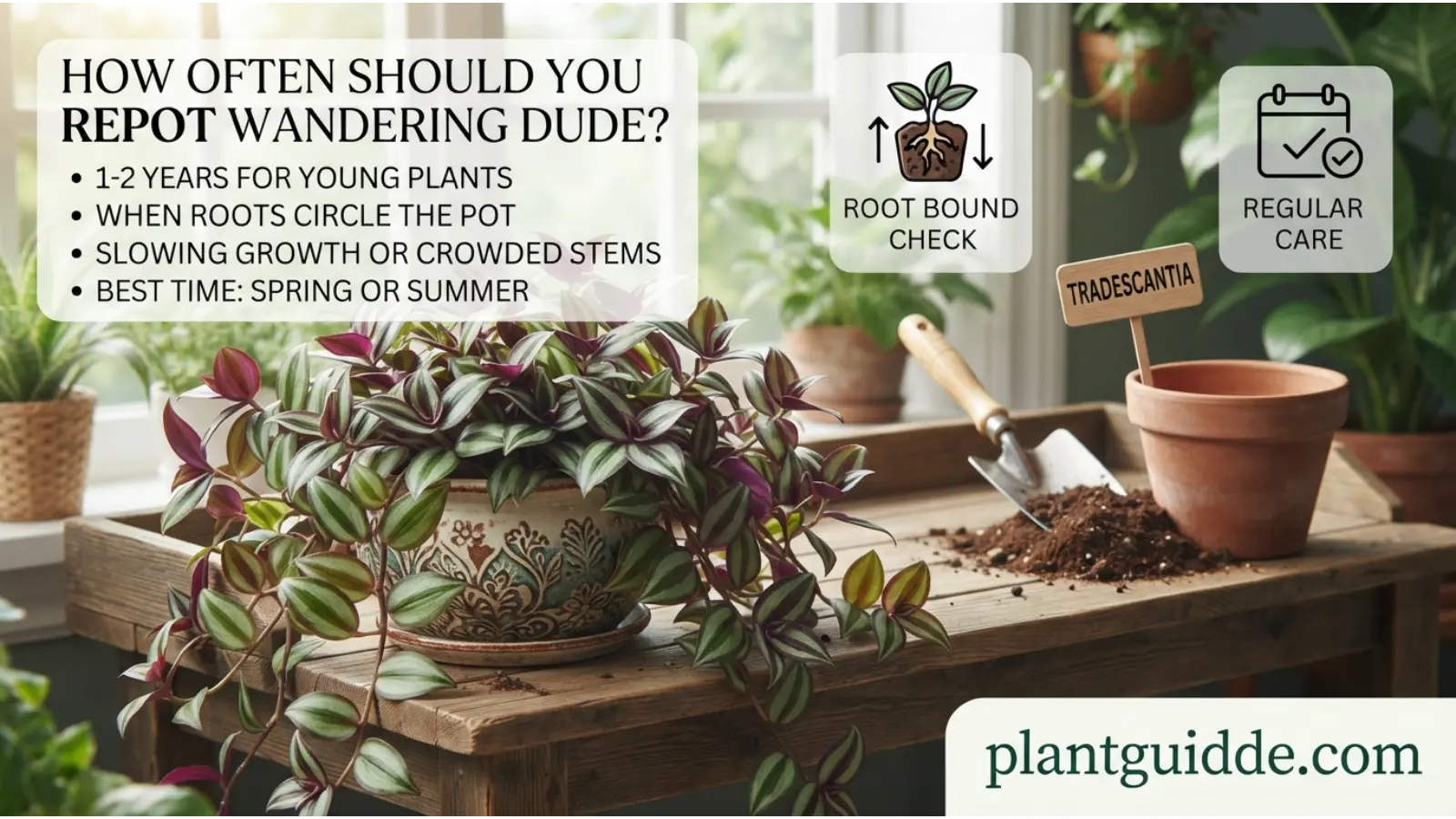
How Often Should You Repot Wandering Dude?
Wandering dude does not necessarily need frequent repotting.
Consider repotting when:
- Roots are tightly circling the root ball
- Water runs through the pot unusually quickly
- Growth has slowed despite good conditions
- The existing soil has degraded
- The plant has become significantly root-bound
Choose a pot only modestly larger than the current container. An oversized pot holds more unused soil, which can stay wet longer and increase the risk of root problems.
FAQs:
Is wandering dude easy to care for?
Yes. It is generally forgiving when provided with adequate light, sensible watering, and well-draining soil. Its rapid growth also makes it easy to rejuvenate through pruning and propagation.
How much sunlight does a wandering dude need?
Bright, indirect light is a good target indoors. Some gentle direct sunlight can be tolerated, but intense afternoon exposure may scorch foliage, particularly when the plant has not been acclimated.
Why is my wandering dude plant growing long and thin?
Insufficient light is a common reason. Move the plant to a brighter location and prune the stretched stems to encourage fresh, more compact growth.
Can you grow wandering dude from cuttings?
Yes. Stem cuttings can readily be rooted in water or planted directly into moist, well-draining soil. Include healthy nodes because roots can develop from these points.
How do I make my wandering dude plant fuller?
Give it adequate light and regularly pinch or prune long stems above healthy nodes. Rooting some of the cuttings and planting them back into the same container can also create a fuller-looking display.
Final Thoughts
Successful wandering dude plant care comes down to balancing light, moisture, drainage, and regular pruning. Give the plant enough bright light to maintain attractive growth, allow excess water to drain freely, and check the soil before watering rather than relying on a fixed schedule.
If your plant becomes leggy, start by checking its light. If the leaves yellow or stems become soft, investigate the moisture and drainage. Once those fundamentals are right, occasional pruning and propagation can keep the plant dense, colorful, and attractive for years.

Asad Mumtaz is a dedicated plant enthusiast and gardening writer with a passion for helping people care for their plants successfully. He specializes in plant care guides, indoor gardening, and practical growing tips for all skill levels. His content focuses on making gardening simple, enjoyable, and rewarding. Through his work, Asad shares reliable advice to help readers create thriving green spaces.