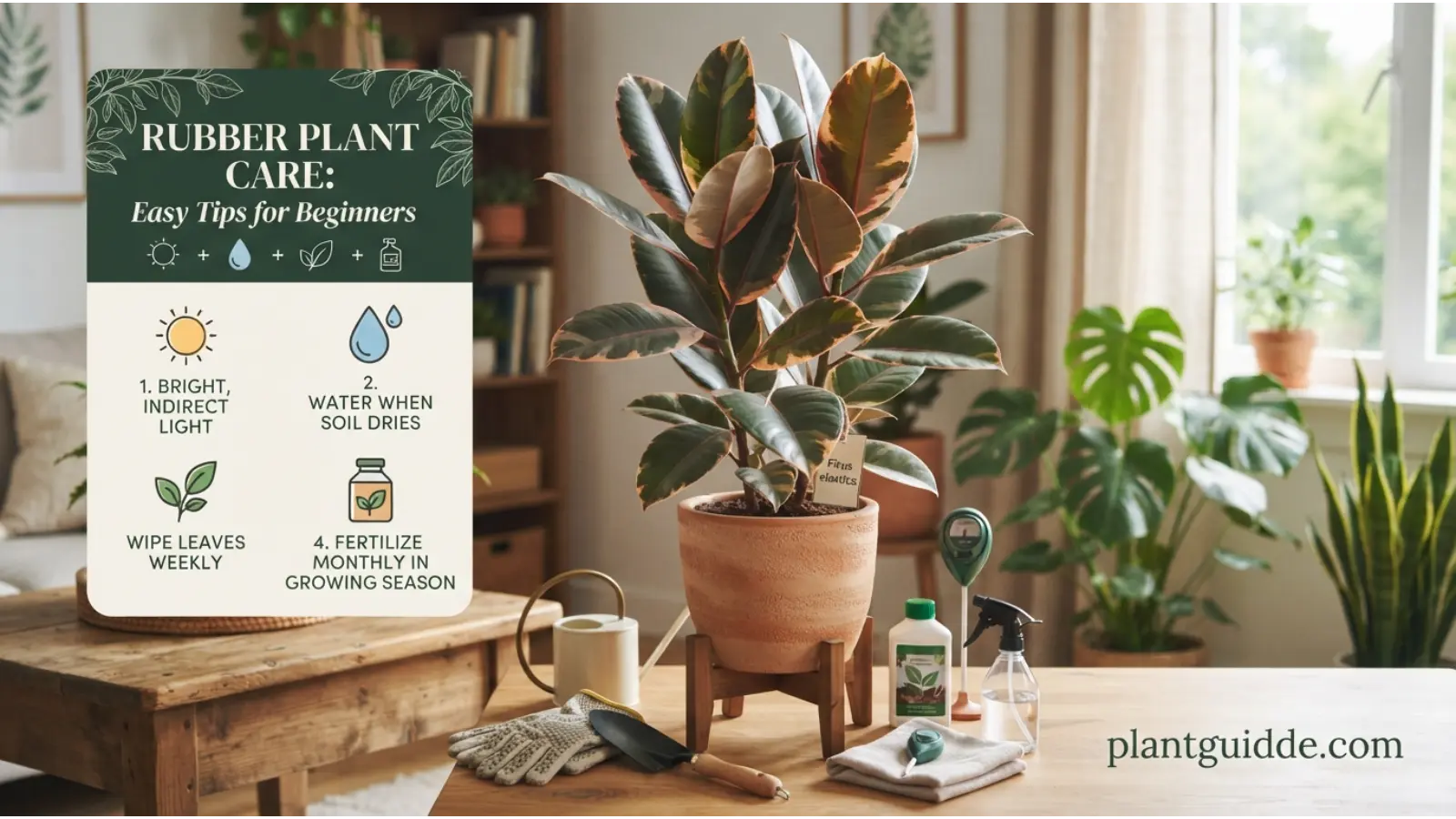
Rubber plant care indoor (Ficus elastica) is one of those houseplants that can look remarkably impressive without requiring complicated daily care. Its thick stems and large, glossy leaves make it a popular choice for living rooms, bedrooms, offices, and other bright indoor spaces.
The biggest challenge is usually not keeping a rubber plant alive. It is finding the right balance between light and moisture. Too little light can lead to weak growth, while consistently wet soil can damage the roots. Sudden changes in temperature, dry air, or moving the plant repeatedly can also trigger leaf drop.
Good rubber plant care indoor starts with understanding how the plant responds to its environment rather than following a rigid watering calendar. Once its basic needs are consistent, Ficus elastica is generally a resilient, long-lived houseplant.
Quick Answer
Rubber plant care indoors is mainly about providing bright, indirect light, well-draining soil, careful watering, warmth, and moderate humidity. Water when the top few centimeters of soil become dry, then let excess water drain completely.
Keep the plant away from cold drafts and harsh afternoon sun. With stable conditions and occasional pruning and feeding, Ficus elastica can grow into a healthy, attractive indoor tree.
What Is a Rubber Plant?
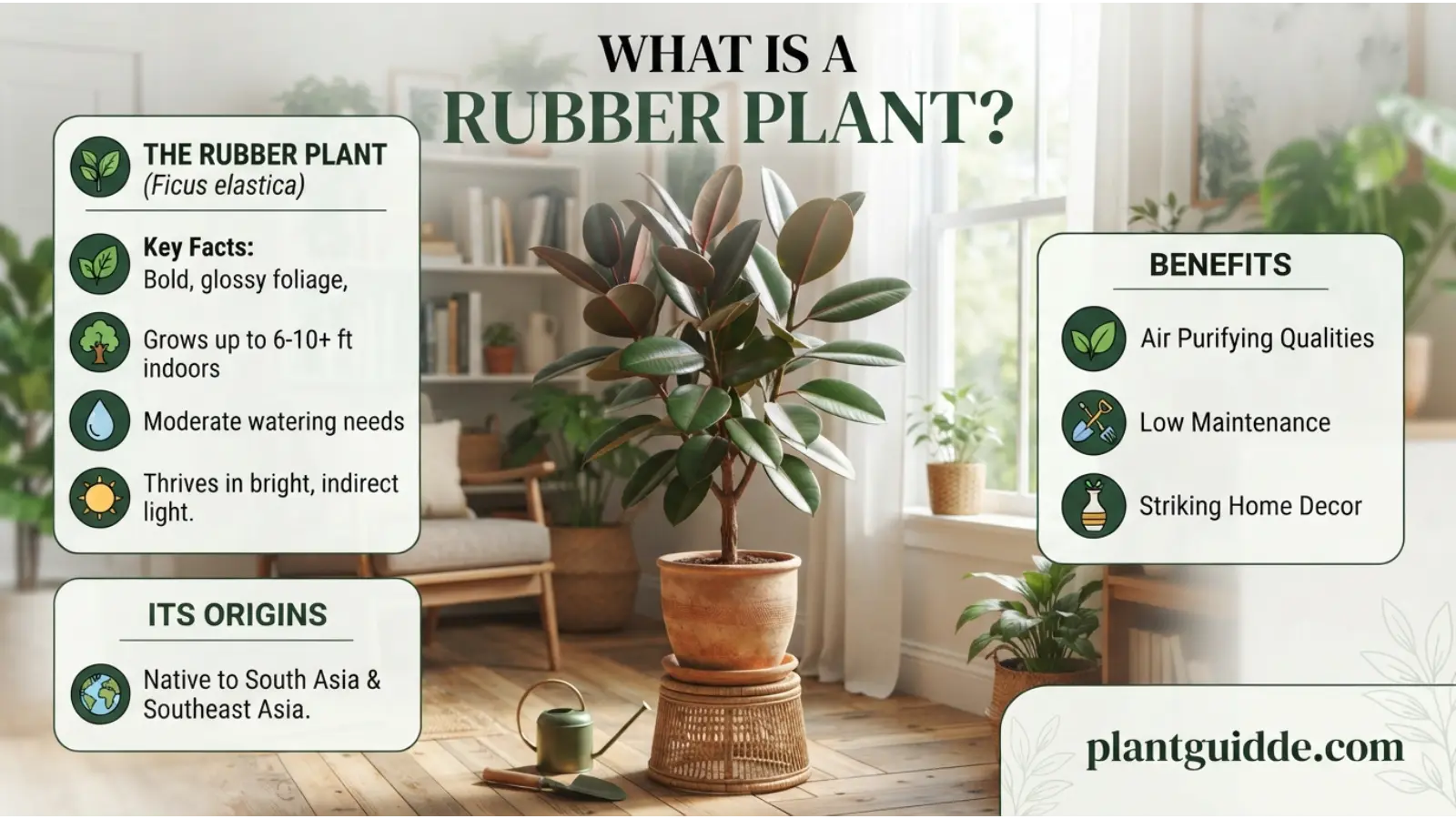
The rubber plant, scientifically known as Ficus elastica, is an evergreen member of the fig family, Moraceae. It is native to tropical regions extending from the eastern Himalayas into parts of Southeast Asia.
In its natural environment, it can become a large tree. Indoors, however, it can be maintained as a manageable houseplant with pruning and appropriate pot size.
Its most recognizable features include:
- Large, thick, leathery leaves
- Glossy green, burgundy, or variegated foliage
- Upright stems and tree-like growth
- New leaves that often emerge tightly rolled
- Milky latex sap released when stems or leaves are damaged
Common cultivars include green-leaved forms such as ‘Robusta’ and variegated types such as ‘Tineke’. Variegated rubber plants generally need more light than solid-green varieties to maintain strong coloration.
Rubber Plant Indoor Care at a Glance
| Care factor | What a rubber plant prefers |
|---|---|
| Light | Bright, indirect light |
| Water | Water thoroughly after the upper soil layer dries |
| Soil | Moisture-retentive but well-draining |
| Humidity | Moderate to high humidity is beneficial |
| Temperature | Warm, stable conditions |
| Fertilizer | Regular feeding during active growth |
| Pruning | Useful for shaping and encouraging branching |
| Repotting | When roots become crowded or growth slows |
| Common problems | Yellow leaves, brown edges, leaf drop, pests, root problems |
The exact watering frequency will vary with pot size, soil, temperature, light, and season. Checking the soil is more reliable than watering on the same day every week.
How Much Light Does a Rubber Plant Need Indoors?
Bright, indirect light is usually the safest starting point for a rubber plant.
A location close to a bright window can provide enough light for strong growth while reducing the risk of leaf scorch from intense direct sunlight. East- or west-facing windows can work particularly well, while a bright south-facing location may require some filtering depending on the season and intensity of the sun.
What happens with too little light?
A rubber plant kept too far from a window may show:
- Slow or weak growth
- Smaller new leaves
- Longer spaces between leaves
- Pale or less vibrant foliage
- Reduced growth during the active season
RHS notes that inadequate light can contribute to poor new growth and smaller, paler leaves.
Rubber plant care indoor your plant is growing very slowly, do not immediately add more fertilizer. First consider whether it is receiving enough usable light.
Can rubber plants tolerate direct sunlight?
They can tolerate some direct sun, particularly gentle morning or late-afternoon light, especially after gradual acclimation. However, prolonged intense sunlight can scorch the foliage.
Brown, dry-looking patches that appear on the side of leaves facing a strong window may indicate excessive direct sun rather than a watering problem.
Practical tip: If moving a rubber plant from a dim room to a much brighter window, increase exposure gradually rather than changing its light conditions overnight.
How to Water a Rubber Plant Indoors
Watering is one of the most important parts of rubber plant care indoor, and overwatering is one of the easiest mistakes to make.
Instead of following a fixed schedule, check the soil.
When the upper few centimeters feel dry, water the plant thoroughly until water begins to drain from the bottom of the container. Then empty excess water from the saucer or outer pot.
RHS recommends allowing the compost to dry slightly between waterings and reducing watering during winter.
A simple watering test
Push your finger a few centimeters into the soil.
- Still noticeably damp: wait before watering.
- Upper layer feels dry: check deeper into the pot and consider watering.
- Soil is dry much farther down and leaves are beginning to droop: the plant may be overdue for water.
- Soil stays wet for many days: investigate drainage, soil structure, pot size, and light levels.
A rubber plant does not need constantly wet soil. Its roots need both moisture and access to air.
Why overwatering causes problems
When the growing medium remains saturated for too long, roots can become stressed and may eventually rot. This is why watering frequency alone does not determine whether a plant is being overwatered.
A plant watered once a week can still be overwatered if it is sitting in a large pot of poorly draining soil in a dim room.
Better rule: water according to soil condition and environmental conditions, not the calendar.
Best Soil for Rubber Plants
Rubber plants prefer a growing medium that holds some moisture without becoming permanently saturated.
A practical indoor mix can contain:
- Quality houseplant potting mix
- Composted bark or another organic component
- Perlite or another material that improves aeration and drainage
The goal is not to create extremely dry soil. The goal is to prevent the roots from sitting in stagnant, waterlogged conditions.
RHS recommends a moisture-retentive, loam-based growing medium with good drainage for ornamental figs, while specific Ficus elastica cultivars are also recommended for houseplant compost with added bark.
Why the pot matters as much as the soil
A container should have a drainage hole.
Without drainage, excess water has nowhere to escape, making it much easier to maintain saturated soil around the roots.
Avoid placing a drainage pot permanently inside standing water.
Humidity for Indoor Rubber Plants
Rubber plants generally appreciate moderate to higher humidity, but they can adapt to ordinary household conditions when their other needs are met.
Very dry air can contribute to dry or shriveled foliage, particularly when combined with heat or strong airflow.
If your indoor air is particularly dry, useful options include:
- Running a humidifier nearby
- Grouping several plants together
- Keeping the plant away from strong heating or cooling airflow
- Using a pebble tray if practical
Humidity should not become an excuse for keeping the soil constantly wet. Air humidity and soil moisture are separate factors.
Best Temperature for Rubber Plant Care Indoor
Rubber plants prefer warm, relatively stable conditions.
Avoid placing them:
- Directly beside air conditioners
- Against cold windows during winter
- Beside heaters or radiators
- In locations exposed to strong drafts
- Where temperatures change sharply from day to night
RHS recommends keeping ornamental figs warm and away from drafts and sudden temperature fluctuations.
A stable environment is often more helpful than constantly trying to create a perfect temperature.
How to Fertilize a Rubber Plant
A rubber plant uses more nutrients while actively producing new growth than it does during slower periods.
During the growing season, a balanced houseplant fertilizer can be applied according to the product’s label directions. Some Ficus elastica growing guidance recommends monthly feeding during active growth.
Do not assume that more fertilizer means faster or healthier growth.
Excess fertilizer can contribute to salt buildup and root stress. If the plant is barely growing because it is in poor light, increasing fertilizer will not solve the underlying problem.
A useful order of troubleshooting is: light → watering → roots/soil → temperature → nutrition.
How to Prune a Rubber Plant
Pruning helps control height, remove damaged growth, and create a more compact shape.
If your rubber plant has become tall and bare, selective pruning can encourage branching below the cut.
Before pruning:
- Use clean, sharp pruning shears.
- Decide where you want new growth or branching.
- Make a clean cut above an appropriate node.
- Allow the plant to recover in good light.
- Wipe away or safely manage the milky sap produced by the cut.
The sap can irritate skin, so gloves are sensible when pruning. RHS specifically identifies Ficus elastica as a potential skin allergen.
Pruning is also a good opportunity to remove severely damaged or unhealthy leaves, but healthy leaves should not be removed simply because they are older.
How to Repot a Rubber Plant
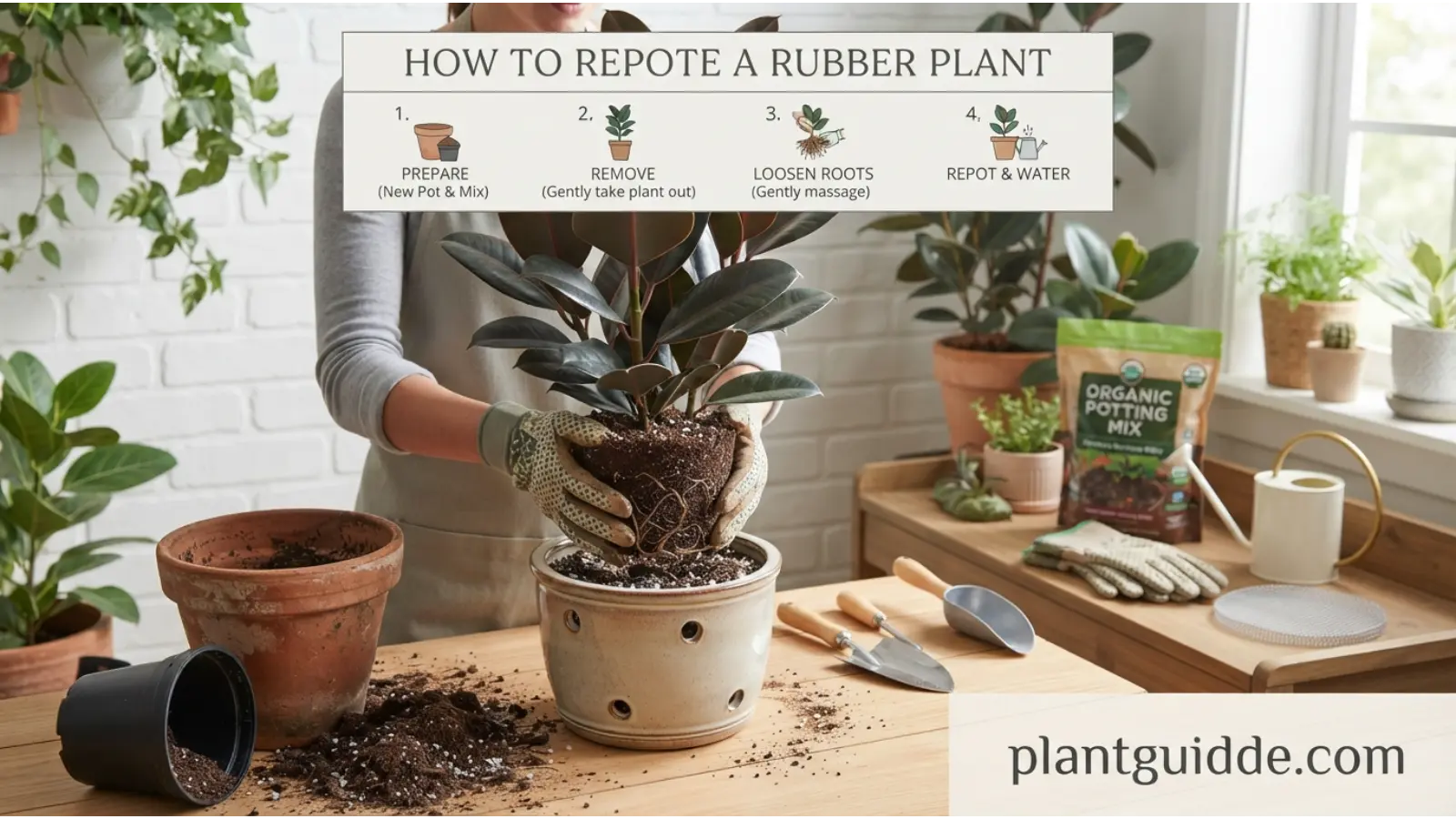
A rubber plant does not need to be repotted simply because it has been in the same pot for a particular number of months.
Consider repotting when:
- Roots are tightly circling the root ball
- Roots are emerging from drainage holes
- The soil dries unusually quickly
- Growth has slowed despite suitable light and care
- The pot has become unstable because the plant is top-heavy
- The growing medium has broken down and drains poorly
RHS guidance for Ficus elastica includes repotting approximately every two to three years, but actual timing depends on the plant and its growing conditions.
Choose a new container only moderately larger than the existing root system. An excessively large pot can hold more moisture than the roots can use, increasing the risk of prolonged wet soil.
How to Clean Rubber Plant Leaves
Large rubber plant leaves collect dust easily.
A layer of dust can interfere with the leaf surface receiving light, so gently cleaning the leaves can be useful.
Use:
- A soft, damp cloth
- Lukewarm water
- Gentle pressure
Support the leaf while wiping rather than pulling against the stem.
Avoid relying on oily commercial leaf-shine products. They can leave residues on the foliage and are unnecessary for healthy growth.
Why Is My Rubber Plant Dropping Leaves?
Leaf drop is one of the most frustrating rubber plant problems because several different issues can cause it.
Possible causes include:
- Overwatering
- Low light
- Cold temperatures
- Sudden temperature changes
- Drafts
- Major changes in location
- Excess fertilizer
- Root problems
RHS identifies overwatering, low winter temperatures, low light, excess fertilizer, and cold drafts among potential causes of sudden leaf drop in ornamental figs.
If several leaves fall suddenly
Look at the plant’s recent history.
Ask:
Did I move it?
A sudden change in light or temperature can stress a rubber plant.
Has the soil stayed wet?
Persistent moisture may indicate a drainage or root problem.
Has the room become colder?
Temperature changes can trigger leaf loss.
Has the plant been receiving less light?
Seasonal changes can reduce available light considerably.
Do not respond to leaf drop by automatically watering more. Check the soil first.
Rubber Plant Leaves Turning Yellow
Yellow leaves can have different causes, but consistently wet soil is an important one to investigate.
If several leaves are turning yellow while the soil remains wet, inspect the roots and growing medium rather than simply adding fertilizer.
One older lower leaf turning yellow occasionally may be part of normal leaf aging. The more concerning pattern is widespread or rapidly progressing yellowing accompanied by wet soil, poor growth, or other signs of stress.
Why Are Rubber Plant Leaves Turning Brown?
Brown foliage can result from several environmental problems.
Brown, dry edges
This can occur with:
- Very dry air
- Irregular watering
- Excessive direct sunlight
- Root problems that prevent normal water uptake
RHS lists low humidity, dry compost, and excessive direct sun among possible causes of dry or shriveled foliage in ornamental figs.
Brown scorched patches
If the brown areas appear bleached, dry, and concentrated on leaves receiving intense sunlight, excessive direct exposure is worth considering.
Move the plant to bright filtered light rather than placing it in a dark corner.
Common Rubber Plant Care Mistakes
Watering on a fixed schedule
A weekly schedule may work temporarily, but indoor conditions change. Soil dries differently in a bright, warm room than in a cool, dim room.
Better approach: check the soil before watering.
Keeping the plant in a dark corner
Rubber plants may survive lower light for a while, but survival is not the same as strong growth.
Better approach: give the plant the brightest suitable indirect light available.
Using a pot without drainage
This makes excess moisture much harder to manage.
Better approach: use a container with a functional drainage hole.
Moving the plant repeatedly
If the plant is constantly moved between windows, rooms, and corners, it has to adjust to changing light and temperature conditions.
Better approach: find a suitable location and keep conditions reasonably stable.
Fertilizing a struggling plant immediately
Fertilizer is not a universal cure for poor growth.
Better approach: diagnose light, moisture, roots, and temperature first.
Ignoring the leaves
The pattern of damage often provides useful information.
For example, persistent yellowing combined with wet soil suggests a very different problem from crispy brown edges in a hot, dry room.
Rubber Plant Pests to Watch For
Rubber plants can be affected by common houseplant pests, including:
- Mealybugs
- Scale insects
- Spider mites
- Thrips
RHS specifically lists these pests among those that can affect ornamental figs.
Inspect the undersides of leaves, leaf joints, stems, and new growth regularly.
Early detection is much easier to manage than a widespread infestation.
If you see cottony material, sticky residue, fine webbing, tiny insects, or distorted new growth, isolate the affected plant from other houseplants while you investigate.
How to Propagate a Rubber Plant
Rubber plants can be propagated from stem cuttings, while air layering is another established method.
Stem-tip cuttings are commonly used for houseplants, including Ficus elastica.
For a more advanced approach, air layering allows roots to develop on a stem while it remains attached to the parent plant. Iowa State University Extension describes air layering as a propagation method for rubber trees and provides a detailed procedure for rooting a selected stem before cutting it from the parent plant.
When pruning or propagating, remember that Ficus elastica releases milky sap from wounds. Wear gloves if your skin is sensitive and avoid getting the sap in your eyes.
Green vs. Variegated Rubber Plants
Green rubber plants and variegated types have broadly similar care requirements, but their light needs can differ.
Variegated cultivars such as ‘Tineke’ generally need brighter conditions to maintain their attractive patterns. However, extended exposure to intense direct sunlight can scorch the lighter portions of the leaves.
If a variegated plant gradually produces less colorful foliage, review its light conditions before assuming the plant needs more fertilizer.
Image Suggestion: A side-by-side visual showing a healthy green rubber plant, a variegated ‘Tineke’, and close-ups of healthy versus stressed leaves.
Is a Rubber Plant Safe Around Pets?
If you have cats or dogs, take extra care with Ficus elastica. The plant produces an irritating sap, and veterinary poison-control guidance identifies rubber tree plant sap as capable of causing oral and gastrointestinal irritation when animals chew or ingest it.
Keep the plant somewhere pets cannot chew the leaves or stems. If a pet has ingested part of the plant and develops symptoms, contact a veterinarian or appropriate animal poison-control service.
Do not confuse the true rubber plant (Ficus elastica) with the commonly called baby rubber plant (Peperomia obtusifolia), which is a different species.
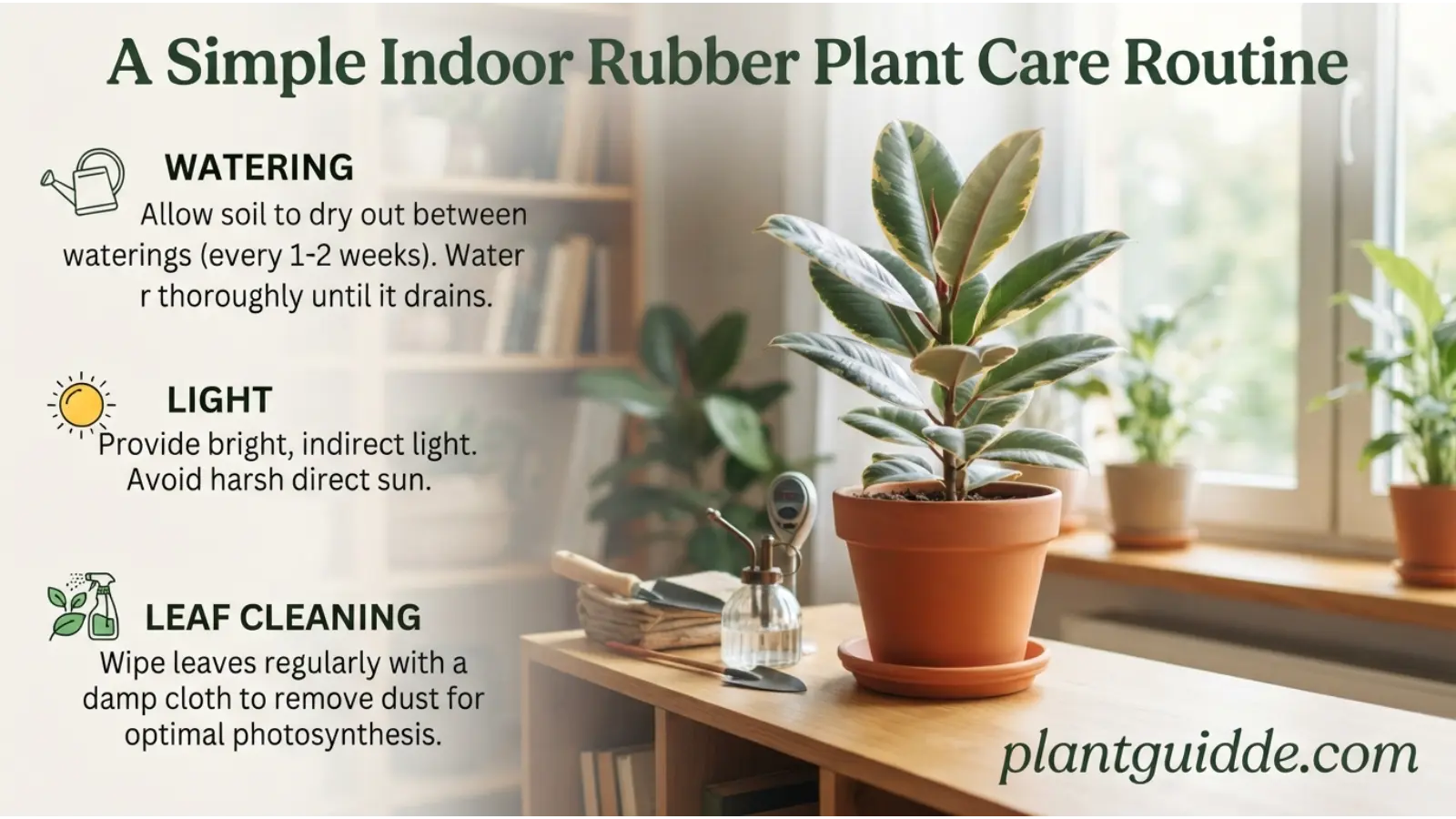
A Simple Indoor Rubber Plant Care Routine
For most home growers, a straightforward routine is enough:
Every few days:
Check the leaves and soil rather than automatically watering.
When the upper soil becomes dry:
Water thoroughly and allow excess water to drain.
Every few weeks:
Inspect the undersides of leaves and stems for pests.
During active growth:
Feed according to the fertilizer label when the plant is growing well.
Occasionally:
Clean dusty leaves with a soft, damp cloth.
When necessary:
Prune damaged or unwanted growth and repot when the plant becomes root-bound or the soil structure deteriorates.
The goal is consistency rather than constant attention.
FAQs:
How often should I water a rubber plant indoors?
Water when the upper few centimeters of soil have dried rather than watering according to a fixed weekly schedule. Water thoroughly, then allow excess water to drain. In cooler or lower-light conditions, the plant may need water less frequently.
Can a rubber plant survive in low light?
A rubber plant can tolerate less light than it prefers, but growth is generally stronger in bright, indirect light. If growth becomes weak or new leaves are unusually small or pale, insufficient light may be contributing to the problem.
Why are my rubber plant leaves falling off?
Leaf drop can be associated with overwatering, low light, cold conditions, drafts, sudden environmental changes, or excess fertilizer. Check the soil moisture and recent changes in the plant’s location before changing the watering routine.
Do rubber plants need high humidity?
Rubber plants benefit from moderate to higher humidity, but they can adapt to ordinary household humidity. If the air is very dry, particularly in a heated room, increasing humidity may help reduce dry or shriveled foliage.
Should I cut off brown leaves from my rubber plant?
If a leaf is severely damaged or mostly brown, removing it can improve the plant’s appearance. If only the tip or edge is brown, you can leave the healthy portion intact while investigating the underlying cause, such as dry air, inconsistent watering, or excessive direct sun.
Conclusion
Successful rubber plant care indoor does not require a complicated routine. Give Ficus elastica bright indirect light, a well-draining growing medium, thorough but controlled watering, warmth, and reasonably stable conditions.
When problems appear, look for patterns rather than treating individual symptoms. Yellow leaves with persistently wet soil, brown patches after intense sunlight, or sudden leaf drop after a location change can each point toward a different cause.
For most indoor growers, the best next step is simple: check your plant’s light and soil moisture first, then adjust one condition at a time. Consistent care will usually do more for a rubber plant than frequent intervention.

Asad Mumtaz is a dedicated plant enthusiast and gardening writer with a passion for helping people care for their plants successfully. He specializes in plant care guides, indoor gardening, and practical growing tips for all skill levels. His content focuses on making gardening simple, enjoyable, and rewarding. Through his work, Asad shares reliable advice to help readers create thriving green spaces.