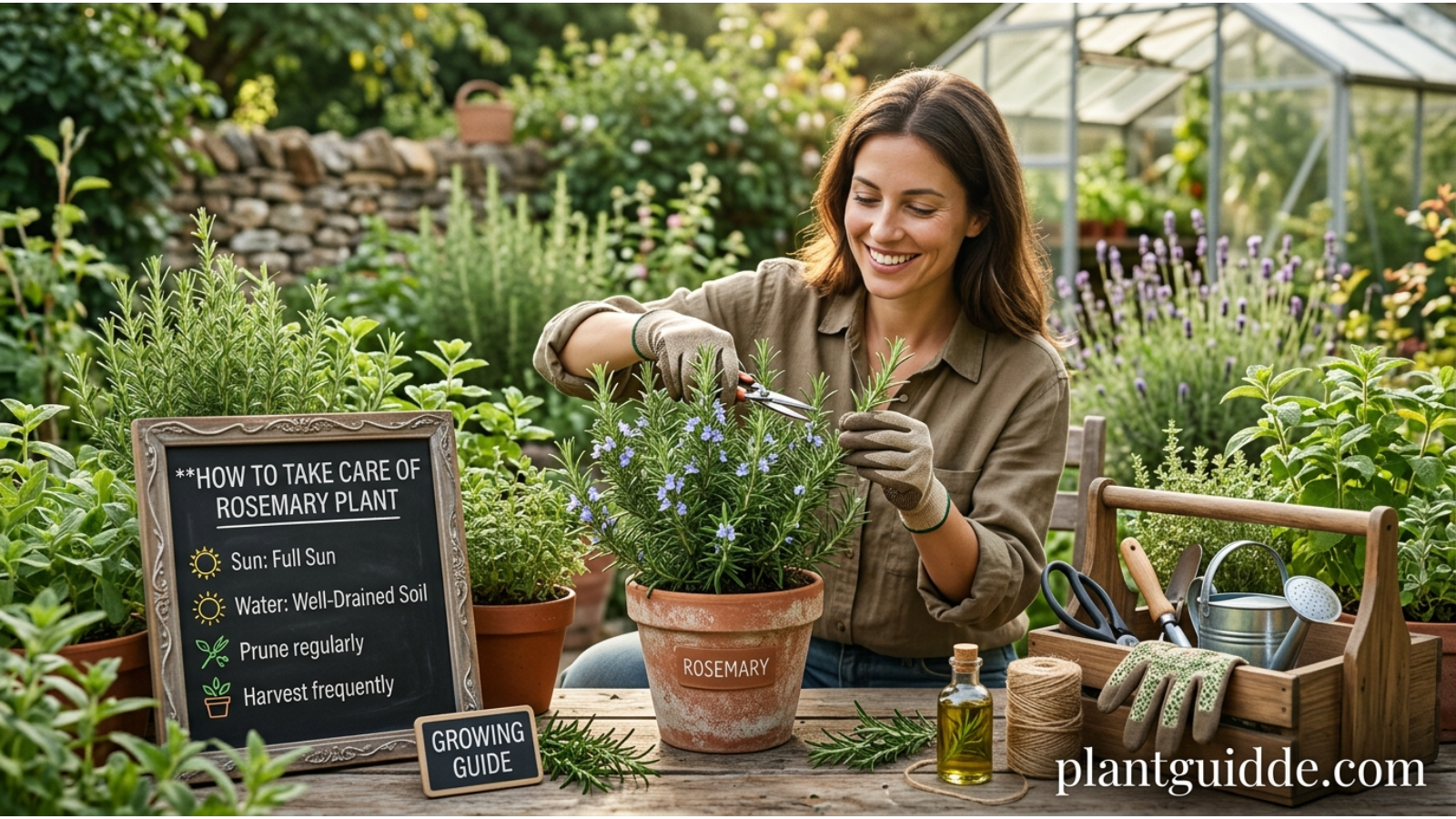
Rosemary (Salvia rosmarinus) is one of those herbs that can be surprisingly easy to grow once you understand what it actually prefers. If you’re wondering how to take care of rosemary plant, the key is to give it plenty of light, well-draining soil, and careful watering rather than treating it like a typical leafy houseplant.
The biggest mistake beginners make is frequent watering. Rosemary prefers to dry out between waterings, and consistently wet soil can lead to root problems. Learning how to take care of rosemary plant properly means understanding its natural preference for sunny conditions and relatively dry, well-drained soil.
A rosemary plant can grow successfully in a kitchen container, sunny windowsill, balcony, patio, raised bed, or outdoor herb garden. The challenge is giving it enough light and preventing its roots from staying wet for too long.
Quick Answer
To take care of a rosemary plant, give it plenty of direct sunlight, fast-draining soil, a pot with drainage holes, and water only when the soil has dried substantially. Rosemary prefers conditions that are slightly dry rather than constantly moist. Regular pruning improves shape and encourages fresh growth, while good airflow helps prevent common problems such as root rot, mildew, and weak, leggy growth.
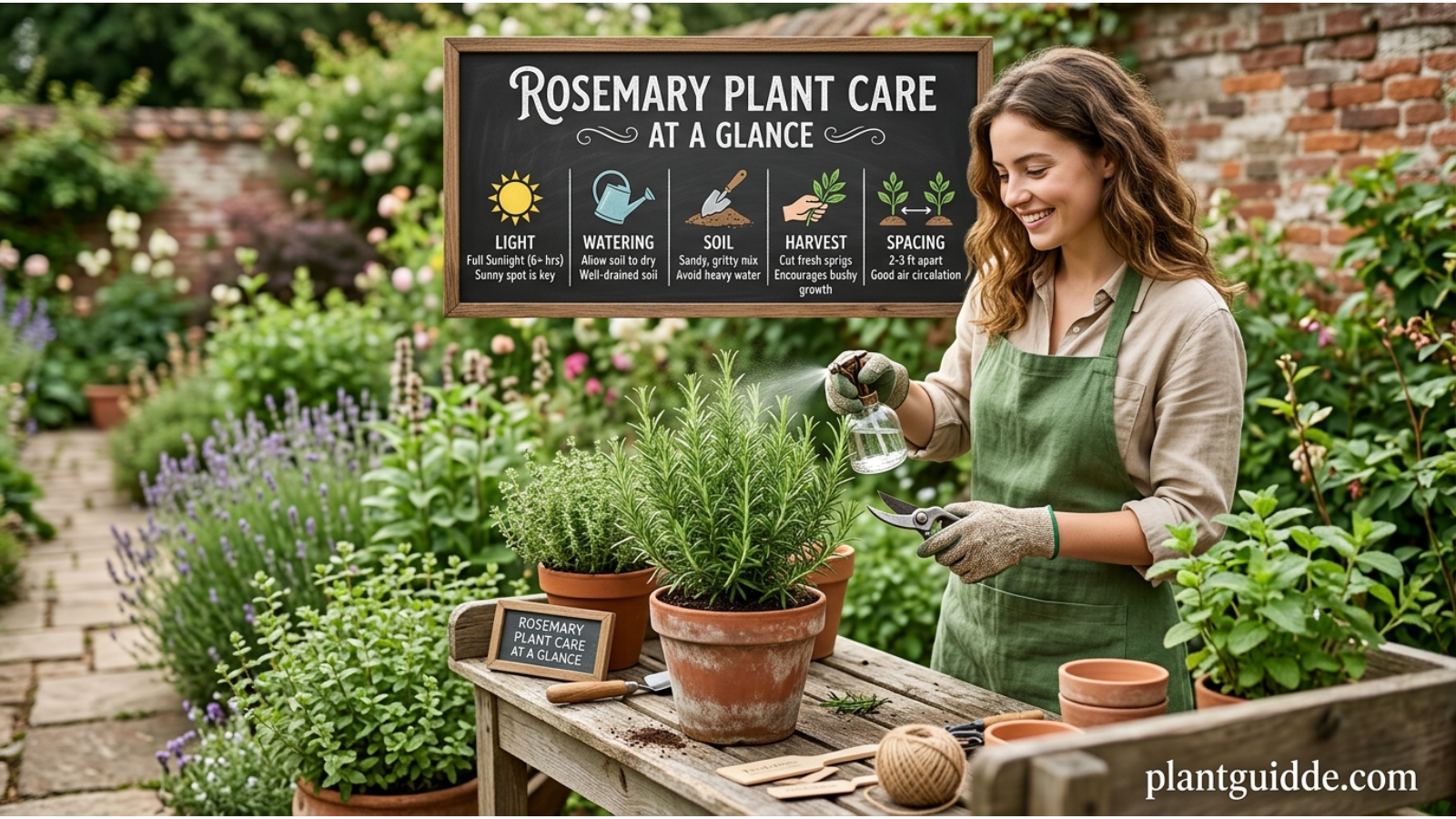
Rosemary Plant Care at a Glance
| Care factor | What rosemary prefers |
|---|---|
| Light | 6–8 hours of direct sunlight |
| Soil | Loose, gritty, very well-draining soil |
| Watering | Water deeply, then allow soil to dry substantially |
| Humidity | Average household humidity is usually adequate |
| Temperature | Mild to warm conditions; protect from hard freezes |
| Fertilizer | Light feeding during active growth |
| Pruning | Regular light harvesting and shaping |
| Pot | Container with drainage holes |
| Airflow | Good airflow, especially indoors |
| Difficulty | Generally easy once drainage and light are correct |
What Makes Rosemary Different From Many Houseplants?
Rosemary is a Mediterranean herb rather than a tropical foliage plant. That difference explains many of its care requirements.
Its narrow, somewhat leathery leaves reduce water loss, while its woody stems support a more drought-tolerant growth habit. In cultivation, rosemary generally performs better when the roots have access to oxygen and the growing medium drains quickly.
This is why watering on a rigid schedule can be counterproductive.
For example, watering every three days might work during a hot, bright summer period when a small pot dries quickly. The same schedule could keep the roots unnecessarily wet during a cool, cloudy period.
Instead of asking, “What day should I water my rosemary?” check the soil and the plant’s growing conditions.
How Much Sunlight Does Rosemary Need?
Rosemary grows best with around 6–8 hours of direct sunlight per day. More bright light is generally helpful when the plant has enough water and the temperature is suitable.
A sunny outdoor location is often easier than an indoor windowsill because indoor light intensity can be much lower than it appears to our eyes.
Growing Rosemary Indoors
Place indoor rosemary in the brightest location available, ideally near a south- or west-facing window in the Northern Hemisphere.
Watch for signs that the plant is not receiving enough light:
- Long spaces between leaves
- Thin or weak stems
- Pale or sparse growth
- Growth leaning toward a window
- Reduced aromatic foliage
- A generally stretched appearance
If natural light is insufficient, a suitable grow light can supplement it.
Rotate the pot occasionally so growth does not become heavily one-sided.
Growing Rosemary Outdoors
Outdoor rosemary generally benefits from a location receiving several hours of direct sun. A sunny patio, balcony, raised bed, or herb garden can work well.
In extremely hot climates, intense afternoon heat combined with a small container can dry the root ball very quickly. The goal is not simply maximum sun at all costs; it is strong light combined with appropriate watering and protection from extreme conditions.
What Soil Is Best for Rosemary?
The ideal rosemary soil is loose, gritty, and fast draining.
Heavy soil that remains wet for long periods is one of the biggest risks to rosemary because poorly aerated, waterlogged conditions can damage the roots.
A useful container mix should allow excess water to move away quickly rather than forming a dense, soggy mass.
Suitable ingredients can include:
- Quality potting mix
- Coarse sand
- Perlite
- Fine gravel or other appropriate drainage-improving material
You do not need an extremely complicated soil recipe. The important characteristics are drainage and adequate root aeration.
Why Drainage Matters More Than Frequent Watering
A rosemary plant can recover from moderate dryness much more easily than roots that remain continuously saturated.
When soil stays wet, the spaces between soil particles become filled with water instead of air. Roots need oxygen, so prolonged saturation can interfere with healthy root function and increase the risk of root problems.
This is why adding a drainage hole to the container is more useful than simply trying to control excess water with a strict watering calendar.
How to Water a Rosemary Plant
Water rosemary thoroughly when the soil has dried substantially, then allow excess water to drain away completely.
Do not give it tiny amounts of water every day simply because the surface looks dry.
Instead:
- Check the soil before watering.
- If the upper portion is dry and the deeper soil has also dried considerably, water thoroughly.
- Apply enough water to moisten the root ball.
- Allow excess water to drain from the bottom.
- Empty standing water from a saucer or decorative container.
- Wait until the soil dries appropriately before watering again.
The exact interval varies with pot size, temperature, sunlight, soil composition, airflow, and season.
How Often Should You Water Rosemary?
There is no universal number of days that works for every rosemary plant.
A small rosemary plant in a sunny terracotta pot may need water much more frequently than a larger plant growing outdoors in cooler weather.
During hot, bright weather, check the soil more often. During cool or low-light periods, watering usually needs to be reduced.
The important rule is simple: check the soil rather than following the calendar.
How Do You Know When Rosemary Needs Water?
Look for a combination of soil and plant clues.
The soil is usually the more useful starting point. If the growing medium is still noticeably damp, adding more water may do more harm than good.
Mildly dry soil is normal for rosemary. However, prolonged severe dryness can eventually lead to:
- Drooping foliage
- Dry or brittle leaves
- Leaf drop
- Reduced new growth
- A dry, shrunken root ball in container plants
A wilted plant does not automatically mean it needs water. Root damage from excessive moisture can also produce wilting.
That is why checking the soil and drainage is important before watering a struggling rosemary plant.
What Temperature Does Rosemary Need?
Rosemary generally prefers mild to warm growing conditions and performs particularly well when exposed to plenty of sunlight.
Established plants can tolerate some cool weather, but cold tolerance varies by cultivar, plant maturity, moisture levels, and local conditions.
Container-grown rosemary can be more vulnerable to cold because its roots have less insulation than plants growing in the ground.
If freezing temperatures are expected, consider protecting container plants or moving them to a suitable sheltered location.
At the other extreme, intense heat can rapidly dry a small container. During very hot weather, monitor the soil more frequently rather than automatically watering on a fixed schedule.
Does Rosemary Need High Humidity?
No. Rosemary generally does not require tropical levels of humidity.
This is another reason it can behave differently from many popular indoor plants.
Good airflow can actually be more useful than trying to create a very humid environment, particularly when foliage is dense or indoor conditions are stagnant.
Avoid crowding rosemary between other plants where air circulation is poor.
How to Fertilize Rosemary
Rosemary is not generally a heavy feeder.
If the plant is growing in reasonably fertile soil, excessive fertilizer is unnecessary and may encourage soft, overly lush growth rather than the compact, aromatic growth many gardeners want.
For container-grown rosemary, a balanced, diluted fertilizer can be used occasionally during active growth according to the product’s instructions.
Avoid repeatedly applying strong fertilizer to a stressed plant. First determine whether the real problem is insufficient light, poor drainage, watering, temperature, or root damage.
Does Rosemary Need Fertilizer Every Week?
Usually, no.
A rosemary plant does not need weekly heavy feeding simply because it is an herb. Fertilize according to the plant’s growth, the fertility of the growing medium, and the instructions for the fertilizer being used.
How to Prune Rosemary
Pruning helps maintain a compact shape, encourages branching, and provides an easy way to harvest fresh rosemary.
For regular harvesting, cut healthy sprigs as needed rather than repeatedly stripping the entire plant.
A useful approach is to:
- Select healthy, actively growing stems.
- Cut above a leaf node or branching point.
- Avoid removing too much growth at one time.
- Keep the plant’s overall shape balanced.
- Remove dead or damaged portions when necessary.
Young green stems are generally more responsive to shaping than old, heavily woody sections.
Can You Cut Rosemary Back Hard?
Be careful with severe pruning into old woody stems.
Rosemary can become woody with age, and not every old bare section will reliably produce new growth after being cut back severely.
Regular light pruning is therefore safer than waiting until the plant becomes badly overgrown and then removing a large percentage of it at once.
How to Harvest Rosemary Without Weakening the Plant
Harvesting can double as pruning.
Choose healthy stems and cut manageable portions for cooking. Avoid repeatedly taking all the new growth from the same section.
For frequent kitchen use, harvesting small amounts regularly can help keep a container plant compact.
If the plant is young or recovering from stress, allow it to establish healthy growth before harvesting heavily.
Repotting Rosemary
Rosemary does not need constant repotting. Repot when the current container has become restrictive, the soil structure has deteriorated, or drainage has become poor.
Signs that repotting may be appropriate include:
- Roots circling heavily around the container
- Water running through unusually quickly because the root ball has become extremely compact
- Growth slowing despite suitable light and care
- The plant repeatedly drying out far too quickly
- Soil that has broken down and no longer drains well
Choose a container with drainage holes and avoid moving a small plant into an excessively large pot.
A very large container holds more soil, which can remain wet for longer after watering. Matching the pot reasonably to the root system can make moisture management easier.
Rosemary Care in a Terracotta Pot
Terracotta can be useful for rosemary because the porous material allows some moisture to evaporate through the sides of the container.
This does not eliminate the need for drainage, but it can make moisture management easier in some growing conditions.
The trade-off is that terracotta may dry faster than plastic or glazed containers, particularly in hot, sunny weather.
If you use terracotta, check the soil more frequently rather than assuming the plant needs water simply because the pot feels dry.
Growing Rosemary in the Kitchen
A rosemary plant can be kept near the kitchen for convenient harvesting, but convenience should not determine its location.
A kitchen counter several feet away from a bright window may look attractive but provide insufficient light.
Instead, prioritize:
- Strong direct sunlight
- Good airflow
- Fast-draining soil
- A container with drainage
- Easy access for harvesting
If the brightest suitable location is not directly in the kitchen, the plant will generally benefit more from proper growing conditions than from being placed somewhere convenient.
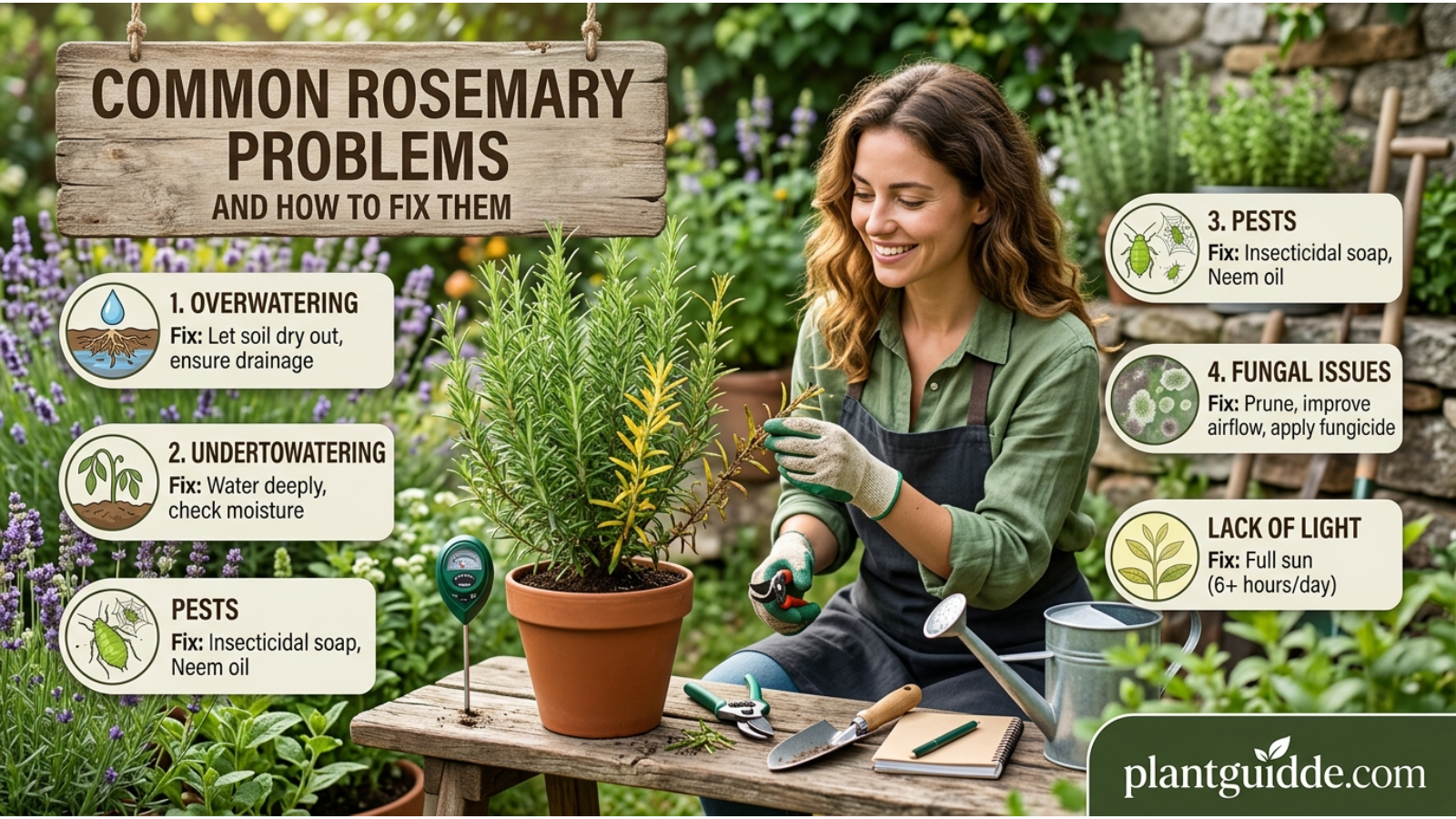
Common Rosemary Problems and How to Fix Them
Rosemary Leaves Turning Yellow
Yellow leaves can have several causes, but excessive moisture is an important one to investigate.
Check:
- Whether the soil remains wet for long periods
- Whether the pot has drainage holes
- Whether water is collecting beneath the container
- Whether the plant receives enough direct light
- Whether the roots show signs of damage
Do not automatically add fertilizer when leaves turn yellow. Correct the growing conditions first.
Rosemary Turning Brown
Brown leaves may result from severe dryness, root problems, temperature stress, or other environmental issues.
Check the soil moisture and examine the plant’s growing environment.
If the soil is extremely dry and the foliage is brittle, dehydration may be involved. If the soil is constantly wet and the plant is declining, root problems become a greater concern.
Rosemary Drooping
Drooping rosemary can be caused by either too little or too much water.
That may sound contradictory, but the roots explain why.
A severely dehydrated plant cannot maintain normal leaf firmness. Conversely, damaged roots in chronically wet soil may struggle to supply water effectively to the foliage.
Always inspect the soil before deciding how to respond.
Rosemary Has Brown Tips
Brown tips can develop when the plant experiences environmental stress, including severe dryness or unfavorable root conditions.
Look at the overall pattern rather than focusing on one damaged leaf. A few older damaged tips are less concerning than widespread browning accompanied by poor growth.
Rosemary Becoming Leggy
Leggy rosemary usually indicates that the plant is not receiving enough usable light or is otherwise growing under conditions that encourage weak, elongated growth.
Move it toward a brighter location and prune lightly to encourage a fuller shape.
Avoid making a dramatic move from low light to intense outdoor sun without allowing the plant to adjust, particularly if it has been indoors for a long time.
Rosemary Losing Leaves
Some leaf loss can occur naturally as older foliage ages, but widespread leaf drop deserves investigation.
Check light, watering, drainage, temperature, and root health.
Take care of rosemary plant the plant has recently moved locations, environmental change can also contribute to temporary stress.
Why Is My Rosemary Dying After Bringing It Indoors?
A rosemary plant can struggle after moving indoors because the conditions may change dramatically.
Outside, it may have received strong sunlight, excellent airflow, and rapid evaporation. Indoors, it may suddenly receive weaker light and remain moist for longer.
This creates a common combination of problems:
less light + slower drying + frequent watering = increased stress
When bringing rosemary indoors, place it in the brightest suitable location and adjust watering based on how quickly the soil actually dries.
Do not continue an outdoor watering routine after moving the plant inside.
Can Rosemary Grow Indoors Year-Round?
Yes, rosemary can be grown indoors year-round, but sufficient light is the main challenge.
A sunny window may work, especially for a compact plant. If natural light is inadequate, supplemental grow lighting can help maintain stronger growth.
Indoor rosemary also benefits from good airflow and careful watering.
The plant should not be treated like a high-humidity tropical houseplant simply because it is being grown indoors.
Rosemary Care by Season
Spring
Spring is a useful time to encourage active growth.
As temperatures and light levels increase:
- Resume active growth fertilization if needed.
- Begin regular harvesting.
- Check whether the plant needs repotting.
- Increase watering only as the soil begins drying faster.
- Prune lightly to shape new growth.
Summer
Summer often brings rapid drying, especially for container rosemary.
Monitor small pots frequently during hot weather. A plant receiving several hours of direct sunlight may use water considerably faster than it does during winter.
Avoid assuming that a dry-looking surface means the entire root ball is dry. Check deeper into the soil before watering.
Autumn
As temperatures and light levels decline, rosemary may use less water.
Reduce watering frequency when the soil begins staying moist for longer periods.
If you grow rosemary outdoors in a cold region, begin planning protection before severe cold arrives.
Winter
Winter care is mainly about balancing reduced growth with sufficient light.
Indoor plants may need less frequent watering because evaporation and plant growth can slow considerably.
Place rosemary in the brightest available location and avoid keeping the soil constantly wet.
Rosemary Plant Care for Beginners: The Five Rules That Matter Most
Take care of rosemary plant you are new to growing rosemary, concentrate on these five habits:
- Give it strong direct sunlight.
- Use fast-draining soil.
- Always use a container with drainage holes.
- Let the soil dry substantially between waterings.
- Prune and harvest lightly rather than repeatedly cutting into old woody growth.
Getting these fundamentals right solves many of the problems that beginners mistakenly try to fix with fertilizer or more frequent watering.
Common Rosemary Care Mistakes
Watering on a Fixed Schedule
A calendar cannot account for changing weather, sunlight, pot size, and soil.
Check the soil instead.
Using Heavy Garden Soil in a Container
Dense soil can hold excessive moisture around the roots.
A container-grown rosemary plant generally benefits from a much more freely draining growing medium.
Keeping Rosemary in Low Light
Watering correctly will not compensate for inadequate light.
Take care of rosemary plant the plant is stretching and producing weak growth, reassess its light before changing its fertilizer.
Using a Decorative Pot Without Drainage
A beautiful container can become a serious problem if excess water has nowhere to escape.
Take care of rosemary plant you want to use a decorative outer pot, keep the rosemary in a draining nursery pot inside it and empty collected water when necessary.
Overfertilizing a Stressed Plant
Yellow or weak foliage does not automatically mean the plant needs fertilizer.
Diagnose the growing environment first.
Pruning Only After the Plant Becomes Overgrown
Regular light harvesting is easier on rosemary than a severe haircut after years of unchecked growth.
How to Take Care of Rosemary Plant After Repotting
Rosemary may need a short adjustment period after repotting.
After moving it into fresh soil:
- Water appropriately to settle the soil.
- Ensure excess water drains completely.
- Return it to a bright location.
- Avoid excessive fertilizer immediately after repotting.
- Monitor the soil rather than watering automatically.
- Avoid unnecessary additional disturbance while it establishes.
Take care of rosemary plant the new container is substantially larger than the old one, pay particular attention to drying time because the extra soil can retain moisture longer.
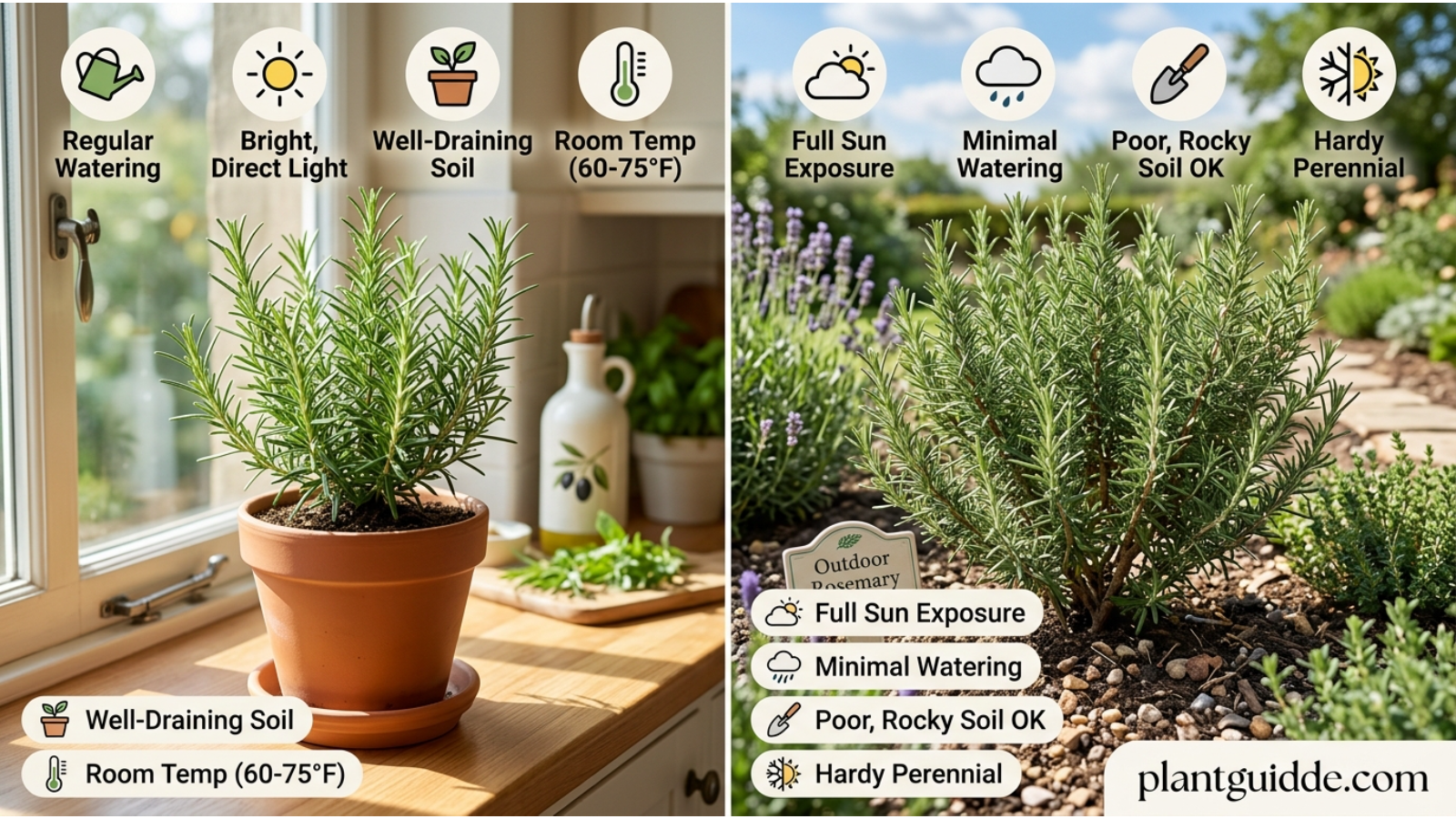
Indoor vs. Outdoor Rosemary
| Feature | Indoor rosemary | Outdoor rosemary |
|---|---|---|
| Light | Brightest window or supplemental light | Direct sun |
| Airflow | Often limited; provide circulation | Usually naturally better |
| Watering | Often less frequent | Depends strongly on weather |
| Container | Usually required | Optional |
| Main challenge | Insufficient light | Extreme weather |
| Humidity | Normal household conditions usually work | Depends on climate |
| Pruning | Regular light harvesting | Regular shaping and harvesting |
The basic principles remain the same in both environments: strong light, excellent drainage, and careful watering.
When Should You Move Rosemary to a Larger Pot?
Move rosemary when the root system has substantially filled its current container or when the existing soil no longer performs well.
Do not repot simply because a certain amount of time has passed.
When selecting a new pot, choose one that gives the roots additional room without creating an unnecessarily huge volume of wet soil.
After repotting, monitor how quickly the new soil dries. The watering pattern may change because the container and soil volume have changed.
FAQs:
How often should I water a rosemary plant?
Water when the soil has dried substantially rather than following a fixed schedule. Rosemary needs more frequent checking during hot, bright weather and usually less water during cool, low-light periods.
Does rosemary need full sun?
Rosemary generally performs best with several hours of direct sunlight each day, with around 6–8 hours being a useful target for strong growth. Indoors, place it in the brightest suitable window or supplement natural light when necessary.
Why is my rosemary turning yellow?
Yellow foliage can occur for several reasons, but consistently wet soil and poor drainage are important issues to check first. Also assess light, watering practices, and root condition before adding fertilizer.
Can rosemary grow indoors?
Yes. Rosemary can grow indoors when given strong light, good airflow, fast-draining soil, and careful watering. Insufficient light is one of the most common challenges when growing it inside.
Should rosemary soil dry out between waterings?
Yes. Rosemary generally prefers the soil to dry substantially between thorough waterings. Constantly wet soil reduces root aeration and can contribute to root problems.
Conclusion
Learning how to take care of rosemary plant becomes much easier when you stop treating it like a moisture-loving houseplant. Give it strong sunlight, fast-draining soil, a container with drainage, and enough time for the soil to dry substantially between thorough waterings.
For the healthiest growth, focus on the environment before reaching for fertilizer or other treatments. If your rosemary receives enough light and its roots are protected from prolonged wetness, regular harvesting and light pruning can keep the plant productive, compact, and ready for the kitchen.

Asad Mumtaz is a dedicated plant enthusiast and gardening writer with a passion for helping people care for their plants successfully. He specializes in plant care guides, indoor gardening, and practical growing tips for all skill levels. His content focuses on making gardening simple, enjoyable, and rewarding. Through his work, Asad shares reliable advice to help readers create thriving green spaces.