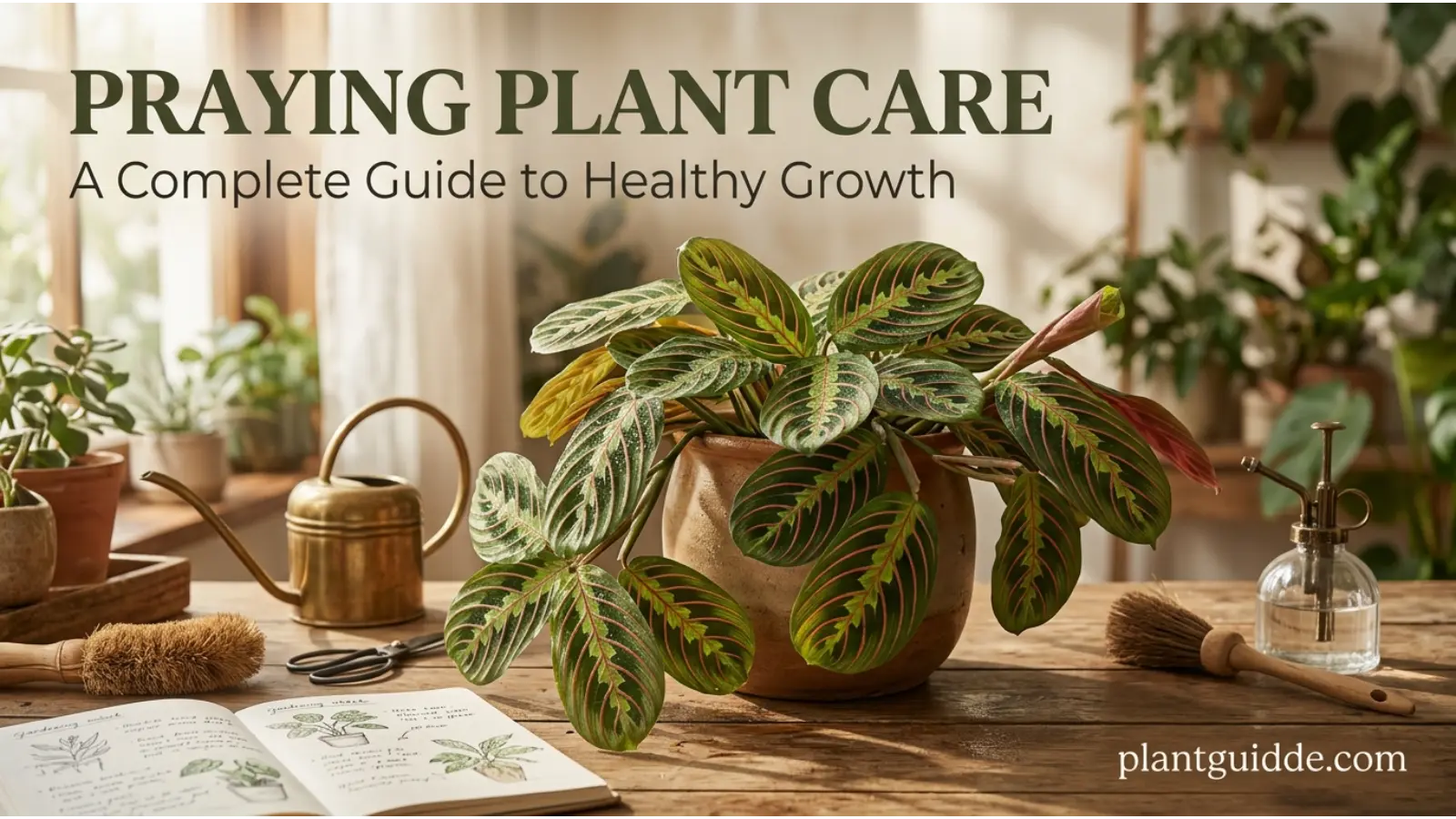
Take care of prayer plant are admired for their beautifully patterned leaves, colorful veins, and fascinating habit of folding their foliage upward at night. Their decorative appearance makes them popular indoor plants, especially for people who want something more distinctive than ordinary green houseplants.
However, learning how to take care of prayer plant varieties requires a little more attention to moisture and humidity than caring for drought-tolerant plants such as snake plants or ZZ plants.
Dry air, inconsistent watering, intense sunlight, and poor drainage can cause curling leaves, brown edges, faded patterns, or slow growth.
The good news is that prayer plants respond well when their basic needs remain consistent. With suitable light, careful watering, warm temperatures, and a comfortable level of humidity, you can maintain attractive foliage and encourage healthy new growth throughout the growing season.
Quick Answer
To take care of a prayer plant (Maranta leuconeura), provide bright, indirect light, warm temperatures, moderate to high humidity, and consistently lightly moist soil. Use a well-draining potting mix, water when the top layer begins to dry, and avoid direct afternoon sunlight. Maintain good airflow and check the leaves regularly for browning, curling, or pests to keep your prayer plant healthy indoors.
Understanding the Prayer Plant
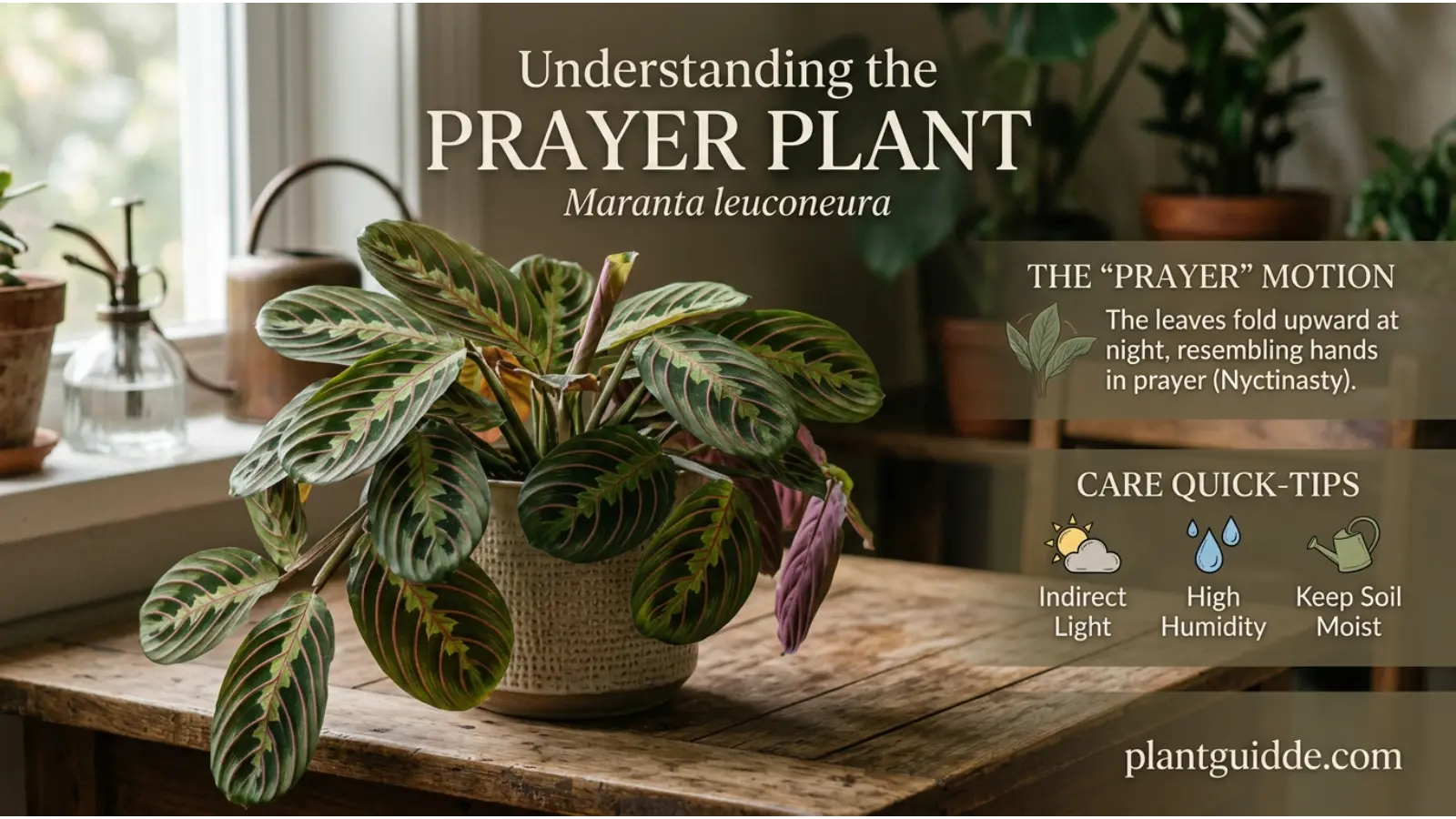
The prayer plant (Maranta leuconeura) is a tropical perennial native to the rainforests of Brazil. It belongs to the Marantaceae family and grows close to the forest floor, where it receives filtered light rather than intense direct sunlight.
Its oval leaves feature distinctive patterns that may include dark green patches, pale green backgrounds, and red or pink veins, depending on the variety. The leaves also move in response to changing light conditions, a behavior known as nyctinasty.
During the day, the leaves generally spread outward to capture light. As evening approaches, they often rise or fold upward. This natural movement is not usually a sign of stress.
Prayer plants are sometimes confused with Calathea and other members of the prayer-plant family. Although their care requirements overlap, individual species can differ in leaf shape, growth habit, and environmental preferences.
Best Conditions for Prayer Plant Care
Prayer plants grow best when their surroundings resemble the warm, humid, sheltered conditions of a tropical forest floor.
| Care factor | Recommended conditions | What to avoid |
|---|---|---|
| Light | Bright, indirect light | Strong, prolonged direct sunlight |
| Water | Keep soil lightly moist without waterlogging | Bone-dry soil for extended periods |
| Soil | Moisture-retentive but well-draining mix | Dense, compacted soil |
| Temperature | Approximately 65–80°F (18–27°C) | Cold drafts and sudden temperature changes |
| Humidity | Around 50–60% or higher when practical | Persistently dry air |
| Fertilizer | Diluted balanced fertilizer during active growth | Heavy or frequent feeding |
| Pot | Container with drainage holes | Standing water around roots |
These are useful starting points rather than rigid rules. Your plant’s pot, room temperature, light exposure, and growing season all influence how quickly the soil dries.
How Much Light Does a Prayer Plant Need?
Light affects leaf color, growth, and the plant’s ability to produce healthy new foliage. Prayer plants naturally grow beneath taller vegetation, so they generally prefer filtered light.
Bright, indirect light
Place your prayer plant near an east-facing window or in a bright room where sunlight does not strike the leaves intensely for long periods. A sheer curtain can help filter strong sunlight from south- or west-facing windows.
Adequate indirect light supports compact growth and helps maintain the attractive patterns on the leaves. If the plant receives too little light, growth may slow and new leaves may become smaller.
Can a prayer plant grow in low light?
Prayer plants can tolerate moderate indoor light, but prolonged deep shade is not ideal. In a dim location, the plant may produce fewer leaves, lose some visual contrast, or take longer to use the water in its pot.
Take care of prayer plant the soil stays wet for many days, consider whether the location receives enough light before increasing the watering frequency.
Signs of incorrect lighting
- Faded or scorched patches: The plant may be receiving too much direct sunlight.
- Slow growth: Insufficient light is one possible cause.
- Smaller new leaves: Light, nutrition, root health, or pot conditions may be limiting growth.
- Leaves turning toward a window: The plant may be responding to uneven light.
Rotate the pot occasionally for balanced growth, and make lighting changes gradually to avoid stressing the foliage.
How to Water a Prayer Plant Correctly
Watering is one of the most important aspects of prayer plant care. Unlike succulents, prayer plants do not store large amounts of water in thick leaves. They prefer a more consistent supply of moisture, but their roots still need oxygen.
Follow these watering steps
- Check the soil: Feel the top half-inch to inch of soil. If it is beginning to dry, check slightly deeper to understand the moisture level around the roots.
- Water thoroughly: Apply water evenly across the soil until it begins to drain from the bottom.
- Allow excess water to escape: Empty the saucer or outer pot so the roots do not sit in standing water.
- Monitor moisture: Check the soil again regularly and water when the upper layer begins to dry.
- Adjust for the season: Reduce watering as growth slows in cooler months, while preventing the root ball from drying out completely.
The plant may need more frequent watering in a warm, bright room and less in a cool, dim location. Avoid following a fixed weekly schedule without checking the soil.
Should you use tap water?
Prayer plants can be sensitive to mineral buildup and certain chemicals in some water supplies. If you notice recurring brown leaf edges despite suitable watering and humidity, water quality may be worth investigating.
Depending on your local supply, filtered water, rainwater collected safely, or another low-mineral water source may help. Letting tap water stand does not remove dissolved minerals, so it is not a reliable solution to mineral buildup.
How to recognize overwatering
Overwatering can lead to yellowing leaves, soft stems, persistent wet soil, and root rot. If the potting mix stays saturated, check whether the container drains properly and whether the soil is too dense.
Take care of prayer plant the plant continues to decline, inspect the roots. Healthy roots are generally firm, while damaged roots may be dark and mushy. Remove rotting tissue with clean tools and repot into fresh, airy soil if necessary.
Best Soil and Pot for a Prayer Plant
Prayer plants need a potting mix that retains some moisture without becoming waterlogged. A mixture that dries too quickly can stress the plant, while a dense medium may deprive roots of oxygen.
A practical starting mix includes:
- Two parts quality indoor potting mix
- One part perlite or pumice
- One part fine orchid bark or another suitable aerating material
Adjust the proportions according to your conditions. If the mix dries out too rapidly, use a little more moisture-retentive potting mix. If it stays wet for too long, increase the proportion of aerating material.
Choose a pot with drainage holes. A container that is only slightly larger than the root ball is usually easier to manage than an oversized pot filled with soil that remains wet for extended periods.
Avoid compacting the mix tightly around the roots. Gently settle it into place while preserving enough air space for healthy root development.
How to Maintain Humidity for a Prayer Plant
Humidity is particularly important when growing prayer plants indoors. Their tropical origins mean they generally appreciate more atmospheric moisture than many common houseplants.
Humidity around 50–60% or higher can be helpful, provided airflow and soil drainage remain good. Average household humidity may be sufficient in some homes, but very dry indoor air can contribute to crispy leaf edges.
Practical ways to increase humidity
- Use a humidifier: This is often the most reliable method for maintaining a consistent humidity level.
- Group compatible plants: Placing several plants together may create a slightly more humid local environment.
- Move the plant away from heating vents: Hot, dry airflow can worsen leaf-edge damage.
- Monitor humidity: A small digital hygrometer can help you understand conditions around the plant.
Pebble trays may provide a small local effect, but they do not reliably raise room humidity substantially. Misting also provides only a temporary change and is not a substitute for maintaining suitable humidity.
Avoid enclosing the plant in stagnant, excessively damp conditions. Consistent humidity, good airflow, and healthy roots work together to support attractive foliage.
Ideal Temperature for Prayer Plant Growth
Prayer plants prefer warm, stable indoor conditions. Temperatures around 65–80°F (18–27°C) are generally suitable for active growth.
Keep the plant away from cold windows, air-conditioning drafts, and doors that open frequently during cold weather. Sudden temperature changes can stress the leaves and slow growth.
If your home becomes cooler during winter, reduce watering as necessary because the soil may dry more slowly. Do not compensate for slower growth by adding extra fertilizer.
Avoid exposing prayer plants to frost or prolonged cold. Their tropical foliage is not adapted to freezing temperatures.
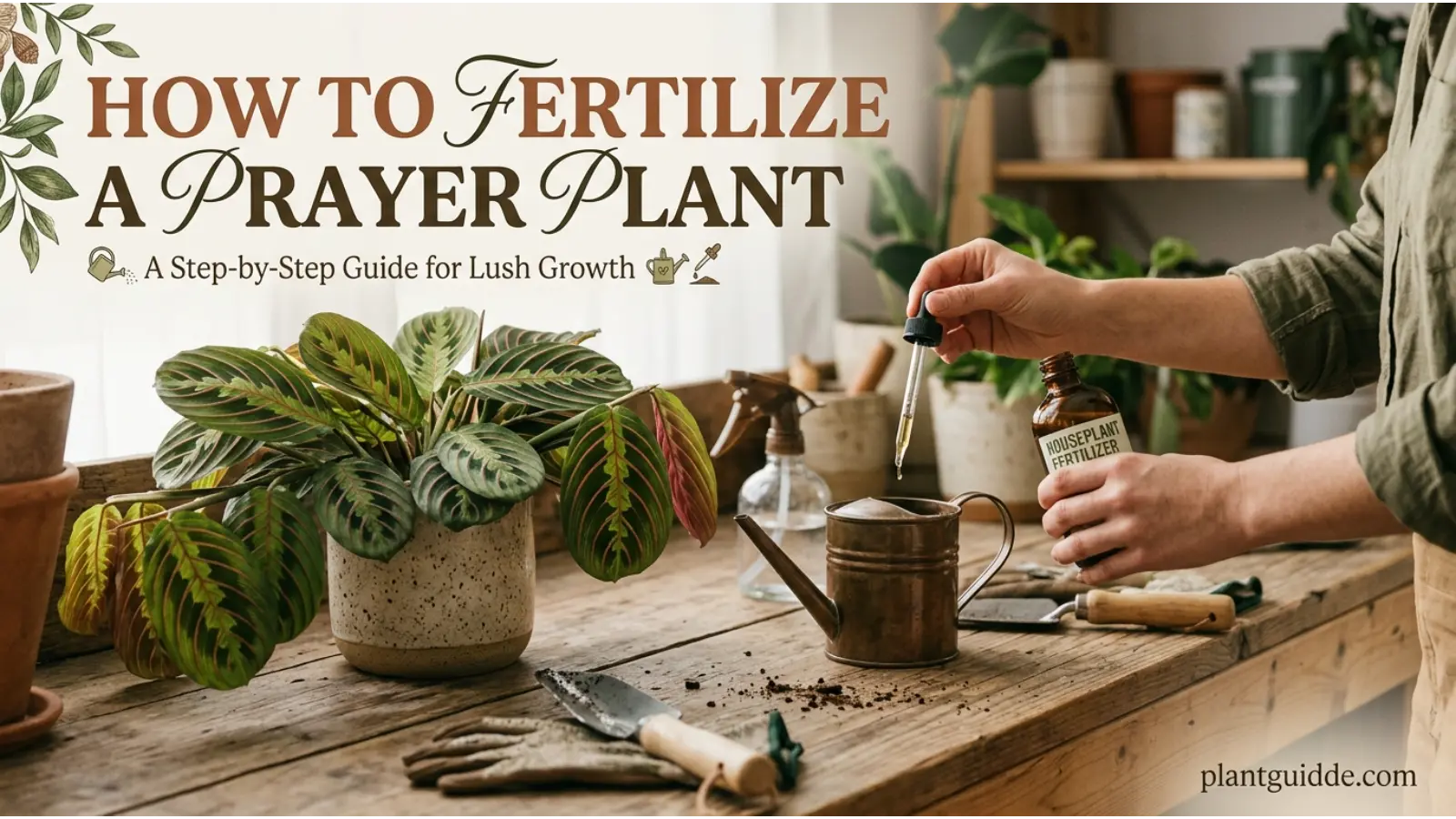
How to Fertilize a Prayer Plant
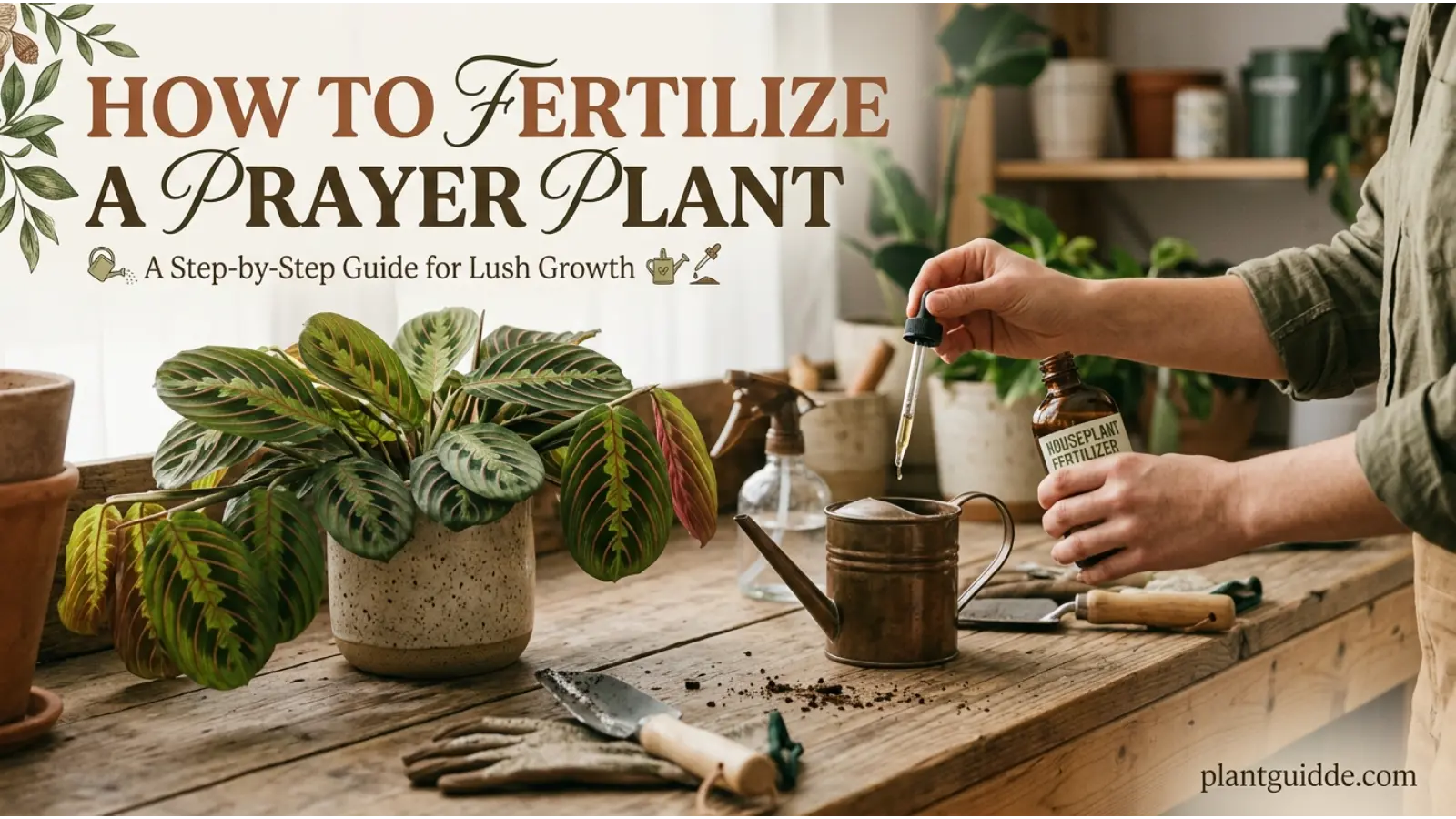
Prayer plants benefit from modest feeding during active growth, particularly when they have been growing in the same container for an extended period.
Use a balanced liquid houseplant fertilizer diluted according to its label. Feeding approximately every four to six weeks during spring and summer may be sufficient, depending on the product and growing conditions.
Follow these guidelines:
- Apply fertilizer only when the plant is reasonably healthy.
- Avoid excessive concentrations, which can damage roots.
- Reduce or stop feeding during winter if growth slows.
- Flush the potting mix occasionally if fertilizer salts accumulate and drainage is good.
If new leaves appear pale or growth slows, check light, roots, and watering before assuming the plant needs more nutrients. Fertilizer cannot correct damage caused by waterlogged soil or unsuitable environmental conditions.
How to Prune and Maintain Prayer Plant Leaves
Prayer plants usually require little pruning. Most maintenance involves removing damaged leaves and keeping the foliage clean.
Use clean, sharp scissors to cut yellow, dead, or badly damaged leaves near the base of their stems. Avoid removing large amounts of healthy foliage at once because the plant needs its leaves to produce energy.
Dust can collect on broad leaves and reduce their appearance. Gently wipe them with a soft, damp cloth when needed. Support each leaf as you clean it to avoid tearing the delicate foliage.
Do not use leaf-shine products that may leave residue on the leaves. Also avoid repeatedly trimming brown tips without investigating the underlying cause, since new damage may continue if watering, humidity, or water quality remains unsuitable.
How to Propagate a Prayer Plant
Prayer plants are commonly propagated by division. This method is generally more reliable for home growers than attempting to root individual leaves.
Propagation by division
- Remove the plant gently from its pot.
- Identify natural clusters of stems with their own roots.
- Carefully separate a healthy section, keeping roots attached to each division.
- Place each division in a pot with fresh, well-draining soil.
- Water enough to settle the soil, then allow excess water to drain.
- Keep the divisions in warm conditions with bright, indirect light and suitable humidity.
Avoid dividing a severely stressed plant unless division is necessary to address a serious root problem. Healthy plants generally establish more successfully.
After propagation, monitor soil moisture closely. Newly divided plants have smaller root systems and may need careful attention while they adjust to their new containers.
Common Prayer Plant Problems and How to Fix Them
Prayer plants often communicate environmental stress through their leaves. The important step is to consider several possible causes rather than assuming every symptom has one explanation.
| Problem | Possible causes | What to do |
|---|---|---|
| Brown, crispy edges | Low humidity, mineral buildup, inconsistent moisture | Check humidity, water quality, and soil moisture |
| Yellow leaves | Overwatering, root damage, natural aging | Check drainage and inspect roots if yellowing spreads |
| Curling leaves | Dry soil, heat stress, or environmental changes | Check moisture and move the plant away from hot drafts |
| Drooping foliage | Underwatering, root problems, or temperature stress | Inspect the soil and roots before watering |
| Faded leaf patterns | Excessive direct sunlight or unsuitable light | Adjust the plant’s position gradually |
| Slow growth | Low light, seasonal slowdown, or root restriction | Review lighting, season, and root condition |
| Fine webbing or stippled leaves | Possible spider mites | Isolate the plant and inspect the undersides of leaves |
| Cottony white insects | Possible mealybugs | Isolate the plant and treat the infestation appropriately |
Why are the leaf edges turning brown?
Brown edges are common on prayer plants, but the cause is not always low humidity. Mineral buildup, inconsistent watering, root damage, and dry airflow can also contribute.
Start by checking the soil moisture and the plant’s location. If the soil is consistently wet, improve drainage and inspect the roots. If the plant is otherwise healthy and humidity is low, a humidifier may help. Where hard water is a concern, try a suitable low-mineral water source and monitor new growth.
Existing brown tissue will not turn green again. Focus on preventing further damage rather than repeatedly trimming the leaves.
Why do prayer plant leaves curl?
Leaves may curl inward when the plant is losing moisture faster than it can replace it. Dry soil, hot airflow, and root damage can all contribute.
Check the soil before watering. If it is dry, water thoroughly and allow excess water to drain. If the soil is already wet, do not add more water automatically; inspect drainage and consider root health.
Some leaf movement is natural, so observe whether the curling persists during the day rather than judging the plant by its evening posture alone.
Why is my prayer plant losing leaves?
A few older leaves may yellow and die naturally. Widespread leaf loss, however, can indicate prolonged water stress, root rot, cold exposure, or pests.
Inspect the plant’s base, check soil moisture, and look beneath the leaves for insects. Correct the main cause before making several care changes at once.
Is a Prayer Plant Safe for Pets?
The commonly grown prayer plant (Maranta leuconeura) is generally listed as non-toxic to cats and dogs. This makes it a popular choice for households with pets.
However, chewing any houseplant may cause mild digestive upset, and plants sold under similar common names can belong to different species. Confirm the plant’s botanical identity before relying on a pet-safety label.
Keep the plant out of reach if your pet tends to chew foliage, and contact a veterinarian if your pet develops concerning symptoms after eating a plant.
Common Prayer Plant Care Mistakes
Even when the basic care routine seems correct, small environmental problems can gradually affect leaf quality.
Letting the soil dry out completely too often: Prayer plants generally prefer more consistent moisture than succulents. Check the soil regularly, especially in warm weather.
Keeping the roots constantly wet: Moisture is beneficial, but saturated soil can cause root rot. Always use a draining pot and an airy mix.
Placing the plant in intense direct sunlight: Strong sunlight can scorch foliage and fade its patterns. Choose filtered light instead.
Ignoring low humidity: Very dry air can worsen leaf-edge damage. Measure humidity before investing in solutions.
Using fertilizer to fix every problem: Yellowing and slow growth can result from water stress, root damage, or poor lighting. Identify the cause first.
Changing several conditions at once: Moving the plant, changing the soil, increasing watering, and adding fertilizer simultaneously makes it difficult to determine what helped or harmed the plant. Adjust one or two factors at a time unless urgent root problems require immediate intervention.
A simple care log noting watering, light changes, and new leaf growth can help you recognize patterns and make more reliable adjustments.
FAQs:
How often should you water a prayer plant?
Water when the upper half-inch to inch of soil begins to dry, checking slightly deeper if needed. The frequency depends on temperature, light, pot size, and soil. Keep the mix lightly moist without leaving the roots in standing water.
Why do prayer plants fold their leaves at night?
Prayer plants display a natural movement called nyctinasty. Changes in light and internal water pressure at the leaf joints cause the leaves to rise or fold in the evening. This movement is normal and does not usually indicate a watering problem.
Can prayer plants grow indoors without direct sunlight?
Yes. Prayer plants generally grow well in bright, indirect light and do not need direct sunlight. A bright room near a filtered window is often suitable. Very dim locations can slow growth and contribute to weaker foliage.
How do I make my prayer plant grow more leaves?
Provide suitable indirect light, consistent moisture, warm temperatures, and adequate humidity. During active growth, modest fertilizer can help if nutrients are limited. Remove dead leaves and inspect the roots if growth remains slow despite good conditions.
Why does my prayer plant have brown tips even when I water it regularly?
Regular watering does not rule out other problems. Brown tips may result from low humidity, mineral accumulation, root damage, or excessive fertilizer. Check soil drainage, water quality, and the plant’s location before increasing watering frequency.
Conclusion
Learning how to take care of prayer plant varieties becomes easier when you focus on stable growing conditions rather than frequent adjustments. Provide bright, indirect light, warm temperatures, suitable humidity, and soil that stays lightly moist without becoming saturated.
Check the soil before watering, protect the foliage from harsh sunlight, and investigate brown edges or curling leaves before they become widespread. With consistent attention to moisture, light, and root health, your prayer plant can maintain its distinctive patterns and produce attractive new growth indoors.

Asad Mumtaz is a dedicated plant enthusiast and gardening writer with a passion for helping people care for their plants successfully. He specializes in plant care guides, indoor gardening, and practical growing tips for all skill levels. His content focuses on making gardening simple, enjoyable, and rewarding. Through his work, Asad shares reliable advice to help readers create thriving green spaces.