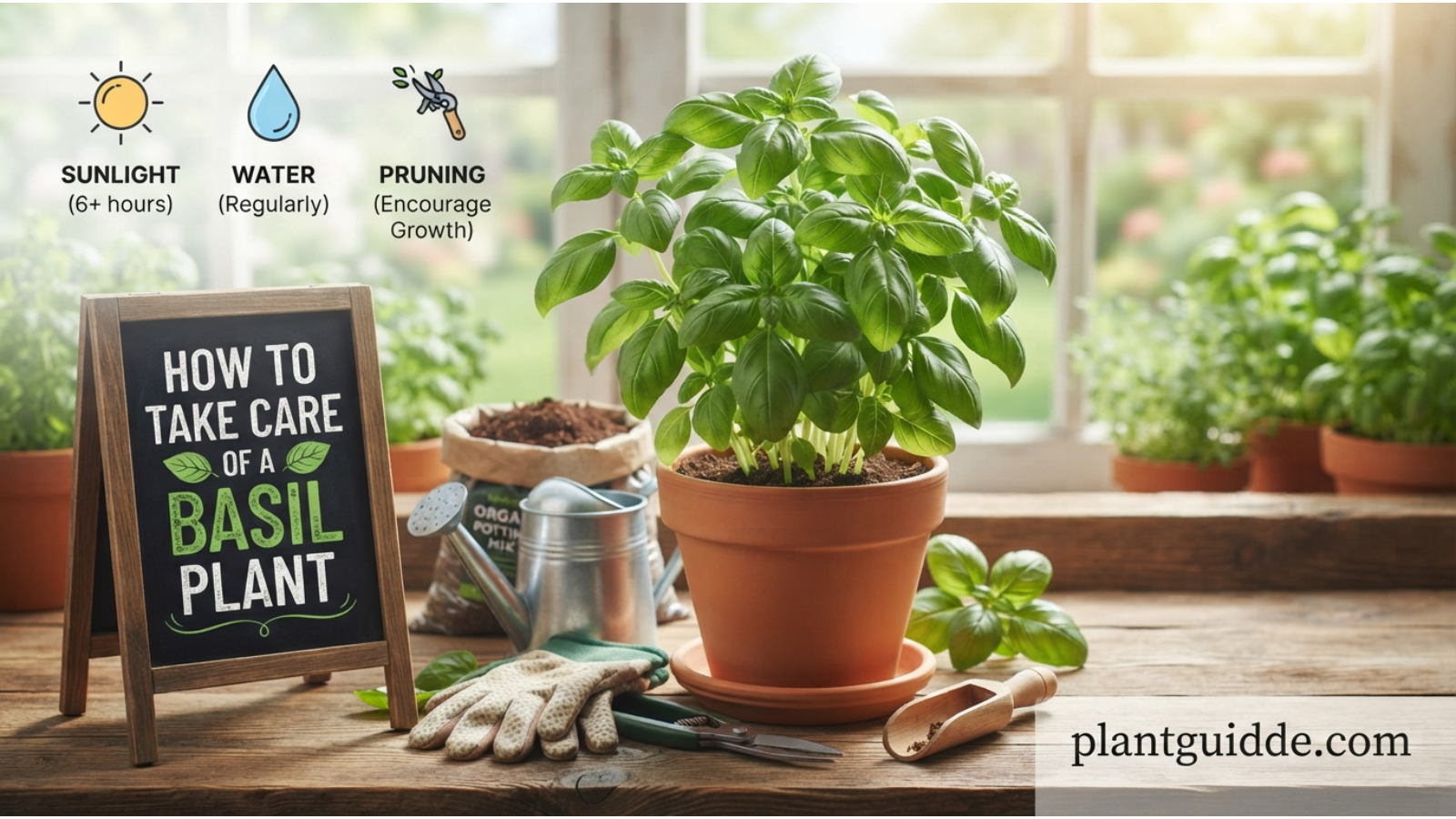
Basil is one of the most rewarding herbs to grow at home. Learning how to take care of a basil plant can give you a steady supply of fresh leaves for pesto, pasta, salads, sauces, sandwiches, and more.
But basil can be surprisingly quick to show signs of stress. Leaves may turn yellow, wilt suddenly, develop brown edges, or become small and pale. Sometimes the problem isn’t a lack of fertilizer at all, it is simply too little light, inconsistent watering, poor drainage, or allowing the plant to flower too early.
The good news is that basil does not need complicated care. It needs the right conditions consistently.
If you’re growing basil in a kitchen window, container, raised bed, or outdoor garden, the key is to balance sunlight, moisture, warmth, nutrition, and regular pruning. Once you understand what healthy basil looks and feels like, caring for it becomes much easier.
Quick Answer
To take care of a basil plant, give it 6–8 hours of bright sunlight, consistently moist but well-draining soil, warm temperatures, and regular harvesting. Water when the top inch of soil begins to feel dry, avoid letting the roots sit in water, and pinch off flower buds to encourage leafy growth. Good airflow also helps prevent common basil problems such as fungal disease and weak, leggy growth.
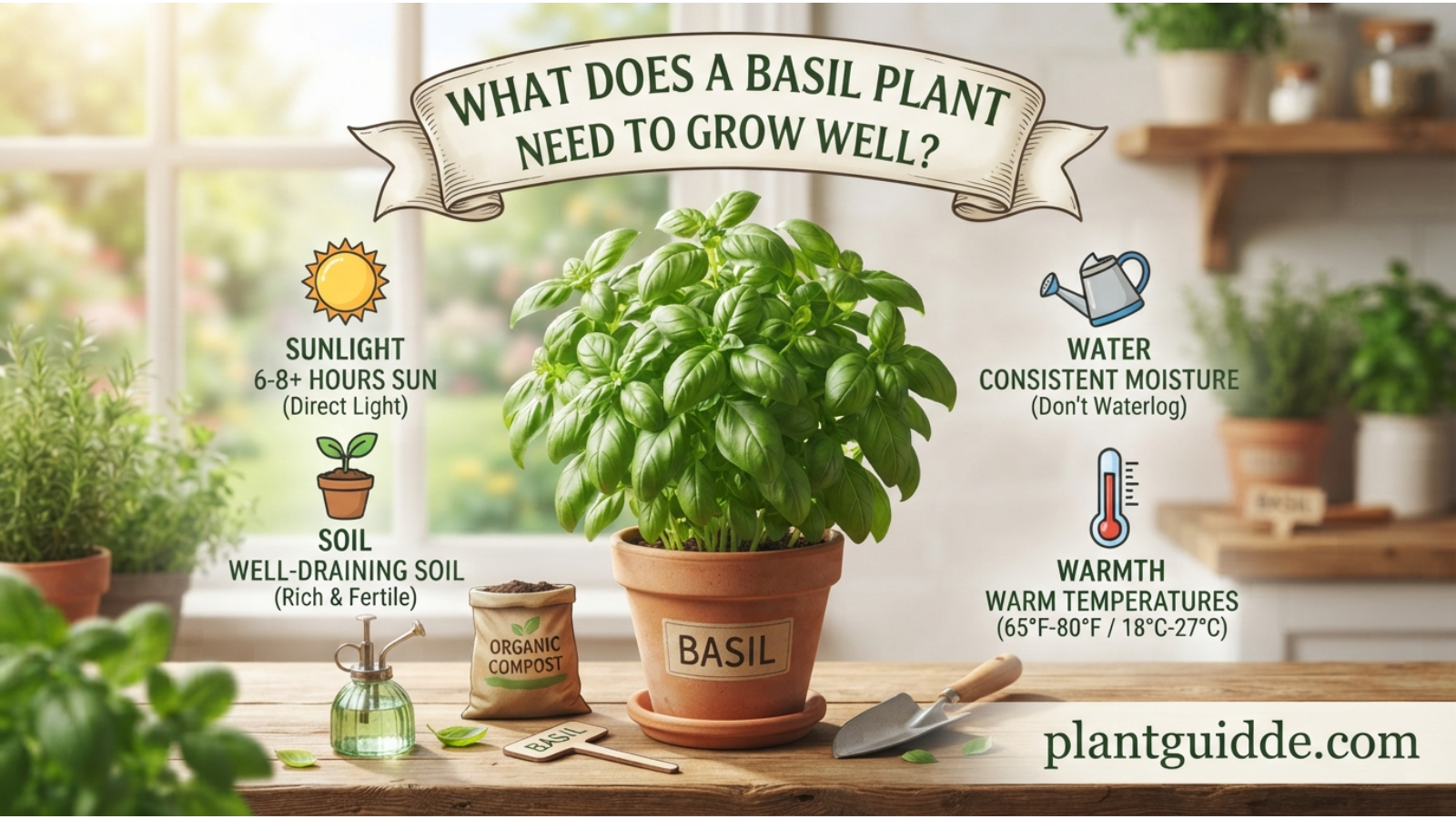
What Does a Basil Plant Need to Grow Well?
Basil (Ocimum basilicum) is a warm-season herb that grows best when its basic environmental needs are met.
| Care factor | What basil generally prefers | Why it matters |
|---|---|---|
| Light | 6–8 hours of bright light | Supports compact, leafy growth |
| Soil | Rich, loose, well-draining soil | Provides nutrients without waterlogging roots |
| Water | Even moisture without saturation | Prevents both drought stress and root problems |
| Temperature | Warm conditions | Basil is sensitive to cold |
| Humidity | Moderate humidity with airflow | Helps reduce stress and disease |
| Feeding | Light, regular nutrition when actively growing | Supports continued leaf production |
| Pruning | Frequent pinching and harvesting | Encourages branching and delays flowering |
The exact requirements vary with climate, container size, sunlight intensity, and whether you’re growing basil indoors or outdoors.
Give Basil Plenty of Sunlight
Light is one of the most important factors in basil care.
Basil generally performs best with at least 6 hours of strong light each day, with around 6–8 hours often producing vigorous growth. Outdoor basil can usually handle full sun once acclimated, while indoor plants may need a very bright south- or west-facing window or supplemental grow lighting.
Signs your basil needs more light
A basil plant receiving insufficient light may:
- Grow tall and thin
- Develop widely spaced leaves
- Lean toward a window
- Produce smaller leaves
- Become less bushy
- Have slower growth
This is called leggy growth, and simply adding fertilizer usually won’t solve it.
Indoor basil tip
If your basil sits on a windowsill and becomes stretched or tilted toward the glass, rotate the pot every few days. If natural light remains weak, a suitable grow light can make a significant difference.
Image Suggestion: Side-by-side illustration of compact basil receiving adequate light versus leggy basil growing in low light.
Water Basil the Right Way
Watering is where many beginners struggle.
Basil likes consistently moist soil, but that does not mean constantly wet soil. The roots need both moisture and oxygen.
Instead of watering according to a calendar, check the soil.
A simple watering test
Push your finger about an inch into the soil.
- If the surface and upper layer feel dry, water thoroughly.
- If the soil still feels moist, wait and check again later.
- If water drains immediately but the plant repeatedly wilts, investigate whether the container is too small or the soil is drying excessively quickly.
When watering, apply enough water to moisten the root zone and allow excess water to drain from the bottom of the container.
Avoid shallow watering
Adding only a small splash of water every day can create uneven moisture. The upper soil becomes wet while deeper roots remain relatively dry.
A thorough watering followed by appropriate drying at the surface is usually a better approach.
Why overwatering causes problems
Constantly saturated soil reduces the air available around roots and can contribute to root decline. Yellow leaves, wilting despite wet soil, and a persistently soggy potting mix can all indicate a watering or drainage problem.
Expert tip: If basil looks wilted, don’t automatically water it. Check the soil first. Wilting can result from either drought or damaged roots. How to Take Care of a Basil Plant.
Use Well-Draining Soil
Basil isn’t particularly demanding about soil, but drainage matters.
A good container mix should:
- Hold enough moisture for the plant
- Drain excess water efficiently
- Contain organic matter
- Remain loose rather than becoming dense and compacted
For container basil, a quality all-purpose potting mix is generally a good starting point. Adding excessive garden soil to a container can make the growing medium heavy and poorly drained.
Does basil need special soil?
Not necessarily.
You don’t need an expensive specialty herb mix. What matters more is good structure, drainage, and adequate fertility.
Choose the Right Pot
A basil plant can grow surprisingly quickly when conditions are good, and the container influences how frequently you need to water. How to Take Care of a Basil Plant.
Choose a pot with:
- Drainage holes
- Enough depth for a healthy root system
- Sufficient space for the plant’s expected growth
A tiny container may dry out extremely quickly, particularly in hot weather.
On the other hand, putting a small basil plant into a very large container can make moisture management more difficult if the soil remains wet for too long.
Container-grown basil tip
If you see roots circling the drainage holes, water seems to disappear almost immediately, or growth has slowed despite good light and feeding, the plant may have outgrown its container.
Image Suggestion: Diagram showing basil roots in an appropriately sized container versus a severely root-bound pot.
Keep Basil Warm
Basil is a warm-season herb and does not appreciate cold conditions.
It grows best when temperatures remain comfortably warm, while cold nights can cause slowed growth, discoloration, or general decline.
Avoid placing indoor basil directly beside:
- Cold windows during winter
- Air-conditioning vents
- Drafty doors
- Heating vents
- Sudden temperature changes
If you’re growing basil outdoors, wait until the danger of cold weather has passed before moving young plants outside.
One important seasonal warning
Basil is much more sensitive to cold than many common garden herbs. If temperatures are expected to drop significantly, protecting or moving container-grown basil can extend its productive season.
Feed Basil, But Don’t Overdo It
Basil produces lots of leaves, so it needs access to nutrients.
If you are growing basil in a nutrient-rich potting mix, you may not need to fertilize immediately. Once the plant is actively growing, a balanced fertilizer applied according to its label can help maintain healthy growth.
What happens with too much fertilizer?
More fertilizer does not automatically mean more basil.
Excessive feeding can contribute to:
- Weak or overly soft growth
- Salt buildup in containers
- Leaf-edge damage
- Unnecessary expense
A plant with poor light will not become healthy simply because you give it more fertilizer.
Better approach: Correct light, watering, drainage, and temperature problems before increasing fertilizer.
Prune and Harvest Basil Regularly
One of the easiest ways to make basil bushier is also one of the most overlooked: harvest it correctly.
When the plant has several sets of leaves, pinch or cut the stem just above a pair of healthy leaves.
This encourages the plant to produce new side shoots.
Instead of repeatedly removing individual leaves from random locations, harvest stem sections strategically. How to Take Care of a Basil Plant.
Why pruning works
Basil naturally tries to grow upward and eventually reproduce through flowers and seeds. Cutting growing tips redirects growth toward branching.
The result can be a fuller plant with more usable leaves.
Don’t be afraid to harvest
Regular harvesting is not necessarily harmful to a healthy basil plant. In fact, harvesting the growing tips can help maintain a productive shape.
Image Suggestion: Close-up diagram showing exactly where to cut a basil stem above a pair of leaves. How to Take Care of a Basil Plant.
Remove Flowers If You Want More Leaves
Basil eventually produces flowers.
The flowers are perfectly normal and can be attractive to pollinators outdoors, but flowering changes the plant’s growth priorities.
If your primary goal is harvesting tender basil leaves, pinch off flower buds as soon as you notice them. How to Take Care of a Basil Plant.
Should you always remove basil flowers?
No.
If you’re growing basil for seed, pollinators, or simply want to enjoy the flowers, you can allow some flowering.
But for maximum leaf production and a compact culinary herb, regular removal of flower buds is usually useful.
Give Basil Good Airflow
Good airflow is particularly important when basil is grown indoors or planted closely together.
Dense foliage combined with consistently damp leaves and poor circulation can create conditions favorable to fungal problems.
Give plants enough space that leaves aren’t constantly pressed against one another. How to Take Care of a Basil Plant.
A common mistake
Many growers focus heavily on humidity but forget about airflow.
Humidity and airflow aren’t opposites. You can provide reasonable humidity while still keeping air moving gently around the foliage.
Avoid blasting basil with a strong fan. The goal is gentle circulation, not constant wind stress.
Indoor Basil Plant Care
Growing basil indoors is convenient, but indoor plants often struggle with light intensity more than anything else.
A bright room is not necessarily the same thing as a bright growing location.
A basil plant several feet away from a window may receive dramatically less useful light than one positioned close to it.
For healthy indoor basil
Place the plant:
- Near the brightest suitable window.
- Where it receives several hours of direct or very bright light.
- Away from cold drafts and heating or cooling vents.
- In a pot with drainage holes.
- Where air can circulate around the foliage.
If natural light is inadequate, supplement it with a grow light.
Indoor basil watering
Indoor basil may dry more slowly than outdoor basil because evaporation is lower. This means copying an outdoor watering schedule can easily lead to overwatering.
Check the soil rather than watering simply because several days have passed.
Outdoor Basil Care
Outdoor basil can grow rapidly when provided with warmth, sunlight, moisture, and fertile soil.
However, outdoor plants experience more environmental variation.
Watch for:
- Extreme heat
- Heavy rain
- Dry wind
- Cold nights
- Pest activity
- Competition from weeds
During very hot weather, container basil may require more frequent watering because pots dry faster than garden beds.
At the same time, heavy rainfall can saturate poorly drained soil.
The goal remains the same: moist but well-drained root conditions.
How to Make Basil Grow Bushier
If your basil is tall and sparse, don’t immediately replace it.
Try this approach:
Step 1: Improve the light
Move it toward a brighter growing location if necessary.
Step 2: Identify the main growing stems
Look for tall stems with pairs of leaves.
Step 3: Pinch above a leaf pair
Remove the growing tip just above healthy leaves.
Step 4: Continue harvesting
As new side branches develop, harvest their growing tips as well.
Step 5: Prevent premature flowering
Remove flower buds if your goal is continued leaf production.
With adequate light, this combination encourages basil to become considerably fuller rather than simply taller.
Why Are My Basil Leaves Turning Yellow?
Yellow basil leaves can have several causes, so don’t assume fertilizer deficiency immediately.
| Possible cause | What you may notice | What to check |
|---|---|---|
| Overwatering | Yellow leaves + wet soil | Drainage and watering frequency |
| Underwatering | Yellowing + dry, wilted plant | Soil moisture |
| Poor light | Weak, stretched growth | Location and light intensity |
| Natural aging | Older lower leaves yellow first | Overall plant health |
| Nutrient shortage | Pale overall growth | Soil fertility |
| Root problems | Yellowing + persistent wet soil | Roots and drainage |
| Pest damage | Speckling or distorted leaves | Undersides of leaves |
The important part
Look at multiple symptoms together.
For example, yellow leaves plus soggy soil suggests a very different problem from yellow leaves plus bone-dry soil.
Why Are My Basil Leaves Wilting?
Wilting does not automatically mean the plant needs water.
If the soil is dry
The plant may simply be experiencing water stress.
Water thoroughly and monitor how quickly it recovers.
If the soil is wet
Don’t add more water.
Persistent wetness can indicate poor drainage or root damage. In this situation, investigate the root environment rather than treating the symptom with additional irrigation.
If wilting happens during hot afternoons
Some plants temporarily wilt during intense heat even when soil moisture is adequate. Check the plant again later rather than immediately watering repeatedly.
Why Are Basil Leaves Turning Brown?
Brown or crispy leaves can result from several environmental stresses.
Common possibilities include:
- Severe underwatering
- Very dry conditions
- Excessive fertilizer salts
- Root problems
- Leaf scorch
- Pest or disease damage
The location of the damage provides clues.
Crispy edges often point toward moisture stress or environmental stress, while distinct spots or lesions may warrant closer inspection for disease.
Basil Leaves Curling: What Does It Mean?
Curling leaves are another symptom rather than a diagnosis.
Check:
- Soil moisture
- Light exposure
- Temperature
- Humidity
- Pest activity
- Recent changes in the plant’s environment
Look carefully underneath leaves for small insects or webbing.
If curling appeared shortly after moving the plant outdoors, the plant may also be responding to a sudden change in light, temperature, or wind.
Common Basil Pests
Basil can attract several garden pests, including aphids, whiteflies, spider mites, and other sap-feeding insects.
Inspect the plant regularly, particularly:
- Leaf undersides
- New growth
- Stem joints
Early detection is much easier to manage than a severe infestation.
If you notice insects, identify the pest before choosing a treatment. Avoid applying unnecessary pesticides to edible herbs.
Image Suggestion: Annotated basil leaf showing common pest locations on the underside and around new growth.
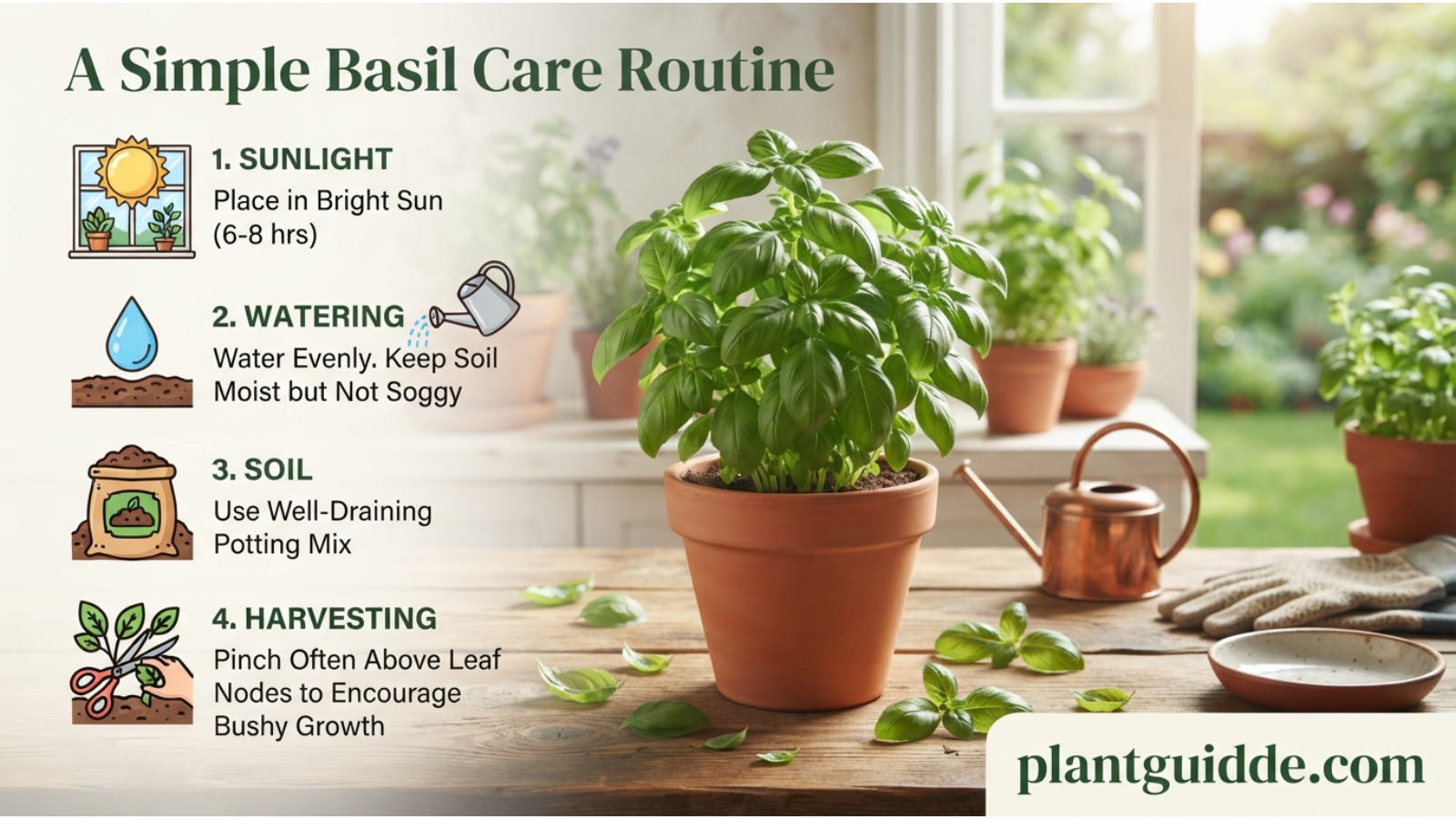
A Simple Basil Care Routine
You don’t need to inspect your basil constantly.
A practical routine is:
Every few days
- Check soil moisture.
- Look for wilting.
- Inspect new growth.
- Check underneath leaves for pests.
Weekly
- Harvest growing tips.
- Remove damaged leaves.
- Check whether the plant is becoming crowded.
- Rotate indoor plants if needed.
As needed
- Fertilize during active growth.
- Repot when the container becomes restrictive.
- Remove flower buds if growing primarily for leaves.
- Adjust the plant’s location if light or temperature changes.
This approach is more reliable than following a rigid “water every X days” schedule.
Basil Care Mistakes to Avoid
1. Watering automatically every day
Basil’s water needs change with temperature, pot size, sunlight, and humidity.
Better: Check the soil.
2. Keeping the soil constantly wet
Moisture is good; saturation is not.
Better: Use well-draining soil and a pot with drainage.
3. Growing basil in weak light
A bright-looking room may still provide insufficient light.
Better: Place basil close to a strong light source or supplement with a grow light.
4. Waiting too long to harvest
Tall stems become harder to manage.
Better: Start pinching growing tips once the plant is established.
5. Using fertilizer to fix every problem
Nutrients can’t compensate for poor lighting, bad drainage, or cold temperatures.
Better: Diagnose the environment first.
6. Ignoring flower buds
If you’re growing basil primarily for leaves, allowing repeated flowering can reduce the plant’s usefulness as a leafy herb.
Better: Pinch flower buds regularly.
7. Keeping plants too crowded
Dense foliage can restrict airflow.
Better: Give plants enough room for air to move around the leaves.
How to Care for Basil Through the Seasons
Spring
This is an excellent time to establish basil outdoors once temperatures are reliably warm.
Focus on:
- Increasing sunlight gradually
- Avoiding cold nights
- Maintaining consistent moisture
- Encouraging branching early
Summer
Basil can grow extremely quickly during warm weather.
Monitor soil moisture more frequently, especially in containers. Harvest regularly to keep the plant compact and productive.
Fall
Growth may slow as temperatures decline.
If your basil is in a container, consider moving it indoors before cold weather damages it.
Winter
Indoor basil usually needs more attention to light.
A sunny windowsill may not provide enough intensity, particularly in regions with short winter days. Supplemental lighting may be necessary for continued vigorous growth.
Can You Keep Basil Growing After Harvesting?
Yes. Basil is a renewable herb when harvested correctly.
Instead of cutting the entire plant down at once, harvest selected stems while leaving enough healthy foliage for continued photosynthesis and growth.
As the plant branches, continue harvesting the new tips.
This creates a cycle:
Grow → pinch → branch → harvest → grow again
That is one of the simplest ways to keep a basil plant productive for an extended period.
Can Basil Grow From Cuttings?
Yes. Basil is relatively easy to propagate from stem cuttings.
Choose a healthy stem, remove the lower leaves, and place the cutting in water or an appropriate propagation medium. Once roots develop sufficiently, the cutting can be transferred to soil.
Propagation is particularly useful when you have a healthy basil plant that you want to duplicate.
FAQs,
How often should I water a basil plant?
Water when the upper layer of soil begins to dry rather than following a fixed schedule. Water thoroughly and allow excess water to drain.
Does basil need full sun?
Basil generally grows best with around 6–8 hours of bright light. Outdoor basil can perform well in full sun, while indoor plants may need a very bright window or grow light.
Why is my basil plant dying?
Check the basics first: light, soil moisture, drainage, temperature, and pests. Both severe underwatering and prolonged overwatering can cause wilting and decline.
Should I remove basil flowers?
If your priority is continued leaf production, yes. Pinching flower buds helps keep the plant focused on vegetative growth. You can leave flowers if you want seeds or enjoy them for pollinators.
Can basil grow indoors?
Yes. Indoor basil can grow successfully when it receives enough light, has good drainage, stays warm, and is harvested regularly.
Why is my basil getting tall instead of bushy?
Insufficient light and lack of pruning are common causes. Move the plant to a brighter location and pinch growing tips above leaf pairs to encourage branching.
Can basil recover from wilting?
Often, yes, particularly when wilting is caused by temporary underwatering or heat stress. Check the soil before watering because wilting in consistently wet soil can indicate a different problem.
Does basil need fertilizer?
Basil benefits from adequate nutrients during active growth, especially when grown repeatedly in containers. However, fertilizer should complement—not replace—good light, moisture, drainage, and temperature.
What is the best soil for basil?
Use a fertile, loose, well-draining potting mix that retains some moisture without becoming waterlogged.
Final Basil Care Checklist
For healthy, productive basil, remember these essentials:
- ☀️ Give it plenty of bright light.
- 💧 Keep soil evenly moist but not saturated.
- 🪴 Use a container with drainage holes.
- 🌱 Choose loose, well-draining soil.
- 🌡️ Protect basil from cold temperatures.
- ✂️ Harvest and pinch growing tips regularly.
- 🌸 Remove flower buds when growing primarily for leaves.
- 🌬️ Maintain good airflow around the foliage.
- 🔎 Check regularly for pests and unusual symptoms.
- 🌿 Diagnose the environment before reaching for fertilizer.
Conclusion
Learning how to take care of a basil plant becomes much easier when you stop thinking of basil care as a strict watering schedule and start paying attention to the plant’s growing conditions.
Give basil strong light, warm temperatures, well-draining soil, consistent moisture, and regular harvesting. When something goes wrong, don’t treat the symptom immediately, check the soil, roots, light, temperature, and foliage to identify the underlying cause.
The most productive basil plants aren’t necessarily the ones receiving the most attention. They’re the ones growing in a stable environment with the right balance of light, water, warmth, nutrition, and pruning.

Asad Mumtaz is a dedicated plant enthusiast and gardening writer with a passion for helping people care for their plants successfully. He specializes in plant care guides, indoor gardening, and practical growing tips for all skill levels. His content focuses on making gardening simple, enjoyable, and rewarding. Through his work, Asad shares reliable advice to help readers create thriving green spaces.