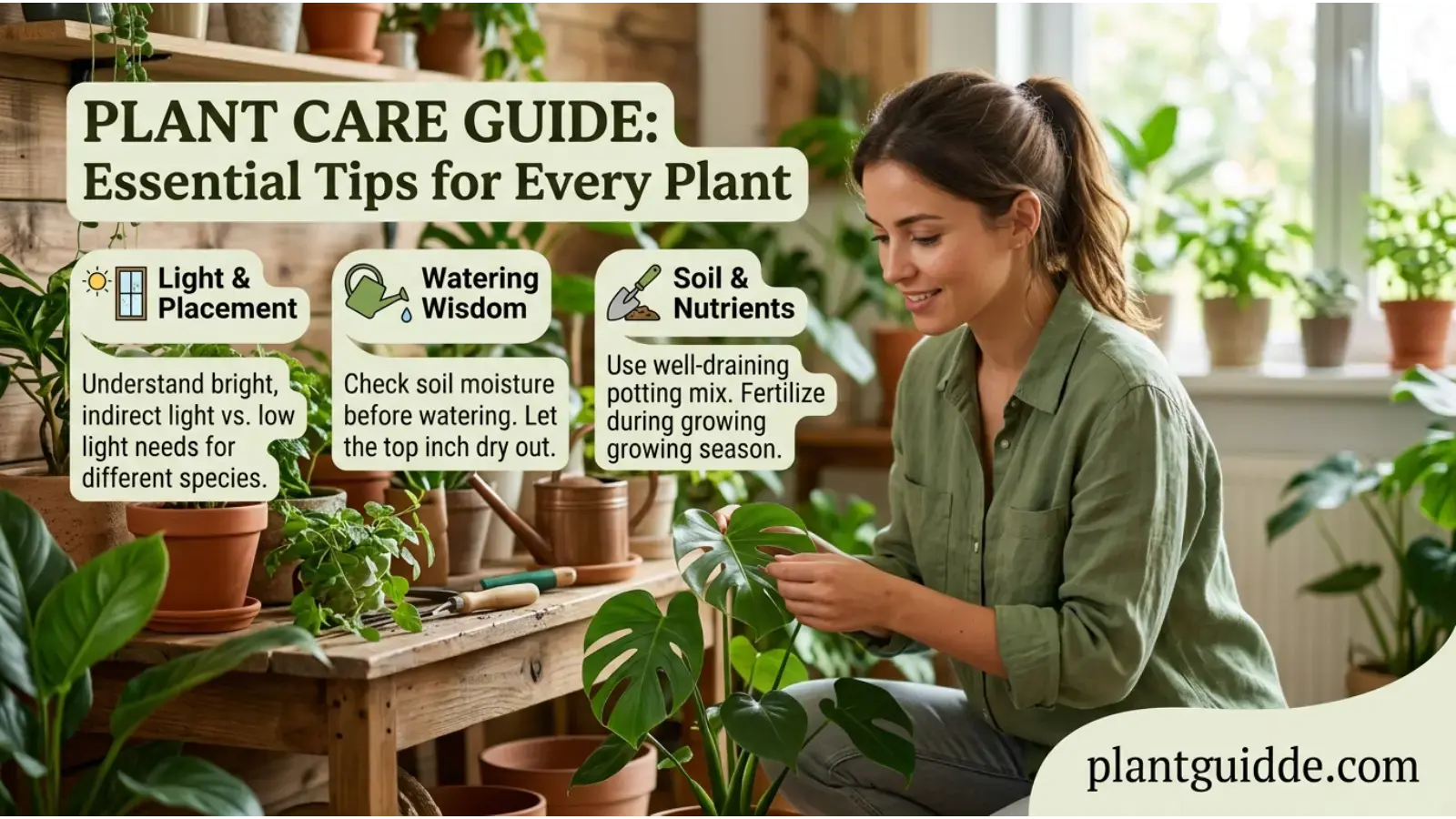
Plant care guide for plants can seem complicated when every species appears to have different requirements. One plant may tolerate weeks without water, while another wilts quickly when its soil becomes too dry.
Some thrive in bright windows, while others develop leaf scorch when exposed to intense direct sunlight.
The key is to stop treating plant care as a fixed routine. A reliable plant care guide should help you understand what your plant needs, recognize changes in its condition, and adjust your care accordingly.
Whether you are caring for a snake plant, pothos, monstera, peace lily, jade plant, herbs, flowering plants, or tropical houseplants, the same basic principles provide a strong starting point.
Quick Answer
A good plant care guide starts with understanding a plant’s natural needs rather than following a rigid watering schedule. Most houseplants need the right balance of light, water, soil, drainage, temperature, humidity, and nutrition.
Observe the leaves and soil regularly, adjust care as conditions change, and fix problems early before they become serious.
Understand Your Plant Before Changing Its Care
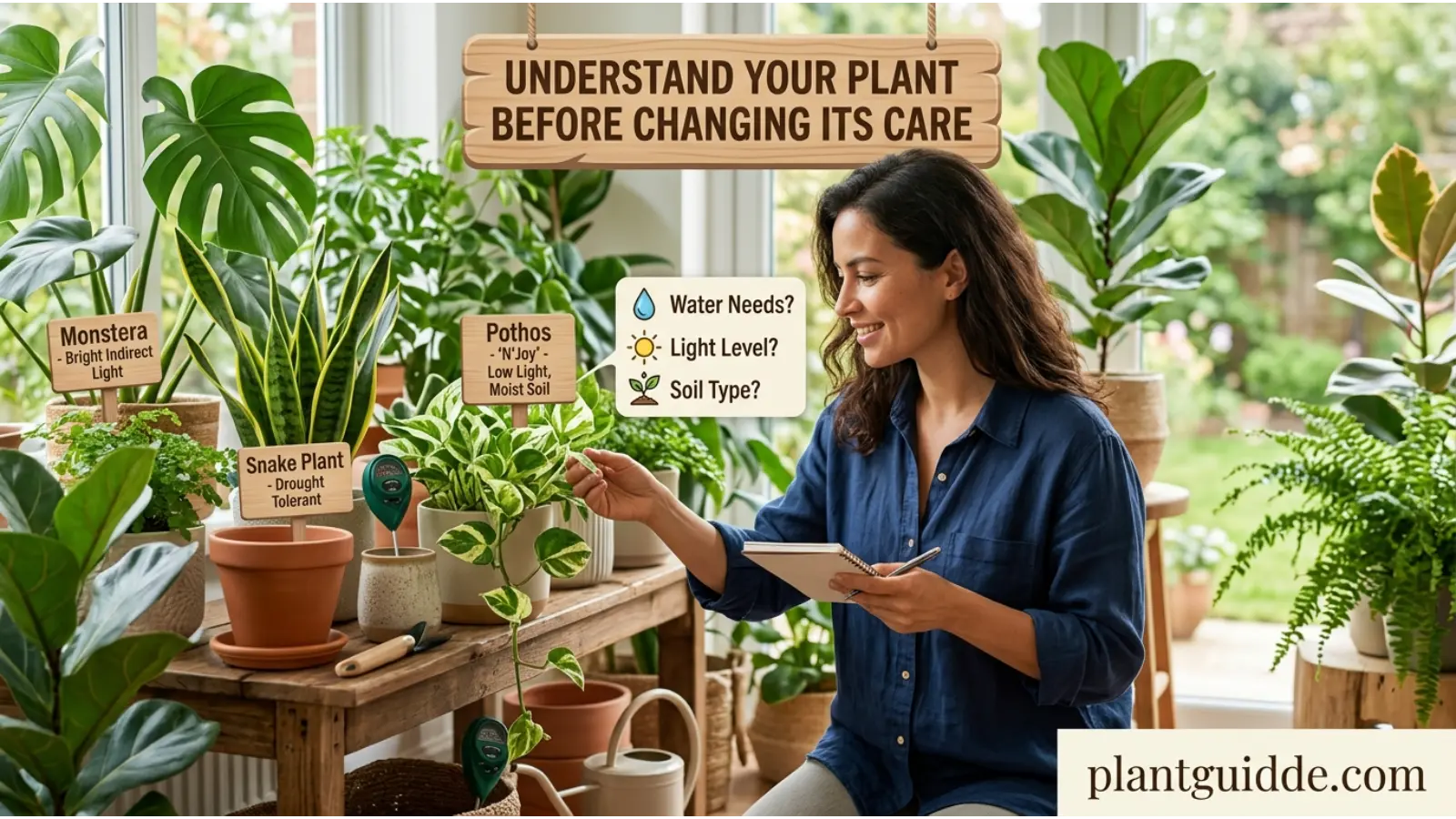
The first step is identifying the plant correctly. Common names can refer to several different plants, and care requirements can vary significantly between species.
Once you know the plant, find out:
- Whether it naturally grows in tropical, arid, temperate, or Mediterranean conditions
- How much light it receives in its natural habitat
- Whether it prefers consistently moist or periodically dry soil
- How its roots are adapted to moisture
- Whether it naturally experiences high humidity
- Its typical temperature range
- Whether it grows actively during certain seasons
This information gives you a better starting point than copying a watering schedule from another plant.
For example, a jade plant stores water in its leaves and stems, so constantly moist soil can create problems. A tropical plant with thin leaves may lose moisture much faster and require more consistent watering.
Light Is the Foundation of Plant Health
Light provides the energy plants need for photosynthesis, making it one of the most important parts of plant care.
However, “more light” does not always mean “better.” The correct amount depends on the species.
Bright Indirect Light
Bright indirect light is common for many popular houseplants. Place the plant near a bright window where it receives plenty of daylight without prolonged exposure to harsh direct afternoon sun.
Plants that prefer this environment may include many:
- Pothos
- Monsteras
- Peace lilies
- Prayer plants
- Chinese evergreens
- Dracaenas
Direct Sunlight
Some plants need several hours of direct sunlight to remain compact and vigorous. Succulents, many herbs, and numerous flowering plants generally require considerably more light than shade-tolerant houseplants.
A sunny windowsill can be excellent, but glass can intensify heat. Watch for pale, bleached, or scorched leaves after moving a plant into stronger light.
Low Light
Low-light tolerance is often misunderstood.
A plant described as tolerant of low light may survive there, but that does not necessarily mean it will grow vigorously. Growth can become slower, leaves may become smaller, and variegated plants may lose some of their patterns.
Plant care guide a plant is becoming unusually stretched or producing smaller new leaves, insufficient light may be part of the problem.
Practical tip: Instead of asking whether a room is “bright,” look at where the plant actually sits. A bright room can still have a surprisingly dark corner several feet away from a window.
Water Plants According to Their Needs
Watering is one of the most common causes of plant problems.
The mistake is usually not watering too much or too little in isolation. It is watering according to a calendar instead of the plant’s actual conditions.
Temperature, light, pot size, soil composition, humidity, season, and root health all affect how quickly soil dries.
Before watering, check the soil and consider the plant’s characteristics.
For many houseplants, insert your finger a few centimeters into the soil. Plant care guide the upper layer is dry but the plant prefers consistently moist conditions, it may be ready for water. If the species prefers drying between waterings, allow a greater portion of the soil to dry first.
When you water a typical container plant:
- Water thoroughly rather than adding a tiny amount every day.
- Allow excess water to drain from the bottom.
- Empty standing water from a saucer when appropriate.
- Avoid letting the pot sit continuously in stagnant water.
- Check the soil again before the next watering.
Why a Fixed Watering Schedule Fails
“Water every seven days” sounds convenient, but plants do not use water at exactly the same rate every week.
A plant near a sunny window in summer may dry rapidly. The same plant may remain wet much longer during a cool, darker winter.
Instead of writing “water every Sunday,” use a routine such as:
Check the plant weekly → inspect the soil → assess the leaves → water if needed.
That approach is much more reliable.
Choose Soil That Matches the Plant
Potting soil is not simply something that holds a plant upright. It controls moisture, air movement, root support, and drainage.
Different plants need different soil structures.
A tropical foliage plant may benefit from a moisture-retentive but airy potting mix. Succulents and many drought-tolerant plants generally need a faster-draining medium that does not stay saturated for long periods.
A useful potting mix should provide:
- Adequate moisture retention for the species
- Air spaces around the roots
- Good drainage
- Structural stability
- Appropriate organic matter
Dense soil that stays wet for too long can reduce oxygen around the roots and increase the risk of root problems.
Drainage Matters More Than Many Beginners Realize
A container with drainage holes gives excess water somewhere to escape.
Decorative pots without drainage can still be used as outer covers, but the plant should generally remain in an appropriate nursery pot or inner container that allows excess water to drain.
Do not assume that adding a layer of gravel at the bottom automatically fixes poor drainage. The more important factors are the container’s drainage holes and the structure of the growing medium.
Pick the Right Pot Size
A larger pot is not automatically better.
An oversized container can hold more wet soil around a relatively small root system. If the plant cannot use that moisture quickly, the soil may remain wet for too long.
When repotting, choose a container only moderately larger than the existing root system unless the plant has a specific reason to need more space.
Signs that a plant may need repotting include:
- Roots densely circling the root ball
- Roots emerging from drainage holes
- Soil drying unusually quickly
- Noticeably restricted growth
- A root-bound plant becoming difficult to water evenly
- Soil that has broken down significantly
Repotting should solve a root or soil problem, not simply be performed because the calendar says it is time.
Humidity Can Matter for Tropical Plants
Humidity is especially relevant for plants adapted to tropical or subtropical environments.
Low humidity may contribute to:
- Brown leaf tips
- Crispy edges
- Curling leaves
- Increased moisture loss
- Stress in sensitive tropical plants
However, raising humidity is not always the first solution.
Before buying a humidifier, check whether the plant is also suffering from underwatering, excessive fertilizer, salt accumulation, root damage, cold drafts, or intense direct sunlight.
For humidity-sensitive plants, a humidifier can provide a more consistent environment than occasional misting.
Good airflow is also important. High humidity combined with stagnant air and constantly wet foliage can create an environment favorable to disease problems.
Temperature and Location Matter
Most common houseplants perform best when protected from extreme temperature changes.
Avoid placing sensitive plants directly beside:
- Heating vents
- Air-conditioning vents
- Frequently opened exterior doors
- Very cold windows
- Hot appliances
- Strong drafts
A plant may tolerate a temperature range but still react badly to sudden changes.
Location should therefore be selected based on the combination of light, temperature, airflow, and humidity, not light alone.
Fertilize According to Growth
Plants need nutrients, but more fertilizer does not necessarily produce healthier growth.
During active growth, many container plants benefit from appropriate fertilization because repeated watering can gradually reduce available nutrients in the potting medium.
Follow the fertilizer’s directions and consider:
- Plant species
- Growth stage
- Season
- Potting medium
- Fertilizer concentration
- Recent repotting
Avoid fertilizing a severely stressed plant simply because its leaves look unhealthy. If roots are damaged or the plant is struggling because of poor light or watering, additional fertilizer may make the situation worse.
Signs of Possible Fertilizer Problems
Excess fertilizer can contribute to:
- Brown leaf margins
- Leaf-tip burn
- Salt buildup on soil
- Root stress
- Poor growth
Plant care guide fertilizer salts accumulate, appropriate flushing with clean water may help some container plants, provided the pot has adequate drainage and the plant’s needs allow it.
Pruning Keeps Plants Manageable and Healthy
Pruning is useful for removing damaged growth, controlling shape, encouraging branching in suitable plants, and improving appearance.
Use clean, sharp tools when cutting plants.
Remove leaves that are completely dead or severely damaged, but do not automatically remove every leaf with a small brown spot. A partially damaged leaf can still contribute to photosynthesis.
For many branching plants, strategic pruning just above an appropriate growth point can encourage new shoots.
Always consider the species before making major cuts because some plants respond to pruning much better than others.
Clean Leaves When Necessary
Dust can accumulate on broad houseplant leaves, particularly in indoor environments.
A gentle cleaning can improve the plant’s appearance and make it easier to inspect for pests.
Use plain water and a soft cloth when appropriate for the species. Avoid routinely applying household cleaning products, oils, or leaf-shine products unless they are specifically designed and safe for the plant.
While cleaning, inspect the underside of leaves and along stems for:
- Webbing
- Scale-like bumps
- Sticky residue
- Cottony material
- Tiny insects
- Discoloration
Leaf cleaning can therefore become part of pest monitoring as well as general maintenance.
Check Plants Regularly for Pests
Common houseplant pests include spider mites, mealybugs, scale insects, aphids, and fungus gnats.
Early detection makes management much easier.
During a weekly inspection, check:
- New growth
- Leaf undersides
- Stem joints
- Soil surface
- Areas where leaves overlap
A few pests are easier to manage than a widespread infestation.
Plant care guide you bring a new plant into a collection, inspect it carefully before placing it close to established plants. Quarantining new plants for a period can reduce the chance of introducing pests to the rest of your collection.
Learn What Leaves Are Telling You
Plants often show stress through their leaves before the underlying problem becomes severe.
Yellow Leaves
Yellowing can have several causes, including:
- Overwatering
- Poor drainage
- Aging leaves
- Insufficient light
- Root problems
- Nutrient issues
Do not diagnose the problem from color alone. Check the soil, roots, light exposure, recent changes, and the location of the affected leaves.
Brown Leaf Tips
Brown tips can result from:
- Dry soil
- Low humidity
- Salt buildup
- Excess fertilizer
- Root stress
- Environmental fluctuations
A single symptom can have multiple causes, which is why plant diagnosis requires looking at the entire growing environment.
Drooping
Drooping may indicate underwatering, but it can also occur when roots are damaged by excessive moisture.
Check the soil before automatically adding water.
If the soil is extremely wet and the plant is still drooping, adding more water may make the problem worse.
Curling Leaves
Curling may be associated with:
- Water stress
- Excessive heat
- Strong sunlight
- Low humidity
- Pest activity
- Root problems
Look for other symptoms before deciding what action to take.
Leggy or Stretched Growth
Long spaces between leaves often indicate that a plant is not receiving enough usable light.
Moving it closer to an appropriate light source can help, although severely stretched existing growth will not necessarily return to its previous compact form.
Seasonal Plant Care Requires Adjustments
Plant care should change with the environment.
Spring and Summer
Many plants experience stronger growth during warmer, brighter months. They may require:
- More frequent watering
- Regular feeding
- Pruning
- Repotting when appropriate
- Increased monitoring for pests
However, increased watering should still be based on soil moisture rather than the season alone.
Fall and Winter
Lower light and cooler conditions can slow growth.
You may need to:
- Reduce watering frequency
- Move plants away from cold windows
- Protect tropical plants from drafts
- Reduce or pause fertilizer for plants that are no longer actively growing
- Monitor for dry indoor air
One of the most common winter mistakes is continuing a summer watering routine when the plant is using significantly less water.
A Simple Weekly Plant Care Routine
You do not need to spend hours caring for houseplants.
A short weekly inspection can prevent many problems.
Step 1: Inspect the Leaves
Look for yellowing, browning, curling, spots, pests, or unusual new growth.
Step 2: Check the Soil
Feel the soil rather than watering automatically.
Step 3: Check the Light
Make sure the plant has not been moved into a significantly darker or hotter position.
Step 4: Inspect the Pot
Make sure drainage holes are not blocked and that excess water is not sitting around the roots.
Step 5: Look for Pests
Check the underside of leaves and new growth.
Step 6: Record Important Changes
For plants that are difficult to manage, note watering dates, repotting, fertilization, and major environmental changes.
This can help you identify patterns instead of relying on memory.
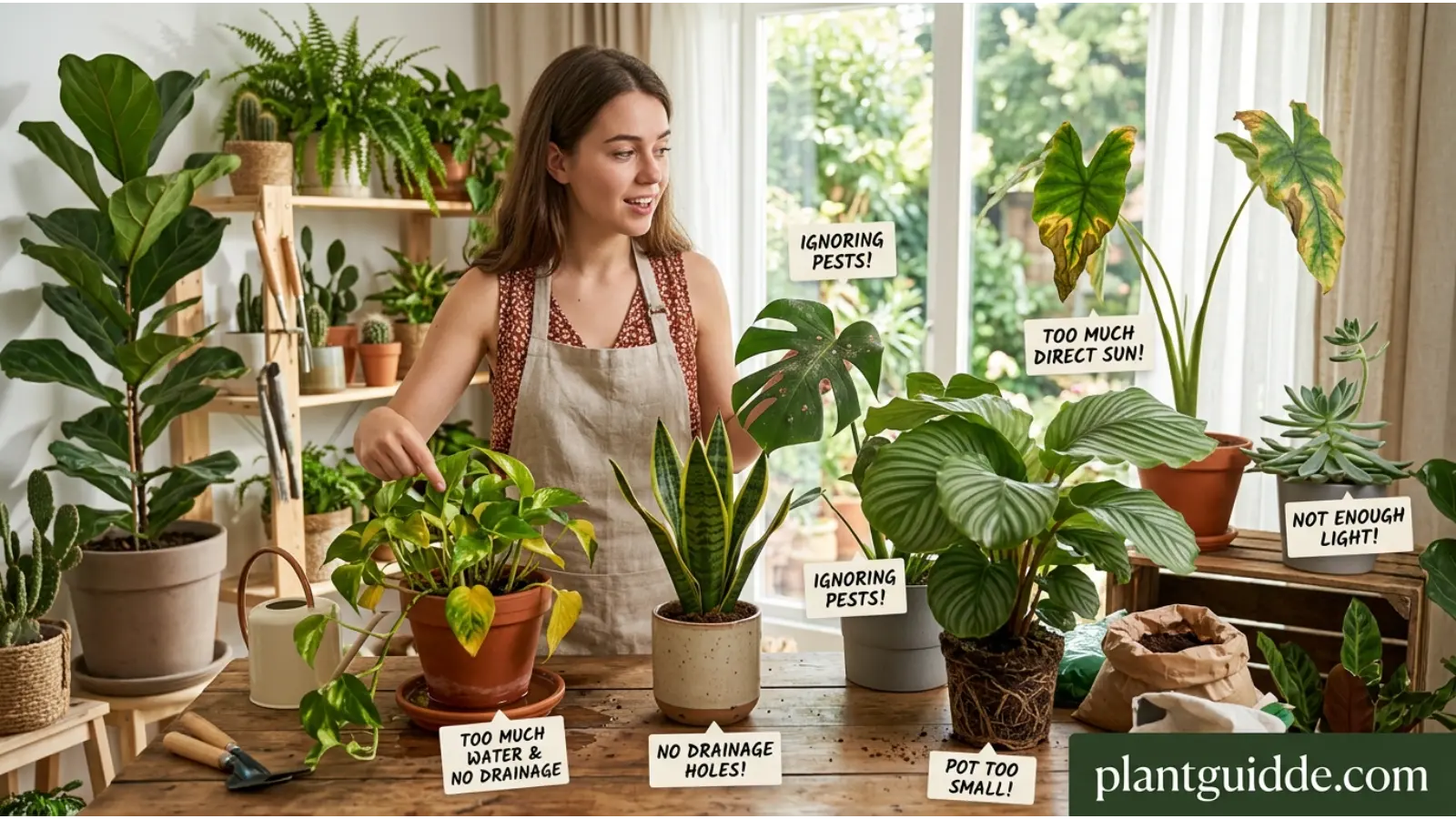
Common Plant Care Mistakes to Avoid
Watering on a Calendar
A schedule is useful as a reminder to check plants, but it should not determine whether a plant actually receives water.
Keeping Soil Constantly Wet
Moisture-loving does not always mean waterlogged. Roots also need access to oxygen.
Putting Every Plant Near the Same Window
Different species have different light requirements. A sunny windowsill that works for herbs may be too intense for a shade-adapted tropical plant.
Using a Decorative Pot Without Considering Drainage
A beautiful container cannot compensate for poor drainage.
Repotting Too Frequently
Repotting can disturb roots unnecessarily. Do it when the plant and growing medium actually require it.
Fertilizing a Stressed Plant
Nutrients cannot compensate for poor light, damaged roots, incorrect watering, or unsuitable temperatures.
Ignoring the Roots
Leaf symptoms are useful clues, but persistent problems sometimes require inspecting the root system.
Treating Every Yellow Leaf as Overwatering
Older leaves naturally age and decline. Look at the pattern and overall health of the plant before diagnosing a problem.
How to Diagnose a Struggling Plant
When a plant suddenly looks unhealthy, avoid changing five things at once.
Use a simple troubleshooting process:
Observe → identify the change → check the environment → inspect the roots if necessary → make one reasonable adjustment → monitor the response.
For example, if a plant is drooping, first check the soil. If the soil is dry, watering may be appropriate. If it is saturated, investigate drainage and root health instead.
Plant care guide the plant developed problems shortly after being moved, compare its previous and current light, temperature, airflow, and watering conditions.
This approach is more reliable than applying a random treatment.
How to Create the Best Environment for Indoor Plants
A healthy indoor plant setup usually depends on several factors working together.
Think of plant care as a system:
Light → photosynthesis → growth → water use → soil moisture → root health → nutrient uptake → new growth
Changing one part affects the others.
For example, increasing light can increase photosynthesis and water use. A plant may therefore dry faster after being moved closer to a bright window.
Likewise, moving a plant into a cooler, darker room may reduce water consumption. Continuing the same watering routine could leave the soil wet for much longer.
Understanding these relationships makes plant care much easier.
Beginner-Friendly Plant Care Checklist
Use this checklist when caring for almost any houseplant:
- Identify the plant correctly.
- Find out its preferred light level.
- Check soil moisture before watering.
- Use a container with suitable drainage.
- Choose a potting mix appropriate for the species.
- Avoid sudden environmental changes.
- Provide suitable temperature and airflow.
- Fertilize according to active growth and plant needs.
- Inspect leaves and stems for pests.
- Remove dead or severely damaged growth.
- Adjust care as seasons change.
- Watch new growth for evidence that your changes are working.
FAQs:
How often should I water my plants?
There is no universal watering schedule. Check the soil and consider the plant species, pot size, light, temperature, humidity, and season. Water thoroughly when the plant actually needs it rather than automatically watering on a fixed day.
What is the most important part of plant care?
Light is one of the most important factors because it provides the energy plants need for photosynthesis. However, healthy growth depends on several factors working together, including appropriate water, soil, drainage, temperature, nutrients, and humidity.
Why are my plant leaves turning yellow?
Yellow leaves can result from overwatering, poor drainage, insufficient light, nutrient problems, root damage, or normal aging. Check the soil and the overall pattern of yellowing before deciding on a treatment.
Can a plant recover from overwatering?
A plant can sometimes recover if the problem is identified early. Allowing appropriate drying, improving drainage, and correcting the watering routine may help. If roots have suffered significant damage, the plant may need root inspection and removal of unhealthy tissue.
Should I mist my houseplants?
Misting can temporarily increase moisture on leaf surfaces, but it does not necessarily provide lasting humidity. For plants that genuinely need higher humidity, a humidifier or a naturally humid growing location is generally more consistent. Good airflow remains important.
Final Thoughts
Successful plant care is less about following a perfect routine and more about learning how your plant responds to its environment. Start with the correct light, appropriate watering, well-draining soil, suitable temperature, and a container that supports healthy roots.
Then pay attention to the plant itself. New growth, leaf color, soil moisture, and changes in appearance provide useful clues about what is happening below the surface.
The most useful plant care guide is ultimately one that helps you observe, understand, and adjust rather than simply follow instructions. Start with one plant, learn its normal behavior, and make changes gradually. That habit will make caring for an entire collection much easier.

Asad Mumtaz is a dedicated plant enthusiast and gardening writer with a passion for helping people care for their plants successfully. He specializes in plant care guides, indoor gardening, and practical growing tips for all skill levels. His content focuses on making gardening simple, enjoyable, and rewarding. Through his work, Asad shares reliable advice to help readers create thriving green spaces.