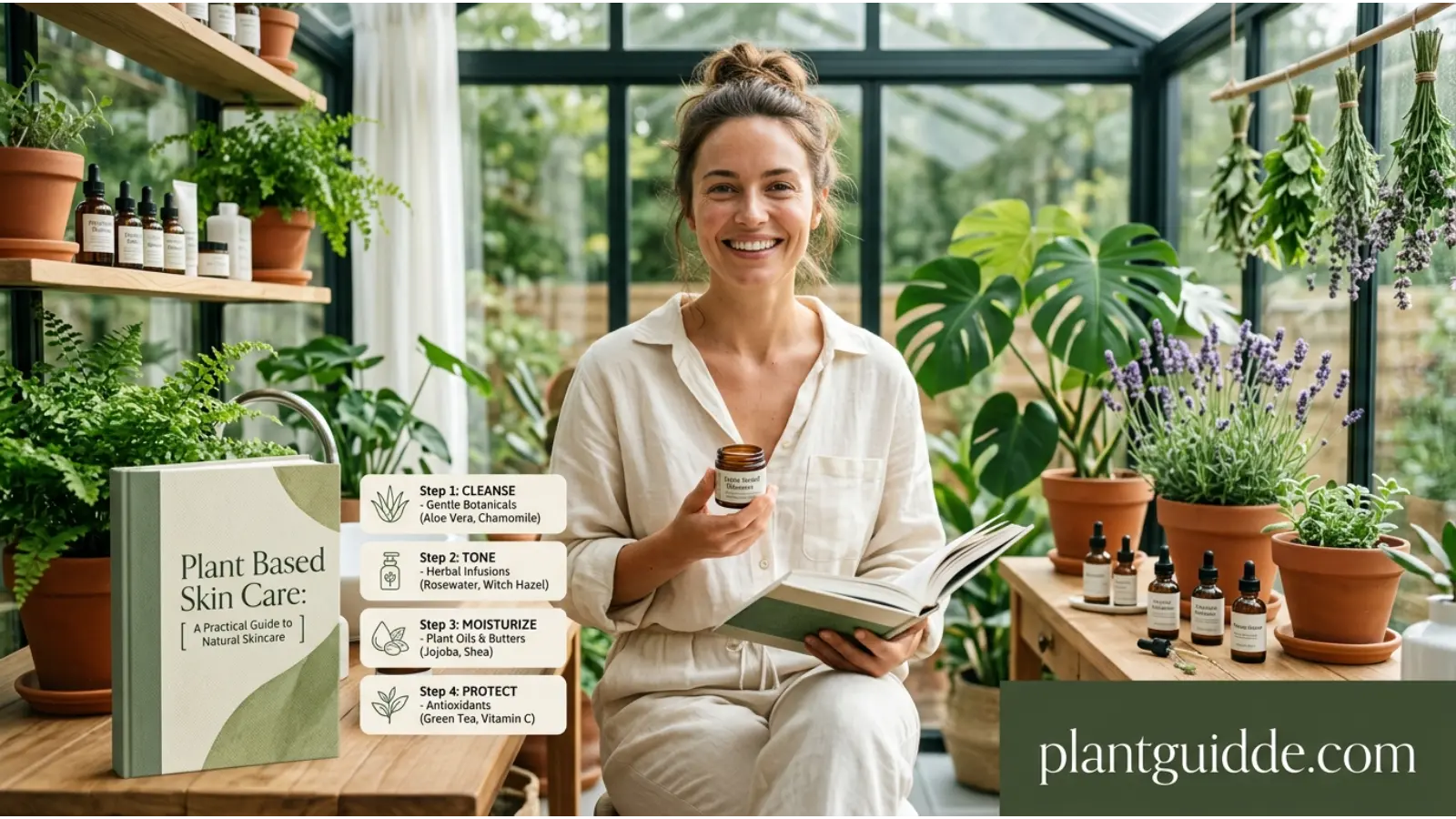
Plant based skin care has become popular among people who want simpler routines, botanical ingredients, and alternatives to heavily fragranced or unnecessarily complicated products.
But “plant-based” does not automatically mean gentle, chemical-free, safer, or better for every skin type.
Plants contain useful compounds, but they can also contain substances capable of causing irritation or allergic reactions.
The U.S. FDA notes that an ingredient’s natural or organic source does not determine its safety, while dermatologists recommend testing new skincare products before adding them to a routine.
The goal, therefore, is not to choose a product simply because it says plant based. It is to understand which botanical ingredients may be useful, how they are formulated, and how your own skin responds.
Quick Answer
Plant based skin care uses ingredients derived from plants, such as aloe vera, jojoba, shea butter, green tea, oat, and botanical extracts, to cleanse, moisturize, soothe, and support the skin.
The best approach is not simply choosing products labeled “natural,” but selecting well-formulated products that match your skin type, checking the ingredient list, and patch-testing new products before regular use.
What Is Plant Based Skin Care?
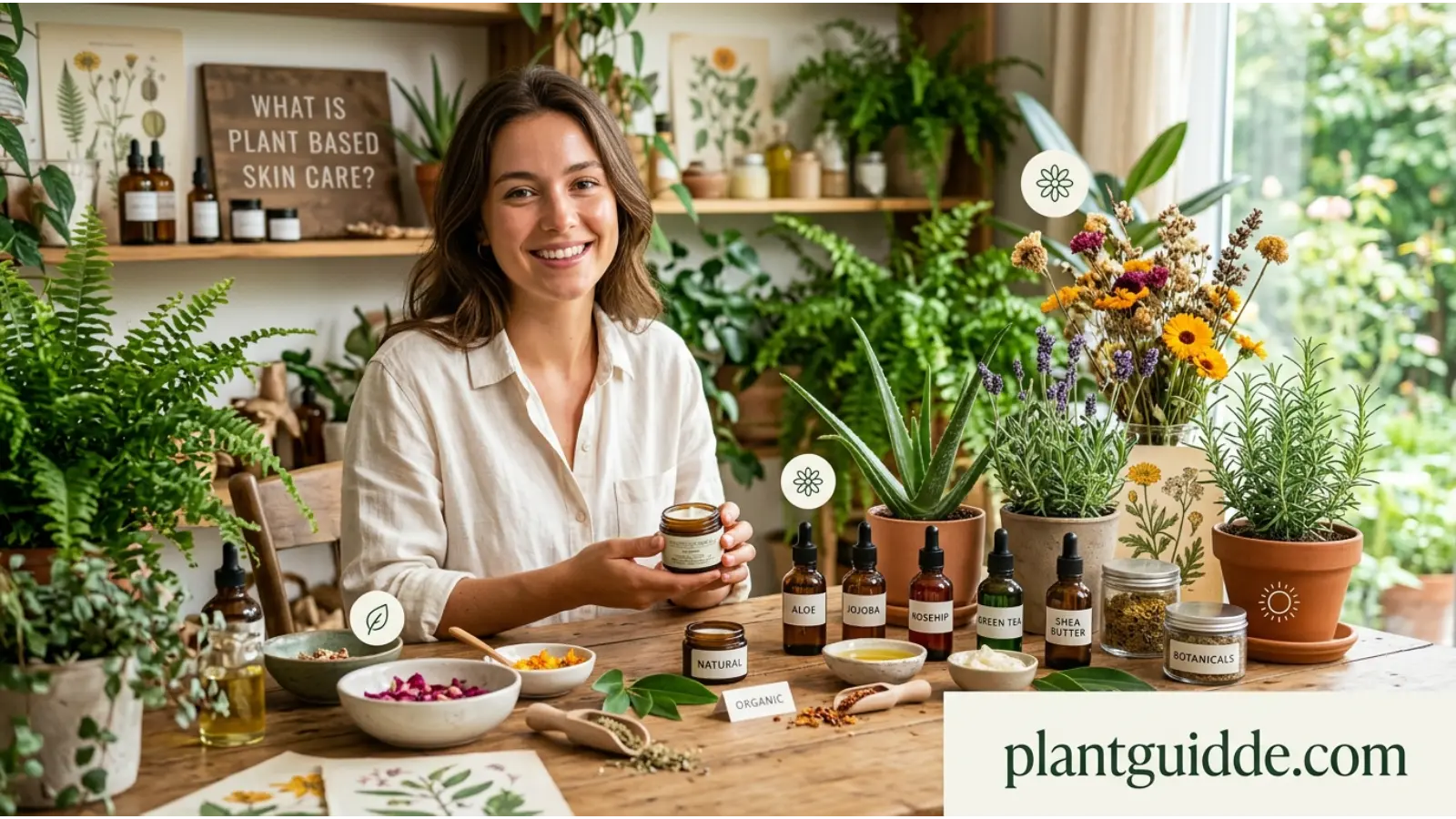
Plant based skin care refers broadly to skincare products formulated with ingredients derived partly or primarily from plants. Depending on the product, these may include plant oils, butters, waxes, extracts, hydrosols, fermented botanical ingredients, or purified compounds originally obtained from plants.
Common examples include:
- Aloe vera
- Jojoba oil
- Shea butter
- Sunflower oil
- Rosehip oil
- Green tea extract
- Chamomile
- Calendula
- Oat extracts
- Licorice root
- Coconut-derived ingredients
- Tea tree oil
- Grapeseed oil
Importantly, a plant-based product does not necessarily contain only plant ingredients. A finished cosmetic may require preservatives, emulsifiers, stabilizers, surfactants, or other ingredients to remain safe and effective.
That is not automatically a problem. In fact, formulation is one of the most important differences between a carefully developed botanical skincare product and a homemade mixture of raw plant ingredients.
How Plant Based Skin Care Can Benefit Your Routine
The benefits depend heavily on the individual ingredient and the finished formulation rather than the phrase “plant based” itself.
Plant oils can support moisturization
Some plant oils help reduce moisture loss and improve the skin’s soft, comfortable feel. Jojoba, sunflower, squalane from plant sources, and certain seed oils are commonly used in moisturizers and facial products.
However, an oil is not necessarily a complete moisturizer. A well-formulated moisturizer may combine water, humectants, emollients, and occlusive ingredients to address different aspects of hydration.
Botanical extracts can provide useful compounds
Plants contain naturally occurring compounds such as polyphenols, flavonoids, fatty acids, vitamins, and other phytochemicals. Depending on the plant and extraction method, these compounds may be incorporated into skincare formulations for their antioxidant, conditioning, soothing, or sensory properties.
The important distinction is that laboratory activity does not automatically prove that a particular finished skincare product will produce the same benefit on human skin.
Some plant ingredients can be soothing
Ingredients such as colloidal oatmeal, aloe vera, and certain botanical extracts are often used in products designed for dry or uncomfortable skin.
Aloe is a good example of why evidence and formulation matter. Research suggests topical aloe gel is generally well tolerated, but burning, itching, rash, and eczema have occasionally been reported.
Plant-based formulas can fit a minimalist routine
If your goal is a simpler skincare routine, plant-derived ingredients can be part of it. But simplicity should mean fewer unnecessary steps and better ingredient selection—not automatically replacing every conventional cosmetic ingredient with a botanical alternative.
Plant Based Does Not Mean Chemical-Free
“Chemical-free” is one of the most misleading ideas associated with natural skincare.
Everything is made of chemicals, including water, plant oils, aloe vera, and the compounds naturally present in botanical extracts.
A more useful question is:
Is the ingredient appropriate, well formulated, and tolerated by my skin?
The FDA does not have a formal cosmetic definition for “natural,” and it specifically cautions consumers not to assume that natural or organic ingredients are safer simply because they come from plants.
This distinction is especially important when comparing conventional and plant based skin care. A synthetic ingredient can be well tolerated by one person, while a botanical extract can cause irritation in another.
Best Plant Based Ingredients to Look For
There is no single “best” plant ingredient. The right choice depends on your skin’s needs.
| Ingredient | Common skincare role | Often useful for |
|---|---|---|
| Aloe vera | Hydrating, soothing | Dry or uncomfortable skin |
| Jojoba oil | Emollient | Normal to dry skin |
| Shea butter | Rich emollient | Dry, rough skin |
| Sunflower oil | Emollient | Dry or compromised-feeling skin |
| Green tea extract | Antioxidant botanical | General skincare |
| Colloidal oatmeal | Skin-soothing, moisturizing | Dry or sensitive-feeling skin |
| Licorice extract | Botanical skin-conditioning ingredient | Uneven-looking skin |
| Rosehip oil | Emollient | Dry or mature-feeling skin |
| Calendula | Botanical soothing ingredient | Products for dry or sensitive-feeling skin |
| Grapeseed oil | Lightweight emollient | Normal to oily-feeling skin |
These descriptions refer to common cosmetic uses and should not be interpreted as promises to treat a medical skin condition.
How to Choose Plant Based Skin Care for Your Skin Type
Choosing by skin type is usually more useful than choosing based only on whether a product is natural.
For dry skin
Look for products containing a combination of:
- Plant oils
- Plant butters
- Humectants
- Ceramide-containing formulas
- Gentle cleansers
- Occlusive ingredients
A rich cream may be more useful than a facial oil alone because it can provide several types of moisturizing support.
For oily or combination skin
Choose lighter textures such as:
- Lightweight lotions
- Gel moisturizers
- Non-greasy emulsions
- Products with lightweight botanical oils
Avoid assuming that every plant oil is suitable simply because it is natural. The overall formula and your individual response matter more than the source of the ingredient.
For sensitive skin
This is where “natural” marketing deserves the most caution.
Instead of choosing products based on the number of botanical ingredients, consider simpler formulas with fewer potential irritants. Fragrance and essential oils deserve particular attention because plant-derived fragrance ingredients can still trigger irritation or allergic contact dermatitis. The American Academy of Dermatology also cautions that products described as “unscented” or containing botanical ingredients may still contain fragrance-related ingredients.
For mature-looking skin
A practical routine should focus on consistent moisturization, gentle cleansing, and daily sun protection. Plant-derived antioxidants can be useful additions, but they should complement—not replace—the fundamentals of skincare.
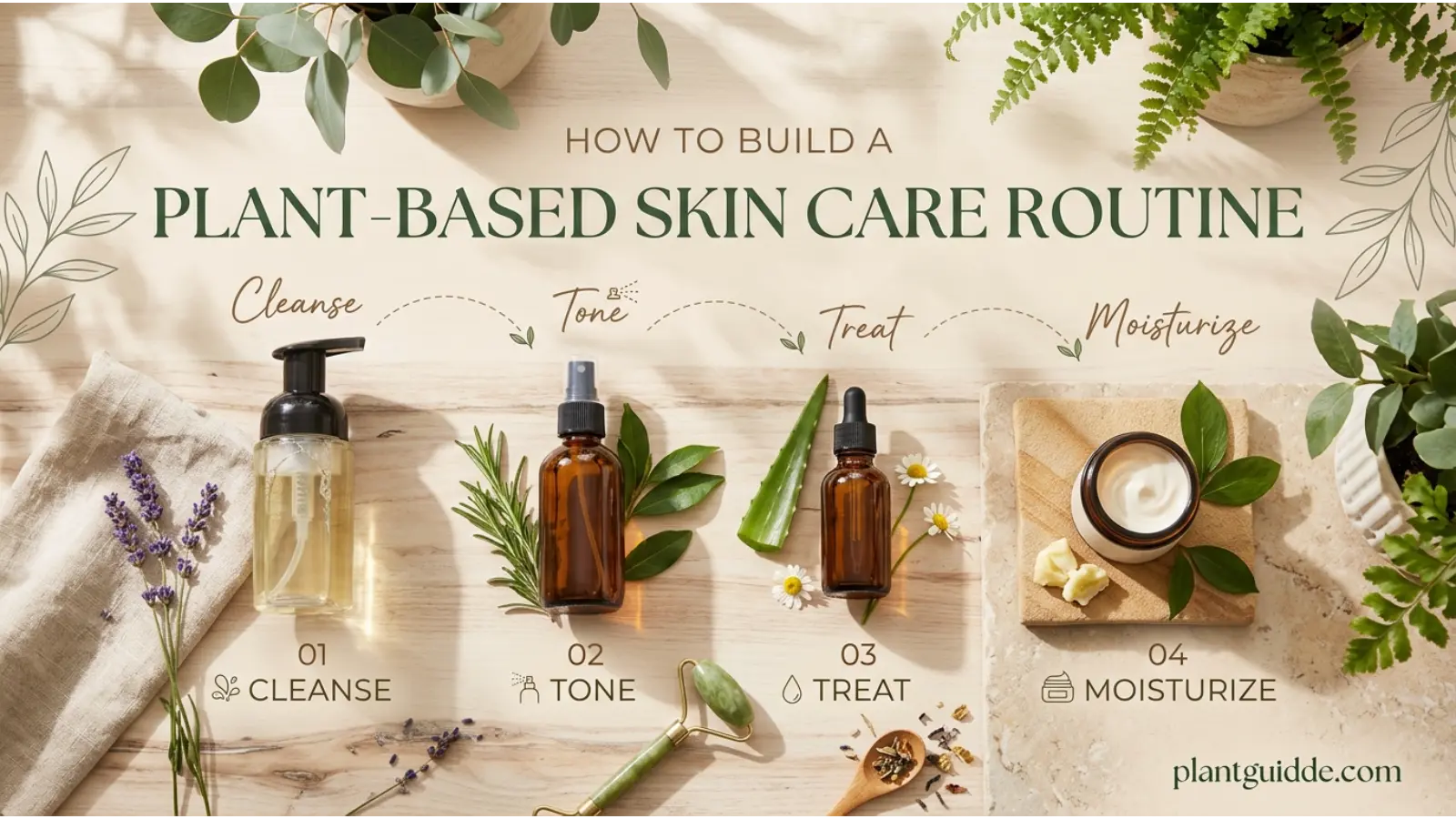
How to Build a Plant Based Skin Care Routine
You do not need ten botanical products to create an effective routine.
Morning
1. Cleanse gently
Use a mild cleanser if your skin needs cleansing in the morning. If cleansing leaves your face tight or uncomfortable, the product may be too harsh or the routine may be excessive.
2. Apply a targeted product if needed
This might be a botanical serum or another product chosen for a specific concern.
3. Moisturize
Use a moisturizer appropriate for your skin type. Plant-derived oils or extracts can be included, but the complete formula matters.
4. Finish with sunscreen
Daily broad-spectrum sunscreen is one of the most important parts of a daytime skincare routine. A plant-based routine should not mean skipping sun protection.
Evening
1. Remove sunscreen and makeup
Use a suitable cleanser or cleansing method rather than aggressively rubbing the skin.
2. Apply treatment products
Introduce only products that have a clear purpose for your routine.
3. Moisturize
Use a moisturizer that leaves the skin comfortable without excessive heaviness.
The best routine is usually the one you can follow consistently without causing irritation.
How to Patch-Test Plant Based Skin Care
Patch testing is particularly useful when trying a new botanical product because natural ingredients can still cause irritation or allergy.
The American Academy of Dermatology recommends applying a new skincare product to a small test area twice daily for seven to 10 days before using it more broadly. If redness, itching, swelling, or another reaction develops, stop using the product.
A simple approach is:
- Choose a small area such as the inner arm.
- Apply the product according to its normal directions.
- Repeat the test as recommended.
- Watch for redness, itching, burning, swelling, or a rash.
- Stop using the product if a reaction develops.
- If the reaction is severe or persistent, seek medical advice.
If you repeatedly develop unexplained reactions to skincare products, a dermatologist may recommend formal patch testing to identify contact allergens.
Common Mistakes With Plant Based Skin Care
Assuming natural means safe
This is probably the biggest mistake.
Poison ivy is natural. Certain essential oils can irritate skin. Some plant compounds can trigger allergic reactions.
The source of an ingredient tells you where it came from—not whether your skin will tolerate it.
Using essential oils directly on the face
Essential oils are highly concentrated. Applying them directly to skin can cause irritation or allergic reactions, and some citrus oils can create additional problems when skin is exposed to sunlight.
A properly formulated cosmetic product is very different from putting concentrated essential oil directly onto your face.
Making complicated DIY recipes
Fresh aloe, kitchen oils, fruit mixtures, herbal infusions, and homemade creams may sound appealing, but water-containing homemade products can have preservation and contamination problems.
If you make or use homemade cosmetics, cleanliness, formulation, storage, and preservation are important safety considerations. The FDA notes that cosmetic products can become contaminated and that manufacturers remain responsible for product safety.
Changing several products at once
If your skin becomes irritated after introducing five new products, identifying the problem becomes difficult.
A better strategy is to introduce products gradually.
Ignoring the full ingredient list
The front label might highlight aloe, rose, green tea, or another botanical, while the rest of the formula contains many other ingredients that may matter more to your skin.
Read the complete ingredient list rather than judging a product by its marketing name.
What to Look for on a Plant Based Skin Care Label
When evaluating a product, ask:
What is the product actually designed to do?
A cleanser, serum, moisturizer, facial oil, and exfoliant serve different purposes.
Which ingredients are present?
Look beyond the highlighted botanical ingredients.
Does it contain fragrance or essential oils?
This can matter if your skin is sensitive or prone to reactions.
Is the packaging appropriate?
Products containing water generally require preservation. Packaging that limits repeated exposure can also help reduce contamination risk.
Are the claims realistic?
Be cautious of products promising to “detox,” “cure,” or permanently fix complex skin conditions simply because they contain plants.
In the United States, products marketed with claims to treat or prevent disease can fall under drug regulations rather than being treated solely as cosmetics.
Plant Oils vs Plant Extracts: What’s the Difference?
These terms are often confused.
Plant oils are generally lipid-based ingredients obtained from seeds, fruits, nuts, or other plant materials. They are commonly used as emollients and can influence the texture and feel of a moisturizer or facial oil.
Plant extracts contain selected compounds extracted from plant material using a particular extraction process. Their composition can vary depending on the plant part, solvent, processing method, and concentration.
That means “rosehip oil” and “rosehip extract” should not be treated as interchangeable ingredients.
The same plant can produce very different cosmetic ingredients depending on how it is processed.
Is Plant Based Skin Care Better Than Conventional Skin Care?
Not automatically.
Plant based skin care may appeal to people who prefer botanical ingredients, simpler formulations, or certain sourcing philosophies. Conventional skincare may offer highly studied ingredients, precise formulation, reliable preservation, and predictable concentrations.
There is also considerable overlap between the categories.
A modern skincare product may contain both plant-derived and synthetic ingredients, with each serving a specific formulation purpose.
Instead of asking:
“Is plant based better?”
Ask:
“Is this particular product well formulated, appropriate for my skin, and supported by reasonable evidence for what I want it to do?”
That question leads to much better skincare decisions.
How to Start if You’re Completely New
If you are moving toward plant based skin care for the first time, keep the transition simple.
Start with:
- A gentle cleanser.
- A suitable moisturizer.
- Daily sunscreen.
- One optional botanical-focused product.
- A patch test before introducing each new product.
Use the routine consistently for several weeks rather than constantly changing products.
If your skin becomes dry, tight, itchy, unusually red, or uncomfortable, simplify the routine instead of adding more products to fix the problem.

FAQ:
Is plant based skin care good for your skin?
It can be, provided the products are well formulated and appropriate for your skin. Plant-derived ingredients can provide moisturizing, conditioning, antioxidant, or soothing properties, but natural origin alone does not guarantee safety or effectiveness.
Is plant based skincare better than chemical skincare?
No category is automatically better. Plant-derived and synthetic ingredients can both be useful in skincare. The formulation, concentration, evidence, safety profile, and your individual skin response are more important than whether an ingredient is plant derived.
Can plant based skin care cause allergies?
Yes. Botanical ingredients, essential oils, fragrances, and other plant-derived substances can cause irritation or allergic contact dermatitis in some people. Patch testing new products can help identify potential reactions.
Is aloe vera safe to put on your skin?
Topical aloe vera gel is generally well tolerated, but some people experience burning, itching, rash, or eczema. If you have sensitive skin, test an aloe-containing product before applying it extensively.
What is the best plant based ingredient for dry skin?
There is no single best ingredient for everyone. Ingredients such as shea butter, jojoba oil, sunflower oil, oat, and aloe may be useful depending on the formulation and your skin’s needs. A complete moisturizer is often more practical than relying on one plant oil alone.
Final Takeaway
Plant based skin care can be a useful part of a thoughtful skincare routine, but the words “plant based,” “natural,” and “organic” should not be treated as guarantees of safety or effectiveness.
Choose products according to your skin type and specific needs, read the complete ingredient list, avoid unnecessary fragrance when your skin is sensitive, introduce products gradually, and patch-test new formulas.
The smartest natural skincare routine is not the one containing the most plants. It is the one that gives your skin what it needs without creating new problems.

Asad Mumtaz is a dedicated plant enthusiast and gardening writer with a passion for helping people care for their plants successfully. He specializes in plant care guides, indoor gardening, and practical growing tips for all skill levels. His content focuses on making gardening simple, enjoyable, and rewarding. Through his work, Asad shares reliable advice to help readers create thriving green spaces.