Ghost plant care are easy to underestimate. Their thick leaves and ability to tolerate dry conditions make them forgiving, but they can deteriorate quickly when treated like ordinary leafy houseplants. The most common problems, soft leaves, stretching, root rot, leaf drop, and dull coloration, usually come from too much moisture or insufficient light.
Good ghost plant care is therefore less about following a rigid watering schedule and more about reading the plant and its growing conditions. A plant sitting in a small terracotta pot in a bright window will need different treatment from one growing in a humid room with limited sunlight.
If you understand how much light the plant receives, how quickly its soil dries, and how well excess water drains away, most ghost plant problems become much easier to prevent.
Quick Answer
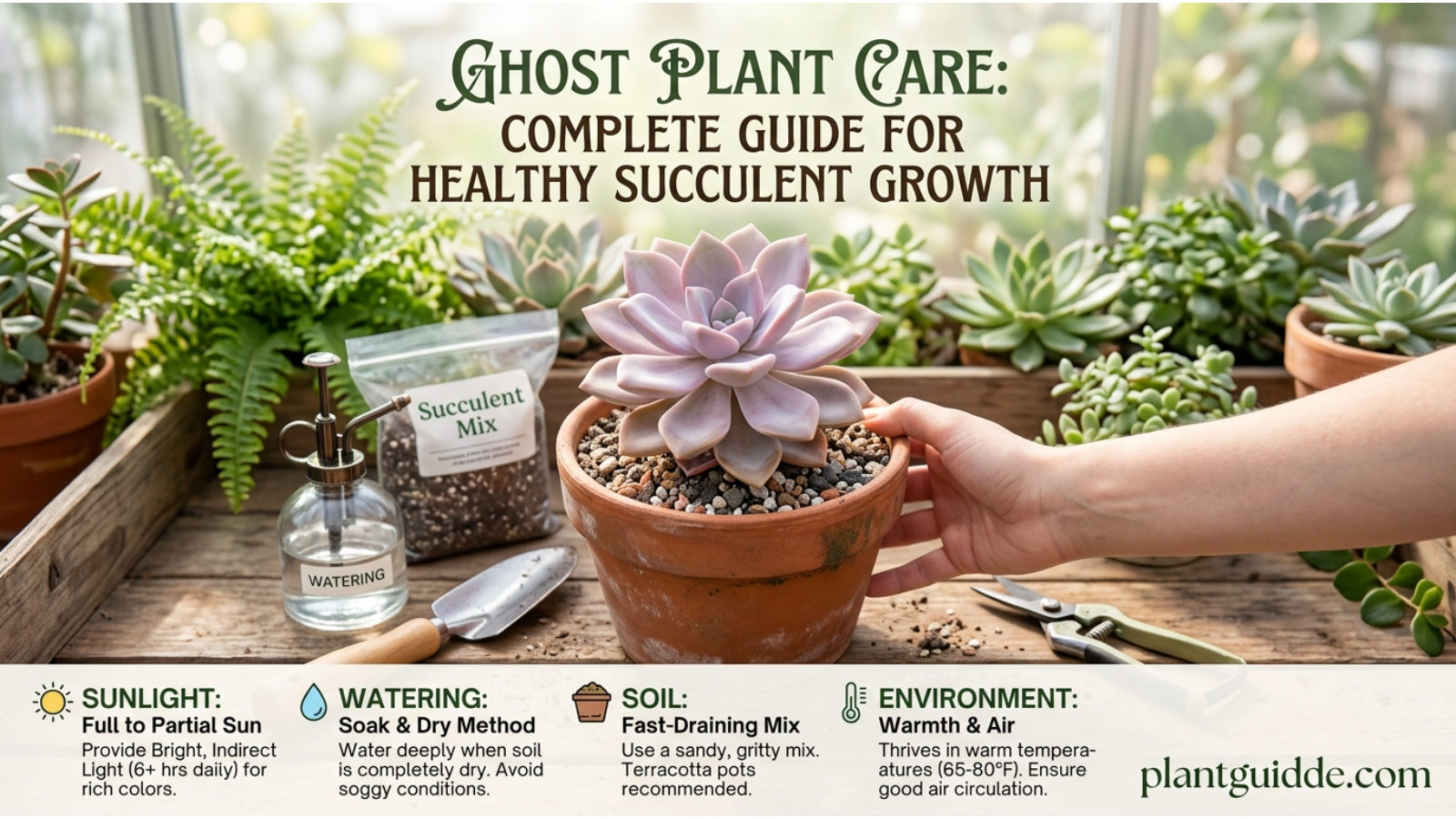
Ghost plant care is mainly about bright light, fast-draining soil, careful watering, and good airflow. The ghost plant (Graptopetalum paraguayense) is a drought-tolerant succulent that prefers its soil to dry thoroughly between waterings. Give it several hours of bright light, use a pot with drainage, protect it from prolonged wet soil, and avoid frequent light watering that keeps the roots damp.
What Is a Ghost Plant?
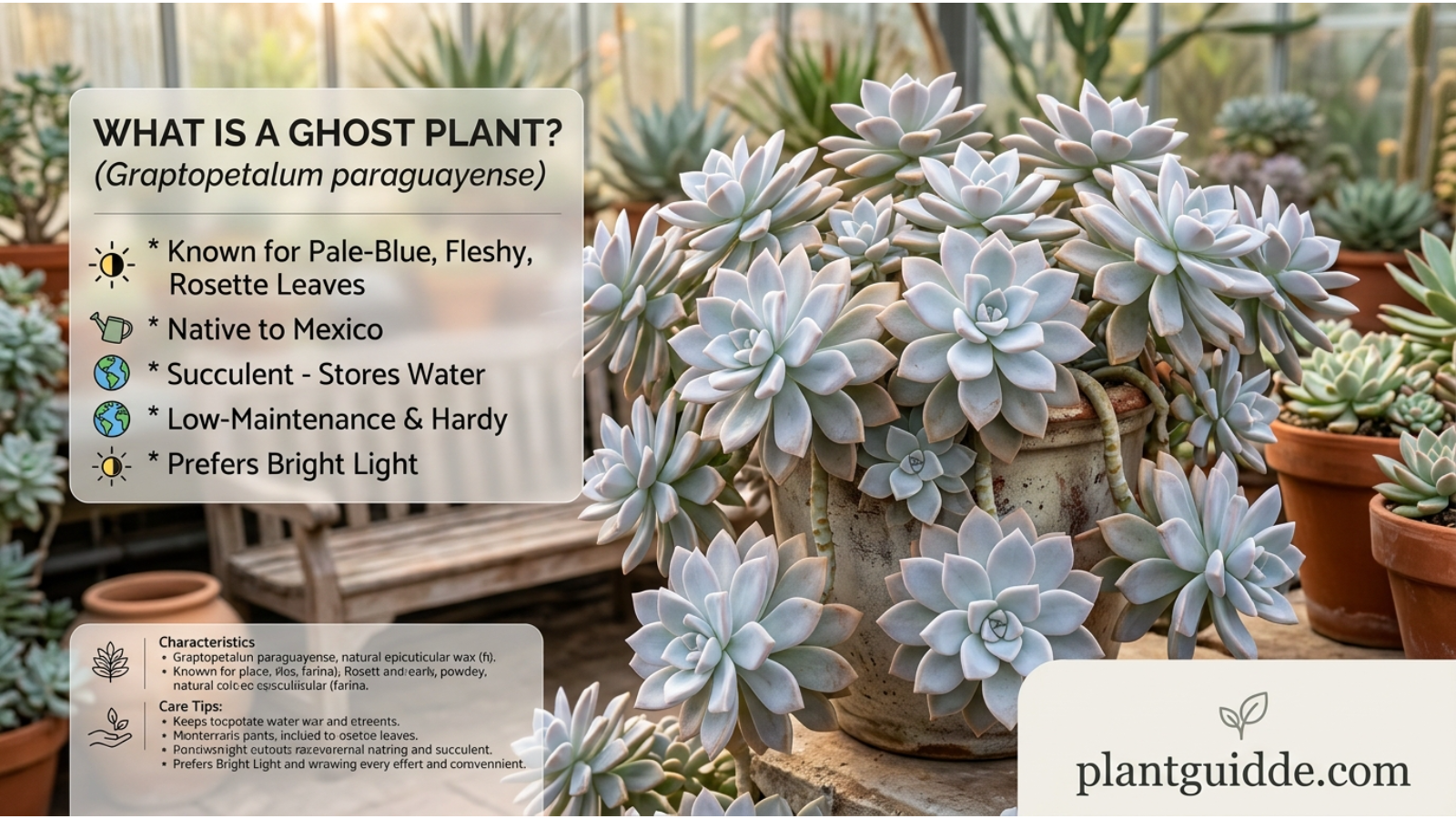
The ghost plant is a trailing succulent commonly known by its botanical name, Graptopetalum paraguayense. It belongs to the Crassulaceae family and is valued for its fleshy, pointed leaves arranged in attractive rosettes.
The leaves can appear gray, blue-green, pinkish, lavender, or silvery depending on the plant and its growing conditions. A powdery coating called farina gives the foliage much of its ghostly appearance.
The plant can eventually develop long stems as the lower leaves age and fall away. This makes it particularly useful for hanging containers, shelves, rock gardens, and succulent arrangements.
One important point for beginners is that the pale coating on the leaves is natural. Rubbing or repeatedly touching the foliage can remove it permanently, leaving fingerprints or shiny patches.
Ghost Plant vs. Ghost Flower
The name “ghost plant” can sometimes cause confusion because common plant names are not always standardized. For succulent growers, Graptopetalum paraguayense is the plant most commonly meant by ghost plant.
When buying one, checking the botanical name is the safest way to confirm that you are getting the succulent rather than another plant sold under a similar common name.
Ghost Plant Light Requirements
Light is one of the most important factors in successful ghost plant care.
A ghost plant needs bright light, with several hours of direct sunlight being beneficial when the plant has been gradually acclimated to it. Indoors, a bright south- or west-facing window can work well, although the intensity of sunlight varies considerably by climate and season.
A plant that does not receive enough light may become stretched and lose its compact rosette shape.
Signs Your Ghost Plant Needs More Light
Watch for:
- Long gaps between leaves
- A stretched or leaning stem
- Pale or less colorful foliage
- Rosettes becoming loose
- Growth reaching toward a window
- Slow or weak new growth
Stretching is especially useful as a diagnostic clue. If a normally compact succulent begins producing a long stem with widely spaced leaves, moving it into brighter conditions is usually more useful than changing its watering routine.
Can Ghost Plants Take Full Sun?
Yes, but sudden exposure to intense sunlight can cause sunburn.
If a ghost plant has been growing indoors or in shade, introduce stronger sunlight gradually. Start with gentler morning or filtered sunlight and increase exposure over time.
In extremely hot climates, harsh afternoon sun through glass can be surprisingly intense. A plant may appreciate bright light while still benefiting from protection during the hottest part of the day.
Image Suggestion: A healthy ghost plant showing compact rosettes in bright window light compared with a stretched plant growing in insufficient light.
How Often Should You Water a Ghost Plant?
There is no reliable watering calendar that works for every ghost plant.
Instead, water when the potting mix has dried thoroughly and the plant actually needs moisture. Then water deeply enough to moisten the entire root zone and allow excess water to escape through the drainage holes.
This approach is usually safer than giving the plant a small amount of water every few days.
During active growth and warm, bright conditions, the plant may need water more frequently. During cool, darker periods, the soil can remain dry much longer.
A Practical Watering Method
- Check the soil several inches below the surface.
- Make sure it is genuinely dry rather than merely dry on top.
- Water thoroughly until excess water drains from the pot.
- Empty any standing water collected beneath the container.
- Allow the soil to dry again before watering.
The exact interval could be several days, a couple of weeks, or longer depending on temperature, light, pot size, soil composition, and humidity.
Should You Mist a Ghost Plant?
Generally, no.
Ghost plants store water in their fleshy leaves, so regular misting is unnecessary. Increasing surface moisture without meaningfully hydrating the root system can also create a damp environment around the foliage.
Instead of misting, focus on appropriate light, drainage, and root-zone moisture.
Ghost Plant Soil Requirements
The ideal ghost plant soil should drain quickly and should not remain wet for extended periods.
A commercial cactus or succulent mix can be a useful starting point, but some mixes retain more moisture than expected. Adding a mineral component such as pumice, perlite, or coarse grit can improve drainage and aeration.
The goal is not simply to make the soil dry instantly. Roots still need access to water and oxygen. The better target is a mix that becomes thoroughly moist when watered and then dries at a reasonable rate.
What Makes a Good Succulent Mix?
A useful mixture generally contains:
- A quality base potting mix
- A substantial amount of porous mineral material
- Materials that prevent the mix from compacting
- Enough organic matter to support healthy roots
Avoid heavy garden soil for container-grown ghost plants. Dense soil can stay wet around the roots long after the surface appears dry.
Choosing the Right Pot
A drainage hole is more important than an attractive container.
Terracotta pots are particularly useful for beginners because their porous walls can allow moisture to escape more readily than some nonporous containers. However, a well-draining soil mix and sensible watering matter more than the material of the pot alone.
Choose a container that is only moderately larger than the root system. An oversized pot holds more soil, which can remain wet for longer after watering.
If you place a nursery pot inside a decorative cover pot, remove it for watering when practical and allow the excess water to drain completely before putting it back.
Temperature and Humidity
Ghost plants generally prefer warm growing conditions and good airflow. They can tolerate some environmental variation, but prolonged exposure to freezing temperatures can damage succulent tissue.
Humidity is usually less important than it is for tropical houseplants.
You do not need to create a highly humid environment to grow a healthy ghost plant. In fact, excessive moisture combined with poor airflow can create more problems than moderately dry indoor air.
For indoor growing, prioritize:
- Bright light
- Good ventilation
- Drying soil between waterings
- Protection from freezing conditions
- Avoiding prolonged exposure to cold, wet soil
Fertilizing Ghost Plants
Ghost plants do not require heavy feeding.
During active growth, a diluted balanced fertilizer formulated for succulents can be applied occasionally. Overfertilizing can encourage softer, faster growth that is less attractive and potentially more vulnerable to stress.
If the plant is growing slowly during a cool or low-light period, increasing fertilizer is usually not the first solution. Improve light and growing conditions before adding more nutrients.
How to Repot a Ghost Plant
Repotting is useful when the plant has outgrown its container, the soil has degraded, drainage has become poor, or there are signs of root problems.
A simple repotting process is:
- Allow the soil to dry before repotting when possible.
- Gently remove the plant from its container.
- Inspect the roots for obvious damage or decay.
- Remove old, compacted soil.
- Trim away genuinely rotten roots with a clean tool.
- Place the plant into fresh, well-draining succulent mix.
- Keep the plant in suitable light and avoid immediately saturating compromised roots.
- Resume normal watering once the plant has settled and the soil is appropriately dry.
Do not automatically remove healthy roots simply because they are thin or brownish. Root appearance varies, and healthy roots should not be confused with soft, collapsing, foul-smelling tissue.
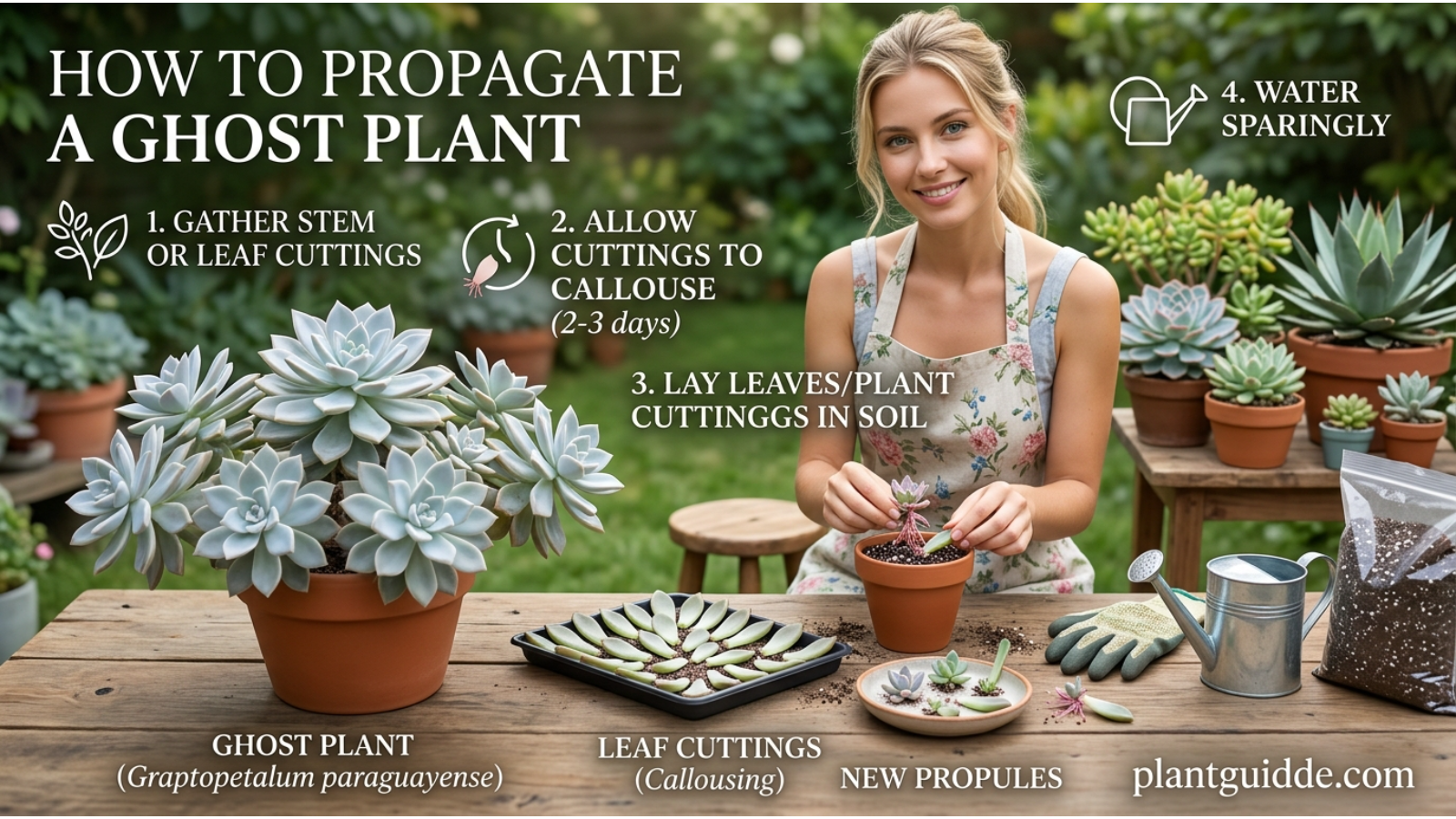
How to Propagate a Ghost Plant
Ghost plants are among the more rewarding succulents to propagate because they can produce new plants from leaves, stems, or offsets.
Leaf Propagation
Healthy leaves can sometimes produce roots and new rosettes.
Choose a mature, healthy leaf and remove it cleanly from the stem. The entire leaf base is important; a badly damaged or incomplete leaf is less likely to propagate successfully.
Place the leaf on a suitable dry surface rather than burying it deeply in wet soil. Given appropriate conditions, roots and new growth may eventually appear.
Patience matters. Succulent propagation is not a process that needs constant watering.
Stem Cuttings
Stem cuttings are often quicker when you already have a leggy plant.
Cut a healthy section of stem, allow the cut end to dry and callus, then place it into a well-draining growing medium. Once roots develop, the cutting can establish as a new plant.
Interestingly, a stretched ghost plant does not necessarily need to be discarded. Leggy growth can provide useful material for propagation while the remaining rooted portion may continue producing new growth.
Why Is My Ghost Plant Turning Green?
A ghost plant can lose some of its silvery, pink, or lavender coloration when growing conditions change.
One common reason is insufficient light. However, color also varies naturally with genetics, season, temperature, watering, and the plant’s overall growing environment.
Do not try to force dramatic coloration by suddenly exposing a shade-grown plant to intense midday sunlight. Stronger coloration is desirable only when achieved without damaging the plant.
Gradual light acclimation is the safer approach.
Why Is My Ghost Plant Turning Brown?
Brown areas can have several causes, so the pattern matters.
Possible causes include:
- Sunburn
- Physical damage
- Severe dehydration
- Root problems
- Environmental stress
- Old leaves naturally dying
If only the exposed side develops pale brown or tan patches after a sudden move into strong sunlight, sunburn is a strong possibility.
If the plant is brown, soft, and collapsing from the base, excessive moisture and root damage become more concerning.
Look at the whole plant rather than treating every brown spot as the same problem.
Why Are My Ghost Plant Leaves Falling Off?
Some leaf loss is completely normal.
Older lower leaves naturally dry out and fall as the plant grows. However, sudden or widespread leaf drop can indicate stress.
Soft Leaves Falling Off
Soft leaves that detach easily, especially when the soil remains wet, may indicate overwatering or root problems.
Dry, Wrinkled Leaves Falling Off
A few older leaves becoming dry and shriveled can be normal. If many leaves are becoming severely wrinkled while the soil has remained dry for an extended period, the plant may need water.
The important distinction is dry versus soft.
Dry and wrinkled usually points toward water shortage or normal aging. Soft, translucent, or mushy tissue is much more concerning for excess moisture.
Why Is My Ghost Plant Getting Leggy?
A leggy ghost plant is usually asking for more light.
Succulents stretch when they cannot produce enough energy from available light. The plant may continue growing, but the new leaves become more widely spaced as the stem reaches toward a brighter area.
Move it gradually toward stronger light rather than making a sudden transition.
If the stem is already very long, consider pruning and propagating the healthy top portion. This can give you a fresh compact rosette while allowing the remaining stem to produce new growth.
Ghost Plant Problems: A Quick Diagnostic Guide
| Symptom | Likely Cause | What to Check First |
|---|---|---|
| Long, stretched stem | Insufficient light | Move toward brighter light gradually |
| Soft, yellowing leaves | Excess moisture | Check soil and drainage |
| Wrinkled leaves | Dry conditions or root problems | Check soil and root health |
| Sudden leaf drop | Stress, overwatering, or temperature change | Inspect soil and environment |
| Brown patches after sun exposure | Sunburn | Review recent light changes |
| Slow growth | Low light, cool conditions, or seasonal dormancy | Check light and temperature |
| Mushy stem base | Root or stem rot | Inspect roots and remove damaged tissue |
| Dull coloration | Lower light or natural variation | Improve light gradually |
Common Ghost Plant Care Mistakes
Watering on a Fixed Schedule
“Water every Sunday” sounds convenient, but plant needs change with the season and environment.
Check the soil instead.
Keeping the Soil Slightly Moist
This is one of the biggest differences between caring for a tropical foliage plant and a succulent.
Ghost plants are adapted to periods of dryness. Constantly damp soil can deprive roots of oxygen and increase the risk of rot.
Giving Low Light and More Water
This combination is particularly problematic.
When light is weak, growth slows. If watering remains frequent, the soil can stay wet longer while the plant has less demand for moisture.
If your ghost plant is struggling in a dark room, adding water is rarely the best first response.
Touching the Leaves Constantly
The powdery coating on ghost plant leaves can be easily disturbed. Frequent handling can remove the farina and permanently change the appearance of the foliage.
Handle the plant by its stem or pot when possible.
Moving a Shade-Grown Plant Directly Into Harsh Sun
More light is often beneficial, but sudden changes can burn leaves.
Acclimate gradually.
How to Keep a Ghost Plant Compact and Colorful
If your goal is a compact plant with attractive coloration, focus on light before fertilizer.
A practical routine is:
- Provide strong, appropriate light.
- Rotate the container periodically if growth leans toward one direction.
- Let the soil dry properly between waterings.
- Use a fast-draining mix.
- Avoid excessive nitrogen fertilizer.
- Protect the natural farina by minimizing unnecessary handling.
- Prune stretched growth when necessary and use the cuttings for propagation.
Remember that coloration is not simply a sign of “better care.” Different plants can naturally show different shades, and environmental stress should never be deliberately pushed to an extreme just to produce stronger colors.
Indoor Ghost Plant Care
Growing a ghost plant indoors is straightforward when the room provides enough light.
Place the plant near the brightest suitable window available. If natural light is weak, supplemental grow lighting can help prevent stretching.
Keep the pot away from consistently damp locations and avoid placing it directly beside sources of extreme temperature fluctuations.
A useful indoor setup might look like this:
Bright window → well-draining pot → dry-down between waterings → good airflow → occasional feeding during active growth.
This is generally more useful than trying to create a complicated care routine.
Outdoor Ghost Plant Care
Ghost plants can perform very well outdoors where temperatures and sunlight are appropriate.
Outdoor plants often receive substantially more light and airflow than indoor plants, but they may also encounter heavier rain. A container that dries quickly indoors can remain wet much longer during repeated rainfall.
If heavy rain is expected, make sure the container drains freely and consider moving potted plants under suitable cover.
Outdoor sunlight should also be introduced gradually if the plant was previously grown indoors.
When Should You Bring a Ghost Plant Indoors?
If temperatures are expected to approach freezing, move container-grown ghost plants into a protected location.
Cold damage can be especially serious when succulent tissue is exposed to freezing conditions or when cold temperatures coincide with wet soil.
Rather than waiting for visible damage, monitor the forecast and move vulnerable container plants to a suitable sheltered environment ahead of freezing weather.
Is Ghost Plant Toxic to Pets?
If you have cats or dogs that chew on houseplants, do not assume that every succulent is automatically safe because it is commonly grown indoors.
Plant identification matters, and toxicity information can vary among species. If your pet has eaten an unknown plant, contact a veterinarian or an appropriate animal poison resource rather than relying solely on a common name.
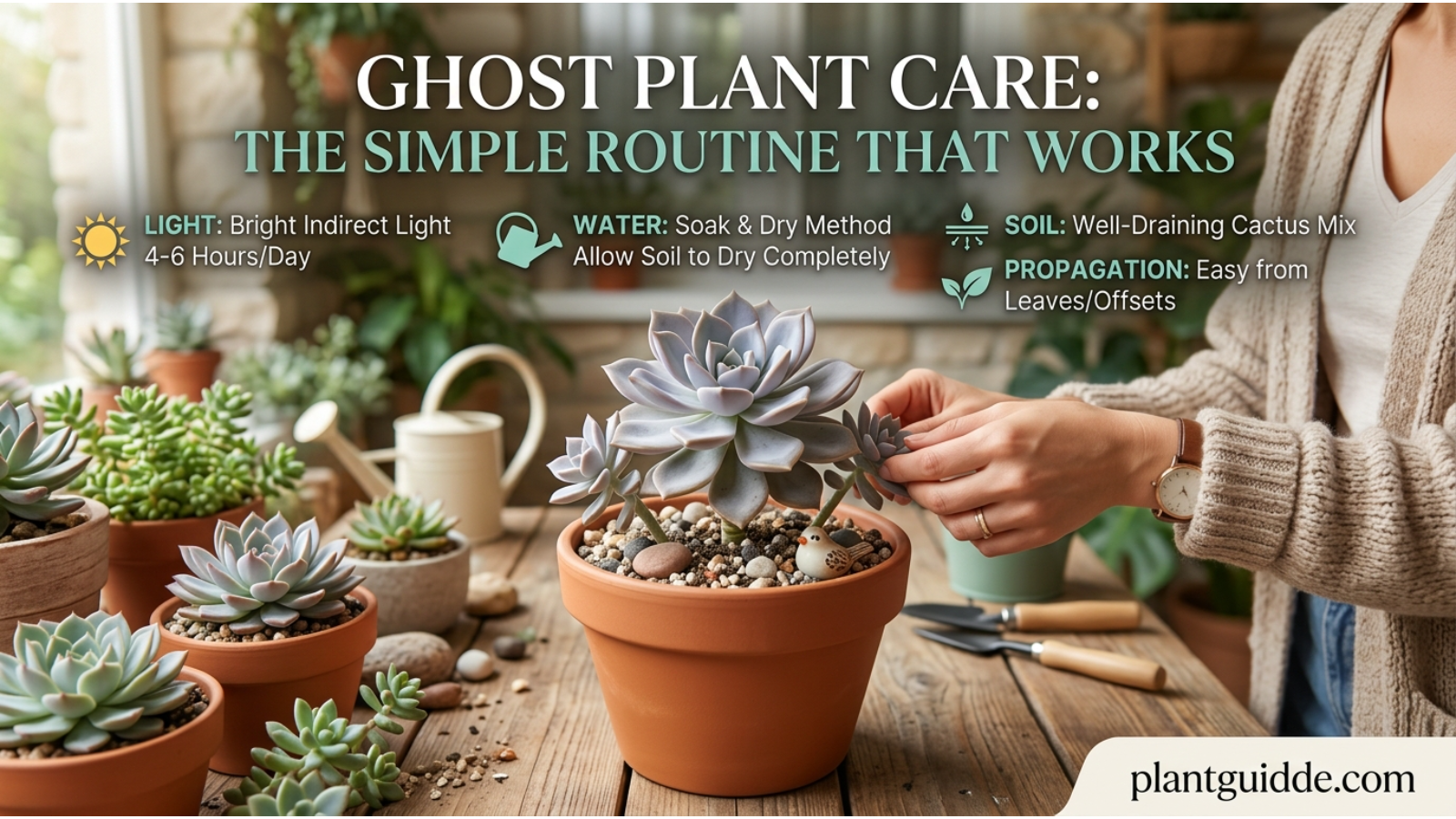
Ghost Plant Care: The Simple Routine That Works
For beginners, you do not need to monitor dozens of variables.
Focus on these five:
1. Give it plenty of light.
Bright conditions help maintain compact growth.
2. Use fast-draining soil.
Roots need both moisture and oxygen.
3. Water thoroughly, then let the soil dry.
Avoid frequent small drinks.
4. Use a pot with drainage.
Never rely on a decorative container to manage excess water.
5. Watch the plant.
Stretching, softness, wrinkles, and sudden leaf loss are clues about what needs changing.
The biggest improvement in ghost plant care usually comes from learning to interpret these signals rather than memorizing a watering schedule.
FAQs:
How often should you water a ghost plant?
Water when the soil has dried thoroughly rather than according to a fixed calendar. Water deeply, allow excess water to drain, and then wait for the mix to dry again. Bright, warm conditions may require more frequent watering than cool or low-light conditions.
Does a ghost plant need direct sunlight?
Ghost plants benefit from strong light and can tolerate direct sunlight when acclimated gradually. Avoid suddenly moving a plant from low light into intense afternoon sun because this can cause sunburn.
Why is my ghost plant losing its purple color?
Lower light can reduce the intensity of some colors, although natural variation, season, temperature, and genetics also affect appearance. Increase light gradually rather than exposing the plant suddenly to harsh sunlight.
Can you grow a ghost plant from a leaf?
Yes. Healthy leaves can produce roots and eventually new plants under suitable conditions. The leaf should be removed cleanly and allowed to remain relatively dry while roots and new growth develop.
Is a ghost plant easy to grow?
Yes, especially once you understand succulent watering. Its main requirements are strong light, excellent drainage, and a proper dry period between waterings. Most serious problems come from conditions that keep the roots wet for too long.
Conclusion
Successful ghost plant care comes down to giving this succulent the environment it naturally prefers: strong light, excellent drainage, thorough but infrequent watering, and enough time for the soil to dry.
Do not judge the plant by a calendar alone. Look at its leaves, growth pattern, soil moisture, and recent environmental changes. A stretched plant may need more light, a soft plant may be staying too wet, and a few dry lower leaves may simply be part of normal growth.
If you are starting with one ghost plant, begin with the basics: a bright location, a drainage hole, a fast-draining mix, and patience between waterings. Those four decisions will prevent many of the problems that make succulent care seem harder than it really is.

Asad Mumtaz is a dedicated plant enthusiast and gardening writer with a passion for helping people care for their plants successfully. He specializes in plant care guides, indoor gardening, and practical growing tips for all skill levels. His content focuses on making gardening simple, enjoyable, and rewarding. Through his work, Asad shares reliable advice to help readers create thriving green spaces.