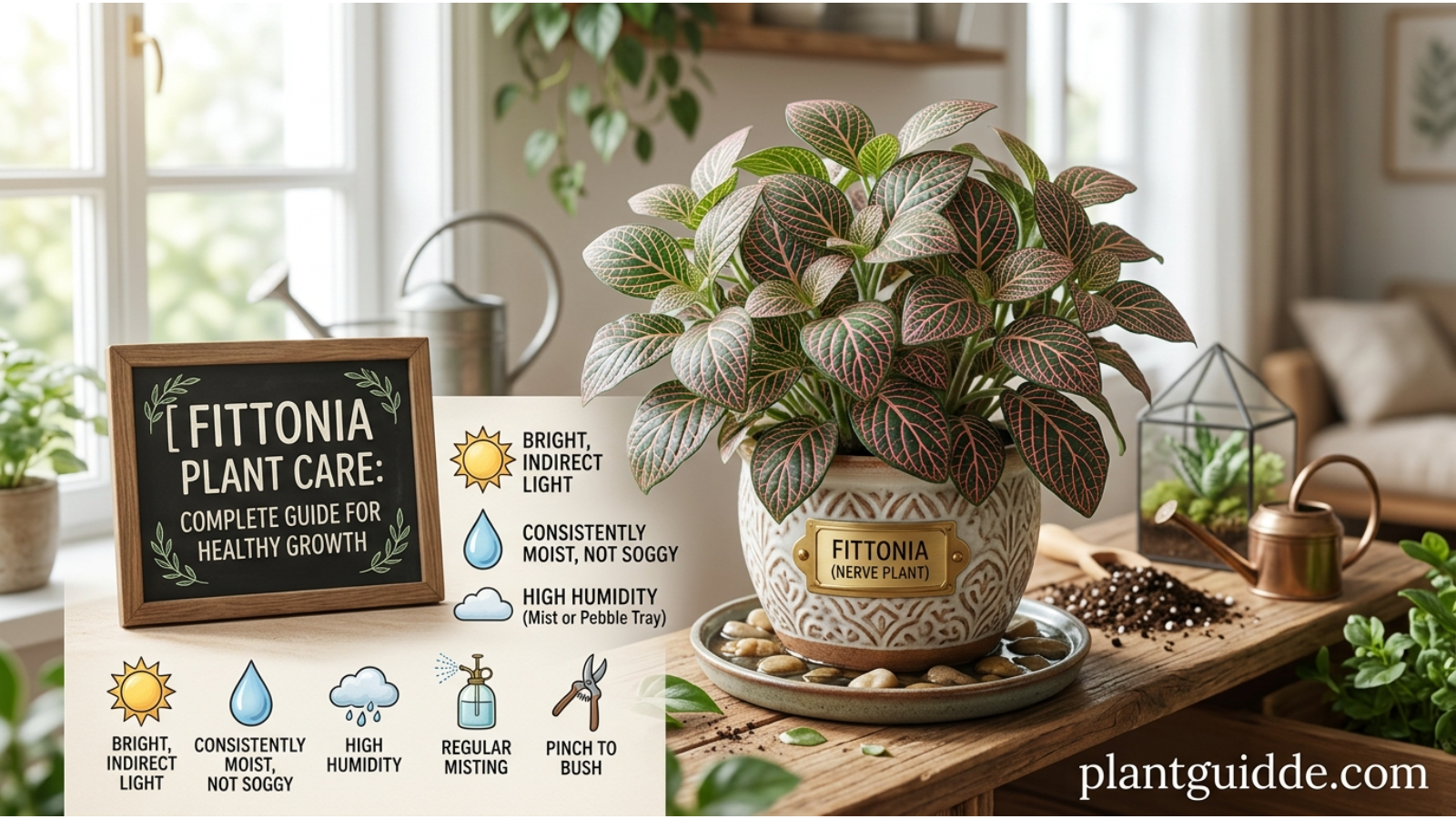
Fittonia plant care, commonly called the nerve plant, is one of those houseplants that can look spectacular one day and dramatically wilt the next. Its small leaves are decorated with striking white, pink, red, or green veins, making it a popular choice for shelves, terrariums, bathrooms, and other indoor spaces.
The good news is that a wilted Fittonia is not always a dying plant. This species is unusually expressive about changes in moisture. If the soil becomes too dry, the leaves can droop dramatically. After thorough watering, a healthy plant may recover surprisingly quickly.
That sensitivity is also what makes Fittonia plant care different from caring for drought-tolerant houseplants. The goal is not to keep the roots constantly saturated. Instead, you want a stable combination of moisture, humidity, gentle light, warmth, and drainage.
Quick Answer
Fittonia plant care is mainly about maintaining bright, indirect light, consistently moist but well-draining soil, high humidity, and warm, stable temperatures. Avoid harsh direct sunlight and letting the soil dry completely. With the right balance of moisture and humidity, Fittonia develops fuller growth and keeps its colorful, veined leaves looking vibrant.
What Is a Fittonia Plant?
Fittonia is a tropical foliage plant in the Acanthaceae family, best known for its contrasting leaf veins. The plants commonly sold as nerve plants include cultivars of Fittonia albivenis and related forms.
Unlike plants grown primarily for flowers, Fittonia’s main attraction is its foliage. Depending on the cultivar, leaves may have prominent white, pink, red, or silver-colored veins.
Fittonia naturally grows in warm, humid tropical environments where it receives filtered light rather than intense midday sun. Recreating those conditions indoors explains most of its care requirements.
Fittonia Plant Care at a Glance
| Care requirement | What Fittonia prefers |
|---|---|
| Light | Bright, indirect or filtered light |
| Water | Consistently moist soil without standing water |
| Humidity | High humidity, ideally around 50% or higher |
| Temperature | Warm, stable indoor temperatures |
| Soil | Moisture-retentive but well-draining mix |
| Fertilizer | Diluted balanced fertilizer during active growth |
| Growth habit | Low-growing, spreading or trailing |
| Difficulty | Moderate; moisture and humidity are the main challenges |
| Common problems | Wilting, brown edges, yellow leaves, leaf drop, root problems |
The most important point is consistency. A Fittonia can tolerate a less-than-perfect day, but repeated cycles of severe drying followed by heavy watering can create ongoing stress.
How Much Light Does Fittonia Need?
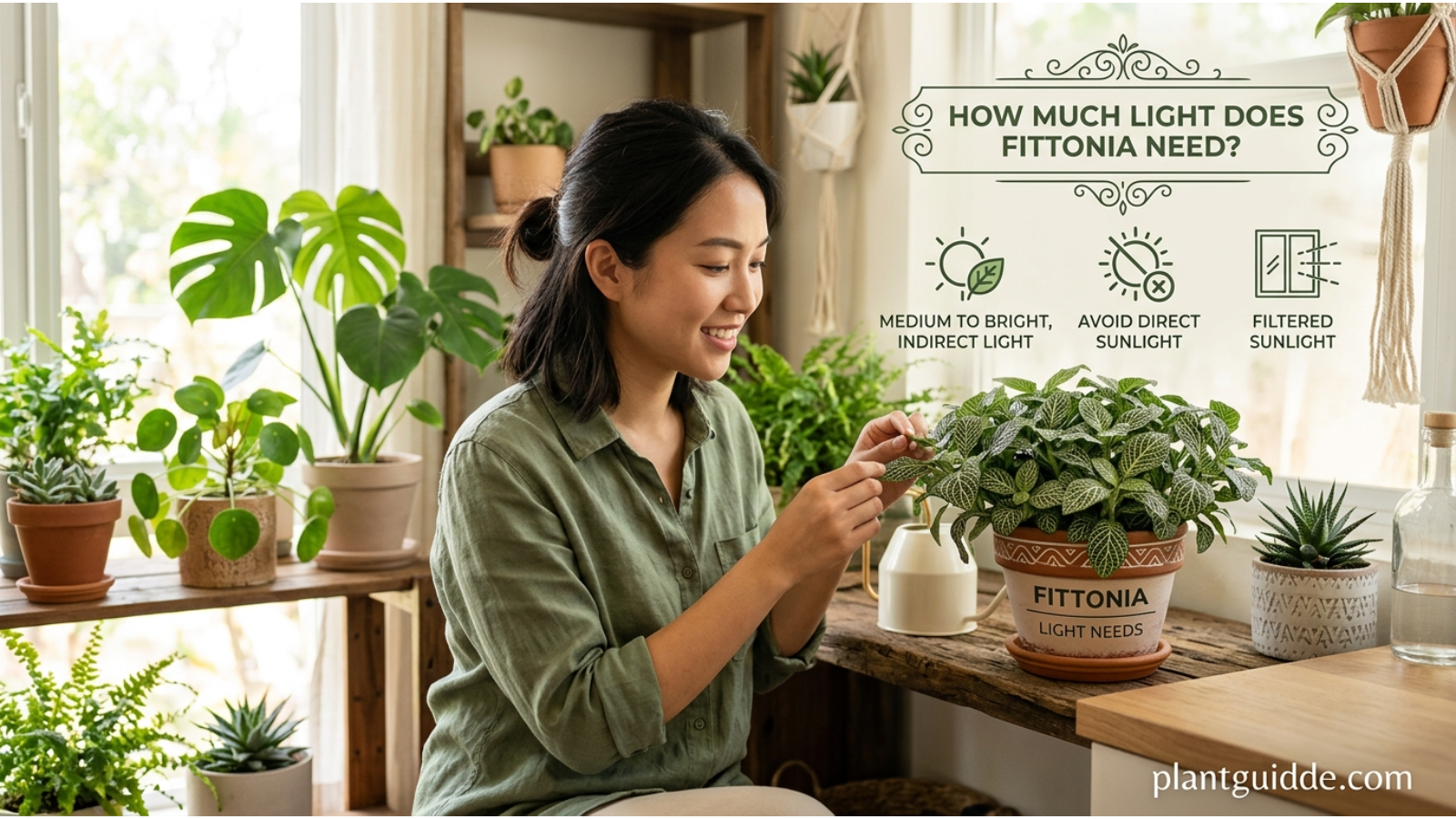
Fittonia grows best in bright, indirect light. It can tolerate moderate light, but strong direct sunlight can scorch its delicate leaves.
An ideal location is near a bright window where sunlight is filtered through a sheer curtain or reflected into the room.
Signs the light is too strong
Watch for:
- Faded or bleached-looking leaves
- Brown or crispy patches
- Scorched leaf edges
- Leaves becoming unusually dry
- Soil drying much faster than normal
Move the plant farther from the window or filter the sunlight if these symptoms appear.
Signs the light is too low
Insufficient light can cause:
- Slow growth
- Longer spaces between leaves
- Less vigorous new growth
- Dull-looking foliage
- A tendency for the plant to become sparse
Fittonia does not need direct sun to maintain attractive foliage. If you’re choosing between a dim corner and a bright location with filtered light, the latter is usually the better option.
Practical tip: Rotate the pot every week or two if one side consistently receives more light. This encourages more even growth instead of a plant leaning strongly toward the window.
How to Water a Fittonia
Watering is probably the most important part of successful Fittonia plant care.
The soil should remain evenly moist but never permanently waterlogged. Allowing the entire root ball to become bone dry can cause severe wilting, while constantly saturated soil reduces oxygen around the roots and increases the risk of root problems.
Instead of watering according to a fixed calendar, check the soil.
Insert your finger about an inch into the potting mix. If the surface has started to dry but the mix underneath still feels slightly moist, conditions may be appropriate for watering soon. If the soil is still noticeably wet, wait.
When watering:
- Water thoroughly until excess moisture drains from the bottom.
- Let the pot drain completely.
- Empty water collected in the saucer or decorative container.
- Check the soil again before the next watering.
The frequency will change with temperature, light, pot size, soil composition, and season.
What if Fittonia suddenly wilts?
Don’t panic immediately.
If the soil is clearly dry and the leaves have collapsed, water the plant thoroughly. A Fittonia that has simply wilted from dehydration may begin recovering within hours.
However, repeated severe wilting should not become your normal watering strategy. Frequent drying can stress the plant and eventually contribute to leaf damage.
If the soil is already wet but the plant remains wilted, the problem may be more serious. Poor drainage, root damage, cold temperatures, or other environmental stressors should then be considered.
Best Soil for Fittonia
Fittonia needs a potting mix that holds enough moisture while allowing excess water to escape.
A useful indoor mix can contain:
- Quality indoor potting soil
- Coco coir or another moisture-retentive component
- Perlite or another aerating material
The exact recipe is less important than the result. When you squeeze or inspect the mix, it should retain some moisture without becoming dense, muddy, or slow to drain.
Avoid using heavy garden soil in an indoor container. It can compact around the roots and make moisture management much more difficult.
Why drainage matters
A common beginner mistake is assuming that because Fittonia likes moisture, the pot should stay wet all the time.
It shouldn’t.
Roots need both water and oxygen. A potting mix that remains saturated for long periods can create conditions where roots deteriorate, even though the plant appears to be “well watered.”
Choose a container with a drainage hole rather than relying on a decorative pot with no drainage.
How to Increase Humidity for Fittonia
Fittonia comes from humid environments, so ordinary dry indoor air can make it more difficult to maintain healthy foliage.
Aim for moderate to high humidity, particularly when indoor heating or air conditioning makes the air noticeably dry.
Useful approaches include:
- Using a humidifier
- Grouping several humidity-loving plants together
- Growing Fittonia in a suitable terrarium
- Keeping it in a naturally humid room with adequate light
- Monitoring humidity with a small digital hygrometer
A bathroom can be an excellent location if it has enough natural light.
Does misting help Fittonia?
Misting may temporarily increase moisture around the leaves, but it is not a reliable substitute for maintaining appropriate room humidity.
Fittonia plant care your home is consistently dry, a humidifier provides much more dependable results.
Also avoid keeping the plant in stagnant, constantly wet conditions. High humidity works best when paired with reasonable airflow.
Best Temperature for Fittonia
Fittonia prefers warm, stable conditions and generally performs well at comfortable indoor temperatures.
Keep it away from:
- Cold drafts
- Exterior doors that open frequently in winter
- Air-conditioning vents
- Heating vents
- Very cold windows
- Sudden temperature changes
A plant that is perfectly watered can still struggle if it repeatedly experiences cold drafts.
Stable conditions are particularly important because Fittonia is sensitive to environmental changes. If the plant suddenly begins drooping after being moved, consider temperature and humidity as well as watering.
How to Fertilize Fittonia
Fittonia is not an extremely heavy feeder, but occasional fertilization can support active growth.
During the growing season, use a balanced liquid houseplant fertilizer diluted according to the product’s instructions. Avoid applying concentrated fertilizer to dry soil because this can increase the risk of root damage.
A simple approach is:
- Water appropriately.
- Apply diluted fertilizer when the plant is actively growing.
- Reduce or stop regular feeding during periods of very slow growth.
- Avoid fertilizing a severely stressed or recently repotted plant until it has recovered.
More fertilizer does not necessarily mean more attractive foliage. Excess fertilizer can cause salt buildup and leaf-edge damage.
How to Prune Fittonia
Fittonia naturally develops a low, spreading shape, but regular trimming can make the plant look fuller.
Use clean, sharp scissors to remove:
- Dead leaves
- Damaged foliage
- Weak or excessively long stems
- Unattractive growth
For a bushier appearance, trim just above a leaf node. The plant can respond by producing additional branching.
Don’t remove large amounts of healthy foliage at once unless there is a specific reason. Light, regular pruning is usually enough to maintain a compact appearance.
How to Propagate Fittonia
Fittonia is relatively easy to propagate from stem cuttings.
Propagation in water
Choose a healthy stem with several leaves and cut it just below a node. Remove lower leaves and place the stem in clean water, keeping the leaves above the waterline.
Once roots develop, transfer the cutting to a suitable moist potting mix.
Propagation in soil
You can also place a fresh cutting directly into a lightly moist, well-draining propagation mix.
Keep the cutting warm and humid while it develops roots. Avoid keeping the medium saturated.
Because Fittonia can produce roots from stem nodes, a healthy cutting can establish relatively quickly under favorable conditions.
Why Are My Fittonia Leaves Wilting?
Wilting is one of the most recognizable Fittonia problems.
The first thing to check is the soil.
If the soil is dry
Underwatering is likely. Water thoroughly and monitor the plant’s recovery.
If the soil is wet
Do not automatically add more water. Check:
- Whether the pot has drainage holes
- Whether water is trapped in a cachepot
- How dense the potting mix is
- Whether the roots may have been damaged
- Whether the plant has recently experienced cold stress
If the plant repeatedly wilts
Repeated wilting often means the watering routine or growing environment needs adjustment rather than simply more water.
A useful observation is how quickly the soil changes from moist to completely dry. If it happens extremely fast, the plant may be receiving excessive light, sitting near a heat source, or growing in a mix that does not retain enough moisture.
Why Are Fittonia Leaves Turning Brown?
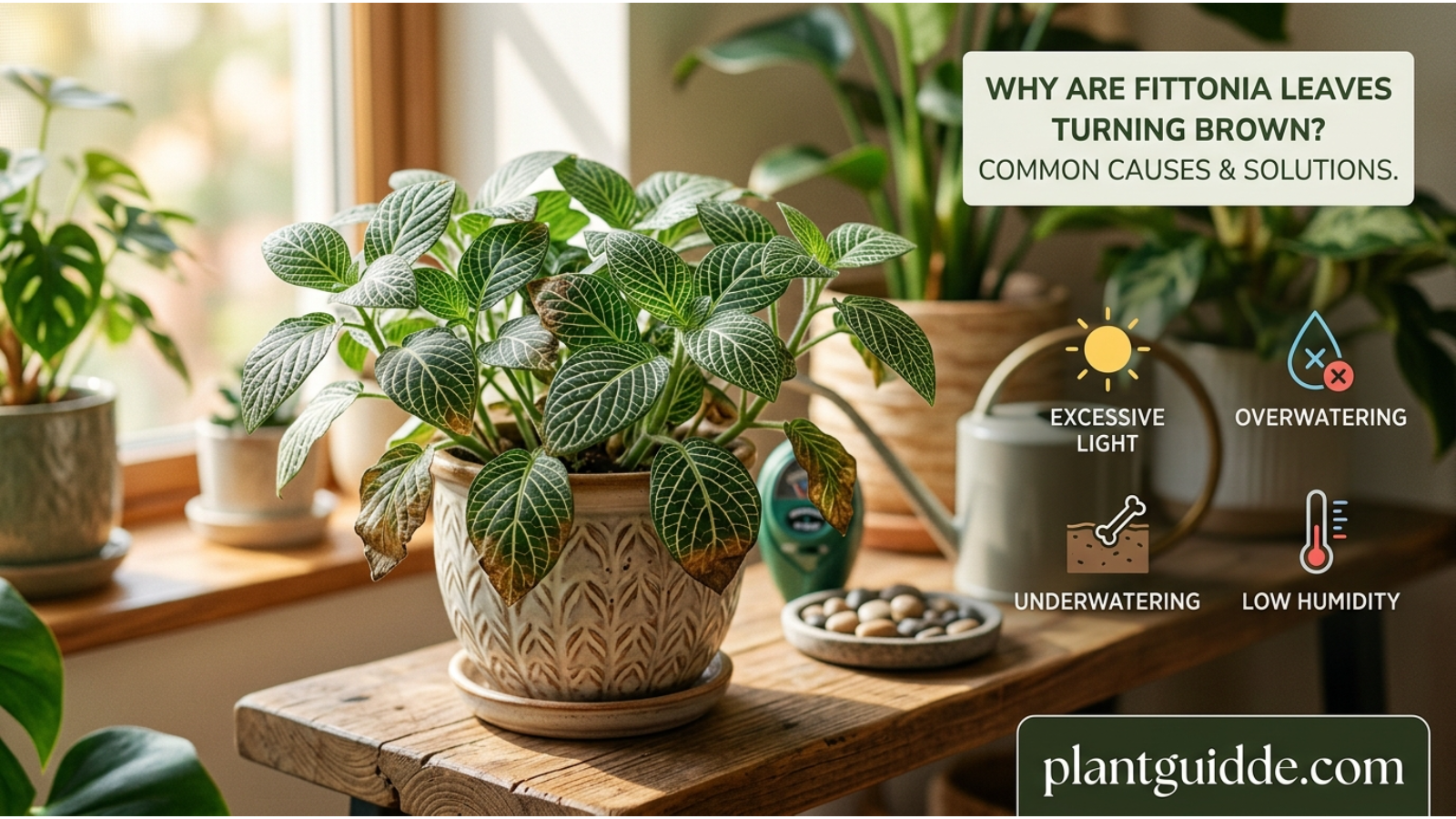
Brown leaves or brown edges can have several causes.
Common possibilities include:
- Low humidity
- Soil becoming too dry
- Excess fertilizer
- Excessive direct sunlight
- Root stress
- Poor-quality water in sensitive growing conditions
Look at the pattern rather than treating every brown leaf the same way.
Crispy brown edges plus dry soil often point toward moisture or humidity stress.
Brown patches exposed to strong sunlight may indicate leaf scorch.
Brown foliage combined with persistently wet soil deserves closer inspection of the roots and drainage.
Remove severely damaged leaves, but correcting the underlying condition is more important than pruning symptoms.
Why Are Fittonia Leaves Turning Yellow?
Yellow leaves are often associated with watering or root problems, but context matters.
Fittonia plant care several leaves gradually become yellow while the soil remains wet for long periods, investigate overwatering and drainage first.
Possible causes include:
- Excessive moisture
- Poor drainage
- Root stress
- Low light combined with wet soil
- Natural aging of older leaves
- Nutritional problems
Do not respond to yellow leaves by immediately adding fertilizer. If the root system is struggling because of excess moisture, fertilizer will not solve the underlying issue.
Why Are Fittonia Leaves Curling?
Curling or curling inward can occur when the plant is under environmental stress.
Check for:
- Dry soil
- Low humidity
- Excessive direct light
- High temperatures
- Cold drafts
- Root problems
The combination of curling leaves and dry soil is especially useful information. Water the plant thoroughly and then observe whether the foliage begins recovering.
Fittonia plant care curling persists despite adequate moisture, investigate light, humidity, and temperature rather than repeatedly watering.
Why Is My Fittonia Dropping Leaves?
Leaf drop can happen when Fittonia experiences sudden or prolonged stress.
Common triggers include:
- Severe underwatering
- Root damage
- Cold exposure
- Sudden environmental changes
- Poor drainage
- Very low humidity
- Major changes in light
If the plant was recently moved from a humid greenhouse or nursery into a dry home, some adjustment may occur.
The best response is usually to stabilize its environment rather than making several changes at once.
How to Make Fittonia Bushier
A healthy Fittonia can become fuller with appropriate light and selective pruning.
For bushier growth:
- Provide bright, indirect light.
- Avoid letting the plant repeatedly dry out.
- Pinch or trim excessively long stems.
- Remove weak or damaged growth.
- Rotate the pot periodically.
- Fertilize moderately during active growth.
If the plant becomes long and sparse, don’t simply increase fertilizer. Stretching is often more closely related to insufficient light.
Fittonia Care in a Terrarium
Fittonia is particularly well suited to terrariums because its preference for humidity and compact growth fit the environment.
However, a closed terrarium can retain a great deal of moisture. That means watering should be much less frequent than for a plant growing in an ordinary pot.
Watch for condensation, stagnant air, and persistently saturated substrate. A terrarium should be humid, not permanently swampy.
A partially open setup can sometimes be easier to manage because it provides more control over moisture and airflow.
Common Fittonia Care Mistakes
Keeping the soil constantly soaked
Fittonia likes moisture, but its roots still need oxygen. Water when the plant actually needs it rather than maintaining saturated soil.
Letting the plant become completely dry repeatedly
A dramatic wilt can be corrected, but repeatedly allowing the root ball to dry out places unnecessary stress on the plant.
Putting Fittonia in direct afternoon sun
Its colorful leaves are attractive partly because they thrive under softer, filtered light. Harsh sunlight can damage them.
Relying entirely on misting
Misting is temporary. If indoor humidity is consistently low, improve the surrounding environment instead.
Using a pot without drainage
This makes moisture management unnecessarily difficult and increases the risk of water remaining around the roots.
Moving the plant constantly
Fittonia responds to environmental changes. Find a suitable location and allow the plant time to adjust.
Fertilizing a stressed plant
If the leaves are suddenly wilting, yellowing, or collapsing, first determine whether water, roots, temperature, or light is responsible.
A Simple Fittonia Care Routine
You don’t need a complicated schedule to keep Fittonia healthy.
Weekly: Check soil moisture, inspect leaves for pests or damage, and make sure the plant is receiving appropriate indirect light.
Every few weeks during active growth: Check whether the plant needs feeding and remove dead or badly damaged foliage.
Every few months: Examine drainage, inspect the potting mix, and look for roots emerging excessively from drainage holes.
Whenever the plant changes appearance: Treat the leaves as clues. Check soil moisture, light, humidity, temperature, and roots before changing several things simultaneously.
This diagnostic approach is more reliable than trying to follow an exact watering schedule.
What to Do When Your Fittonia Looks Unhealthy
When a Fittonia suddenly looks worse, work through the problem in this order:
1. Check the soil.
Is it dry, slightly moist, or saturated?
2. Check the roots indirectly.
Look for poor drainage, standing water, or a dense potting mix.
3. Check the light.
Is the plant receiving harsh direct sun or sitting in deep shade?
4. Check humidity.
Is the surrounding air unusually dry?
5. Check temperature.
Look for drafts, heating vents, or air-conditioning exposure.
6. Change one major factor at a time.
This makes it much easier to determine what actually helped.
This last step is frequently overlooked. If you simultaneously move a plant, repot it, fertilize it, change its watering routine, and add a humidifier, you may improve the plant but learn nothing about what caused the problem.
Fittonia Plant Care by Season
Spring and summer
Fittonia generally has more opportunity for active growth when temperatures and light levels are favorable.
Monitor soil moisture more frequently because warmer conditions can increase water use.
Autumn and winter
Indoor heating can dramatically reduce humidity, while shorter days can reduce available light.
During this period:
- Keep the plant away from heating vents.
- Monitor humidity.
- Reduce fertilizer when growth slows.
- Check soil before watering rather than assuming it needs the same amount as in summer.
The biggest mistake is maintaining exactly the same watering routine year-round without considering changes in evaporation and growth.
Fittonia Pests to Watch For
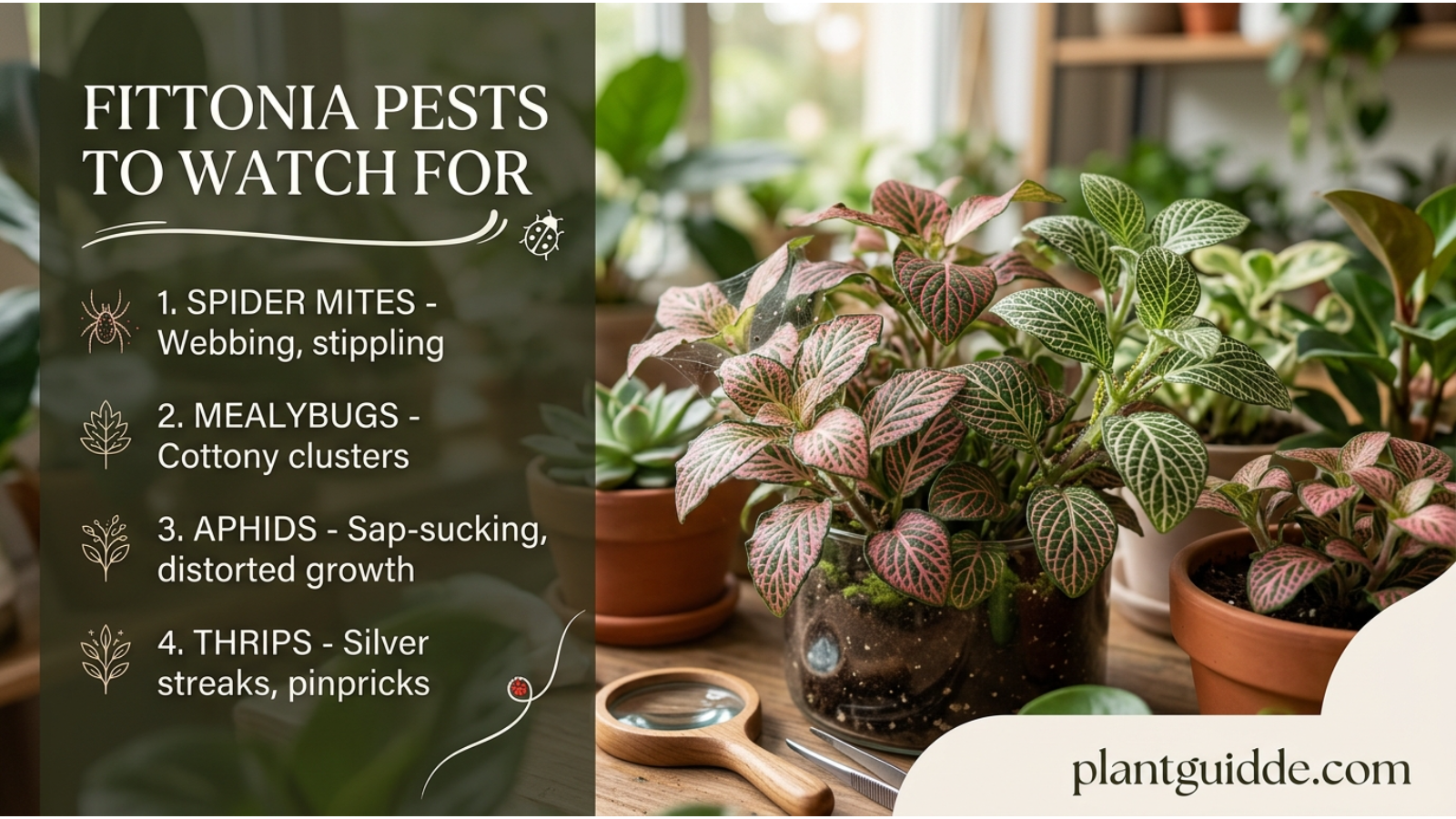
Fittonia can occasionally experience common indoor plant pests such as spider mites, aphids, mealybugs, and fungus gnats.
Inspect new growth, leaf undersides, stems, and the soil surface.
Signs can include:
- Tiny insects
- Fine webbing
- Sticky residue
- White cotton-like clusters
- Speckled or distorted leaves
- Small flying insects around the pot
Early detection is much easier to manage than a large infestation. Regular inspection should therefore be part of your normal plant routine, particularly when bringing new plants into your home.
FAQs:
How often should I water a Fittonia?
Water when the upper portion of the potting mix begins to dry rather than following a fixed number of days. Water thoroughly, allow excess water to drain, and avoid leaving the pot sitting in water.
Does Fittonia need direct sunlight?
No. Fittonia generally performs best in bright, indirect or filtered light. Strong direct sunlight, particularly intense afternoon sun, can scorch its delicate foliage.
Why does my Fittonia wilt so quickly?
Fittonia can wilt dramatically when its soil becomes too dry. Check the soil first. If it is dry, thorough watering may allow the plant to recover. If the soil is already wet, investigate drainage, roots, temperature, and other environmental stress.
Can Fittonia grow in low light?
It can tolerate lower light for a period, but prolonged insufficient light may result in slow, sparse growth. Bright, indirect light is usually better for maintaining compact growth and attractive foliage.
Is Fittonia good for a terrarium?
Yes. Fittonia’s compact growth and preference for humidity make it a popular terrarium plant. The main challenge is preventing the substrate from remaining excessively wet, particularly in a closed container.
Conclusion
Successful Fittonia plant care comes down to balance rather than a complicated routine. Give your nerve plant bright, indirect light, evenly moist but well-draining soil, adequate humidity, warmth, and a stable environment.
When problems appear, don’t treat the leaves as isolated symptoms. A wilted Fittonia may need water, but a wilted plant sitting in saturated soil needs a completely different response. Check the soil, roots, light, humidity, and temperature before making changes.
For most indoor growers, the best next step is simple: place your Fittonia in bright filtered light, check its soil regularly, and keep moisture consistent without keeping the roots waterlogged. Once those conditions are stable, the plant becomes much easier to understand and maintain.

Asad Mumtaz is a dedicated plant enthusiast and gardening writer with a passion for helping people care for their plants successfully. He specializes in plant care guides, indoor gardening, and practical growing tips for all skill levels. His content focuses on making gardening simple, enjoyable, and rewarding. Through his work, Asad shares reliable advice to help readers create thriving green spaces.