Aloe vera is often called an almost indestructible houseplant, but even Aloe Vera Plant hardy succulent can struggle when its basic needs are overlooked. Its thick, fleshy leaves are designed to store water, which means aloe prefers dry periods rather than constantly damp soil.
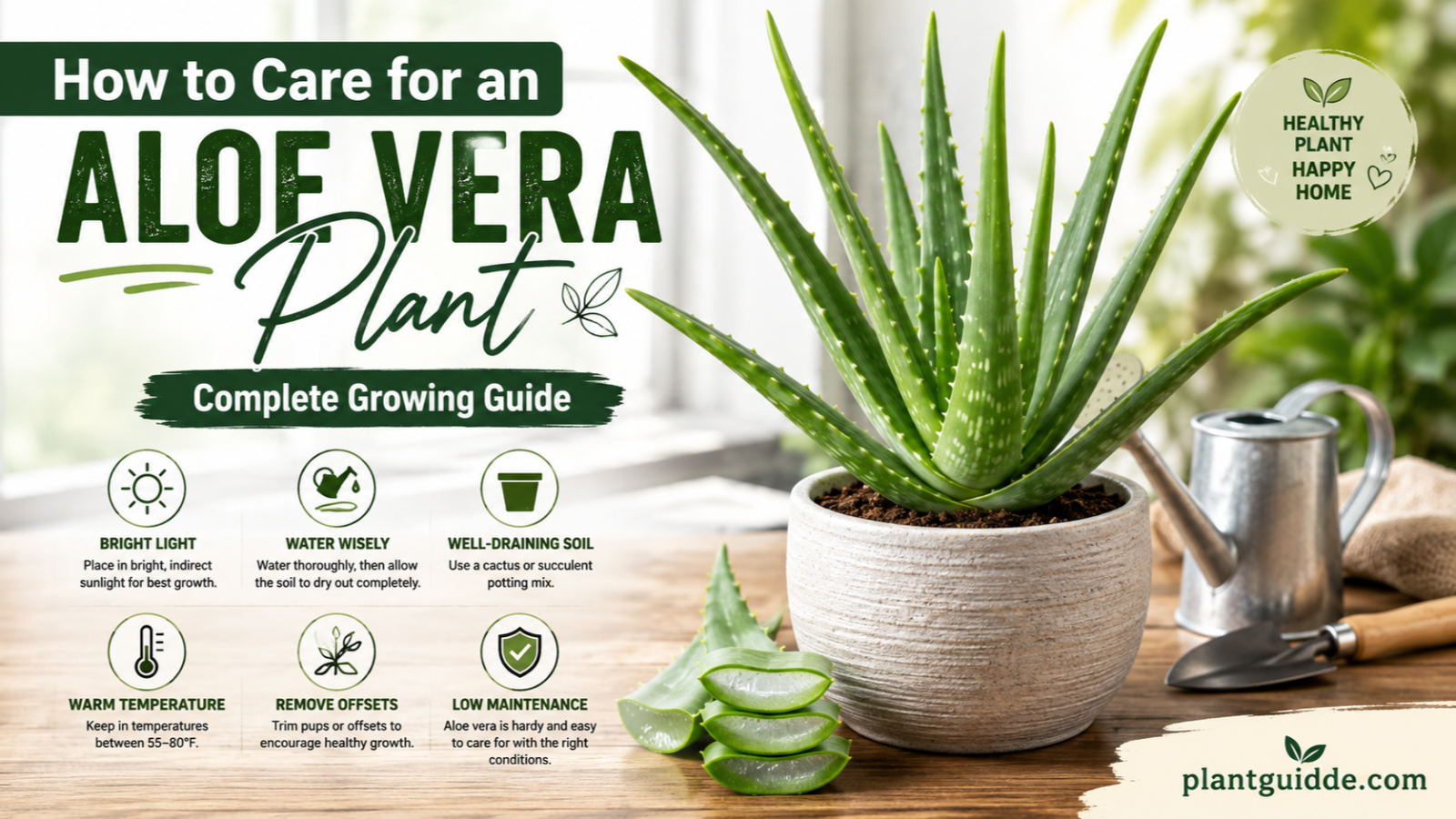
If you’re learning how to care for an aloe vera plant, focus on three essentials: plenty of bright light, well-draining soil, and careful watering. Soft, yellow leaves can signal excess moisture, while thin, stretched growth often means the plant needs more light.
This guide explains what aloe vera needs to grow well, how to spot common problems early, and what to change when your plant starts showing signs of stress.
Quick Answer
To care for an aloe vera plant, give it bright light, fast-draining soil, a pot with drainage holes, and thorough but infrequent watering. Allow the soil to dry well between waterings, and avoid letting the roots sit in water. Aloe vera grows best in warm conditions with good airflow and generally needs less water than ordinary houseplants. The most common problems come from overwatering, inadequate light, or poorly draining soil.
Understanding Aloe Vera Before You Start
Aloe vera (Aloe vera) is a succulent species adapted to relatively dry environments. It stores water in its thick leaves, allowing it to survive periods when rainfall is limited.
That natural adaptation explains nearly everything about successful aloe vera care.
Unlike plants that need consistently moist soil, aloe generally performs better when its roots have access to moisture followed by a period of drying. Its roots need oxygen as well as water, and constantly saturated soil reduces the air spaces available around them.
This is why two plants receiving the same amount of water can respond very differently depending on their soil and pot.
Aloe vera care is therefore less about watering frequently and more about controlling how long moisture remains around the roots.
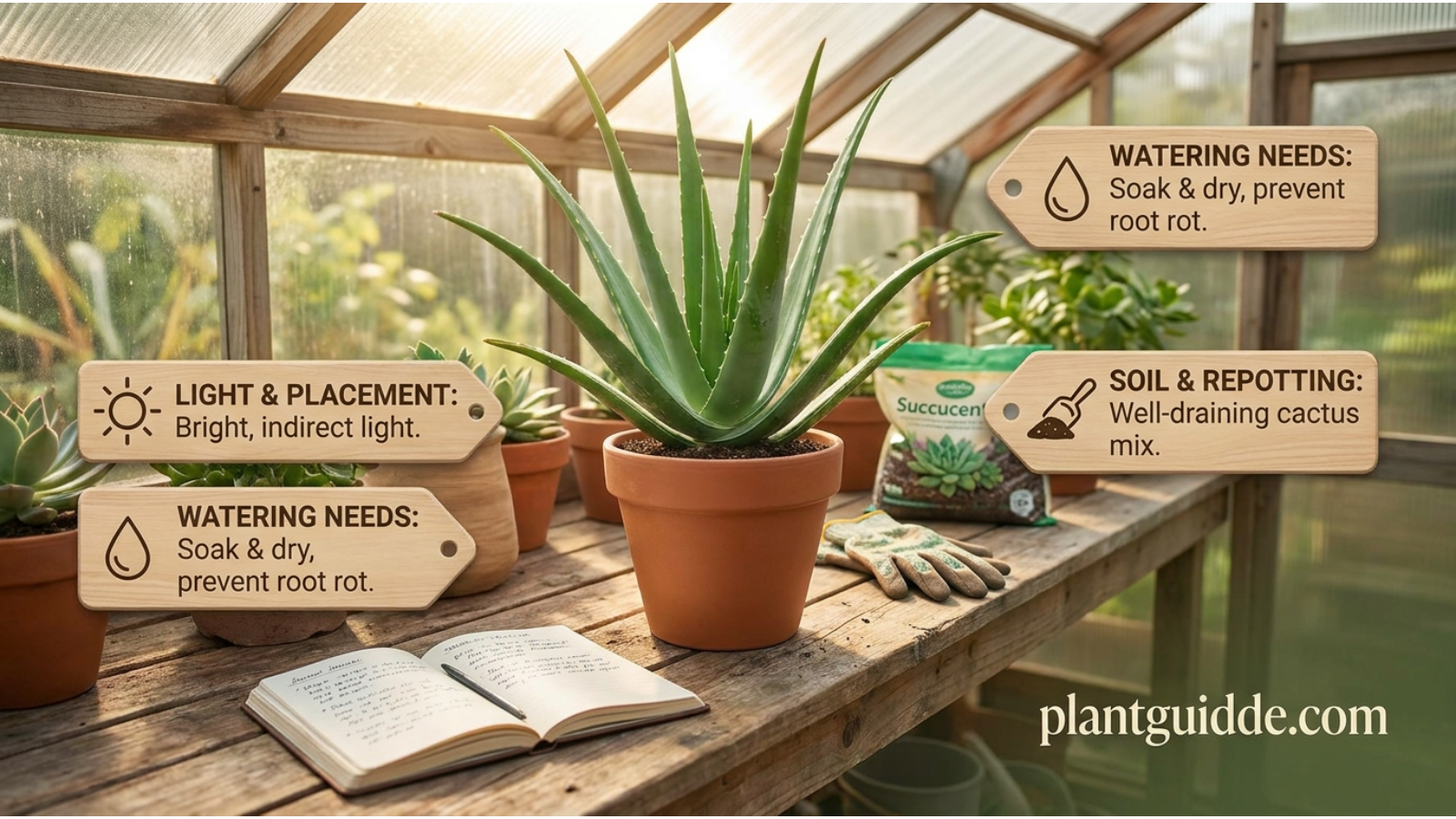
Aloe Vera Care Requirements at a Glance
| Care factor | What aloe vera prefers | Common problem |
|---|---|---|
| Light | Bright light, including several hours of direct sun when acclimated | Weak, stretched growth |
| Water | Thorough watering followed by significant drying | Root rot from frequent watering |
| Soil | Fast-draining succulent or cactus mix | Roots staying wet too long |
| Pot | Drainage hole and appropriate size | Standing water |
| Temperature | Warm, stable conditions | Cold damage |
| Humidity | Average indoor humidity is usually adequate | Excess humidity with poor airflow |
| Fertilizer | Light feeding during active growth | Overfertilization |
| Airflow | Good circulation | Damp, stagnant conditions |
| Repotting | Only when necessary | Root disturbance or oversized pot |
The exact schedule will vary with light, temperature, pot size, soil, and season. A fixed watering calendar is less reliable than checking the plant and soil.
How Much Light Does Aloe Vera Need?
Light is one of the most important factors in successful aloe vera care.
Aloe generally prefers bright light, and it can tolerate substantial direct sunlight when gradually acclimated. A bright south- or southwest-facing window can work well in many homes, although the intensity of sunlight varies significantly by location and season.
If the plant has been growing in a dim indoor spot, placing it immediately into several hours of intense afternoon sunlight can cause leaf scorch.
Signs your aloe needs more light
Watch for:
- Leaves becoming unusually long or thin
- The plant leaning strongly toward a window
- Wide spacing between new growth
- Pale or less vigorous foliage
- A rosette that becomes loose instead of compact
This stretched growth is sometimes called etiolation. It happens because the plant is trying to position itself where it can capture more light.
How to increase light safely
If your aloe has been kept in low light:
- Move it closer to a bright window.
- Start with gentler morning or filtered light.
- Gradually increase direct exposure over several days or weeks.
- Monitor the leaves for bleaching or scorched patches.
- Rotate the pot periodically if growth becomes noticeably one-sided.
Expert tip: A sudden change in light can be more stressful than the stronger light itself. Acclimation is especially important when moving an aloe from an indoor shelf to outdoor sunlight.
Image Suggestion: A visual comparison showing compact, healthy aloe growth beside stretched aloe caused by insufficient light.
How to Water an Aloe Vera Plant Correctly
Watering is where many aloe plants go wrong.
The best approach is usually deep watering followed by a period of drying, rather than giving the plant a small amount of water every few days.
When watering, thoroughly moisten the soil until excess water flows from the drainage hole. Then empty any water collected in the saucer or outer container.
After that, allow the soil to dry substantially before watering again.
Why frequent watering causes problems
Aloe roots need oxygen. If the soil stays wet continuously, the root zone can become poorly aerated. Over time, this may encourage root deterioration and fungal or bacterial problems.
A beginner may see a slightly wrinkled leaf and assume the plant needs water immediately. But wrinkling is not enough information by itself.
Before watering, check:
- How dry the soil is several inches below the surface
- Whether the pot feels noticeably lighter
- Whether the leaves are firm or becoming soft
- How much light the plant receives
- How long the soil normally takes to dry
A practical watering method
Step 1: Check the soil rather than the calendar.
Step 2: If the soil is still significantly moist, wait.
Step 3: When the soil has dried sufficiently, water thoroughly.
Step 4: Let excess water drain completely.
Step 5: Never leave the pot sitting in collected water.
The time between waterings can be much longer in a cool, dim room than in a warm, bright location.
Should you water aloe vera from the top or bottom?
Either method can work if the soil becomes thoroughly moistened and excess water can drain away.
Top watering is generally straightforward for most indoor plants. Pour water around the soil rather than repeatedly dumping water into the center of the rosette.
The important issue is not whether water comes from above or below. The important issue is achieving adequate moisture without keeping the roots wet for too long.
How Often Should You Water Aloe Vera?
There is no universally correct number of days.
As a general starting point, an actively growing aloe in a warm, bright environment may need watering every couple of weeks, while one growing in lower light or cooler conditions may go considerably longer.
Use the plant’s environment to guide you.
Aloe may need water sooner when:
- Light levels are high
- Temperatures are warm
- The pot is small
- The soil dries quickly
- The plant is actively growing
- Air circulation is good
Aloe may need water less often when:
- Light is weak
- Temperatures are cool
- The pot is large
- The soil retains moisture
- Growth has slowed
- The plant is indoors during a darker season
The mistake to avoid is treating “once a week” or “every two weeks” as a rule. The same watering schedule can be appropriate for one aloe and disastrous for another.
Choosing the Best Soil for Aloe Vera
Aloe vera needs soil that drains quickly.
Ordinary moisture-retaining potting soil can remain wet for too long, particularly when combined with a large container or low indoor light.
A commercial cactus or succulent mix is a convenient starting point. If necessary, the mix can be amended with a suitable coarse mineral component to improve drainage and reduce prolonged moisture retention.
The goal is not simply to make the soil dry immediately after watering. It should hold enough moisture to hydrate the plant while allowing excess water and air to move through the root zone.
What makes good aloe soil?
Look for a mixture that:
- Drains quickly
- Does not compact easily
- Allows air into the root zone
- Does not remain soggy for extended periods
- Provides enough support for the plant
Important: Even excellent soil cannot compensate for a container with no drainage hole.
Choosing the Right Pot
The container is part of the watering system.
Aloe vera should generally be planted in a pot with a functional drainage hole. Terracotta can be useful because its porous walls can allow moisture to evaporate more readily than some glazed or plastic containers.
The pot does not need to be enormous.
An oversized container holds more soil, and more soil can mean more retained moisture around the roots after watering. This becomes particularly problematic if the plant is small and growing slowly.
When choosing a pot:
- Select a container appropriate for the root system.
- Make sure it has drainage.
- Avoid unnecessarily deep or oversized pots.
- Repot when roots become crowded or the existing soil has deteriorated.
- Make sure the container is stable enough to support the plant.
Image Suggestion: Diagram showing an aloe planted in a properly sized pot with a drainage hole versus an oversized container holding excess wet soil.
How to Repot Aloe Vera
Aloe vera does not need frequent repotting simply because a year has passed.
Repot when there is a practical reason, such as:
- Roots filling the container
- The plant becoming unstable
- Poorly draining or compacted soil
- A damaged container
- Numerous offsets crowding the pot
- Soil that no longer drains effectively
Repotting steps
- Prepare a clean pot with a drainage hole.
- Use fresh, fast-draining succulent soil.
- Carefully remove the aloe from its existing container.
- Inspect the roots for damage or decay.
- Remove obviously unhealthy material with clean tools if necessary.
- Position the plant at an appropriate depth.
- Fill around the roots with fresh soil.
- Allow the plant to settle before returning to a normal watering routine.
Avoid burying the central rosette deeply in the soil. Keeping the crown and leaf bases appropriately positioned helps reduce the risk of moisture-related problems.
What Temperature Is Best for Aloe Vera?
Aloe vera prefers warm conditions and generally performs well at normal indoor temperatures.
It is much less comfortable with prolonged cold exposure. Sudden temperature drops, cold drafts, and contact with freezing conditions can damage the leaves.
Keep aloe away from:
- Freezing temperatures
- Cold drafts
- Poorly insulated windows during cold weather
- Direct contact with very cold glass
- Sudden environmental changes
If you move an indoor aloe outdoors during warm weather, remember that temperature is not the only variable changing—light intensity, wind, and watering requirements change too.
Does Aloe Vera Need High Humidity?
Usually, no.
One of the advantages of growing aloe indoors is that it generally does not require the high humidity that many tropical houseplants prefer.
Normal household humidity is often sufficient when the plant receives good light, has appropriate soil, and is not kept constantly wet.
This means routine misting is generally unnecessary.
In fact, repeatedly keeping the foliage and surrounding environment damp without adequate airflow can create an environment that is less suitable than simply allowing the plant to remain relatively dry.
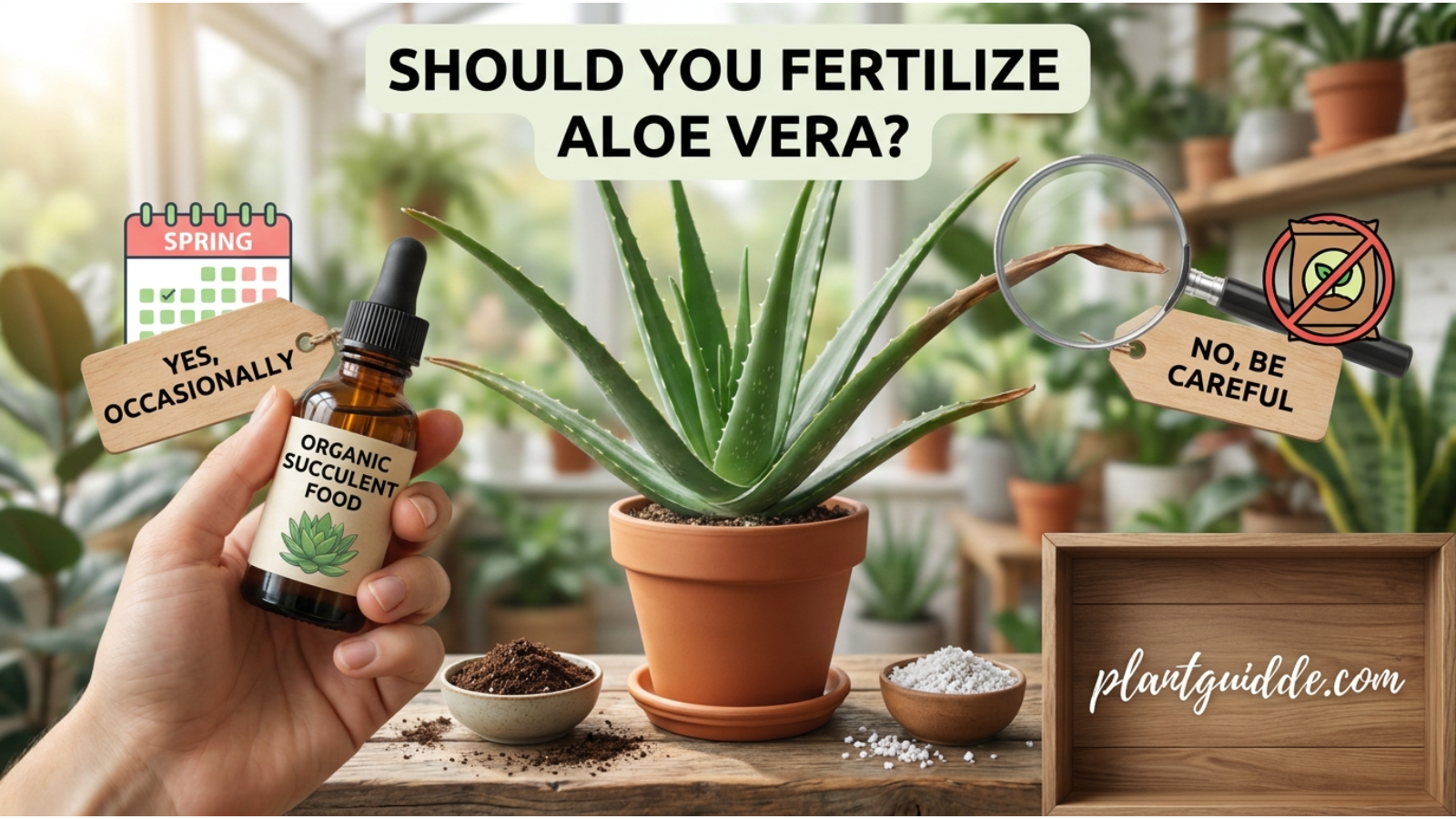
Should You Fertilize Aloe Vera?
Aloe vera is not a heavy feeder.
During active growth, it can benefit from occasional, appropriately diluted fertilizer, but frequent feeding is unnecessary and may create problems.
Too much fertilizer can contribute to excessive salt accumulation in the soil and may damage roots or foliage.
For most home growers, the priority should be:
Light → drainage → appropriate watering → healthy roots → fertilizer.
Fertilizer cannot fix poor light or chronically wet soil.
How to Recognize a Healthy Aloe Vera Plant
A healthy aloe usually has:
- Firm, fleshy leaves
- Strong coloration appropriate to the variety and growing conditions
- Compact growth
- New leaves emerging from the center
- A stable root system
- No persistent soggy soil
- No widespread mushy or collapsing tissue
Healthy aloe leaves can vary somewhat in color and firmness depending on light, water availability, age, and environmental conditions.
Do not judge the plant by one leaf alone. Look at the overall pattern of growth.
Aloe Vera Problems: What the Leaves Are Telling You
One of the most useful aloe vera care skills is learning to diagnose symptoms rather than reacting to them individually.
Aloe Vera Leaves Turning Yellow
Yellow leaves can have several causes, but excess moisture is an important possibility, particularly when several leaves are yellowing and the soil remains wet for long periods.
Check:
- Soil moisture
- Drainage
- Pot size
- Root condition
- Recent watering frequency
- Light levels
If the soil is constantly damp, improving drainage and correcting the watering pattern should be a priority.
An older lower leaf occasionally yellowing and dying naturally is different from widespread yellowing throughout the plant.
Aloe Vera Leaves Turning Brown
Brown areas can result from different forms of stress.
Possible causes include:
- Excessive direct sunlight after a sudden move
- Severe dryness
- Physical damage
- Cold injury
- Root problems
- Environmental stress
Look at the location and texture of the brown area.
Dry, crispy patches after moving an aloe suddenly into intense sunlight suggest a different problem from soft, dark, collapsing tissue associated with excessive moisture.
Aloe Vera Leaves Curling or Wrinkling
Wrinkled or curling leaves can indicate that the plant is not maintaining enough internal water.
But that does not automatically mean “water immediately.”
Check the soil first.
If the soil is bone dry and the plant is receiving strong light, watering may be appropriate. If the soil is wet but the leaves remain wrinkled or soft, the problem may instead involve damaged roots that are unable to function normally.
This distinction is important:
A plant can have wet soil and still show signs of water stress.
The roots—not the amount of water sitting in the pot—determine whether the plant can actually absorb it effectively.
Aloe Vera Leaves Becoming Soft or Mushy
Soft, translucent, or mushy leaves are a warning sign.
If the plant has been watered frequently and the soil stays wet, inspect the roots and lower stem area.
Healthy roots should not have a persistently rotten appearance or unpleasant odor.
If significant root damage is present, simply withholding water may not solve the problem. The damaged roots may need to be removed and the plant repotted into fresh, appropriately draining soil.
Aloe Vera Plant Falling Over
Aloe can become unstable for several reasons.
The plant may be:
- Growing toward a light source
- Top-heavy
- Planted in an unsuitable container
- Developing weak or damaged roots
- Producing numerous offsets around the base
First inspect the roots and soil. If the roots are healthy, increasing light and using a stable, appropriately sized pot may help.
Aloe Vera Leaves Looking Thin
Thin leaves can indicate that the plant is not maintaining adequate water reserves.
Possible explanations include:
- Prolonged dryness
- Root damage
- Poor root development
- Very intense conditions combined with insufficient watering
- Low light affecting overall growth
Again, inspect the soil before changing your watering routine.
Common Aloe Vera Care Mistakes
1. Watering on a Schedule
A calendar cannot account for changes in temperature, sunlight, soil, or pot size.
Better approach: Check the soil and the plant’s condition.
2. Using a Pot Without Drainage
Water needs somewhere to go.
Better approach: Always use a container with a drainage hole for routine aloe cultivation.
3. Keeping Aloe in a Dark Corner
Aloe may survive in low light for a while, but survival is not the same as healthy growth.
Better approach: Provide bright light and acclimate the plant before exposing it to strong direct sunlight.
4. Using Heavy Potting Soil
Dense soil can remain wet too long.
Better approach: Use a fast-draining succulent-oriented mix.
5. Moving Aloe Into Full Sun Suddenly
A plant adapted to indoor low light can scorch when suddenly exposed to intense outdoor sunlight.
Better approach: Increase light exposure gradually.
6. Choosing a Huge Decorative Pot
A large container may look attractive but can create a much larger volume of moisture-retaining soil than the plant needs.
Better approach: Choose the pot based on the root system rather than the visual size of the plant.
7. Assuming Wrinkled Leaves Always Mean “More Water”
Wrinkling can result from dehydration, but it can also occur when damaged roots cannot absorb water properly.
Better approach: Diagnose the root environment before watering again.
Aloe Vera Care Through the Seasons
Spring
As light and temperatures increase, aloe may resume active growth.
This is a good time to:
- Check whether the plant needs repotting
- Increase watering only as the soil-drying rate changes
- Begin or resume light fertilization if appropriate
- Monitor new growth
Do not increase watering simply because spring has arrived. Increase it because the plant is actually using water more rapidly.
Summer
Bright light and warm temperatures can increase water use.
Outdoor plants may dry substantially faster than indoor plants, particularly in wind or intense sunlight.
Check the soil more frequently, but still allow appropriate drying between waterings.
Fall
As daylight decreases, water consumption may slow.
Avoid continuing a summer watering routine automatically. A plant that once dried in several days may now remain moist for much longer.
Winter
Indoor aloe often needs considerably less water during darker, cooler periods.
Keep the plant in the brightest practical location and be especially careful about cold windows and overwatering.
Seasonal rule: Adjust watering based on drying speed, not the name of the season alone.
How to Care for Aloe Vera Outdoors
Aloe vera can perform very well outdoors in suitable climates.
The main challenge is transitioning it from indoor conditions.
If the plant has been growing behind glass in relatively weak light, gradually expose it to stronger sunlight.
Outdoor aloe also experiences:
- More intense sunlight
- Wind
- Faster drying
- Rain
- Larger temperature fluctuations
If rainfall is frequent, excellent drainage becomes even more important.
Aloe should not be placed where water repeatedly collects around the roots.
How to Propagate Aloe Vera From Offsets
A mature aloe vera plant often produces small offsets, sometimes called pups, around its base.
These can eventually be separated and grown as individual plants.
Basic propagation process
- Wait until the offset is sufficiently developed.
- Remove the plant carefully from the pot if necessary.
- Separate the offset with as much healthy root material as practical.
- Allow damaged cut surfaces to dry appropriately before planting when needed.
- Place the offset in a small container with fast-draining soil.
- Provide bright light without immediately exposing a newly divided plant to extreme conditions.
- Water cautiously while the young plant establishes.
The key is not to treat a newly separated offset exactly like a large, established plant. Its root system is smaller, so excessive moisture can remain around the roots more easily.
Image Suggestion: Step-by-step infographic showing aloe offset separation, drying, planting, and establishment.
When Should You Cut Aloe Vera Leaves?
Remove leaves when they are:
- Completely dead
- Severely damaged
- Diseased or rotting
- Blocking necessary maintenance
Use a clean, sharp tool and avoid repeatedly cutting healthy leaves simply for appearance.
If you harvest aloe leaves for household purposes, remember that fresh aloe leaf contains latex and other compounds in addition to the inner gel. Aloe intended for ingestion should not be treated as automatically safe simply because it comes from a home-grown plant.
For routine ornamental care, it is usually better to focus on maintaining healthy growth rather than repeatedly harvesting leaves.
A Simple Aloe Vera Care Routine
If you want a practical routine without overcomplicating things, use this checklist.
Every few days
Look at the plant.
You do not necessarily need to water it.
Check for:
- New growth
- Leaf damage
- Pests
- Unusual discoloration
- Changes in firmness
Before watering
Check:
- Soil moisture
- Pot weight
- Recent watering
- Light conditions
- Temperature
Every few weeks
Inspect:
- Drainage
- Root-zone moisture
- Leaf condition
- Signs of pests
- Whether growth is becoming stretched
Every few months
Review the whole environment:
- Is the plant receiving enough light?
- Is the soil still draining well?
- Has the pot become too small?
- Has the seasonal light changed?
- Has your watering frequency changed with the environment?
This approach is more reliable than following a rigid care calendar.
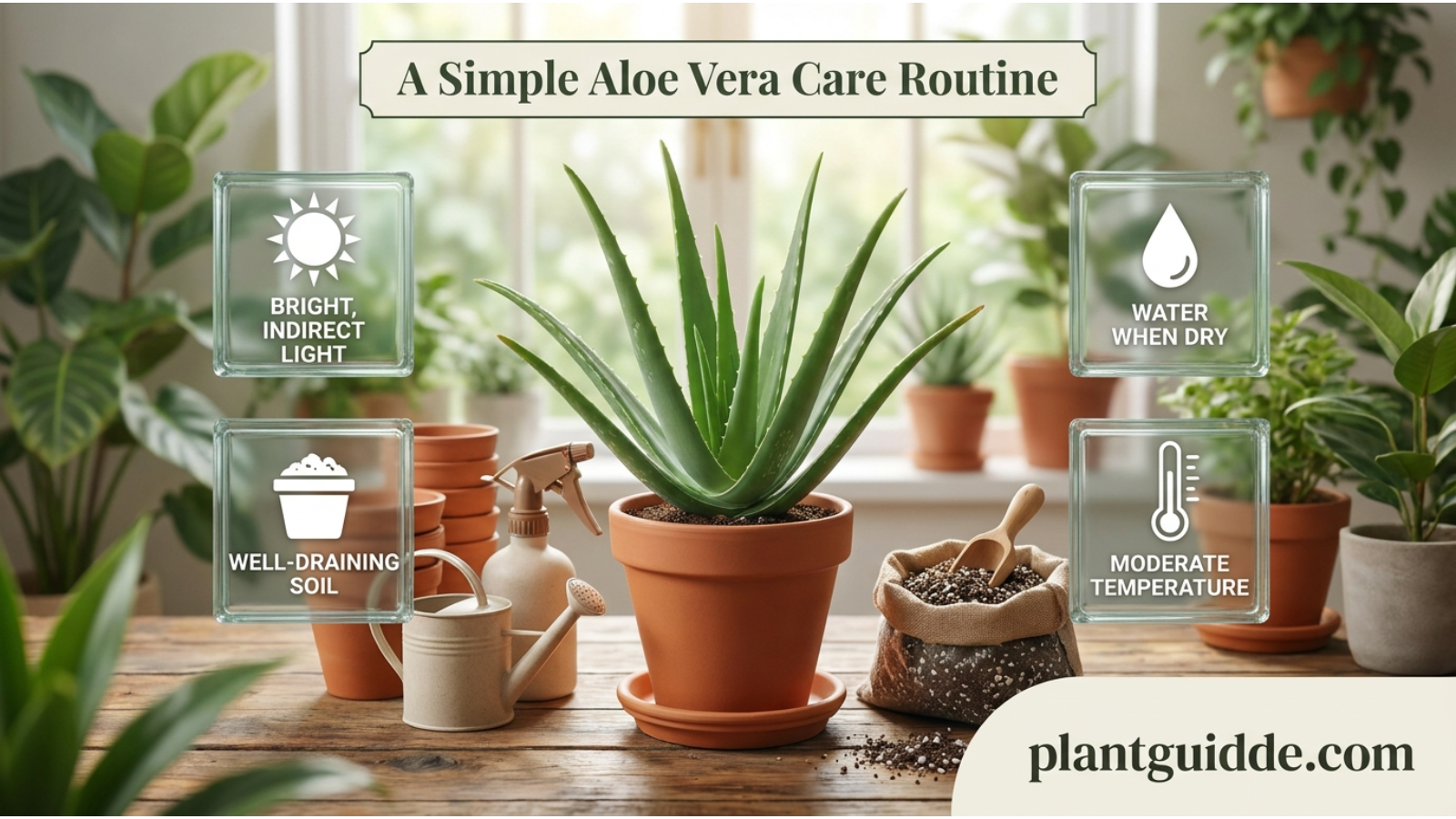
Aloe Vera Care: The Most Important Priorities
If you remember only five things from this guide, make them these:
1. Give it plenty of light.
Aloe is a light-loving succulent and usually grows best when it receives strong indoor light.
2. Let the soil dry between waterings.
Constant moisture is one of the biggest risks.
3. Use fast-draining soil.
The root zone should not stay saturated for extended periods.
4. Always provide drainage.
A drainage hole is far more important than a decorative container.
5. Diagnose before changing your routine.
Yellow leaves, wrinkles, brown patches, and softness can have different causes.
FAQs:
How often should I water an aloe vera plant?
Water when the soil has dried substantially rather than following a fixed weekly schedule. Bright, warm conditions may require more frequent watering, while cool or low-light conditions usually require less.
Does aloe vera need direct sunlight?
Aloe vera generally benefits from bright light and can tolerate direct sunlight when properly acclimated. Plants moved suddenly from low indoor light into intense sun may develop leaf scorch.
Why are my aloe vera leaves turning yellow?
Overwatering is a common cause, particularly when the soil remains wet for long periods. Check the drainage, soil moisture, pot size, and root condition before watering again.
Why is my aloe vera plant turning brown?
Brown areas can result from sun stress, severe dryness, cold damage, physical injury, or root problems. Examine the texture and location of the damaged tissue and consider recent changes in the plant’s environment.
Should I mist my aloe vera plant?
Usually not. Aloe vera does not generally require misting because it is adapted to relatively dry conditions. Good drainage and appropriate watering are much more important.
What is the best soil for aloe vera?
Use a fast-draining cactus or succulent mix. The soil should retain enough moisture to hydrate the plant while allowing excess water and air to move through the root zone.
Can aloe vera grow indoors?
Yes. Aloe vera can grow successfully indoors when it receives sufficient bright light and is planted in well-draining soil in a container with drainage.
Why is my aloe vera plant leaning?
Leaning can result from insufficient light, top-heavy growth, unstable soil, or root problems. If the plant is consistently reaching toward a window, increase its light gradually.
Can aloe vera survive without water for a long time?
Aloe vera is drought-adapted and can tolerate periods of dryness, but that does not mean it should be deliberately neglected. The goal is to provide adequate water while allowing the root zone to dry between waterings.
When should I repot aloe vera?
Repot when the plant has become root-bound, unstable, crowded with offsets, or is growing in deteriorated or poorly draining soil. There is no need to repot simply because a particular amount of time has passed.
Can I grow aloe vera from a leaf?
Aloe vera is generally propagated more reliably from offsets or pups than from individual leaves. A detached leaf does not necessarily develop into a new plant in the same way some other succulents can.
Conclusion
Learning how to care for an aloe vera plant becomes much easier when you stop treating watering as the main task and start managing the entire root environment.
Give aloe plenty of appropriate light, use fast-draining soil, choose a container with drainage, and water thoroughly only after the soil has had enough time to dry. Then pay attention to what the plant is showing you.
If the leaves are yellow and the soil stays wet, investigate excess moisture. If the plant is stretched and leaning, examine its light. If leaves are wrinkled, check both moisture and root health instead of automatically adding more water.
The healthiest aloe vera plants are usually not the ones receiving the most attention. They are the ones growing in a bright, well-drained, relatively stable environment where the roots can alternate between moisture and drying.

Asad Mumtaz is a dedicated plant enthusiast and gardening writer with a passion for helping people care for their plants successfully. He specializes in plant care guides, indoor gardening, and practical growing tips for all skill levels. His content focuses on making gardening simple, enjoyable, and rewarding. Through his work, Asad shares reliable advice to help readers create thriving green spaces.