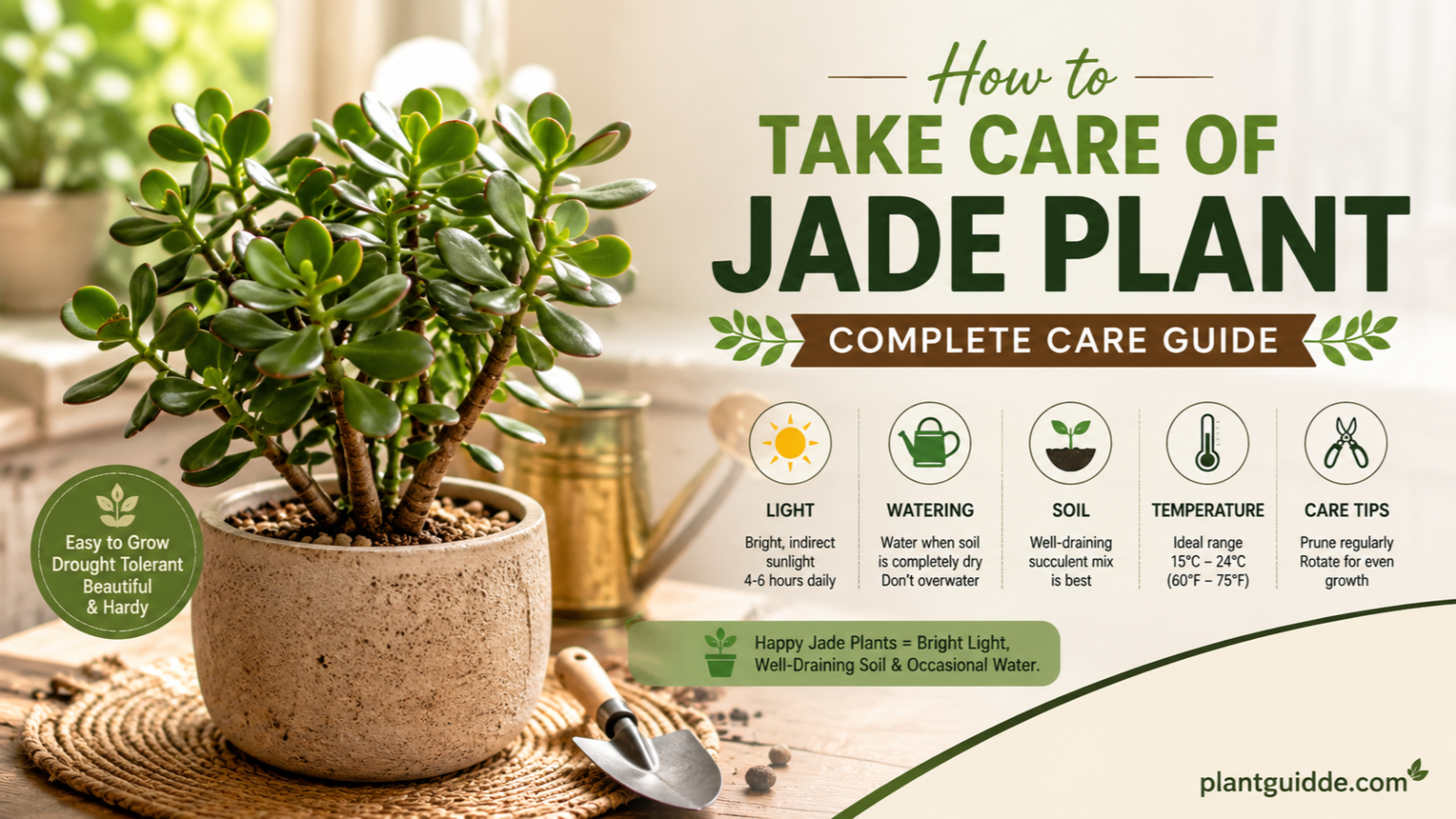
Learning how to take care of jade plant starts with understanding one simple fact: its thick, fleshy leaves and stems store water. This makes Crassula ovata drought-tolerant, but also sensitive to overwatering.
Many beginners make the mistake of watering a jade plant whenever its leaves feel slightly soft. But if the soil is still damp, more water can damage the roots. Yellow leaves, leaf drop, soft stems, brown spots, and slow growth are often signs that something is wrong with its growing conditions.
Good jade plant care indoors is not about following a strict watering schedule. It is about giving the plant strong light, fast-draining soil, proper drainage, and enough time for the roots to dry between waterings.
This guide explains how to create those conditions, adjust care through the seasons, and recognize common problems before they become serious.
Quick Answer
To take care of a jade plant, give it plenty of bright light, use fast-draining soil, and water thoroughly only after the soil has dried out. Keep it in a pot with drainage holes and avoid letting the roots sit in water. Jade plants also benefit from moderate temperatures, occasional fertilizing during active growth, and pruning when needed. The most important rule is simple: let the soil dry between waterings rather than following a fixed watering schedule.
Understanding the Jade Plant
The jade plant, commonly known as Crassula ovata, is a succulent native to southern Africa. Its thick leaves and woody stems are specialized for storing water.
That explains several important aspects of jade plant care:
- It does not need constantly moist soil.
- It can tolerate periods of dryness better than prolonged wetness.
- Strong light helps maintain compact, sturdy growth.
- Poor drainage is particularly problematic.
- Mature plants can become heavy because their stems and leaves contain substantial water.
Jade plants can live for many years with appropriate care and eventually develop thick, branching, almost miniature-tree-like stems. This makes them particularly rewarding houseplants for people who want something that can mature rather than simply survive for a season.
Image Suggestion: A labeled botanical illustration showing a mature jade plant, fleshy leaves, woody stems, roots, and the relationship between water storage and drought tolerance.
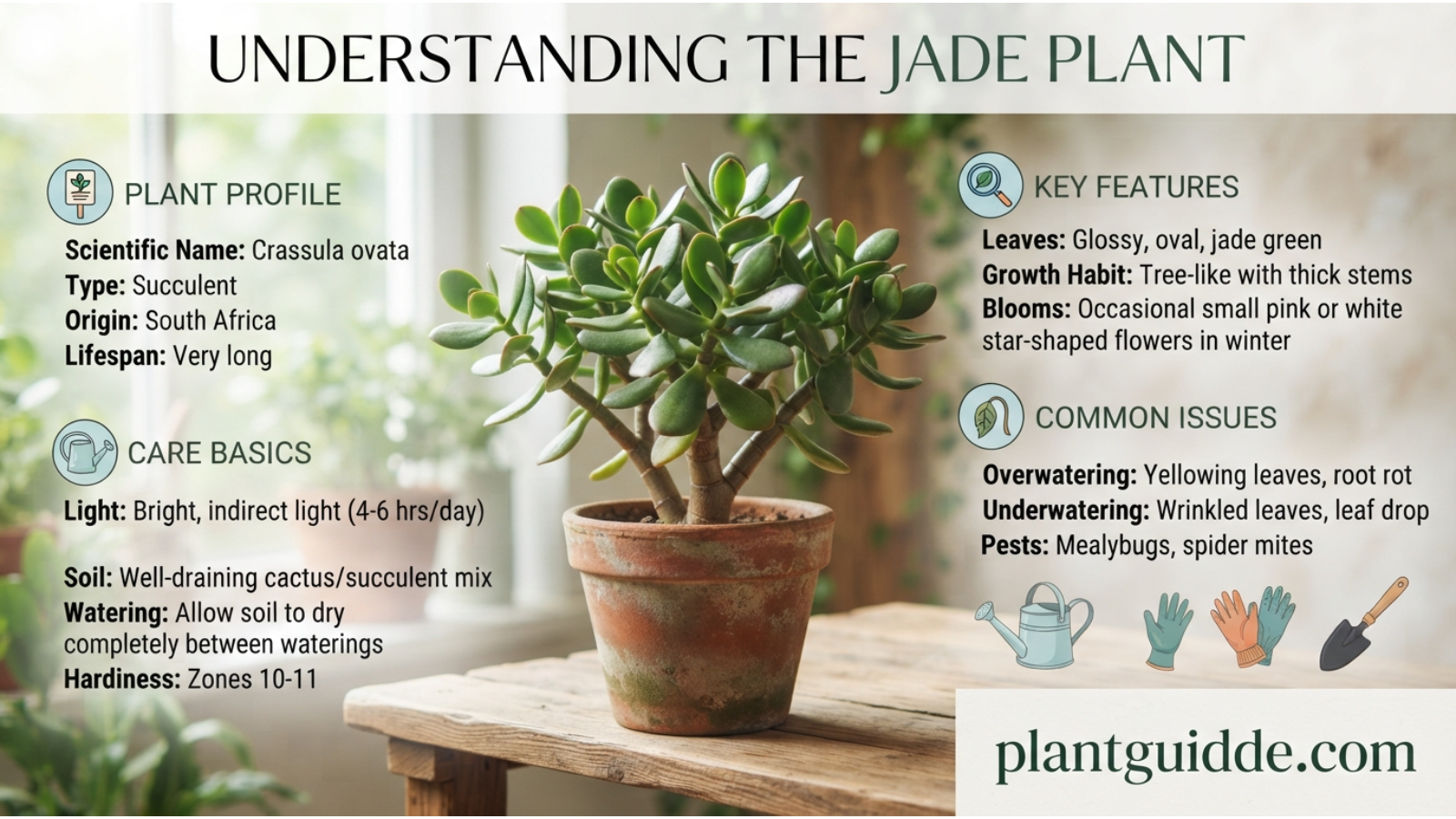
Jade Plant Care Requirements at a Glance
| Care factor | What a jade plant needs | What to watch for |
|---|---|---|
| Light | Bright light, including several hours of direct sun when acclimated | Stretching, pale growth, leaf scorch |
| Water | Thorough watering followed by a drying period | Yellow leaves, shriveled leaves, soft stems |
| Soil | Fast-draining succulent or cactus mix | Soil remaining wet for many days |
| Pot | Drainage holes are essential | Water collecting at the bottom |
| Temperature | Warm, stable indoor conditions | Cold drafts and sudden temperature changes |
| Humidity | Average household humidity is usually adequate | Excessively humid, poorly ventilated conditions |
| Fertilizer | Light feeding during active growth | Weak growth or fertilizer buildup |
| Pruning | Occasional pruning to shape and encourage branching | Leggy or unbalanced growth |
Give Your Jade Plant Enough Light
Light is one of the most important parts of jade plant care indoors.
Jade plants naturally grow in bright environments, so placing one in a dim corner may keep it alive temporarily but usually produces weaker, less compact growth.
A jade plant receiving insufficient light may develop:
- Long gaps between leaves
- Thin or weak stems
- Pale green foliage
- One-sided growth toward a window
- Smaller new leaves
- A generally stretched appearance
This stretched growth is called etiolation. Once a stem has become excessively elongated, moving the plant into brighter light will improve future growth, but it will not automatically make the existing stretched section compact again. Pruning may be necessary.
Where should you place a jade plant?
A bright south-, southeast-, or west-facing window can work well indoors, depending on the intensity of sunlight and the climate.
If your jade plant has been sitting in relatively low light, do not suddenly place it in intense midday sun. Gradually increase its exposure so the leaves have time to adapt.
Signs your jade plant needs more light
If the newest growth is noticeably stretched or the plant repeatedly leans toward the window, light is one of the first things to investigate.
Practical tip: Rotate the pot every week or two if the plant receives light primarily from one direction. This encourages more even growth.
Image Suggestion: Side-by-side comparison of a compact jade plant growing near a bright window and a stretched jade plant growing in low light.
Get Jade Plant Watering Right
If there is one part of how to take care of jade plant that beginners should master first, it is watering.
The goal is not to give your jade plant a tiny amount of water every few days. Instead, water thoroughly when the soil has dried sufficiently, then allow excess water to drain away.
How often should you water a jade plant?
There is no reliable universal schedule because watering frequency depends on:
- Pot size
- Soil composition
- Drainage
- Amount of sunlight
- Indoor temperature
- Air movement
- Season
- Plant size
A jade plant in bright light and a small porous pot may dry much faster than a larger plant sitting in a heavy container with dense soil.
How to know when it is time to water
Check the soil rather than relying solely on the calendar.
Insert a finger several inches into the potting mix or use another reliable method to assess moisture. If the soil is still clearly damp, wait.
When the mix has dried substantially, water the plant thoroughly until some water flows from the drainage hole.
Then empty any water collected in the saucer or outer container.
Why small sips of water can cause problems
Giving a jade plant a small splash every few days can create an awkward middle ground: the upper soil may appear dry while moisture remains deeper around the roots.
Thorough watering followed by a drying period is generally a better approach than constant light watering.
Expert insight: The question is not simply “How many times per week should I water my jade plant?” The better question is “How quickly does this particular potting mix dry in this particular location?”
Choose Fast-Draining Jade Plant Soil
The best jade plant soil allows water to move through the root zone without remaining saturated for long periods.
A commercial cactus or succulent mix can be a convenient starting point. Some growers improve drainage further by incorporating materials such as pumice, perlite, or coarse mineral components.
The exact recipe is less important than the final behavior of the mix.
Good jade plant soil should:
- Drain excess water efficiently
- Provide enough air around the roots
- Avoid compacting easily
- Dry reasonably between waterings
- Remain structurally stable over time
A heavy, moisture-retentive potting mix can stay wet for too long, especially in a low-light room.
Don’t confuse drainage with dryness
Fast drainage does not mean the plant should be planted in material that contains no organic matter whatsoever.
The objective is a balanced root environment where the plant receives water when needed but does not remain surrounded by stagnant moisture.
Image Suggestion: Close-up diagram comparing well-draining succulent soil with dense, water-retentive potting soil.
Always Use a Pot With Drainage Holes
Even excellent soil cannot compensate for a container that traps excess water.
A jade plant should ideally be grown in a container with at least one effective drainage hole.
After watering, excess moisture needs somewhere to go.
Why drainage matters
If water remains trapped at the bottom of the container, the lower portion of the root zone can remain wet even when the surface looks dry.
This is one reason a jade plant can develop problems despite apparently reasonable watering habits.
What about decorative pots?
You can certainly place a jade plant inside a decorative cover pot, but make sure the actual growing container can drain.
After watering, do not leave the nursery pot sitting in accumulated water.
Keep the Temperature Stable
Jade plants generally perform well in normal indoor temperatures.
The bigger concern is often not the exact temperature but sudden environmental changes.
Avoid placing the plant directly against:
- Cold windows during freezing weather
- Heating vents
- Strong air-conditioning outlets
- Frequently opened exterior doors
- Areas with extreme temperature fluctuations
A stable environment makes it easier to maintain consistent soil moisture and reduces unnecessary stress.
Humidity Usually Isn’t the Main Problem
Unlike many tropical houseplants, jade plants do not require extremely high humidity.
Average indoor humidity is often sufficient.
This is useful because beginners sometimes focus heavily on misting while overlooking much more important factors such as light and drainage.
Regularly misting a jade plant is not a substitute for proper watering, suitable soil, or adequate light.
If the plant is struggling, investigate the root environment and light exposure before assuming it needs more humidity.
Fertilize Jade Plants Carefully
Jade plants do not require heavy feeding.
During active growth, a balanced fertilizer formulated for houseplants or succulents can be applied according to its label directions.
Avoid the temptation to fertilize more frequently simply because the plant is growing slowly.
Slow growth can result from insufficient light, unsuitable temperatures, poor roots, or seasonal dormancy—not necessarily a fertilizer deficiency.
When should you fertilize?
For many indoor jade plants, feeding during the active growing period makes more sense than fertilizing heavily during periods of slow growth.
Always apply fertilizer to soil that is appropriately moist rather than using concentrated fertilizer on severely dry roots.
Prune Your Jade Plant for Better Shape
Pruning is not just cosmetic.
It can help create a stronger, more balanced plant by controlling awkward growth and encouraging branching.
You may want to prune when:
- A stem becomes excessively long
- The plant grows heavily in one direction
- Branches are crossing or overcrowded
- You want a more tree-like shape
- A damaged or unhealthy section needs removal
Use clean, sharp pruning tools and make deliberate cuts rather than repeatedly trimming tiny pieces from random locations.
How much can you prune?
Healthy jade plants can tolerate substantial pruning, but beginners should still avoid removing large amounts of healthy foliage unnecessarily.
A better approach is to shape the plant gradually while observing where new branches develop.
Expert tip: If you want a fuller jade plant, think about where you want branches to emerge before making a cut. Pruning is essentially a way of redirecting future growth.
Image Suggestion: Diagram showing where to prune a leggy jade stem to encourage branching.
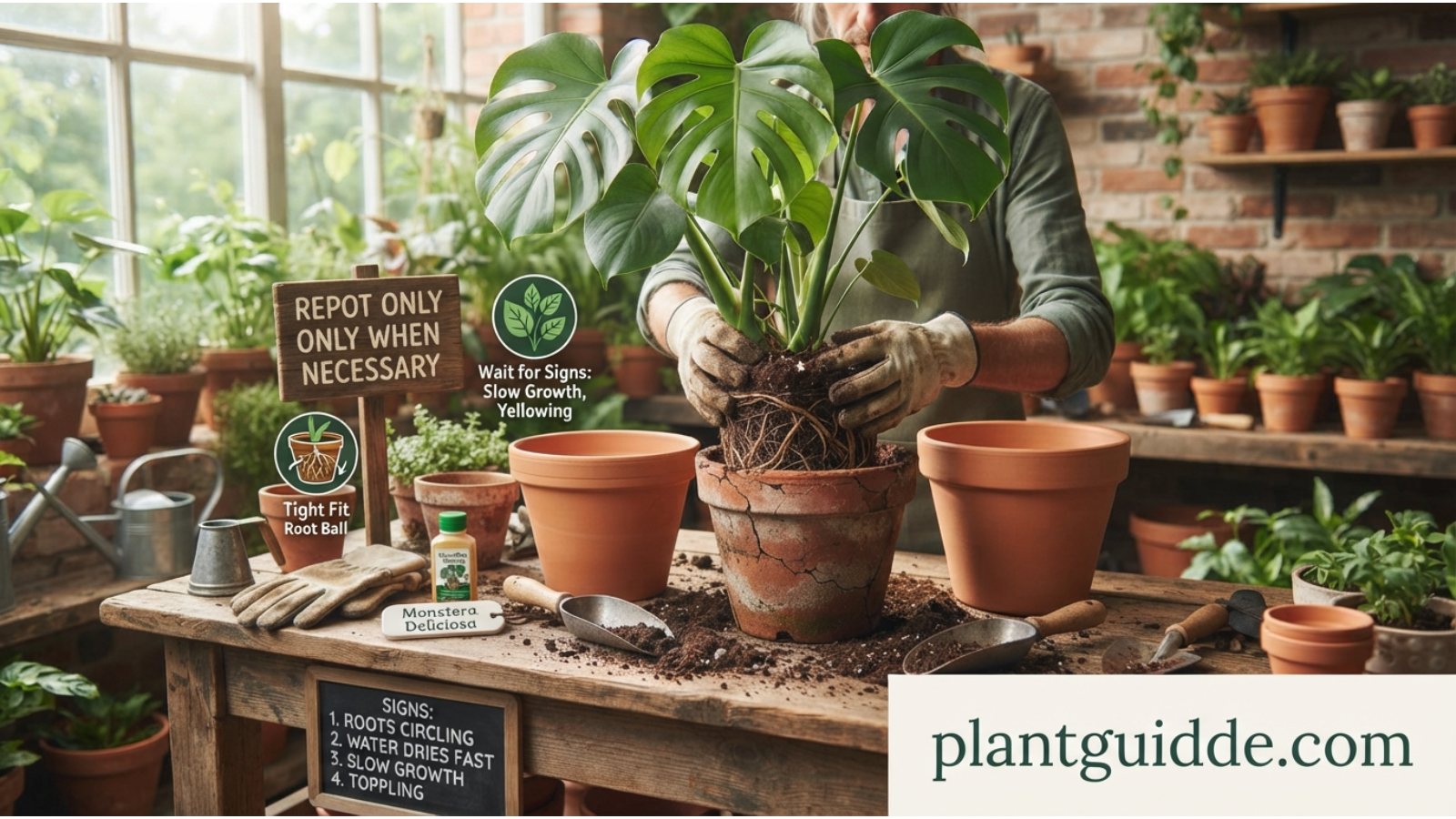
Repot Only When Necessary
Jade plants do not need to be repotted every year simply because the calendar says so.
Repotting can be useful when:
- Roots are tightly circling the container
- The soil has broken down or become poorly draining
- The plant has become unstable
- The container is clearly too small
- There is a persistent root-related problem
Choose a new container only modestly larger than the existing root ball.
A dramatically oversized pot can hold more moisture than the plant can use, increasing the time the soil stays wet.
After repotting
Do not immediately compensate for transplanting by keeping the soil constantly wet.
Give the plant time to settle and adjust to its new root environment while maintaining appropriate moisture.
A Simple Weekly Jade Plant Care Routine
You do not need an elaborate schedule to keep a jade plant healthy.
Instead, perform a quick inspection.
Check these five things:
1. Soil moisture
Is the soil still damp, or has it dried sufficiently?
2. Light
Is the plant receiving strong enough light without signs of sudden sun stress?
3. Leaves
Look for yellowing, unusual spots, shriveling, or unexplained leaf drop.
4. Stems
Healthy stems should not feel unusually soft or mushy.
5. Pests
Inspect leaf joints and stems for cottony insects, scale, or other unusual activity.
This takes only a few minutes and is much more useful than blindly following a watering calendar.
How to Recognize an Overwatered Jade Plant
Overwatering does not simply mean “giving too much water once.”
The more serious issue is often watering again before the root zone has had enough time to dry.
Possible warning signs include:
- Yellowing leaves
- Leaves dropping unexpectedly
- Soft or mushy stems
- Dark or damaged areas near the base
- Soil remaining wet for an unusually long time
- A sour or unpleasant smell from the soil
- Declining growth despite frequent watering
If the stem becomes soft near the soil line, take the situation seriously. Severe moisture-related root or stem problems can progress quickly.
What should you do?
Stop adding water and assess the soil and root environment.
If the soil is staying wet because it is dense or the container drains poorly, simply waiting longer between waterings may not solve the underlying problem.
You may need to address the soil, drainage, pot size, or root condition.
What to Do When Jade Plant Leaves Fall Off
Leaf drop can have several causes, so don’t automatically assume that watering is the only explanation.
Consider:
- Recent changes in light
- Overwatering
- Prolonged dryness
- Sudden temperature changes
- Poor root health
- Physical disturbance
- Natural aging of older leaves
A useful diagnostic clue
If many leaves are dropping while the soil remains wet and the stems are becoming soft, investigate excess moisture first.
If the leaves are wrinkled and the soil has been completely dry for an extended period, insufficient water becomes more likely.
The pattern matters more than any single symptom.
Jade Plant Leaves Turning Yellow
Yellow leaves are a symptom, not a diagnosis.
A few older leaves naturally aging and falling away may not indicate a serious problem.
However, widespread yellowing deserves attention.
Check these factors in order:
- Soil moisture: Is the soil staying wet too long?
- Drainage: Does water escape freely from the pot?
- Light: Is the plant receiving enough bright light?
- Roots: Are there signs of root damage?
- Recent changes: Was the plant recently repotted or moved?
Avoid responding to yellow leaves by automatically adding fertilizer. If the underlying problem is excess moisture, additional fertilizer will not fix it.
Jade Plant Leaves Wrinkled or Shriveled
Wrinkled leaves often indicate that the plant’s stored water reserves are becoming depleted, but the diagnosis still depends on the soil.
If the soil is extremely dry, dehydration is a reasonable possibility.
If the soil is wet but the leaves are still wrinkled, do not automatically water again.
Damaged roots may be unable to absorb water properly even though plenty of moisture is present in the pot.
This distinction is especially important because watering a plant with compromised roots can make the original problem worse.
Brown Spots and Brown Leaves on a Jade Plant
Brown areas can result from several different stresses.
Potential causes include:
- Excessive direct sunlight after a sudden change
- Physical damage
- Water-related root problems
- Environmental stress
- Pest activity
- Localized leaf damage
Look at the location and appearance of the brown area.
A dry, crispy patch on a leaf is different from a dark, soft section on a stem.
Practical diagnostic rule: Always inspect the entire plant and its environment instead of treating the visible symptom alone.
Why Is My Jade Plant Drooping?
A drooping jade plant does not necessarily need more water.
Possible explanations include:
- Soil is excessively dry
- Roots are damaged
- The plant is experiencing temperature stress
- Light conditions are inadequate
- The plant has been recently disturbed
- Stems have become weak from insufficient light
Check the soil before watering.
Then examine the stems. A firm but slightly drooping plant is a different situation from one with soft, collapsing stems.
How to Prevent a Leggy Jade Plant
Leggy growth is commonly associated with insufficient light.
When light is limited, the plant may produce elongated stems as it attempts to reach a brighter location.
To improve the plant:
- Move it gradually toward stronger light.
- Avoid an abrupt transition from low light to intense direct sun.
- Rotate the pot periodically.
- Prune excessively stretched growth if necessary.
- Maintain good light for new growth.
Remember that better lighting changes future growth. It does not magically shorten existing elongated stems.
How to Propagate a Jade Plant
Jade plants are relatively easy to propagate from healthy leaves or stem cuttings.
For a stem cutting:
- Select a healthy section of stem.
- Make a clean cut with a sanitized tool.
- Allow the cutting to dry and form a callus.
- Place it into an appropriate well-draining propagation medium.
- Keep conditions appropriate for rooting without keeping the medium constantly wet.
- Once established, transition the new plant into normal jade plant care.
Propagation works best when you treat the cutting like a succulent rather than a typical tropical houseplant.
Image Suggestion: Step-by-step visual showing jade stem cutting, callusing, planting, rooting, and new growth.
Seasonal Jade Plant Care
Your watering routine should change with the environment rather than remaining identical throughout the year.
Spring and Summer
With stronger light and active growth, a jade plant may use water more quickly.
Check the soil regularly, but do not automatically increase watering just because the season has changed.
If the plant is growing actively, this is also the period when pruning, propagation, and appropriate fertilization may be most useful.
Fall and Winter
Indoor light levels often decrease, and growth may slow.
As a result, the soil may remain moist for longer.
This means your plant may need water less frequently than it did during brighter months.
The important adjustment is not “water every X days in winter.” It is to recognize that drying time has changed.
Common Jade Plant Care Mistakes
Watering on a Fixed Calendar
A schedule such as “water every Sunday” ignores differences in light, soil, temperature, and pot size.
Better approach: Check the soil and plant condition before watering.
Using a Pot Without Drainage
This makes moisture management unnecessarily difficult.
Better approach: Use a container that allows excess water to escape.
Keeping Jade Plants in Low Light
The plant may survive, but growth can become weak and stretched.
Better approach: Provide bright light and acclimate gradually to stronger direct sunlight.
Using Dense Potting Soil
Heavy soil can remain wet around the roots.
Better approach: Choose a well-draining succulent-oriented mix.
Choosing an Oversized Pot
More soil means more potential moisture retention.
Better approach: Increase container size gradually as the root system requires it.
Misting Instead of Watering Properly
Misting the leaves does not replace appropriate root watering.
Better approach: Focus on the root zone and overall growing environment.
Fertilizing a Stressed Plant
Fertilizer is not a cure for poor drainage, inadequate light, or damaged roots.
Better approach: Correct the environmental problem first.
A Practical Jade Plant Troubleshooting Guide
| Problem | First thing to check | Likely direction |
|---|---|---|
| Yellow leaves | Soil moisture | Too much moisture is a common possibility |
| Wrinkled leaves | Soil moisture | Check for prolonged dryness |
| Soft stem | Soil and drainage | Investigate excess moisture/root problems |
| Long, thin growth | Light | Increase suitable light gradually |
| Sudden leaf drop | Recent environmental changes | Check water, light, temperature |
| Brown crispy patches | Light and environment | Check for sudden intense sun or stress |
| Soil stays wet | Soil and pot | Improve drainage/root environment |
| Slow growth | Light, season, roots | Do not assume fertilizer is needed |
| Plant leaning | Light direction | Rotate and improve light exposure |
How to Take Care of a Jade Plant After Buying It
A newly purchased jade plant may have been grown under very different conditions from those in your home.
Instead of immediately changing everything, give it time to adjust.
During the first few weeks:
- Inspect the soil before watering.
- Check for pests.
- Observe the available light.
- Avoid sudden exposure to intense sun if it came from a shaded environment.
- Make sure the container drains.
- Watch how quickly the soil dries.
This adjustment period can tell you more about the plant’s actual needs than a generic care calendar.
If the plant was recently watered by the nursery or store, do not water again simply because you brought it home.
How Do You Know a Jade Plant Is Healthy?
A healthy jade plant typically shows:
- Firm, fleshy leaves
- Strong stems
- Consistent new growth during active periods
- Good color appropriate to its growing conditions
- No widespread unexplained leaf drop
- Soil that dries appropriately between waterings
- A stable, well-supported structure
Healthy growth does not necessarily mean rapid growth.
Jade plants are naturally slower-growing than many popular foliage houseplants. A compact plant producing sturdy new growth can be healthier than a rapidly stretched plant growing in weak light.
When Should You Move or Repot a Jade Plant?
Do not move a jade plant simply because you think a different location might look better.
Consider moving it when the current environment is clearly unsuitable—for example, when growth is consistently stretched because the plant receives too little light.
Repot when the root system or deteriorating soil actually requires it.
A useful rule is:
Change one major variable at a time whenever possible.
If you simultaneously move the plant, repot it, change the soil, increase sunlight dramatically, and alter watering, it becomes difficult to determine which change helped or harmed the plant.
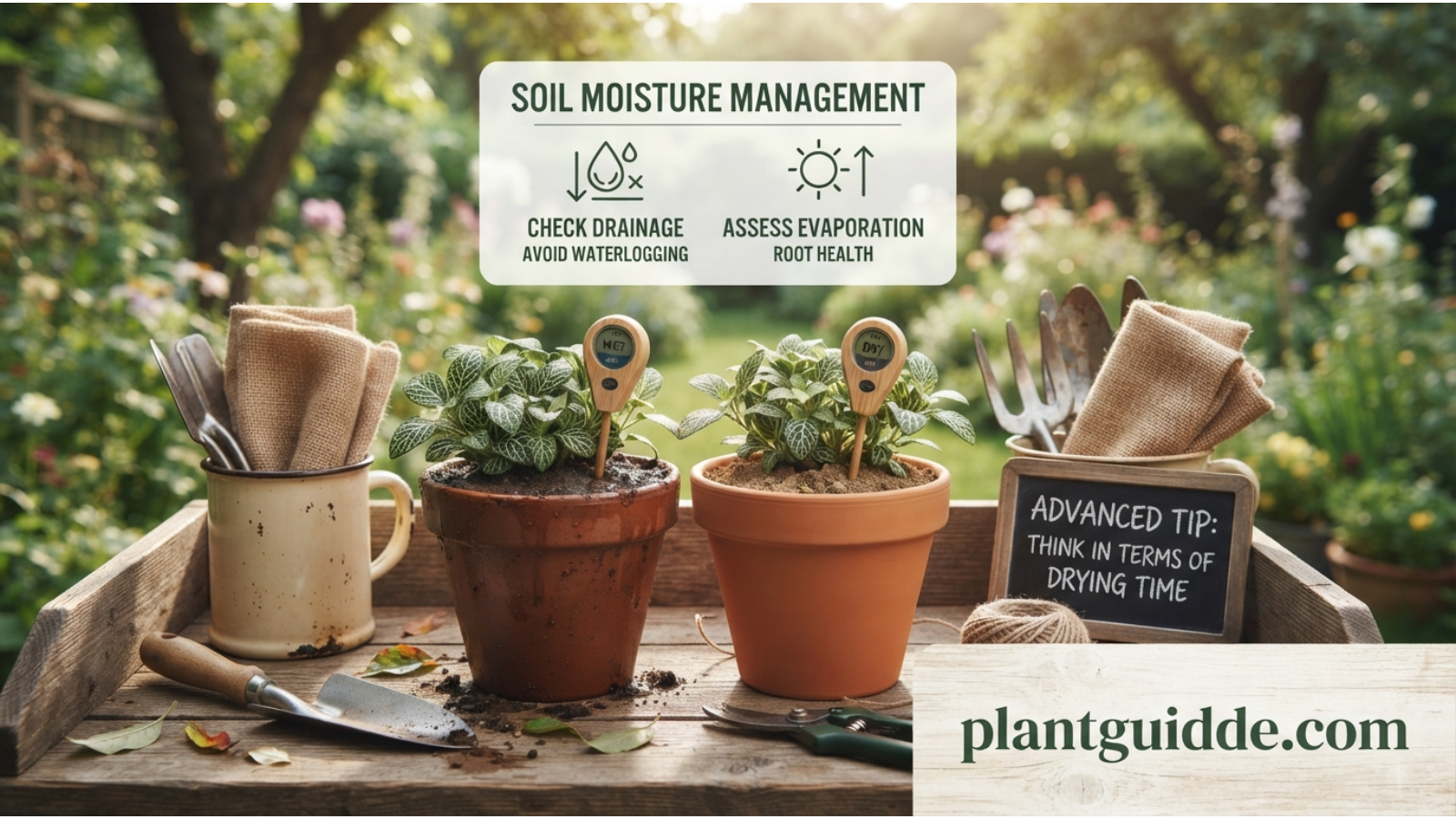
Advanced Tip: Think in Terms of Drying Time
One of the most useful ways to improve jade plant care is to stop thinking about watering as an isolated event.
Instead, think about the complete cycle:
Water → drain → dry → water again.
The length of that cycle depends on your environment.
A jade plant in a small pot beside a bright window may complete the cycle quickly.
A large jade plant in a deep container filled with moisture-retentive soil may take much longer.
Once you understand this cycle, jade plant watering becomes far less confusing.
FAQs:
How often should I water a jade plant?
Water when the soil has dried sufficiently rather than following a strict weekly schedule. Environmental conditions determine how quickly the pot dries, so the interval can vary considerably.
Does a jade plant need direct sunlight?
Jade plants benefit from strong light and can grow well with direct sun when properly acclimated. Plants moved suddenly from low light into intense sunlight can develop leaf damage, so increase exposure gradually.
Can jade plants survive indoors?
Yes. Jade plants can grow successfully indoors when provided with strong light, suitable drainage, and careful watering.
Why are my jade plant leaves falling off?
Leaf drop can result from overwatering, prolonged dryness, sudden environmental changes, poor light, temperature stress, or root problems. Check the soil and growing conditions before deciding on a solution.
Should I mist my jade plant?
Misting is generally unnecessary for routine jade plant care. Proper light, drainage, soil, and watering are much more important.
What is the best soil for a jade plant?
Use a well-draining succulent or cactus-oriented potting mix. The important characteristic is that excess water can drain away and the root zone does not remain saturated for long periods.
Can I use regular potting soil for a jade plant?
Regular potting soil can hold more moisture than a jade plant prefers, particularly when used by itself. A better approach is to use a mix designed for succulents or modify the growing medium to improve drainage.
Why is my jade plant growing tall and thin?
Insufficient light is a common reason for elongated, weak growth. Gradually move the plant toward a brighter location and consider pruning excessively stretched stems.
Should I cut dead leaves from my jade plant?
Remove clearly dead or damaged leaves when they come away easily or interfere with the plant. Avoid repeatedly removing healthy leaves simply because they are older.
When should I repot a jade plant?
Repot when the plant has become significantly root-bound, the soil has deteriorated, drainage has become poor, or the container no longer provides adequate stability. There is no need to repot annually just for the sake of doing so.
How can I make my jade plant bushier?
Provide strong light and prune strategically to encourage branching. Rather than randomly cutting the plant, decide where you want new branches to develop and prune accordingly.
Can a jade plant recover from overwatering?
It depends on how severe the damage is. If the problem is caught early, correcting the moisture and drainage conditions may allow the plant to recover. Severe root or stem damage may require removal of healthy sections for propagation.
The Bottom Line
The secret to successful jade plant care is not complicated, but it does require paying attention to the plant’s environment.
Give your jade plant bright light, fast-draining soil, a container with drainage holes, and thorough watering followed by a proper drying period. Keep temperatures reasonably stable, fertilize modestly during active growth, and prune when necessary to maintain a strong structure.
Most importantly, do not treat every symptom as a signal to add more water. A jade plant’s thick leaves are already designed to store moisture. Your job is to provide the conditions that allow the plant to use that stored water naturally without keeping its roots continuously wet.
Once you stop relying on a fixed watering calendar and start watching soil moisture, light, leaf condition, stem firmness, and drying time, caring for a jade plant becomes much easier, and your plant has a much better chance of developing into the healthy, sturdy specimen it can become.

Asad Mumtaz is a dedicated plant enthusiast and gardening writer with a passion for helping people care for their plants successfully. He specializes in plant care guides, indoor gardening, and practical growing tips for all skill levels. His content focuses on making gardening simple, enjoyable, and rewarding. Through his work, Asad shares reliable advice to help readers create thriving green spaces.