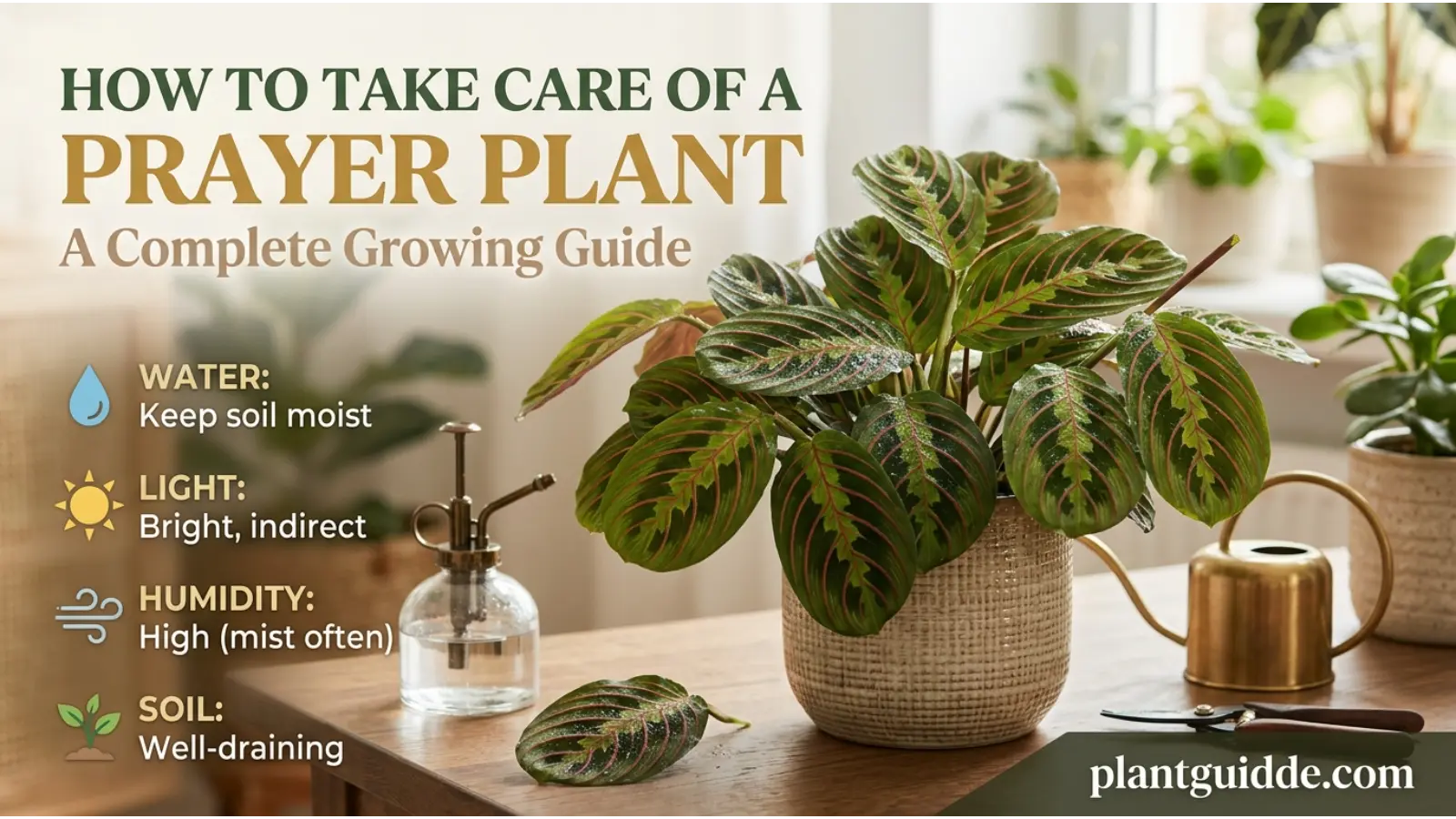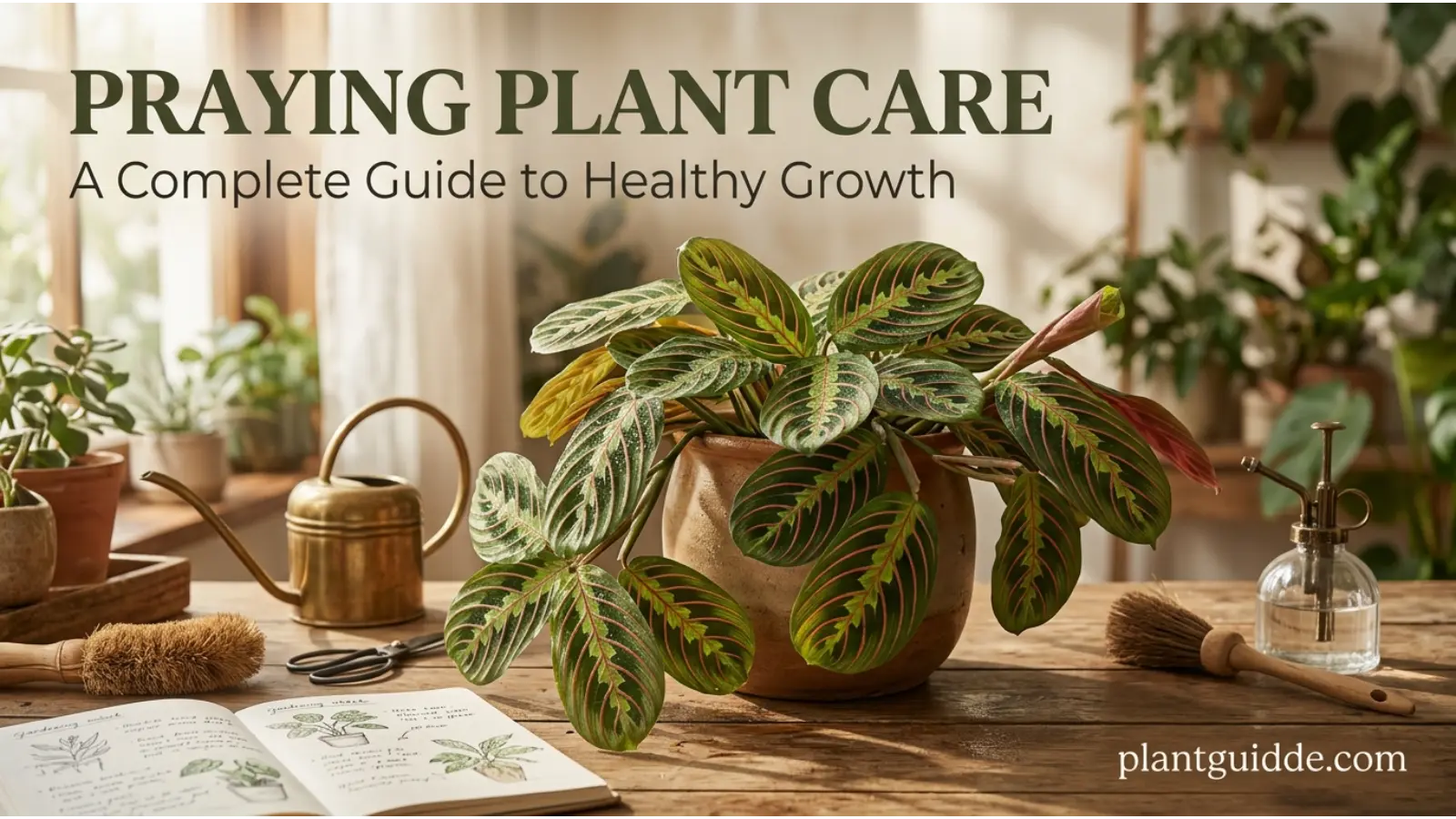
Praying plant care is a striking tropical houseplant admired for its oval leaves, vivid patterns, and colorful veins. Its leaves often feature shades of deep green, light green, red, and burgundy, making it an attractive choice for shelves, tabletops, and indoor plant collections.
However, praying plant care requires a little more attention to moisture and humidity than many beginner-friendly houseplants. Dry air, inconsistent watering, harsh sunlight, and poor drainage can lead to curling leaves, brown edges, faded patterns, or slow growth.
The good news is that you do not need a greenhouse to grow a healthy prayer plant. By understanding its natural growing conditions and recognizing early signs of stress, you can maintain attractive foliage and encourage steady growth in an ordinary home.
Quick Answer
Praying plant care involves providing bright, indirect light, consistently moist but well-draining soil, warm temperatures, and moderate to high humidity. The prayer plant (Maranta leuconeura) is known for its decorative leaves that fold upward at night and open during the day. Avoid direct afternoon sunlight, waterlogged soil, and cold drafts to keep its colorful foliage healthy.
Understanding the Prayer Plant
The prayer plant, botanically known as Maranta leuconeura, belongs to the Marantaceae family and originates from tropical regions of Brazil. It grows close to the ground in warm, humid environments where taller vegetation filters much of the direct sunlight.
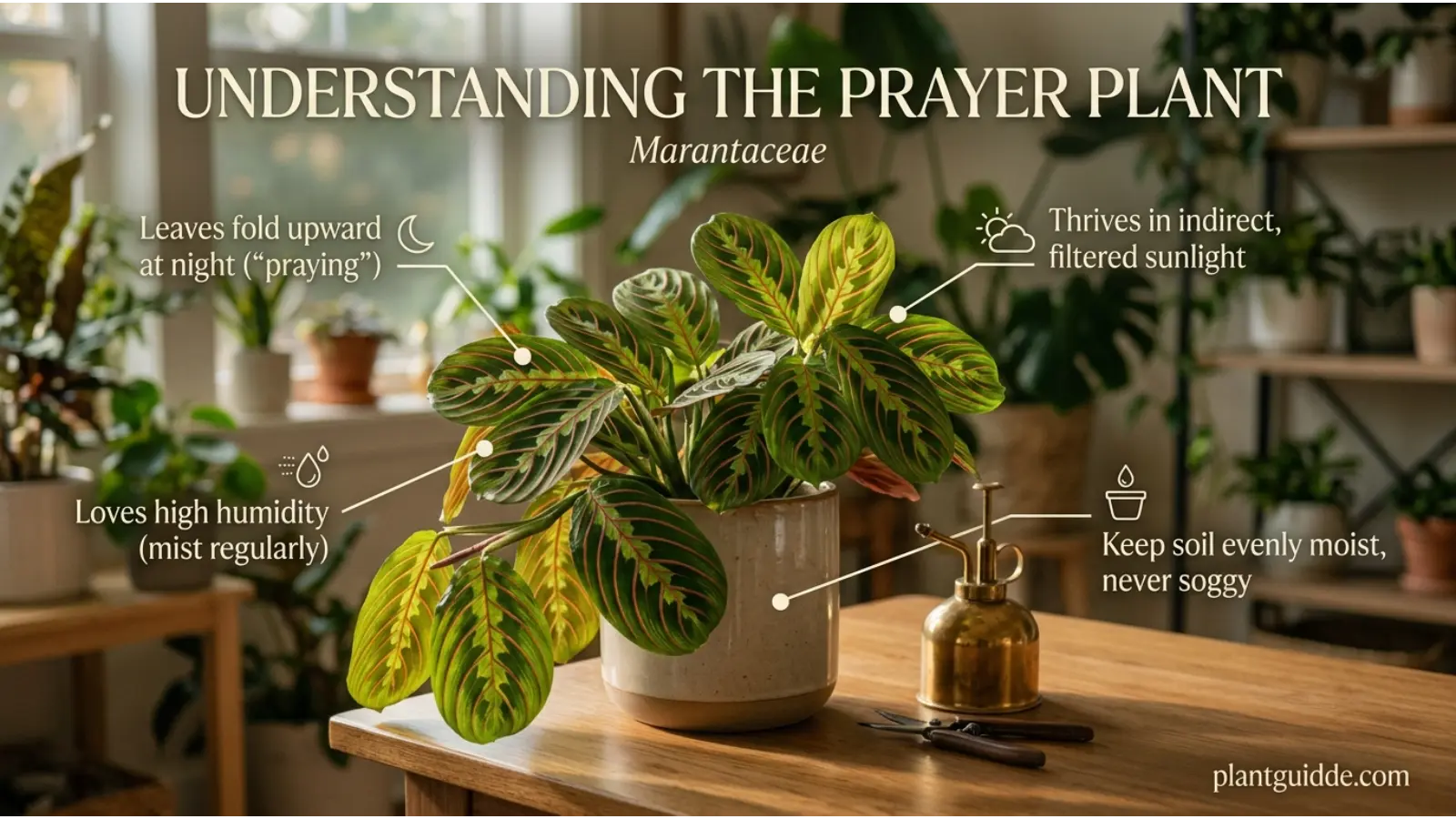
Its most distinctive feature is nyctinasty, a natural movement in which the leaves change position in response to the daily light cycle. In the evening, the leaves often rise or fold upward, then spread out again during the day.
This movement is normal and does not mean the plant is wilting. However, persistent curling during the daytime, crispy edges, or limp leaves may indicate a care problem.
Prayer plants are also sometimes confused with other members of the Marantaceae family, including Calathea and Ctenanthe. Although these plants share similar foliage and care preferences, they are different plants with distinct botanical characteristics.
Best Conditions for Praying Plant Care
Prayer plants thrive when their growing environment resembles the warm, filtered-light conditions of a tropical forest floor.
| Care factor | Ideal conditions | What to avoid |
|---|---|---|
| Light | Medium to bright, indirect light | Harsh direct afternoon sun |
| Water | Evenly moist soil with good drainage | Bone-dry soil or constant saturation |
| Soil | Loose, moisture-retentive, well-draining mix | Dense, compacted soil |
| Temperature | Approximately 65–80°F (18–27°C) | Cold drafts and sudden temperature changes |
| Humidity | Around 50–60% or higher when practical | Persistently dry air |
| Fertilizer | Diluted balanced fertilizer during active growth | Heavy or frequent feeding |
| Pot | Container with drainage holes | Standing water around the roots |
These are practical starting points rather than rigid requirements. Adjust watering and humidity management according to your room conditions and the plant’s response.
How Much Light Does a Prayer Plant Need?
Light plays an important role in maintaining the prayer plant’s colorful foliage. The goal is to provide enough brightness for healthy growth without exposing the leaves to intense sunlight.
Bright, indirect light
Place your prayer plant near an east-facing window or near a bright window where direct sunlight is filtered by a sheer curtain. A few feet away from a bright south- or west-facing window may also work, depending on the intensity of the sun.
Suitable light helps maintain the leaf patterns, supports new growth, and prevents the plant from becoming weak or sparse.
Can prayer plants grow in low light?
Prayer plants can tolerate moderate indoor light, but prolonged low-light conditions may slow growth and reduce the vibrancy of their foliage.
Praying plant care new leaves become smaller or the plant stops producing healthy growth, consider moving it to a brighter location with indirect light. Avoid compensating for a dark room by placing it immediately in strong direct sunlight.
Signs of incorrect lighting
- Faded or scorched patches: The plant may be receiving too much direct sunlight.
- Slow growth: Light may be insufficient, although other factors can contribute.
- Smaller leaves: Prolonged low light or limited growing conditions may be responsible.
- Uneven growth: The plant may be receiving light mainly from one direction.
Rotate the pot occasionally to encourage balanced growth, and make lighting changes gradually.
How Often Should You Water a Prayer Plant?
Watering is one of the most important parts of praying plant care. Unlike snake plants or succulents, prayer plants prefer soil that stays lightly and consistently moist. However, their roots still need oxygen, so constantly saturated soil can cause serious damage.
Follow a soil-based watering routine
- Check the top layer of soil with your finger.
- Water when the surface begins to dry slightly, before the entire root zone becomes dry.
- Pour water evenly over the soil until excess water flows from the drainage holes.
- Empty the saucer or decorative outer pot so the roots do not sit in standing water.
- Check the soil again before the next watering.
The exact frequency depends on pot size, temperature, humidity, light, and soil composition. A prayer plant in a warm room may need water more often than one in cooler conditions.
Do not water automatically every two or three days. Check the soil first, particularly during winter when growth slows and moisture may evaporate more slowly.
What type of water is best?
Prayer plants can be sensitive to mineral buildup and may develop brown leaf tips when exposed to unsuitable water or other environmental stresses.
Praying plant care your tap water is heavily mineralized or the plant repeatedly develops unexplained brown edges, try rainwater or filtered water and observe whether the symptoms improve. Avoid assuming that water quality is the only cause; humidity, fertilizer salts, and root problems can produce similar symptoms.
How to prevent overwatering
Overwatering does not simply mean giving too much water at one time. It often means allowing the roots to remain in wet soil for too long.
To reduce the risk:
- Use a pot with drainage holes.
- Choose a loose potting mix.
- Avoid oversized containers that hold excess wet soil.
- Remove standing water after watering.
- Check the roots if the soil stays wet for unusually long periods.
Praying plant care the plant develops widespread yellowing, limp growth, or a sour soil smell, inspect the roots for rot rather than adding more water.
Best Soil and Pot for a Prayer Plant
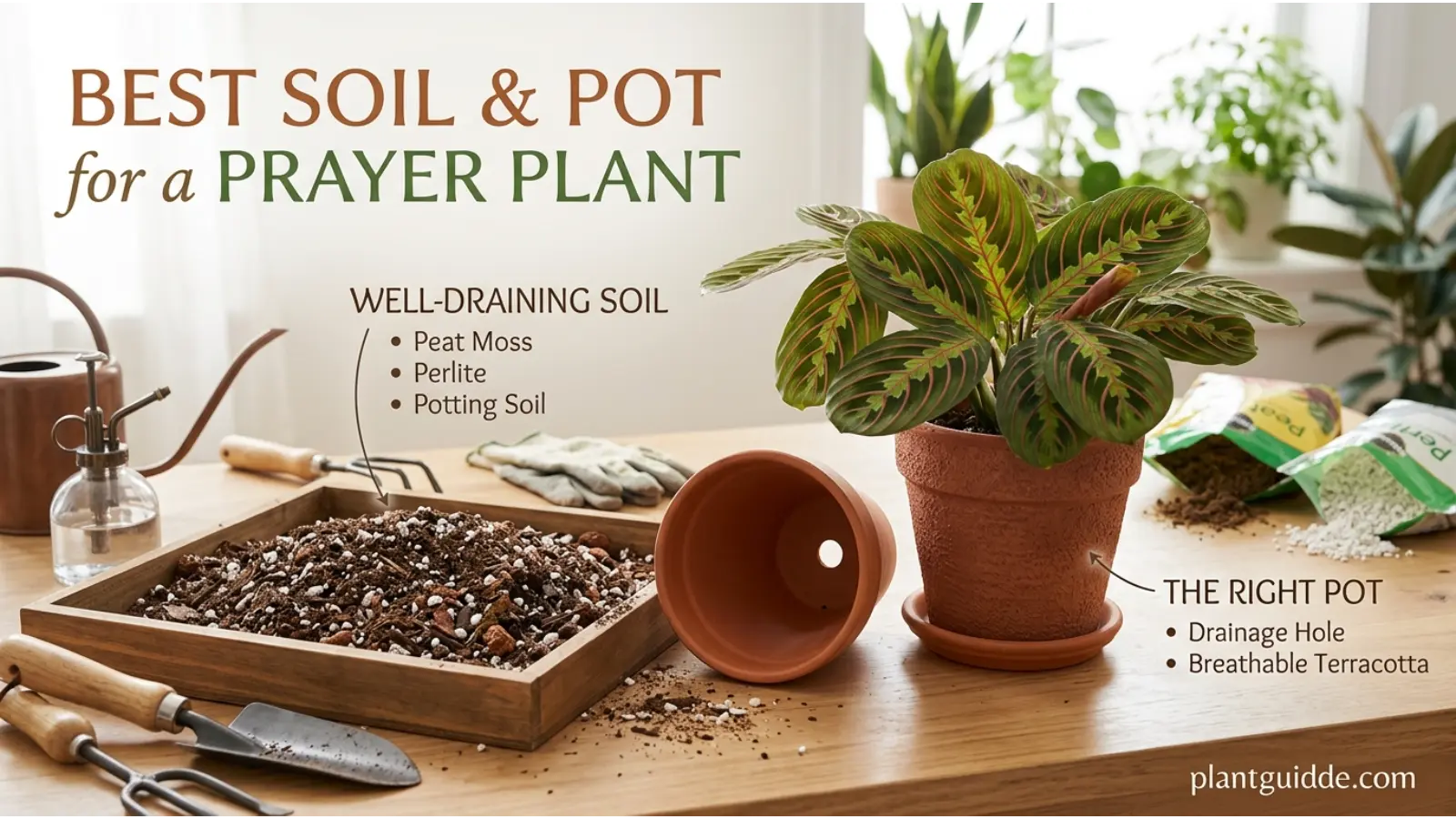
Prayer plants need soil that retains enough moisture to prevent rapid drying while allowing excess water to drain away.
A suitable mix can contain:
- Two parts quality indoor potting mix or coco-coir-based medium
- One part perlite or pumice
- One part fine orchid bark or another suitable material that improves aeration
This is a flexible starting formula, not a strict recipe. Adjust it based on how quickly the mixture dries in your home. If the soil remains wet for too long, increase its aeration. If it dries extremely quickly, use a slightly more moisture-retentive mix.
Avoid heavy garden soil or compacted potting mix because these materials can restrict airflow around the roots.
Choosing the right pot
Select a container with drainage holes that comfortably accommodates the root system. A pot that is too large can hold excess moisture, increasing the risk of root problems.
Plastic pots retain moisture longer, while terracotta allows more evaporation through its walls. For a prayer plant that dries too quickly, a plastic pot may help maintain more consistent moisture. If your home is cool or the soil stays wet, a more breathable container may be helpful.
Temperature and Humidity Requirements
Prayer plants are tropical plants that prefer warmth and relatively humid air. Maintaining stable conditions is particularly helpful when growing them indoors through winter.
Ideal temperature
A temperature range of approximately 65–80°F (18–27°C) is suitable for most indoor prayer plants.
Keep the plant away from:
- Cold windows and exterior doors during winter
- Air-conditioning vents that blow directly onto the foliage
- Hot heating vents
- Sudden temperature fluctuations
Cold exposure can stress the plant and cause leaf curling, discoloration, or declining growth.
How much humidity does a prayer plant need?
Prayer plants generally appreciate humidity around 50–60% or higher, although the exact level they tolerate depends on the growing environment and the plant’s condition.
If your indoor air is dry, especially during winter, a room humidifier is one of the most reliable ways to increase humidity.
Grouping plants together may create a slightly more humid local environment, provided there is enough airflow. Regular misting is less reliable because its effect is temporary and wet foliage that remains damp may encourage disease under unsuitable conditions.
A small digital hygrometer can help you determine whether dry air is actually a problem instead of relying on guesswork.
How to Fertilize a Prayer Plant
Prayer plants benefit from moderate feeding during active growth, usually in spring and summer. Excessive fertilizer can damage roots and contribute to brown leaf tips.
Use a balanced liquid houseplant fertilizer diluted according to the label. Depending on the product and growing conditions, feeding every four to six weeks during active growth may be sufficient.
Follow these guidelines:
- Apply fertilizer to appropriately moist soil rather than severely dry soil.
- Avoid heavy feeding when growth has slowed.
- Do not fertilize a plant with suspected root rot.
- Reduce or stop feeding during winter if the plant is not actively growing.
- Flush the soil occasionally with clean water if fertilizer salts accumulate and the pot drains freely.
If the plant is growing slowly, check light, temperature, root health, and watering before increasing fertilizer. More nutrients will not correct poor growing conditions.
How to Prune a Prayer Plant
Prayer plants generally need little pruning, but removing damaged leaves can improve their appearance and help you monitor the plant’s health.
Use clean, sharp scissors to cut yellow, dead, or severely damaged leaves near their base without injuring nearby stems.
If the plant becomes uneven, you can trim selected stems to improve its shape. Avoid removing large amounts of healthy foliage at once, especially when the plant is already stressed.
Brown tips can be trimmed carefully to follow the natural outline of the leaf. However, trimming only improves appearance; it does not resolve the underlying cause. Review humidity, watering, water quality, and fertilizer use if the damage continues.
How to Propagate a Prayer Plant
Prayer plants are commonly propagated by division. This method is generally more reliable for home growers than attempting to root individual leaves.
Propagation by division
- Remove the plant gently from its pot.
- Identify a naturally separated section with healthy roots and several leaves.
- Carefully separate the section by hand or use a clean tool if needed.
- Place each division in a suitable container with fresh, well-draining potting mix.
- Water lightly but thoroughly enough to settle the soil, allowing excess water to drain.
- Keep the new plants warm and provide bright, indirect light while they establish.
Avoid dividing a small or unhealthy plant that does not have enough established growth to recover.
During the first few weeks, monitor moisture carefully. Newly divided roots may be more vulnerable to both drying out and prolonged saturation.
Common Prayer Plant Problems and Solutions
Prayer plants often communicate stress through their leaves. The most useful approach is to examine the pattern of damage, check soil moisture, and consider any recent changes in light, temperature, or watering.
| Symptom | Possible cause | What to do |
|---|---|---|
| Brown, crispy leaf edges | Low humidity, mineral buildup, inconsistent moisture, or fertilizer salts | Review humidity, water quality, and feeding |
| Leaves curling inward | Dry soil, heat stress, or other environmental stress | Check soil moisture and temperature |
| Yellow leaves | Overwatering, root damage, or natural aging | Check drainage and inspect roots if yellowing spreads |
| Drooping leaves | Dry soil, root problems, or temperature stress | Check the soil and growing conditions before watering |
| Faded leaf patterns | Excessive direct sunlight or insufficient light | Adjust the plant’s location gradually |
| Slow growth | Low light, seasonal slowdown, poor root health, or nutrient limitations | Check light, roots, moisture, and feeding |
| White cottony insects | Mealybugs | Isolate the plant and treat the infestation |
| Fine webbing and stippled leaves | Possible spider mites | Inspect leaf undersides and treat pests appropriately |
Why are prayer plant leaves curling?
Curling leaves can be caused by dry soil, excessive heat, or other environmental stress. Prayer plants also naturally change leaf position as part of their daily movement, so not every raised or folded leaf is a warning sign.
Check whether the curling persists during daylight. If the soil is dry, water the plant thoroughly. If the soil is already wet, investigate root health and environmental conditions instead of adding more water.
Why are the leaf edges turning brown?
Brown edges may develop when humidity is low, water contains substantial dissolved minerals, fertilizer salts accumulate, or roots are damaged.
Check one factor at a time. For example, if the room is very dry, improve humidity and keep the plant away from heating vents. If the soil has a crusty mineral deposit, review fertilizer use and water quality.
Existing brown tissue will not turn green again, but correcting the cause can help protect new leaves.
Why is my prayer plant turning yellow?
One older leaf turning yellow occasionally may be normal. However, several yellow leaves appearing within a short period deserve attention.
Check whether the potting mix remains wet, whether the container drains properly, and whether the plant has recently experienced a temperature change. If the soil is persistently soggy, inspect the roots for rot.
Do not automatically fertilize a yellowing plant. Nutrient deficiency is only one possible cause, and excess fertilizer may worsen root stress.
Common Mistakes to Avoid
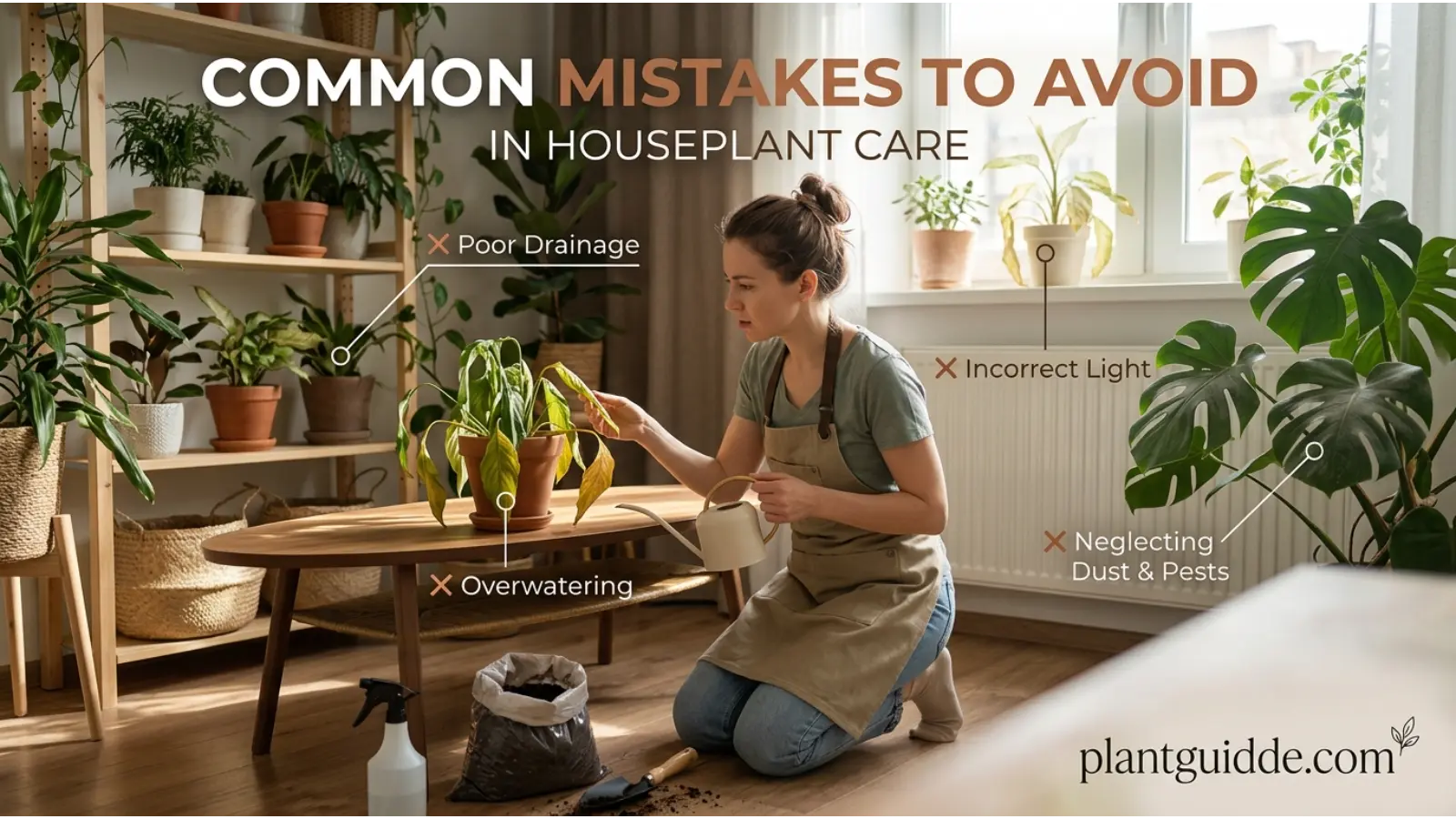
Even with good intentions, a few routine habits can make prayer plant care harder than necessary.
Letting the soil dry completely: Prayer plants generally prefer more consistent moisture than drought-tolerant houseplants. Allow the surface to dry slightly, but avoid repeatedly letting the entire root ball become bone-dry.
Keeping the soil constantly wet: Moist soil is not the same as waterlogged soil. Roots need both moisture and oxygen.
Placing the plant in direct afternoon sunlight: Intense sunlight can scorch leaves and fade their patterns.
Ignoring humidity: Very dry air can contribute to crispy edges, especially when combined with other stress factors.
Fertilizing too often: Excess fertilizer can cause salt buildup and root damage.
Changing several conditions at once: If a plant develops brown tips, moving it, repotting it, increasing watering, and adding fertilizer simultaneously makes it difficult to identify the actual cause.
Instead, inspect the plant carefully, make the most appropriate adjustment, and monitor new growth over the following weeks.
Is the Prayer Plant Safe for Pets?
Prayer plants are generally considered non-toxic to cats and dogs, making them a popular choice for homes with pets. However, chewing any houseplant can cause mild stomach upset in some animals.
If your pet repeatedly chews the foliage, keep the plant out of reach and provide an appropriate alternative. If symptoms are severe or persistent after ingestion, consult a veterinarian.
Make sure you have correctly identified the plant, because other plants with similar-looking leaves may have different toxicity profiles.
FAQs:
How often should I water my prayer plant?
Water when the top layer of soil begins to dry slightly, while the deeper root zone remains lightly moist. The interval depends on temperature, light, humidity, pot size, and soil. Check the soil before watering instead of following a fixed weekly schedule.
Why do prayer plant leaves fold up at night?
Prayer plants display nyctinasty, a natural movement that changes leaf position in response to the daily light cycle. Leaves commonly rise or fold upward at night and spread during the day. This behavior is normal when the foliage otherwise appears healthy.
Can I grow a prayer plant in low light?
A prayer plant can tolerate moderate indoor light, but prolonged low light may slow growth and reduce leaf vibrancy. Bright, indirect light is generally better. Avoid placing it in strong direct sunlight to compensate for an overly dark location.
How do I make my prayer plant grow more leaves?
Provide suitable indirect light, consistent soil moisture, warm temperatures, and moderate humidity. Feed lightly during active growth and check that the roots have enough room and healthy drainage. New growth depends on the plant’s condition, so avoid excessive fertilizer or watering to force faster results.
Why does my prayer plant have brown tips even though I water it regularly?
Brown tips can result from low humidity, mineral-heavy water, fertilizer salt buildup, inconsistent moisture, or root damage. Check the room’s humidity and inspect the soil before changing your routine. If the problem continues, consider trying lower-mineral water and reducing fertilizer buildup.
Conclusion
Successful praying plant care comes down to balancing moisture, light, warmth, and humidity. Provide bright, indirect light, keep the soil lightly moist without waterlogging it, and use a well-draining potting mix. Watch for changes in leaf edges, color, and posture so you can correct problems before they spread.
Start by checking your plant’s current light and soil moisture. Once those two conditions are right, maintaining a healthy prayer plant becomes much easier, and its distinctive foliage can remain attractive throughout the year.

Asad Mumtaz is a dedicated plant enthusiast and gardening writer with a passion for helping people care for their plants successfully. He specializes in plant care guides, indoor gardening, and practical growing tips for all skill levels. His content focuses on making gardening simple, enjoyable, and rewarding. Through his work, Asad shares reliable advice to help readers create thriving green spaces.