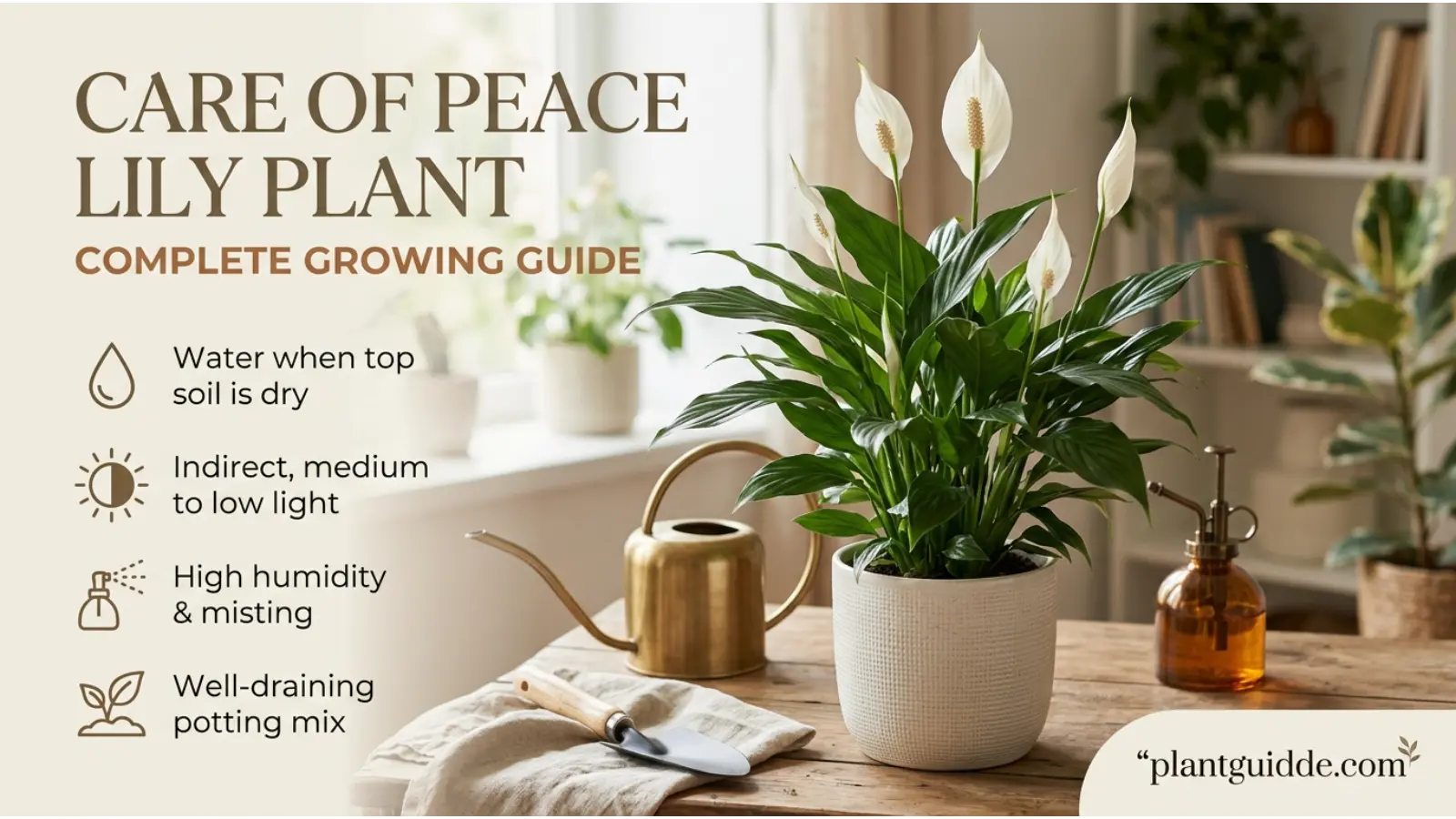
Care of peace lily plant (Spathiphyllum) is a popular indoor plant known for its glossy green leaves and elegant white flower-like spathes. It adds a fresh, tropical appearance to living rooms, bedrooms, offices, and other indoor spaces.
Although it is often recommended to beginners, keeping a peace lily healthy requires a little more attention to moisture than many drought-tolerant houseplants.
The biggest challenge with peace lily care is finding the right balance between watering and drainage. Too little water can cause dramatic drooping, while constantly wet soil can damage the roots. Insufficient light may also limit flowering, even when the foliage appears healthy.
Understanding what your peace lily needs will help you maintain attractive leaves, encourage blooms, and recognize problems before they become serious.
Quick Answer
The care of peace lily plant involves providing bright, indirect light, evenly moist but well-draining soil, warm temperatures, and moderate humidity. Water when the top inch of soil feels dry, and empty excess water from the saucer to prevent root problems. Feed lightly during active growth, remove fading flowers and damaged leaves, and avoid harsh direct sunlight to keep the foliage healthy.
Understanding the Peace Lily Plant
Peace lilies belong to the genus Spathiphyllum and are tropical flowering plants native to regions of the Americas and Southeast Asia, depending on the species. Their white spathes surround a central flower spike called a spadix. The spathe is a modified leaf, rather than an ordinary flower petal.
Peace lilies are valued for several reasons:
- Their broad, glossy leaves provide year-round greenery.
- They can grow successfully in many indoor environments with suitable light.
- Their white spathes add seasonal decorative interest.
- They can be grown in containers and propagated by dividing established clumps.
One important point is that tolerating lower light does not mean a peace lily will flower well in a dark room. The plant may maintain foliage under lower light, but brighter indirect light generally supports stronger growth and better flowering.
Best Conditions for Peace Lily Care
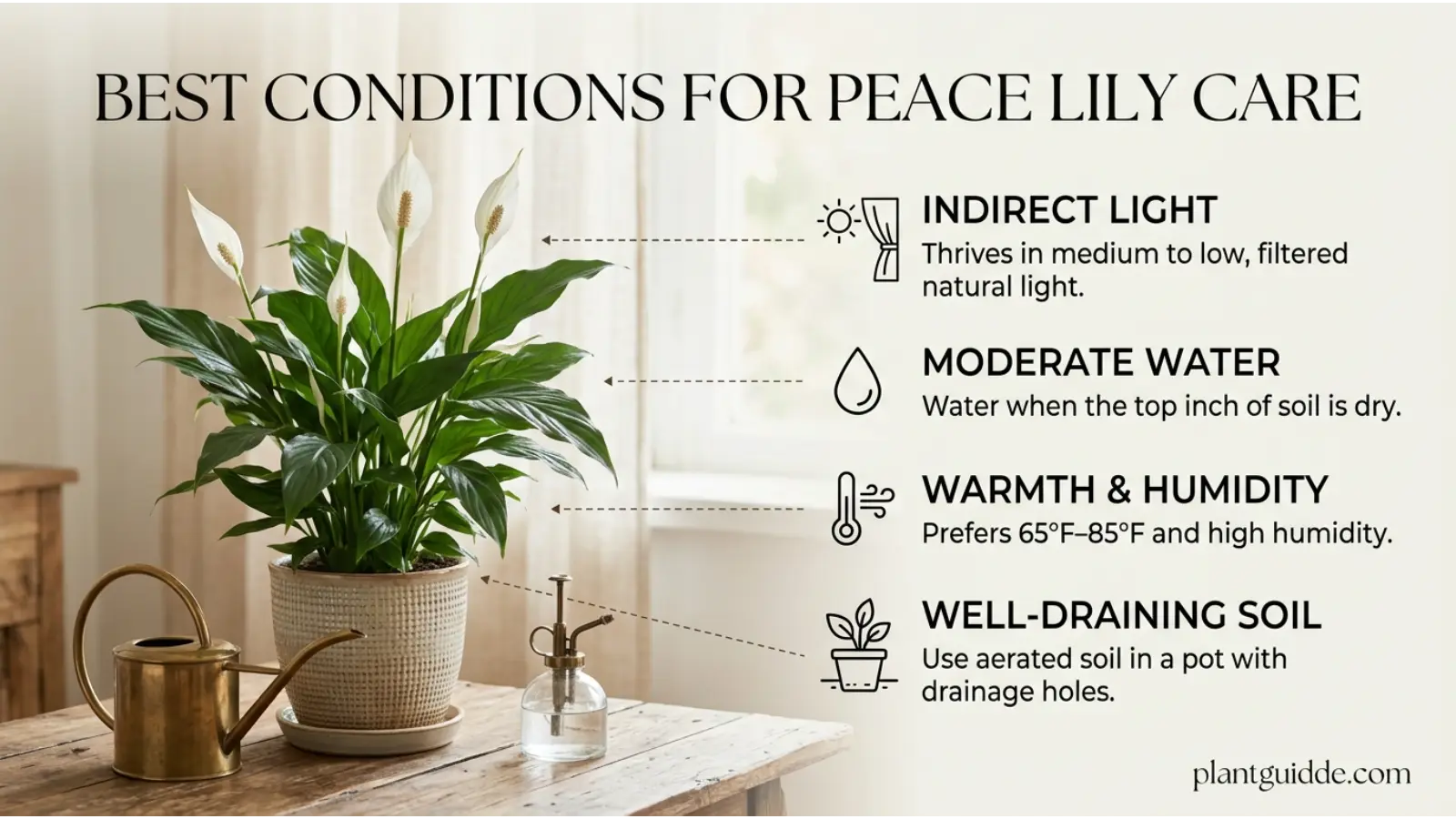
Peace lilies grow best when light, moisture, temperature, and soil work together. Use the following conditions as a starting point and adjust according to how your plant responds.
| Care factor | Recommended conditions | What to avoid |
|---|---|---|
| Light | Bright, indirect light | Harsh midday sunlight or deep, prolonged darkness |
| Water | Water when the top inch of soil begins to dry | Constantly saturated soil |
| Soil | Moisture-retentive but well-draining potting mix | Dense soil that remains waterlogged |
| Temperature | Approximately 65–80°F (18–27°C) | Cold drafts and sudden temperature changes |
| Humidity | Moderate to higher humidity | Very dry air combined with heat or drafts |
| Fertilizer | Balanced houseplant fertilizer during active growth | Excessive feeding |
| Pot | Container with drainage holes | Standing water around the roots |
How Much Light Does a Peace Lily Need?
Light affects the plant’s growth, leaf condition, and ability to produce flowers. Bright, indirect light is generally the best choice for an indoor peace lily.
Bright, indirect light
Place your plant near an east-facing window or a few feet from a bright south- or west-facing window. A sheer curtain can filter strong sunlight and help prevent leaf scorch.
With suitable light, peace lilies can produce healthy new leaves and are more likely to flower when other conditions are appropriate.
Can peace lilies grow in low light?
Yes, peace lilies can tolerate lower light than many flowering plants. However, low light often slows growth and reduces flowering. If your plant has healthy leaves but rarely produces white spathes, inadequate light may be one reason.
Move it gradually to a brighter location rather than placing it immediately in strong direct sunlight.
Signs of lighting problems
- Brown or bleached patches: Strong direct sunlight may be scorching the leaves.
- Slow growth: Light may be insufficient, although root and nutrient problems can also contribute.
- Healthy foliage but few flowers: The plant may need brighter indirect light or improved overall growing conditions.
- Leaves leaning toward a window: Rotate the pot occasionally to encourage more balanced growth.
How Often Should You Water a Peace Lily?
Watering is one of the most important aspects of peace lily plant care. Unlike snake plants or succulents, peace lilies prefer more consistent moisture. However, their roots still need oxygen, so constantly wet soil can be harmful.
Follow these watering steps
- Check the soil: Feel the top inch of potting mix with your finger.
- Water when the surface begins to dry: Do not wait until the entire root ball becomes bone-dry.
- Water thoroughly: Apply water evenly until it drains from the bottom of the pot.
- Empty the saucer: Do not leave the container standing in excess water.
- Check moisture again before watering: Adjust the interval according to the plant’s environment.
A peace lily in a warm, bright room may need water more often than one in a cool, dim space. Pot size, root density, and soil composition also affect drying time.
Avoid following a rigid weekly schedule. Checking soil moisture is more reliable because indoor conditions change throughout the year.
Why does a peace lily droop?
Peace lilies are known for wilting noticeably when they become too dry. Care of peace lily plant the soil is dry and the leaves have drooped, thorough watering may help the plant recover.
However, drooping is not always caused by underwatering. If the soil is already wet, additional water may worsen root problems.
Before watering a drooping peace lily, check the soil:
- Dry soil: Water thoroughly and allow excess water to drain.
- Wet soil: Check drainage and allow the mix to dry somewhat.
- Persistently drooping leaves: Inspect the roots if the problem continues despite appropriate watering.
Frequent severe wilting can stress the plant, so aim to water before the leaves collapse.
Best Soil for a Peace Lily
Peace lilies need soil that holds enough moisture for their roots while allowing excess water to escape. A good indoor potting mix amended with perlite is often suitable.
A practical starting mixture is:
- Two parts quality indoor potting mix
- One part perlite or pumice
This combination can improve aeration while retaining some moisture. Adjust the mixture according to how quickly it dries in your home.
Avoid heavy garden soil in indoor pots because it may compact and restrict airflow. Likewise, an overly coarse mix that dries very quickly may require more frequent watering than a peace lily can comfortably tolerate.
Why drainage matters
Drainage helps prevent water from accumulating around the roots. Even a plant that enjoys consistently moist soil can develop root rot when its potting mix stays saturated.
Always choose a container with drainage holes. If you use a decorative pot without holes, keep the peace lily in a separate nursery pot and empty any water that collects in the outer container.
Ideal Temperature and Humidity
Peace lilies prefer warm, stable indoor conditions. Temperatures around 65–80°F (18–27°C) are generally suitable for healthy growth.
Keep the plant away from cold drafts, air-conditioning vents, and sudden temperature changes. Cold conditions can damage tropical foliage and slow growth.
Does a peace lily need high humidity?
Peace lilies appreciate moderate to higher humidity, especially in homes with very dry indoor air. However, they can often adapt to ordinary household humidity when watering and light are appropriate.
Care of peace lily plant the leaf edges become dry and crispy, check the soil, root health, and exposure to heating vents before assuming humidity is the only issue.
To improve humidity, you can:
- Use a room humidifier.
- Group compatible houseplants together.
- Move the plant away from direct airflow from heaters or air conditioners.
Misting is not essential and provides only a temporary increase in moisture around the leaves.

How to Fertilize a Peace Lily
Peace lilies do not need heavy feeding. Excess fertilizer can contribute to salt buildup in the soil, brown leaf tips, and root damage.
During spring and summer, apply a balanced liquid houseplant fertilizer at the rate recommended on the label. Depending on the formulation and growing conditions, feeding every four to eight weeks may be sufficient.
Follow these practices:
- Apply fertilizer when the plant is actively growing.
- Avoid applying concentrated fertilizer to very dry soil.
- Reduce feeding when growth slows during winter.
- Do not fertilize a plant with severely damaged roots.
- If fertilizer salts accumulate, flush the soil with water when drainage is adequate.
Care of peace lily plant your peace lily is not flowering, do not automatically increase fertilizer. Insufficient light, immature growth, and general environmental conditions may be more important factors.
How to Encourage Peace Lily Flowers
Peace lilies are grown for their distinctive white spathes, but indoor plants do not necessarily flower continuously. Blooming depends on factors such as light, maturity, variety, and overall health.
To encourage flowering:
- Provide bright, indirect light.
- Maintain appropriate soil moisture without waterlogging the roots.
- Keep temperatures reasonably stable.
- Feed lightly during active growth.
- Avoid unnecessary repotting and root disturbance.
A plant can have healthy green foliage without producing many flowers. If your peace lily is growing well but not blooming, try improving its light exposure gradually before changing its fertilizer routine.
Once a spathe fades or turns brown, remove the flower stalk near its base with clean scissors. This improves the plant’s appearance and allows it to direct resources toward continued growth.
How to Prune and Maintain a Peace Lily
Peace lilies generally need little pruning. Regularly removing damaged foliage and fading flower stalks keeps the plant tidy and makes it easier to spot potential problems.
Pruning steps
- Use clean, sharp scissors or pruning shears.
- Cut completely yellow or badly damaged leaves near the base of their stems.
- Remove fading flower stalks close to the soil without damaging nearby leaves.
- Check the plant for pests while trimming.
- Avoid removing large amounts of healthy foliage unnecessarily.
A leaf with a small brown tip does not always need to be removed. You can trim the damaged portion if desired, following the natural outline of the leaf, but correct the underlying cause to prevent further damage.
How to Repot a Peace Lily
Peace lilies usually need repotting when their roots fill the container, water passes through the pot unusually quickly, or growth becomes restricted by a crowded root system.
Spring is often a convenient time to repot because the plant can resume active growth afterward. However, serious root rot should be addressed promptly regardless of the season.
Step-by-step repotting
- Choose a pot with drainage holes that is only slightly larger than the current container.
- Gently remove the plant and loosen compacted soil around the outer roots.
- Inspect the roots and trim any soft, rotting sections with clean tools.
- Position the plant at its previous soil depth.
- Fill around the roots with fresh, well-draining potting mix.
- Water thoroughly and let excess water drain.
Avoid moving a small plant into a very large pot. Excess soil can remain wet for too long, especially in low light.
After repotting, give the peace lily suitable indirect light and avoid heavy fertilizing while it adjusts.
How to Propagate a Peace Lily
Peace lilies are most commonly propagated by dividing established plants. Unlike pothos, they are not usually propagated from ordinary leaf cuttings.
Propagation by division
- Remove the mature plant carefully from its pot.
- Identify natural clumps containing their own leaves, growing points, and roots.
- Gently separate the clumps, using a clean knife if necessary.
- Plant each division in a suitable container with fresh potting mix.
- Water thoroughly and allow excess water to drain.
- Place the new plants in bright, indirect light while they establish.
Choose divisions with healthy roots and several leaves whenever possible. Very small divisions may take longer to recover and produce new growth.
Avoid separating the plant into too many tiny pieces, as this can increase stress and slow establishment.
Common Peace Lily Problems and Solutions
Changes in leaf color, texture, and posture can help you identify problems before they become severe. Always consider soil moisture and root health alongside visible symptoms.
| Problem | Possible cause | What to do |
|---|---|---|
| Yellow leaves | Overwatering, root damage, or normal aging | Check soil moisture and inspect roots if yellowing spreads |
| Brown leaf tips | Fertilizer salts, dry air, inconsistent watering, or root stress | Review watering and feeding practices |
| Drooping leaves | Underwatering, excess moisture, or root problems | Check the soil before adding water |
| Brown or scorched patches | Excessive direct sunlight | Move the plant to filtered light |
| Few or no flowers | Insufficient light, plant maturity, or growing conditions | Improve indirect light and maintain consistent care |
| Black or mushy roots | Root rot associated with excess moisture | Remove damaged roots and repot in fresh mix |
| Small insects or sticky leaves | Possible pest infestation | Inspect foliage and treat identified pests |
Why are peace lily leaves turning yellow?
Yellow leaves can result from overwatering, root damage, insufficient light, or normal aging. If several leaves turn yellow while the soil remains wet, check the drainage and roots.
If only an older leaf yellows while the rest of the plant looks healthy, it may simply be reaching the end of its life cycle.
Avoid cutting off every yellow leaf without investigating the cause. A pattern of widespread yellowing is more useful than an isolated leaf when diagnosing a problem.
Why are the leaf tips turning brown?
Brown tips can result from several factors, including fertilizer salts, inconsistent watering, dry air, and damaged roots. Tap-water minerals may also contribute in some situations, depending on local water quality.
Check your watering routine and fertilizer use first. If you suspect mineral buildup, flush the potting mix with suitable water, provided the container drains freely.
Trim brown tips for appearance if desired, but remember that the damaged tissue will not turn green again.
Common Peace Lily Care Mistakes
Peace lilies are resilient, but several common habits can prevent them from growing well.
Watering too frequently: Moisture-loving does not mean waterlogged. Let the upper layer of soil begin to dry before watering again.
Allowing repeated severe wilting: A peace lily may recover after drooping, but repeated drought stress can weaken its appearance and growth.
Keeping it in deep shade: The plant may survive, but flowering and growth can decline.
Using a pot without drainage: Standing water can suffocate roots and encourage rot.
Overfertilizing to encourage flowers: Excess fertilizer may damage roots without solving the actual problem.
Ignoring persistent drooping: If the soil is wet, adding more water can make the problem worse. Check the roots and drainage.
Changing several conditions at once: If the plant is struggling, adjust the most likely cause first and monitor its response. This makes it easier to identify what actually helps.
Is the Peace Lily Toxic to Pets?
Yes. Peace lilies contain insoluble calcium oxalate crystals that can irritate the mouth and digestive tract when chewed or swallowed. Cats, dogs, and children should not be allowed to chew the leaves.
Possible symptoms in pets include oral irritation, drooling, pawing at the mouth, vomiting, and difficulty swallowing. Keep the plant out of reach, and contact a veterinarian if a pet chews it and develops symptoms.
Peace lilies are not true lilies of the genus Lilium. This distinction matters because true lilies can cause life-threatening kidney injury in cats, whereas peace lilies typically cause localized irritation. Nevertheless, peace lily ingestion should not be dismissed, particularly if swallowing or breathing becomes difficult.

FAQs:
How often should I water a peace lily?
Check the top inch of soil and water when it begins to dry. The interval varies with temperature, light, pot size, and season. Water thoroughly and empty the saucer instead of following a fixed weekly schedule.
Why is my peace lily drooping even after watering?
If the soil is wet, root damage or poor drainage may be preventing the plant from taking up water effectively. Check for soggy soil and inspect the roots if the drooping continues. Avoid adding more water until you understand the cause.
How do I get my peace lily to flower again?
Provide bright, indirect light, suitable watering, warm conditions, and light feeding during active growth. Flowering also depends on the plant’s maturity and variety, so even healthy plants may not bloom continuously.
Should I cut off dead peace lily leaves?
Yes. Remove fully yellow, dead, or badly damaged leaves with clean scissors, cutting near the base of the stem. You can also remove fading flower stalks. Investigate recurring leaf damage rather than relying on pruning alone.
Is the peace lily a good indoor plant for beginners?
Yes, provided you can monitor soil moisture and provide suitable indirect light. It is forgiving of ordinary indoor conditions, but it is less tolerant of prolonged dryness than a snake plant and can suffer if its roots remain waterlogged. Keep it away from pets and children who may chew the foliage.
Conclusion
Successful care of peace lily plant varieties comes down to balancing moisture, drainage, and light. Provide bright, indirect light, water when the top inch of soil begins to dry, use a suitable potting mix, and avoid excessive fertilizer.
Care of peace lily plant your plant develops yellow leaves or drooping foliage, check the soil before changing your routine. With consistent observation and a few simple adjustments, you can maintain healthy green leaves and give your peace lily the best opportunity to produce its elegant white blooms.

Asad Mumtaz is a dedicated plant enthusiast and gardening writer with a passion for helping people care for their plants successfully. He specializes in plant care guides, indoor gardening, and practical growing tips for all skill levels. His content focuses on making gardening simple, enjoyable, and rewarding. Through his work, Asad shares reliable advice to help readers create thriving green spaces.