Care of a aloe vera plant is a popular succulent known for its thick, fleshy leaves and relatively low-maintenance needs. It grows well indoors in a sunny location and can thrive for years when its basic requirements are met. However, even a drought-tolerant plant can develop problems when its roots remain wet or its leaves receive too little light.
Learning how to take care of an aloe vera plant means understanding how it stores water, responds to sunlight, and grows in a well-draining environment. Overwatering, unsuitable soil, and sudden exposure to intense sunlight are common reasons an aloe plant develops soft leaves, brown patches, or stunted growth.
Care of a aloe vera plant you are growing aloe vera on a windowsill, in a container outdoors, or as part of a succulent collection, the following guide explains how to provide suitable growing conditions, identify problems early, and maintain a healthy plant throughout the year.
Quick Answer
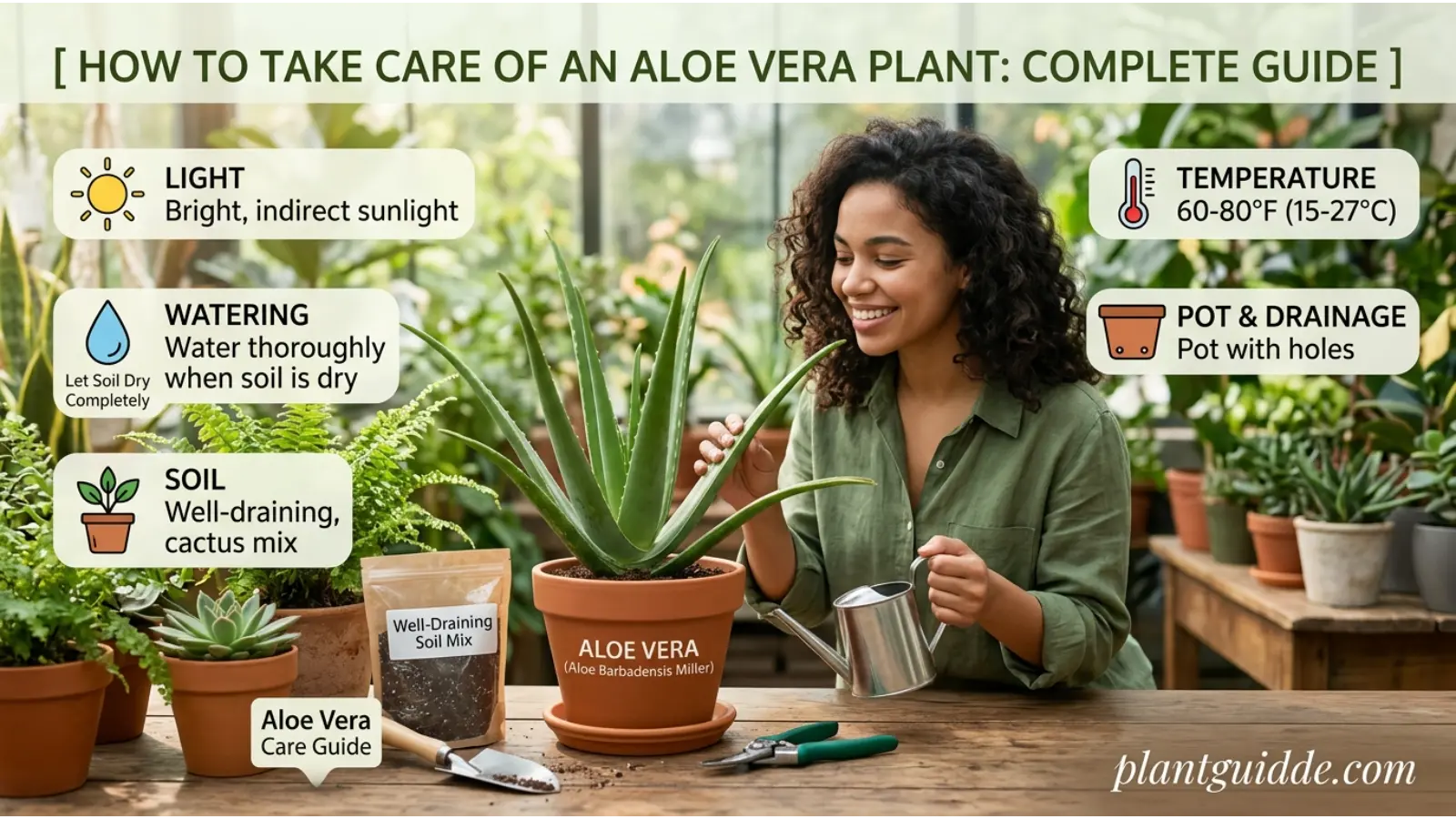
To take care of an aloe vera plant, provide bright light, well-draining succulent soil, and a pot with drainage holes. Water deeply when the soil has dried completely, then let excess water drain away. Keep the plant warm, avoid frequent watering, and use fertilizer sparingly during active growth. These conditions help aloe vera develop firm, healthy leaves and reduce the risk of root rot.
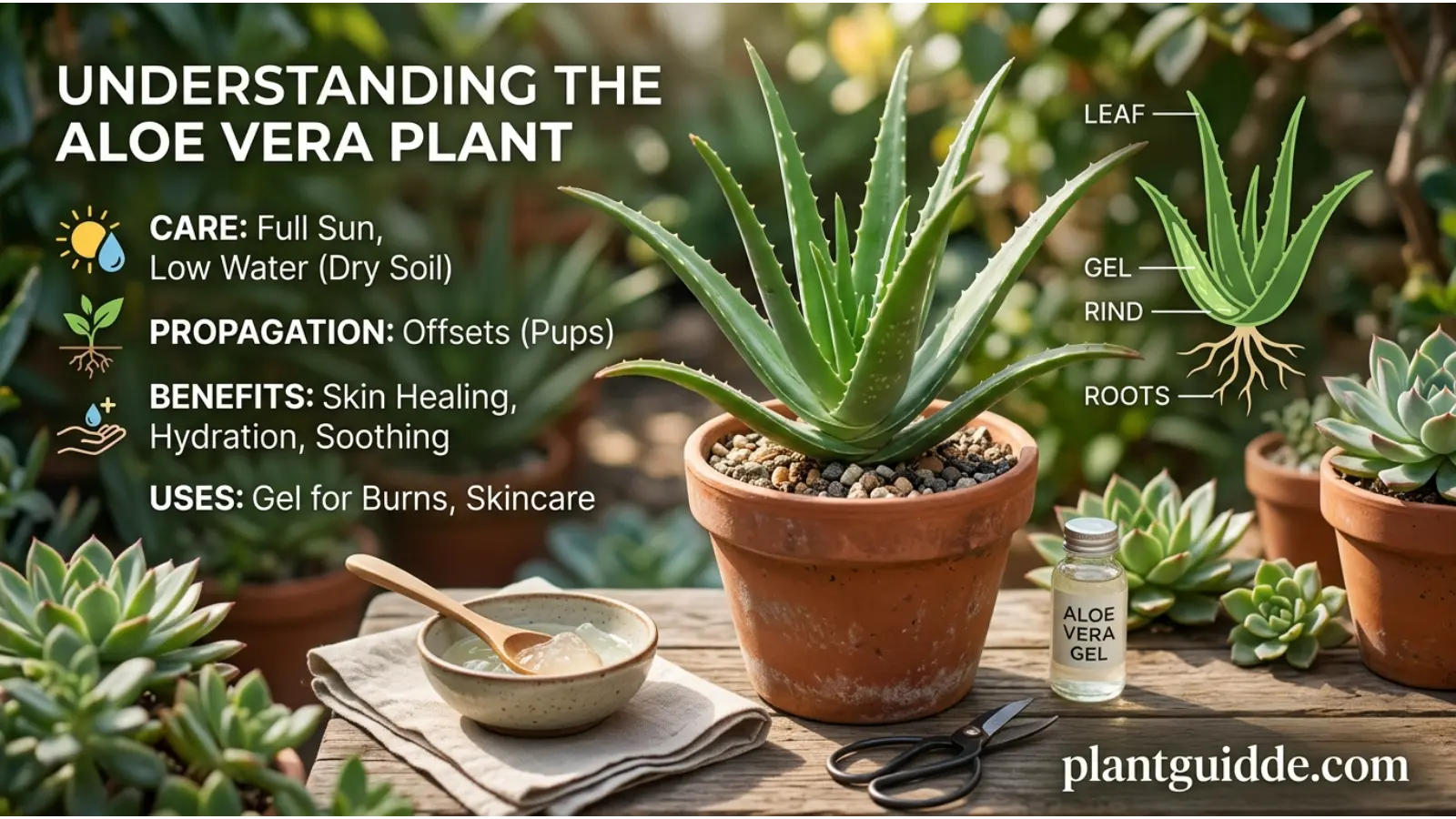
Understanding the Aloe Vera Plant
Aloe vera (Aloe vera) is a succulent perennial in the Asphodelaceae family. Its thick, green leaves store water, allowing the plant to tolerate periods of dry soil better than many common houseplants.
Mature plants may develop offsets, often called pups, around the base. These young plants can eventually be separated and grown in their own containers.
Aloe vera is popular because it offers several practical advantages:
- Water-efficient growth: Its fleshy leaves help it survive short periods without watering.
- Compact appearance: It fits well on sunny windowsills, desks, and patios.
- Easy propagation: Established plants often produce offsets that can be separated.
- Simple maintenance: It generally needs little pruning and only occasional feeding.
Despite these advantages, aloe vera is not a plant that thrives in every indoor location. A dark corner and constantly damp soil can gradually weaken it, even if the plant initially appears healthy.
Best Conditions for Aloe Vera Plant Care
Aloe vera grows best when light, temperature, soil, and watering work together. The following conditions provide a useful starting point.
| Care factor | Recommended conditions | What to avoid |
|---|---|---|
| Light | Bright light, with several hours of gentle direct sun when acclimated | Sudden exposure to intense sunlight |
| Water | Thorough watering after the soil dries completely | Frequent watering in damp soil |
| Soil | Fast-draining cactus or succulent mix | Heavy, moisture-retentive soil |
| Temperature | Approximately 65–85°F (18–29°C) | Frost and prolonged cold |
| Humidity | Average indoor humidity is generally suitable | Persistently damp conditions |
| Fertilizer | Light feeding during active growth | Excessive fertilizer |
| Pot | Container with drainage holes | Pots that trap excess water |
These recommendations may need adjusting depending on your climate, indoor lighting, container material, and the time of year.
How Much Sunlight Does an Aloe Vera Plant Need?
Light plays a major role in keeping aloe vera compact, firm, and healthy. A plant receiving insufficient light may stretch, lean toward a window, or develop unusually thin leaves.
Bright, direct sunlight
Aloe vera generally grows well in a bright location near a sunny window. An east-facing window can provide gentle morning sunlight, while a bright south- or west-facing window may offer stronger exposure.
If your plant has been growing indoors in low light, introduce direct sunlight gradually. Move it into brighter conditions over several days or weeks rather than placing it immediately in intense afternoon sun.
Sudden exposure can cause sunburn, which appears as brown, reddish, or bleached patches on the leaves.
Can aloe vera grow indoors?
Yes. Aloe vera can grow successfully indoors when it receives enough natural light. A bright windowsill is often a better choice than a shelf several feet away from a window.
If natural light is limited, a suitable grow light can help. Position it according to the manufacturer’s recommendations and monitor the leaves for signs of stress.
Signs your aloe vera needs more light
Watch for these changes:
- Leaves spread outward or lean strongly toward the window.
- New growth becomes narrow or elongated.
- The plant loses its compact, upright shape.
- Growth slows despite healthy roots and suitable watering.
Move the plant to a brighter location gradually. Avoid trying to correct low light by watering or fertilizing more frequently, because those changes will not solve the underlying problem.
Image Suggestion: A healthy aloe vera plant beside a bright window, with examples of compact growth, light stretching, and sunburned leaves.
How Often Should You Water an Aloe Vera Plant?
Watering is one of the most important parts of aloe vera care. The plant stores moisture in its leaves, so it does not need the consistently moist soil required by many tropical houseplants.
The safest approach is to water according to soil dryness rather than following a fixed weekly schedule.
Step-by-step watering method
- Check the soil: Insert a finger or wooden stick into the potting mix to assess moisture below the surface.
- Wait until the soil dries completely: Do not water while the root zone remains damp.
- Water thoroughly: Apply water evenly across the soil until it flows from the drainage holes.
- Allow excess water to escape: Empty the saucer or outer container so the roots do not sit in standing water.
- Check again before watering: Wait until the soil has dried completely before repeating the process.
Aloe vera may need water more frequently during warm, bright weather and much less often during cool, darker months. Pot size, soil composition, and airflow also affect how quickly moisture disappears.
What happens when you overwater aloe vera?
Overwatering can deprive roots of oxygen and cause root rot. Common warning signs include:
- Soft, yellowing, or translucent leaves.
- A mushy base near the soil line.
- Soil that remains wet for an unusually long time.
- Dark, soft roots or an unpleasant smell from the potting mix.
If you suspect root rot, remove the plant from its pot and inspect the roots. Trim away rotten sections with clean tools and allow damaged areas to dry as appropriate before repotting into fresh, dry, well-draining succulent mix.
Do not keep watering a plant simply because its leaves look weak. Root damage can prevent aloe vera from absorbing water properly, even when the soil is wet.
What happens when you underwater aloe vera?
Prolonged underwatering can cause leaves to become thinner, less firm, or slightly wrinkled. If the soil is completely dry and the roots are healthy, water thoroughly and let the pot drain.
Healthy aloe leaves should gradually regain firmness if dehydration was the cause. If the leaves remain soft or collapse, inspect the roots and base before watering again.
Best Soil for Aloe Vera
Aloe vera needs soil that allows excess water to drain quickly while providing enough stability for its roots. Dense garden soil or moisture-retentive potting mixes can remain wet too long, particularly in indoor containers.
Choose a succulent potting mix
A commercial cactus and succulent mix is a convenient option. If the mix retains too much moisture, improve its drainage with additional perlite or pumice.
A practical starting mixture is:
- Two parts cactus or succulent potting mix.
- One part perlite or pumice.
Adjust the proportions according to the materials used and how quickly the soil dries. The aim is a loose, airy medium that does not stay saturated after watering.
Avoid adding excessive compost or other moisture-retaining materials if your growing environment is cool or humid.
Why drainage matters
Even careful watering cannot compensate for soil that holds water for too long. Roots need oxygen, and poor drainage increases the risk of rot.
Always use a pot with drainage holes. Decorative containers without holes can serve as outer covers, but the aloe should remain in a separate draining pot that can be removed for watering.
Choosing the Right Pot for Aloe Vera
The right container helps control moisture and supports healthy root development.
Aloe vera generally does well in a pot that fits its root system without leaving a large volume of unused soil around it. An oversized pot can stay damp for longer than necessary.
Terracotta pots are useful because their porous walls allow moisture to evaporate. Plastic and glazed ceramic pots can also work, but the soil may take longer to dry.
Choose a container that is:
- Equipped with drainage holes.
- Wide and stable enough to support the plant.
- Only slightly larger than the root ball.
- Easy to inspect and clean when repotting is needed.
Do not add a layer of gravel to the bottom of a pot as a substitute for drainage holes. Proper drainage depends on the container design and potting mix, not simply on a layer of stones.
Ideal Temperature and Humidity for Aloe Vera
Aloe vera prefers warm conditions and generally grows well at approximately 65–85°F (18–29°C). It can tolerate some variation, but prolonged cold and frost may seriously damage the leaves and roots.
If you grow aloe outdoors in a container, bring it inside before cold weather threatens. Keep indoor plants away from chilly drafts and windows that become very cold at night.
Average household humidity is usually sufficient. Aloe vera does not need frequent misting, and spraying the leaves will not replace proper watering at the roots.
In humid climates, pay particular attention to drainage and soil drying. A plant in a humid room or shaded outdoor location may need considerably less frequent watering than one in a warm, sunny environment.
How to Fertilize an Aloe Vera Plant
Aloe vera is a light feeder and generally does not require frequent fertilizer. Excessive feeding can contribute to salt buildup and may damage the roots.
During active growth in spring and summer, you can apply a balanced liquid fertilizer formulated for succulents, diluted according to its label. In many home-growing situations, occasional feeding is sufficient.
Follow these guidelines:
- Fertilize only when the plant is reasonably healthy and actively growing.
- Avoid applying concentrated fertilizer to very dry soil.
- Do not feed a plant with suspected root rot.
- Reduce or stop feeding during winter if growth slows.
- Avoid using fertilizer to compensate for inadequate light.
If your aloe is growing slowly, first check its light exposure, root health, and potting mix. Slow growth can be normal, especially during cooler months.
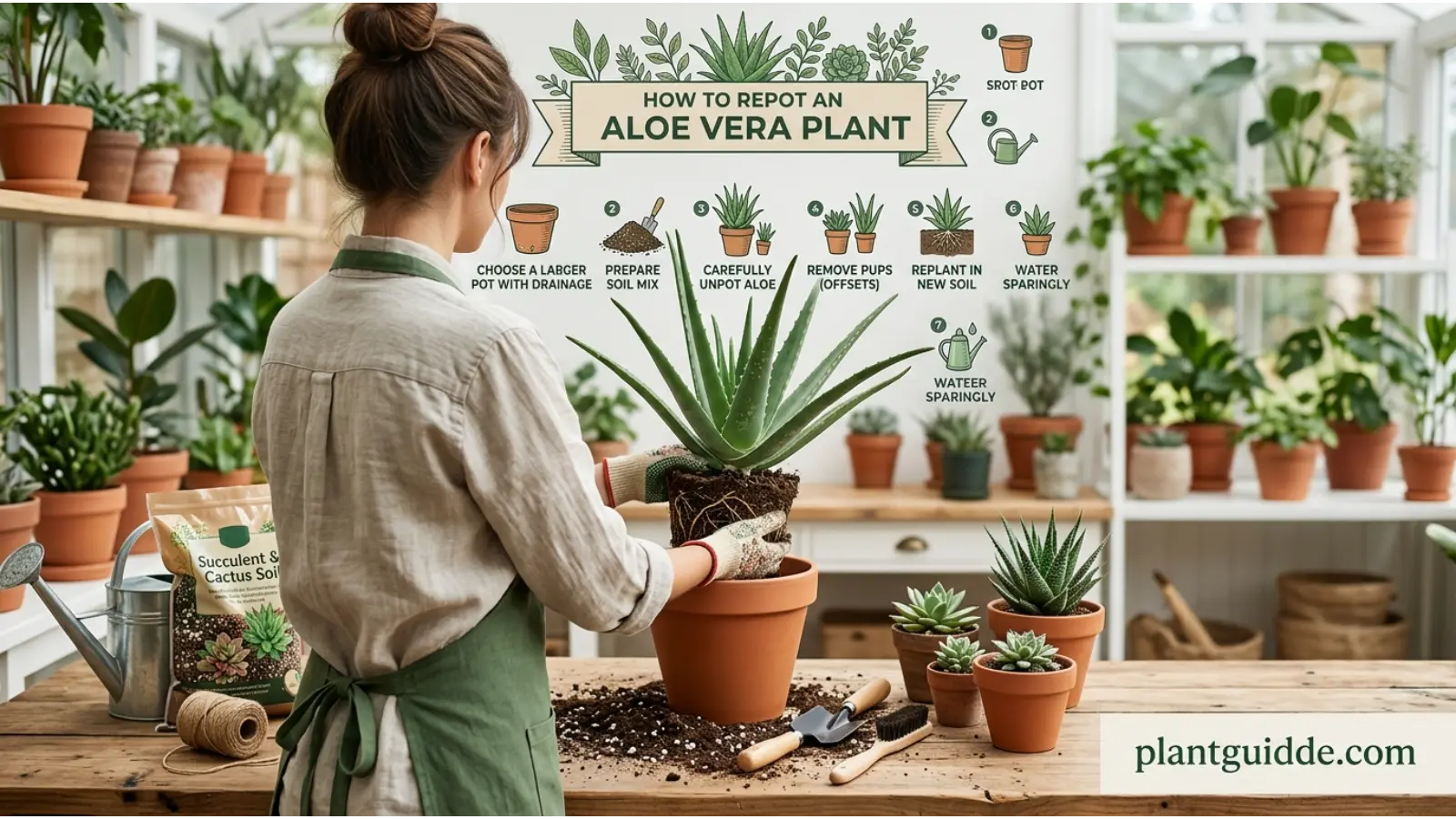
How to Repot an Aloe Vera Plant
Aloe vera does not need frequent repotting. Repot when roots fill the container, offsets crowd the pot, or the plant becomes unstable.
Spring and early summer are often convenient times because the plant can resume active growth after repotting. However, a plant suffering from serious root rot should be treated promptly.
Repotting steps
- Gently remove the aloe vera plant from its container.
- Brush away loose soil and inspect the roots.
- Remove dead or rotten roots with a clean cutting tool.
- Select a pot with drainage holes that is only slightly larger than the root system.
- Position the plant at the same depth it was previously growing.
- Fill around the roots with fresh, well-draining succulent mix.
- Allow any damaged roots to recover before resuming careful watering.
If the roots are healthy and undamaged, water according to the condition of the soil and plant. If you removed rotten roots, allow the cut areas to dry before watering to reduce the risk of further decay.
Avoid burying the base of the leaves deeply in the soil because persistent moisture around the crown can encourage rot.
How to Propagate Aloe Vera From Pups
Aloe vera commonly produces small offsets, known as pups, around the base of a mature plant. These are generally the easiest way to propagate aloe while preserving the characteristics of the parent plant.
Step-by-step propagation
- Wait until the pup is reasonably developed and has its own roots, if possible.
- Remove the parent plant from its pot or gently expose the area around the offset.
- Separate the pup using a clean, sharp knife if it remains attached.
- Allow any cut surfaces to dry and form a protective callus.
- Plant the pup in a small container with drainage holes and dry succulent mix.
- Place it in bright, indirect light while it establishes.
- Begin watering cautiously once the cut area has dried and the plant is settling into the mix.
Small pups may take time to establish. Avoid placing them in oversized pots or keeping their soil continuously wet.
Can you grow aloe vera from a leaf cutting?
Aloe vera is not reliably propagated from individual leaf cuttings. A detached leaf may rot before producing roots and a new plant. For more dependable results, use an established pup or grow aloe from seed if you have the appropriate conditions and patience.
Common Aloe Vera Problems and How to Fix Them
Changes in leaf shape, color, or texture often provide clues about the plant’s growing conditions. Check the soil, roots, light exposure, and recent care routine before choosing a solution.
| Problem | Possible cause | What to do |
|---|---|---|
| Yellow, soft leaves | Excess moisture or root damage | Check soil dryness and inspect the roots if symptoms continue |
| Thin or wrinkled leaves | Underwatering or damaged roots | Check the root zone and water only if the soil is dry |
| Brown or bleached patches | Sunburn or physical injury | Reduce intense direct sun and acclimate gradually |
| Leaning or stretched growth | Insufficient light | Move the plant gradually to a brighter location |
| Brown leaf tips | Water stress, salt buildup, or other environmental stress | Review watering and fertilizer practices |
| Mushy plant base | Crown or root rot | Remove damaged tissue and correct drainage problems |
| Little new growth | Low light, seasonal slowdown, or restricted roots | Check light and root health before feeding |
Why are aloe vera leaves turning brown?
Brown leaves can result from several different causes. Dry, crispy patches may indicate sunburn, dehydration, or damaged tissue. Soft, dark areas near the base are more concerning because they may signal rot.
Examine the texture as well as the color. If the affected area is firm and dry, review light exposure and watering. If it is mushy or spreading, inspect the plant for rot and take corrective action.
Why is my aloe vera plant turning yellow?
Yellowing can result from overwatering, poor drainage, or natural aging of older leaves. If the soil remains damp, allow it to dry and check whether the potting mix drains adequately.
If several leaves turn yellow and become soft, inspect the roots. Do not automatically add fertilizer, because nutrient deficiency is only one possible explanation and may not be the main problem.
Why is my aloe vera plant drooping?
Drooping or folding leaves may indicate dehydration, root damage, insufficient light, or physical stress. Check whether the leaves are firm or soft and whether the soil is dry or wet.
If the soil is wet and the leaves are soft, adding water could worsen the problem. Inspect the roots if the plant continues to decline.
Common Aloe Vera Care Mistakes
Aloe vera is forgiving of occasional missed watering, but repeated mistakes can gradually damage it.
Watering too frequently: Succulents need periods of dry soil. Wait until the soil has dried completely before watering again.
Using dense potting soil: Heavy soil can stay wet around the roots. Choose a mix formulated for cacti and succulents or improve drainage with perlite or pumice.
Keeping the plant too far from a window: Low light can produce weak, stretched growth. Provide brighter light gradually.
Moving it directly into intense sunlight: Indoor-grown leaves can burn when exposed suddenly to strong sun. Acclimate the plant over time.
Using a pot without drainage: Trapped water increases the risk of root rot. Use a container with drainage holes.
Fertilizing too often: Aloe vera is not a heavy feeder. Excess nutrients can harm roots rather than improve growth.
Ignoring the plant’s base: Soft or discolored tissue near the soil line may indicate rot. Check early instead of waiting for the entire plant to collapse.
The most useful habit is to assess the soil and leaf condition before making changes. Altering watering, light, fertilizer, and pot size all at once makes it harder to identify the actual problem.
Is Aloe Vera Safe for Pets and People?
Aloe vera is commonly grown for its ornamental appearance and is also associated with topical skincare products. However, the plant is not automatically safe to eat or use directly on the skin.
The outer leaf and yellow latex beneath the rind contain compounds that can cause gastrointestinal irritation. Ingesting aloe plant material can be toxic to cats and dogs, so keep the plant out of reach of pets.
The clear inner gel is used in some properly prepared topical products, but fresh plant material can be contaminated with latex or other irritants. Do not assume that homemade preparations are safe to ingest or apply to damaged skin. Seek appropriate medical or veterinary advice if ingestion or a reaction occurs.
For a household with curious pets, place the plant somewhere inaccessible or choose a non-toxic alternative.

FAQs:
How often should I water an aloe vera plant indoors?
Water when the soil has dried completely throughout the pot. The interval varies with light, temperature, pot size, and soil type, so there is no universal weekly schedule. Water thoroughly, allow excess water to drain, and avoid leaving the pot in standing water.
Does aloe vera need direct sunlight?
Aloe vera needs bright light and can tolerate direct sunlight after gradual acclimation. Gentle morning sun is often a good starting point. Sudden exposure to intense afternoon sunlight can cause brown or bleached patches, especially on plants that have been growing indoors.
Why is my aloe vera plant dying?
Common causes include overwatering, root rot, poor drainage, and insufficient light. Check whether the soil is persistently wet, examine the base for soft tissue, and inspect the roots if necessary. Correct the underlying problem before adding fertilizer or watering more frequently.
Should I cut off damaged aloe vera leaves?
Remove leaves that are completely dead, severely damaged, or rotting with a clean, sharp tool. A small dry scar does not always require removal. If the damage is spreading or the base is soft, investigate the growing conditions before trimming more leaves.
Can aloe vera grow indoors all year?
Yes. Aloe vera can grow indoors year-round if it receives sufficient light, warm temperatures, and appropriate watering. Place it near a bright window, use well-draining succulent soil, and reduce watering when growth slows during cooler or darker months.
Conclusion
Learning how to take care of an aloe vera plant comes down to providing bright light, fast-draining soil, a suitable container, and careful watering. Let the soil dry completely between waterings, protect the plant from frost, and avoid excessive fertilizer.
Care of a aloe vera plant your aloe vera is struggling, start by checking the soil moisture and root health before changing anything else. These simple habits will help you maintain a healthy plant and encourage steady growth for years to come.

Asad Mumtaz is a dedicated plant enthusiast and gardening writer with a passion for helping people care for their plants successfully. He specializes in plant care guides, indoor gardening, and practical growing tips for all skill levels. His content focuses on making gardening simple, enjoyable, and rewarding. Through his work, Asad shares reliable advice to help readers create thriving green spaces.