Care for aloe vera plant is a popular succulent known for its thick, fleshy leaves, attractive appearance, and relatively low maintenance requirements.
It grows well in containers, sunny indoor spaces, and warm outdoor gardens where temperatures remain suitable. For beginners, it can be a rewarding plant because it tolerates dry conditions better than consistently wet soil.
However, even a drought-tolerant succulent can struggle when its growing conditions are unsuitable. Yellow leaves, soft leaf bases, brown tips, and drooping foliage may indicate overwatering, insufficient light, temperature stress, or root damage.
Learning how to care for aloe vera plant varieties starts with understanding how they store water and why their roots need excellent drainage. This guide covers the best light, watering methods, soil, temperature, propagation, repotting, and solutions to common aloe vera problems.
Quick Answer
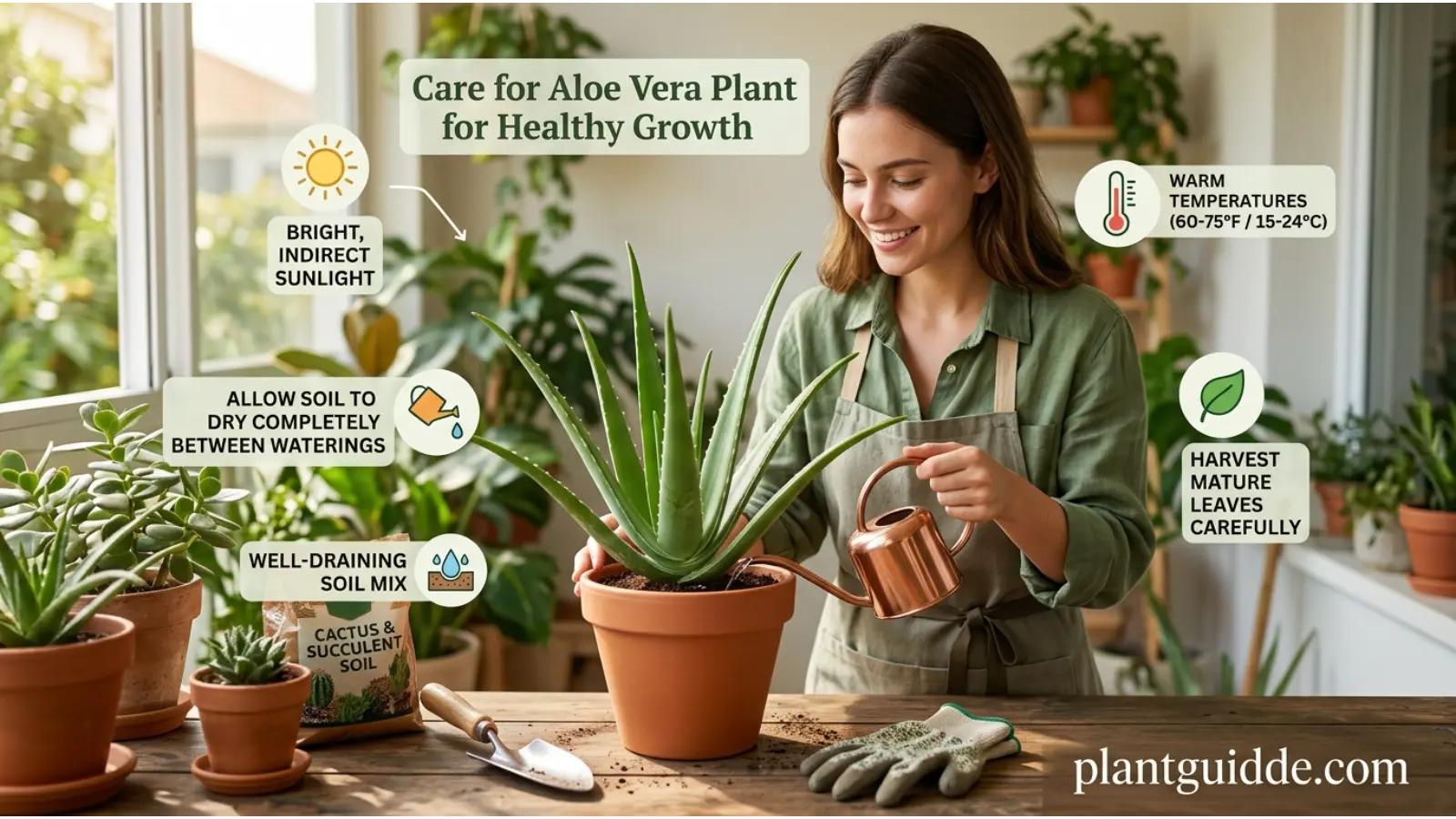
To care for an aloe vera plant, provide bright light, well-draining succulent soil, and a pot with drainage holes. Water thoroughly only when the soil has dried completely, and avoid leaving the roots in standing water. Keep the plant in warm conditions, protect it from frost, and use a light fertilizer during active growth if needed. Proper drainage and careful watering are the keys to healthy, firm aloe leaves.
Understanding the Aloe Vera Plant
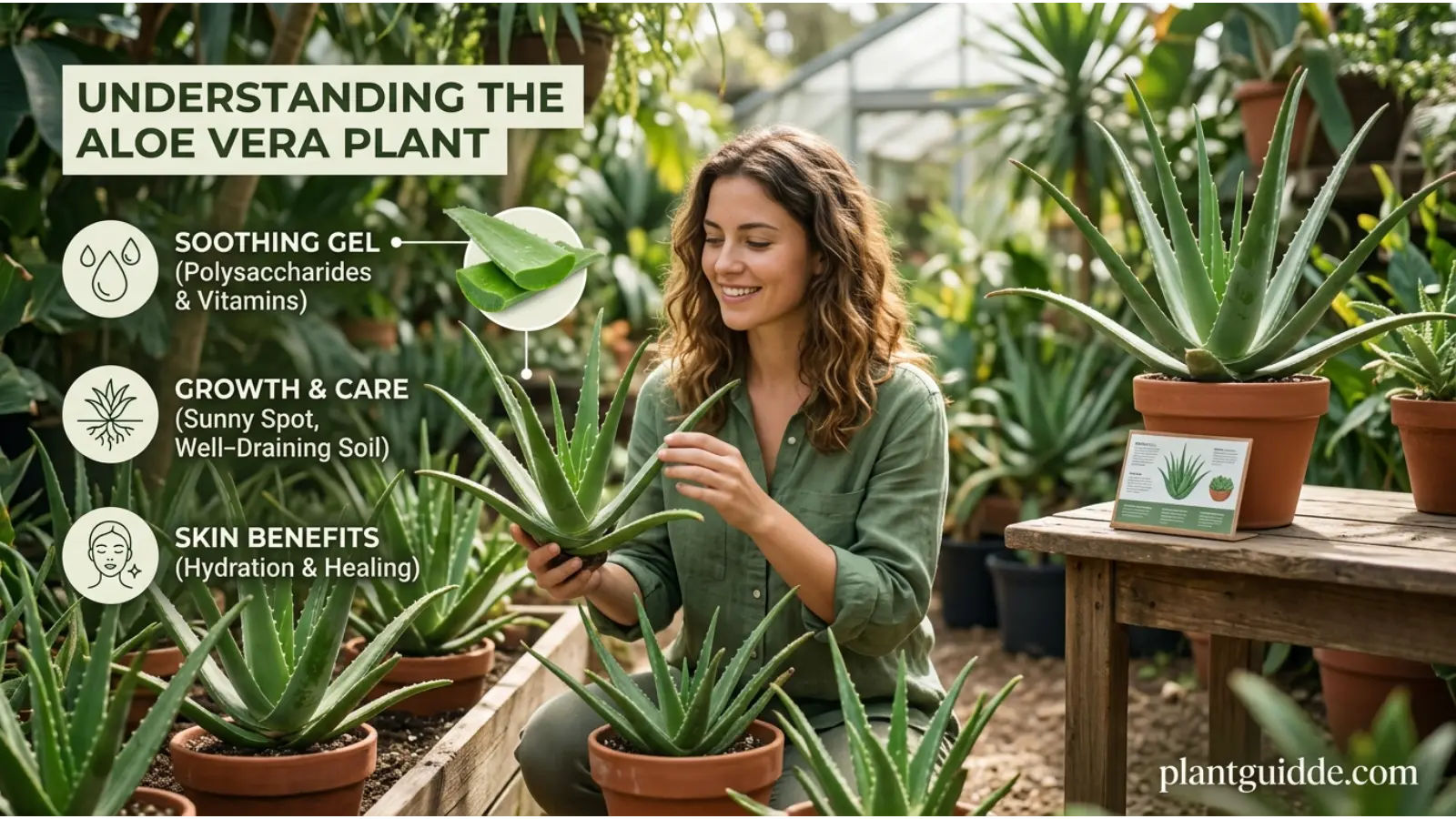
Aloe vera (Aloe vera, also known botanically as Aloe barbadensis Mill.) is a succulent in the Asphodelaceae family. It forms a rosette of thick, fleshy leaves that store water, allowing the plant to withstand periods of dry soil.
Mature plants can produce offsets, often called pups, around the base. Under suitable conditions, an established aloe may also produce a tall flower stalk with tubular flowers.
Aloe vera is especially suitable for people who prefer plants that do not need frequent watering. However, it is not a plant that thrives on neglect indefinitely. It still needs adequate light, healthy roots, and enough growing space.
Best Conditions for Aloe Vera Plant Care
The right growing environment helps aloe vera maintain firm leaves and develop healthy roots.
| Growing factor | Recommended conditions | What to avoid |
|---|---|---|
| Light | Bright light with several hours of gentle direct sun when acclimated | Sudden exposure to intense sunlight |
| Water | Thorough watering after the soil dries completely | Frequent watering in damp soil |
| Soil | Fast-draining cactus or succulent mix | Dense, water-retentive soil |
| Pot | Container with drainage holes | Pots that trap excess water |
| Temperature | Warm conditions, ideally around 65–85°F (18–29°C) | Frost and prolonged cold |
| Humidity | Average indoor humidity is generally suitable | Persistently damp conditions |
| Fertilizer | Light feeding during active growth if needed | Heavy or frequent fertilizing |
These conditions are a useful starting point. Your watering needs will vary depending on the amount of sunlight, pot size, soil mixture, and temperature.
How Much Sunlight Does Aloe Vera Need?
Light is essential for healthy aloe growth. A plant that receives too little light may become pale, stretch outward, or develop weak leaves that no longer form a compact rosette.
Best indoor light
Place aloe vera near a bright window where it receives plenty of natural light. A south- or west-facing window may work well, depending on the climate and the intensity of the sun. An east-facing window can also be suitable if it provides enough brightness.
If your aloe has been growing in a dim location, introduce stronger light gradually. Moving it directly into intense afternoon sunlight can cause sunburn, especially when the leaves have adapted to indoor conditions.
Can aloe vera grow in low light?
Aloe vera may survive for a while in lower light, but prolonged low-light conditions often lead to weak, stretched growth. If the leaves spread apart or lean heavily toward the window, move the plant to a brighter location.
Care for aloe vera plant natural light is limited, a suitable grow light can help. Position and operate it according to the manufacturer’s recommendations, and give the plant a regular dark period.
Signs of light problems
- Long, stretched growth: Often indicates insufficient light.
- Brown or bleached patches: May result from excessive direct sunlight.
- Pale leaves: Can indicate inadequate light or other growing problems.
- Leaning toward a window: Suggests uneven light exposure.
Rotate the pot periodically so the plant receives light more evenly.
How Often Should You Water Aloe Vera?
Watering is one of the most important aspects of aloe vera plant care. Its fleshy leaves store moisture, so it does not need the consistently damp soil preferred by many tropical houseplants.
Follow the soak-and-dry method
- Check the soil several inches below the surface or use a wooden stick to assess moisture.
- Wait until the soil has dried completely throughout the pot.
- Water thoroughly until excess water flows through the drainage holes.
- Empty the saucer or outer container so the plant does not sit in standing water.
- Allow the soil to dry completely again before watering.
Do not rely on a fixed weekly schedule. An aloe growing in a warm, sunny room may dry faster than one in a cool room with limited light.
During winter, growth often slows and the soil takes longer to dry. Water less frequently as needed, while still checking the actual soil condition.
How to recognize overwatering
Overwatering can deprive the roots of oxygen and cause rot. Warning signs include:
- Soft or mushy leaves
- Yellowing near the base
- Dark, collapsing leaf tissue
- Persistently wet soil
- A foul smell from the potting mix
If these symptoms appear, remove the plant from its container and inspect the roots. Healthy roots are generally firm, while rotting roots may be dark, mushy, or slimy.
Trim rotten tissue with a clean tool and repot the plant in fresh, fast-draining soil. If the base of the plant has become severely rotten, recovery may be difficult.
How to recognize underwatering
An underwatered aloe may develop thinner, less plump, or slightly wrinkled leaves. If the soil is completely dry and the roots appear healthy, water the plant thoroughly and let the excess drain.
Do not automatically water a soft or drooping aloe. Root rot can also prevent the plant from absorbing water, so check the soil and roots before deciding what the plant needs.
Best Soil and Pot for Aloe Vera
Aloe vera needs soil that drains quickly and provides sufficient air around its roots. Dense potting soil can hold excess moisture, especially indoors where evaporation may be slow.
Choose a suitable potting mix
A commercial cactus and succulent mix is a practical choice. If the mix remains wet for too long, improve its structure by adding perlite or pumice.
A simple starting mixture is:
- Two parts cactus or succulent potting mix
- One part perlite or pumice
Adjust the ratio according to the materials available and how quickly the soil dries. The goal is a loose, stable mixture that drains freely without becoming compacted.
Avoid using ordinary garden soil alone in a container. It may become dense and retain too much moisture around the roots.
Choose a pot with drainage holes
Aloe vera does best in a container that allows excess water to escape. Terracotta pots can be useful because they allow moisture to evaporate through their sides.
Choose a pot that comfortably accommodates the root system without being excessively large. A very large pot contains more soil than the plant can use, which may stay wet for too long.
Decorative containers without drainage can serve as outer covers, but keep the aloe in a separate pot with drainage holes and remove excess water after watering.
Ideal Temperature and Humidity for Aloe Vera
Aloe vera prefers warm conditions. Temperatures around 65–85°F (18–29°C) are generally suitable for indoor growth.
Protect the plant from frost and prolonged cold. If you grow aloe outdoors, bring container-grown plants inside before cold weather threatens them.
Average indoor humidity is usually sufficient. Aloe does not require misting, and regularly spraying its leaves does not replace proper watering or suitable soil.
Avoid placing the plant in a persistently damp, poorly ventilated area. Good drainage, adequate light, and suitable temperatures are more important than high humidity.
How to Fertilize Aloe Vera
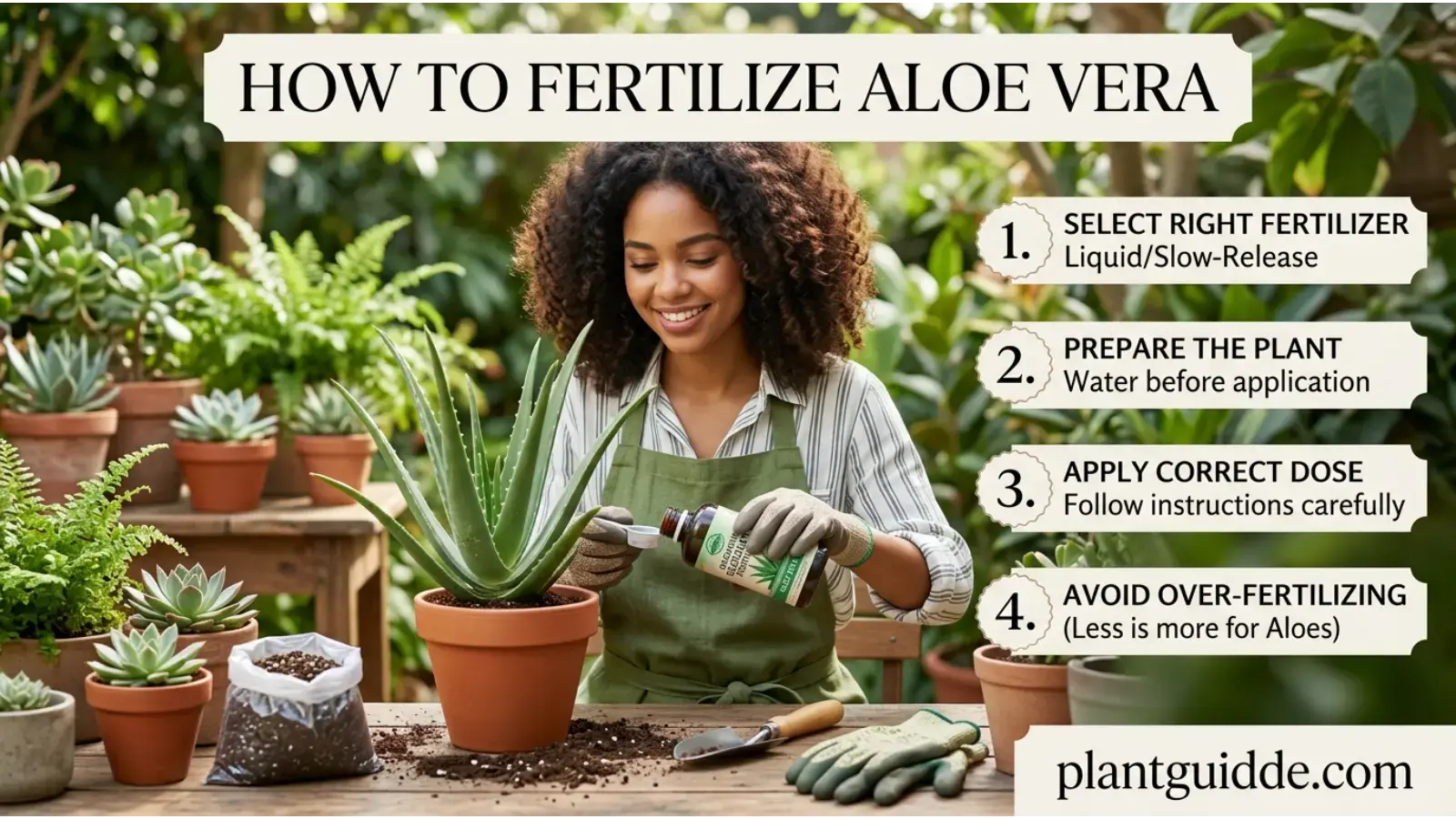
Aloe vera is a light feeder and usually grows well without frequent fertilization. Excessive feeding can lead to salt buildup and may damage the roots.
During active growth in spring and summer, you can apply a balanced fertilizer formulated for succulents, diluted according to the label. One light application during the growing season may be enough for a plant growing in an adequately nutritious potting mix.
Follow these guidelines:
- Avoid heavy fertilizing.
- Do not fertilize a plant with damaged or rotting roots.
- Reduce or stop feeding when growth slows in winter.
- Avoid fertilizing immediately after severe root damage or stressful repotting.
If your aloe is growing slowly, check its light, root health, and soil conditions before assuming it needs fertilizer.
How to Repot Aloe Vera
Aloe vera does not need frequent repotting. Repot when roots fill the container, the plant becomes unstable, or offsets crowd the pot.
Spring or early summer is often a convenient time to repot because growth is more active. However, a plant suffering from serious root rot should be treated promptly rather than left in unhealthy soil.
Step-by-step repotting
- Select a pot with drainage holes that is only slightly larger than the current one.
- Gently remove the plant and loosen excess soil.
- Inspect the roots and remove any soft or rotting sections with a clean tool.
- Position the plant at its previous depth, keeping the leaf bases above the soil.
- Fill around the roots with fresh succulent mix.
- Allow any damaged roots to dry and heal before watering, particularly if you had to make substantial cuts.
- Place the plant in bright, indirect light while it settles, then gradually return it to its normal lighting conditions.
Avoid burying the base of the leaves. Soil packed around the crown can trap moisture and increase the risk of rot.
How to Propagate Aloe Vera from Pups
The easiest way to propagate aloe vera is to separate the small plants that develop around the base of a mature parent.
Propagation steps
- Remove the parent plant from its pot so you can see the offsets and their roots.
- Choose a pup that has developed its own roots, if possible.
- Gently separate it from the parent, using a clean knife if necessary.
- Allow damaged cut surfaces to dry and callus before planting.
- Place the pup in a small pot with drainage holes and succulent soil.
- Keep it in bright, indirect light while it establishes.
- Water carefully once the soil has dried, avoiding constant moisture.
Very small offsets without roots may take longer to establish. Giving them time to develop before separation often improves their chances of success.
Can you grow aloe vera from a leaf cutting?
Aloe vera is not reliably propagated from detached leaves. A leaf may rot before producing roots or new growth. Separating healthy pups is generally a more dependable method for home growers.
Common Aloe Vera Problems and How to Fix Them
Aloe leaves can reveal changes in the growing environment, but the same symptom may have several causes. Check the soil, roots, light, and recent care routine before treating the plant.
| Problem | Possible cause | What to do |
|---|---|---|
| Yellow leaves | Overwatering, root damage, or natural aging | Check soil moisture and inspect roots if symptoms continue |
| Soft or mushy leaves | Excess moisture or rot | Inspect roots and remove rotten tissue |
| Thin or wrinkled leaves | Underwatering or damaged roots | Check soil dryness and root health |
| Brown leaf tips | Sun stress, inconsistent moisture, or other environmental stress | Review light exposure and watering |
| Red or brown leaf coloration | Intense sunlight, temperature changes, or stress | Assess recent environmental changes |
| Stretched or leaning growth | Insufficient light | Move the plant gradually to a brighter location |
| Slow growth | Low light, seasonal slowdown, or root problems | Review light, temperature, and root condition |
| Dark, soft leaf bases | Crown or root rot | Remove affected tissue and correct drainage problems |
Why are aloe vera leaves turning yellow?
Yellow leaves can indicate excess moisture, damaged roots, or normal aging of older leaves. If several leaves are turning yellow while the soil remains damp, check the drainage and root system.
Reduce unnecessary watering and repot if the soil is compacted or the roots are rotting. Do not add fertilizer until the plant has recovered.
Why is my aloe vera plant turning brown?
Brown coloration may result from sunburn, cold exposure, physical damage, or root problems. Examine the pattern carefully.
Dry, bleached patches on the side facing the sun may suggest sunburn. Dark, mushy areas near the base are more concerning because they can indicate rot. Adjust the growing conditions according to the symptoms rather than applying the same treatment to every brown leaf.
Why is my aloe vera drooping?
Aloe leaves can droop because of underwatering, overwatering, inadequate light, or damage to the roots. Check whether the soil is dry or wet before taking action.
If the soil is wet and the plant feels unstable, inspect the roots. If the soil is completely dry and the roots are firm, a thorough watering may help.
Is Aloe Vera Safe for Pets and Children?
Aloe vera is considered toxic to cats and dogs when ingested. Compounds in the plant, particularly in the outer leaf tissues and latex, can cause vomiting, diarrhea, lethargy, or other gastrointestinal symptoms.
Keep the plant out of reach of pets and young children. If ingestion occurs and symptoms develop, contact a veterinarian or an appropriate poison-information service.
Although the clear inner gel is used in some commercial products, raw aloe leaves contain yellow latex beneath the skin. Do not assume that every part of the plant is safe to eat or use on the skin.
Can Aloe Vera Grow Outdoors?
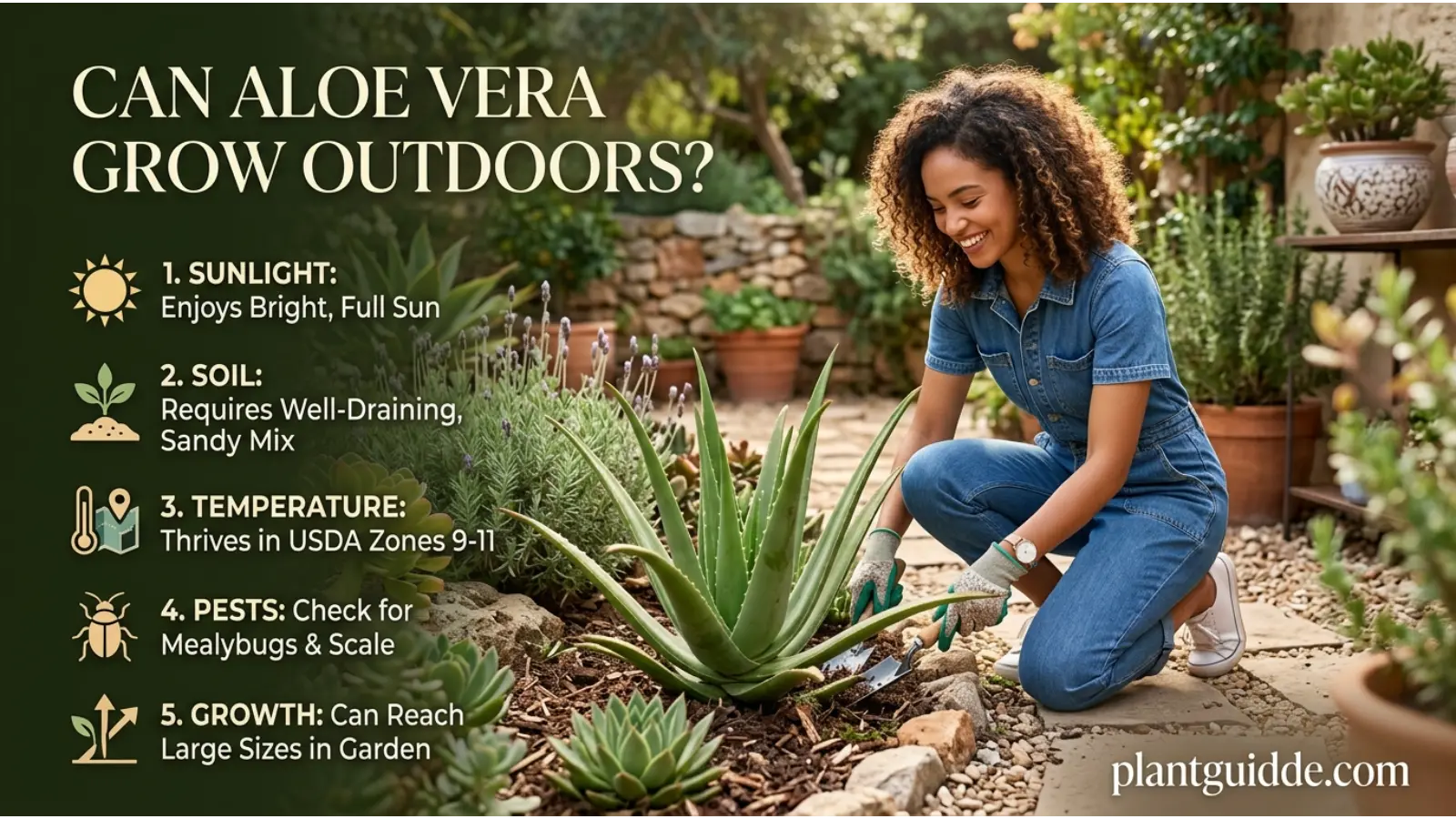
Yes. Aloe vera grows well outdoors in warm climates with plenty of light and well-draining soil. It can thrive in containers on sunny patios or in suitable garden beds where frost is not a concern.
If you move an indoor aloe outdoors, introduce it to stronger sunlight gradually. Sudden exposure to intense sunlight can scorch the leaves.
Choose a location where rainwater drains quickly, particularly during wet seasons. In areas with cold winters or heavy rainfall, a container makes it easier to protect the plant and control its growing conditions.
FAQs:
How often should I water an aloe vera plant indoors?
Water when the soil has dried completely throughout the pot. Depending on light, temperature, pot size, and season, this may take a week or several weeks. Water thoroughly and let the excess drain before returning the plant to its usual location.
Does aloe vera need direct sunlight?
Aloe vera needs bright light and can adapt to several hours of direct sunlight when introduced gradually. A bright window is usually suitable indoors. Avoid moving a plant from deep shade directly into intense midday or afternoon sun.
Why is my aloe vera plant dying?
Common causes include overwatering, poor drainage, root rot, inadequate light, and cold damage. Check the soil moisture and inspect the roots if the plant has soft leaves or a collapsing base. Correct the underlying issue before changing several other growing conditions.
Should I cut off damaged aloe vera leaves?
Remove completely rotten or severely damaged leaves with a clean, sharp tool. Minor cosmetic damage usually does not require removing an otherwise healthy leaf. If several leaves are deteriorating, identify the cause before pruning so the problem does not continue.
Can aloe vera grow indoors without a grow light?
Yes, if the room provides enough natural light. A bright window is often sufficient. In a consistently dim room, growth may become weak or stretched, and a suitable grow light can help maintain healthier growth.
Conclusion
Successful care for aloe vera plant growth comes down to three essentials: bright light, fast-draining soil, and careful watering. Allow the soil to dry completely between waterings, use a pot with drainage holes, and protect the plant from frost and prolonged cold.
If your aloe is struggling, start by checking the soil and roots before adding water or fertilizer. Once its basic needs are met, aloe vera is a relatively low-maintenance succulent that can remain healthy for years and produce new plants from its offsets.

Asad Mumtaz is a dedicated plant enthusiast and gardening writer with a passion for helping people care for their plants successfully. He specializes in plant care guides, indoor gardening, and practical growing tips for all skill levels. His content focuses on making gardening simple, enjoyable, and rewarding. Through his work, Asad shares reliable advice to help readers create thriving green spaces.