Peace lily plant indoors (Spathiphyllum species) are popular indoor plants known for their glossy green leaves and elegant white flowers, technically called spathes. They can brighten bedrooms, living rooms, offices, and other indoor spaces without requiring the intense sunlight that many flowering plants need.
However, learning how to care for a peace lily plant indoors involves more than watering it whenever the leaves droop. Yellow leaves, brown tips, wilting, and a lack of flowers can result from different problems, including poor drainage, unsuitable lighting, and inconsistent watering.
The key is to understand what your plant needs and recognize how its leaves respond to changing conditions. With suitable light, balanced moisture, and a healthy root system, a peace lily can remain attractive for years.
Quick Answer
To care for a peace lily plant indoors, place it in bright, indirect light, use well-draining potting soil, and water when the top inch of soil feels dry. Maintain comfortable room temperatures, provide moderate humidity, and fertilize lightly during active growth. Avoid direct afternoon sunlight and waterlogged soil, which can cause leaf damage and root rot. Check the plant regularly to identify problems before they become severe.
Best Conditions for Indoor Peace Lily Care
Peace lilies naturally grow in warm, shaded tropical environments. Indoors, they generally perform best when their roots remain lightly moist but never waterlogged.
| Care factor | Ideal conditions | What to avoid |
|---|---|---|
| Light | Bright, indirect light | Strong, prolonged direct sunlight |
| Water | Water when the top inch of soil feels dry | Constantly saturated soil |
| Soil | Moisture-retentive but well-draining potting mix | Dense soil that stays wet |
| Temperature | Approximately 65–80°F (18–27°C) | Cold drafts and sudden temperature changes |
| Humidity | Moderate to moderately high humidity | Extremely dry air over long periods |
| Fertilizer | Diluted houseplant fertilizer during active growth | Excessive feeding |
| Pot | Container with drainage holes | Standing water around the roots |
These are starting guidelines rather than rigid rules. A peace lily in a warm, bright room may use water faster than one in a cooler, dimmer space.
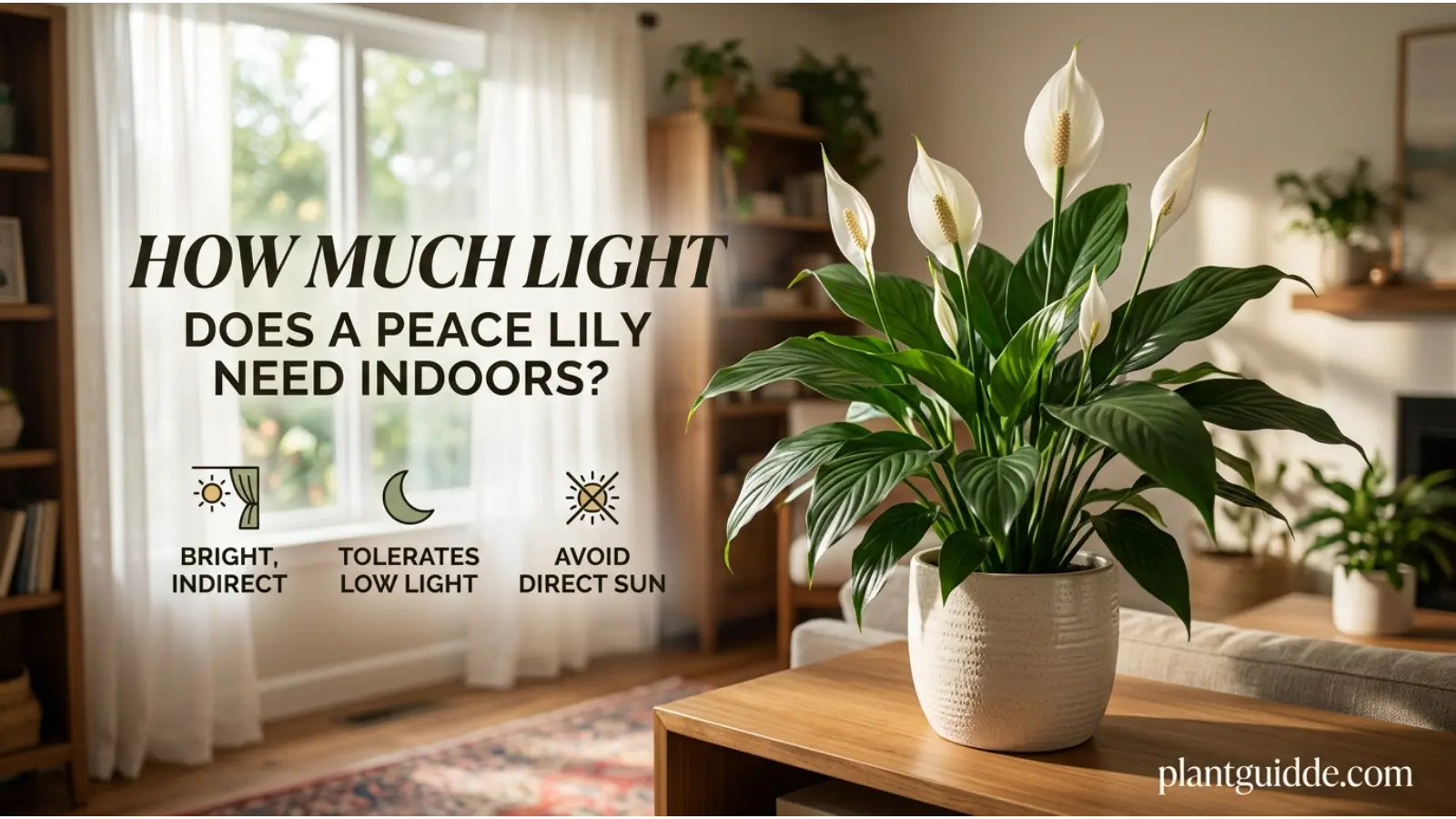
How Much Light Does a Peace Lily Need Indoors?
Light affects leaf growth, overall plant health, and the likelihood of flowering. Peace lilies tolerate lower light than many flowering houseplants, but they generally grow better with bright, filtered light.
Choose bright, indirect light
Place your peace lily near an east-facing window or a few feet from a bright south- or west-facing window. A sheer curtain can help soften intense sunlight.
A suitable location provides enough light to support healthy leaves without exposing them to prolonged, harsh rays.
Can a peace lily grow in low light?
Yes, but there is an important distinction between surviving and thriving. A peace lily may maintain its leaves in a relatively dim room, but growth and flowering can become limited.
If your plant looks healthy but rarely produces flowers, assess the light before increasing fertilizer. More nutrients cannot compensate for insufficient light.
Signs of lighting problems
- Brown or bleached patches: Strong direct sunlight may be scorching the leaves.
- Slow growth: The plant may need brighter indirect light, although root or nutrient problems can also contribute.
- Fewer flowers: Insufficient light is one possible reason.
- Pale or yellowing foliage: Check lighting alongside watering, drainage, and root health.
Move the plant gradually if you need to change its location. Sudden exposure to intense sunlight can damage leaves adapted to indoor conditions.
How Often Should You Water an Indoor Peace Lily?
Peace lilies prefer more consistent moisture than drought-tolerant plants such as snake plants. However, keeping the soil constantly wet can deprive the roots of oxygen and encourage root rot.
Instead of following a fixed watering schedule, check the soil regularly.
Step-by-step watering method
- Check the top inch of soil. Insert your finger into the potting mix to assess moisture.
- Water when the surface begins to dry. If the soil is still wet, wait and check again.
- Water thoroughly. Pour water evenly over the soil until excess water flows from the drainage holes.
- Empty the saucer. Do not let the pot sit in standing water.
- Monitor the plant. Check moisture more frequently during warm, bright periods and less frequently when growth slows.
The exact watering interval depends on pot size, soil, room temperature, light, and humidity. A small plant in a warm room may dry much faster than a large plant in a cool corner.
Why do peace lily leaves droop?
Peace lilies are known for visibly drooping when they become too dry. If the soil is dry and the leaves are limp, thorough watering may help the plant recover.
However, drooping does not always mean the plant needs water. Roots damaged by excessive moisture may also struggle to supply water to the leaves.
Before watering a drooping peace lily, check the soil:
- If it is dry, water thoroughly and allow excess water to drain.
- If it is wet, do not add more water.
- If the plant remains limp despite suitable moisture, inspect the roots and review the growing conditions.
Repeatedly allowing a peace lily to wilt severely can stress the plant. Use drooping as a warning sign, not as your regular watering method.
Best Soil and Pot for Peace Lilies
Peace lilies need a potting mix that holds some moisture while allowing excess water to drain. A standard indoor potting mix can work if it is not too dense.
For improved aeration, consider a mixture containing:
- Two parts quality indoor potting mix
- One part perlite or pumice
You can adjust this mixture depending on how quickly the soil dries. The goal is a loose, stable medium that retains enough moisture for the roots without becoming waterlogged.
Choose a pot with drainage holes
Drainage is essential because excess water needs somewhere to escape. A pot without drainage holes can trap water around the roots, even when the surface looks dry.
Choose a container that comfortably accommodates the root system without being excessively large. Too much unused soil can remain wet for longer than necessary.
If you use a decorative pot without drainage, keep the plant in a separate nursery pot and remove it for watering. Allow the inner pot to drain fully before returning it to the decorative container.
Ideal Temperature and Humidity for Indoor Peace Lilies
Peace lilies generally prefer temperatures around 65–80°F (18–27°C). Keep them away from cold drafts, air-conditioning vents, and sudden temperature changes.
Moderate to moderately high humidity can help maintain attractive foliage. In dry indoor environments, brown leaf tips may become more noticeable, although watering problems, root damage, and fertilizer salts can produce similar symptoms.
To improve the growing environment:
- Keep the plant away from heating vents.
- Group it with other houseplants if the surrounding conditions are suitable.
- Use a room humidifier if indoor air is consistently very dry.
- Avoid relying on frequent misting as a substitute for stable humidity.
Peace lilies do not need a greenhouse to grow well. Comfortable indoor temperatures, suitable light, and consistent soil moisture are usually more important than attempting to create tropical humidity.
How to Fertilize a Peace Lily
Peace lilies are not heavy feeders. Excessive fertilizer can cause salt buildup in the soil and contribute to brown leaf tips or root damage.
During spring and summer, apply a balanced liquid houseplant fertilizer diluted according to its label. Feeding every four to eight weeks may be sufficient for a plant growing actively, although the appropriate frequency depends on the product and the plant’s conditions.
Follow these practices:
- Apply fertilizer at the recommended dilution.
- Avoid feeding a severely wilted or root-damaged plant.
- Reduce or stop feeding when growth slows during winter.
- Do not increase fertilizer simply because the plant is not flowering.
If your peace lily has healthy leaves but produces few flowers, check light levels first. Excess fertilizer can encourage foliage growth without resolving inadequate lighting.
How to Encourage a Peace Lily to Flower
Peace lily flowers consist of a white spathe surrounding a central flower-bearing structure called a spadix. The white spathe may gradually turn green as it ages, which is often a normal part of the flower’s development.
Several factors influence flowering:
Provide sufficient light. Bright, indirect light generally supports better flowering than a dark corner.
Maintain healthy roots. Waterlogged soil can interfere with root function and overall growth.
Avoid excessive fertilizer. Too much feeding does not guarantee more flowers and may damage the plant.
Allow the plant to mature. Young or recently divided peace lilies may need time to establish themselves before flowering regularly.
Remove spent flowers. Cut old flower stalks near the base with clean scissors. This improves appearance and prevents the plant from wasting resources on aging flower structures.
Some indoor peace lilies flower intermittently rather than continuously. A healthy plant without flowers is not necessarily unhealthy, particularly when it receives limited natural light.
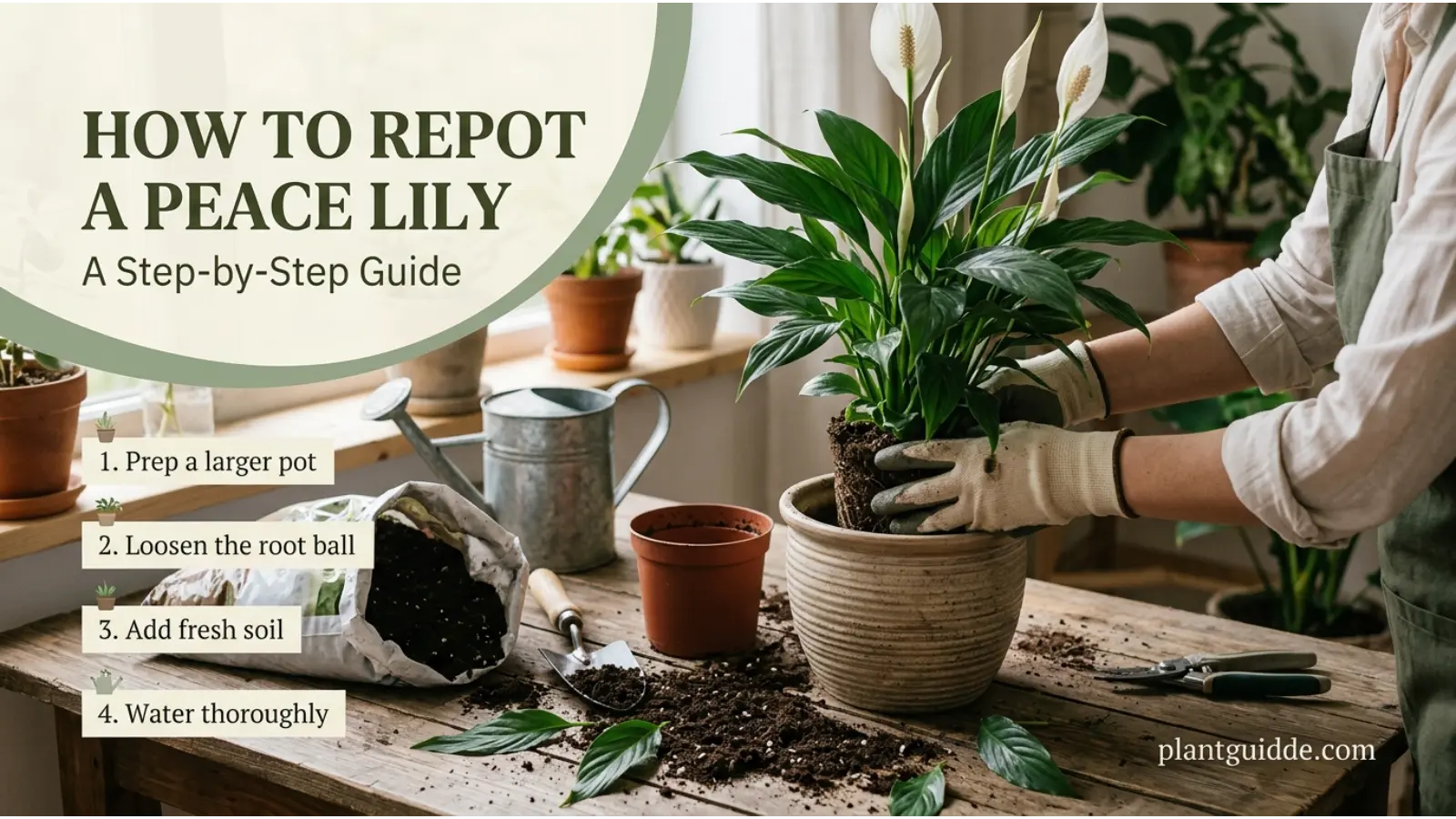
How to Repot a Peace Lily
Repotting becomes necessary when roots crowd the container, emerge from drainage holes, or cause the soil to dry unusually quickly. Spring is often a convenient time because the plant can resume active growth afterward.
Repotting steps
- Select a pot with drainage holes that is only one size larger than the current container.
- Gently remove the plant and loosen the outer roots.
- Inspect the roots for dark, soft, or damaged sections.
- Trim rotting roots with clean tools.
- Place the plant at its previous soil depth.
- Fill around the roots with fresh, well-draining potting mix.
- Water appropriately and allow excess water to drain.
Do not automatically move a peace lily into a much larger pot. A container that holds too much unused soil may stay wet for longer, increasing the risk of root problems.
If you repot because of root rot, prioritize removing damaged tissue and correcting the soil and drainage conditions rather than simply choosing a larger pot.
Common Peace Lily Problems and How to Fix Them
Peace lily leaves can reveal changes in watering, lighting, and root health. However, similar symptoms can have different causes, so examine the soil and overall environment before choosing a solution.
| Symptom | Possible cause | What to do |
|---|---|---|
| Yellow leaves | Excess moisture, root damage, or natural aging | Check soil moisture and inspect roots if yellowing continues |
| Brown leaf tips | Dry air, inconsistent watering, or fertilizer salts | Review humidity, watering, and feeding |
| Drooping leaves | Dry soil, waterlogged roots, or temperature stress | Check soil before watering |
| Brown or scorched patches | Excessive direct sunlight | Move the plant to filtered light |
| Green flower spathes | Normal flower aging or changing conditions | Remove spent flowers when appropriate |
| No flowers | Insufficient light, plant maturity, or growing conditions | Improve indirect light and review overall care |
| Persistent wet soil | Poor drainage, oversized pot, or excessive watering | Improve drainage and check the roots |
Why are the leaves turning yellow?
Yellowing can result from excessive watering, poor drainage, root damage, or normal aging of older leaves.
If several leaves turn yellow while the soil stays wet, check the drainage holes and inspect the roots if the condition continues. If only an occasional older leaf yellows while the rest of the plant looks healthy, it may be natural aging.
Avoid cutting off every yellow leaf immediately without identifying the cause. Correcting the growing conditions is more important than removing the visible symptoms.
Why are the leaf tips turning brown?
Brown tips may result from inconsistent watering, low humidity, fertilizer salts, or root stress. Examine the soil and review your recent care routine before changing several factors at once.
You can trim brown tips with clean scissors, following the natural outline of the leaf. Leave a small amount of brown tissue rather than cutting into healthy green areas.
What should you do about root rot?
If the plant remains wilted in wet soil, remove it from the container and inspect the roots. Healthy roots should be firm, while rotting roots often appear dark and mushy.
Remove affected roots with clean tools, discard the old saturated mix, and repot in fresh, well-draining soil. Afterward, water according to the moisture level of the new mix rather than following your previous schedule.
Severely damaged plants may not recover fully, but addressing root problems early improves the chances of saving healthy tissue.
Common Mistakes in Indoor Peace Lily Care
Even attentive plant owners can run into trouble by responding to symptoms without checking their causes.
- Watering every day: Peace lilies prefer moisture, but their roots still need oxygen.
- Waiting for severe drooping: Repeated wilting stresses the plant and is not an ideal watering strategy.
- Placing the plant in direct afternoon sunlight: Strong rays may scorch the foliage.
- Using a pot without drainage: Trapped water increases the risk of root rot.
- Adding fertilizer to fix yellow leaves: Yellowing often results from moisture or root problems instead.
- Moving the plant frequently: Repeated changes in light and temperature can make it harder to maintain consistent conditions.
- Expecting continuous flowers: Indoor flowering depends on light, maturity, and growing conditions.
A useful routine is to check the soil, inspect the newest leaves, and look for changes in leaf color or posture once or twice a week. This makes it easier to spot developing problems without disturbing the plant unnecessarily.
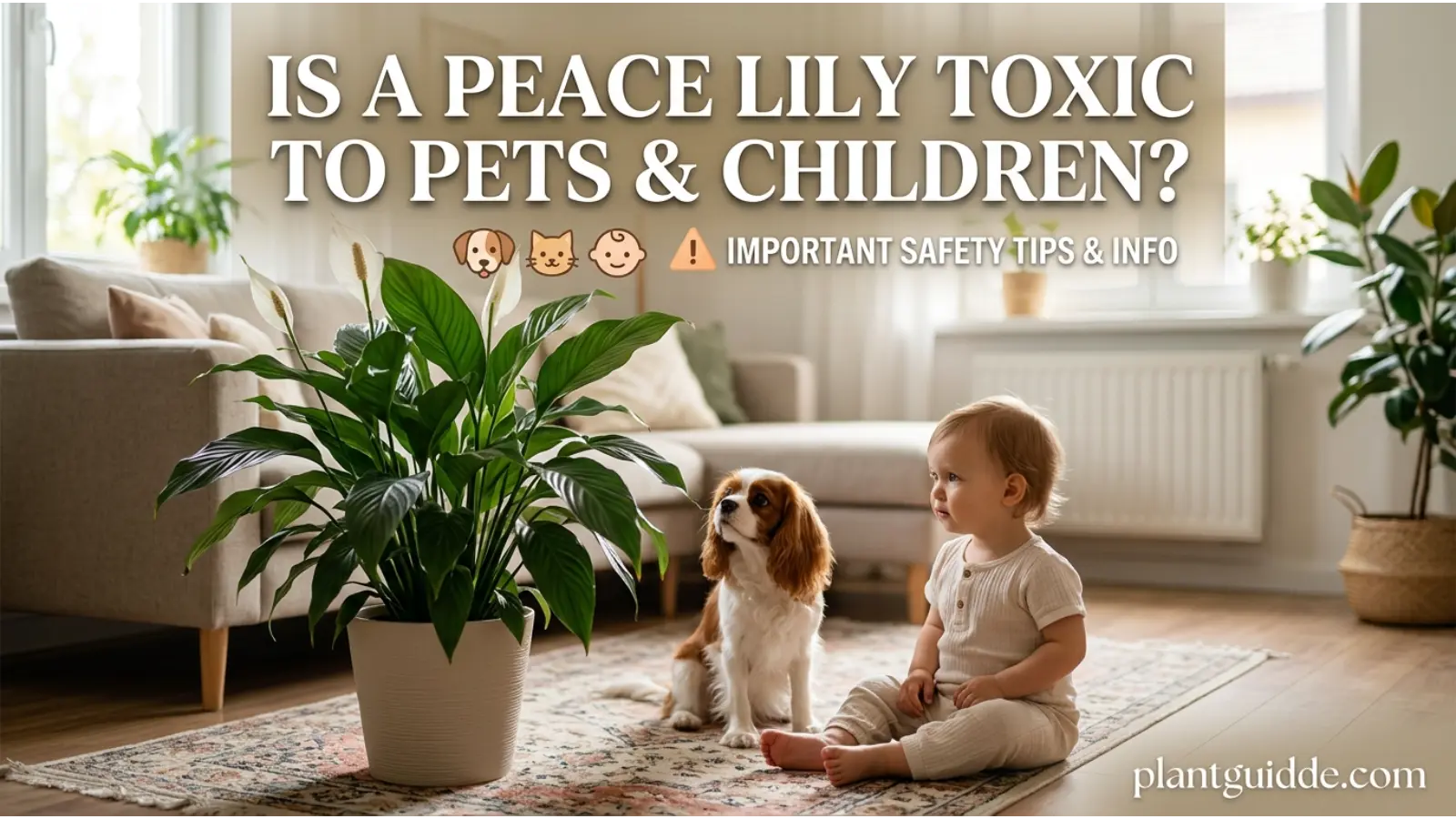
Is a Peace Lily Toxic to Pets and Children?
Yes. Peace lilies contain insoluble calcium oxalate crystals that can irritate the mouth and digestive tract when chewed or swallowed.
Pets or children who bite the leaves may experience oral pain, drooling, irritation, or difficulty swallowing. Keep the plant out of reach of children and animals who might chew it.
Peace lily plant indoors a pet ingests part of the plant and develops symptoms, contact a veterinarian for guidance. If a person experiences significant pain or difficulty swallowing after exposure, seek appropriate medical advice promptly.
Peace lilies are attractive indoor plants, but they should not be considered pet-safe.
FAQs:
How often should I water a peace lily indoors?
Check the top inch of soil and water when it begins to dry. The interval may range from several days to longer than a week, depending on light, temperature, pot size, and soil. Water thoroughly and let excess water drain.
Where is the best place to keep a peace lily indoors?
A bright room with indirect sunlight is usually ideal. Place the plant near an east-facing window or away from strong direct sunlight near a brighter window. Avoid cold drafts and locations where the soil remains wet for extended periods.
Why is my indoor peace lily drooping even after watering?
Peace lily plant indoors the soil is wet, the roots may be struggling because of excess moisture or root rot. Check the drainage and inspect the roots if the plant does not recover. If the soil is dry, water thoroughly and allow the pot to drain.
How can I make my peace lily bloom again?
Provide bright, indirect light, maintain healthy roots, and avoid excessive fertilizer. Mature plants may flower intermittently indoors, so a lack of flowers does not automatically indicate a serious problem.
Should I cut off yellow leaves on a peace lily?
Remove fully yellow or damaged leaves with clean scissors, cutting the leaf stalk near its base without injuring nearby healthy growth. Peace lily plant indoors yellowing affects several leaves, check watering, drainage, and root health before assuming the leaves are simply aging.
Conclusion
Successful indoor peace lily care comes down to balanced moisture, suitable indirect light, healthy roots, and stable temperatures. Water when the top inch of soil begins to dry, use a well-draining potting mix, and avoid leaving the roots in standing water.
Peace lily plant indoors your peace lily develops yellow leaves, brown tips, or drooping foliage, check the soil before making changes. Observing the plant’s response and correcting the underlying cause will help you maintain healthy green leaves and encourage flowering when conditions are suitable.

Asad Mumtaz is a dedicated plant enthusiast and gardening writer with a passion for helping people care for their plants successfully. He specializes in plant care guides, indoor gardening, and practical growing tips for all skill levels. His content focuses on making gardening simple, enjoyable, and rewarding. Through his work, Asad shares reliable advice to help readers create thriving green spaces.