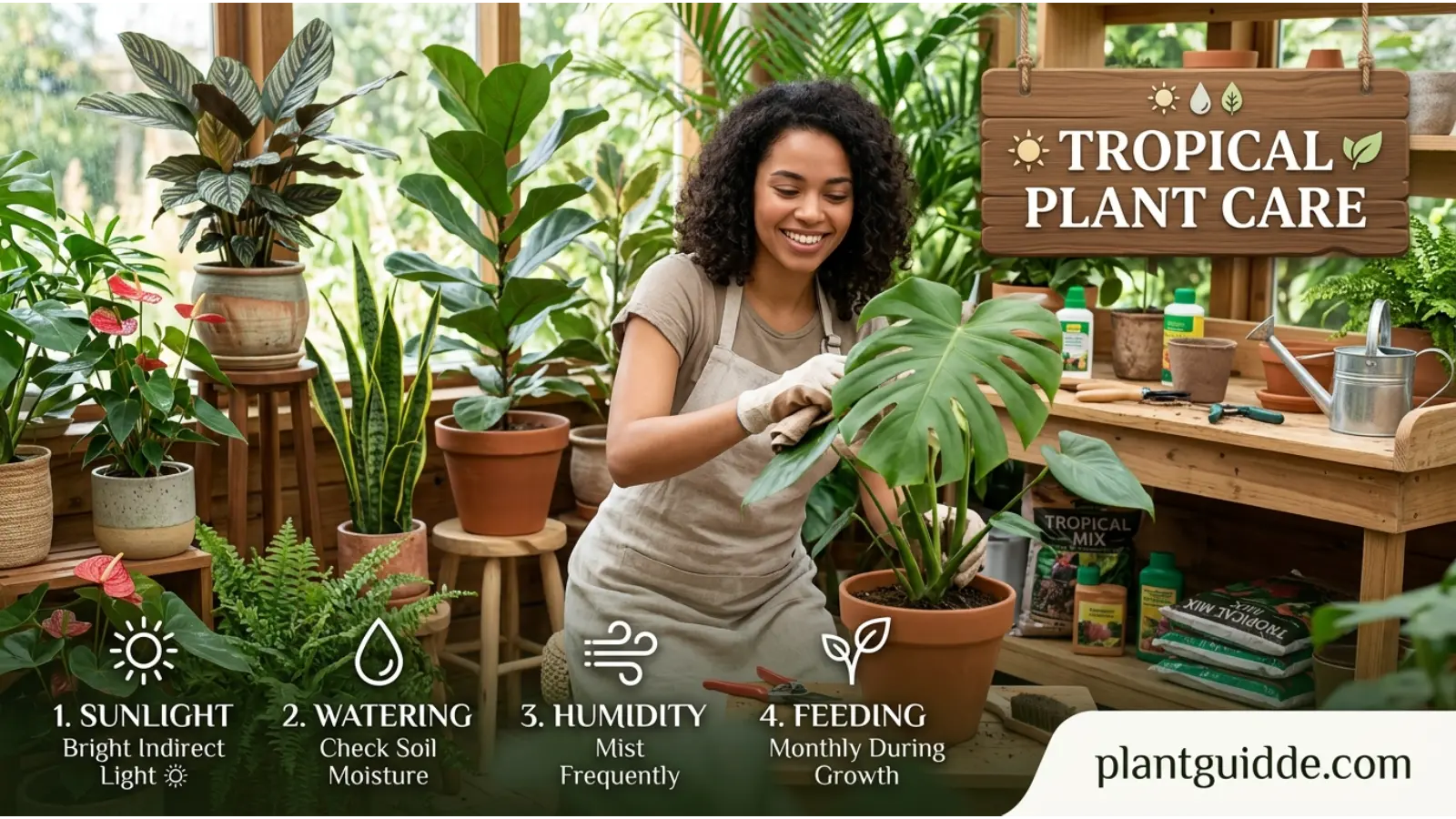
Tropical plant care bring lush foliage, unusual leaf shapes, and a naturally vibrant look to indoor spaces.
Plants such as monstera, philodendron, pothos, peace lily, calathea, prayer plant, anthurium, and many palms can thrive indoors, but they are not all equally forgiving.
The biggest mistake with tropical plant care is assuming that every tropical plant wants the same treatment. A plant may come from a warm, humid region but still dislike constantly wet soil, harsh direct sunlight, or stagnant air.
Successful care is less about reproducing a rainforest and more about understanding the specific conditions your plant can tolerate.
Quick Answer
Tropical plant care focuses on providing bright, suitable light, warm temperatures, consistent but controlled moisture, good humidity, and an airy, well-draining growing medium.
Most tropical houseplants grow best when their environment stays relatively stable. Instead of following a rigid watering schedule, check the soil, leaves, pot, and growing conditions before deciding what your plant needs.
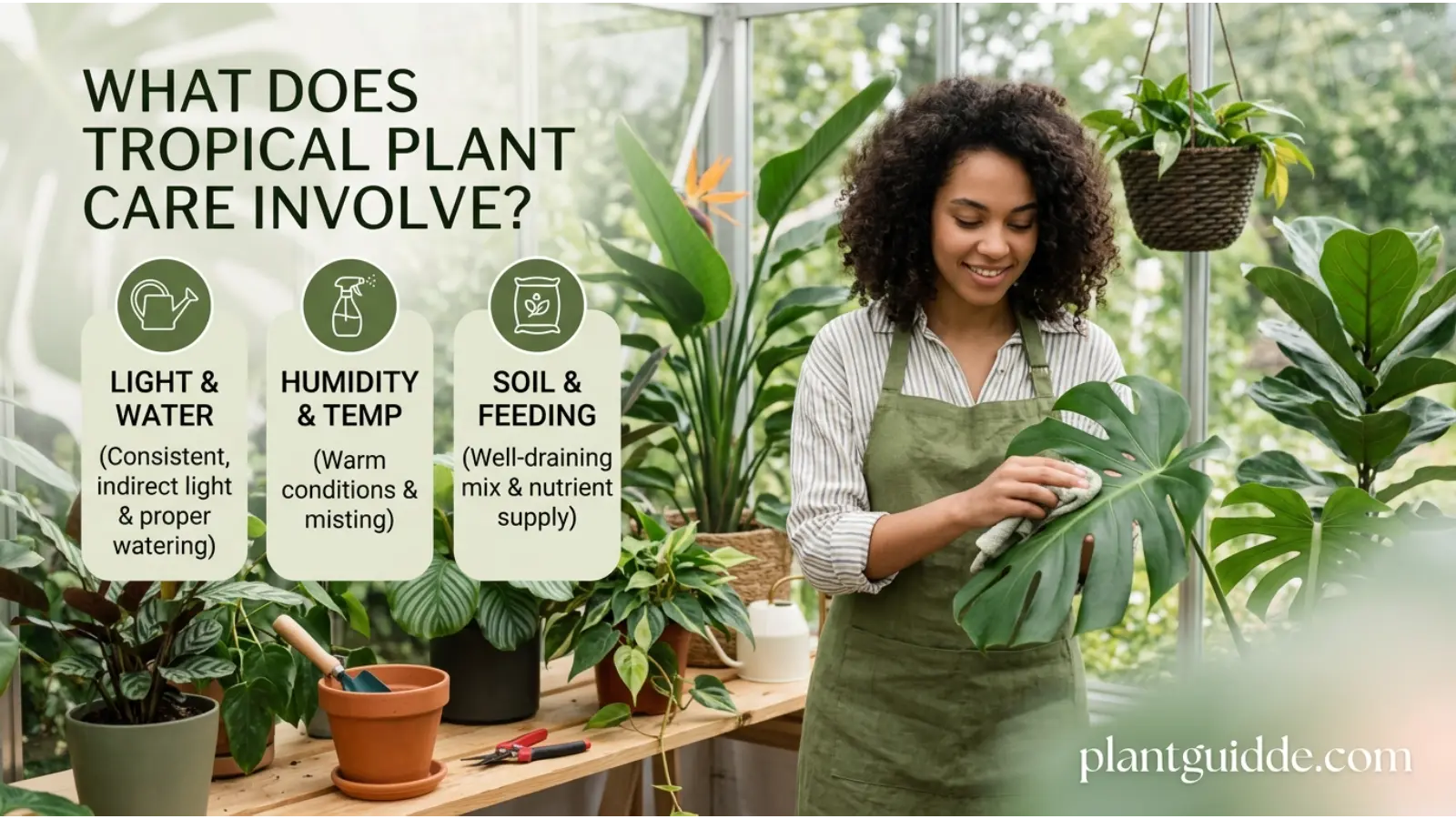
What Does Tropical Plant Care Involve?
Tropical plant care means managing the environmental conditions that influence growth, including light, water, temperature, humidity, soil, drainage, nutrition, and airflow.
In their natural habitats, tropical plants often experience warm temperatures, seasonal rainfall, filtered light beneath vegetation, and active biological soil. Indoors, however, their roots are confined to a container and environmental conditions can change quickly.
That is why a tropical houseplant can struggle even when it receives plenty of water.
The goal is to create a stable growing environment rather than constantly correcting problems after they appear.
How Much Light Do Tropical Plants Need?
Light is one of the most important factors in tropical plant care because it determines how efficiently a plant can produce energy for new growth.
Many popular tropical houseplants prefer bright, indirect light, although their tolerance varies.
A good indoor location may be:
- Near an east-facing window
- A few feet from a bright south- or west-facing window
- Behind a sheer curtain that softens intense sunlight
- Under a suitable grow light when natural light is inadequate
Low light does not always kill a tropical plant immediately. Instead, you may notice slower growth, smaller leaves, longer spaces between leaves, or loss of attractive variegation.
On the other hand, suddenly placing a plant in strong afternoon sun can cause pale patches, bleached leaves, or brown, scorched areas.
How to Tell if Light Is Wrong
Watch the plant rather than relying only on the window direction.
Possible signs of insufficient light:
- Slow or stalled growth
- Small new leaves
- Leggy or stretched stems
- Leaves turning toward the window
- Reduced variegation in some plants
Possible signs of excessive light:
- Bleached-looking foliage
- Crispy brown patches
- Scorched leaf surfaces
- Sudden fading after moving the plant outdoors or closer to a hot window
If you need to increase light, make the change gradually when possible.
Water Tropical Plants According to Their Soil
Watering is where many tropical houseplants are damaged.
The phrase “tropical” can make beginners think a plant should stay constantly moist. In reality, roots need both water and oxygen. Soil that remains saturated for too long can restrict oxygen around the roots and increase the risk of root problems.
Instead of watering every Sunday or following a fixed calendar, check the plant’s actual conditions.
Before watering, consider:
- How dry is the soil?
- How large is the pot compared with the root system?
- Does the container have drainage holes?
- How much light is the plant receiving?
- Has the temperature or humidity recently changed?
- Is the plant actively growing?
A plant receiving strong light in a warm room may use water considerably faster than the same species sitting in a dim, cool corner.
How to Water Properly
When the plant actually needs water, water the soil thoroughly so moisture reaches the root zone. Allow excess water to drain freely, then empty any standing water collected in a saucer or decorative container.
Avoid giving a thirsty plant only a tiny splash every few days. Small amounts may wet only the upper soil while leaving deeper roots inconsistently hydrated.
The appropriate drying period depends on the species and growing conditions. Some tropical plants prefer more consistently moist soil, while others tolerate or prefer a noticeable period of drying.
Choose a Well-Draining Soil Mix
Good tropical plant care starts below the surface.
A useful potting mix should hold enough moisture for the plant while allowing excess water and air to move through the root zone.
For many tropical houseplants, a mix containing materials such as:
- Quality potting mix
- Fine or medium orchid bark
- Perlite or another aerating amendment
- Coco coir or another moisture-retaining component when appropriate
can create a more balanced root environment.
The exact recipe should depend on the plant. A moisture-loving peace lily does not necessarily need the same mix as a plant with thick, water-storing roots or stems.
Drainage Matters More Than a Fancy Soil Recipe
A complicated soil mixture cannot compensate for poor drainage.
Choose a container with drainage holes whenever possible. Decorative cachepots can still be used, but the plant’s actual growing pot should allow excess water to escape.
If water sits around the roots for long periods, adding more fertilizer or moving the plant to a brighter location will not solve the underlying problem.
Humidity: When It Helps and When It Doesn’t
Many tropical plants evolved in environments with higher atmospheric moisture than a typical heated or air-conditioned room.
Low humidity can contribute to:
- Crispy leaf edges
- Brown tips
- Curling leaves
- Faster moisture loss
- Stress in humidity-sensitive species
However, increasing humidity is not a universal cure.
A humidifier can be useful when a room is consistently dry, particularly for plants known to be sensitive to low humidity. Grouping plants together may also slightly increase local moisture, although it should not replace good airflow.
Misting is often overestimated. Spraying leaves may provide only temporary moisture and does not reliably create rainforest-level humidity around the plant.
If you use a humidifier, keep the surrounding area clean and avoid creating persistently damp, stagnant conditions.
Keep Temperatures Stable
Most tropical houseplants prefer warm indoor temperatures and can react poorly to sudden cold.
Protect them from:
- Cold drafts
- Freezing temperatures
- Direct blasts from air conditioners
- Very hot heating vents
- Sudden transitions between very different environments
A plant sitting beside a cold window during winter may experience significantly different conditions from one positioned farther into the room.
Temperature also affects watering. When growth slows in cooler conditions, soil may remain wet for longer. Continuing the same watering routine without checking the soil can create problems.
Airflow Is an Overlooked Part of Tropical Plant Care
High humidity and poor airflow are not the same as healthy tropical conditions.
Plants benefit from gentle air movement because it helps the growing environment dry more evenly and reduces the stagnant conditions that can encourage certain fungal and bacterial problems.
You do not need a fan blowing directly onto the leaves all day.
Instead, aim for gentle circulation around the plant while avoiding strong, drying drafts.
This becomes especially important when plants are grouped closely together or placed in humid rooms.
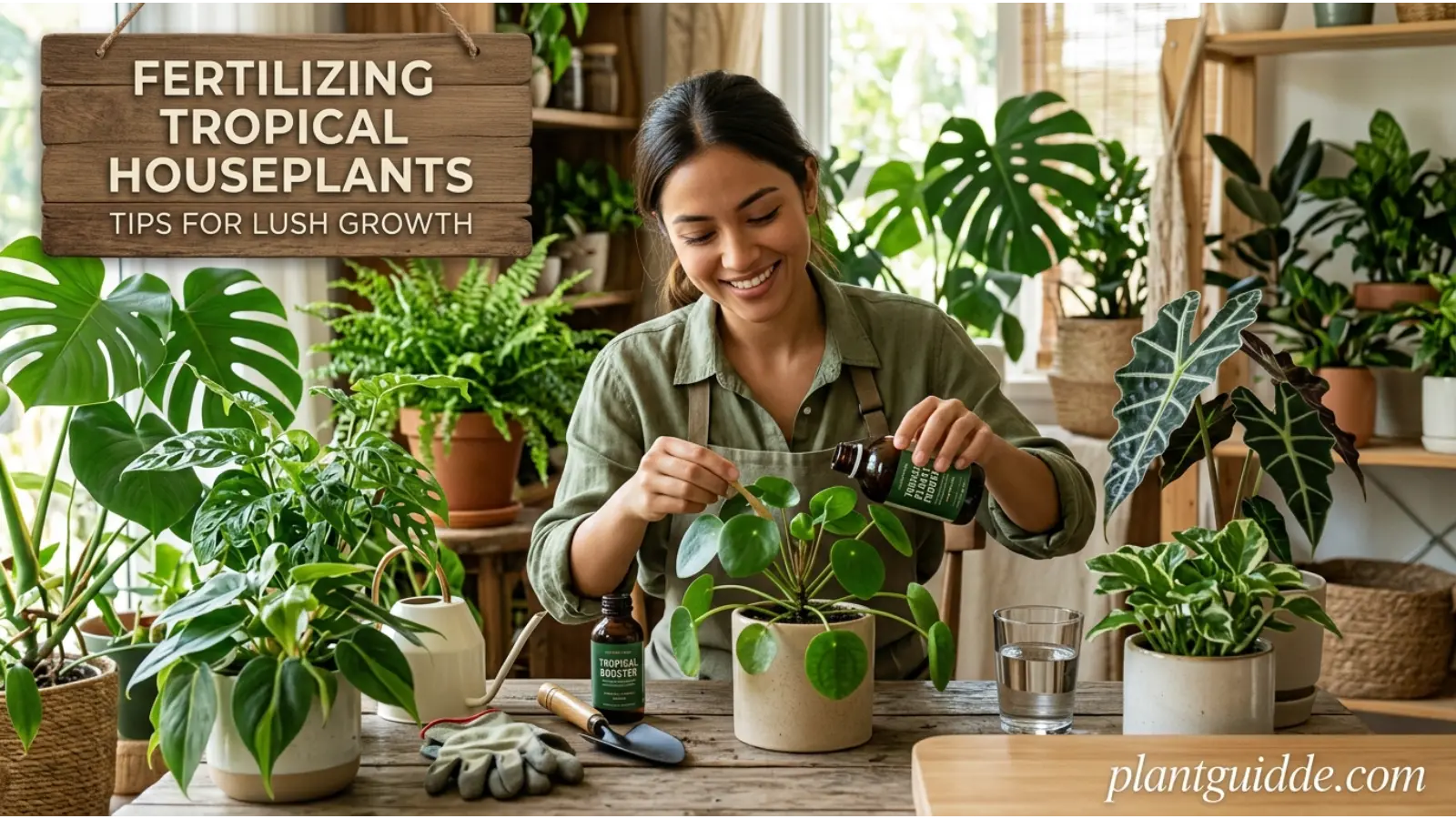
Fertilizing Tropical Houseplants
Tropical plants need nutrients for new leaves, roots, stems, and overall growth, but more fertilizer is not automatically better.
During active growth, many tropical houseplants benefit from a balanced, appropriately diluted fertilizer according to the product’s directions.
Avoid fertilizing a plant that is:
- Severely stressed
- Recently repotted into nutrient-rich soil
- Sitting in waterlogged soil
- Showing unexplained root damage
- Experiencing serious environmental stress
Fertilizer cannot compensate for inadequate light or damaged roots.
A plant receiving insufficient light may have limited capacity for vigorous growth even when nutrients are abundant.
Repotting Tropical Plants Without Causing Unnecessary Stress
Tropical houseplants do not need to be repotted simply because a certain amount of time has passed.
Look for evidence that the existing container is becoming restrictive or the growing medium is no longer performing well.
Possible signs include:
- Roots circling heavily around the root ball
- Roots emerging from drainage holes
- Soil drying unusually quickly
- Water running through the pot without properly wetting the root zone
- Noticeably slowed growth during an otherwise suitable growing period
- A plant becoming unstable or top-heavy
When repotting, choose a container only moderately larger than the current root system.
A huge pot can hold excess moisture around a relatively small root ball, increasing the time the soil takes to dry.
Pruning and Cleaning Tropical Plants
Pruning can improve appearance, remove damaged growth, and help manage size.
Use clean, sharp tools when cutting stems or leaves. Remove completely dead or severely damaged foliage rather than repeatedly trimming healthy green tissue.
Dust can also accumulate on broad tropical leaves.
Gently cleaning leaves can improve their appearance and allows you to inspect the plant more easily for pests or other problems.
Avoid aggressive pruning simply because a plant has a few damaged leaves. First determine why the damage occurred.
Common Tropical Plant Pests
Indoor tropical plants can develop pest problems even when they are otherwise well cared for.
Common pests include:
- Spider mites
- Mealybugs
- Scale insects
- Thrips
- Fungus gnats
- Aphids
Inspect the undersides of leaves, new growth, stems, and leaf joints regularly.
Early detection is much easier to manage than a large infestation.
If you bring home a new tropical plant, keeping it separate from your existing collection for a period of observation can also reduce the chance of immediately spreading pests to other plants.
Common Tropical Plant Care Mistakes
Watering on a Fixed Schedule
A calendar cannot account for changes in light, temperature, pot size, soil, season, or plant growth.
Better approach: Check the soil and plant before watering.
Keeping Soil Permanently Wet
Moisture-loving does not necessarily mean waterlogged.
Better approach: Learn how much drying your particular species prefers and make sure excess water can escape.
Giving Every Tropical Plant the Same Light
Some tropical plants tolerate lower light, while others require much brighter conditions to maintain strong growth.
Better approach: Research the species and observe its response after placement.
Increasing Humidity Without Improving Airflow
A humid, stagnant environment can create its own problems.
Better approach: Combine appropriate humidity with gentle air circulation.
Using a Large Pot Too Soon
A large container may stay wet much longer than expected.
Better approach: Increase pot size gradually as the root system develops.
Treating Brown Leaves With Fertilizer
Brown tips can have several causes, including dry conditions, inconsistent moisture, salt buildup, environmental stress, or natural aging.
Better approach: Investigate the growing conditions before adding nutrients.
Ignoring the Roots
Leaf symptoms are often treated as the main problem, but roots determine how effectively a plant can absorb water and nutrients.
Better approach: If a plant repeatedly declines despite reasonable care, examine the soil, drainage, and root environment.
How to Diagnose Problems From the Leaves
Leaves can provide useful clues, but one symptom rarely identifies a problem with certainty.
| Symptom | Possible Causes | What to Check |
|---|---|---|
| Yellow leaves | Overwatering, aging, low light, root stress | Soil moisture, drainage, light |
| Brown crispy edges | Dry air, inconsistent watering, salt buildup | Humidity, watering, fertilizer use |
| Soft yellow leaves | Excess moisture or root problems | Roots and soil condition |
| Curling leaves | Water stress, heat, low humidity, pests | Moisture, temperature, leaf undersides |
| Small new leaves | Low light, restricted roots, inadequate conditions | Light and root space |
| Drooping | Dry soil, root damage, temperature stress | Soil moisture and roots |
| Pale or bleached patches | Excessive light or heat | Window exposure |
| Slow growth | Low light, cool conditions, root restriction | Light, temperature, pot size |
These symptoms overlap, so avoid making a diagnosis from leaf color alone.
For example, yellow leaves can result from both excessive moisture and natural aging. The surrounding evidence matters.
A Simple Tropical Plant Care Routine
You do not need to constantly monitor your plants.
A practical routine is:
Weekly:
Inspect leaves, stems, and soil. Look for pests, unusual spots, drooping, or changes in growth.
When the soil reaches the plant’s preferred dryness:
Water thoroughly and allow excess water to drain.
During active growth:
Monitor whether the plant needs regular feeding according to its species and fertilizer instructions.
Every few months:
Check whether the plant has outgrown its container, whether the potting mix is still draining properly, and whether its light conditions remain suitable.
Whenever something changes:
Reassess the plant after moving it, changing the room temperature, turning on heating or air conditioning, or changing the pot.
This approach is more reliable than treating tropical plant care as a rigid checklist.
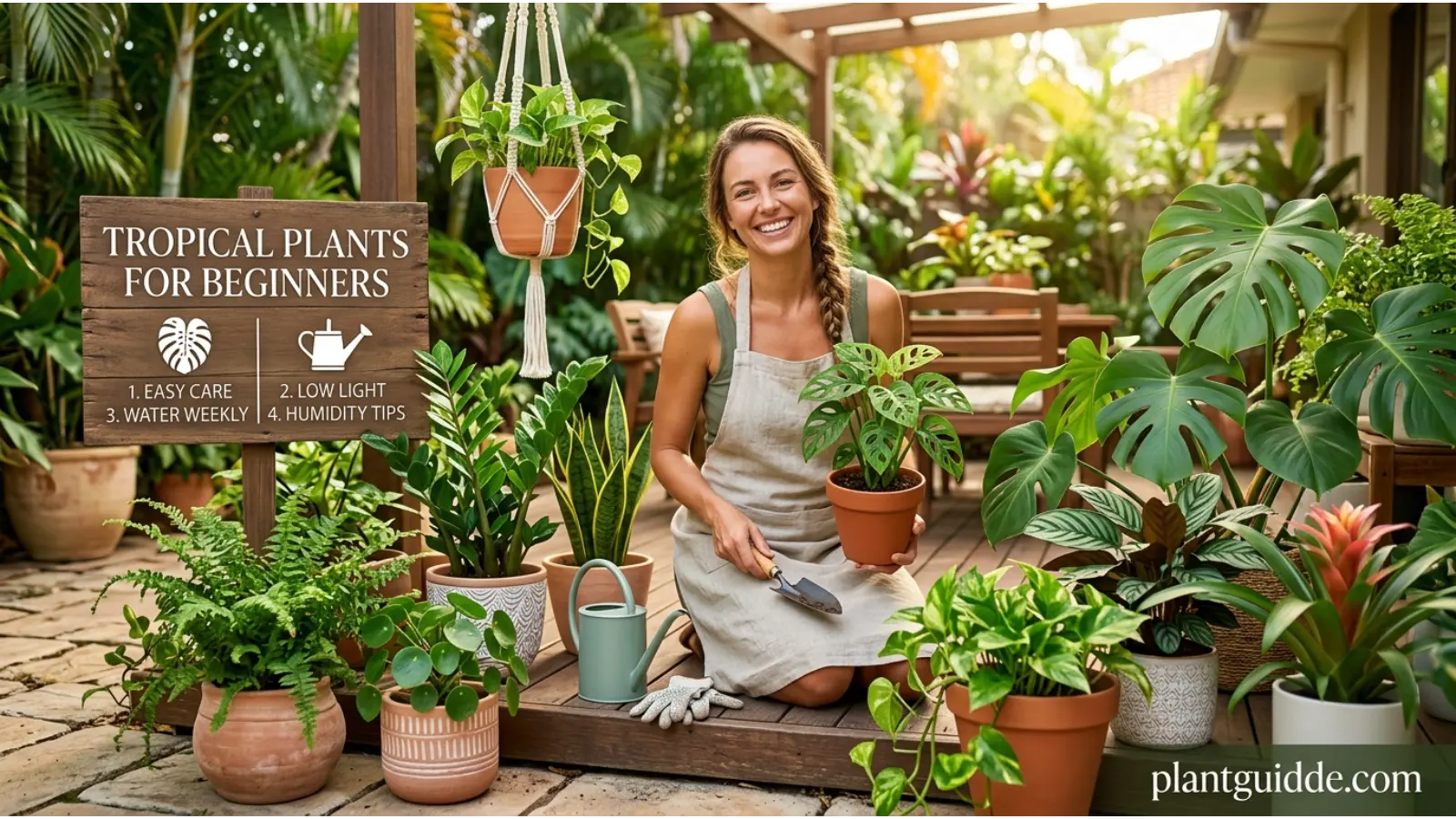
Tropical Plants for Beginners
If you are new to tropical houseplants, start with species that tolerate a reasonable range of indoor conditions.
Common beginner-friendly choices can include:
- Pothos
- Heartleaf philodendron
- Snake plant
- ZZ plant
- Spider plant
- Peace lily
However, “easy” does not mean indestructible.
Even forgiving plants can suffer from chronic overwatering, inadequate drainage, very poor light, or severe temperature stress.
The easiest plant is usually one whose natural preferences match the conditions you can consistently provide.
Image Suggestion: A realistic indoor tropical plant collection showing monstera, pothos, philodendron, peace lily, and other tropical houseplants positioned near a bright window, with visual callouts for light, watering, humidity, soil, and airflow.
How to Make Tropical Plant Care Easier
The best way to simplify care is to reduce unnecessary changes.
Keep plants in locations where their light requirements are naturally met. Use containers with drainage. Learn the preferred moisture level of each species instead of watering every plant together.
It also helps to group plants according to their needs rather than their appearance.
For example, two plants may look equally tropical but have very different watering requirements. Treating them identically simply because they sit on the same shelf can create problems.
When a plant develops a symptom, change one major factor at a time when practical. If you move the plant, dramatically increase watering, change the soil, and add fertilizer simultaneously, it becomes difficult to determine what actually helped.
FAQs:
How often should you water tropical plants?
There is no universal watering schedule for tropical plants. Check the soil and consider the species, pot size, light, temperature, humidity, and season. Water thoroughly when the plant reaches its preferred level of dryness, then allow excess water to drain.
Do tropical plants need direct sunlight?
Not necessarily. Many tropical houseplants prefer bright, indirect light because they naturally grow beneath or around larger vegetation. Some species tolerate or benefit from gentle direct sunlight, while intense afternoon sun can scorch sensitive foliage.
Why are my tropical plant leaves turning brown?
Brown leaves or tips can result from inconsistent watering, dry air, excessive fertilizer salts, low humidity, heat, root problems, or other environmental stress. Check the soil, roots, light, humidity, and recent changes before choosing a solution.
Do tropical plants need high humidity?
Some tropical plants perform better with higher humidity, particularly humidity-sensitive species. However, not every tropical houseplant requires extremely high humidity. Stable moisture, suitable light, good drainage, and airflow are equally important.
Can tropical plants grow indoors year-round?
Yes. Many tropical species can grow indoors throughout the year when they receive adequate light, suitable temperatures, appropriate watering, and sufficient nutrients. Their growth may slow during periods of lower light or cooler conditions.
Conclusion
Successful tropical plant care is less about recreating a perfect rainforest and more about providing the right balance of light, moisture, warmth, humidity, drainage, nutrients, and airflow.
Start by understanding the individual plant rather than assuming every tropical species has identical needs. Check the soil before watering, provide enough light for healthy growth, avoid permanently saturated roots, and pay attention to changes in the leaves.
Once you learn to interpret those signals, caring for tropical plants becomes much more predictable, and your plants can reward you with stronger growth and healthier foliage.

Asad Mumtaz is a dedicated plant enthusiast and gardening writer with a passion for helping people care for their plants successfully. He specializes in plant care guides, indoor gardening, and practical growing tips for all skill levels. His content focuses on making gardening simple, enjoyable, and rewarding. Through his work, Asad shares reliable advice to help readers create thriving green spaces.